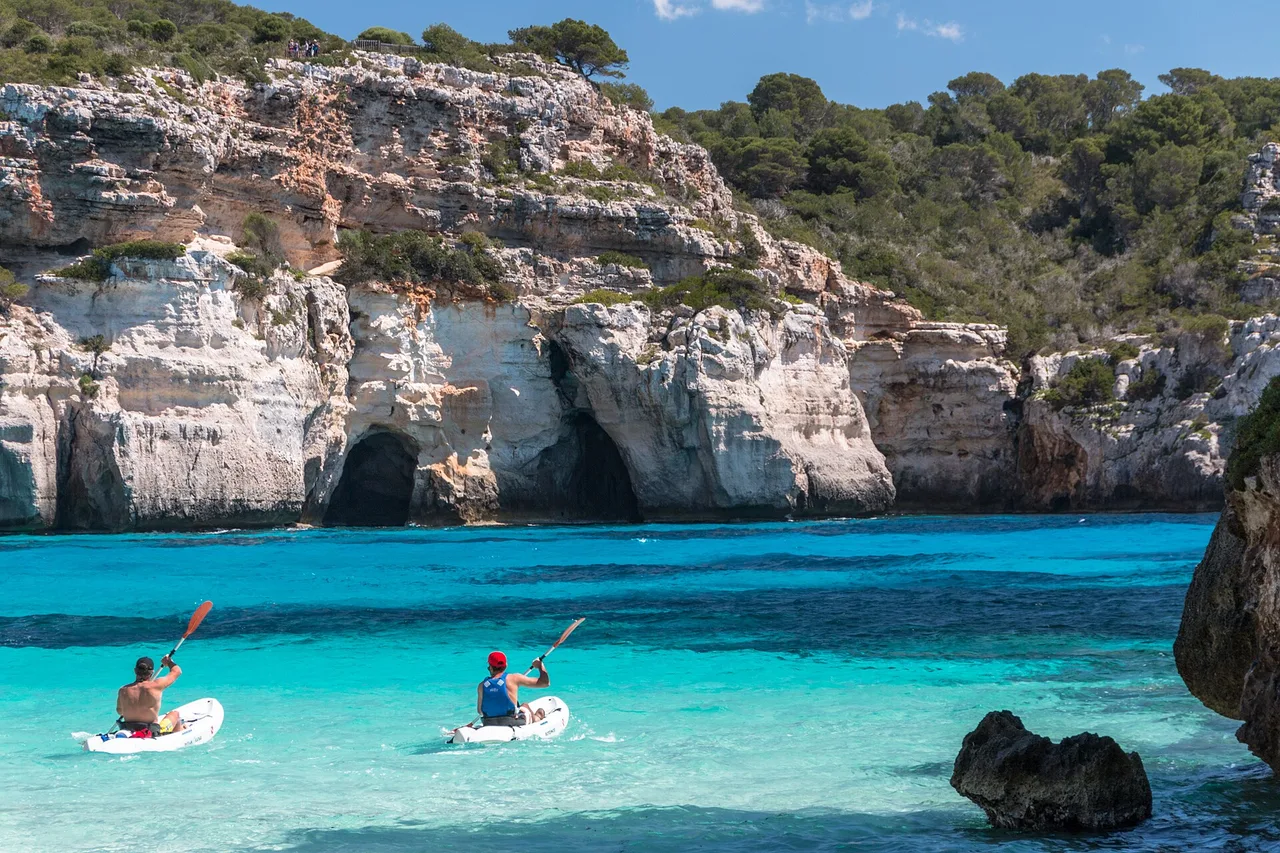
In Menorca the finest cove is almost always at the end of a path. That is not a turn of phrase — it has become the island’s administrative rule. Private cars have been banned from Cala Macarella in high season since 2018, motor access to the natural park is restricted in summer, and on 2 September 2026 the island council voted through a cap on vehicles for the whole island. Walking is no longer the romantic option; it is the default. And Menorca has been equipped for it since the fourteenth century. Here are the coves worth earning on foot, with real walking times and the calculation that decides your day.
💶 Transparency: this article contains one partner link. If you book through it we earn a commission, at no extra cost to you. It changes nothing in our recommendations, and wherever a free or official option exists we name it before the link.
In Menorca, the car stops before the cove
Guides to Menorca all look alike: a list of coves, and under each one, how to park. In 2026 that advice is wrong at the root. The coves that made the island’s name are precisely the ones cars cannot reach, and three separate mechanisms, stacked on top of each other, now settle the question.
The first is old. Private cars and motorbikes have been banned from Cala Macarella in high season since 2018. This is not a summer measure announced in June: it is a settled regime, with a barrier across the lane, a shuttle bus and compulsory booking. For the 2026 season the closure runs from 16 June to 14 September.
The second belongs to the natural park. Around the Favàritx lighthouse, inside the s’Albufera des Grau park, motor access is restricted at the height of the season: you park a kilometre from the lighthouse, or take the shuttle. Here too, the last few hundred metres are walked — by design.
The third is brand new, and it changes the scale. On 2 September 2026 the plenary of Menorca’s island council approved an amendment to the Menorca Reserva de Biosfera law regulating the entry and stay of vehicles on the island. The principle: the council now sets, annually or every two years, a ceiling on the vehicles that may enter Menorca temporarily, calculated from territorial carrying-capacity studies. The figure taken as the technical basis is 120,000 motor vehicles of all categories. Vehicles that are not exempt will need prior authorisation with a sticker, until the quota runs out, with checks at the ports of Maó and Ciutadella. Exempt: vehicles whose owner is registered as resident in any municipality of the Balearic Islands.
The precise arrangements for later seasons have not been written yet — the text refers to a regulation set periodically, and we would rather send you to the council’s portal than announce a timetable we cannot guarantee. The direction of travel, though, is not in doubt. The reversal has happened: in Menorca, walking is no longer the romantic option, it is the default.
The good news is that the island has been equipped for this for seven centuries.
The Camí de Cavalls: 185 kilometres around the island
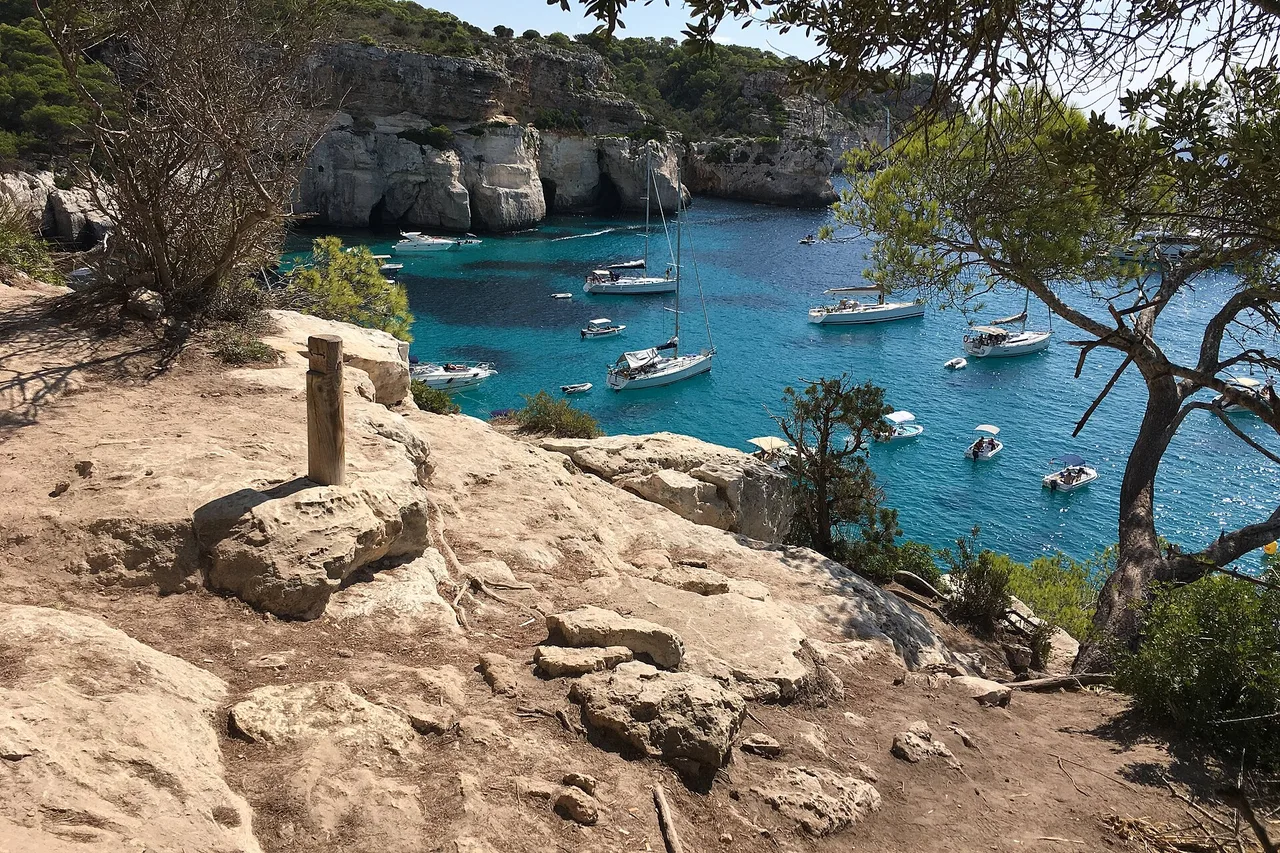
The Camí de Cavalls — the “way of the horses” — circles Menorca completely: about 185 kilometres divided into 20 stages, waymarked GR-223. That puts the average stage at a little over 9.25 kilometres, which is a very ordinary day’s walk: the path is not a sporting challenge, it is an access network.
Its origin goes back to the fourteenth century, when a royal order required the island’s knights to patrol the coast on horseback and defend it. It is not mentioned in writing as the circuit of the island until the seventeenth century, and its full military use came in the eighteenth: linking watchtowers, fortifications and gun batteries, and allowing troops and artillery to move along the shore.
It nearly disappeared. From 1996, protest walks demanded its reopening; they led to the Camí de Cavalls Act of 2000, then to years of agreements and compulsory purchases. The path reopened in full in 2010 and was waymarked GR-223 the following year. That history explains today’s situation: a coastline almost entirely walkable, on public land, while the roads down to it close one by one.
You obviously do not have to walk the whole thing. One well-chosen stage is enough to turn a beach day into something you will remember.
The south-west: three coves in a morning, for nothing
This is where the calculation that decides your day sits — the one no list ever makes.
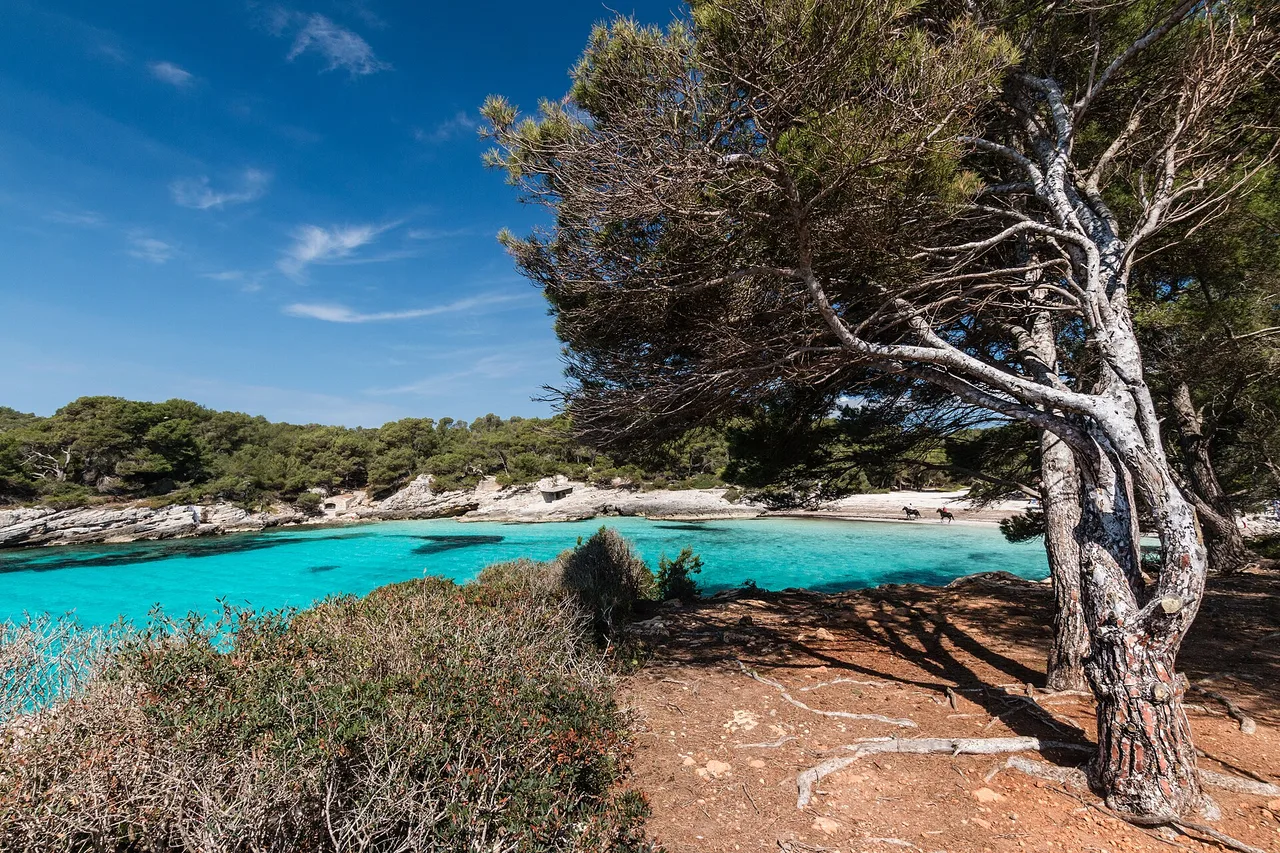
Stage 13 of the Camí de Cavalls links Cala en Turqueta to Cala Galdana: 6.4 kilometres, two and a half hours, graded easy on the official sheet. On the way it serves Cala Macarella — about an hour after Turqueta — and then Cala Macarelleta, reached by a path dropping away to the right just before Macarella. From Macarella to Cala Galdana the official sheet allows 45 minutes; many walkers report thirty. Both are plausible depending on pace and stops — we keep the official figure, which has the merit of not making you miss your last swim.
Add it up. 6.4 kilometres of easy walking give you 3 coves, roughly one cove every 2.13 kilometres, with no barrier, no booking and no car park to worry about.
Now the same day by car. With Macarella closed from 16 June to 14 September, you take the shuttle from Ciutadella: €8.40 return per person, or €33.60 for a family of four — and that buys you one cove, with compulsory booking. With a transport card (T-General, T-Més or T-Jove) the same trip drops to €4.20, or €16.80 for four: roughly half, and worth arranging if you are staying several days. Booked online, the return costs €8.20.
Three free coves against one paid cove: this is not a question of effort, it is a question of arithmetic. Walking from Cala Galdana is not the austere choice, it is the profitable one — and it is also the only one that gives you Macarelleta, which the shuttle does not serve.
One point of honesty all the same: the shuttle is not a bad deal for everyone. If you are staying in Ciutadella without a car, if walking is hard for you, or if you are travelling with a toddler, it does exactly what is asked of it. We are not advising against it — we are saying what it costs, and what walking adds.
The walk to do first: Cala Mitjana
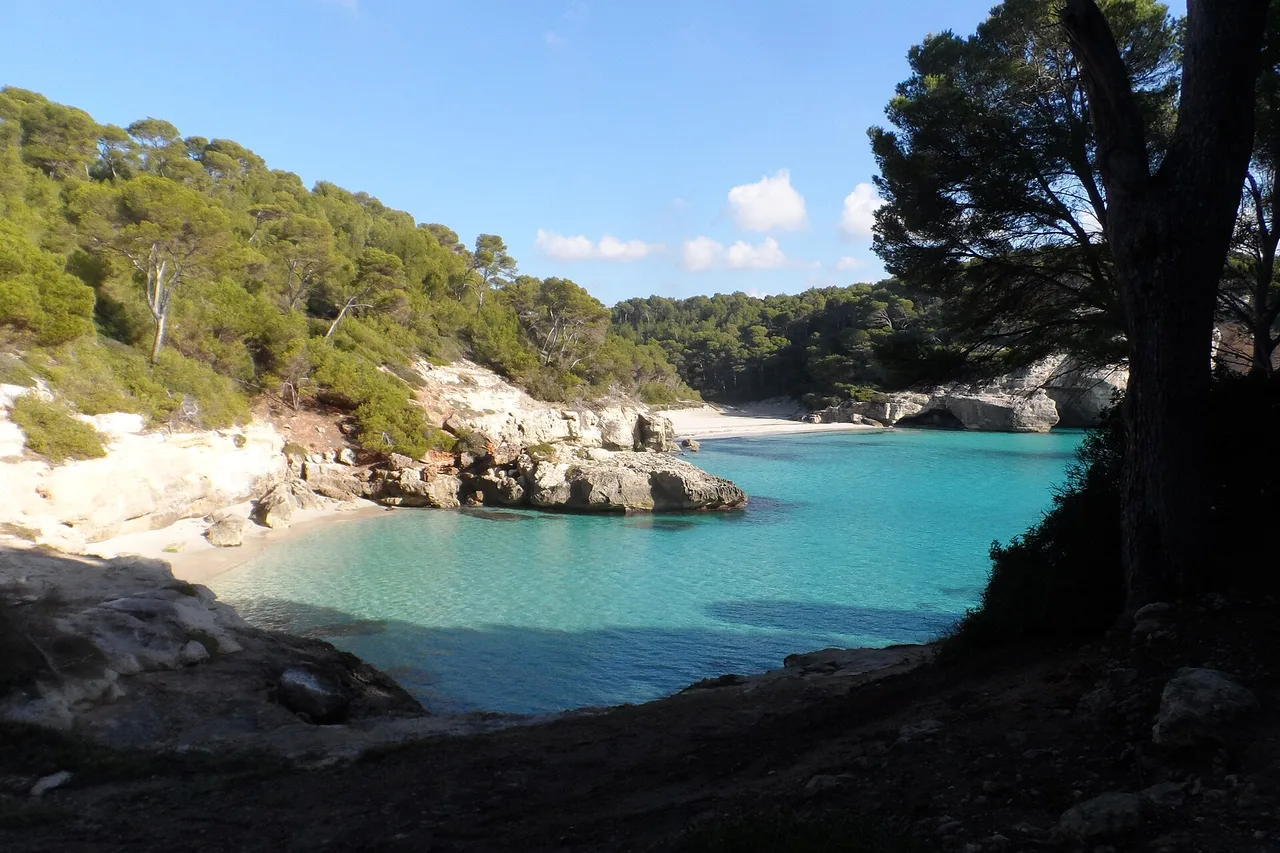
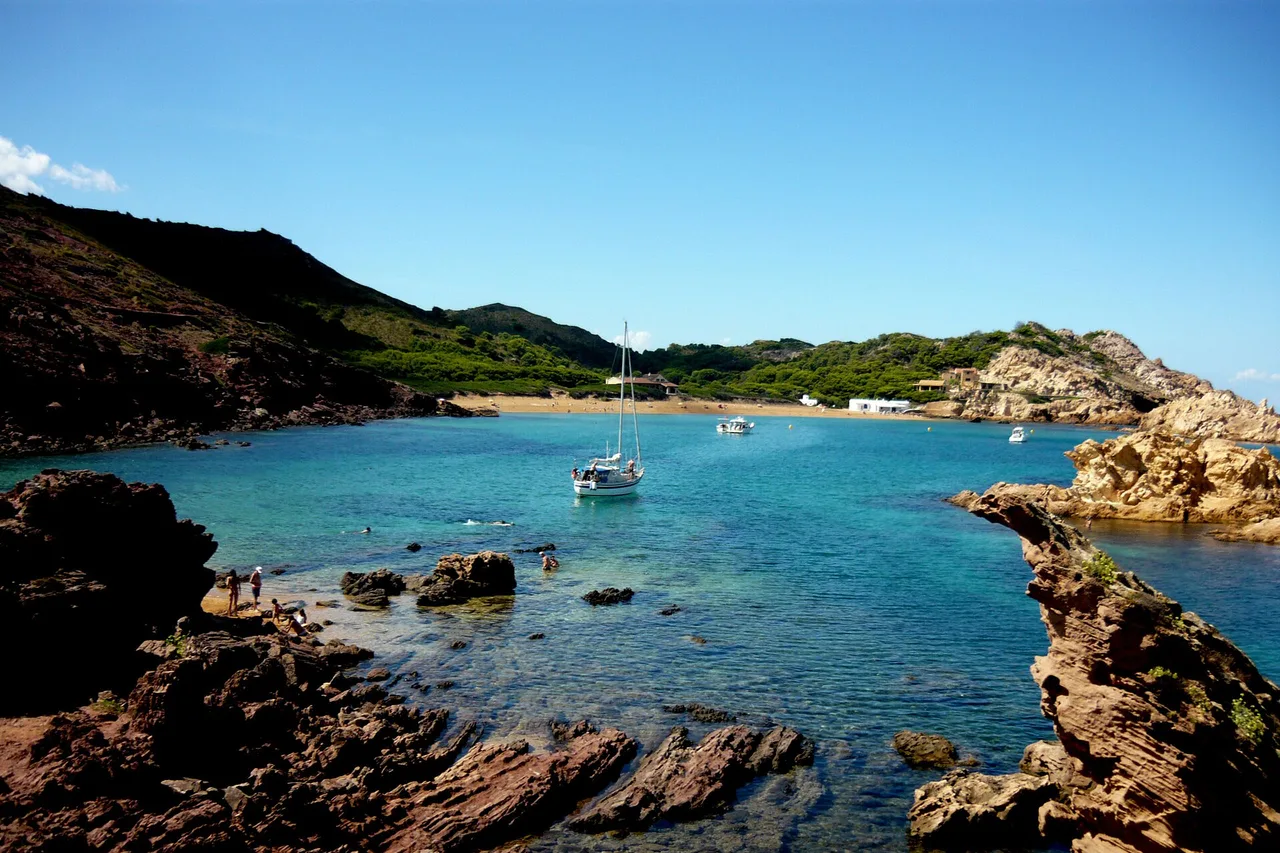
If you only do one, make it this one. Cala Mitjana is reached on foot from Cala Galdana, on an updated stretch of the Camí de Cavalls that is almost entirely flat — the only real difficulty is the final descent to the beach. The path stays in the shade of the pines for much of the way, which changes everything in July.
It is the walk to propose with children, or to test the idea before committing to a full stage. And the photograph above, taken in winter, says all there is to say about timing: the same cove, out of season, is empty.
The north: Cala Pregonda and its copper-coloured sand
The north of Menorca is nothing like the south. White limestone gives way to dark, iron-rich rock, the tramontana wind sculpts the vegetation, and the coves are harsher — and finer, for anyone who likes landscapes that are not trying to please.
Cala Pregonda is the perfect example. You get there after about 30 minutes’ walk from the Binimel·là car park, over stony ground. The sand is golden, russet, almost coppery: the iron-rich rock around it gives it that colour, and the effect when you come out of the path is startling. Binimel·là, the starting point, sits in the heart of the northern Menorca marine reserve — which also explains the water quality for mask and snorkel.
A warning that holds for the whole north: there are no facilities at all. No bar, no drinking water, no guaranteed shade. Whatever is missing from your bag will genuinely be missing.
Favàritx: black slate to Presili and Tortuga
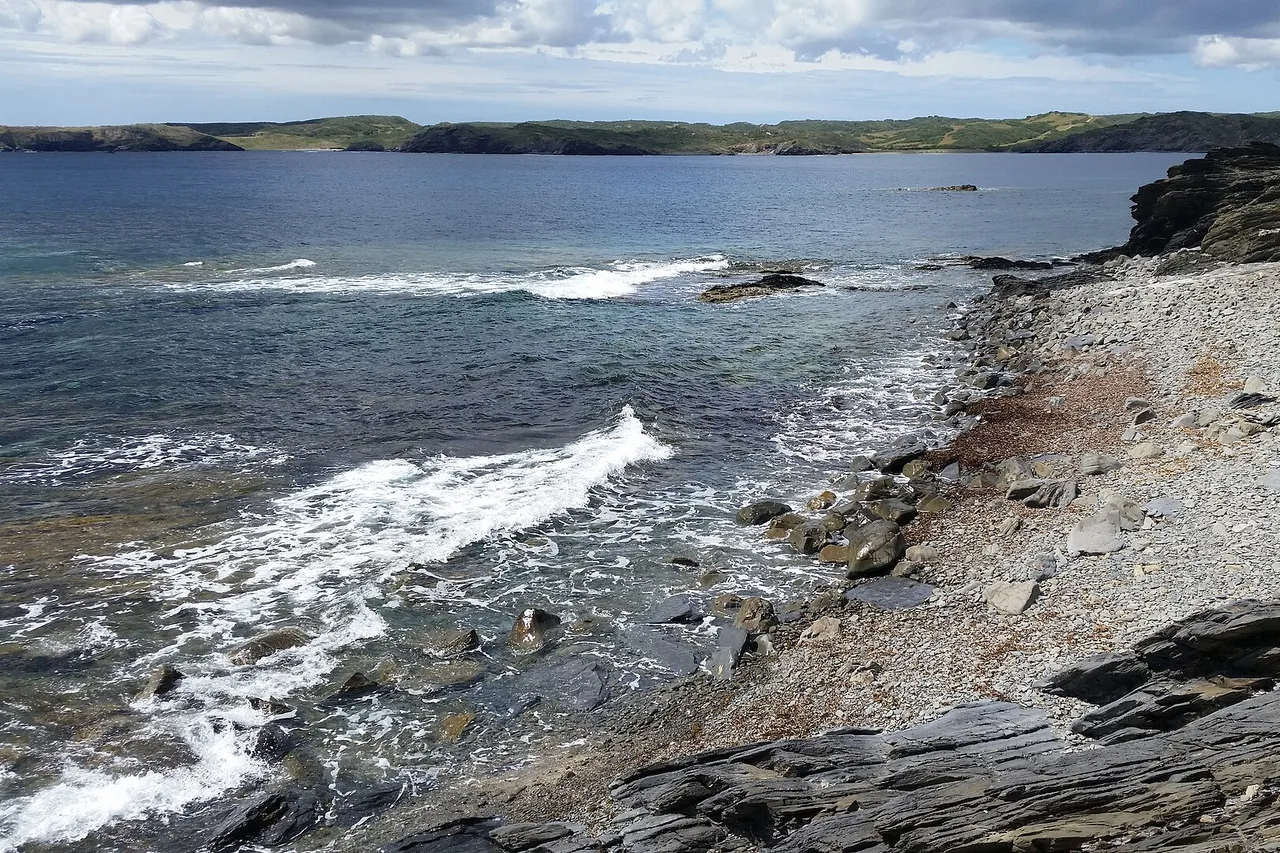
This is the strangest walk on the island, and probably the most memorable. From the car park at the Favàritx lighthouse, inside the s’Albufera des Grau natural park, a stony, waymarked path crosses a plateau of black slate, layered and standing in blades — an almost lunar landscape without a single tree — before opening onto two pale-sand coves.
Walking times from the car park: Cala Presili at 30 minutes (2 kilometres), Cala Tortuga at 55 minutes (2.7 kilometres). The contrast between the dark slate of the plateau and the clear water of the coves is what people remember of Menorca once they are home.
Three rules are not negotiable here, and they are not decorative:
- Stay on the waymarked paths. You are in the core of a biosphere reserve.
- Do not walk on the dunes. The dune system is protected to allow it to regenerate: a shortcut through the sand undoes several seasons of work.
- Use the built steps to go down to Cala Tortuga. They were put there precisely to stop the cliff eroding.
Here too, no shade and no facilities on either beach. And at the height of the season motor access to the lighthouse is restricted: plan for the shuttle, or an extra kilometre on foot from the parking area.
What to bring, and how to reach the trailheads
Start with what costs nothing. Water, more than you think you need — not one of the coves above has a drinking fountain. A hat and sun cream: the Favàritx plateau does not offer a square metre of shade. And proper shoes, not flip-flops: the northern paths are stony, and the Pregonda one frankly rocky. Finally, start early — that is also what gives you the coves to yourself.
That leaves the trailheads. The south-west works very well without a car: from Cala Galdana or Ciutadella, walking and the shuttle are enough, and it is one of the few places in Spain where you can spend a beach week without driving. The north, though, needs a vehicle: Binimel·là and the Favàritx lighthouse are isolated starting points, and they are the ones that give the island’s finest walks.
Comparing local car hire firms in Menorca gives a realistic picture of the terms before you commit: local agencies cover Maó, Ciutadella and the airport, are often cheaper than the big networks and ask for lighter deposits. One 2026-specific caution, though: the entry cap voted on 2 September applies to vehicles arriving on the island, checked at the ports of Maó and Ciutadella. A car hired locally has no entry to get authorised — it is already there. If you were thinking of bringing your own across by ferry, check the island council’s portal before booking the crossing.
A last word on season. Everything above reads differently depending on the month: between 16 June and 14 September, Macarella has to be earned; in October you park there. If your calendar gives you the choice, spring and autumn give you the same coves without the barriers — and, as the photograph of Cala Mitjana above shows, often without anyone at all.
In short
The three walks to remember:
① Cala Mitjana, from Cala Galdana — almost flat, shaded, the easiest. Do this one first.
② Stage 13, Cala en Turqueta to Cala Galdana — 6.4 km, 2 h 30, easy, and 3 coves including Macarella and Macarelleta.
③ Favàritx, to Cala Presili (30 min) and Cala Tortuga (55 min) — black slate, the landscape you do not forget.
And a fourth if the north tempts you: Cala Pregonda, 30 minutes from Binimel·là, for the coppery sand.
The calculation not to forget: 6.4 kilometres of easy walking give you 3 coves for nothing, while the Macarella shuttle costs a family of four €33.60 for a single one — and does not serve Macarelleta.
What 2026 changed: the island now caps the vehicles entering it, on a technical basis of 120,000 vehicles, with checks at the ports. The precise rules are set each year: check the island council’s portal before shipping a car over, and note that hiring locally spares you the question entirely.