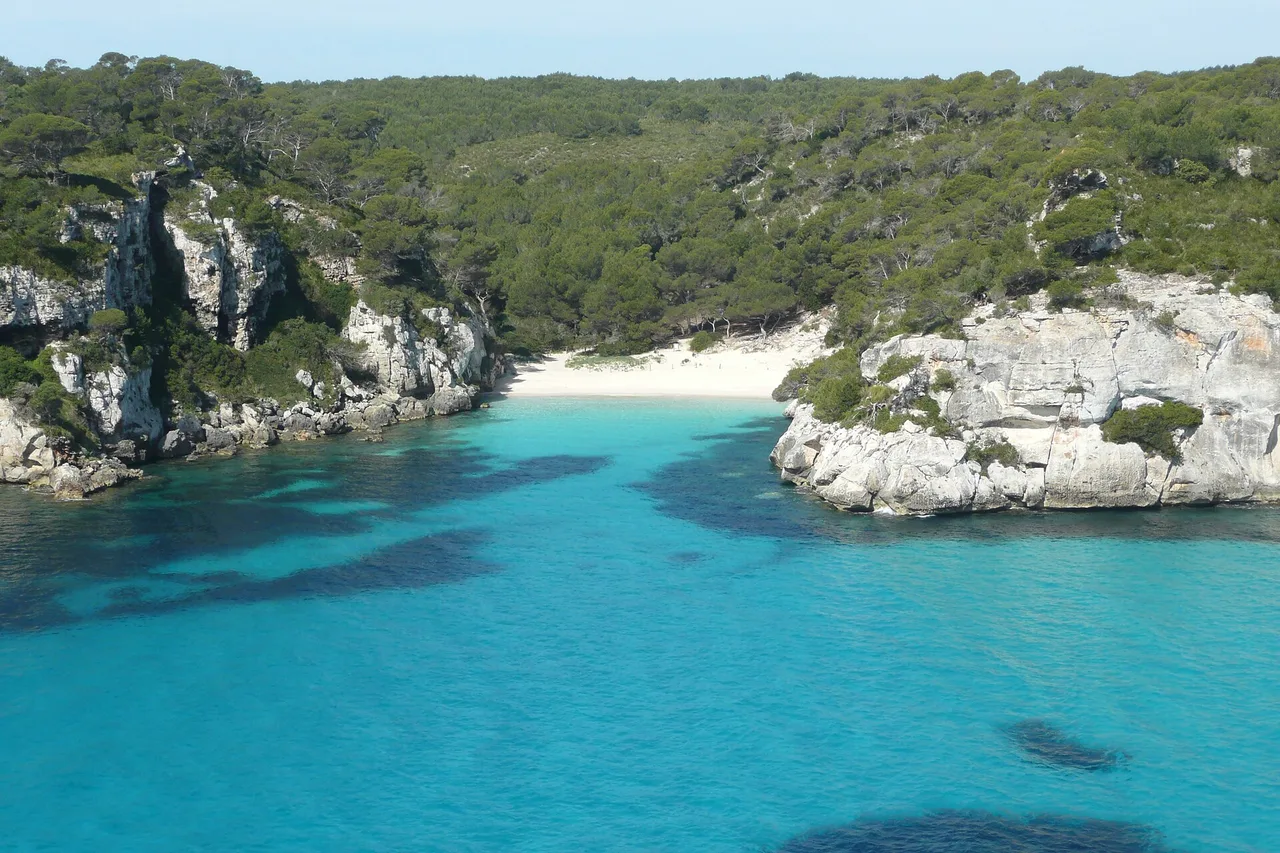
You have been told Menorca is the quiet version of Mallorca. That is true across the year and wrong in August: measured against its own surface area, Menorca then takes in almost as many travellers as its big neighbour — a gap of just 20%, where the raw gap is 6.3 times. Menorcan calm is not a property of the island, it is a property of the calendar. Once that misunderstanding is cleared away the choice becomes simple, because it no longer turns on atmosphere but on three measurable things: what you do with a day away from the beach, when you travel, and two roads that 2026 has closed — each in its own way.
💶 Transparency: this article contains partner links. If you book through one of them we earn a commission at no extra cost to you. It changes nothing in our recommendations, and wherever a free or official option exists we name it before the link.
Menorca’s calm is an annual average, not an August reality
Let us start with the one misunderstanding that genuinely spoils holidays. The raw numbers seem to confirm the cliché: in 2025 Palma airport handled 33,806,427 passengers and Menorca airport about 4.2 million. Eight times fewer. Except that Mallorca is also five times larger: 3,640.11 km² against 695.80.
So let us measure travellers against surface area, month by month. In August 2025 Palma took 4,700,495 passengers and Menorca 751,815 — a raw gap of 6.3 times. Divide by each island’s area: about 1,291 passengers per square kilometre in Mallorca, against 1,081 in Menorca. The gap falls to 20%.
In January the ratio flips completely: 909,795 passengers in Palma and 86,439 in Menorca, that is 250 against 124 per square kilometre — Mallorca then carries twice the load. The two islands simply do not share a rhythm: Palma’s traffic multiplies by 5.2 between January and August, Menorca’s by 8.7. Menorca does not receive fewer people: it receives them more concentrated.
One last figure finishes off the cliché. Menorca airport has a stated capacity of around four million passengers, and it exceeded that in 2025 for the third year running, by roughly 210,000 travellers. The quiet little island has a saturated airport.
What to take from this: if you travel in August, do not pick Menorca believing you are escaping the crowds — pick it for what it is. And if quiet is genuinely your goal, moving your dates by three weeks beats changing island: mid-June and mid-September give you the same sea on islands that are twice as empty.
Mallorca is vertical, Menorca is horizontal
Here is the real difference, the one that does not move with the season: the terrain. Mallorca’s high point, Puig Major, reaches 1,445 metres. Menorca’s, Monte Toro, stops at 358. That is not a geography footnote, it decides everything you do away from the sand.
Mallorca has a proper mountain range, the Serra de Tramuntana, running the length of the north-west coast, which UNESCO inscribed as World Heritage in June 2011 — not as wilderness but as a cultural landscape: centuries of dry-stone terracing, channels, mills and olive groves built into the mountainside. It brings passes, villages clinging to rock such as Deià and Valldemossa, monasteries, hairpin roads and full-day walks.
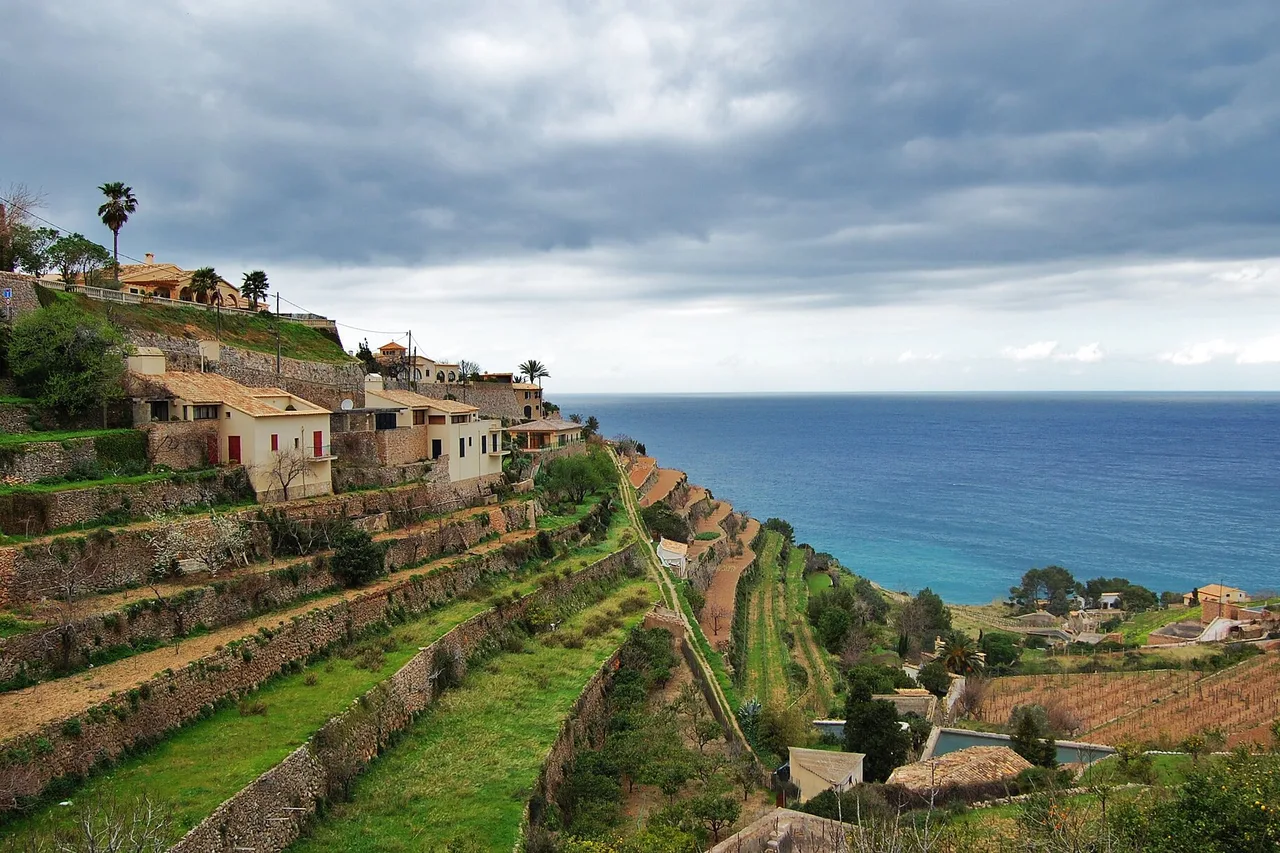
Menorca has none of that, and makes no apology: its interior is a farmed plateau of stone walls, wooden gates and cattle. The reward sits elsewhere, and it is horizontal — the coastline.
The Camí de Cavalls: the argument Mallorca cannot answer
Menorca has something unique in the archipelago: a path that goes right around the island. The Camí de Cavalls, now waymarked as the GR 223, runs about 185 kilometres in 20 stages. It is no recent tourist creation: it was a coastal watch route, documented since the 14th century, ridden by the island’s horsemen to defend the shore. It was restored and reopened to the public in 2010.
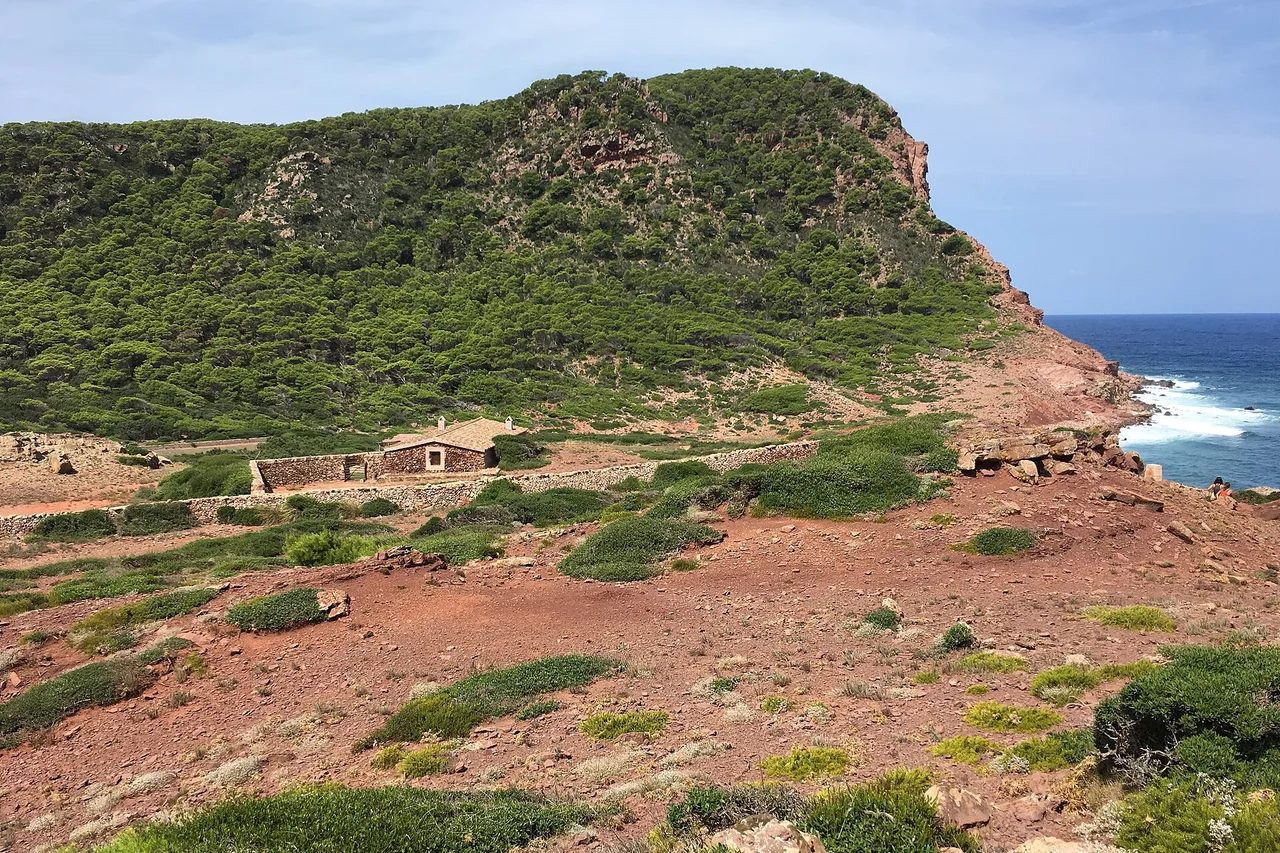
The practical consequence is enormous and widely missed: most southern coves are reached on foot, often twenty to forty minutes from a car park, sometimes less. Macarella, Macarelleta, Turqueta, Mitjana, Escorxada: those short walks are exactly why these beaches stay beautiful — you cannot drive onto the sand.
The less pleasant consequence, worth knowing in advance: the car parks serving these coves are small and full early in high season, and several close or charge with a compulsory shuttle in July and August. Leaving before nine is not magazine advice, it is the condition for parking at all.
Menorca has a listed prehistory, Mallorca has a capital city
If days off the beach worry you, both islands answer — with very different things.
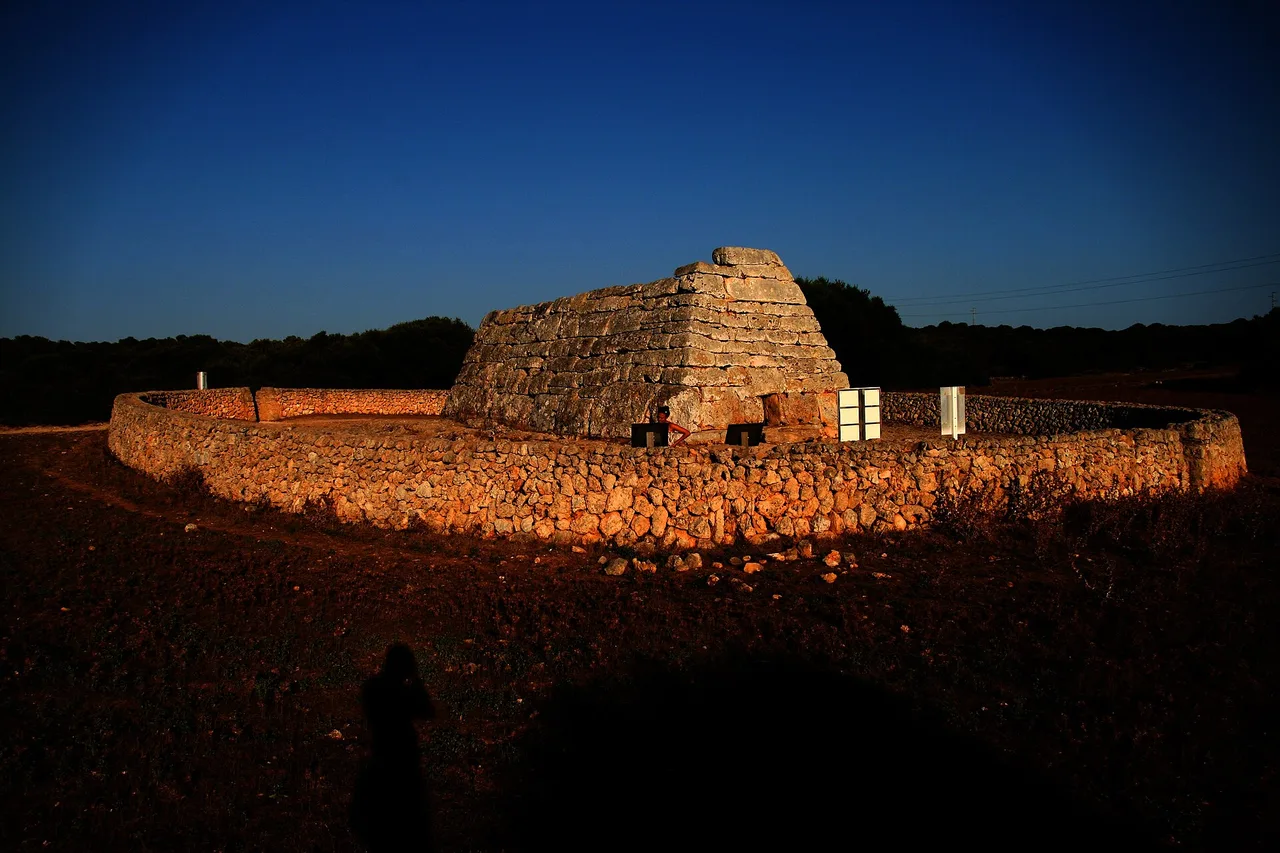
On 18 September 2023 Menorca had “Talayotic Menorca” inscribed on the UNESCO World Heritage list — Spain’s fiftieth inscription. The island holds more than 1,500 prehistoric sites across roughly 700 km², over two per square kilometre: talayots (stone towers), taulas (the great stone T-shapes found nowhere else) and navetas, burial chambers shaped like an upturned boat. The best known, the Naveta des Tudons, is close to three thousand years old and takes twenty minutes to visit, beside the Ciutadella road.
Worth remembering too: the whole island has been a UNESCO Biosphere Reserve since 8 October 1993, covering 70,093.66 hectares on land and 448,936.45 hectares at sea — the marine part is therefore six times larger than the land, which says plainly where Menorca’s interest lies.
Mallorca has something Menorca does not: a real city. Palma offers a Gothic cathedral facing the sea, an old centre you can walk for days, museums, restaurants open all year and an airport connected to the whole of Europe even in winter. For a couple wanting to alternate city and beach, or for an off-season trip, that point alone often settles the question.
Cars: essential in Menorca, debatable in Mallorca
It is counter-intuitive, and yet this is how it works. In Menorca a car is effectively necessary: the southern coves are reached by small roads, buses link the resorts to each other but not to the beaches that make the island worth visiting, and the distances, while short, are not walkable.
In Mallorca a car is very useful but not compulsory — provided you stay in Palma, with its city buses, metro, commuter train and links to several beaches. Rent one for three days in the mountains rather than for the whole week and you will dodge the worst of the capital’s parking.
One rule holds on both islands: in July and August you do not rent a car on arrival. Fleets are limited by the size of the islands, and the last vehicles available cost dearly. Comparing local Balearic rental firms gives a realistic picture of the terms before you commit: local agencies are often cheaper than the big chains and ask for lighter deposits. Check two things in the contract — the excess, and whether you are allowed to take the car on the ferry if you plan to do both islands.
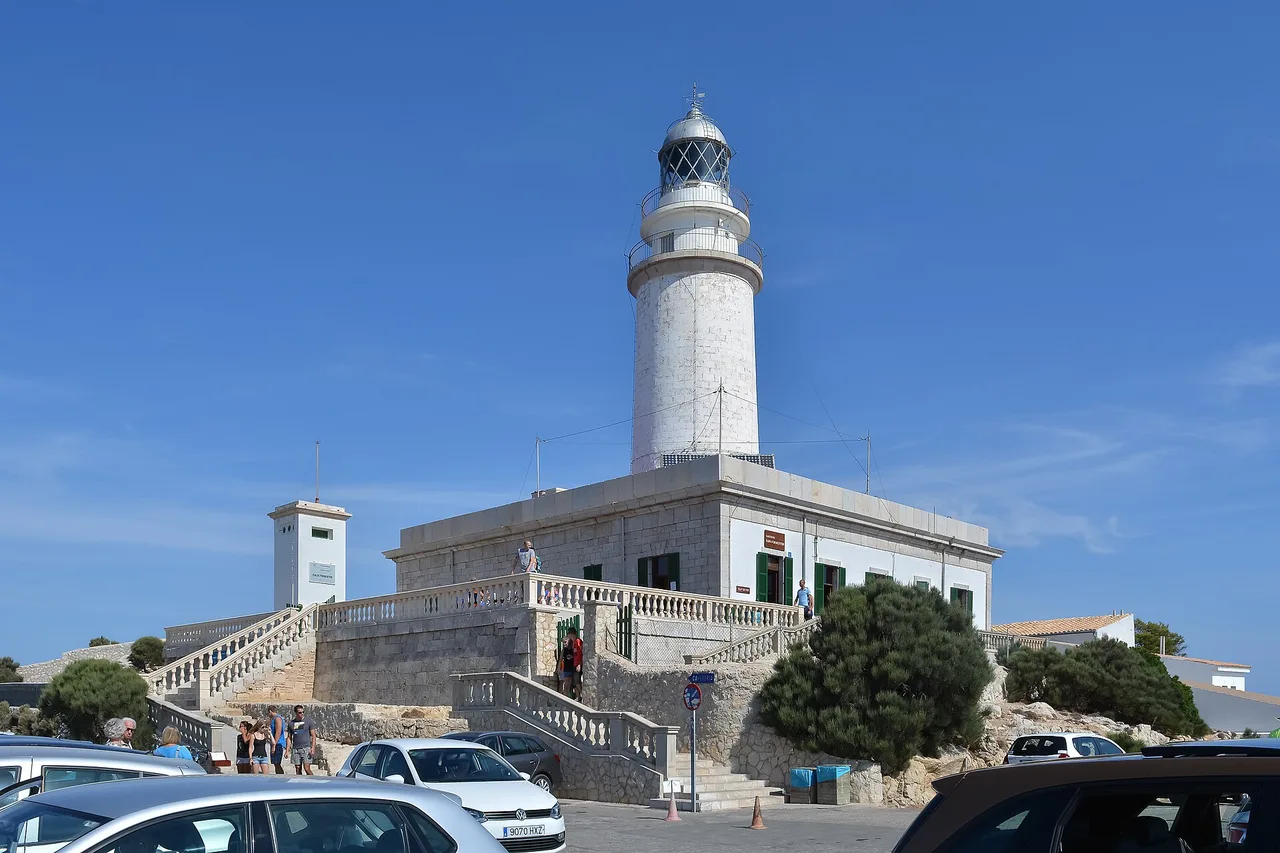
And note that in 2026 the car no longer takes you everywhere. The Ma-2210 road to the Cap de Formentor lighthouse is closed to private vehicles from 15 May to 18 October 2026, between 10am and 10pm, under the scheme published by Spain’s traffic authority. Two barriers filter access, the second reserving the final stretch to the lighthouse entirely. You get up there on the 334 bus, by bike, by taxi, or by car before 10am and after 10pm. Individual permits are requested from the traffic authority at least three working days ahead.
Arriving without a car: what Mallorca allows and Menorca much less
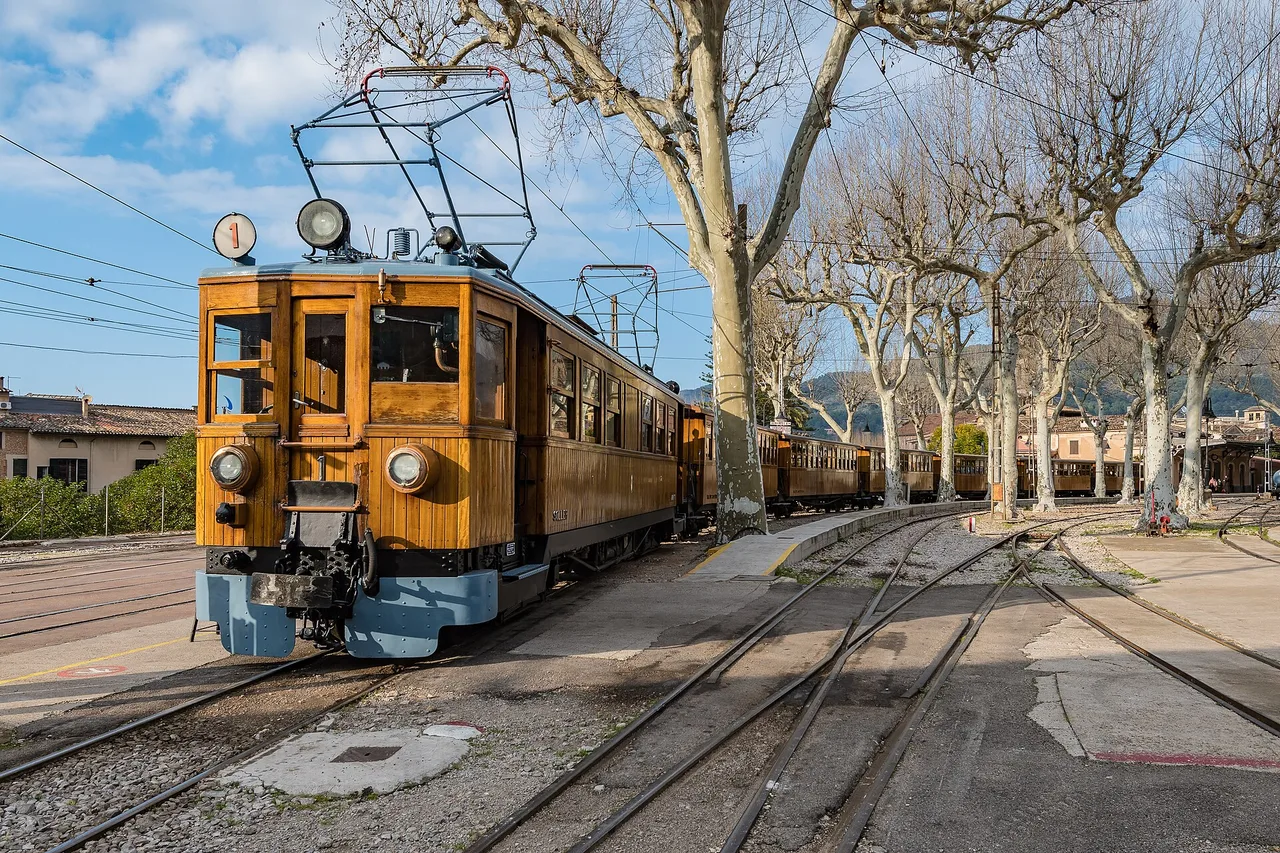
If you are still hesitating, here is a simple test. Picture your trip without a steering wheel. In Mallorca it stands up: stay in Palma, take the historic Sóller train across the Tramuntana, ride the tram down to the port, come back by bus, and give a single day to an organised excursion. In Menorca the same trip is frustrating: you will see two towns and three bus-served beaches, and miss what makes the island.
Late arrivals differ too. Flights into Menorca are packed into a few summer hours, and the taxi queue at Maó airport lengthens abruptly with every landing. Booking a transfer in advance from Palma airport spares you that wait when you land at night with children — the driver tracks the flight and waits if it is late. For a short daytime hop the bus is obviously cheaper, and we would rather say so.
Doing both islands: possible, but not on any date
The crossing exists and it is short: about one hour by fast ferry between Alcúdia in northern Mallorca and Ciutadella in western Menorca — an hour and a quarter to two hours depending on the vessel, with several operators on the route. We offer no booking link here, having no maritime partner: book directly with the ferry companies.
Two caveats, both serious. First, sailings collapse out of season: what is a comfortable shuttle in July becomes one or two departures a day in winter, when the link is not suspended altogether. Second, the Menorcan reform of 2026, whose exact status matters.
On 2 September 2026 Menorca’s island council approved the amendment to the law making the island a biosphere reserve, in order to write in the legal framework for capping the number of vehicles arriving from outside. The ceiling will be set periodically on the basis of a carrying-capacity study — the one used as technical groundwork points to 120,000 vehicles present at once, all categories combined. Non-exempt vehicles will need prior authorisation with a sticker, within the available quota. Exempt are Balearic residents, one vehicle per non-resident property owner, justified professional journeys, reduced-mobility users, emergency services, public transport, taxis, and agricultural or industrial vehicles.
What matters for 2026: the limit was not applied this summer, it was postponed while the control system is put in place. So you can still bring your car — but if you are planning for 2027 or later, check where the scheme stands before building a trip around it.
One last budget point, usually discovered on the bill: the Balearics charge a tourist tax per person per night, to which a high-season supplement has applied since June 2026. The amount depends on the category of your accommodation and the available sources disagree with one another; rather than quote a figure we cannot stand behind, we point you to the official Balearic government portal, which alone is authoritative.
The test, in three questions
Forget beach lists. Answer these:
1. What do you do with a day when you are not going to the beach? If the answer is “walk in the mountains, visit villages, see a city” — Mallorca. If it is “another beach, and a walk along the coast” — Menorca.
2. When are you going? Out of season, Mallorca is the only one of the two that truly works: Menorca’s airport idles and half the island’s addresses close. At the height of summer the Menorcan calm argument is worth little — we have just measured it — but the island remains easier to cover.
3. How many days do you have? Under a week, one island only, no argument. A week in Menorca is enough to go round it; a week in Mallorca forces you to choose between the mountains and the south, and that is no bad thing.
If your answers contradict each other, here is ours: first time in the Balearics, take Mallorca, because it contains several different trips. If you already know you will be in the water every day, take Menorca — and go in June or September rather than August. The island you are picturing does exist, just not on the dates everybody else picks.