In Mallorca it is not the distance that costs you, it is the drive back. The island fits into 3,640 km², yet half of what you want to see sits at the end of a dead end: a road drops to the sea, and you have to climb it again. A one-week itinerary therefore turns on a single decision, taken before you even book the car — one base or two. We ran the numbers: it is worth 280 kilometres of driving that shows you nothing new. Here is the week day by day, with the two roads 2026 has closed and the paperwork trap waiting for foreign-plated cars.
💶 Transparency: this article contains partner links. If you book through one of them we earn a commission at no extra cost to you. It changes nothing in our recommendations, and wherever a free or official option exists we name it before the link.
Mallorca is not large, it is badly connected
Mallorca covers 3,640 km²: smaller than an average English county. On a map, a week looks like plenty to go round it. On the road it is another matter, for one very simple geographical reason: the whole north-western half of the island is a mountain range, the Serra de Tramuntana, whose Puig Major reaches 1,445 metres.
That range has a single ridge road, the Ma-10, running from Andratx to Pollença for about 112 kilometres. It takes roughly two hours to drive without a single stop — an average of 56 km/h on a road with no tolls, no traffic lights and no major town to cross. That figure tells you everything: here, kilometres do not convert into minutes the way they do elsewhere.
The real trap lies elsewhere, though. Almost everything that drops to the sea leaves that road and climbs back up to it. The coves, the harbours, the viewpoints: they are dead ends. You do not drive through them, you drive to them and back.
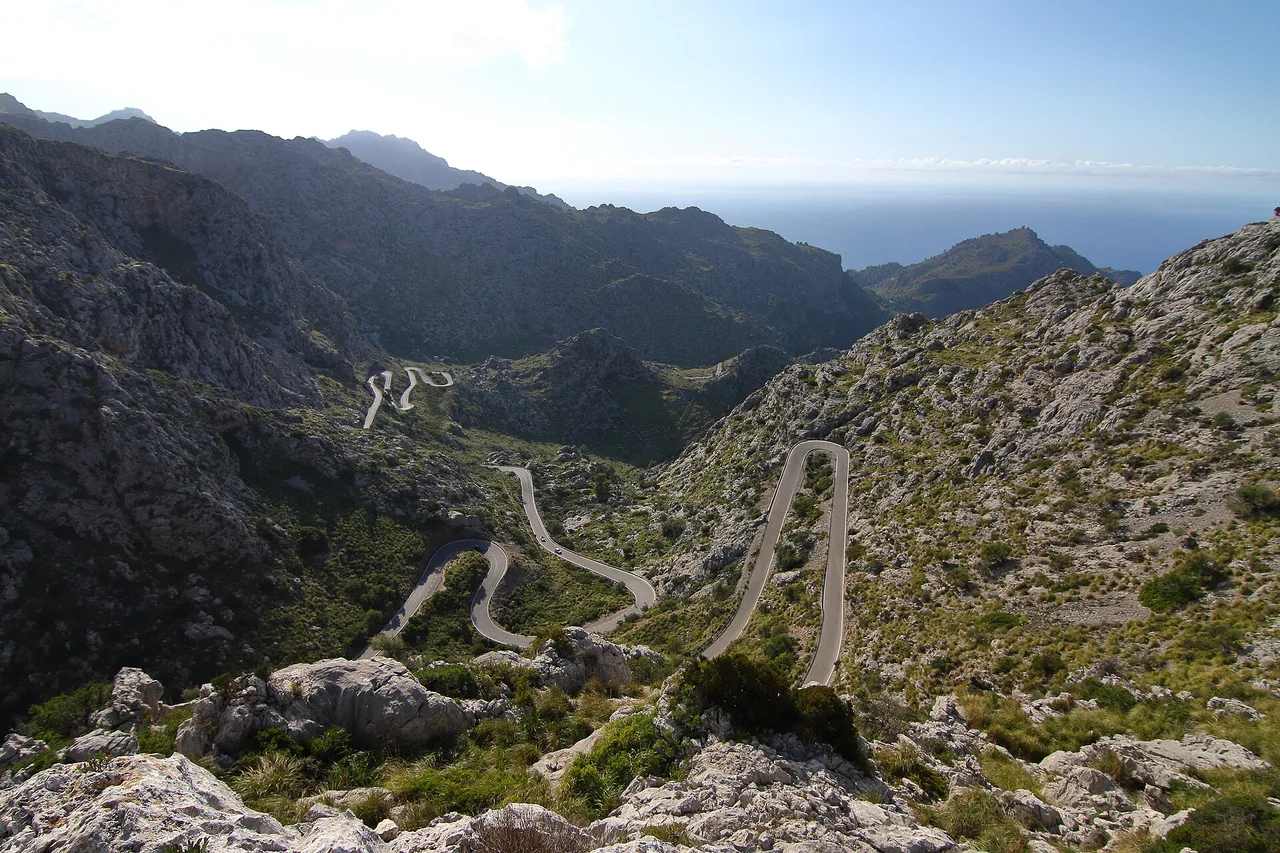
The textbook case is Sa Calobra. The Ma-2141 leaves the ridge and drops to the sea in about 14 kilometres, losing 800 metres: twelve 180-degree hairpins and one full 360-degree loop, the Nus de sa Corbata, where the road passes under itself on a small bridge. It was cut in 1932 and remains closed to vehicles over ten tonnes.
Do the sums: since there is no other way out, you drive 28 kilometres for 14 useful ones and rack up 1,600 metres of climb and descent — 57 metres per kilometre on average — to see one cove. That is not a criticism: it is one of the finest roads in Europe. It is a time budget, and it has to be set before you build the week.
The calculation that decides everything: one base or two?
Here is the question copied itineraries never ask, and it weighs more than the choice of stops.
Picture the classic week: you stay in Palma, well placed, and drive out each day. Three of your days will be spent in the east — Cala Ratjada, Capdepera, Artà, the south-eastern coves. But Palma is about 70 kilometres from Cala Ratjada by road. Three days means six drives: 420 kilometres, all on the same axis, not one of which shows you anything new.
Now move: four nights in the west, three in the east. The same days now cost only 140 kilometres — one drive out, one back. You save 280 kilometres, that is 67% of that driving and three times less time at the wheel, for a single change of hotel. And from an eastern base everything suddenly draws closer: Alcúdia is only 33 kilometres from Cala Ratjada.
These distances are rounded road figures: they are not there to plan to the kilometre, they are there to compare two ways of organising a stay. And on that point the gap is far too large to be a detail.
Our split, then: two nights in Palma, two in the Tramuntana (Sóller or Valldemossa), three in the north-east (Alcúdia, Pollença or Cala Ratjada). Three addresses beat two if you do not mind unpacking often; two are enough if you travel with children.
Days 1 and 2 — Palma, and why the car can wait
The first piece of advice in this itinerary is not to take the car straight away, and it rests on a municipal rule many visitors discover too late.
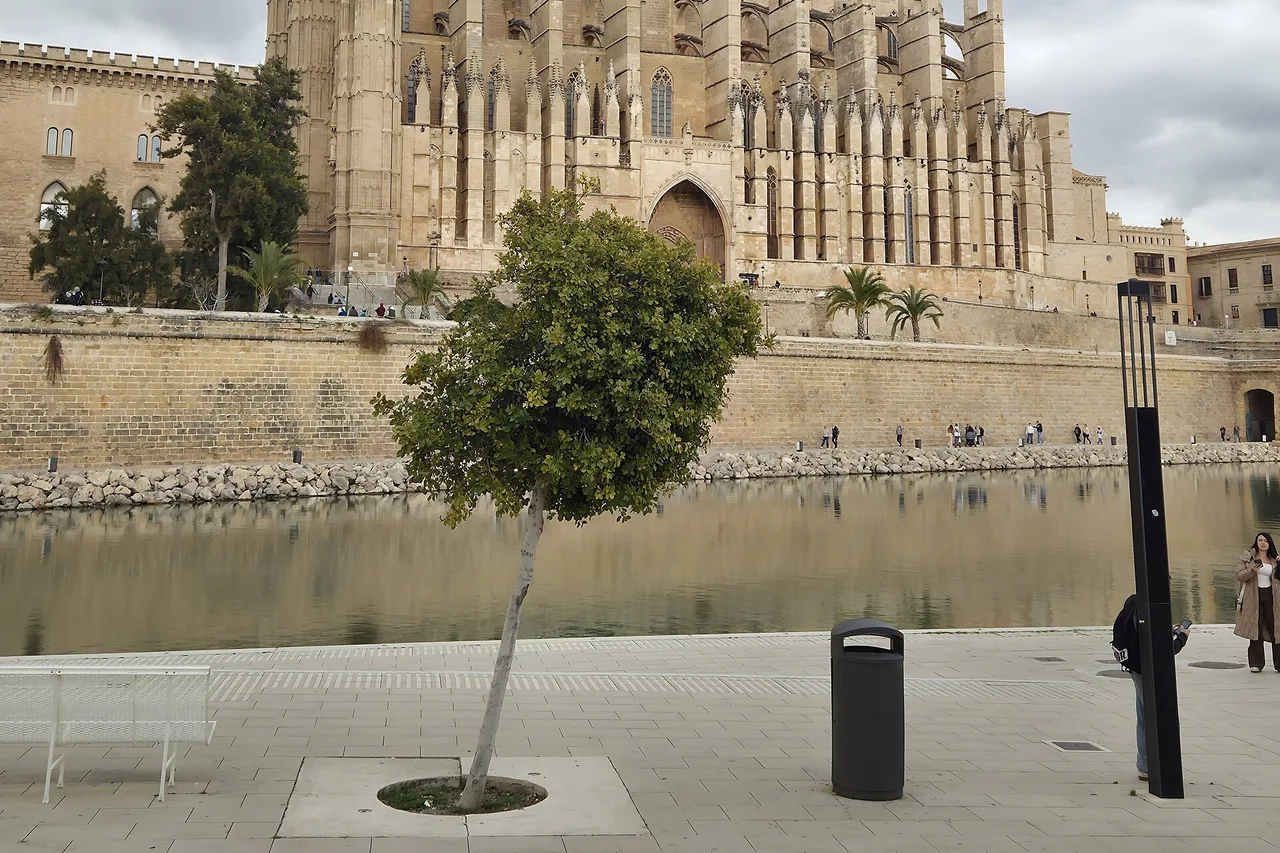
Since 1 January 2025 Palma has run a low emission zone covering everything inside the Avenidas and the Paseo Marítimo — in other words the entire old centre, the cathedral, the marina and almost every city hotel. Breaching it carries a 200 euro fine, raised by 30% for a repeat offence within twelve months.
What matters, in order:
If you hire locally you are not affected in 2026. A car registered in Spain automatically carries a DGT environmental sticker, and recent rental fleets are rated C or better. Until 31 December 2026 the B, C, ECO and 0 stickers all circulate freely. Note what follows, if you come back: from 1 January 2027 the B is excluded, and from 1 January 2030 the C as well.
If you arrive in your own car, on the ferry from Barcelona or Valencia, it is a very different story. Foreign-plated vehicles need prior registration, created by an amendment to the municipal ordinance in March 2026: it must be requested at least five days before the date of access and the authorisation is valid for thirty days. Without it, entering the zone is an offence. The procedure is still evolving, so check it on Palma city council's portal before you travel — it is free and takes ten minutes.
In practice, here is our proposal for the first two days: arrive, reach the hotel without a car, and walk. Palma is a walking city, parking is expensive, and two days of hire saved pays for the transfer several times over. Reserving a transfer from Palma airport makes sense on a flight that lands late, because the driver tracks the flight and waits if it is delayed. For a daytime arrival the public bus links the airport to the centre for a few euros, and we would rather say so before offering anything else.
Days 3 and 4 — the Tramuntana, without trying to chain it all together
The car is collected on the morning of day 3, and Palma is left behind heading north.
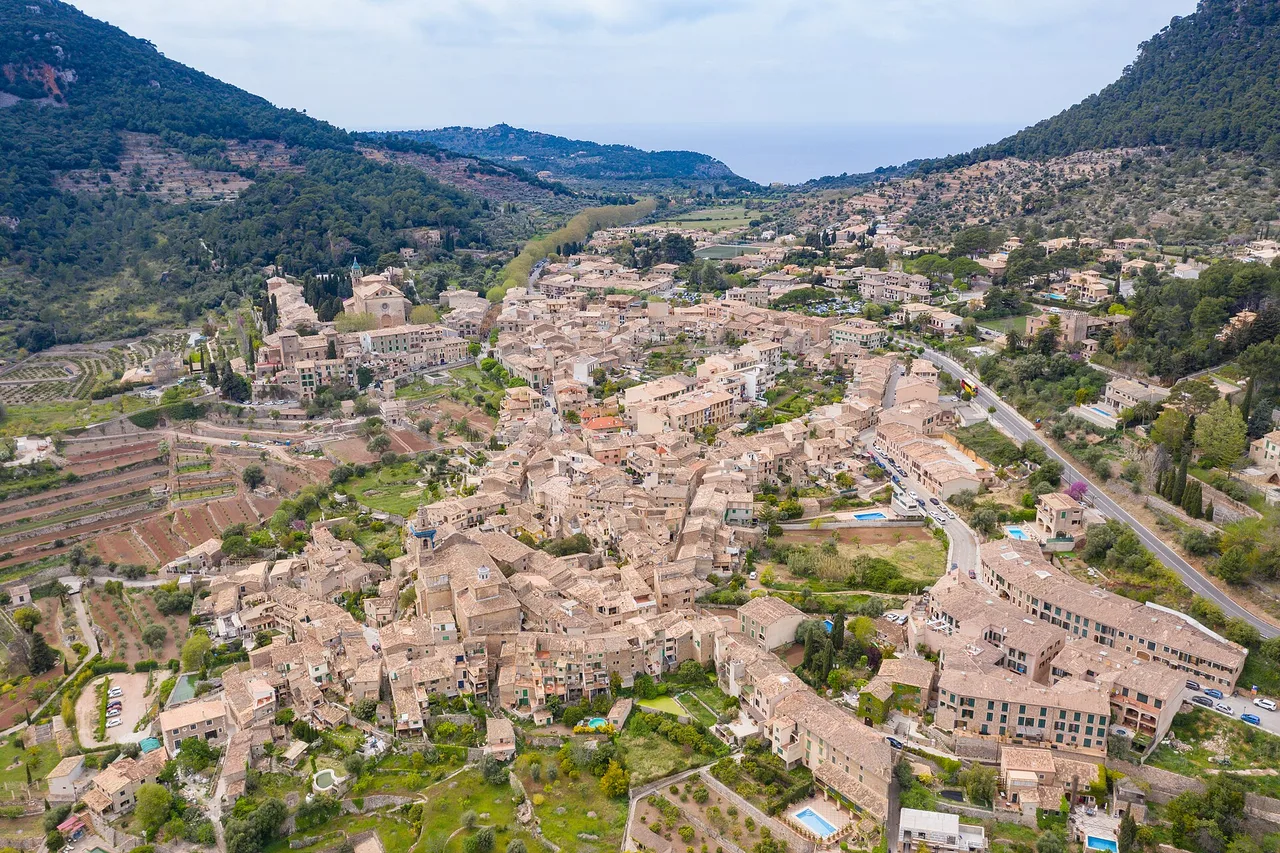
Day 3: Valldemossa, Deià, Sóller. Thirty-odd kilometres of Ma-10, and the day is already full. Valldemossa is a golden stone village packed into its valley floor; Deià clings to the slope, with a descent to the sea that is — you are getting the idea — a dead end; Sóller sits in a basin of orange groves about 25 kilometres from Palma through the tunnel.
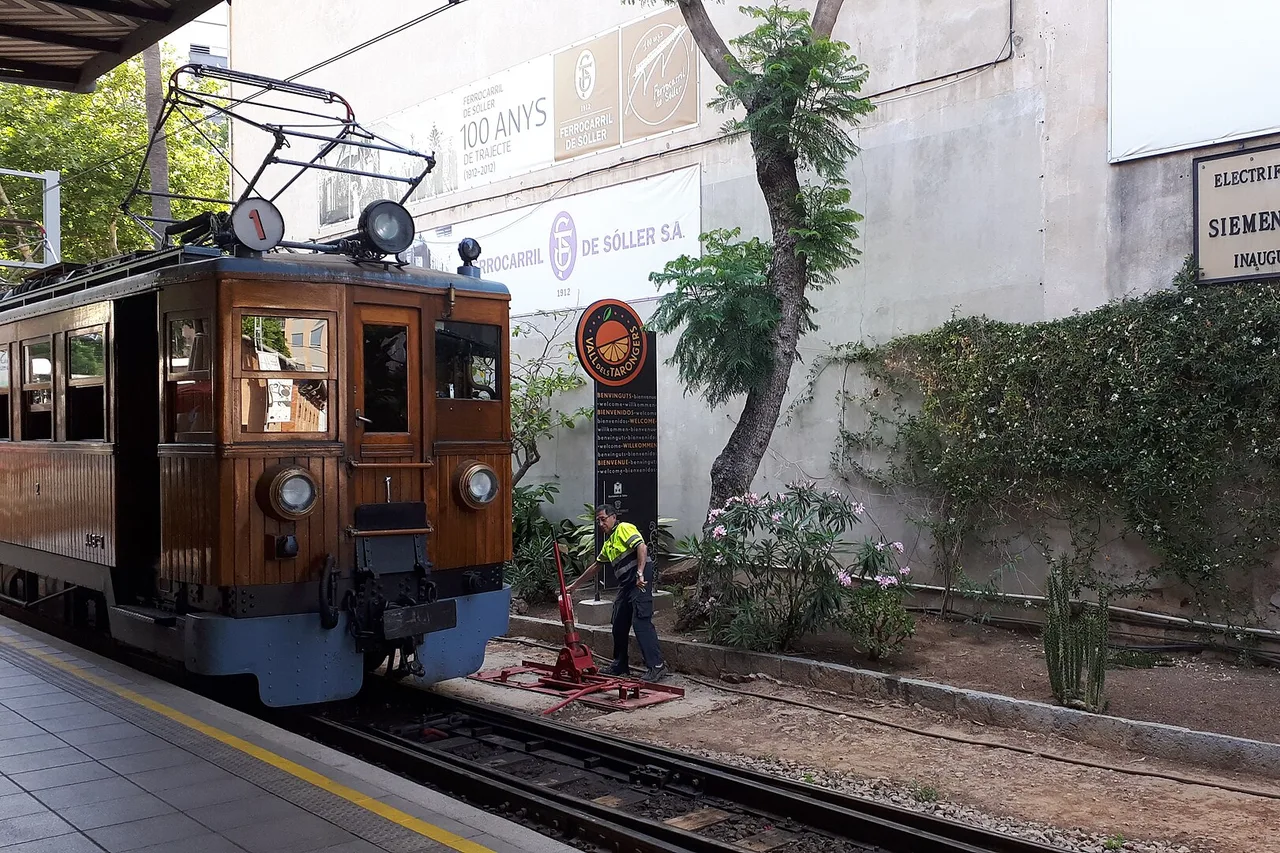
In Sóller, leave the car for half a day and take the train. The 27.3-kilometre line has been run since 1912 by the same company, with its original wooden rolling stock; it crosses the mountain through a series of tunnels and opens onto the valley. A tram continues to the port. It is the only way, in Mallorca, to see the Tramuntana without driving.
Day 4: Sa Calobra, and nothing else. That is the point of everything above. Leave early — before eight if you can — because the coaches start down late in the morning and the road is hard to pass on. At the bottom, the draw is not the beach but the Torrent de Pareis, a gorge reached through two pedestrian tunnels cut into the cliff. Then you climb back the way you came.
If the road worries you there is an honest alternative: the boat from Port de Sóller, which follows the coast and avoids the hairpins entirely. We have no partner on those services: book directly with the operators at the harbour.
The rental: what you are actually signing
One rule first, true of every island and with no exception in Mallorca: in July and August you do not hire a car on arrival. Island fleets are limited by nature, and the last vehicles available are charged accordingly.
Comparing local car hire firms in Mallorca gives a realistic picture of the terms before you commit: local agencies are often cheaper than the big networks and ask for lighter deposits. Check three things in the contract, in this order.
The excess first: it is what turns a car park scrape, in villages where you park between two dry-stone walls, into a three-figure bill. The fuel policy next: full-to-full is the only one that does not charge you for fuel you will not burn. Ferry carriage last, if the idea of seeing Menorca crosses your mind: many contracts forbid it outright, and that is read before booking the crossing, not after.
A word on the category, which is not a detail here: Tramuntana roads are narrow, walled and often barely wider than two cars. A family saloon will drive them, but it makes every passing place a chore. Over a week, the small category is not a saving, it is comfort.
Day 5 — Formentor, the day 2026 changed
You have moved your base to the north-east. The classic day is to drive up to the Cap de Formentor lighthouse on a spectacular road cut into the cliff. In 2026 that is no longer done by car at the hours you had in mind.
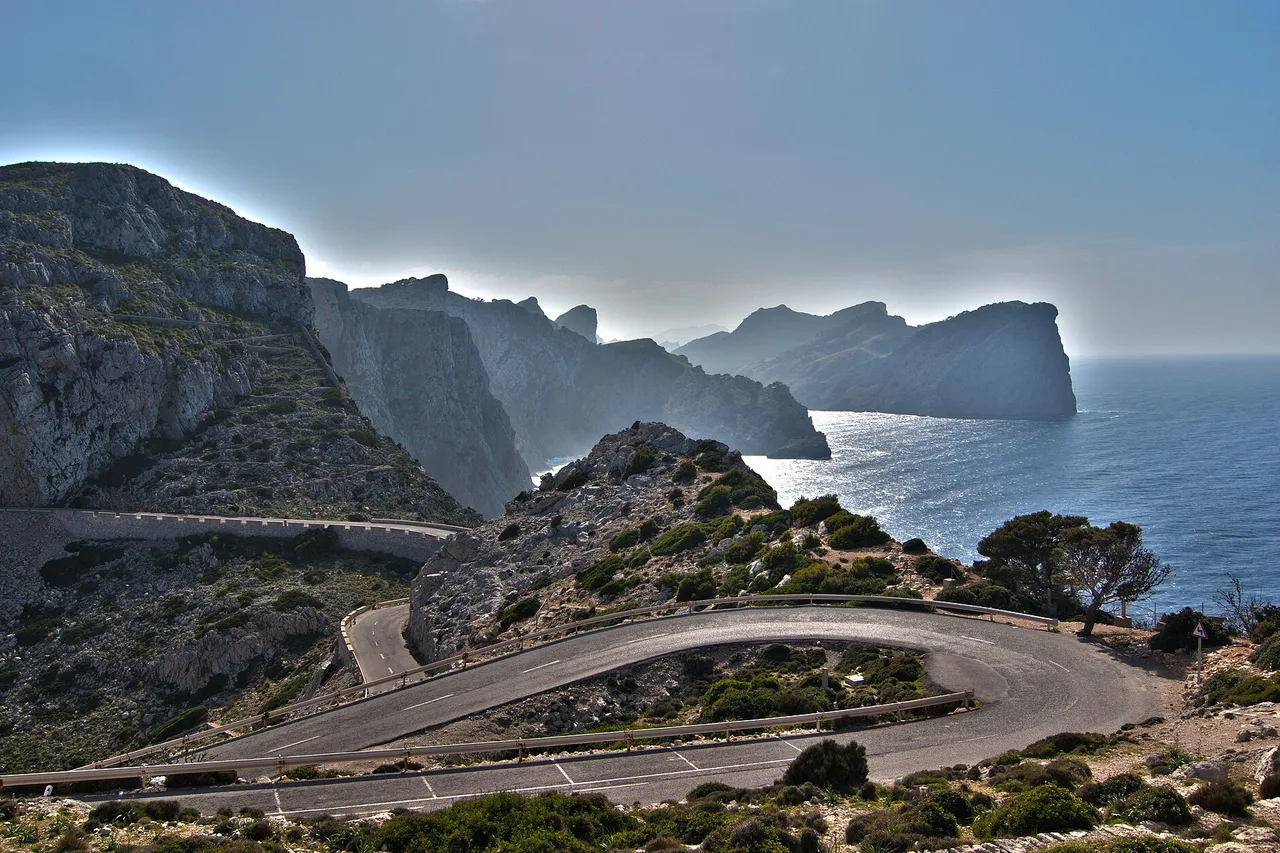
The scheme published by Spain's traffic authority closes the Ma-2210 to private vehicles from 15 May to 18 October 2026 inclusive, between 10:00 and 22:00. The road has to be read in two sections, because the rules differ:
From Port de Pollença to Formentor beach, private vehicles can still reach the car park at kilometre 8, provided spaces remain — which in July means before nine in the morning.
From the beach to the lighthouse the closure is total during those hours: no cars, no motorbikes. What runs is the TIB bus on route 334, taxis, permit holders, cyclists and walkers. Individual permits — residents, transport of people with reduced mobility — are requested from the DGT by email at least three working days ahead.
Two practical notes. First, the window is wide but not total: before 10:00 and after 22:00 the road stays open — and daybreak at Cap de Formentor is the best the day has to offer. Second, be wary of dates you will read elsewhere: several outlets announce the restriction ending on 15 October, while the official scheme says 18 October. We follow the official source.
The rest of the day fills itself: Pollença and its Calvary steps, Alcúdia and its medieval walls, and the long Alcúdia beach to finish.
Days 6 and 7 — the east and the south, where the car earns its keep
This is where the second base pays for itself. From the north-east the distances become human again: 33 kilometres to Cala Ratjada, a little more to the south-eastern coves.
Day 6: the north-east. The castle at Capdepera, the village of Artà and its sanctuary, then the small beaches of Cala Ratjada — Cala Agulla, Cala Mesquida, Cala Lliteres. Plan to park a long way off: these coves have tiny car parks and a single access road, which reproduces the Sa Calobra mechanism in miniature.
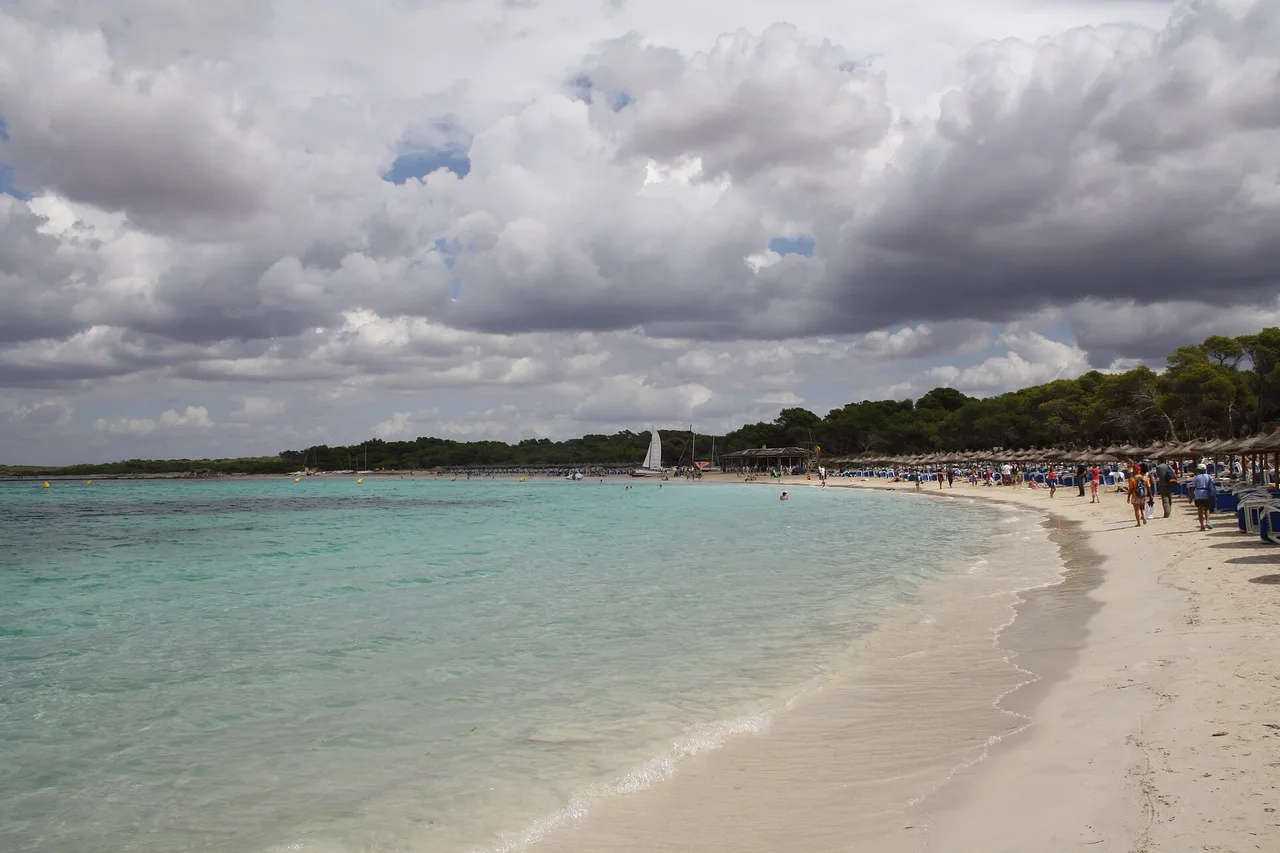
Day 7: the south, on the way back. Rather than driving straight to Palma, come down through the south: Es Trenc, a long pale-sand beach spared from development and backed by pines, then the villages of Santanyí and Ses Salines. The Es Trenc car park is paid and set back from the sand: that is the price of what it protects.
If your flight leaves late, this last day absorbs the car return very comfortably: the airport sits east of Palma — on your way, and outside the low emission zone.
The itinerary at a glance, and the two mistakes to avoid
Days 1-2, Palma without a car. The city on foot, the cathedral, the Olivar market, the Santa Catalina quarter.
Day 3, the Ma-10: Valldemossa, Deià, Sóller and its 1912 train.
Day 4, Sa Calobra: leave at dawn, the Torrent de Pareis, back up the same road.
Day 5, Formentor: early morning or on the 334 bus, then Pollença and Alcúdia.
Day 6, the north-east: Capdepera, Artà, the Cala Ratjada coves.
Day 7, the south: Es Trenc, Santanyí, back to the airport.
First mistake to avoid: keeping one base all week. We put a number on it above — 280 kilometres and three times the driving, for a hotel comfort you will not notice.
Second mistake: taking the car from the airport. Two days of hire and two nights of parking paid for a city you cross on foot, in a centre entirely classified as a low emission zone. Collect it on the morning you leave for the mountains.
One last budget point, usually discovered at checkout: the Balearics charge a tourist tax per person per night, to which a high-season supplement has been added since June 2026. The amount depends on the category of accommodation and the available sources contradict one another; rather than quote a figure we cannot guarantee, we refer you to the Balearic government's official portal, the only authority on it.