In Mallorca, the area you sleep in does not decide your view: it decides your days. The island is a landscape of dead ends, and the same day trip costs 140 kilometres from one base and 66 from another. Before you compare photographs of bedrooms, three constraints settle the matter for you — including one most guides never mention: in Palma, the holiday apartment no longer exists. Here are the six areas, what each one costs in kilometres, and what the tourist tax adds to the bill depending on the category you pick.
💶 Transparency: this article contains partner links. If you book through one of them we earn a commission, at no extra cost to you. It changes nothing in our recommendations, and wherever a free or official option exists we name it before the link.
Three constraints decide before you do
Mallorca covers 3,640 km², and it is tempting to assume you can sleep anywhere because “nothing is far”. That is wrong, for three very concrete reasons that have nothing to do with how charming a village looks.
First constraint: the island is a network of dead ends. The whole north-west half is a mountain range, the Serra de Tramuntana, whose Puig Major rises to 1,445 metres. It has a single ridge road, the Ma-10, running roughly 112 kilometres from Andratx to Pollença — two hours without a single stop, an average of 56 km/h on a road with no tolls and no traffic lights. Almost everything that drops to the sea climbs back up the same way.
Second constraint: your base sets your daily mileage. Take a day out on the east coast, at Cala Ratjada. From Palma that is 140 kilometres there and back. From a north-eastern base at Alcúdia it is 66 kilometres — 2.12 times less. Do that three days running and you see why the choice of area weighs more than the choice of hotel.
Third constraint: the law. This is the one the guides forget, and it simply removes an option you were counting on. We come to it straight away.
Palma: the only car-free base, and the only place where the apartment no longer exists
Start with the fact that changes everything: Palma has banned holiday letting in apartments. The measure came into force on 1 July 2018 — the city was the first in Spain to take the step — and it covers homes in multi-family buildings. Only detached houses can still obtain a licence, and not everywhere: the historic centre, industrial zones and the area around the airport are excluded. In 2026 the moratorium on new licences is maintained in saturated districts, chiefly Ciutat Vella and the seafront. The city council justifies the measure with a 40 % rise in rents over five years.
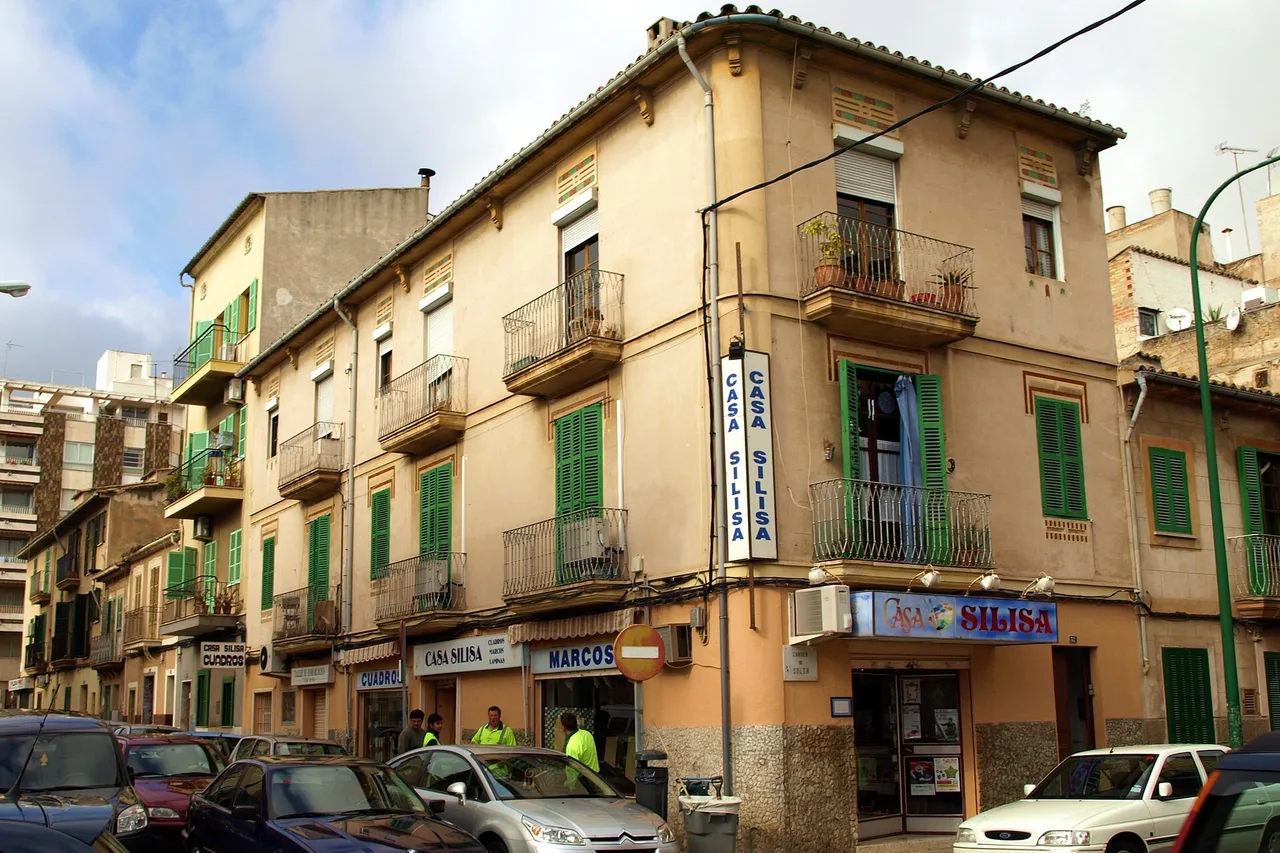
The plain consequence: in Palma, staying means booking a hotel. The “apartments” that will surface in your searches are mostly in the neighbouring resorts — Can Pastilla, El Arenal, Palmanova — and not in the city. That is not a matter of wording: it is a different district, a different commute and a different atmosphere.
In exchange, Palma offers something no other base on the island has: you can stay there without a car. The intermodal station, under Plaça d'Espanya, brings together the metro, the TIB coaches serving the whole island, and the regional trains to Inca, Sa Pobla and Manacor. The A1 bus links the airport to the centre in about half an hour, every fifteen to twenty minutes, from very early morning until a little after midnight.
One clarification that spares you a disappointment: you will read everywhere that public transport is free in Mallorca in 2026. True — and it does not apply to you. The free travel goes to holders of the intermodal card, that is to say residents registered with their town hall. A visitor pays the ordinary fare, which is modest but not zero.
One last point, decisive if you meant to pick up a car on arrival: the whole centre of Palma has been a low emission zone since 1 January 2025, across everything inside the Avenidas and the Paseo Marítimo. The fine is 200 euros. A car hired locally is registered in Spain, automatically carries an environmental sticker and moves freely in 2026; but if you arrive by ferry with your own foreign-plated vehicle you need prior registration, applied for at least five days ahead. In other words, in Palma a car is a handicap, not an asset. Booking a transfer from Palma airport makes sense on a flight that lands late, because the driver tracks the flight and waits if you are delayed; by day, the A1 bus does the job perfectly well for a few euros.
Right for: short stays, car-free trips, city lovers, late arrivals. Wrong for: families who want the beach at the foot of the hotel, and anyone who has booked a car for the whole week.
The Tramuntana (Sóller, Valldemossa, Deià): the loveliest, and the slowest
This is the area you dream of while planning the trip: golden stone villages clinging to the slope, olive terraces, the sea three hundred metres below. It deserves the reputation. It also has a drawback you should accept with your eyes open: everything here takes time.
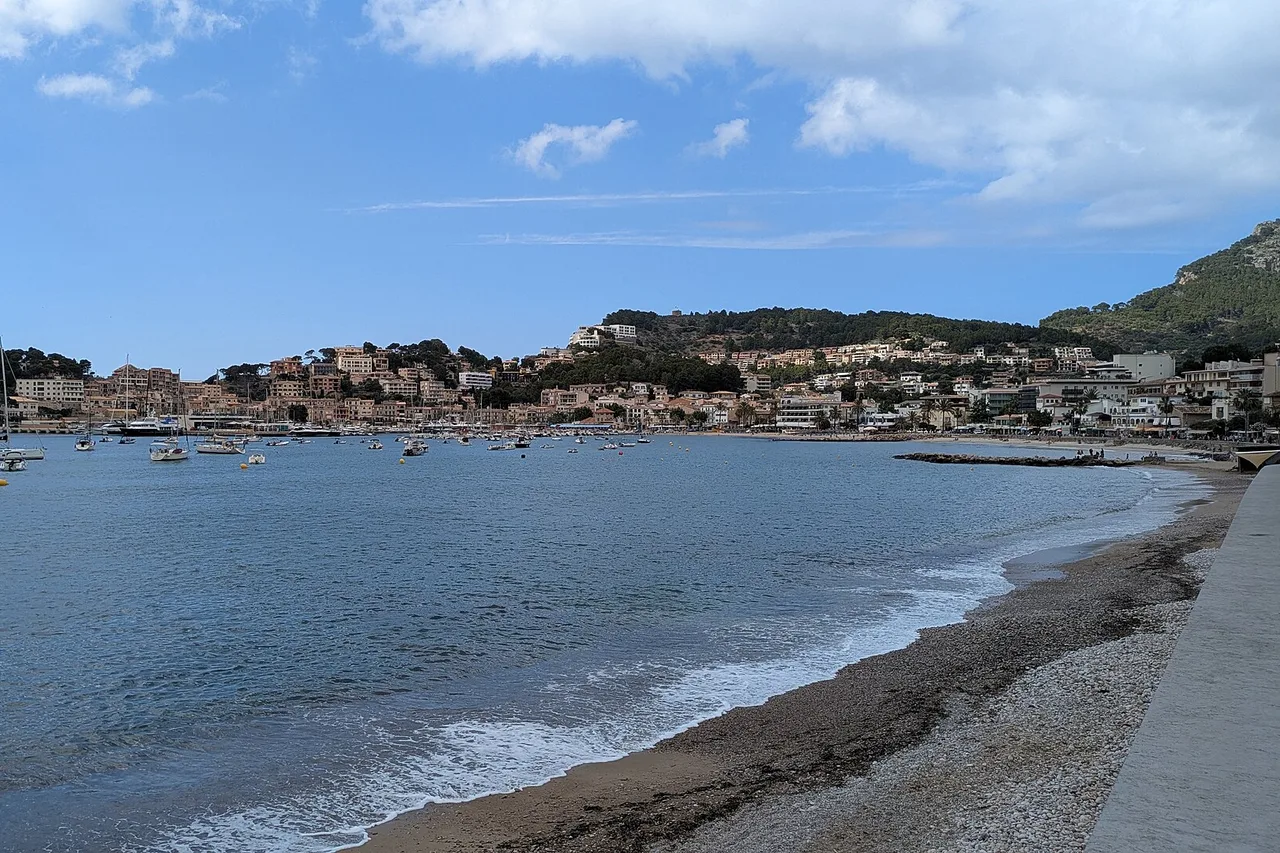
From a base in Sóller or Valldemossa, days in the mountains are a delight and days anywhere else are an expedition. Count 50 kilometres there and back for the Sóller-Palma run through the tunnel alone — and a good deal more, in time, as soon as you take the ridge road.
Sóller does have one asset found nowhere else on the island: its train. The line, 27.3 kilometres long, has been run since 1912 by the same company, with its original wooden rolling stock; it crosses the mountain through a string of tunnels and emerges into the valley, and a tram carries the line on to the port. It is the only way, in Mallorca, to see the Tramuntana without driving — which makes Sóller the one mountain base that works for travellers unwilling to take the wheel every day.
A parking note that is anything but trivial: in these villages the streets are narrow and spaces scarce. A hotel that advertises private parking is worth far more, over a week, than the price difference on the booking page.
Right for: walking, villages, photography, couples without small children. Wrong for: anyone wanting to alternate mountains and sandy beaches — the beaches are at the other end of the island.
The north (Port de Pollença, Alcúdia): the base that solves the 2026 problem
If you were to keep only one area for a first week, it would be this one — and a very precise extra reason has applied since this year.
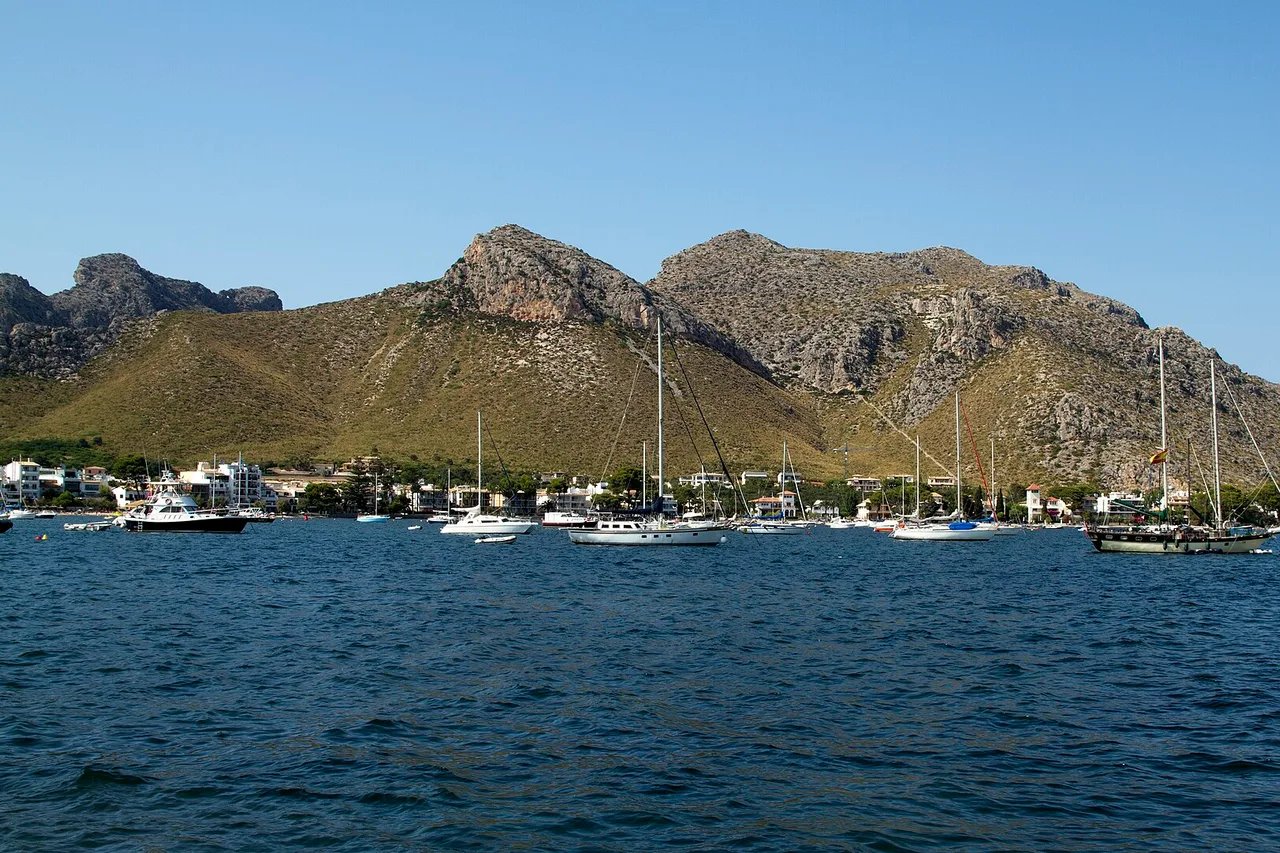
The north brings together what the other areas offer separately: long, gently shelving sandy beaches that suit children; two genuine towns, Pollença and Alcúdia, which live all year and are not rows of hotels; the tip of the Tramuntana immediately to hand; and the east coast a mere 66 kilometres away.
The reason specific to 2026 is called Formentor. The road to the cape is closed to private vehicles from 15 May to 18 October 2026, between 10 a.m. and 10 p.m. Between Port de Pollença and the beach you can still reach the car park at kilometre 8 if spaces remain; between the beach and the lighthouse the closure is total. What still runs: the TIB bus on line 334, taxis, cyclists and walkers. The practical consequence: only a base close by lets you drive up before ten o'clock, which is in any case the best moment of the day. From Palma you would have to leave in the middle of the night.
Right for: families, first stays, anyone who wants a single base for the whole week. Wrong for: night owls, and those after wild coves rather than broad beaches.
The east and south-east (Cala Rajada, Capdepera, Santanyí): the coves, and the distance
This is the coast of the calas: small inlets framed by pines and rock, often tiny, sometimes magnificent. The south-east, around Santanyí and Cala d'Or, lines up dozens of them.
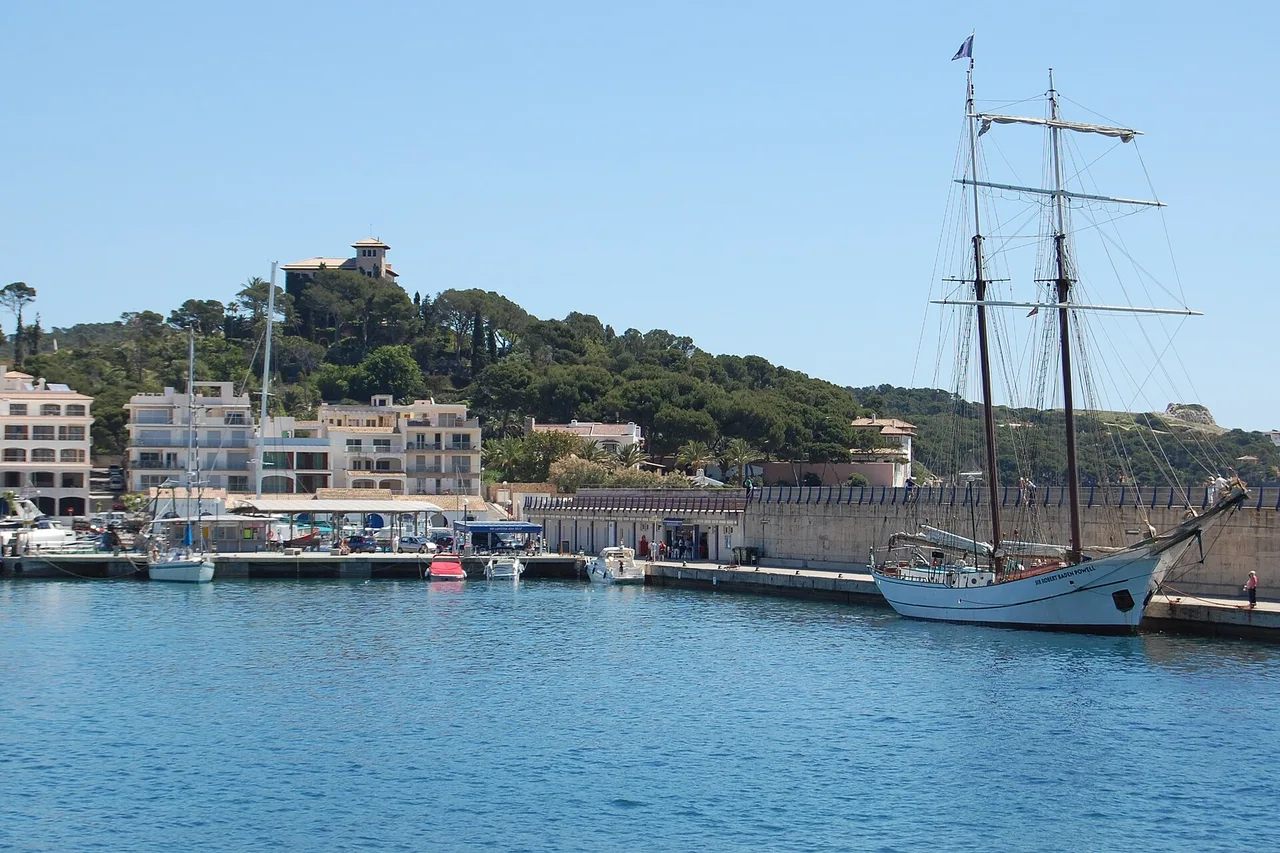
Two honest warnings before you book here. First, you are a long way from everything else: Palma is about 70 kilometres away, and the Tramuntana twice that. Second, these coves reproduce in miniature the mechanics of the whole island: a single access road and a tiny car park, with a space in July decided before nine in the morning.
Here a car is not optional: this is the area where you need one most, and depend on it most. Comparing local car hire firms in Mallorca gives a realistic picture of the terms before you commit — local agencies are often cheaper than the big networks and ask for lighter deposits. Check the excess, the fuel policy (“full to full” is the only one that does not charge you for fuel you will not burn) and, if the idea of crossing to Menorca has occurred to you, whether the contract allows the ferry: many simply forbid it.
Right for: quiet beach holidays, cove hunters, second visits. Wrong for: a first week when you want to see everything.
The south-west (Port d'Andratx, Palmanova, Illetes): near the airport, far from the rest
The coast south-west of Palma is the most built-up on the island, and the most uneven: it holds both Magaluf, capital of cheap partying, and Port d'Andratx, a moneyed anchorage ringed with villas.
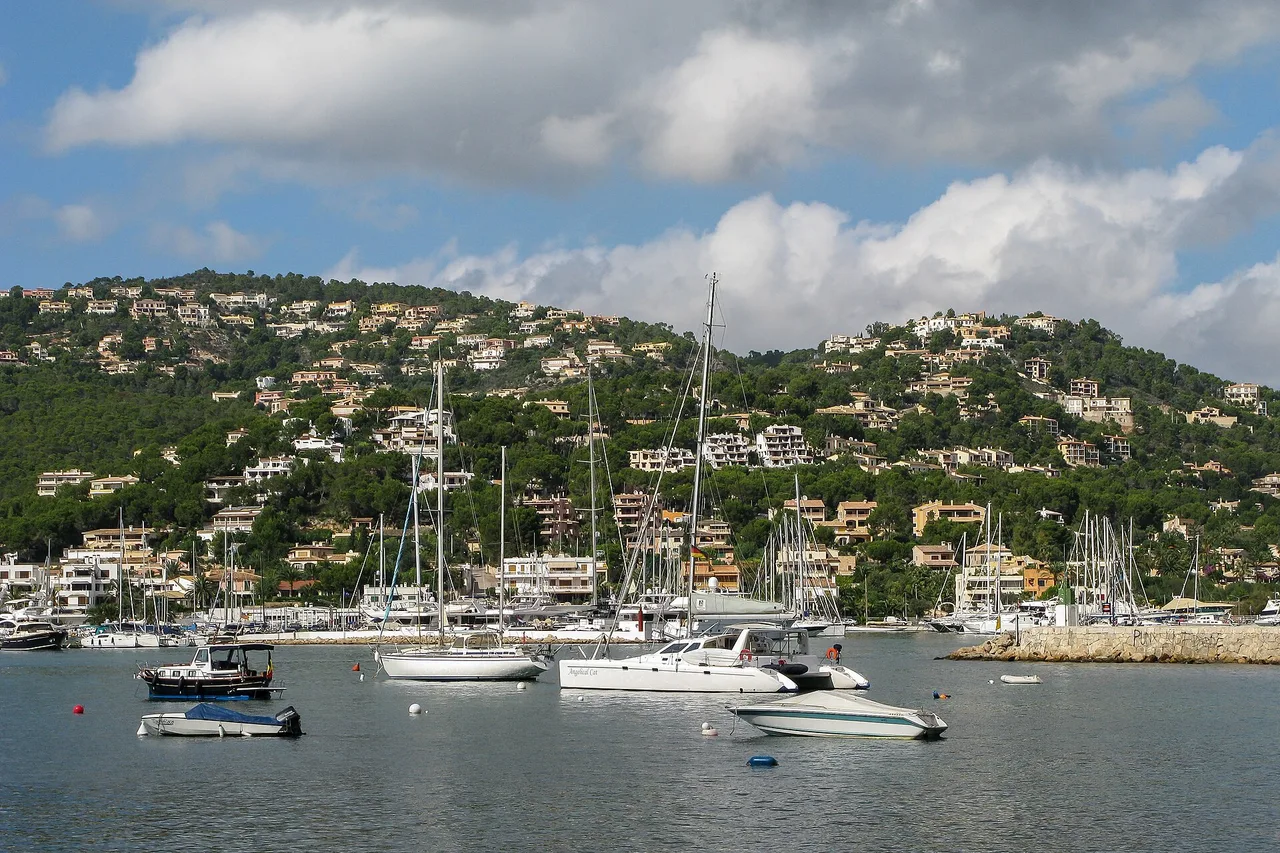
Its real advantage is proximity to the airport: twenty to thirty minutes, outside the low emission zone, which makes it a convenient base for a short break or for a last night before an early flight. Its drawback is the mirror image: the rest of the island lies beyond Palma, and the conurbation crosses badly at rush hour.
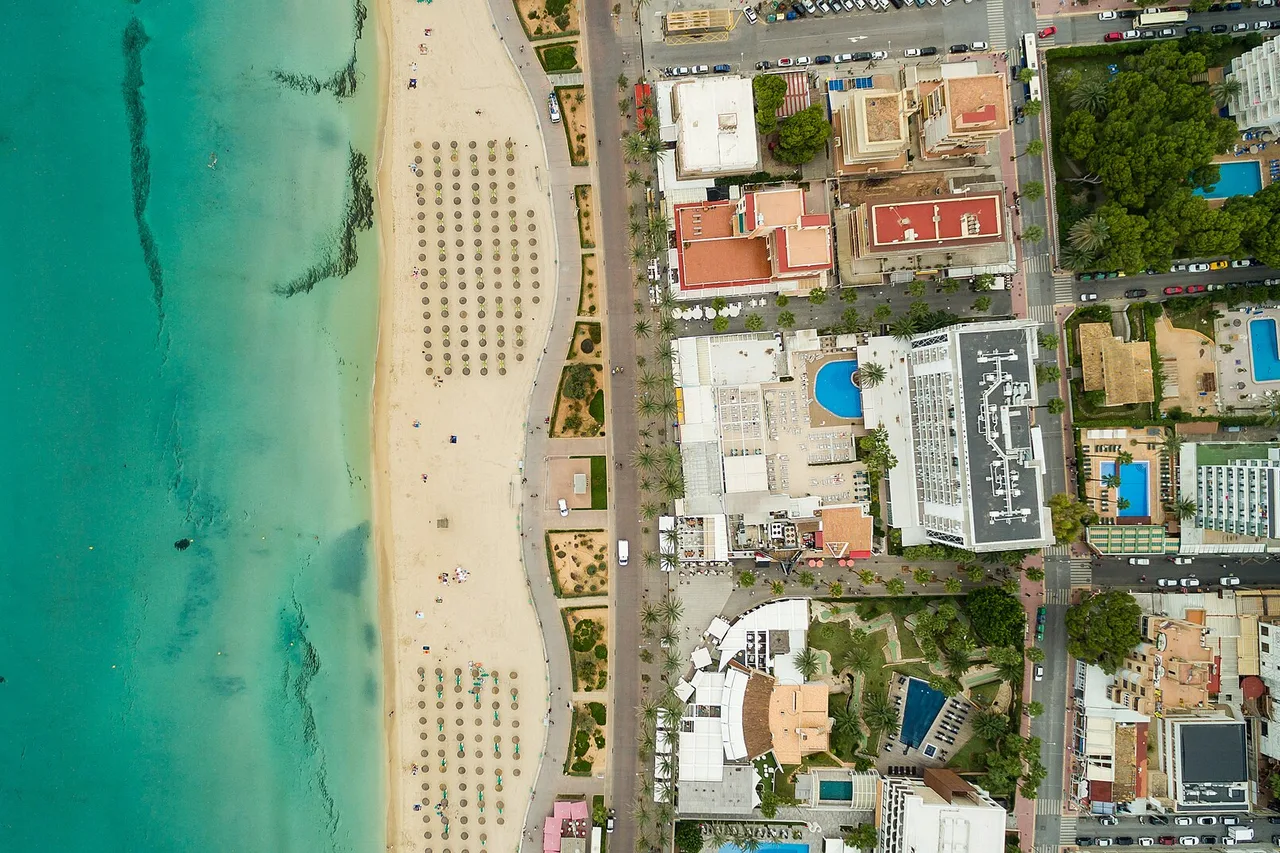
A word on Platja de Palma and El Arenal, shown in our opening photograph: this is the densest concentration of hotels on the island, with prices to match and an enormous beach. You will sleep perfectly well there for three nights; you will be bored over ten days without a car.
Right for: long weekends, late or early flights, tight budgets. Wrong for: anyone wanting to explore the island without driving past Palma twice a day.
What your accommodation costs on top of the room
Here is the part of the bill the comparison sites do not show and you discover at the desk: the sustainable tourism tax, the Balearic tourist levy. It depends neither on the town nor on the area, but on the category of the establishment and on the season — in other words, on your choice of accommodation.
In high season, from 1 May to 31 October, count per person per night, including 10 % VAT: around €1.10 in budget accommodation or on a campsite, €3.30 in a three or four-star hotel, €4.40 in a five-star. In low season, from 1 November to 30 April, those amounts are divided by four: a five-star is taxed at just €1.10.
Put that into a real stay. For two adults and seven nights: €15.40 in budget, €46.20 in the middle category, €61.60 in five-star. The gap between the extremes reaches €46.20 — a night in a hotel, for the tax alone. And here is the figure that surprises: that same five-star week out of season carries only €15.40 of tax, exactly as much as the hostel week in August.
Two reductions are worth knowing, because nobody announces them. Under-16s are entirely exempt: a family of two adults and two children pays for two people, not four. And from the ninth day in the same establishment the rate halves. Over a fortnight in a five-star, two adults therefore pay €96.80 instead of €123.20: €26.40 saved — and that reduction vanishes if you change hotel mid-stay, which is the one serious argument for a single base.
A high-season surcharge has been debated several times and secondary sources contradict one another on its fate. Rather than quote a figure we cannot stand behind, we point you to the official calculator of the Balearic government, the only authority on the matter, which gives the exact amount for your establishment and your dates.
Choosing in three questions
Will you drive? If the answer is no, the matter is settled: Palma, possibly Sóller for its railway line. No other area can be visited without a wheel in your hands.
How many nights? Up to four, a single base, and the one nearest the airport: Palma or the south-west. From five or six onwards, two bases beat one — the gap between 140 and 66 kilometres per day trip says enough.
With whom? Children: the north, for its gently shelving beaches and short distances. A couple who walk: the Tramuntana. Cove hunters after quiet: the east and south-east.
And two mistakes to avoid. The first: booking in central Palma with a hire car for the week — the centre is a low emission zone from end to end, parking is expensive, and you will pay for two days of hire in a city you can cross on foot. The second: hunting for an apartment inside Palma. Legally there have been none since 2018; what you find under that name is elsewhere, often several kilometres away, and it is better to know that before booking than while climbing out of the taxi.