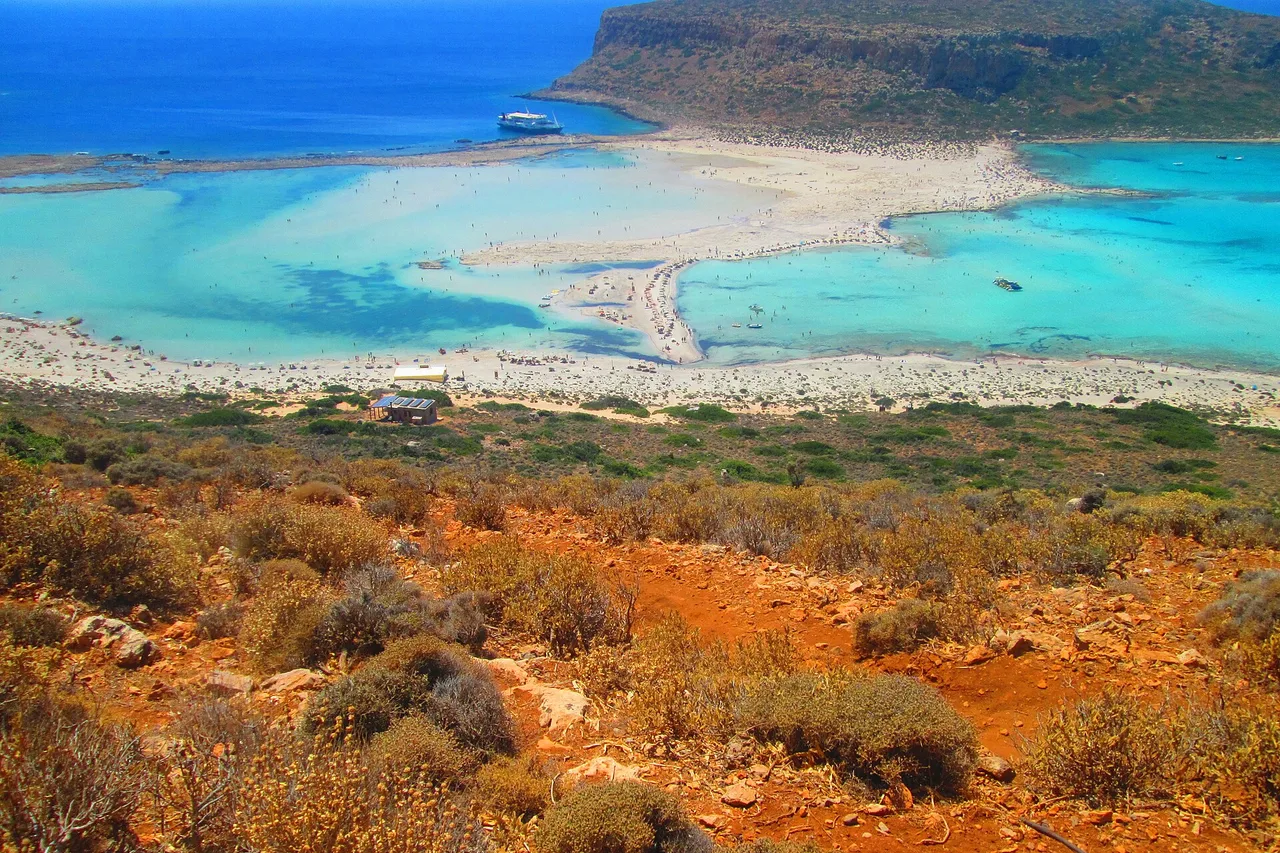
These three beaches never fail on beauty — they fail on access. Rankings show three photographs and stop there. Yet each one carries a precise, measurable obstacle the lists leave out: the 10 kilometres of dirt track to Balos that no rental contract covers, the sand at Elafonissi that is pink in places and not everywhere, and the fire of 29 July 2026, which no list has yet folded into its entry on Preveli. One thread ties the three together: not one of them is visible from a car park.
💶 Transparency: this article contains partner links. If you book through one of them we earn a commission, at no extra cost to you. It changes nothing about our recommendations, and wherever a free or official option exists we name it before the link.
Three beaches, one real subject: none of them is visible from a car park
Balos, Elafonissi and Preveli appear in every ranking of Crete’s finest beaches, and they deserve to. But that is where every ranking stops: three photographs, three superlatives, done. What actually decides your day at all three is not beauty but access — and nobody puts a number on it.
The number tying the three together is unglamorous and still the heart of this article: not one of them is visible from a car park. Balos means walking about 1 kilometre down, Elafonissi means 600 to 800 metres since 2023, Preveli means several hundred steps. For Balos and Elafonissi together that is roughly 3.4 kilometres on foot, there and back — in thirty-degree heat, with the cool box and the children.
Something else the lists leave out: the three are a long way apart. Balos and Elafonissi both belong to the far west; Preveli is on the south coast. From Elafonissi to Preveli, reckon on about 171 kilometres via Chania (legs added together, not a measured route). A one-day “top three” does not exist.
This article takes the three obstacles one at a time, with their figures — and says at the end which one to choose if you only manage one.
Balos: the 10 kilometres of track no contract covers
Balos lies about 56 kilometres from Chania and 17 from Kissamos, on the island’s north-western tip. From the village of Kalyviani an unpaved track of roughly 10 kilometres leads to a car park (around 3 euros), and from there a path of about 1 kilometre drops to the lagoon. Going down is nothing; coming back up in the heat is described locally as “quite strenuous and tiring” — and it comes at the end of a beach day.
The real problem, though, is not the state of the track. It is your rental contract. In Crete, contracts almost universally exclude damage on unpaved roads, and the full-damage waiver makes no difference: underside and tyres explicitly uncovered, with several companies naming the Balos track outright. If something happens out there you are liable one hundred per cent, towing included, in a place where no recovery is a short one.
This is not a warning against the track, but against taking it without knowing. Read what your contract says about unpaved roads before you book — Comparing Crete’s local rental companies lets you put price and conditions side by side before committing. And if you do take it: early, slowly, with a full tank and no schedule to keep.
Balos by boat: what you gain, what you lose
The alternative is the boat from Kissamos. It runs daily in season, calls at Imeri Gramvousa — Venetian fortress of 1579, shipwreck beached below — and then drops you at Balos for several hours. Tickets are in the order of 20 to 30 euros; the municipality of Kissamos also levies about one euro per ticket for the reserve. Figures gathered in September 2026 from booking sites, not from a published official tariff — please check close to your date.
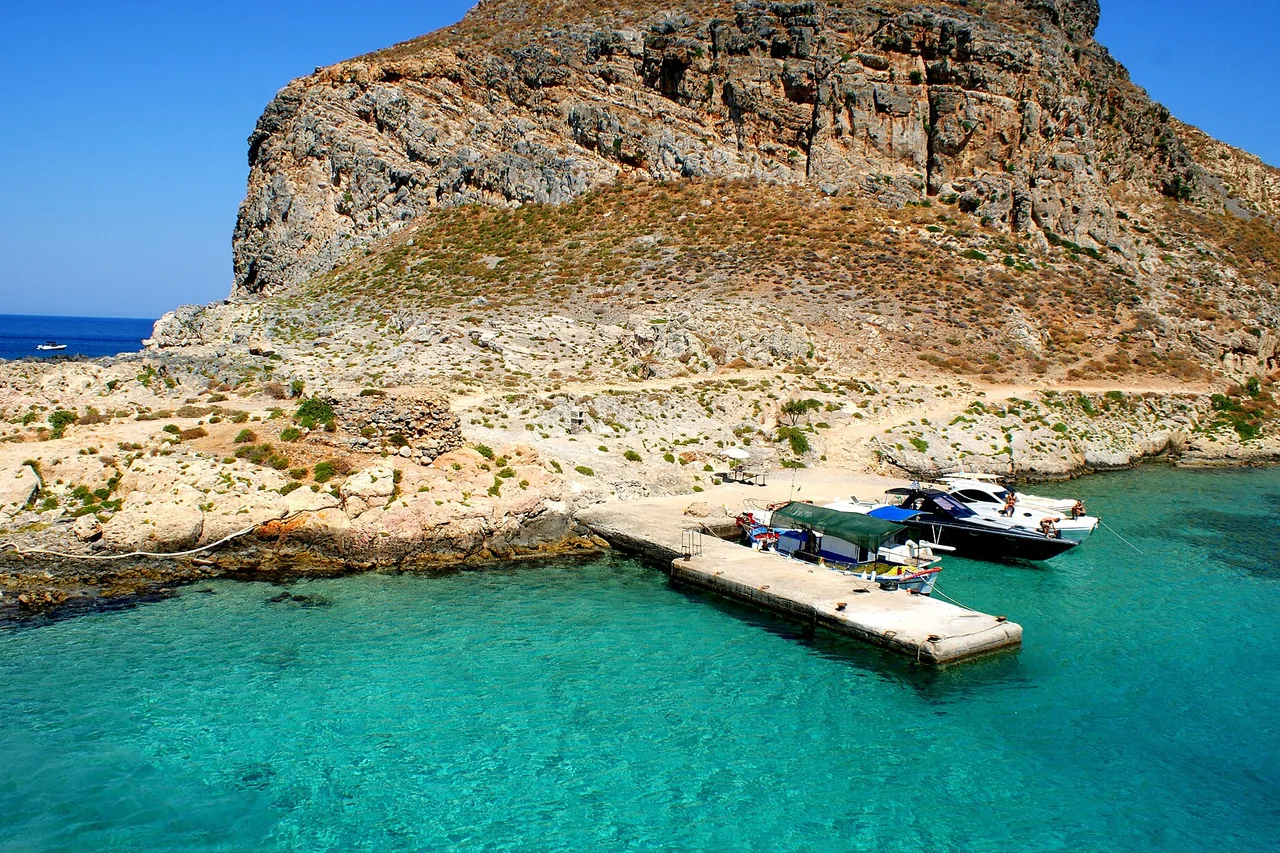
What you gain: no track, no insurance exposure, no climb in the midday sun, plus Gramvousa, which you cannot reach by land at all. What you lose: the hour. The boats all arrive in the same window, and Balos is busy for exactly those hours. To see the lagoon in the light you saw in the photographs, you have to be there before or after — and only a car allows that.
Hence a simple rule. Want the picture? Car, early, eyes open on the contract. Want the day? Boat: easier, safer, a fortress thrown in — and nothing to sign that you have not read.
Elafonissi: is the sand really pink?
It is the most asked question about this beach, and it deserves a straight answer: in places yes, everywhere no.
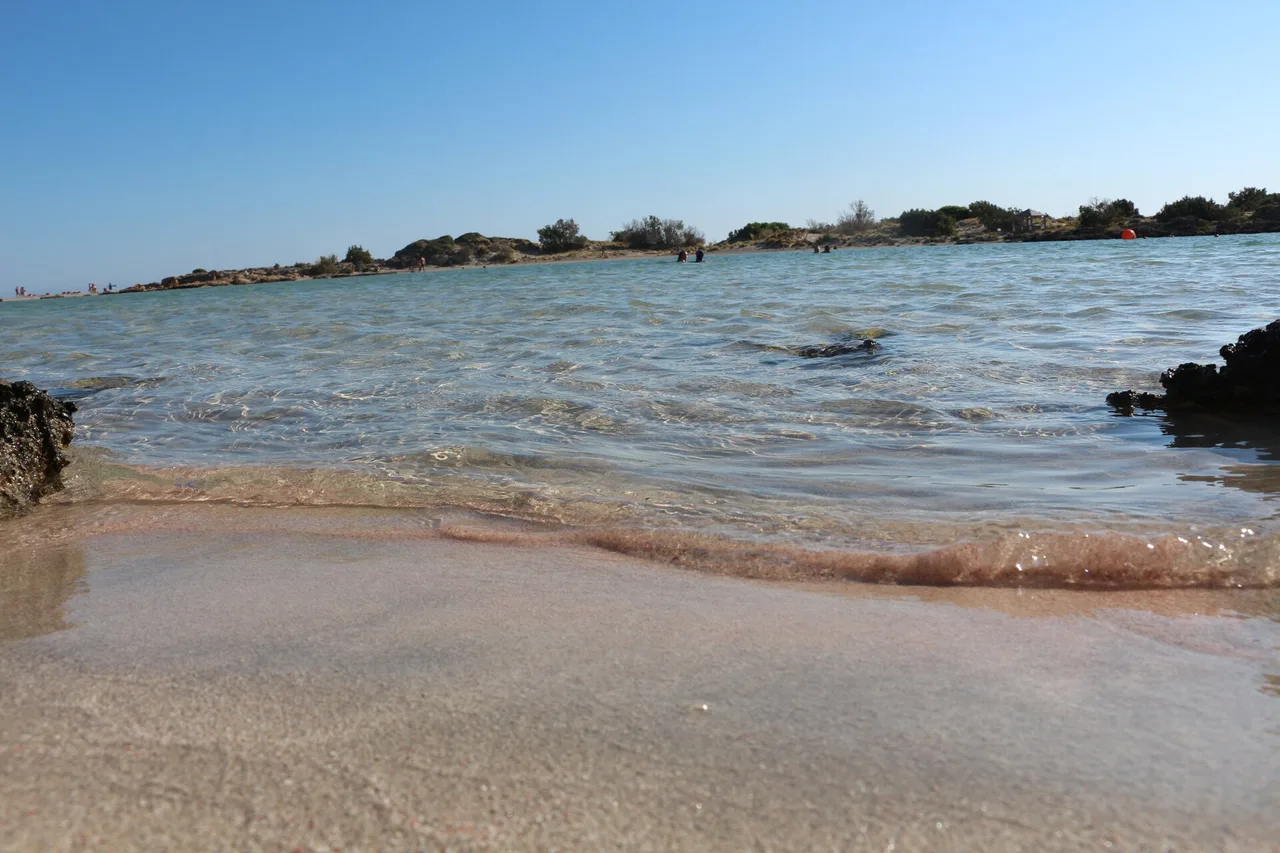
The colour comes from millions of crushed shell fragments of tiny marine organisms — the more detailed sources name Miniacina miniacea, a creature with a vivid red calcareous test that lives on the seagrass meadows offshore. When it dies, the swell carries the shells ashore and grinds them into a fine material that mixes with the pale sand.
That is why the tone is strongest where the swell deposits: at the waterline, in small coves, in the lee of rocks. Large areas of the beach are simply pale. You see it best when the sun is low, so early or late, and after rough seas. The vividly pink beach of certain photographs is image processing; the real one is more restrained, and rather lovely.
Elafonissi — also written Elafonisi — sits 76 kilometres west of Chania, five kilometres south of the Chrysoskalitissa monastery, at the end of a narrow, twisting road. The lagoon is less than a metre deep and can be waded across to the islet: which is why so many families settle here.
Elafonissi: what you do not take home, and the car park that changed in 2023
Two practical points that appear in no ranking and shape your day all the same.
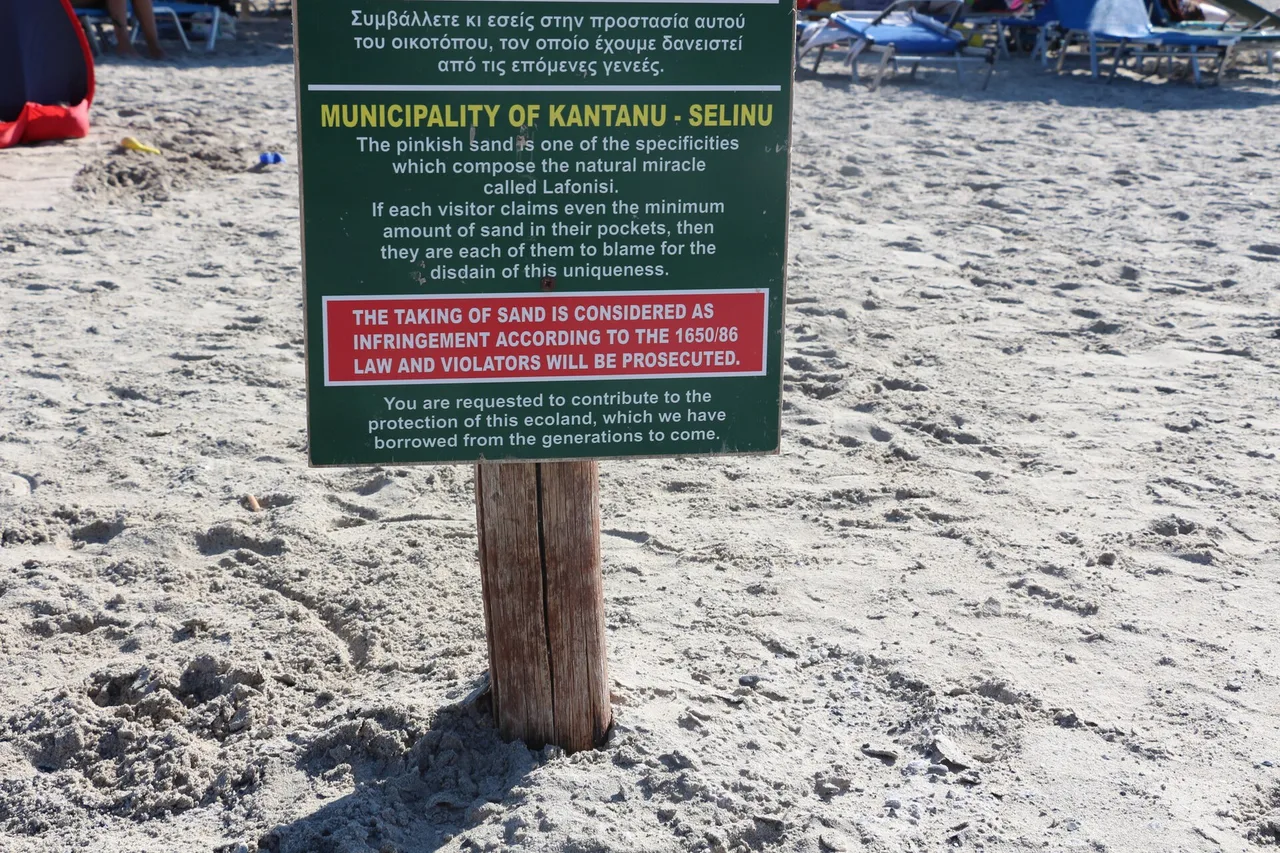
First: the sand stays on the beach. Elafonissi is a Natura 2000 area. Removing sand, shells, plants or animals is prohibited, and a sign from the municipality of Kantanos-Selino states on site that this is an offence, liable to prosecution. It is not a formality: the pink tone is exactly what vanishes into pockets.
Second: the car park. Since the summer of 2023 the old free parking beside the beach has been closed. You park on an organised lot for around 5 euros a day, and then it is 600 to 800 metres on foot. Build it into the day: with a parasol, a cool box and a small child, that walk is the least pleasant part of the outing, and you do it again in the heat.
Without a car, a daily KTEL bus runs in season from Chania’s main bus station to Elafonissi: leaving around 9 a.m., returning around 4 p.m., roughly two hours each way. It is the cheapest way there, and we name it before anything else; check times and fare with KTEL shortly beforehand, as they shift with the season.
Preveli: the fire of 29 July 2026, and what is actually known
Here this article stands where most rankings have not yet caught up. On 29 July 2026 a fire broke out near Krya Vrysi in southern Rethymno and ran to the coast on a strong northerly wind; the front eventually stretched more than 15 kilometres. Satellite analysis by the National Observatory of Athens, using Copernicus Sentinel-2 data, puts the burnt area at roughly 4,500 hectares — and that covers the whole fire zone in southern Rethymno, not the palm forest alone.
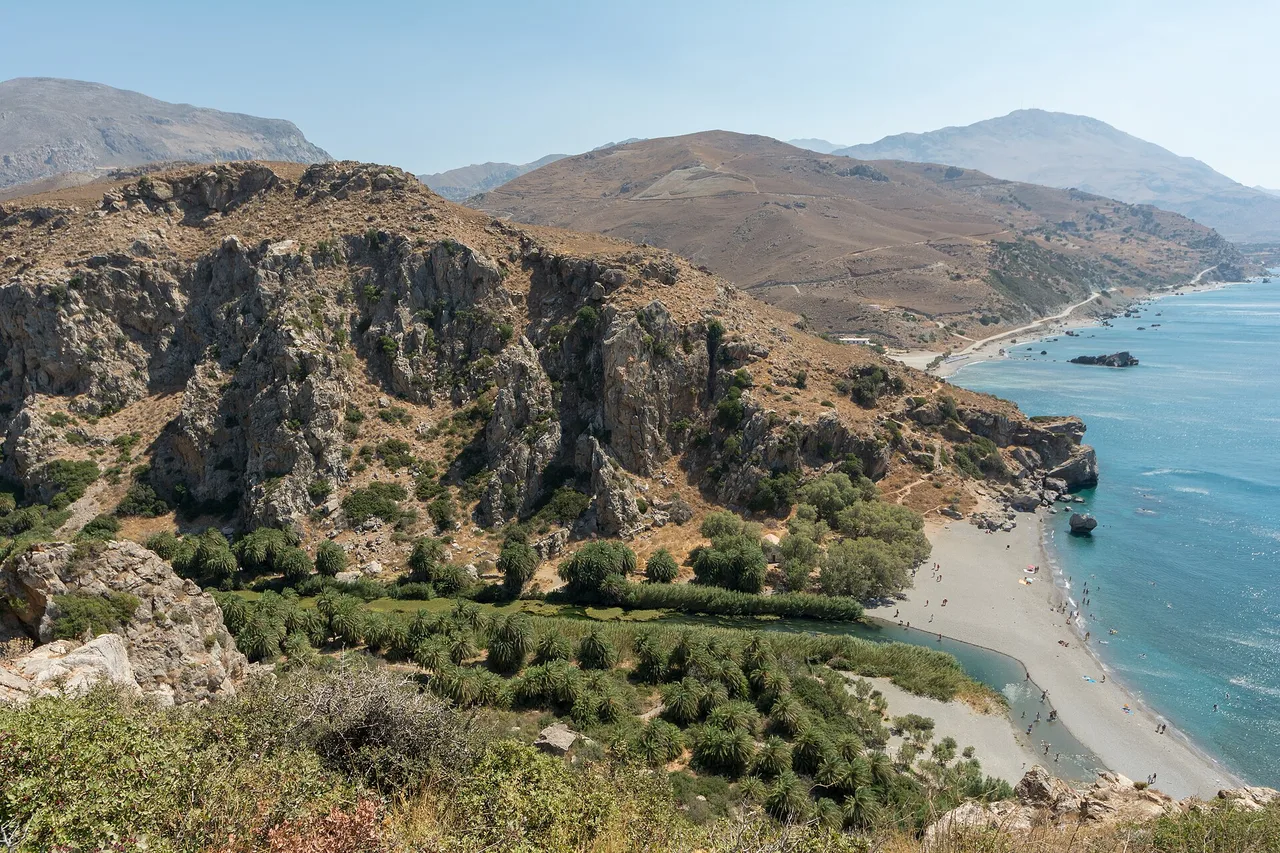
And here the sources contradict each other. First ground assessments report that the heart of the famous palm forest was spared, with damage concentrated at its edges, and that the gorge, the river and the lagoon — the landmarks that make the place — remain. Other accounts and eyewitness photographs paint a markedly darker picture. We do not resolve that contradiction, because the sources do not. What we can say: the beach stayed accessible through August, and anyone going now should check close to the date and expect a landscape marked by fire.
One reason for confidence is nonetheless documented, and it is botanical. Preveli has been here before: on 22 August 2010 a fire destroyed nearly 70 per cent of the palm forest. Yet the Cretan date palm, Phoenix theophrasti, is remarkably fire-resistant — by the autumn of that same year fresh fronds were pushing out of charred trunks, and almost every mature tree had survived. That is no guarantee for 2026. It is the reason not to write this forest off.
Preveli: the descent, and the access almost nobody mentions
Preveli lies 35 kilometres south of Rethymno and 12 kilometres east of Plakias, at the mouth of the Kourtaliotiko gorge, where the Megas Potamos meets the Libyan Sea. That river mouth in the middle of the sand is why the palm forest is there — and why you can swim in fresh water.
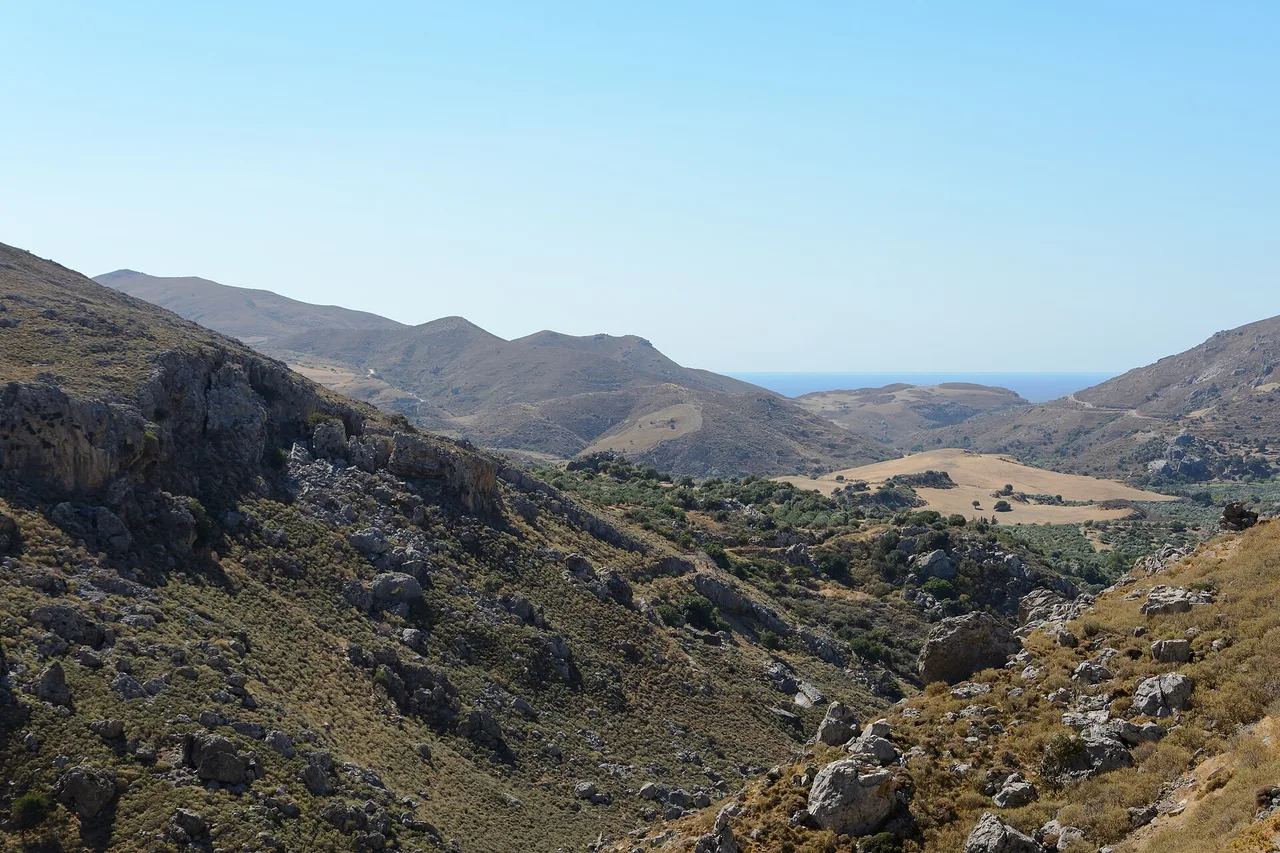
The usual route: a car park above the beach, then a steep descent. Allow 15 to 20 minutes over several hundred steps, uneven in places and scattered with loose stone; the climb back takes 20 to 25 minutes, more in full heat. Closed shoes and water for the return are not a luxury note here.
The access almost nobody mentions: the paved road to Drimiskiano Amoudi comes down near the neighbouring cove, and a short path reaches the beach in about five minutes. For anyone with bad knees, travelling with small children, or arriving in real heat, that is the sensible option — and it costs nothing but knowing it exists. In season there are also excursion boats from Plakias (about twenty minutes). For those boats we deliberately give neither timetable nor fare: we found no solid source, and we do not invent. Camping on the beach is strictly forbidden.
The hour decides more than the beach does
If you take one thing from this article, take this: at all three beaches the hour decides the day, more than the choice of beach.
Balos fills when the boats arrive and empties when they leave. Come by car and the early morning and late afternoon are practically yours — the same lagoon, half the people. Elafonissi lives on light: the pink tone shows when the sun is low, and the bus only leaves Chania at 9 a.m., arriving around 11. Preveli is a matter of legs: climbing back at three in the afternoon is a different exercise from the same climb at ten.
Aspect matters too. Balos and Elafonissi sit on the north and west coasts and take the summer northerly head-on — when it blows hard, the shallow lagoon turns choppy and the sand flies. Preveli faces south and becomes, on exactly those days, the better call. Two beaches west, one south: that is not a coincidence, it is your fallback plan.
And if you only manage one?
That is the commonest case, and no ranking answers it. Here is the answer, without “it depends”.
A week in the west, and you want the picture: Balos. By boat if you would rather not gamble your rental contract, by car and early if you want the lagoon empty.
With children: Elafonissi. Under a metre of water, a lagoon you can wade, shade and services on site — and a walk in that is tiresome but flat.
You are in the east or the middle of the island: Preveli, via Drimiskiano Amoudi. After the fire it is a visit made with open eyes — but river, gorge and sea are the strangest combination Crete offers on any beach.
And if you manage two: Balos and Elafonissi, on two separate days, from Chania or Kissamos. Not the same day — that is 56 and 76 kilometres in two different directions, and you would half-see both. Preveli then keeps for the next trip: 151 kilometres from Balos, it is a chapter of this island in its own right.
Top-rated activities in Crete, bookable online (partner link):