You don’t loop Western Crete. You radiate. The three sights that made its name — Balos, Elafonissi, the Samaria Gorge — sit at the end of three roads that never meet, and one of them doesn’t come back at all: it ends at a village with no road. So a week here turns on two decisions taken before you book anything: one base or two, and which day you leave the car in the hotel car park. We ran both numbers, and the first one contradicts almost every itinerary online. Here is the week, day by day, with the 2026 rules the copied guides don’t have.
💶 Transparency: this article contains partner links. If you book through one of them we earn a commission, at no extra cost to you. It changes nothing about our recommendations, and wherever a free or official option exists, we name it before the link.
Western Crete doesn’t loop. It radiates.
Open a map: Chania, Balos, Elafonissi, Samaria, Chora Sfakion. All five fit inside a box roughly seventy kilometres across, and a circuit looks obvious. There is no circuit. There is a north coast with a fast road along it, and a set of roads running south or west off that coast which never join each other.
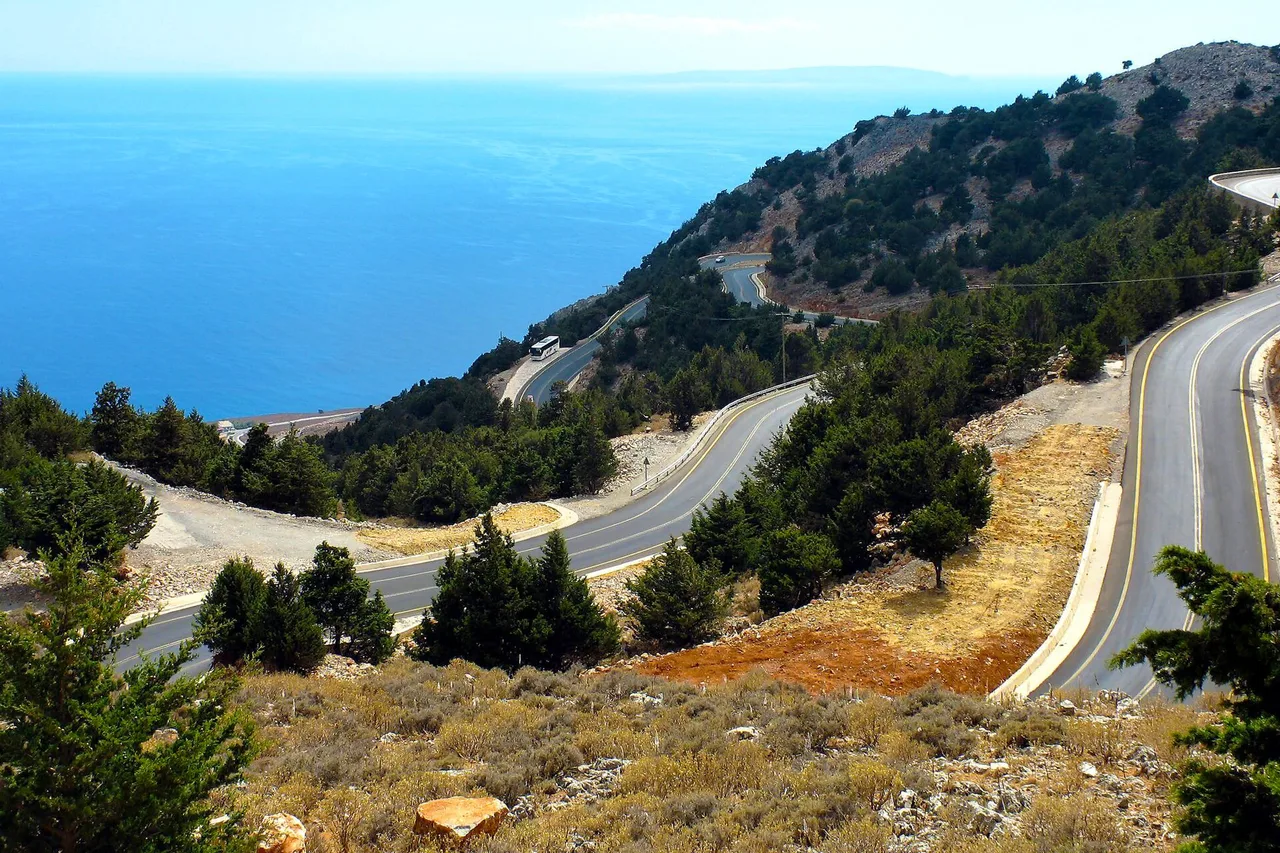
The number that explains everything is speed. On the north coast, the 60 kilometres from Chania to Rethymno take about forty-five minutes: roughly 80 km/h. Leave it for the mountains and the 75 kilometres from Chania to Elafonissi take an hour and three quarters: roughly 43 km/h. You travel at almost half the speed the moment you turn your back on the north coast — and that is precisely where itineraries counted in kilometres lose their days.
Now add the geometry. Balos is north-west, Elafonissi south-west, Samaria due south, Sfakia south-east. A fan, not a line. Two sights that look adjacent on the map may share no road at all, because the White Mountains sit between them.
Everything else in this article follows from that: you don’t plan the week as a circuit, you plan it as one base and a series of out-and-backs. Which leaves the question of which base, and how many.
The calculation that settles it: one base or two?
This is the question copied itineraries never ask, and it matters more than the order of the stops. We costed it with the published road distances.
Option A, everything from Chania. Four out-and-back driving days in the week — Balos, Elafonissi, the Sfakia coast, Rethymno — plus a fifth day, Samaria, done without the car. Total: 520 kilometres.
Option B, four nights in Chania then three in Rethymno. Balos and Elafonissi still leave from Chania, the transfer to Rethymno counts 60 kilometres, and the south coast is then reached from Rethymno. Total: 448 kilometres.
The gap is 72 kilometres, about 14 per cent. In other words: the second base doesn’t pay for itself. It costs half a day of packing and an extra hotel booking to save a little over an hour of driving across the whole week. That is the exact opposite of what we measured on Mallorca, and the reason is geometric: there the sights string out along a coast, here they radiate around a town.
So our advice is simple: seven nights in Chania, or in one of the villages along its bay. The old town is pleasant in the evening, which counts when you come back tired, and Rethymno is easily seen on the way to the airport.
Days 1 and 2 — Chania, and the car that can wait
The first piece of advice in this itinerary is to not pick up the car straight away, and it is not a whim: the old town of Chania is a maze of Venetian lanes you cannot drive through, parking is expensive, and two fewer rental days more than pay for your arrival.
Booking a transfer from Chania airport makes sense on a flight that lands late: the driver waits in the arrivals hall with your name on a board, tracks the flight number, and a delayed plane changes nothing about the pickup. For a daytime arrival the public bus runs into town for a few euros, and we would rather say so before suggesting anything else.
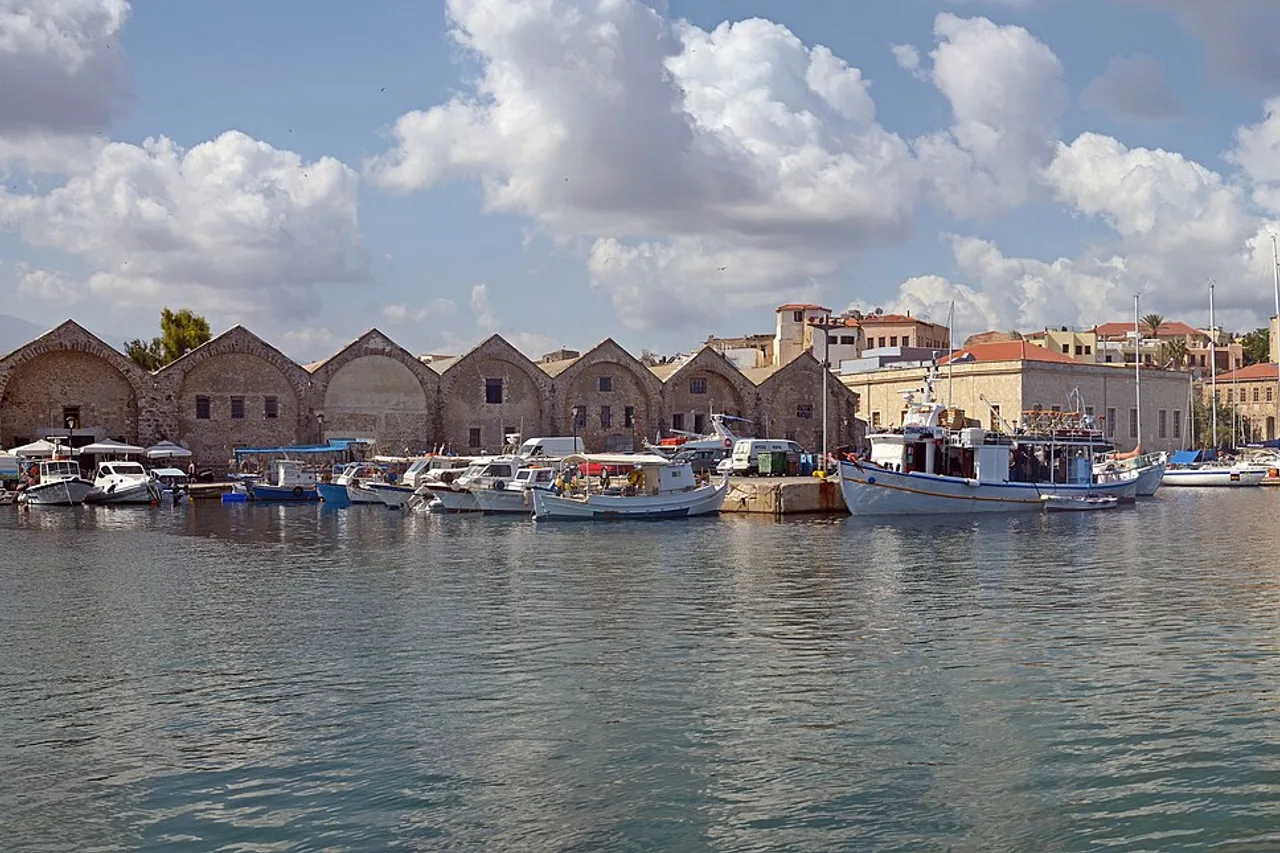
Two days on foot cover the subject: the Venetian harbour and its basin, the lighthouse at the end of the mole, the arsenali where galleys were once repaired, the covered market, and the Ottoman quarter behind. A self-guided audio tour of the old town does the job if you want to understand what you are looking at without following a group: the route starts at the harbour and takes in the lighthouse and the Firka fortress.
Collect the car on the evening of day two, or the morning of day three. That is a rental day saved, and the first real drive heads north-west anyway.
Day 3 — Balos, and the contract clause nobody reads
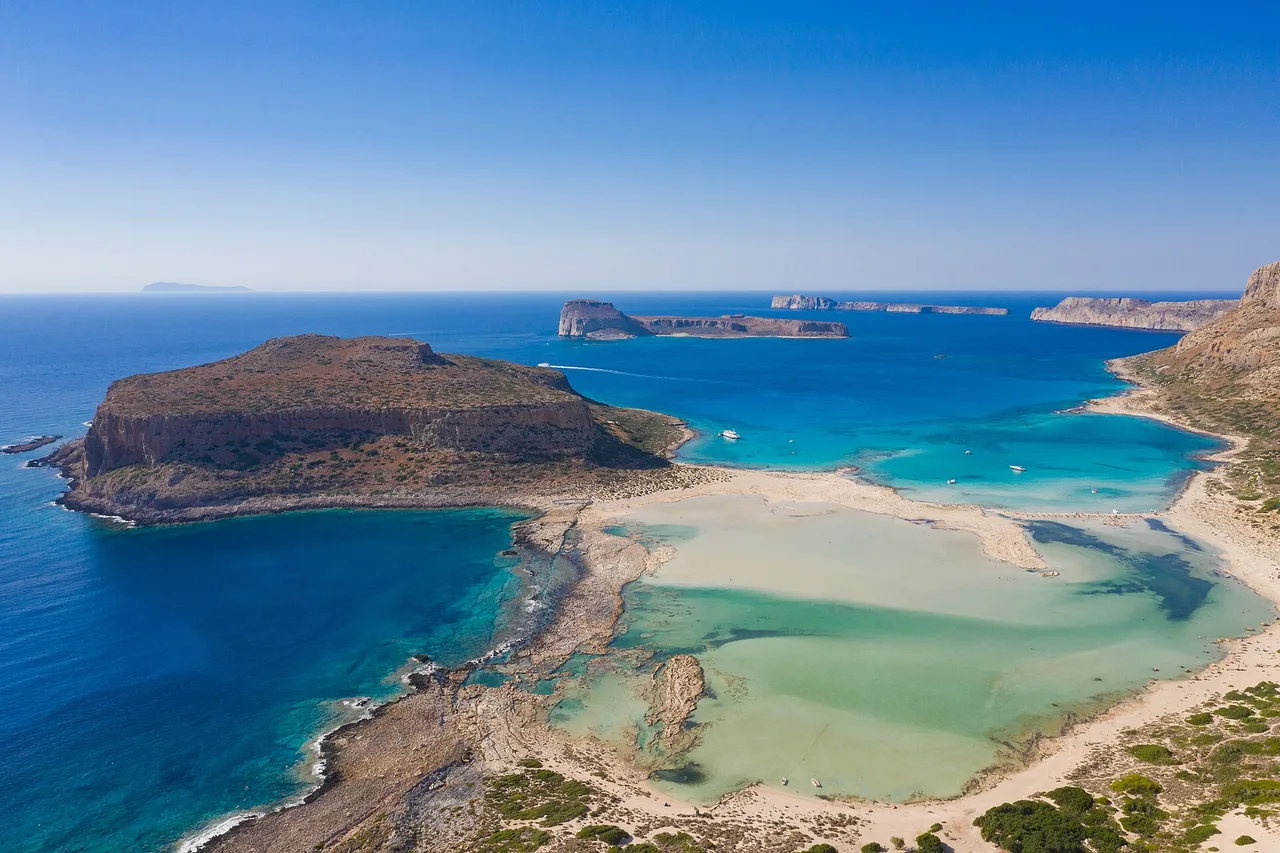
Balos is not a beach, it is a lagoon: a sandbar closing off water so shallow it turns milky white. It has to be earned, and not only on foot.
The tarmac runs as far as Kalyviani, roughly 42 kilometres from Chania. Then come 9 kilometres of dirt track, rough and cut into the hillside, which an ordinary car covers in thirty to forty minutes driven slowly. At the end: a paid car park — reckon on about three euros per car and one euro per person for the protected Gramvousa area — then two kilometres of path, twenty to thirty minutes down, thirty to forty-five back up. In July and August the car park is full by ten in the morning.
Here is what almost nobody checks beforehand: many rental contracts exclude unpaved roads. The Cretan page of Localrent, which compares local Chania rental firms goes as far as saying hire cars are not admitted on that track. This is not a traffic ban: it is an insurance clause, and it decides who pays for a burst tyre or a grounded sump. Read it before you book, not on the way back.
If the clause closes the track to you — or if you are driving a low city car — the boat from Kissamos is the honest alternative: it covers Balos and the fortified islet of Gramvousa in a single day, and removes the question entirely.
Day 4 — Elafonissi, a reserve before it is a beach
Elafonissi is the postcard of Crete: sand whose crushed shell fragments turn the surface pink, a warm lagoon, an islet you wade to in thirty centimetres of water. It is also a Natura 2000 site, and that changes several very concrete things.
The drive first. 75 kilometres from Chania, but an hour and a half to two hours: the last stretch threads the Topolia gorge and a string of mountain villages. Leave early — not for the light, for the car park, which is paid and fills through the morning.
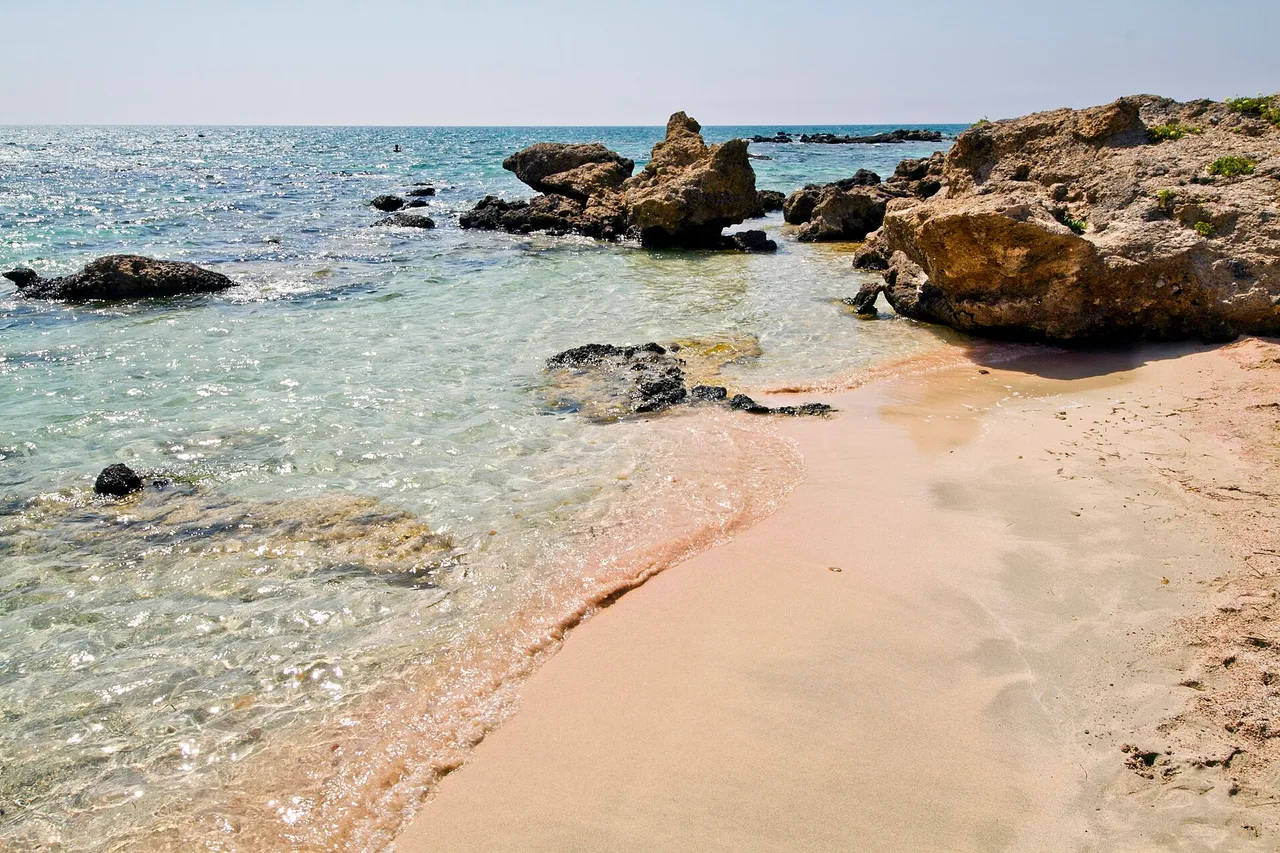
Then the rules, and they are enforced. The dunes are roped off and must not be walked on. Removing sand, shells or plants is forbidden. Personal parasols are not allowed. And the European rules that apply to Natura 2000 beaches require at least 85 per cent of the surface to stay free of concession loungers and umbrellas: you will therefore find far fewer sunbed rows at Elafonissi than on an ordinary beach. That is deliberate, and it is what preserves it.
One last, seasonal point: from May to August the beach is a nesting site for the loggerhead turtle, whose nests are monitored by the ARCHELON association. The marked-off zones exist for that reason. You don’t walk around them.
Day 5 — Samaria, the day without the car
This is the day that gives the whole week its shape, and the only one where your hire car is a liability.
The gorge is walked one way, top to bottom: start at Xyloskalo on the Omalos plateau, at 1,230 metres, and come out at the sea, at the village of Agia Roumeli. 16 kilometres, five to seven hours for most walkers, and above all: Agia Roumeli has no road.
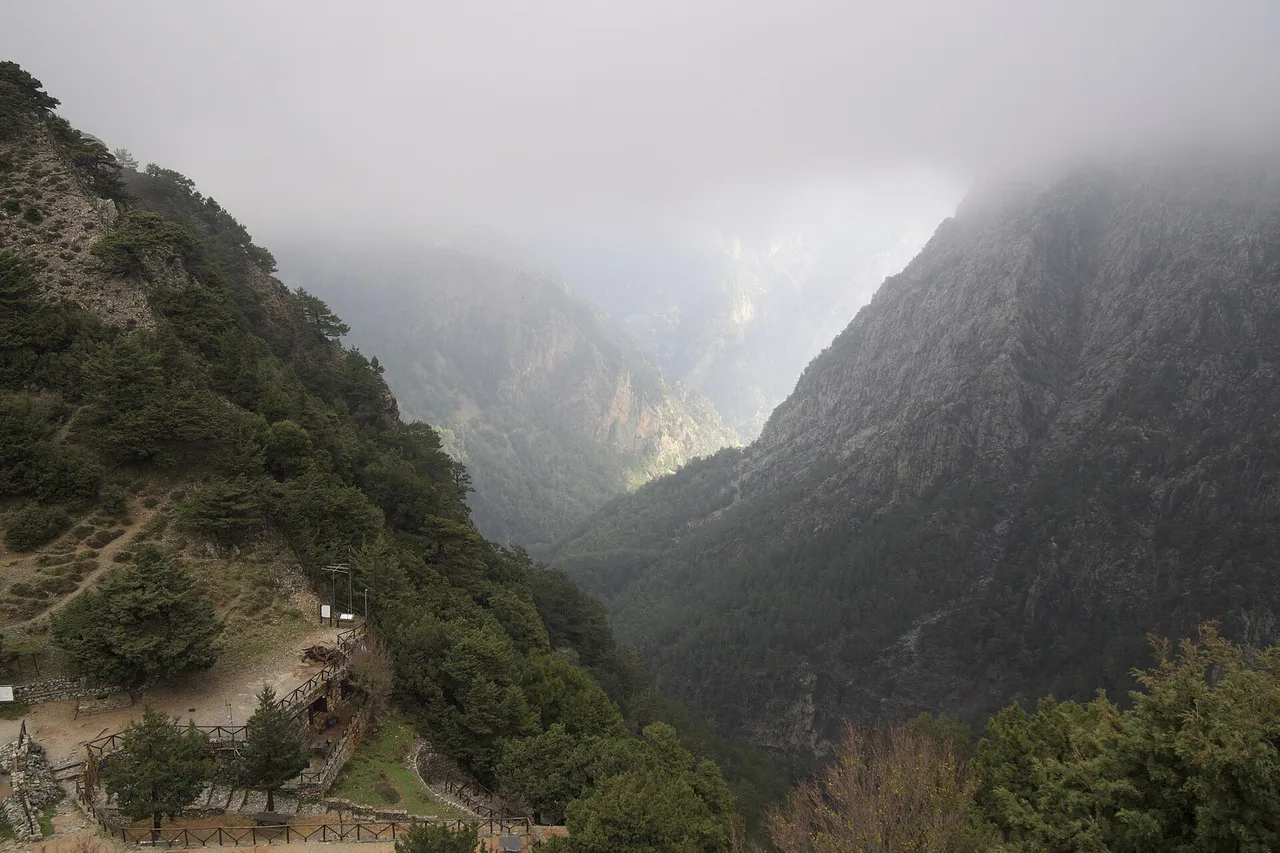
Do the sums if you leave the car at the top. At the exit, a boat to Chora Sfakion — about an hour and ten minutes. Then 74 kilometres to Chania, then 38 back up to the plateau to fetch the vehicle: 112 kilometres of driving for 16 kilometres walked, which is 7 kilometres driven per kilometre on foot. Hence our advice, hardly original but made hard to argue with by the arithmetic: do this day by coach, out to Xyloskalo and back from Chora Sfakion, and leave the car at the hotel.
Two 2026 rules to know before you fix the date. First, the gorge does not open on a fixed date: the managing authority announced the 2026 opening for Tuesday 19 May, from both entrances, after the annual maintenance work — while most guides still print “early May”. A holiday in the first half of May cannot count on Samaria. Second, the park closes mid-season on weather warnings: the official portal announced both entrances closed on Thursday 17 September 2026, with severe weather forecast.
The ticket is compulsory and bought online on the official portal — it funds path maintenance and supervision of the park. We quote no price: the available sources contradict each other and the portal publishes none. Check it when you book, the day before, at the same time as the opening status. One last detail that costs dearly when ignored: after about two in the afternoon you are no longer allowed past the first quarter of the route.
Day 6 — the south coast, where the missing road is the point
After the gorge the temptation is to stay north. That would be to miss what makes this coast unique in Europe: several of its villages still have no road.
Loutro can only be reached on foot or by boat. So can Agia Roumeli. Both have always lived off a sea link — the ANENDYK company has connected Paleochora, Sougia, Agia Roumeli, Loutro, Chora Sfakion and the island of Gavdos since 1983 — and the sailing season follows the gorge season: two to three crossings a day once Samaria is open.
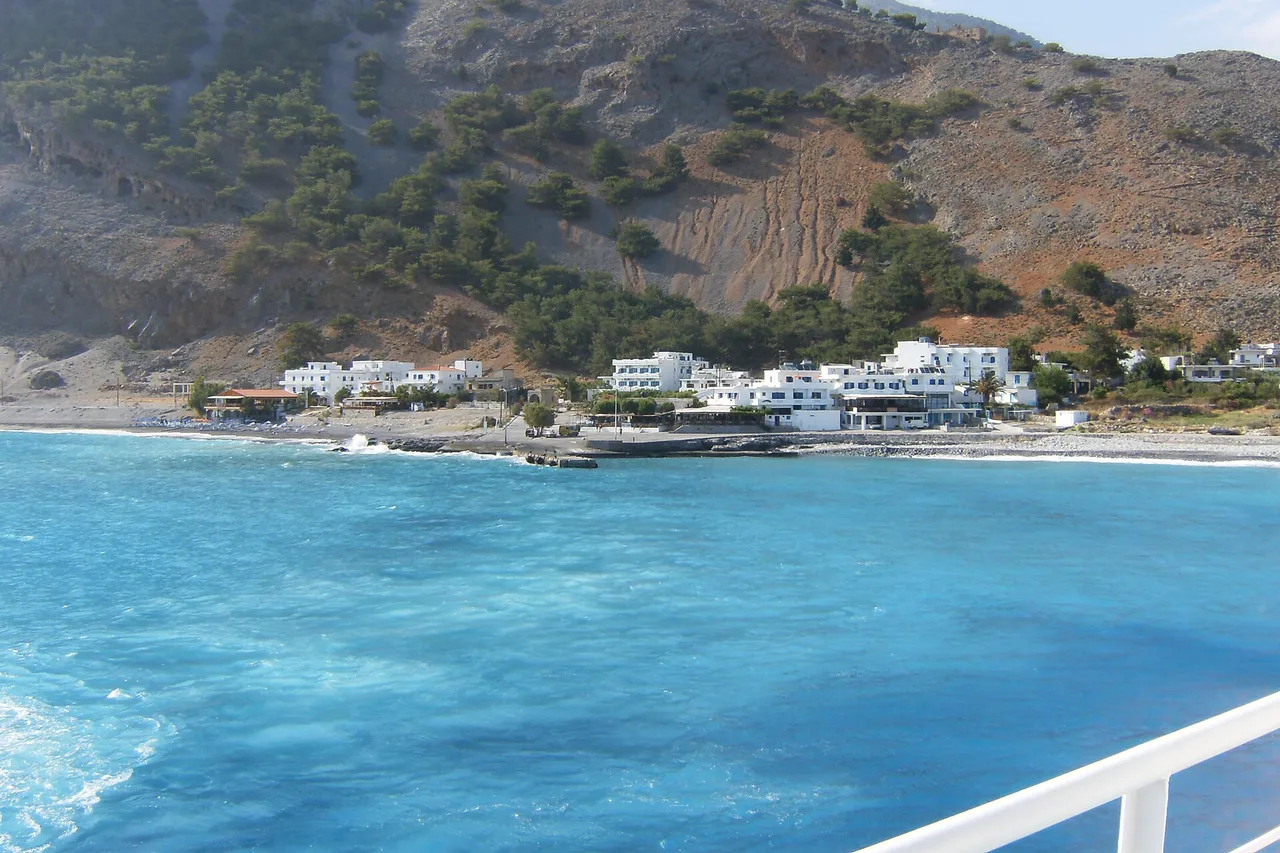
The classic day: drive down to Chora Sfakion (74 kilometres from Chania, an hour and a half of mountain road), leave the car there, take the boat to Loutro, have lunch, swim at Marmara or Glyka Nera, and come back on the last sailing. The same stretch can be walked on the coastal path in about two hours, but without shade.
If you would rather drive, the Imbros gorge, on the road down, is a short and practicable version of Samaria: eight kilometres, no boat at the end, and an easy taxi back up. It is the right plan B if Samaria is shut.
Day 7, and the week at a glance
Days 1-2, Chania without the car. The Venetian harbour, the lighthouse, the arsenali, the market.
Day 3, Balos: 9 kilometres of track, or the boat from Kissamos.
Day 4, Elafonissi: 75 kilometres and two hours of driving, a reserve before it is a beach.
Day 5, Samaria: 16 kilometres on foot, zero kilometres by car.
Day 6, the south coast: Chora Sfakion, Loutro, and the boat that replaces the road.
Day 7, Rethymno on the way back: 60 kilometres of fast road, a Venetian old town and a fortress, then the airport.
The three mistakes to avoid, in the order in which they cost the most. Adding the east of the island: Knossos and Elounda are more than two and a half hours away, and the week loses two whole days to it. Taking the car on Samaria day: 112 kilometres to get it back. Booking a car on arrival in July or August: an island fleet is finite by nature, and the last vehicles available are charged accordingly.
A word on the category, which is not a detail here: Cretan mountain roads are narrow and often walled. A small car is more comfortable than a saloon — provided it has enough ground clearance for the Balos track, if you choose to go that way.