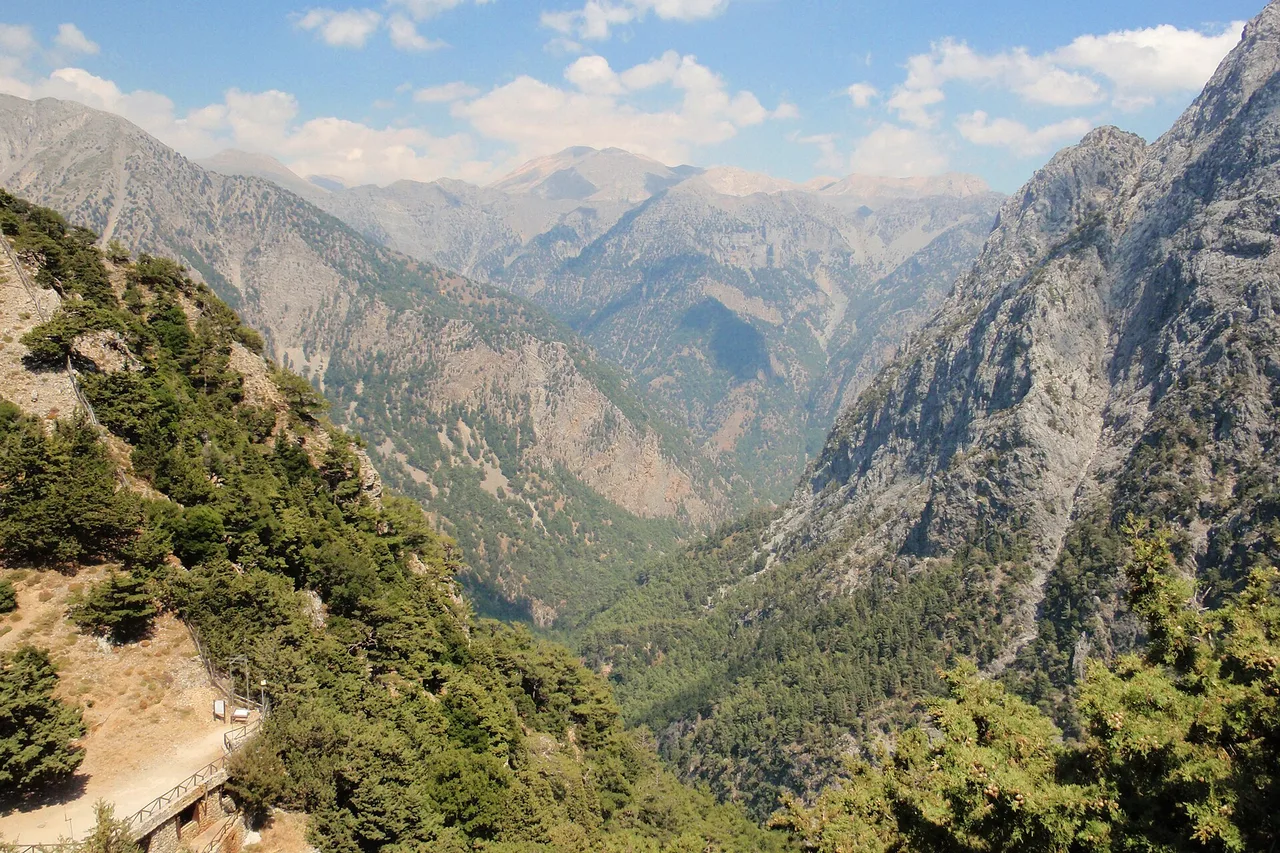
You plan the Samaria Gorge backwards. The trail ends at Agia Roumeli, a village with no road, and the only way out is the late-afternoon boat. Once you see that, you pick the right morning bus — and discover that the comfortable one, at 8:45, leaves a slow walker no margin at all in the worst case. Also here: length and opening hours, why your knees rather than your lungs decide the day, what the way back costs, and why on some days the gorge is simply closed — as it was on 30 September 2026, the day this article was written.
You plan Samaria from the last boat
Most advice about the Samaria Gorge is about shoes and water. It is right. But it is not what decides your day. What decides it is that the trail ends in a village with no road. Agia Roumeli sits on the Libyan Sea at the mouth of the gorge, and the only way out is by water.
KTEL, the Chania bus company, times its return services to the 17:30 boat: the bus from Chora Sfakion leaves at 18:30 “after the arrival of the ferry from Agia Roumeli”. Miss that boat and you spend the night in the village.
So you plan this hike backwards: first the evening boat, then your walking time, then the morning bus. Counted that way round, the choice of bus suddenly looks very different.
Length and terrain: a hike for your knees, not your lungs
The Samaria Gorge is about 16 kilometres long, from the Xyloskalo entrance on the Omalos plateau to Agia Roumeli. The start is at around 1230 metres, the finish at sea level. That averages roughly 77 metres of descent per kilometre — and you hardly ever climb.
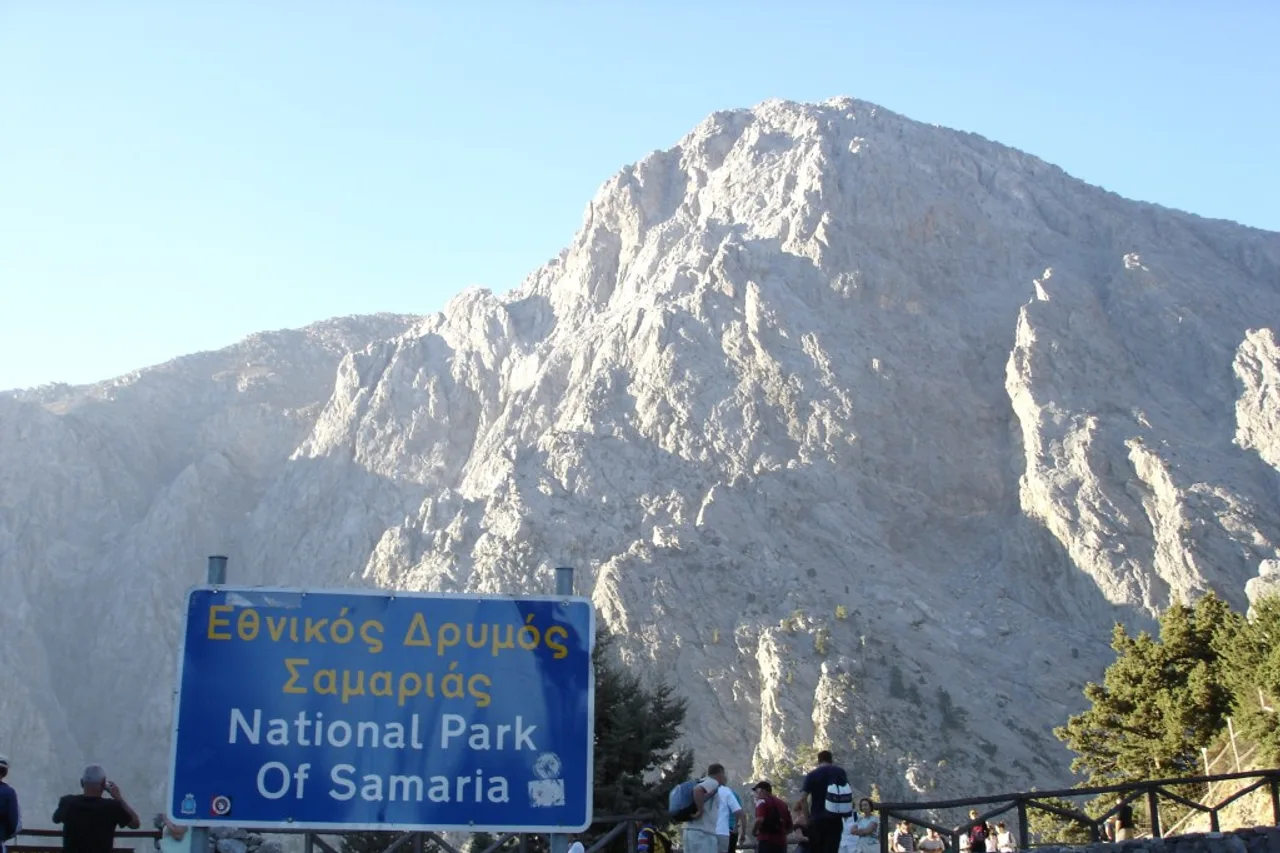
This is exactly what people underestimate. A hike with no climbing sounds easy. In reality your thighs and knees are braking for five to seven hours. The first stretch is the steepest, on stones polished smooth by feet, and it is where most accidents happen. After that: stones, stones and more stones, forest paths, river pebbles and more than a dozen stream crossings. The last three kilometres are flat — and without shade.
Hence the kit: proper hiking boots with a good tread, not sandals. Poles, because they take weight off your knees on the way down. Enough water, sun protection and something to eat. The long break is at the abandoned village of Samaria, roughly halfway.
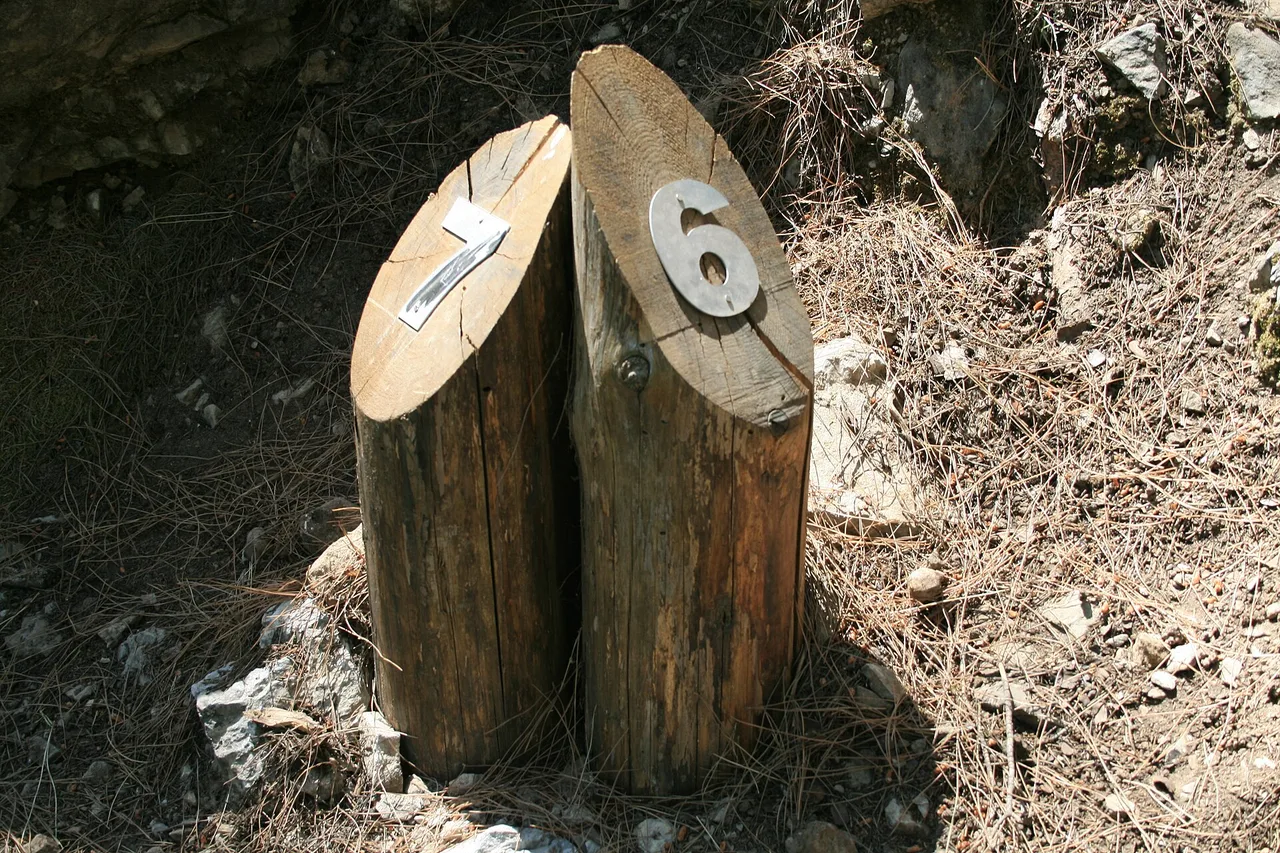
One tip almost nobody gives: the kilometres are marked along the trail. Time your first two kilometres and extrapolate. If you are already clearly slower than you expected, you know early that you will have to watch your breaks.
Which morning bus? The sum that decides the day
From Chania, KTEL buses leave for Omalos and Xyloskalo at 5:00, 7:45 and 8:45. The ride takes about an hour and a half. Add a quarter of an hour for the ticket, toilets and water, then 5 to 7 hours of walking. The boat leaves at 17:30.
| Bus from Chania | Start at Xyloskalo | Arrival at Agia Roumeli (5–7 h) | Margin before the boat |
|---|---|---|---|
| 5:00 | 7:00 | 12:00 – 14:00 | 5 h 30 min – 3 h 30 min |
| 7:45 | 9:30 | 14:30 – 16:30 | 3 h – 1 h |
| 8:45 | 10:30 | 15:30 – 17:30 | 2 h – none |
The 5:00 bus is painful, but it leaves even a slow walker 3 h 30 min to spare — for breaks, a swim, lunch in the village. The 7:45 is the sensible compromise: 1 h of margin at worst.
The 8:45 is the bus people take when they “don’t want to get up at four”. It leaves a fast walker 2 h — and someone who needs seven hours none. That is not impossible. But every long break, every queue at the narrow sections and every blister comes straight off the boat. If you are not sure you will stay under six hours, take an earlier bus.
By car? The problem is the car park at the wrong end
There is a car park at Xyloskalo. The trouble is that your car is then at the start of the trail, and you come out at the other end, in the village with no road. Via Chora Sfakion, getting back to it means the boat, then 74 kilometres to Chania and 38 back up to Omalos — 112 kilometres of road for 16 kilometres of walking. That is why our one-week western Crete itinerary says: on Samaria day, leave the car behind.
There is one exception hardly anyone mentions. KTEL lists a bus from Sougia to Xyloskalo at 18:15, which waits for the boat from Agia Roumeli. If you came by car, take the boat to Sougia (€17) instead of Chora Sfakion, and ride the bus back up to your car. Check the day before that it is running: it is your only connection.
The simplest option is an organised day tour from Chania, Rethymno or the beach resorts: the coach drops you at Xyloskalo in the morning and picks you up at Chora Sfakion in the evening. Compare carefully what is included — entry and the boat are not always — and when the coach leaves: the sum above applies just the same.
Tickets, opening hours, weather: the days the gorge is closed
The gorge is a national park with a season: 1 May to 31 October. In 2026 it actually opened only on 19 May, after the annual trail works — many guides said “early May”. For the full crossing, entry is between 7:00 and 13:00 according to the park’s information site; after that, only for a short walk. You must be out by 18:00.
A ticket is compulsory and is bought online on the official portal, samaria-tickets.necca.gov.gr. The portal shows no public price list; 2026 guides quote €10, free for under-18s and over-65s. Check the amount when you pay.
Above all: the park closes on weather warnings, both entrances, based on the national weather service forecast. It was closed on 17 September 2026, and on 30 September too — the very day we are writing this — with heavy rain and thunderstorms forecast. In autumn, that is not unusual. Check the portal the evening before and in the morning, and do not put Samaria on the last day of your trip: you would have no fallback date.
Along the way: the abandoned village, the Iron Gates, the kri-kri
About halfway along is the village of Samaria, which gave the gorge its name. Its inhabitants had to leave when the area became a national park in 1962. Today it is the rest area: the place for your long break, not for a full hour.
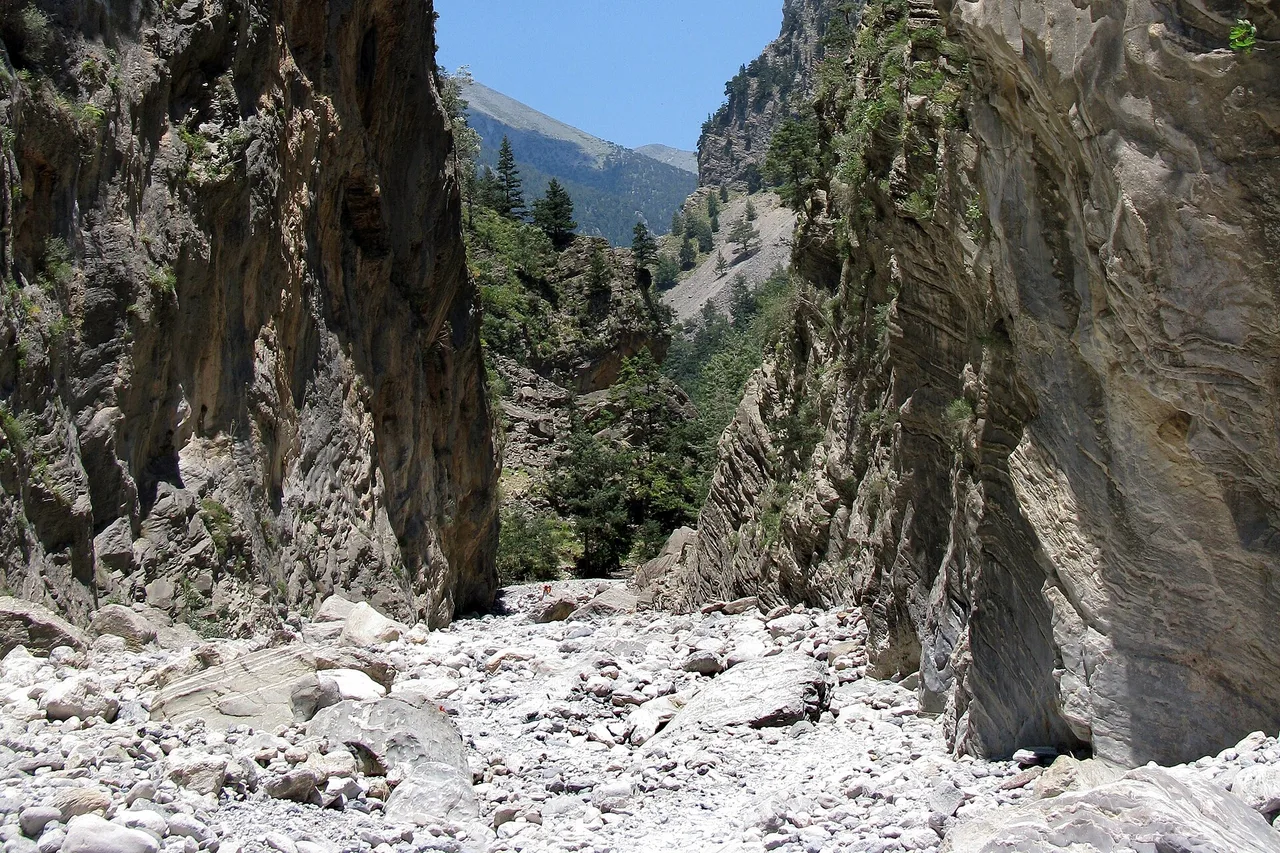
Shortly before the end come the Iron Gates, the famous part: the walls close in to three or four metres, sheer, and the trail runs through beside the stream. By late morning there is a queue. Those who started early have them almost to themselves.
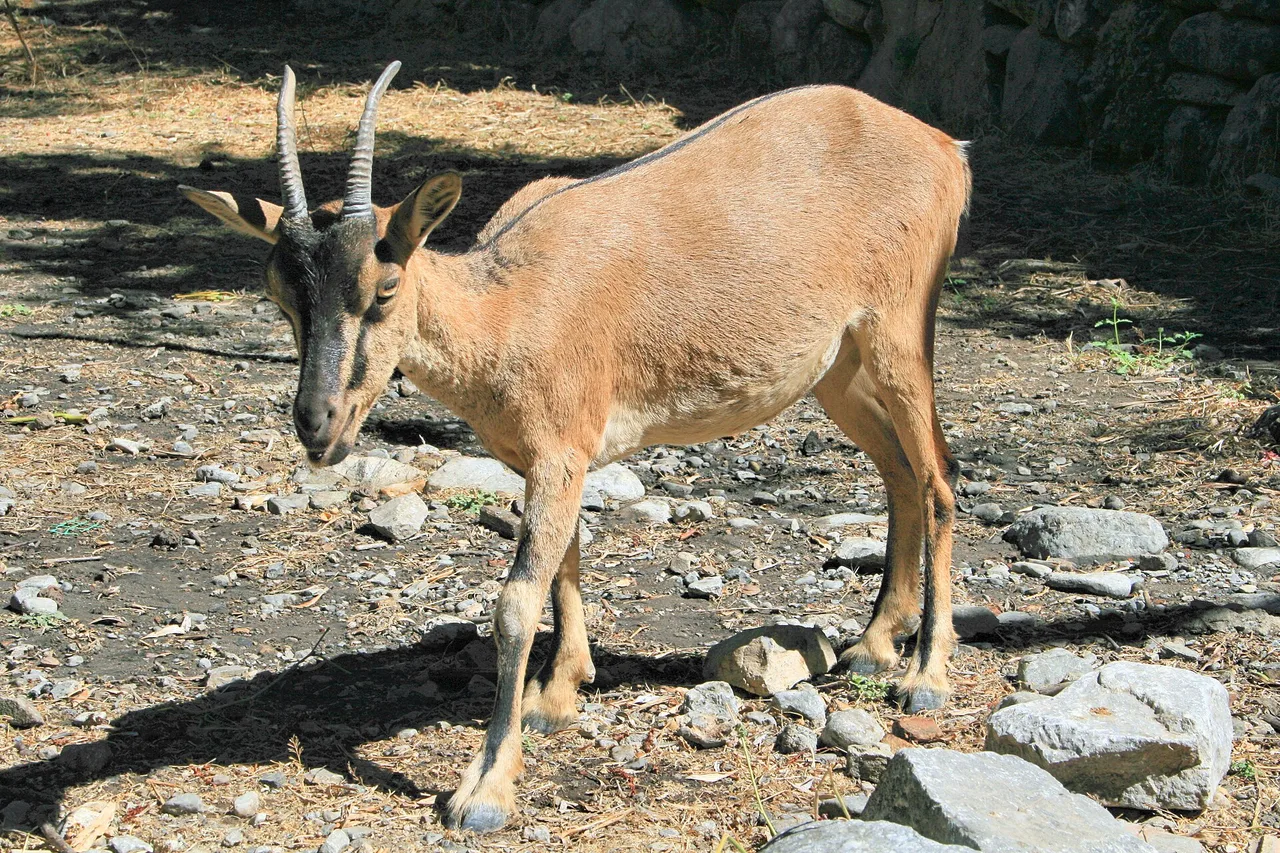
The national park was created to protect the kri-kri, the Cretan wild goat. It is shy and usually keeps high on the slope. Do not feed it, even if one comes close. And stay on the main path: here, that is not advice, it is the rule.
Samaria with children, or without the 16 km: the reverse route
If you cannot or do not want to walk sixteen kilometres downhill, you do not have to give up on the gorge. The park has a second entrance, at the bottom, in Agia Roumeli. You arrive by boat, walk up the gorge as far as the Iron Gates and turn round whenever you like. Locally it is called “the lazy way”.
For families, this is the sensible Samaria. You still see the narrowest point, you choose where to turn back, and the beach is waiting at the end. The cost: entry is free for under-18s according to the guides; the boat from Chora Sfakion is €17 per adult and €8.50 for children aged 5 to 12. A family with two children therefore pays €51 for the return leg — and the same again to get there.
Arriving at Agia Roumeli: the boat, the bus and what the way back costs
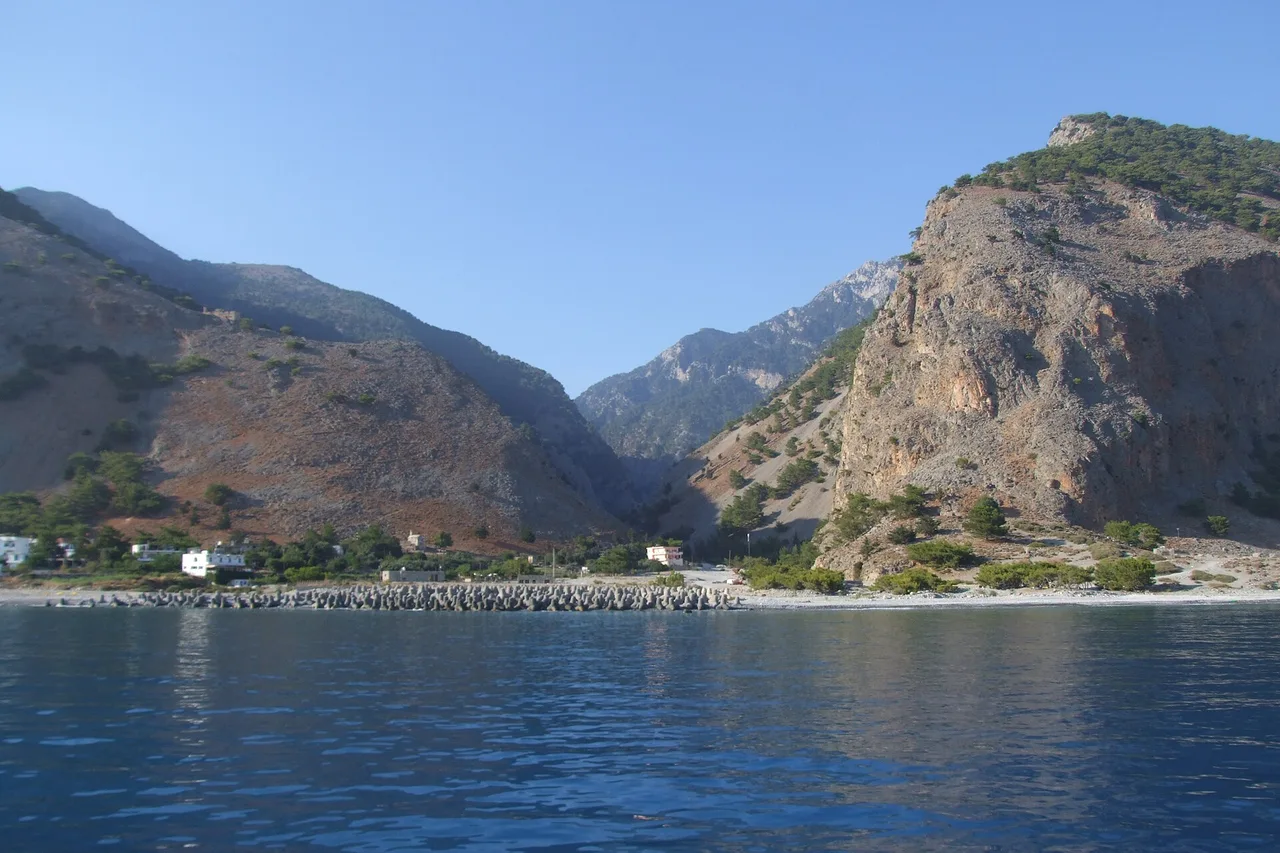
Agia Roumeli has tavernas, a pebble beach and time — if you left yourself some. The ANENDYK ferry runs to Chora Sfakion (€17), Sougia (€17), Loutro (€14) or Paleochora (€25); children aged 5 to 12 pay half. Chora Sfakion is about an hour away, and the 18:30 bus to Chania waits for you there.
If you do not have to be back that evening, spend a night on the south coast — in Loutro, for example, which is also reachable only by boat. We explain why the south coast suits staying put better than day trips in Where to stay in Crete.
The checklist for the night before
1. Check the portal: is the gorge open tomorrow? 2. Buy your ticket online. 3. Choose your bus by your walking time, not your alarm clock. 4. By car: confirm the 18:15 Sougia–Xyloskalo bus, or leave the car. 5. Boots with tread, poles, water, sun protection, cash for the boat and the taverna. 6. Write down the boat time: 17:30. Everything else follows from it.
Top-rated activities in Crete, bookable online: