The question is usually asked as if one city were more beautiful than the other. It isn't: these are two cities playing entirely different games, and the choice is settled by concrete things — what you pay per night, what has to be booked weeks ahead, the season you travel in, and whether you want the sea. Here is what each one actually gives you, what it costs, and the answer case by case.
Two cities playing different games
The comparison starts badly, because it puts side by side two things that do not resemble each other. Barcelona is a city as scenery: what you came to see is visible from the street, concentrated, photogenic, with the sea at the end of it. Madrid is a city as atmosphere: it does not give itself away in photographs, it gives itself away in evenings, squares and museums, and you have to grant it two days before you understand why the people who live there never leave.
That has one immediate practical consequence. Barcelona is planned, Madrid is improvised. In Barcelona the three or four things you came for are booked at a fixed date and time, sometimes weeks ahead. In Madrid you can decide in the morning what you will do that afternoon and it will almost always work. That point alone settles it for a lot of travellers.
The rest comes down to four things you can price or check: what a night actually costs after taxes, what has to be booked, the season, and the sea. We take them in that order.
Barcelona: it is all there, and it all has to be booked
Its strength is real and fits in one sentence: nowhere else in Europe will you find, within a few metro stops, architecture this singular, an intact medieval centre, and a city beach.
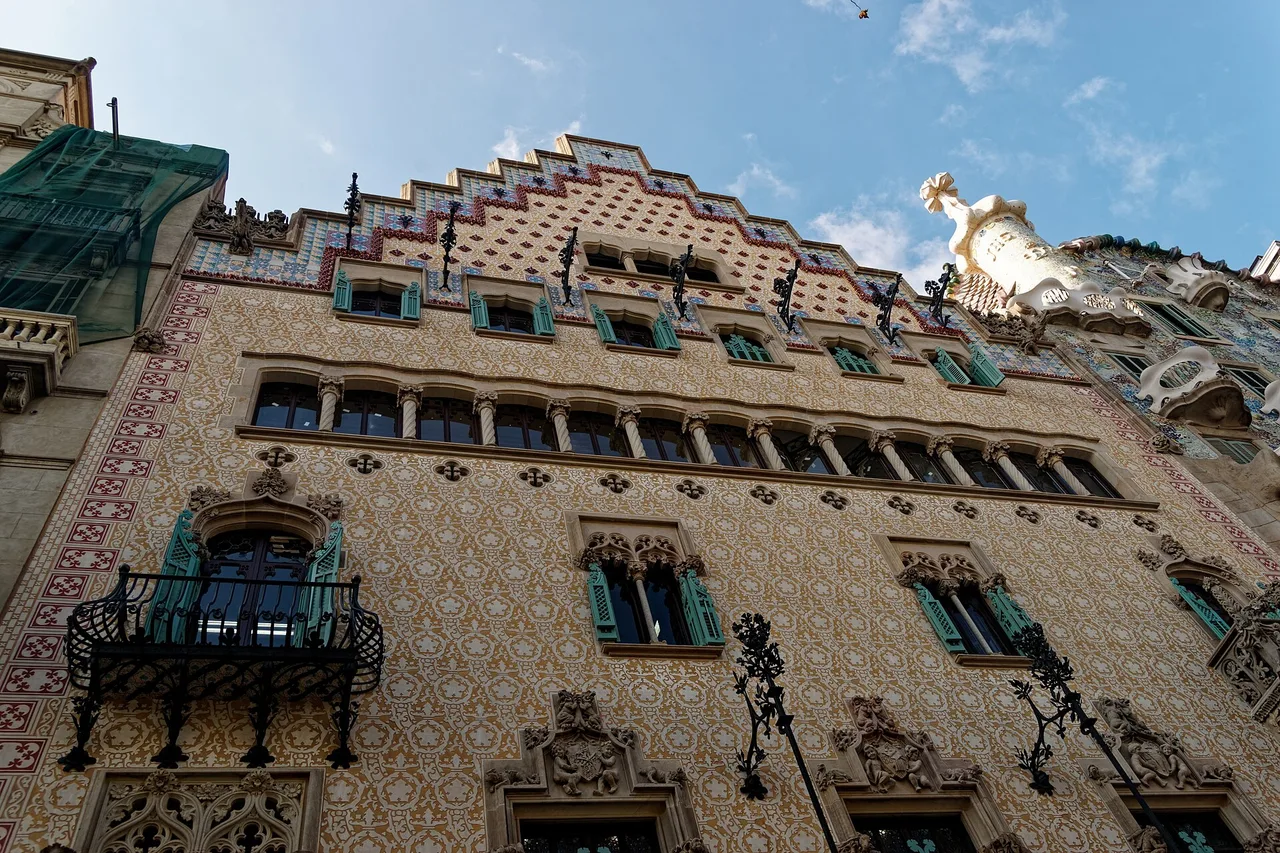
Modernista architecture is the heart of the trip, and a good part of it is seen for free from the pavement: Passeig de Gràcia and its façades, Casa Amatller, the outside of Casa Batlló, the chamfered corners of the Eixample. The Gothic Quarter, Plaça Reial and the Boqueria market cost nothing either.
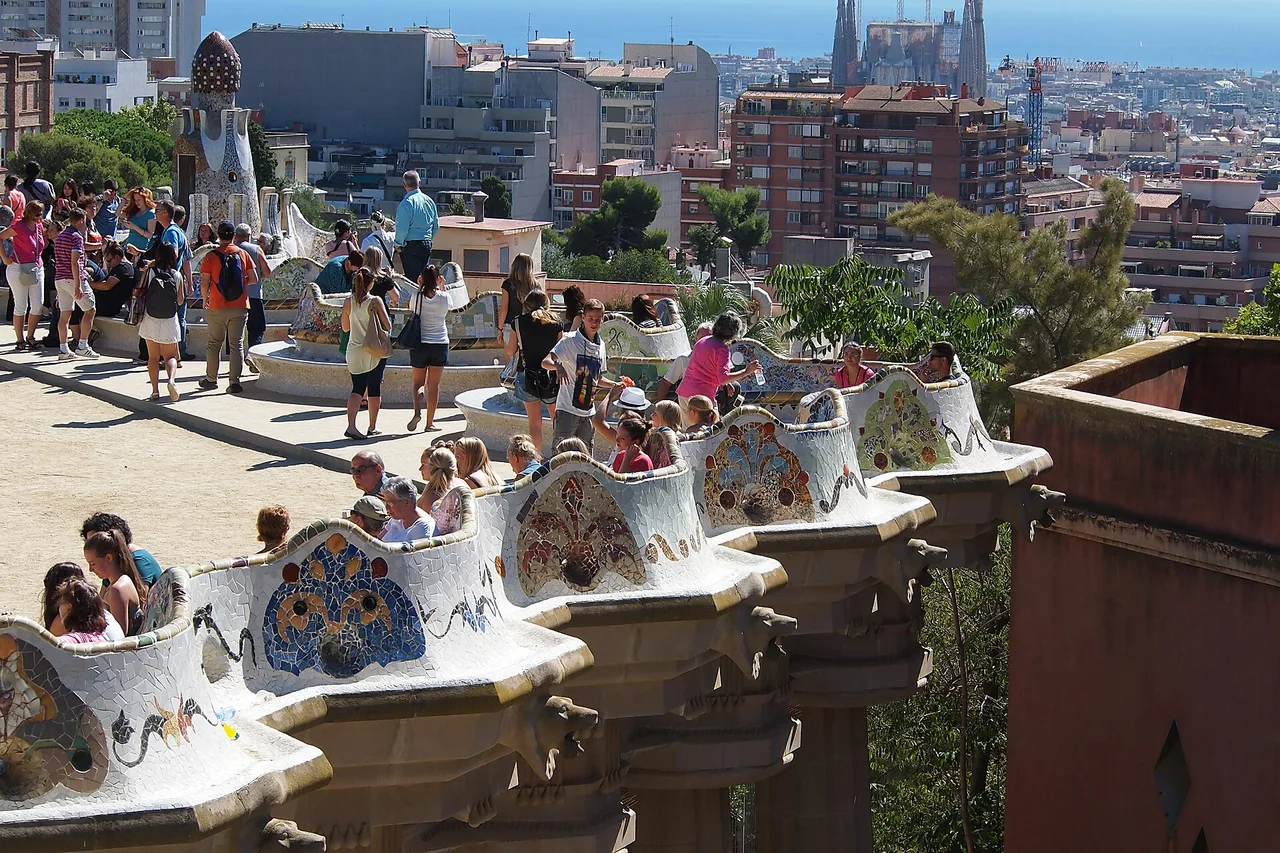
What costs money is the three big tickets. The Sagrada Família is €26 for basic entry with the audio guide, €30 with a guided tour, €36 with tower access, €40 with both; it is free for under-11s. Park Güell is €18 for an adult, €13.50 for 7-12s and over-65s, with timed entry and a cap of 1,400 visitors per hour.
2026 is an unusual year, and you should know it before booking. It marks a hundred years since Gaudí's death on 10 June 1926. In June the 172.5-metre Tower of Jesus Christ was completed and blessed in front of around 120,000 people: the Sagrada Família is now the tallest church in the world. The consequence is mechanical — attendance is higher than usual all year, and slots go faster. If your trip falls in 2026, book as soon as your dates are set, not the week before.
One last thing that is slowly changing the city: Barcelona will not renew any tourist-flat licence when they expire in November 2028 — more than ten thousand apartments are affected, and the Constitutional Court upheld the plan in March 2025. In practice the apartment supply tightens year after year, and hotels are becoming the default again.
Madrid: what the photographs don't show
Madrid suffers from an unfair handicap: it does not reduce to a single image. There is no Sagrada Família, no beach, no recognisable skyline — and that is exactly why it is underrated.
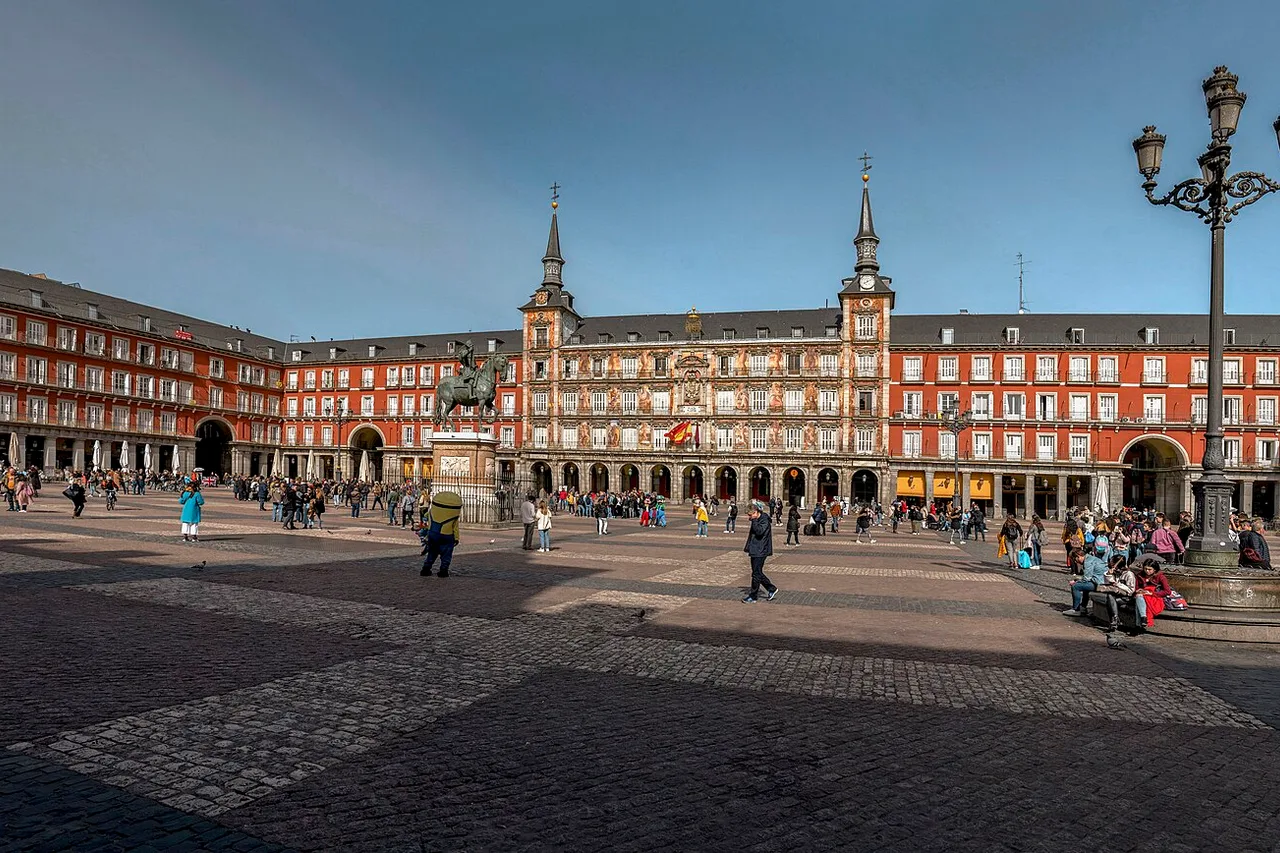
What it has is a density of life no other European capital quite reaches. You walk from square to square — Plaza Mayor, Puerta del Sol, Plaza de Santa Ana, La Latina — without ever crossing a dead district. Terraces are full on a Tuesday evening. The century-old taverns are still taverns, not sets. And the Retiro, right in the centre, is a real city park where people go to read, not a site to tick off.
Its second strength is cultural, and objectively superior: the triangle of the Prado, the Reina Sofía and the Thyssen-Bornemisza has no equivalent in Barcelona. We come back to it below, because the price is the best surprise of the trip.
Its third strength is geographical. Madrid sits at the centre of the country and its day trips are outstanding: Toledo, Segovia and its aqueduct, El Escorial, Alcalá de Henares — all under an hour by train or bus. From Barcelona day trips exist too, but they are thinner and take longer to reach.
What it does not have: the sea, and the instant effect. Madrid does not hit you on day one. That is a genuine drawback if you are only staying two nights.
The gap nobody calculates: the tourist tax
This is the most concrete difference between the two cities, it can be priced, and it almost never appears in comparisons.
Barcelona applies two taxes that stack. First the Catalan regional tax, which depends on the type of accommodation. Then the municipal surcharge, which rose from €4 to €5 per person per night on 1 April 2026 and will rise by one euro every year: €6 in 2027, €7 in 2028, €8 in 2029. Added together, that is currently around €9.50 per person per night in a tourist apartment and up to €12 in a five-star hotel.
Madrid has no tourist tax, and the city council has explicitly ruled one out, so as not to burden a sector that creates jobs. In Spain only Catalonia and the Balearics apply a general tax of this kind.
Do the sum for your own stay, it takes a second: two people, four nights, in an apartment in Barcelona, and you are looking at roughly €76 of tax that simply does not exist in Madrid. This does not condemn Barcelona — it means that on the same budget you will stay somewhere better in Madrid, and that this line belongs in any price comparison.
The sea, the summer, and the point where the answer flips
This is the one argument Madrid cannot match, and it does not carry the same weight depending on the month you travel.
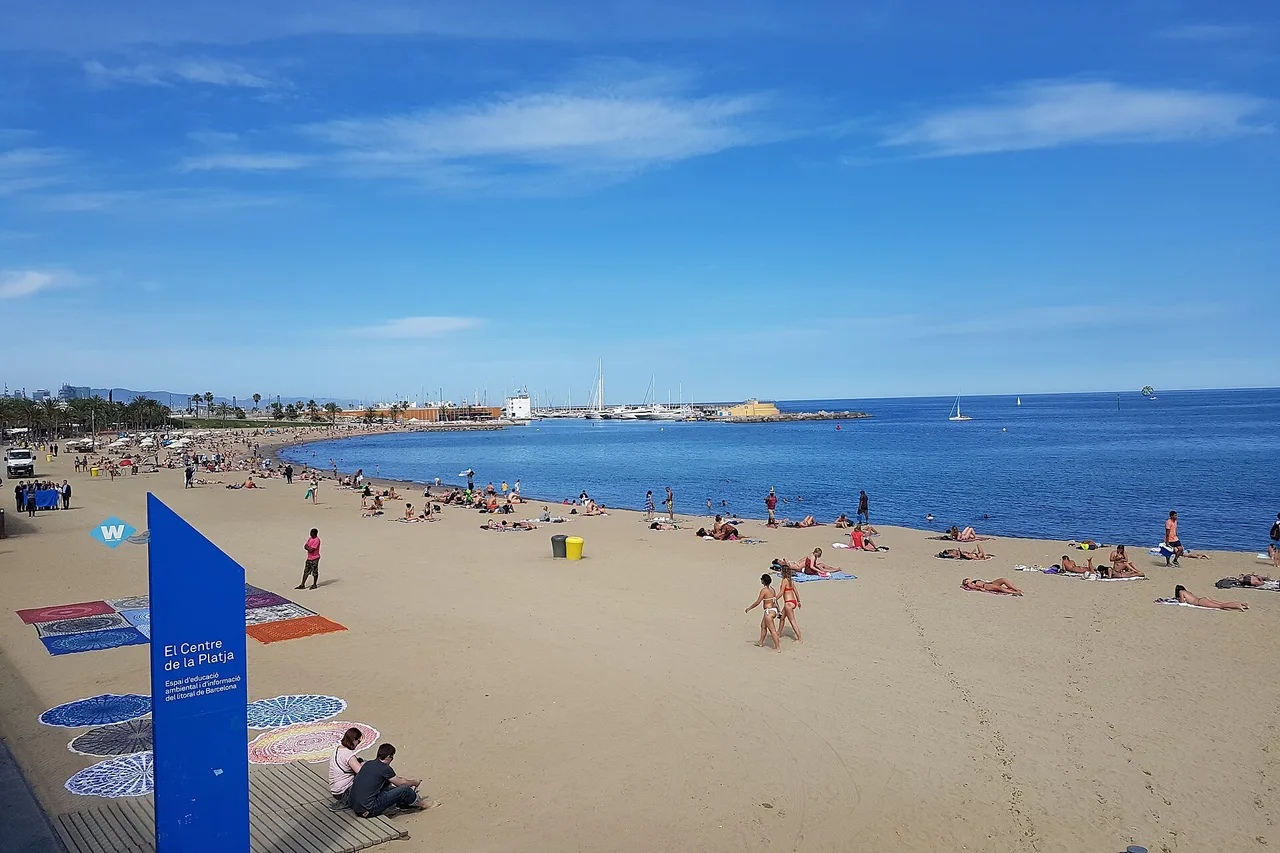
Barceloneta is twenty minutes from the centre by metro. A city of that size with a genuine urban beach is still rare, and it changes the nature of the stay: you can spend a morning in a museum and an afternoon in the water. Travelling with children or teenagers, that argument often settles the question on its own.
The climate tilts differently by season, and it is worth looking at squarely. In July and August, Madrid averages a high of 32 °C against 28-29 °C in Barcelona. Madrid's air, however, is very dry — 41 % humidity in July — while Barcelona sits around 69 %: the sensation is not the same, and many travellers find Barcelona's humid heat harder to bear than Madrid's dry heat, whatever the thermometer says. Add that in August part of the population leaves Madrid, which makes it strangely calm.
In winter the answer flips clearly. Madrid is a high plateau city: January tops out around 12 °C, with genuinely cold days and often brilliant skies. Barcelona keeps a Mediterranean mildness, averaging a low of 5 °C in January, but its beach is of no use — and the city's main argument disappears. In November, January and February, Madrid is the better of the two.
The best season for both, if you have the choice: May, early June, or late September.
Tickets: what must be booked, what is free
This is where the two cities differ most, and where the easiest savings are.
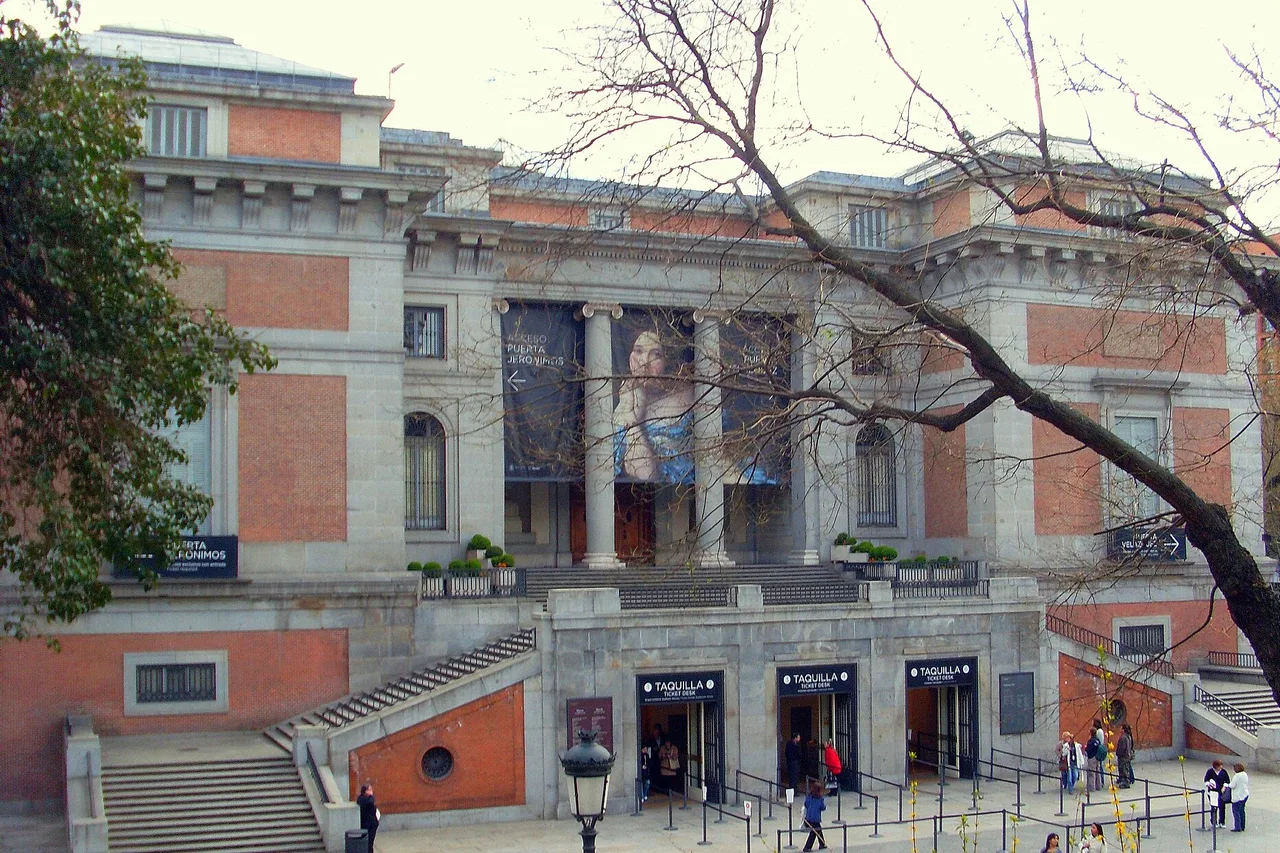
In Madrid, start with what is free — it is the best plan in either city. The permanent collection of the Prado is free Monday to Saturday from 6 to 8 pm, and Sundays and public holidays from 5 to 7 pm (temporary exhibitions are then half price). The Reina Sofía, home of Guernica, is free on Monday and Wednesday to Saturday from 7 to 9 pm, and on Sunday from 12.30 to 2.30 pm. The Royal Palace, around €14, is free for EU and Latin American nationals Monday to Thursday, 4-6 pm from October to March and 6-8 pm from April to September — with no booking possible, you turn up and queue.
Those slots are busy, of course. But two hours in the Prado are plenty to see Velázquez, Goya and Bosch without hurrying, and it is a real saving over a three-day stay.
In Barcelona the logic is reversed: nothing essential is free, and everything is booked. The Sagrada Família and Park Güell run on timed slots, and in 2026 they fill several days ahead. The first move, always, is the monuments' own official websites: that is the lowest price, with no middleman. Only when the slot that suits you is sold out — which is becoming common this year — do resellers have a point, because they hold blocks on times already closed on the official side; tickets for the monuments of Barcelona and Madrid are among them. Always compare the price shown with the official one before confirming: a wide gap means you are paying for a block, not a service.
That leaves the guided tour, which in Barcelona is not a comfort purchase. Catalan modernisme is a movement you understand very little of unless someone explains it, and the difference between "this is pretty" and "I understand what I am looking at" is decided there. An audio guide included in a ticket already does the job; to go further, self-guided audio tours of the modernista district exist at prices well below a private guide. In Madrid that need is smaller: the city explains itself as you walk.
The evening, and the number of nights
Both cities stay up late, but not in the same way, and it genuinely steers the choice.
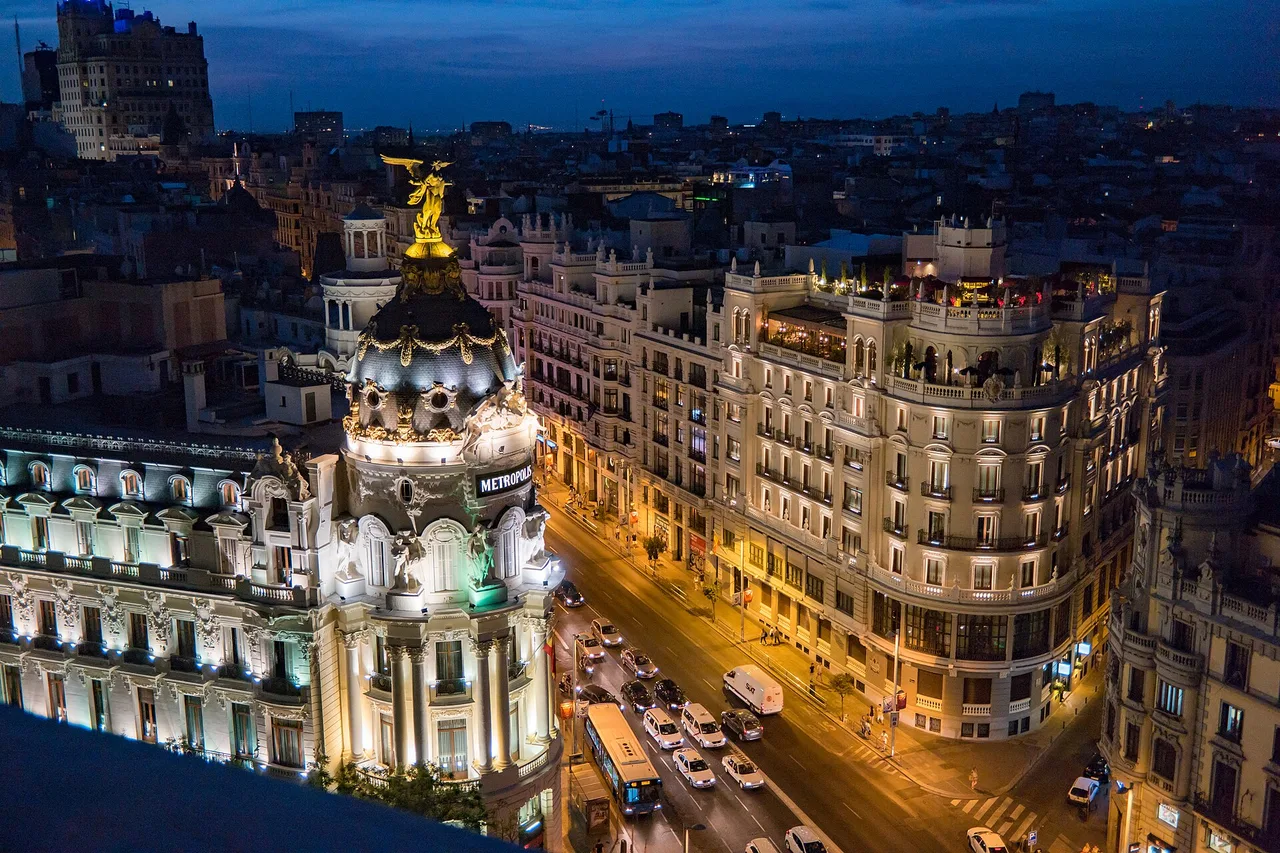
Madrid has the best evening life in Spain, and it is not a matter of partying: it is a matter of density. At ten on a Tuesday night, the streets of La Latina, Malasaña or Chueca are full of people of every age. Taverns close late, cinemas and theatres are everywhere, and the city never really empties. Barcelona's nightlife is more concentrated, more visitor-facing in the central districts, and the old town quietens earlier on weekdays.
On length: three full nights are enough for Barcelona without rushing, four if you want a proper half-day at the beach. Madrid needs the same for the city, but deserves an extra day for a trip out — Toledo or Segovia are under an hour away and each is worth a full day.
Getting around, both cities are well served and cheap. In Barcelona a single ticket is €2.90 in 2026, but the T-casual gives ten journeys for €13 within one zone, transfers included for an hour and a quarter: that is the ticket to buy on arrival. In Madrid a single ticket in zone A costs €1.50 to €2 depending on the number of stops, and ten journeys come to about €12.20.
Side by side
| Criterion | Barcelona | Madrid |
|---|---|---|
| Tourist tax | €9.50 to €12 / person / night | None |
| Booking the sights | Essential, timed slots | Rarely needed |
| Major museums | Paid | Free in the late afternoon |
| The sea | Beach 20 min by metro | None |
| Summer | 28-29 °C, humid | 32 °C, dry |
| Winter | Mild, but the beach is useless | Cold and bright |
| Day trips | Decent | Outstanding |
| Suggested length | 3 to 4 nights | 3 nights + 1 day trip |
Doing both: two and a half hours by train
This is what we recommend as soon as you have a week, and it is surprisingly simple.
Madrid and Barcelona are linked by Spain's busiest high-speed line: about two and a half hours city centre to city centre, up to thirty-five departures a day. It is also the only line in Europe with three competing operators — Renfe AVE, Iryo and Ouigo — which pulls fares down: Ouigo starts around €9, the AVE around €29 booked ahead. One note if you are chasing a fare you saw elsewhere: Avlo, Renfe's low-cost brand, was withdrawn from this line in September 2025.
On this route flying saves nothing once airport access and security are counted. The order matters little, with one nuance: if you arrive from far away and tired, start with Barcelona, which is more immediate; if you finish on a long-haul flight, finish in Madrid, whose airport serves more destinations.
Getting in from the airport, in both cities
In both cities public transport does the job well and costs a few euros. That is the starting point, not the fallback.
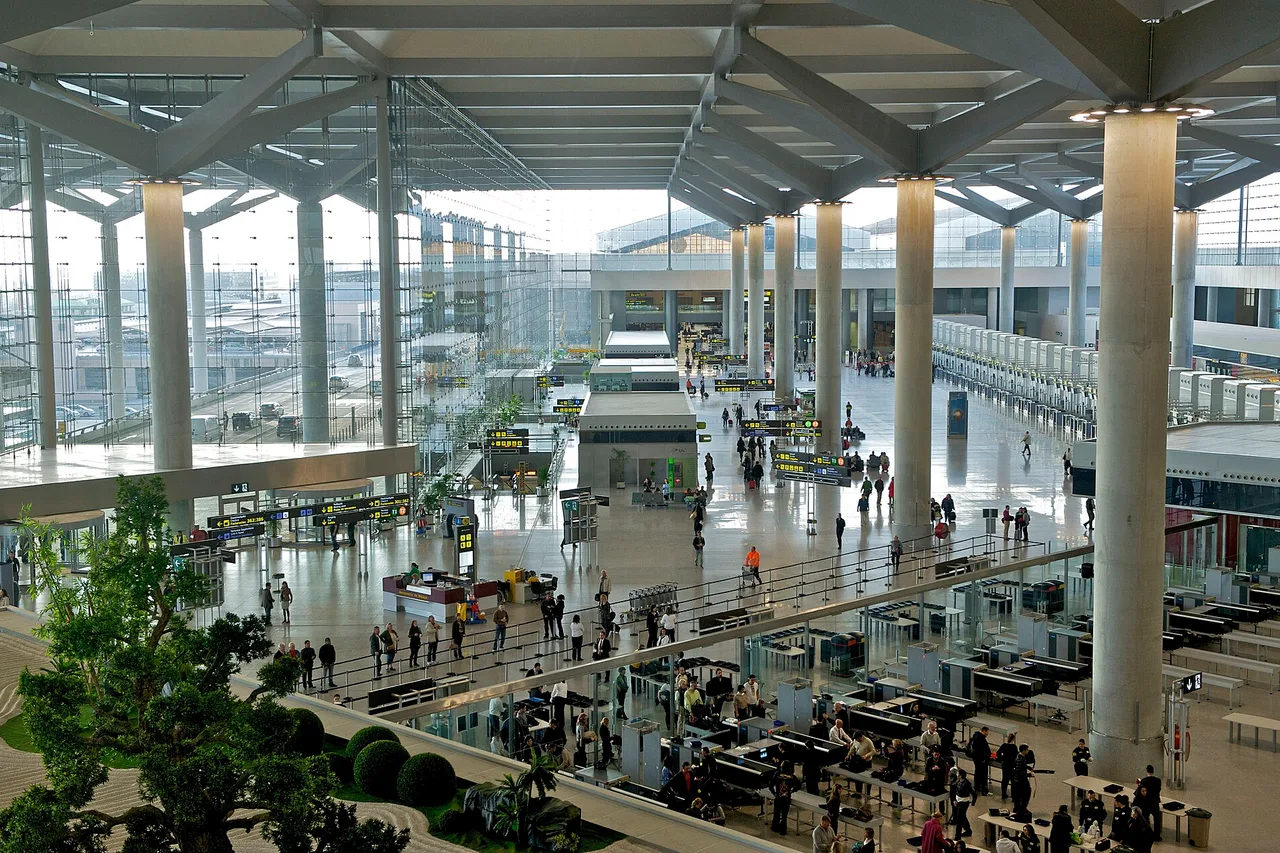
In Madrid, the metro serves Barajas; a €3 airport supplement is added to the single ticket. The simplest alternative is the Exprés Aeropuerto bus, line 203, at €5 whatever the distance: it runs from Atocha between 6 am and 11.30 pm, and from Plaza de Cibeles overnight. If you buy the Abono Turístico — from €8.40 a day in zone A — it covers the airport supplement and every journey of your stay.
In Barcelona, watch out for a classic trap: the T-casual is not valid at the airport stations. You need the specific airport ticket for metro line L9 Sud, around €5.90, for a thirty to thirty-two minute ride; the Hola Barcelona card, on the other hand, is accepted. The Aerobús costs €7.45 one way and €12.85 return, valid ninety days. The Renfe R2 Nord train is the cheapest, around €4.60 to €4.90, but it only serves terminal 2.
There is one case where those solutions fall short, and it is a specific one: a night arrival, in a group, with suitcases and children, heading somewhere poorly served. Only then does a private transfer booked in advance make sense — the price is fixed before departure and the driver waits if the flight is late. For a daytime arrival, one or two people, the metro and the bus remain the right call: we say it in that order because that is the true order.
Our answer, case by case
Here is how we would decide, depending on your situation.
First trip to Spain, three or four nights: Barcelona. It is more immediate, more spectacular, and you come home won over. Book the Sagrada Família and Park Güell as soon as your dates are set, especially this year.
Travelling in July or August: Madrid, despite the higher thermometer. The air is dry, the city half empties, the great museums are air-conditioned and free in the evening, and you avoid Barcelona at its most crowded.
Tight budget: Madrid, no argument. No tourist tax, free museums every day in the late afternoon, and taverns where you eat well for little.
With children or teenagers: Barcelona, for the beach. A morning of sightseeing and an afternoon in the water is an equation that holds for a whole stay.
You have been to Spain before, or you want the city rather than the monuments: Madrid. It is the city people prefer on their second trip, by a distance.
You have a week: both. Three nights in each and two and a half hours of train between them. It is the best of the three trips, and it costs barely more than one.
Top-rated activities in Spain, bookable online: