“Avoid July and August, it is hot”: that is what you will be told everywhere. It is true, and it is useless — because it does not say how hot, and it suggests a heatwave you might dodge with luck. The official figure is clearer: in Seville the average July maximum is 36.0 °C. Not a peak. The average of the daily highs. An ordinary day.
The figure that settles the question
You will be told to “avoid July and August”. That is correct and insufficient, because it does not say by how much, and because it suggests an accident of heatwave. The Spanish meteorological agency’s climatological normals for the Seville Airport station over 1981-2010 put it differently: the average July maximum there is 36.0 °C.
Read that again: the average of the daily highs. Not the record for the month — the ordinary day. Which means a good half of July days exceed it, and days beyond 40 degrees are nothing remarkable.
The whole year, in official figures
Here is the full table of the months that matter for a trip. It is for Seville; Córdoba is slightly hotter, Granada cooler at night, the coast markedly milder.
| Month | Average high | Mean | Average low | Rain |
|---|---|---|---|---|
| January | 16.0 °C | 10.9 °C | 5.7 °C | 66 mm |
| April | 23.4 °C | 17.3 °C | 11.1 °C | 54 mm |
| May | 27.2 °C | 20.7 °C | 14.2 °C | 30 mm |
| July | 36.0 °C | 28.2 °C | 20.3 °C | 2 mm |
| August | 35.5 °C | 27.9 °C | 20.4 °C | 5 mm |
| September | 31.7 °C | 25.0 °C | 18.2 °C | 27 mm |
| October | 26.0 °C | 20.2 °C | 14.4 °C | 68 mm |
📌 One precision we insist on writing: the page consulted gives these normals for the 1981-2010 period, not the 1991-2020 one you might assume. We would rather give you the exact period than a flattering decade — it is the single figure this entire article rests on.
The two windows that genuinely work: May and October
The table names them without ambiguity. May shows an average high of 27.2 °C and 30 mm of rain; October, 26.0 °C and 68 mm. In both cases you walk all day without organising your visit around shade.
They are two different windows, and the choice turns on something other than temperature: in May the countryside is still green and the days are lengthening; in October everything is golden, the sea stays warm after summer, and it rains more — 68 mm, the same as January.
September deserves its own mention: at 31.7 °C average maximum it stays hot, but it is incomparably more workable than July, and visitor numbers fall from the second fortnight.
April: the constraint the guides forget to mention
On paper April is the perfect month: 23.4 °C average maximum, countryside in flower. In practice it carries a calendar constraint that can ruin a poorly prepared trip.
Holy Week, and then the Seville Feria, fill the city. Accommodation is booked months ahead, prices rise sharply, and crossing the centre during the processions is a test of patience. That is not a reason to flee — it is an exceptional moment, and many people come precisely for it.
🟢 The concrete advice: if you are coming for those festivities, book very early and accept the rates. If you are coming for the monuments and the streets, shift by two weeks: you keep the same climate without the crowds or the prices. ⚠️ And check the date: Easter moves every year, and Holy Week can fall in late March as easily as mid-April.
May in Córdoba: a reason to come, not merely a bearable climate
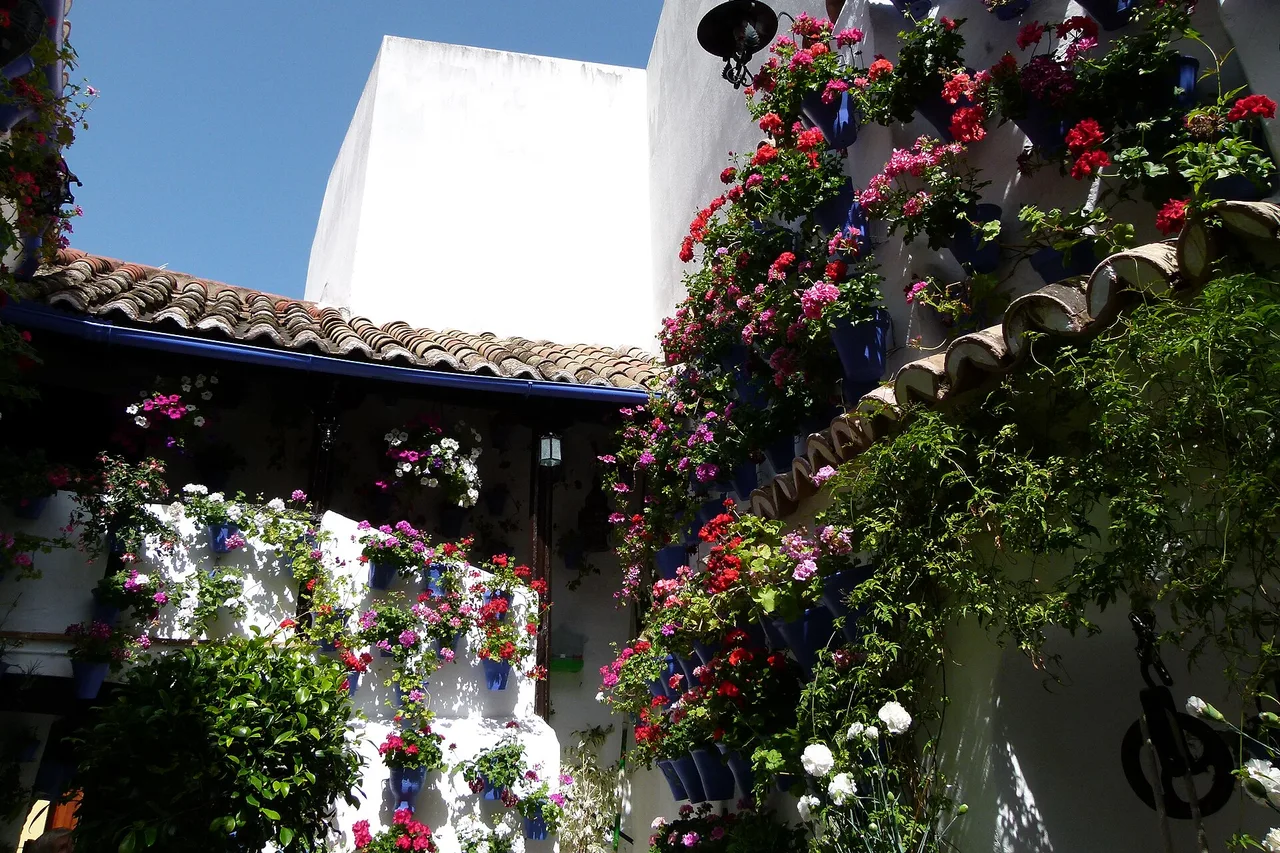
There is one more argument for May, and it is not climatic. It is the month when the patios of Córdoba open and flower — those white inner courtyards covered in potted geraniums that residents open to visitors.
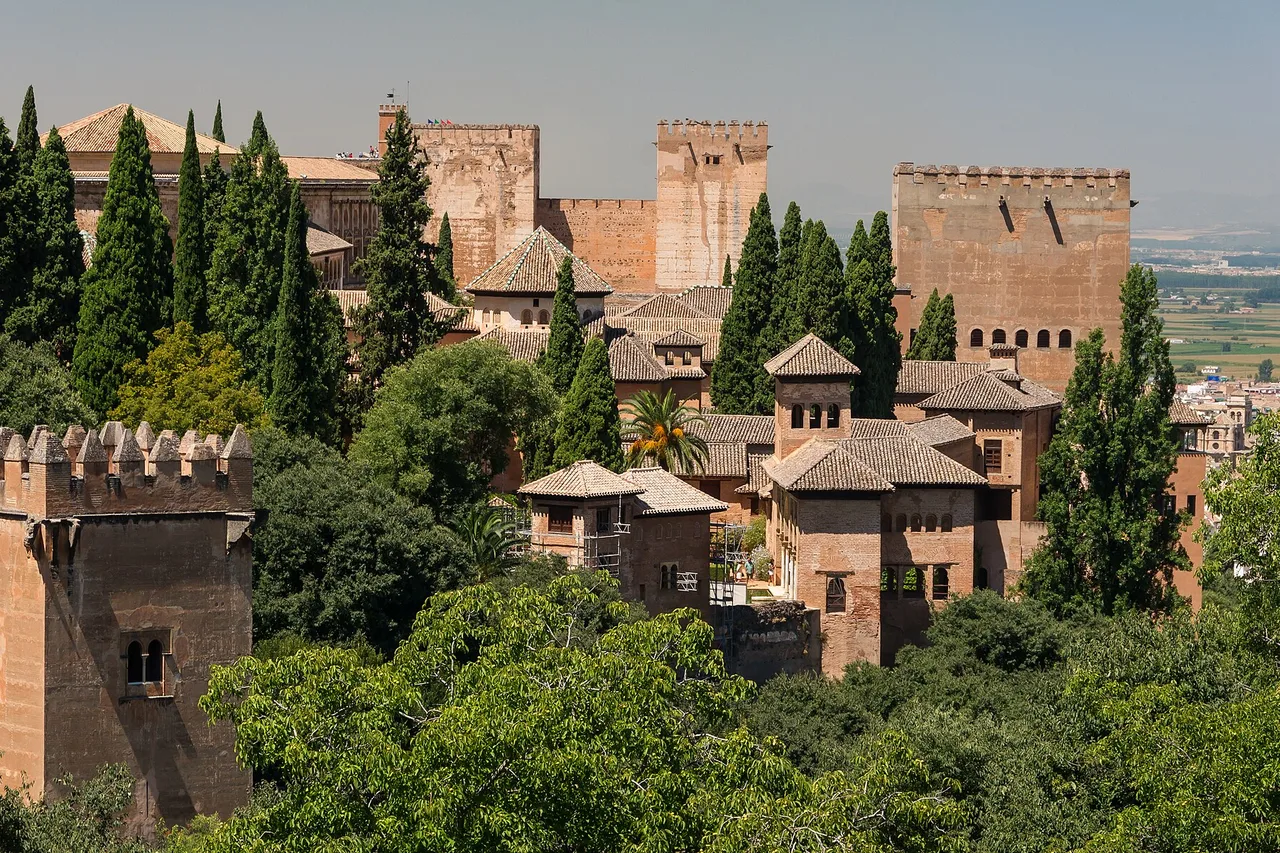
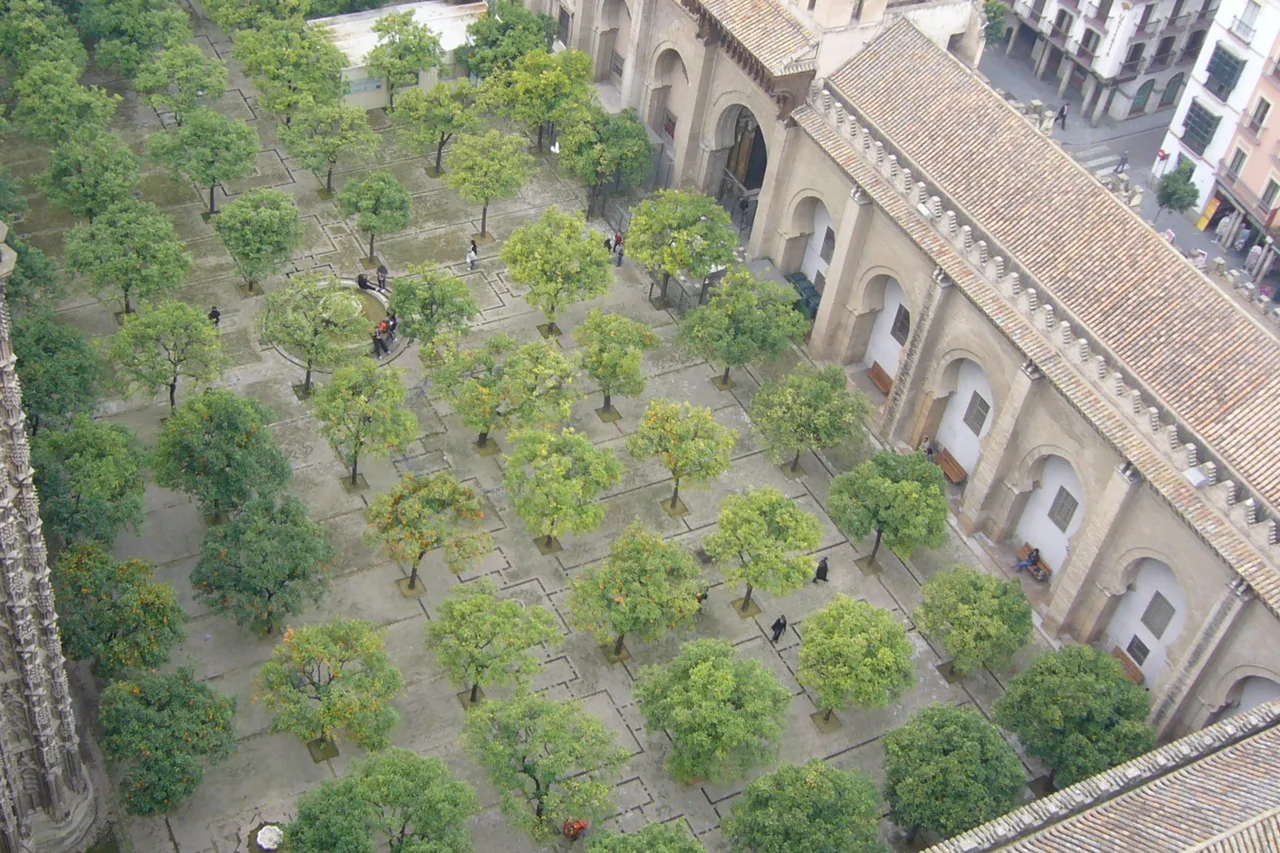
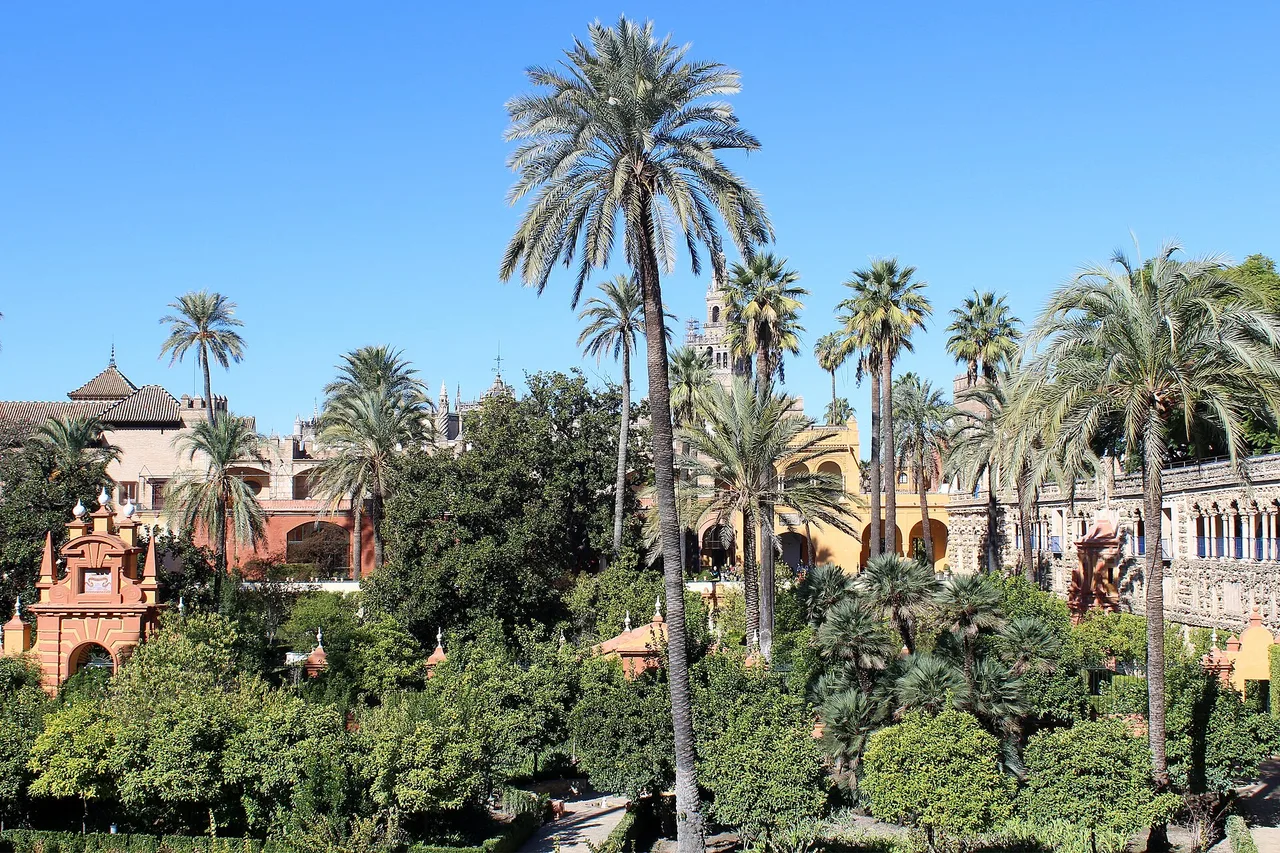
It is also a useful lesson in architecture for the rest of your stay: the Andalusian patio, like the Alcázar gardens or the orange-tree courtyard of Seville cathedral, is a device against heat — shade, water, moving air. These places remain the best refuges of the day, whichever month you come.
Escaping the heat without changing month ①: altitude
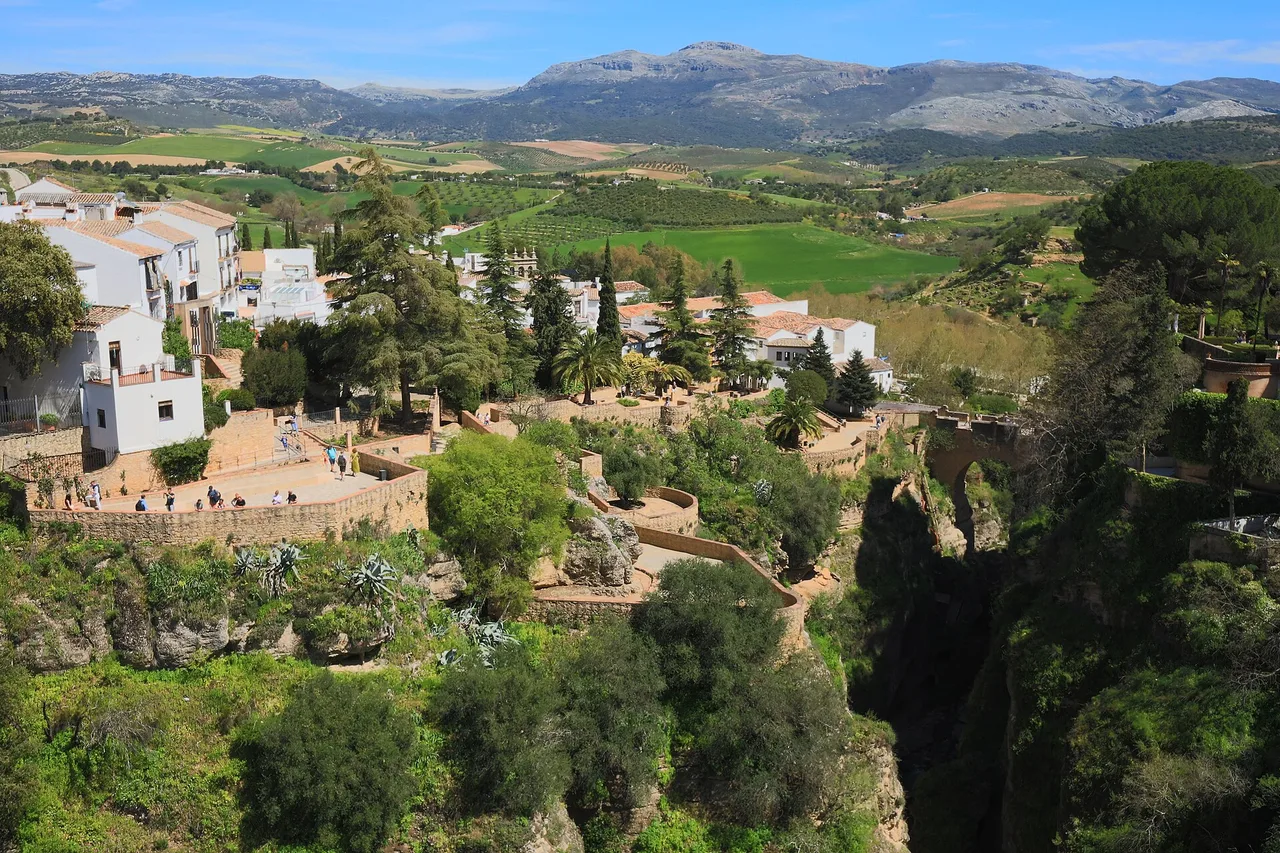
This is the solution people consider least, and it is often the best. Andalusian heat is a valley phenomenon: the Guadalquivir, where Seville and Córdoba lie, is a low plain that accumulates heat with no sea to temper it.
A few hundred metres higher, everything changes. Ronda, Grazalema and the sierra villages sit several degrees below the valley, and above all the nights there are genuinely cool — which matters more than the afternoon peak when it comes to sleeping.
📌 In practice this allows a summer trip that actually holds together: the cities early in the morning, the sierra in the afternoon and at night.
Escaping the heat without changing month ②: the right coast
Andalusia’s two coastlines are not remotely equivalent in summer, and many visitors find this out on arrival.
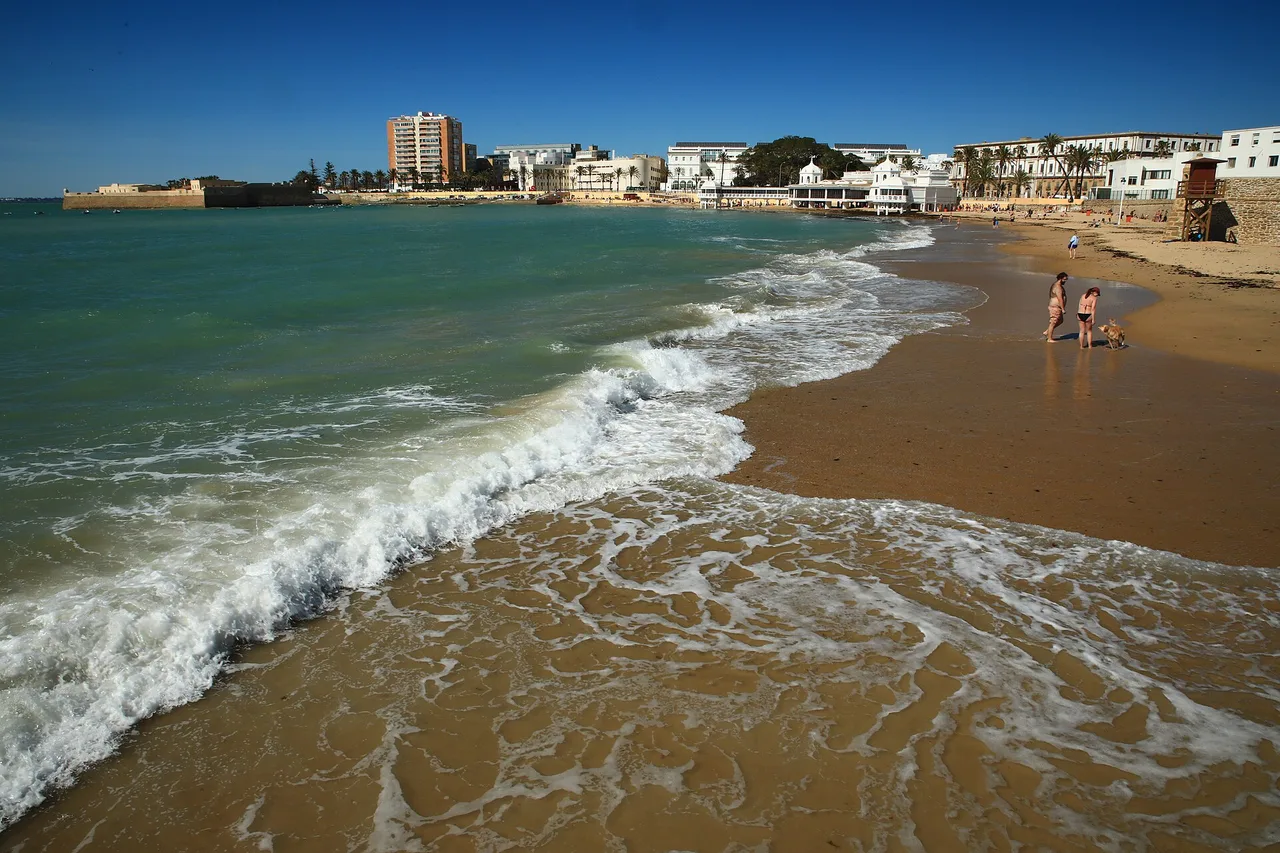
The Atlantic coast — Cádiz, Tarifa, the Costa de la Luz — is windy and tempered by the ocean. It is noticeably more breathable than the interior at the same hour, and its wind is a blessing in August, even if it can be irritating on the beach.
The Mediterranean coast — Málaga, the Costa del Sol — is hotter, less windy, and its sea is warmer. It is the better coast for long swims, the worse one for escaping the heat.
If you are coming in July or August regardless
Sometimes it is the only possible window, and it comes down to three decisions.
① Adopt the local rhythm instead of fighting it. Go out early — monuments often open around nine and the first two hours are the best —, come back in between two and six, go out again in the evening, when Andalusian cities come alive. This is not a deprivation: it is how the region lives.
② Choose places built for heat. The Alcázar gardens, the patios, the interior of Córdoba’s Mezquita: shade, water, moving air. A city centre in full sun at three in the afternoon is not a visit, it is an ordeal.
③ One practical point in your favour: it barely rains. 2 mm on average in July, 5 mm in August. You will not lose a single day to the weather — the only variable to manage is heat.
⚠️ To place the extremes in order of magnitude: 47.4 °C was measured at Montoro, in Córdoba province, on 14 August 2021 — one of the highest readings ever recorded in Spain. It is not a typical day, but it shows what the Guadalquivir valley is capable of.
Winter, the option almost nobody considers
For the cities this is Andalusia’s most underrated season. In Seville the average January maximum is 16.0 °C against an average minimum of 5.7 °C: you visit in a jacket, never hunting for shade, and the monuments are empty.
The trade-offs are honest and worth knowing: 66 mm of rain in January — October’s level —, short days, it is not a beach season, and part of the coastal resorts runs at half speed. In exchange, it is also when accommodation costs least.
Full guide: Where to stay in Seville: a guide to the neighbourhoods
In short
If you take only four things away:
① In Seville, 36.0 °C is the AVERAGE July high, not a peak (normals 1981-2010). The heat is not a risk, it is the climate. ② The two real windows are May (27.2 °C) and October (26.0 °C); September stays hot but workable. ③ April is superb but crowded: Holy Week and the Feria fill Seville, and the date of Easter moves every year. ④ You can escape the heat without changing month, by going up in altitude (Ronda, Grazalema) or by choosing the Atlantic coast over the Mediterranean.
And if summer is your only option: out early, back by two, out again in the evening. It will not rain — the only good news about July, but it is a solid one.