You can walk across Seville's old town in twenty-five minutes. That is enough to make the question "which neighbourhood?" far less decisive than it looks — and to make three details almost nobody checks far more decisive: soundproofing, air conditioning, and what happens to your car if you have one. Here is what each area actually gives you, what it takes in return, and the two weeks a year when all of these rules stop applying.
The three questions that decide, before the neighbourhood does
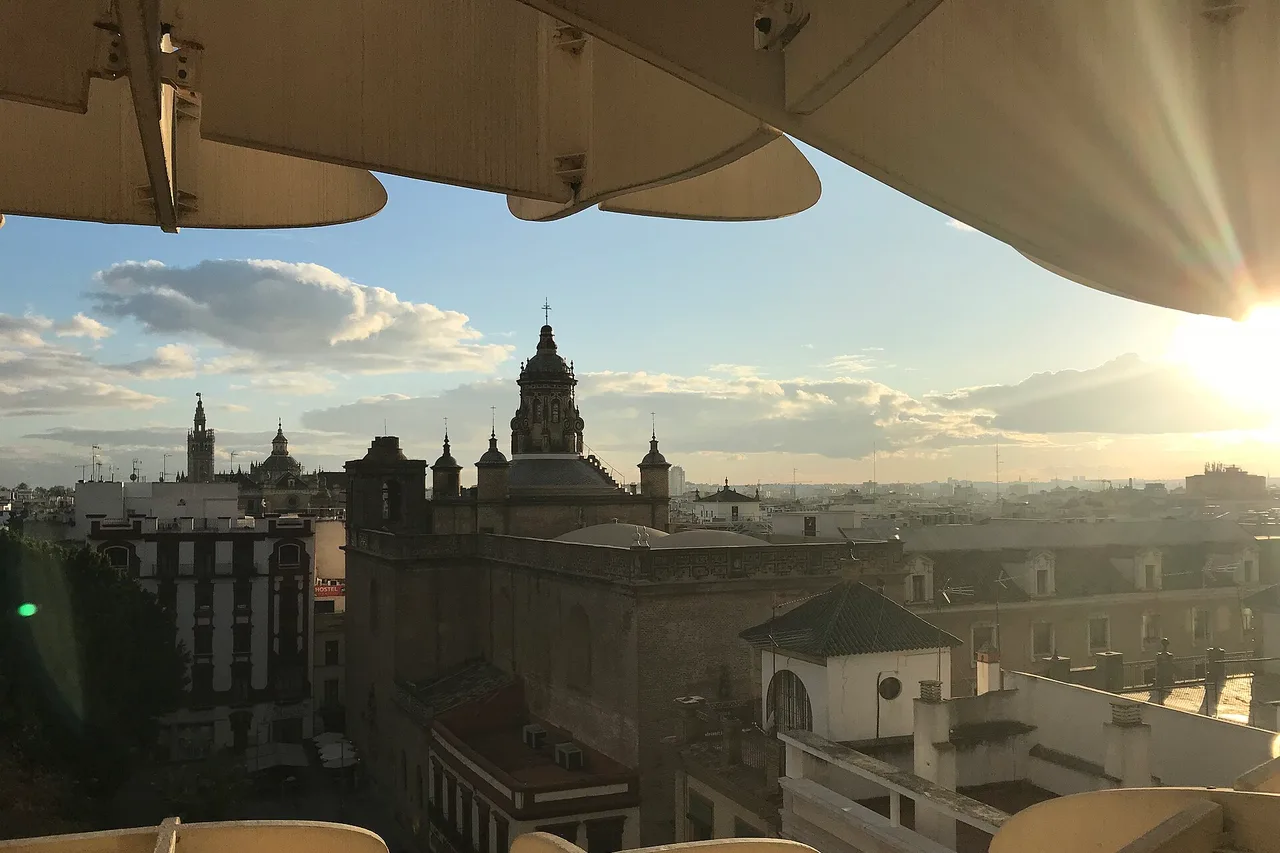
Seville's historic centre fits into a rectangle you can walk across in twenty-five minutes. Your choice of district therefore barely changes your distances. It changes three other things.
Noise. This is by far the leading cause of a ruined stay in Seville. The streets of the centre are narrow, cobbled and lined with hard façades: sound is not absorbed, it bounces. A bar terrace fifteen metres from your window sounds as if it were in the room, and Sevillanos eat late. The good news is that this can be checked before booking: look for double glazing, ask for a room facing a patio or inner courtyard rather than the street, and read recent reviews searching for the word "noise" rather than the word "location".
Air conditioning. From April to October this is not a comfort, it is the condition for sleeping: Seville regularly passes 40 °C in July and August, and the nights barely cool down. A place without air conditioning in high summer is unusable, whatever its district. Since April 2025, Andalusian rules in fact require it in registered tourist accommodation, alongside ventilation and a minimum floor area of 25 m².
The car. If you do not have one, skip this and choose freely. If you do, it governs everything else — more on that below, because it is where mistakes cost the most.
One word, finally, about supply, which has changed recently. Since April 2025 Seville no longer issues new tourist-accommodation licences in neighbourhoods where such properties already exceed 10 % of the housing stock — the Casco Antiguo and Triana first among them. In practice: the number of tourist flats in the centre is no longer growing, and an unlicensed flat can have its booking cancelled. If you go for an apartment rather than a hotel, a registration number on the listing is the one thing genuinely worth checking.
Santa Cruz: the prettiest, the priciest, the least practical
This is the Seville you picture before arriving: white lanes, flowered patios, orange trees. It is accurate — and it is a district you pay for in convenience as much as in euros.
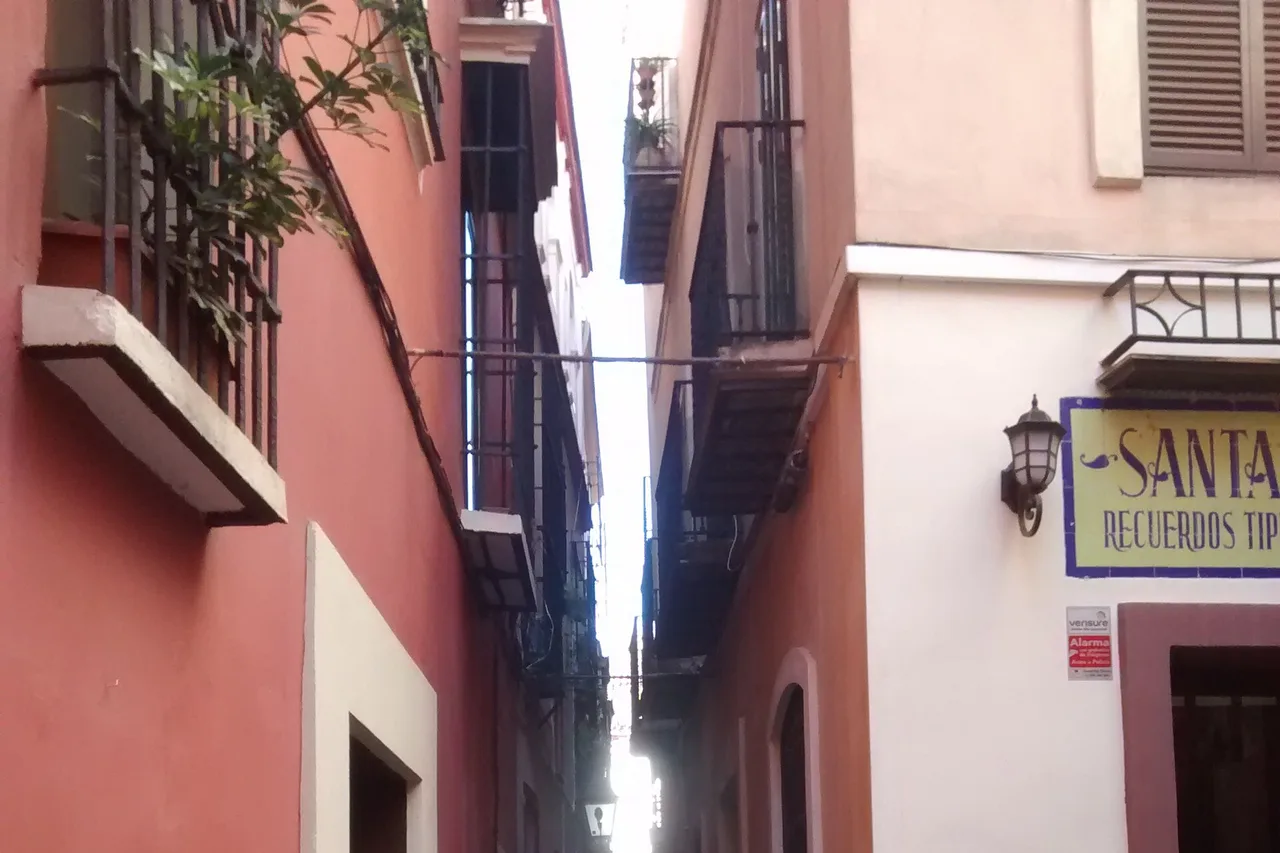
The old Jewish quarter is pressed against the Real Alcázar and the cathedral: from most hotels you are at the entrance in five minutes. In the morning, before nine, it is extraordinary and almost empty. In the evening it quietens down early, because it is a place people walk through rather than go out in.
Its three drawbacks, in the order you discover them. The lanes are so narrow that no taxi will drop you at the door: you end up walking your cases over cobbles, which you feel when your flight lands at midnight. Prices are the highest in the city for equivalent quality, scarcity doing the rest. And you will get lost — genuinely, not as a figure of speech: the streets turn, dead-end, and pedestrian GPS regularly loses the signal.
Who it suits: a short stay, without a car, where location and setting outrank everything else. Who it does not: families with a pushchair, and anyone arriving late.
Alfalfa and the shopping centre: the best compromise
If you had to pick one district for a first visit, it would be this one — because it asks you to give up nothing that matters.
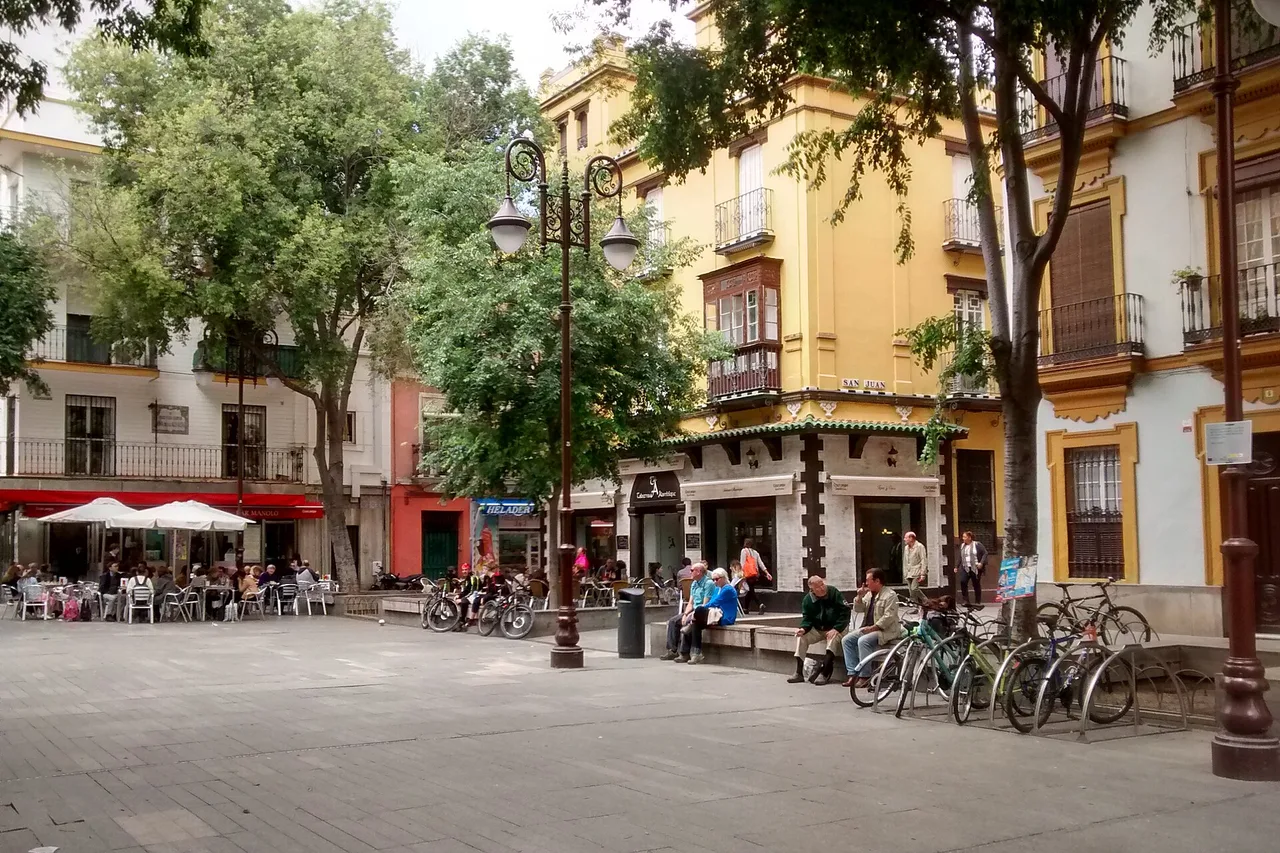
The area running from Plaza de la Alfalfa to Calle Sierpes, by way of Plaza del Salvador, is the living centre of Seville: where locals shop, meet for a drink, and go about the year. You are five minutes' walk from the cathedral, ten from the Setas, a quarter of an hour from everything else. Prices are noticeably softer than in Santa Cruz and the choice is far wider — mid-sized hotels, apartments, small characterful addresses.
The trade-off is single and well known: it is noisy. La Alfalfa is a tapas district, terraces run late, and at weekends the square itself does not empty before one in the morning. The workaround is simple and applies across the centre: ask for a room on the patio side, or pick a side street rather than the square itself. Thirty metres of offset is enough to change the night.
Who it suits: almost everyone, and three-to-five-night stays without a car in particular. Who it does not: light sleepers who book above a bar without checking.
Arenal: the central district you pick when you have a car
Wedged between the cathedral and the Guadalquivir, El Arenal is the only genuinely central area where the car question does not become a problem.
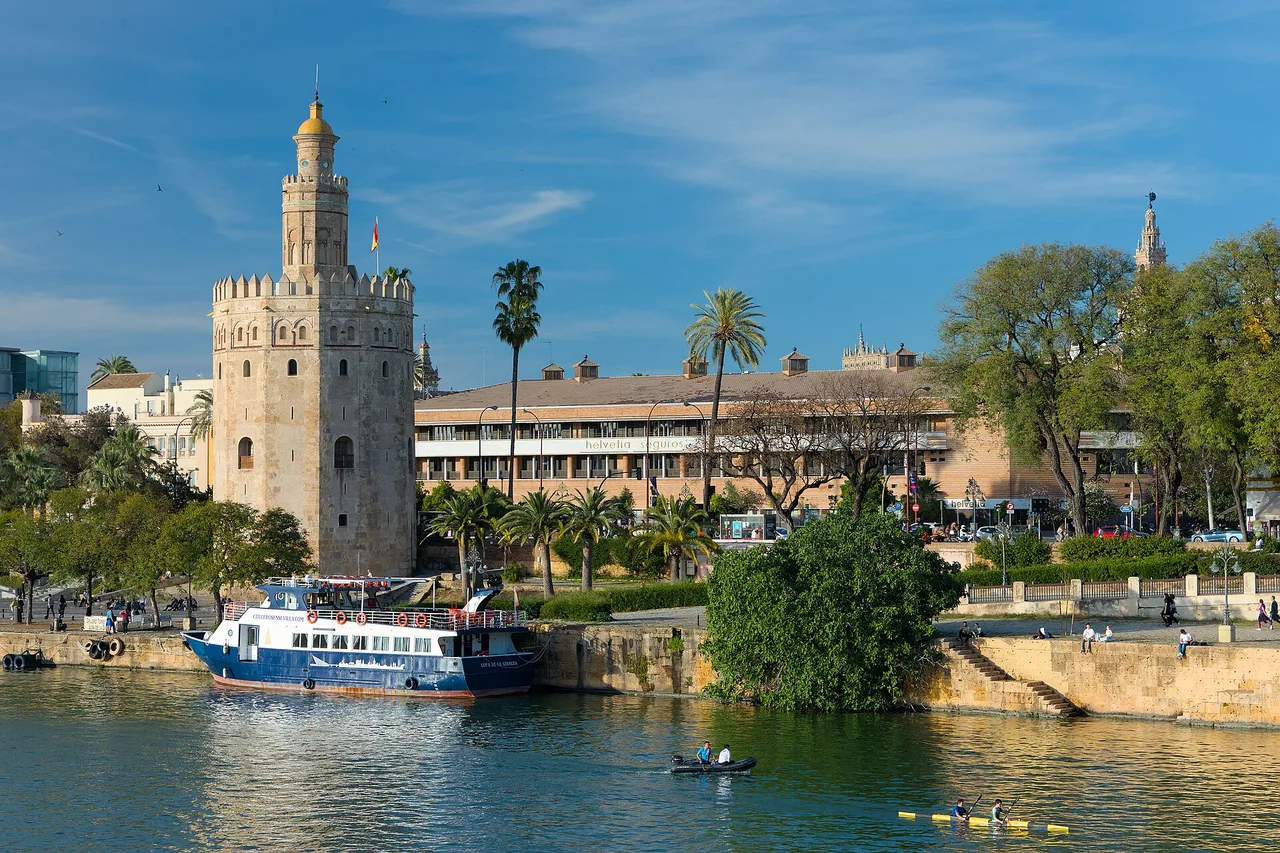
It holds the Torre del Oro, the Maestranza bullring and, above all, the Paseo de Colón — a wide axis lined with public car parks, by which you enter and leave the city without crossing the maze. It is also quieter in the evening than La Alfalfa, and still seven or eight minutes on foot from the cathedral. Hotels here tend to be a little larger, with real lifts and sometimes a garage — two details that seem trivial until you have carried a suitcase up a seventeenth-century staircase.
What you give up: charm. El Arenal is a pleasant district, not a photogenic one, and you will not find the patios of Santa Cruz. It is a perfectly clear trade.
Who it suits: travellers with a car, families, longer stays, anyone who wants to sleep without negotiating with a terrace. Who it does not: those who came for the setting as much as the city.
Triana: across the river, and not far for it
"Triana is outside the centre" is the most persistent myth on this subject. Look at a map: the bridge takes five minutes on foot.
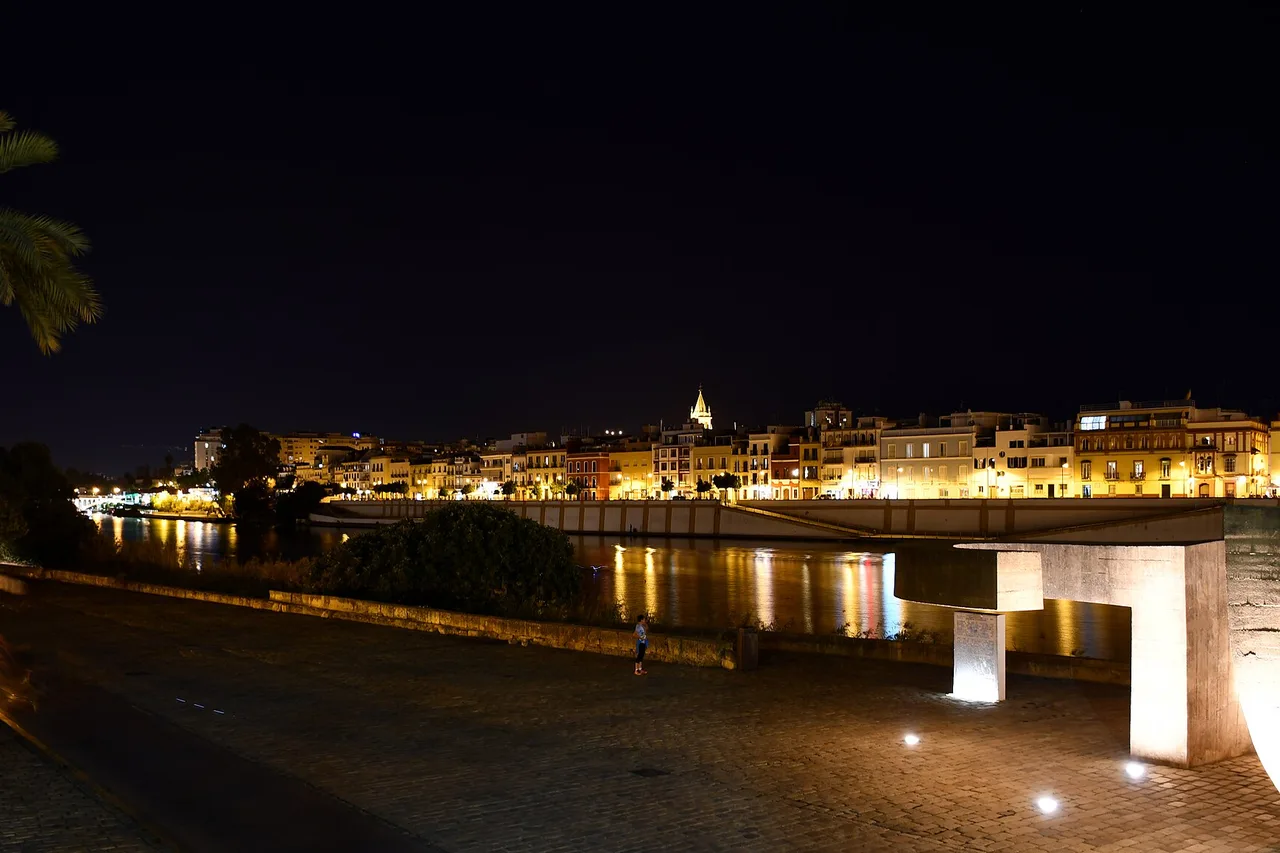
Triana is an old quarter of sailors, ceramicists and gitanos that has stayed fiercely apart — Trianeros will tell you they do not go "to Seville", they go down to it. In practice you stay in a district that lives for itself: the Triana covered market, the bars of Calle San Jacinto, the ceramic workshops of Calle Alfarería. Restaurants are cheaper and far less geared to passing trade than around the cathedral. And from Calle Betis, on the riverbank, the view back over the old town is the finest in Seville.
Apartments are larger and cheaper than across the water for the same floor area, which makes this the best choice for a family or a week-long stay. Two honest reservations: Calle Betis itself is very lively in the evening, as any riverbank in a southern city is; and if you are only staying two nights, ten minutes of bridge morning and evening starts to weigh.
Alameda de Hércules and Macarena: cheaper, livelier, louder
This is the north of the old town, and where prices genuinely drop — for a specific reason.
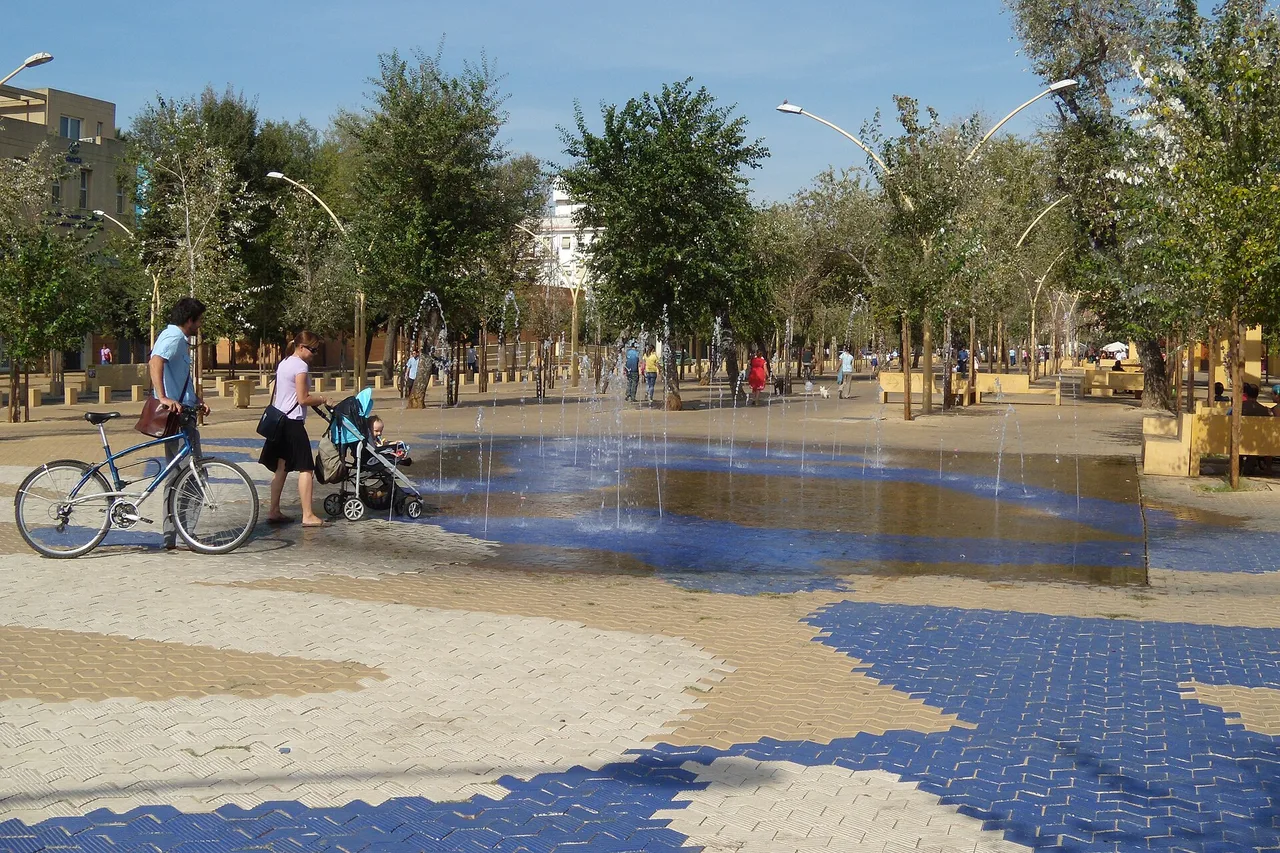
The Alameda de Hércules is a long tree-planted esplanade, lined along its whole length with bars, terraces and stages. The district is the youngest, most alternative and most mixed in Seville: it is also the only central one where you meet more locals than visitors. Further north, the Macarena continues the same logic, with its basilica, its city walls and prices lower still.
It is worth saying plainly why it is cheaper: the Alameda is the heart of Seville's nightlife. At weekends the esplanade is full until three in the morning, and a place facing straight onto it will not be quiet. That is not an objection in itself — for many travellers it is precisely the point — but it becomes one if you discover it on arrival. The thirty-metre rule applies here more than anywhere: one side street changes everything.
Allow fifteen to twenty minutes on foot to the cathedral: it is the most distant district in this selection, and it is still a walk.
Nervión and Santa Justa: the two cases where they are right
These districts are not in the guidebooks and have no particular charm. They do solve two real problems.
Around Santa Justa station, you stay half an hour's walk from the centre — or ten minutes by taxi — in business hotels that are often markedly cheaper at weekends, once their usual clientele has left. It is the right call if Seville is one leg of a rail trip: the AVE puts you in Madrid in two and a half hours, and you have no suitcase to drag over cobbles.
Nervión, further east, is a modern residential district: large flats, lifts, supermarkets, parking, and prices a third below the centre. It is served by metro line 1, which reaches the centre in a few minutes. It is a rational choice for a long stay, or for a family that needs space more than a view.
In both cases the sacrifice is the same, and it is real: you no longer step out of the hotel for a drink at the foot of the cathedral. If your stay is two or three nights, that sacrifice costs more than the money saved.
The neighbourhoods at a glance
| District | On foot | Price | Evenings | Best for |
|---|---|---|---|---|
| Santa Cruz | 0-5 min | Highest | Quiet | Short stay, no car, no heavy luggage |
| Alfalfa / centre | 5 min | Mid | Lively | First visit, 3 to 5 nights |
| Arenal | 7-10 min | Mid | Quiet | With a car, families |
| Triana | 10-15 min | Moderate | Lively by the river | Week-long stays, families |
| Alameda | 15-20 min | Low | Very lively | Tight budgets, going out |
| Santa Justa / Nervión | 25-30 min | Lowest | Residential | Rail stopovers, long stays |
The car: the one real trap of the trip
This is where money is lost without seeing it coming, and the mechanism is worth understanding before booking anything.
Two different schemes are routinely confused. The low-emission zone proper covers the Isla de la Cartuja, to the north-west, and targets the most polluting vehicles — a recent hire car is not affected. The real issue is elsewhere: the historic centre has been a limited-traffic zone since January 2022, on a perimeter following the Paseo de las Delicias, the Paseo de Colón and Reyes Católicos. Inside it, unrestricted access is reserved for residents and holders of a garage space. It is not a question of the vehicle's age: it is a question of authorisation. The standard fine is €200, reduced to €100 if paid early, and it arrives by post several weeks after the trip.
The rule that avoids all of it: never drive into the centre unless your hotel has arranged access in advance, and ask in writing before you book the car, not after. If the hotel has no garage, the answer is a public car park on the edge of the centre — from around €17 a day when booked ahead near the Paseo de Colón, more in hotel garages. And the best advice remains the simplest: in Seville, a car is useless. It is only justified if you are heading out to Ronda, Cádiz or the white villages — in which case pick it up on the morning you leave and return it the same evening.
Arriving, leaving, and the six-hour gap in between
Two practical moments decide how comfortable a stay feels, and they bracket everything else: the ride in from the airport, and the afternoon after you check out.
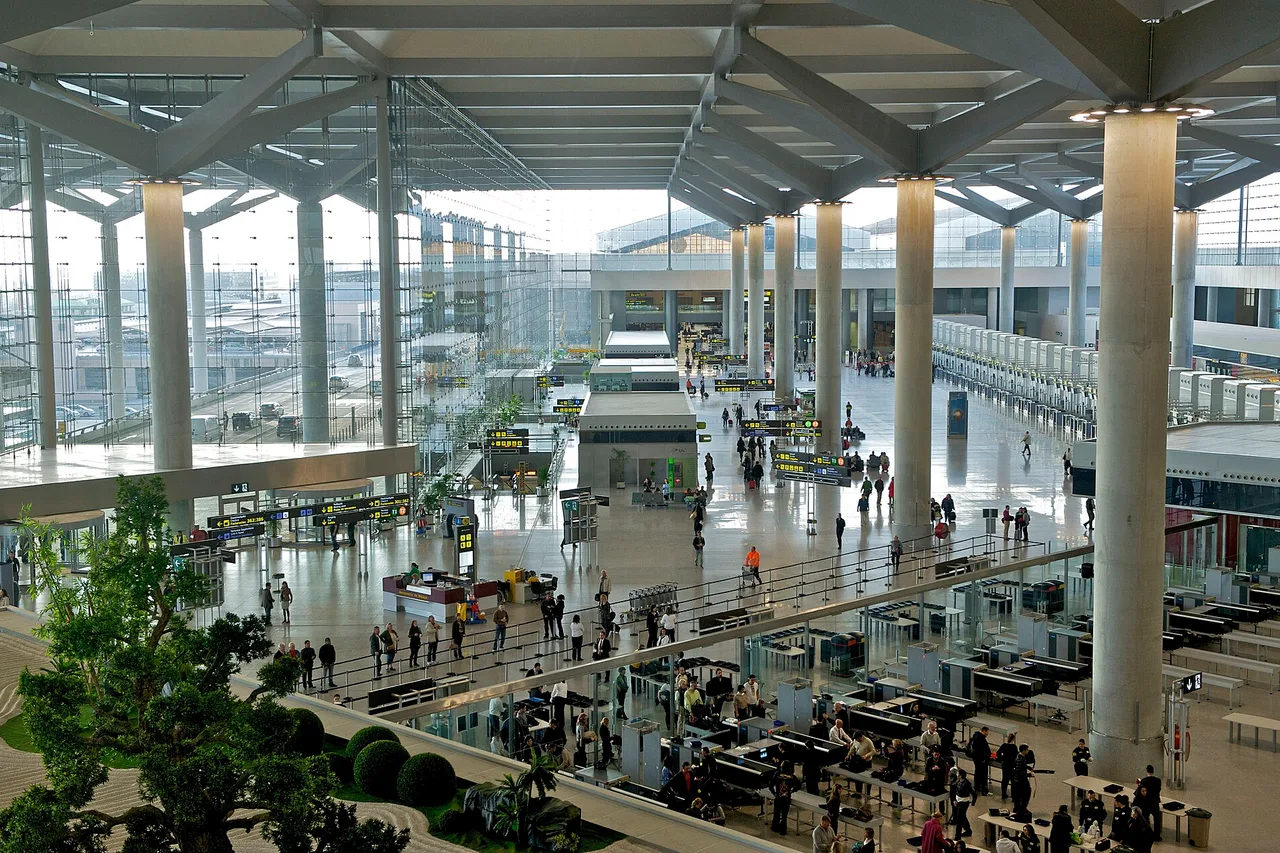
On arrival, the cheapest option is also a good one. The EA bus links San Pablo airport to the centre in about thirty-five minutes for €6 one way and €8 return, tickets bought on board in cash or by card. It serves Santa Justa, Prado de San Sebastián and Plaza de Armas — which puts every district in this article within a walk or a short taxi ride. It runs every twelve to twenty minutes during the day, and the last departure from the airport is at one in the morning. Taxis apply a fixed fare to the centre: €26 Monday to Friday from 7 am to 9 pm, €29 at night, at weekends and on public holidays. It is a fixed fare, not a meter: there is no nasty surprise to fear.
One case remains where neither works well: landing after the last bus, several of you with cases, heading for a place in Santa Cruz where the taxi stops three streets from the door. That is the one situation where a private transfer booked ahead changes something — the driver waits if the flight is late, knows the authorised drop-off points at the edge of the zone, and the price is agreed before you set off. Private airport transfers in Seville cover the city. For a daytime arrival, one or two people, the €6 bus is still the right call — we say it in that order because that is the true order.
On departure the problem is reversed. The room goes at noon, the train or flight leaves in the evening, and a whole afternoon remains with the luggage. First reflex, free and often forgotten: ask your hotel to keep your bags — almost all do, at no charge, including after check-out, and many rental apartments offer the same. Santa Justa station also has left-luggage lockers. If you are staying far from the station or in an apartment with no reception, luggage storage points in central Seville are the alternative: partner shops, a daily rate, open later than most receptions. Use it only if the first solution does not exist.
A last point that lightens the bill: there is no tourist tax in Andalusia in 2026 — not in Seville, nor anywhere else in the region. The advertised price is the price paid. The debate about introducing one has reopened in Seville, but nothing has been voted through so far.
The two weeks when none of the above applies
There are two periods when reasoning by neighbourhood no longer holds, because the whole city changes how it works.
During Holy Week, processions occupy the historic centre continuously, several hours a day, and streets are physically closed along their routes. Getting back to your hotel can mean a long detour, or a wait. Staying in the heart of Santa Cruz then becomes a handicap rather than an advantage — El Arenal, Triana or the Alameda are easier to reach. During the Feria de Abril, life shifts south-west, to the Real de la Feria in Los Remedios: it is the only moment of the year when staying on that side of the river makes sense.
In both cases rates double or triple, and central accommodation goes six months to a year ahead. In 2027, Holy Week runs from Sunday 21 to Sunday 28 March, and the Feria from Tuesday 13 to Sunday 18 April, with the alumbrado on the night of Monday the 12th — Wednesday 14 April being a local public holiday in Seville. These dates move every year, since they follow Easter.
If you are coming for the festivals, book very early and accept the price: it is what you came to see. If you are coming for the city, shift by two weeks — you will find the same Seville, at half the price, and you will be able to walk.