Two travellers doing exactly the same fifteen-day Yucatán loop can easily end up more than €4,000 apart. Neither luck nor the season explains it: four decisions taken before departure do — where you sleep, whether you rent a car, where you eat, and how many paid sites you visit. Here are the three budgets, costed line by line in pesos and euros, with 2026 prices.
Three budgets for the same trip
The table below describes one and the same itinerary: fifteen days, thirteen nights, a loop from Cancún to Playa del Carmen, Tulum, Valladolid, Mérida, Campeche and back. Only the way of living it changes.
All figures are given for two people, excluding international flights, and converted at the rate recorded in early September 2026: €1 ≈ 19.6 pesos.
| Line | Frugal | Comfort | Generous |
|---|---|---|---|
| Lodging (13 nights) | 9,100 pesos ≈ €464 | 20,800 pesos ≈ €1,061 | 45,500 pesos ≈ €2,321 |
| Transport | 2,600 pesos ≈ €133 | 14,900 pesos ≈ €760 | 19,900 pesos ≈ €1,015 |
| Meals | 9,800 pesos ≈ €500 | 19,600 pesos ≈ €1,000 | 36,400 pesos ≈ €1,857 |
| Sites, cenotes, entrance fees | 6,000 pesos ≈ €306 | 10,000 pesos ≈ €510 | 14,000 pesos ≈ €714 |
| Sundries (water, tips, contingency) | 1,500 pesos ≈ €77 | 2,500 pesos ≈ €128 | 4,000 pesos ≈ €204 |
| Total for two | 29,000 pesos ≈ €1,480 | 67,800 pesos ≈ €3,459 | 119,800 pesos ≈ €6,112 |
| Per person | ≈ €740 | ≈ €1,730 | ≈ €3,056 |
Two lessons come out of that table, and they are worth more than the total itself.
The first: lodging and meals together account for 62 to 68 % of the budget in all three columns. It is they, not the activities, that set the price of the trip. Trimming entrance fees to "save money" means arguing over the smallest line.
The second: moving from one column to the next does not double the trip. The ruins of Chichén Itzá are the same at €740 and at €3,056 a head; so are the cenotes, and so is the road.
Lodging: the line that decides everything
Over fifteen days, every extra 500 pesos a night adds 6,500 pesos to the budget — close to €332. It is by far the most powerful lever of the trip.
The 2026 orders of magnitude, for a double room:
| Where | Budget | Mid-range | Upmarket |
|---|---|---|---|
| Mérida, Valladolid, Campeche | 500 to 900 pesos | 1,200 to 2,000 pesos | 3,000 to 5,000 pesos |
| Tulum (pueblo) | 800 to 1,200 pesos | 1,500 to 2,500 pesos | 3,500 to 6,000 pesos |
| Tulum (beach road) | — | 4,000 to 8,000 pesos | 8,000 to 15,000 pesos |
| Playa del Carmen | 700 to 1,200 pesos | 1,500 to 3,000 pesos | 4,000 to 9,000 pesos |
The third row is the one to remember. On Tulum's beach road there is no budget offer at all: the zone begins where the others end. Four kilometres separate that road from the pueblo, and those four kilometres are worth a factor of five on the bill. Two nights on the beach within a fifteen-day trip cost less than seven nights in the pueblo dreaming about it — but thirteen nights on the beach cost more on their own than the entire comfort budget.
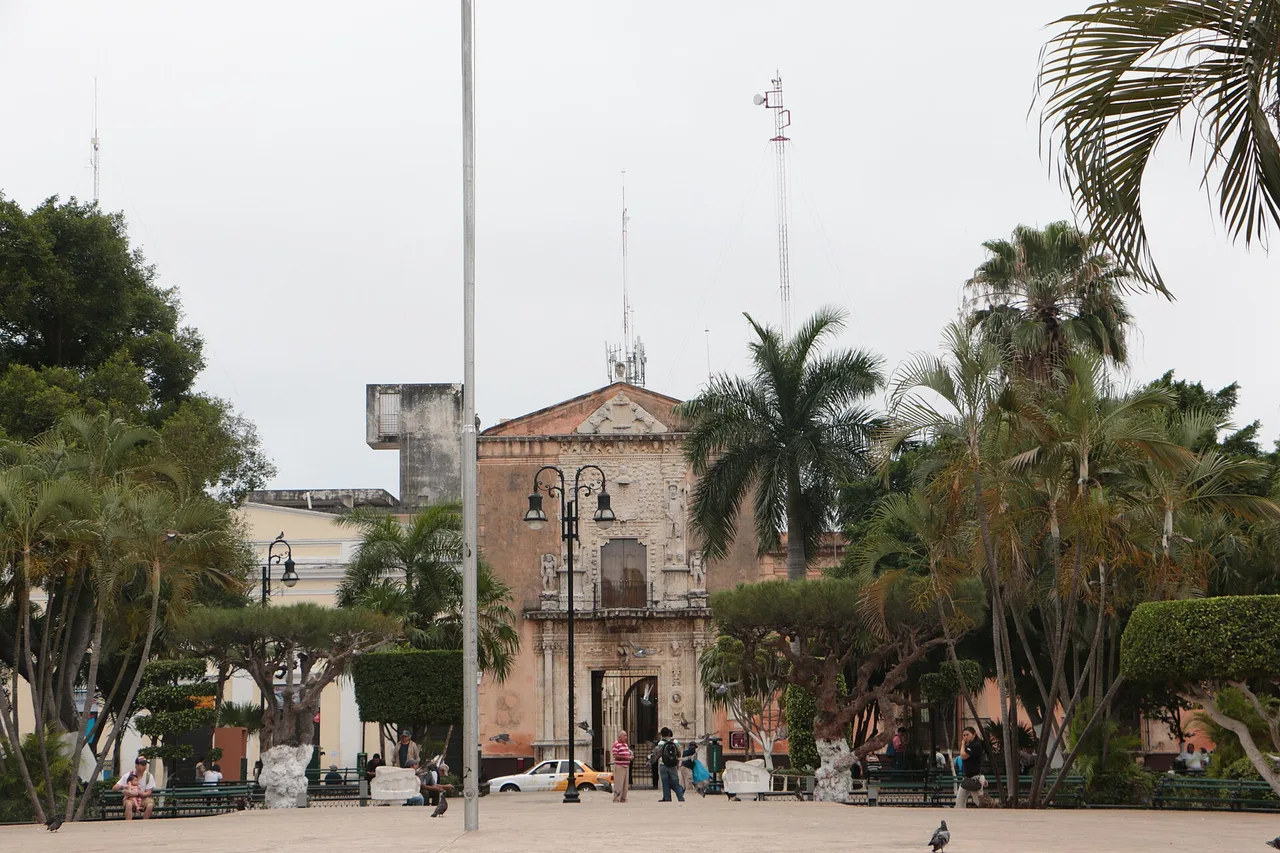
Three inland towns — Mérida, Valladolid, Campeche — offer the best comfort-to-price ratio on the peninsula, and they are exactly the ones rushed itineraries skip. A night in Valladolid costs a third of a night in Tulum, forty minutes from the Dzitnup cenotes and forty-five from Chichén Itzá.
The car: the advertised price is not the price paid
This is where people go wrong most often, and the mistake is always the same: comparing headline rates that leave out what Mexican law makes compulsory.
First, the car is not essential. ADO coaches serve Cancún, Playa del Carmen, Tulum, Valladolid, Mérida and Campeche several times a day, air-conditioned and to fixed timetables; colectivos, the minibuses that leave when full, cover short hops for around fifty pesos. A couple travelling that way spends about 2,600 pesos on transport over fifteen days. That is five to six times less than a car.
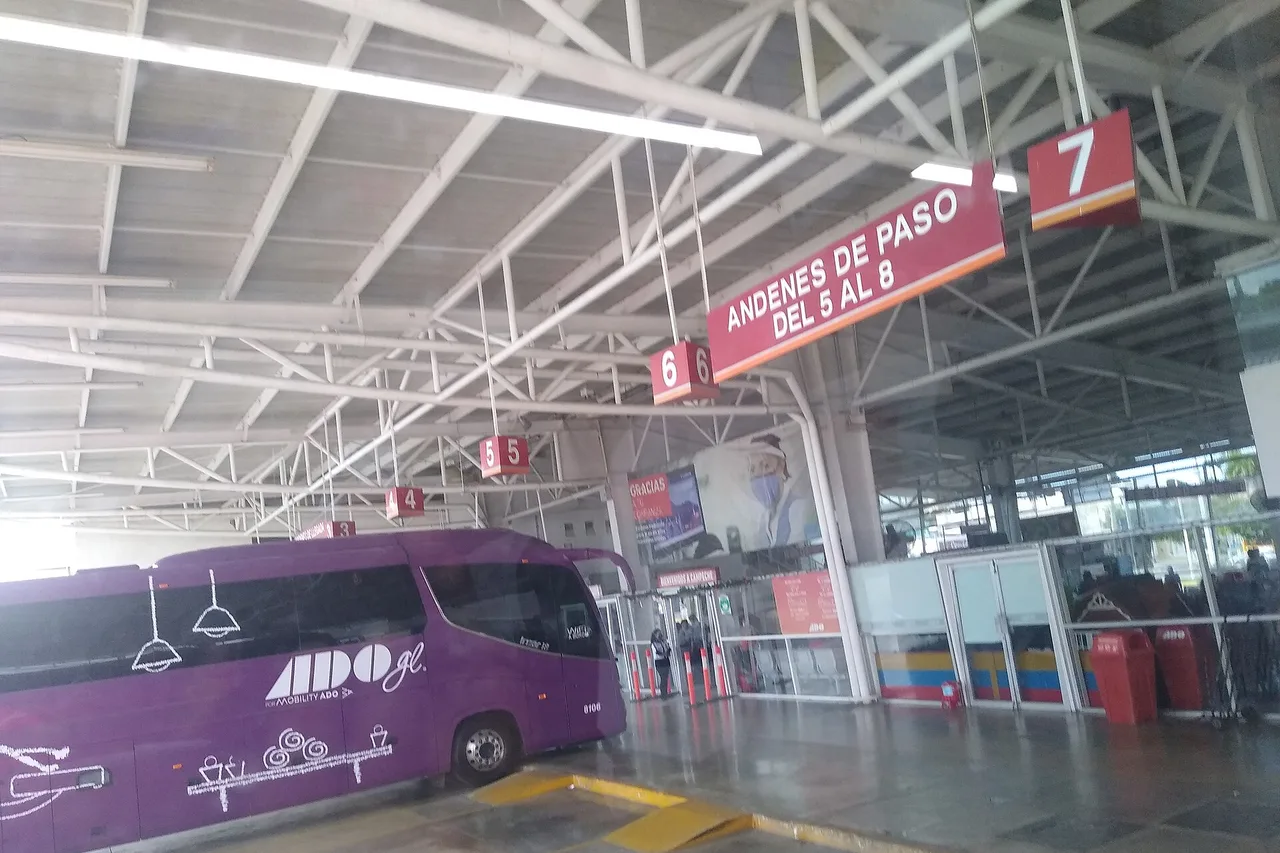
So what a car buys is not savings: it is time, and access to what the bus does not reach — inland cenotes, small beaches, the villages between Valladolid and Mérida, dawn starts ahead of the Cancún coaches. Over fifteen days, that is a serious argument.
If you do rent, one precaution is worth real money. In Mexico, third-party liability is the only insurance required by law, and comparison-site headline rates almost never include it: the desk adds it on arrival, commonly 20 to 30 dollars a day. Over fourteen days that is 280 to 420 dollars more than the price that made up your mind. An offer at €180 for a fortnight thus becomes a €500 bill.
The only honest way to compare is therefore on the total price, third-party liability included — which is why we point to local agencies in Cancún, Playa del Carmen or Mérida, which quote insurance-inclusive rates. All in, reckon on around 11,000 pesos for fourteen days in a small car, and about 16,000 for an SUV.
Two gestures that cost nothing and prevent disputes: photograph the car from every angle before leaving, bumpers and wheel rims included, and refuse to hand it back without a signed condition report.
Fuel and tolls: the sum fits in three lines
It is the only line of the trip that can be worked out exactly in advance, and almost nobody does it.
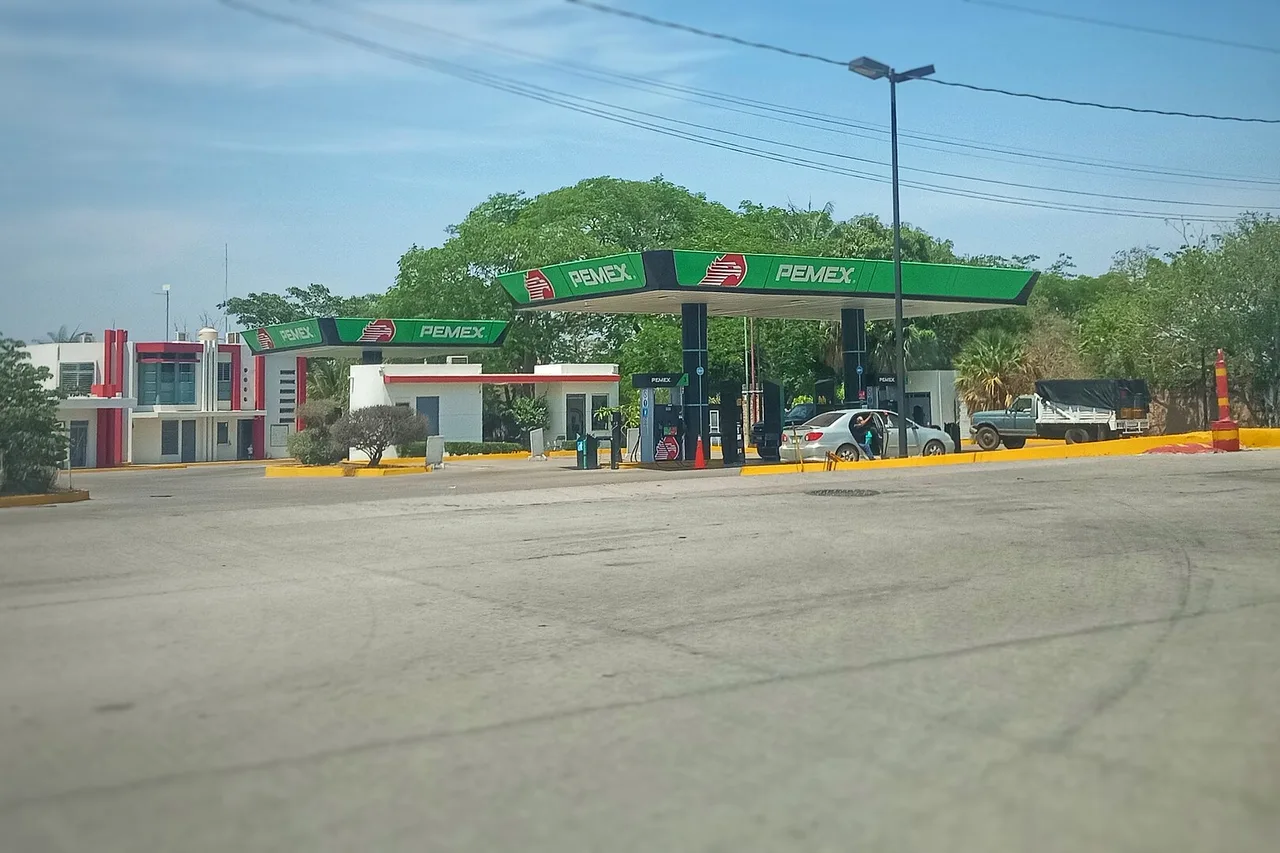
Petrol runs at around 24 to 25 pesos a litre in 2026, about €1.25 — a price that has held steady for two years. A small car uses close to seven litres per hundred kilometres on the peninsula's flat roads.
The classic Cancún – Tulum – Valladolid – Mérida – Campeche – Cancún loop covers 1,500 to 1,800 kilometres over fifteen days, cenote detours included. The sum:
1,600 km × 7 L / 100 = 112 litres × 24.5 pesos ≈ 2,750 pesos, about €140. That is all.
Tolls are the other half of the equation, and they often surprise. Reaching Cancún from Mérida entirely by toll motorway costs up to 675 pesos for a car in 2026, against 645 last year — a rise of 4.6 %. Reckon on around 1,200 pesos of tolls across a full fifteen-day loop.
Full guide: Renting a Car in Yucatán: Insurance, Deposit, Real Prices
There is a free alternative: the libre road, the historic 180, which goes through the villages instead of around them. It adds an hour to an hour and a half on the Mérida–Cancún run, it forces you to slow for countless topes — the massive speed humps at every village entrance — and it crosses precisely what the motorway makes you miss. On a rushed transfer day, take the cuota; on a day with no timetable, the libre is the best free detour of the trip.
Three details that prevent nasty surprises: tolls are paid in cash at most booths, so carry notes; parking is charged at archaeological sites, 124 pesos at Chichén Itzá; and in Tulum as in Playa del Carmen, parking in the centre costs 30 to 60 pesos an hour.
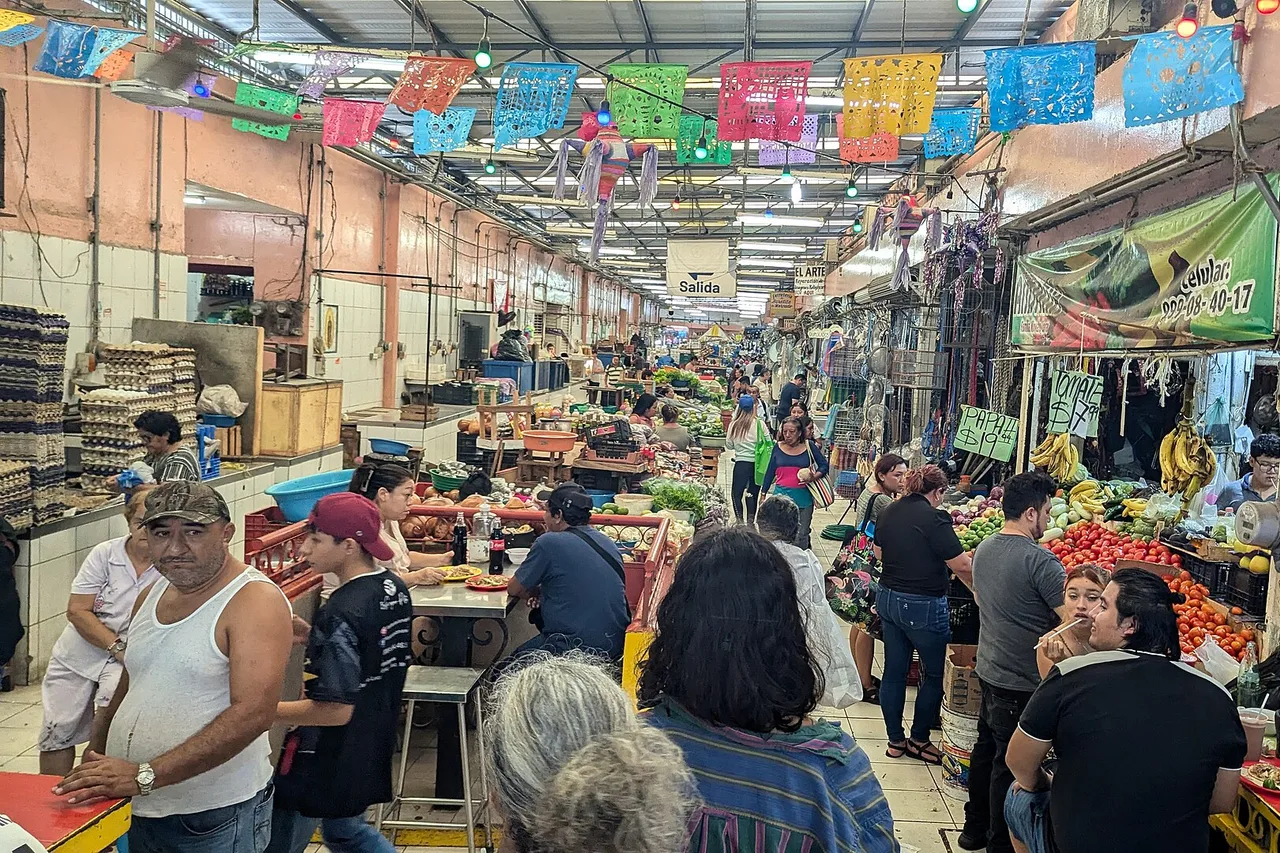
Eating: 60 to 250 pesos a meal, for the same hunger
This is the second line of the budget, and the easiest to move without losing anything — quite the opposite.
| Where you eat | Price | What it is |
|---|---|---|
| Municipal market, cocina económica | 60 to 120 pesos | A full plate, often the best meal of the day |
| Taco stand | 15 to 25 pesos a taco | Four tacos make an 80-peso lunch |
| Neighbourhood restaurant | 150 to 250 pesos | Starter or main, drink included |
| Tourist terrace (Tulum, Fifth Avenue) | 350 to 700 pesos | The same dish, with the address |
| Restaurant on Tulum's beach road | 700 to 1,500 pesos | New York prices, in pesos |
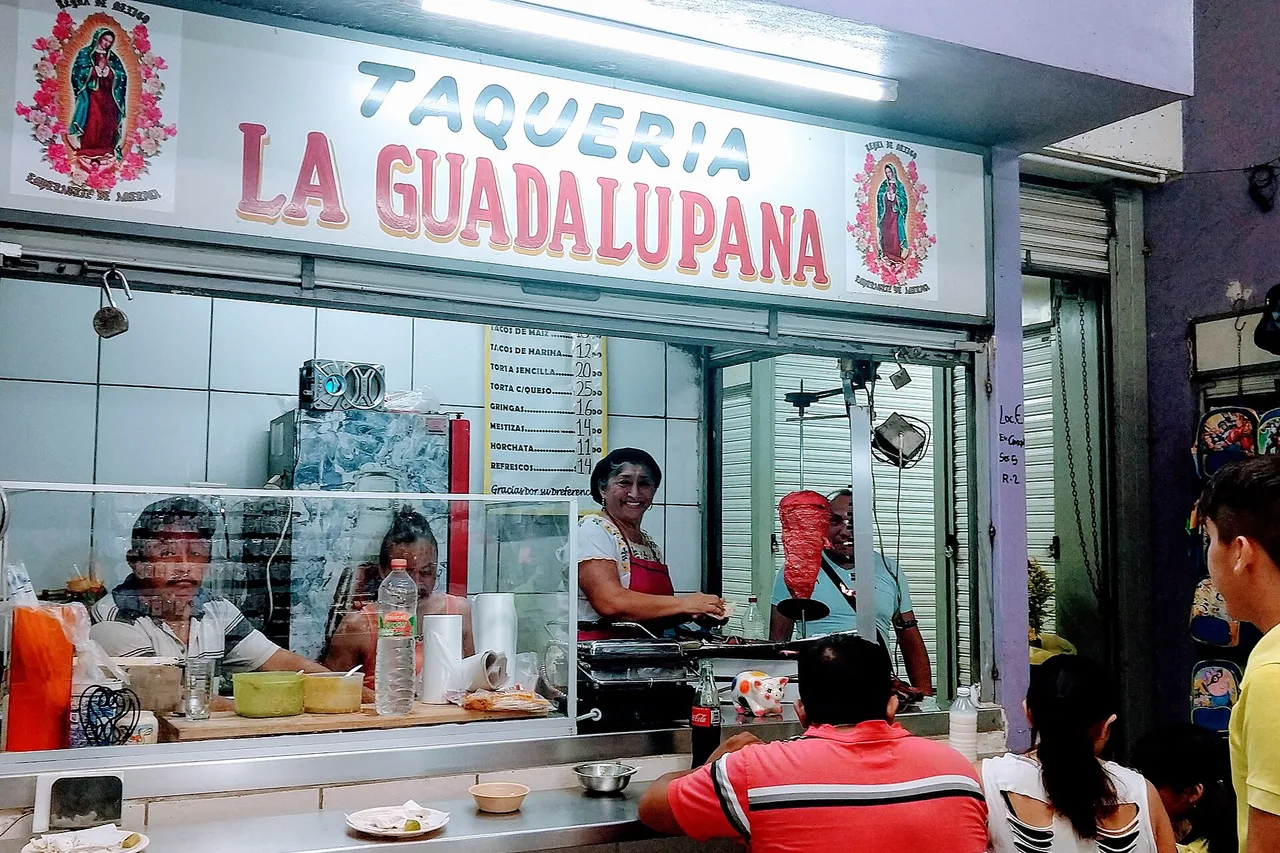
The gap between the first and last rows is a factor of ten, and it matches no comparable gap in quality. Mérida's municipal market serves cochinita pibil that no Riviera terrace equals, for a sixth of the price.
Three habits make most of the difference over fifteen days. The comida corrida — the midday set menu, starter, main, drink — is everywhere between 80 and 150 pesos, and it is Mexicans' own main meal; the evening then goes light. Water in 20-litre carboys sells for 35 to 50 pesos in every corner shop, against 20 pesos for a small bottle: over two weeks the saving is real and the waste divided by twenty. And hotel breakfast is almost always the worst-placed meal of the trip: the fonda next door serves huevos motuleños for 70 pesos.
Entrance fees: what the sites really cost
The line everyone talks about, and the one that weighs least. Even in the generous version it stays under 12 % of the budget.
| Site | Price | Worth knowing |
|---|---|---|
| Chichén Itzá | 697 pesos ≈ €35.50 | 105 pesos INAH + 592 pesos CULTUR, combined into one ticket since 2026. Parking 124 pesos. |
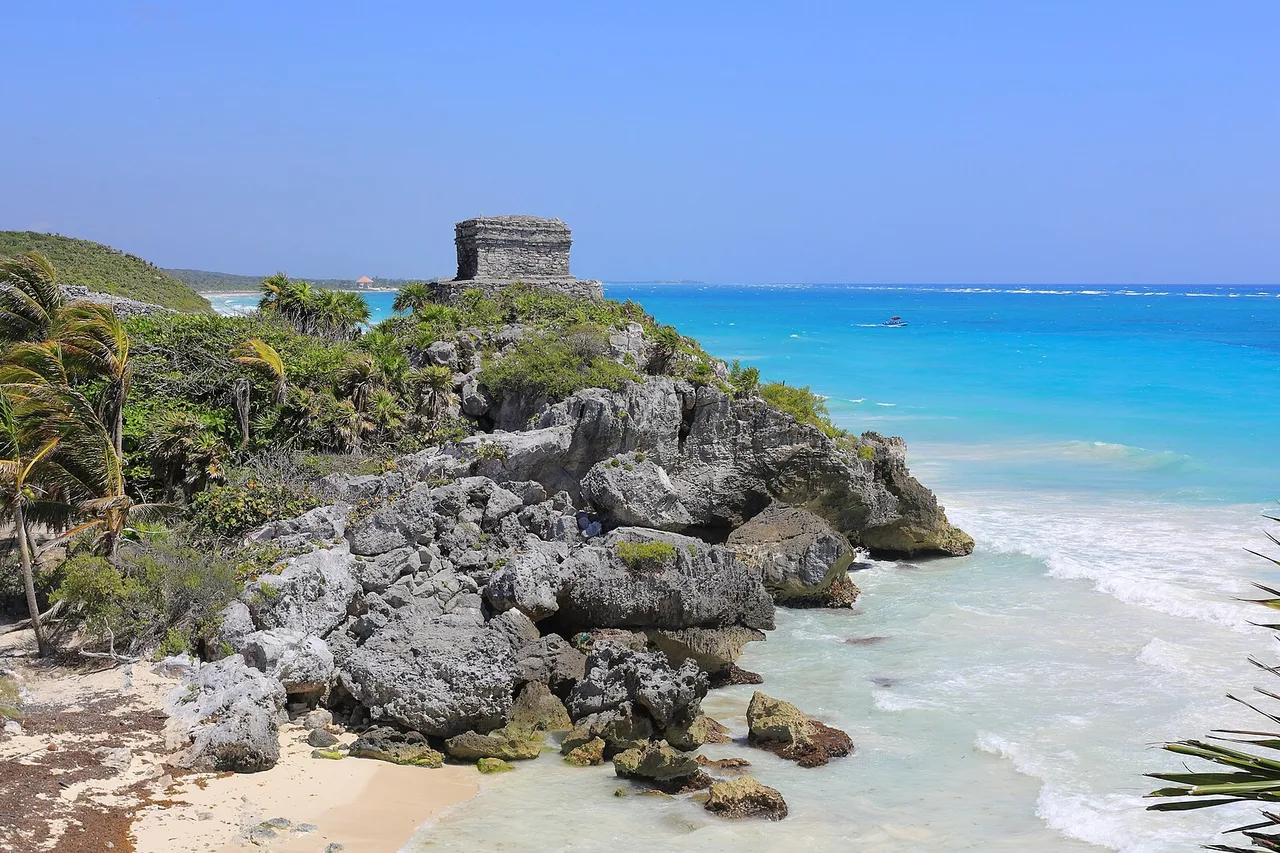
| Tulum (ruins) | ≈ 100 pesos | The cheapest site on the peninsula, and the best placed |
| Uxmal | ≈ 550 pesos | Quieter than Chichén Itzá, an hour from Mérida |
| Cobá | ≈ 120 pesos | Bike hire on site, 60 pesos |
| Village cenote | 50 to 150 pesos | Often unequipped, often the finest |
| Developed cenote (Ik Kil, Dos Ojos) | 300 to 700 pesos | Changing rooms, restaurant, crowds |
A couple visiting three archaeological sites and six cenotes over fifteen days spends between 6,000 and 10,000 pesos on entrance fees, or €306 to €510. It is a real budget, but it is not what tips the trip one way or the other.
Two legitimate savings exist, and one false one. The real one: village cenotes cost five times less than developed ones and are often finer — the fee pays for the infrastructure, not for the water. The second real one: guides at Chichén Itzá are hired at the gate for 800 to 1,000 pesos per group, so they split between several visitors, and they turn a heap of stones into a story.
The false saving is skipping Chichén Itzá because the fee is high. On a fifteen-day budget those 697 pesos are 1 to 2 % of the total — one hotel night less, or three meals on a terrace.
The costs nobody counts, worth 5 to 10 %
They are the only ones on the trip that give nothing in return. And they can almost entirely be removed.
Conversion at the cash machine is the bank's most profitable trap and your most expensive one. When a machine or a card terminal asks "would you like to pay in euros?", it applies its own rate: the loss commonly runs from 5 to 10 %. The answer is always the same — pay in pesos, and let your bank do the exchange. On a €3,500 budget, refusing that conversion saves €175 to €350, which is worth more than any other tip in this article.
Fixed fees per withdrawal run from 30 to 100 pesos depending on the bank: take out large sums at once. And keep cash on you at all times — colectivos, village cenotes, markets, tolls and small restaurants do not take cards.
To stay reachable, start with what is free: hotel and guesthouse wifi covers most needs, and it is decent almost everywhere. It is on the road that it is missing — for navigation, a booking to confirm, a message in the evening from a cenote. Mexican roaming, however, is billed outside the plan by most European operators: a few euros a day, sometimes more, and the bill arrives after the trip. If you need data all the time, an eSIM bought before departure costs around €10 to €20 for two weeks and activates without changing cards. If you are not driving much, wifi is enough — which is the case on most trips.
Full guide: eSIM for Mexico: networks, prices and traps to avoid
Finally, two small lines that make a real difference: tipping runs at 10-15 % in restaurants and is not included in the bill; and the Quintana Roo state tourist tax is sometimes charged separately, around 60 pesos per room per night, in Cancún, Playa del Carmen and Tulum.
What we would advise, depending on your trip
There is no right budget for the Yucatán; there is a budget that matches what you came for.
| Your trip | The budget | Why |
|---|---|---|
| First trip, backpack, two weeks | ≈ €1,480 for two | ADO and colectivos, inland towns, markets. Nothing essential is lost. |
| Couple, car, free rhythm | ≈ €3,459 for two | The car buys remote cenotes and dawn starts — that is what it is worth. |
| Honeymoon, two weeks | ≈ €6,112 for two | Two or three nights on the beach road, the rest inland: the right balance. |
| Family with children | €3,000 to €4,500 for four | Apartments rather than hotels, village cenotes, 105-peso children's tickets. |
| Long stay, a month or more | 25,000 to 35,000 pesos a month for two | Monthly rental in Mérida or Valladolid, market food, local transport. |
One last remark, valid for every row of that table. Two thirds of the budget is settled before departure, in the choice of the towns you sleep in and in the decision to rent a car or not. Once you are there, little is left to optimise — except one thing, the only one that costs no sacrifice at all: refusing conversion into euros at the cash machine.
Top-rated activities in Mexico, bookable online: