“The best time for Thailand is November to February” — that sentence is true for part of the country and false for another. The two coasts run opposite monsoons — when Phuket is soaked, Koh Samui is in the sun — and every year, from February to April, the north goes through an air pollution episode that almost no seasonal guide mentions. Here is the real calendar, region by region, with what to avoid and why.
Three seasons on paper, two coasts that ignore them
The national pattern is simple and you will find it everywhere: a cool, dry season from November to February, a hot season from March to May, a rainy season from June to October. For Bangkok, Ayutthaya and the centre of the country, that is a fair approximation.
The trouble is that the two coasts do not follow that calendar — and it is for the beaches that people pick their dates. The Andaman coast and the Gulf of Thailand run opposite monsoons: when one is soaked, the other is dry. One country, two coastlines, two contradictory calendars.
| Region | The right window | Avoid | Why |
|---|---|---|---|
| Andaman coast Phuket, Krabi, Phi Phi | November to April | May to October | Genuine monsoon: islands and small operators close |
| Gulf of Thailand Samui, Phangan, Koh Tao | July to September | October and November | Reversed season: this is the European summer coast |
| The north Chiang Mai, Chiang Rai | November to January | February to April | Burning season: badly degraded air, peaking in March |
| The centre Bangkok, Ayutthaya | November to February | March to May | Hot season, heavy humidity in the city |
One piece of transparency about this table: you will not find month-by-month temperatures in it. We have no dated record to base them on, and a climate table filled in with plausible-looking numbers is exactly the kind of content this blog tries not to produce.
The Andaman coast: November to April, and not otherwise
This is the postcard coast — Phuket, Krabi, Phi Phi, Koh Lanta, Phang Nga Bay — and its window is clear-cut: November to April, with the core running December to March. Flat sea, visibility, clear skies.
Outside that window it is not “a bit of rain”. From May to October this is a genuine monsoon: September and October are the wettest months, and above all many small operators stop trading, with some islands closing entirely. The sea becomes the limiting factor long before the rain does: crossings are cancelled, boat trips do not sail, and an island with no service is an island you do not visit.
That does not make the coast unreachable in July. It means an Andaman trip in mid-monsoon is a gamble: prices collapse, so do the crowds, and the programme depends on the sea that day. If your trip runs to ten days and the beaches are the reason for it, this is not the gamble to take.
The Gulf: the one coast that works in summer
Here is the most useful thing in this article for a European reader, and the one generic calendars erase. Koh Samui, Koh Phangan and Koh Tao run on a shifted season.
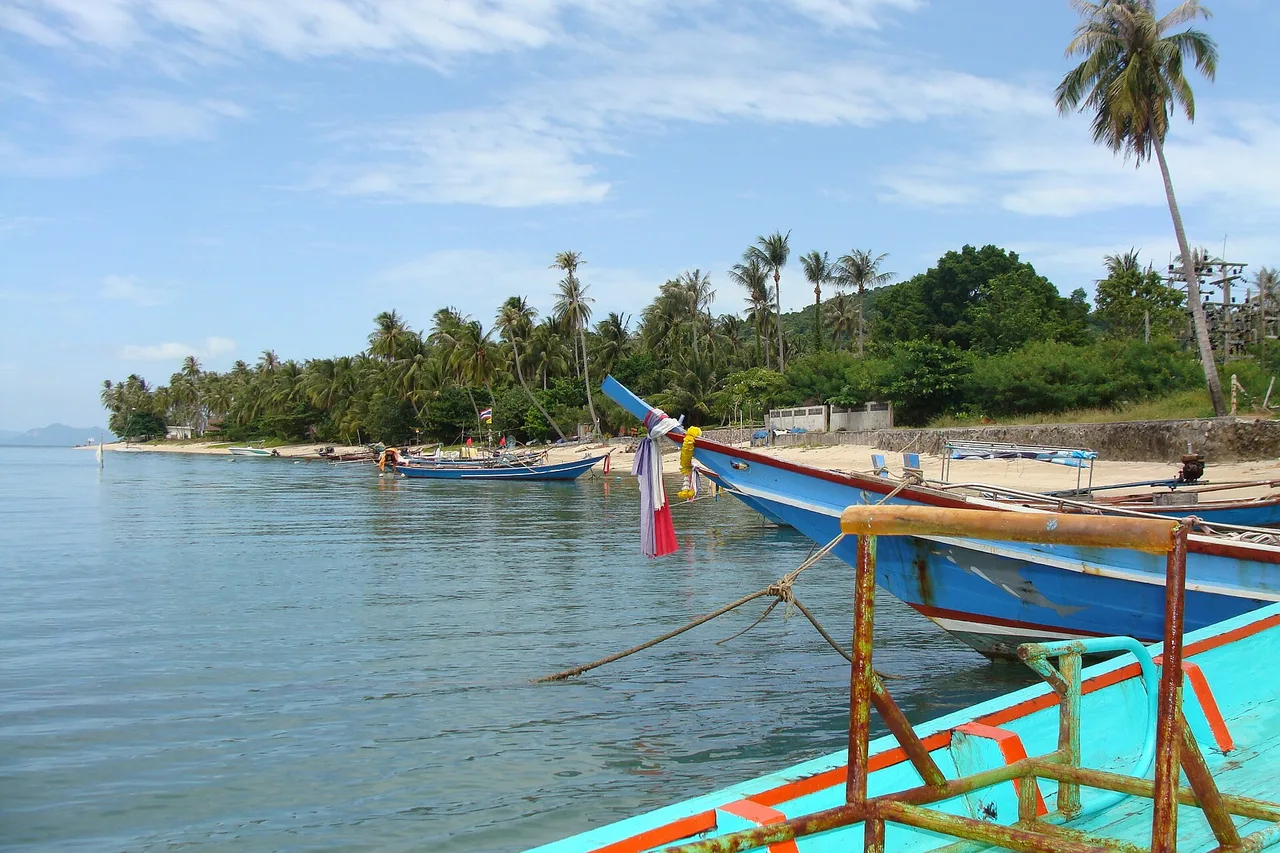
Their best window is July to September, and sunshine is broadly good from January to August. Their heaviest rain falls in October and November — precisely when the Andaman coast enters its best season.
In practice: in July and August, during the European school holidays, do not go to Phuket — go to the Gulf. Same country, same flight, same length of trip — and the difference between a beach holiday that works and a fortnight watching the rain. Conversely, a year-end trip has every reason to aim for the Andaman and leave Samui alone.
What “hot season” means, March to May
Between the dry season and the monsoon sits a period that guides dispatch in two words and which deserves better. From March to May, heat becomes the main subject, particularly in Bangkok and the central cities, where humidity piles on top of the thermometer and walking through the middle of the day becomes punishing.

It is not a period to rule out — sites are less crowded than in December, and the Andaman coast is still inside its window in March and April. It is a period to organise differently: sightseeing early, afternoons in the shade or in the water, and an acceptance that a temple at two in the afternoon will not be a good memory.
It is also the season of Songkran, which we come back to below: the Thai new year falls at the peak of the heat, and the country throws water at itself for three days. That is not a coincidence of the calendar.
February to April in the north: the burning season
Here is the point almost no “when to go” article covers, though it ought to decide your dates if Chiang Mai is on the list.
Every year, from February to April, northern Thailand goes through a burning season — agricultural burning of rice, sugarcane and maize, compounded by forest fires. The worst is concentrated in late February and March, activity peaks in March and fades in May as the rains arrive. About 70 % of the fine particulates measured in Chiang Mai in April come from burnt biomass.
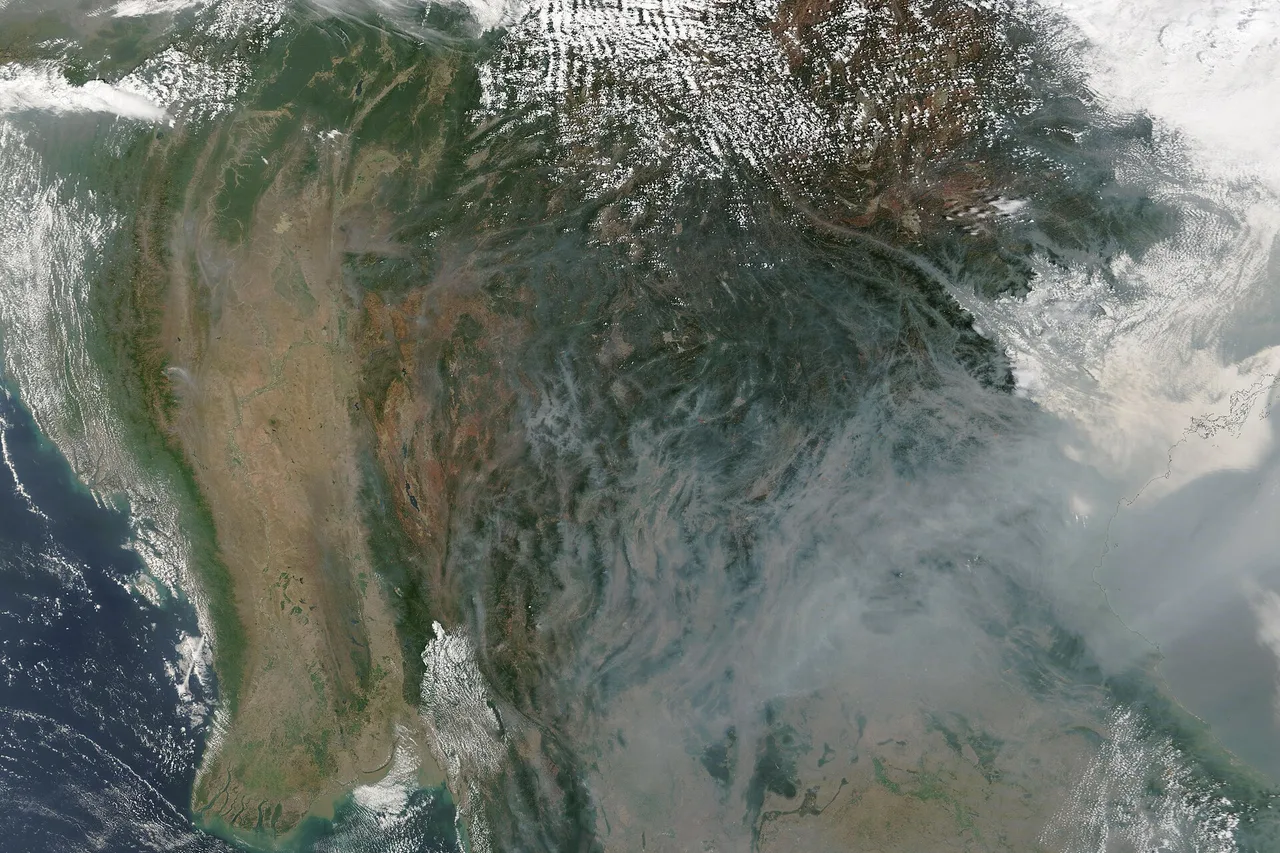
The 2026 figures give the scale. Chiang Mai was ranked the most polluted city in the world several times during March. On 30 March 2026, PM2.5 there reached 188 micrograms per cubic metre, and IQAir’s real-time ranking placed the city first worldwide with an index of 233 — “very unhealthy for all population groups”.
There is no nuance to add: if the north is on your plan, avoid February to April and aim instead for November to January, when the air is still clean and temperatures are pleasant. Asthmatics, small children and older travellers have one more reason to shift their dates. And if you cannot shift them, the information still helps: it will have you pack FFP2 masks rather than discover the problem on arrival.
The monsoon: more useful than its reputation
A word to restore some balance. The rainy season is not a write-off, and treating it as one makes you miss good travel windows.
In the tropics, monsoon rain is generally not a grey day: it is a violent, short downpour, often in the late afternoon, followed by clearing skies. The landscapes are green, the waterfalls full, the sites empty and the prices low. For a trip built on cities, temples and inland travel — Bangkok, Ayutthaya, Sukhothai — the monsoon is perfectly workable.
What it genuinely rules out is the sea-dependent programme. Crossings, diving, boat trips and remote islands become unpredictable — which is why the Andaman coast partly shuts. So the right question is not “will it rain?” but “does my trip depend on a boat?”
Songkran and Loy Krathong: two dates that move prices
Two events move the whole country, and you have to decide whether to be there or to avoid them — there is no middle ground.
Songkran, the Thai new year, falls on 13, 14 and 15 April — fixed dates, national public holidays — with some cities extending the festivities from the 12th to the 16th. It is a nationwide water fight at the hottest point of the year. Wonderful if that is what you came for, gruelling if you hoped to visit temples in peace: transport is saturated and part of the retail trade closes.
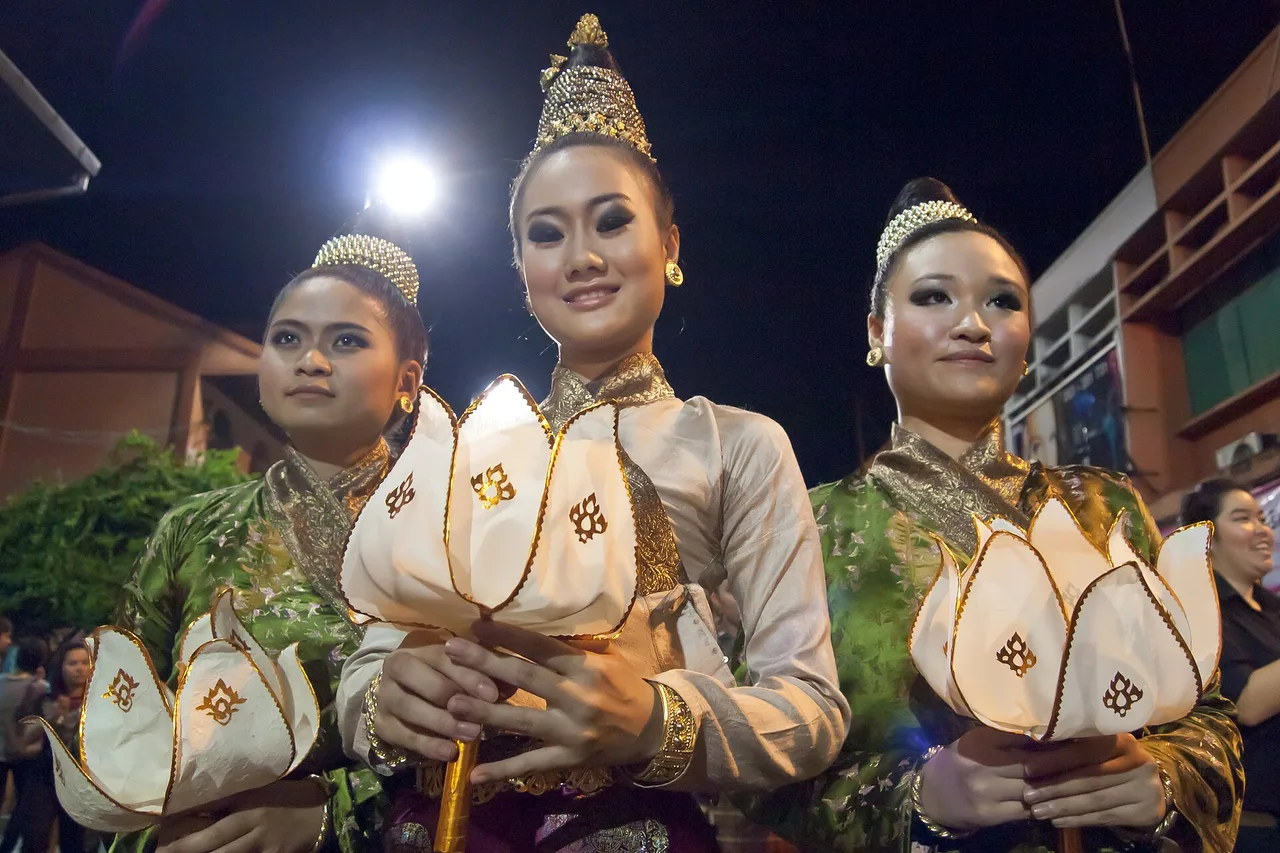
Loy Krathong and, in the north, Yi Peng, follow the lunar calendar, so the dates move each year. In 2026 Loy Krathong falls on 25 November, Yi Peng on 24–25 November. In 2027 it will be 14 November for Loy Krathong and 13–14 November for Yi Peng. It is the most beautiful date in the Thai calendar — and one of the most contested.
The budget consequence should not be underestimated: accommodation prices in Chiang Mai and Sukhothai can triple over these periods. Plan on booking two to three months ahead for Songkran and four to six weeks for Loy Krathong.
What is not yet in force: the 300-baht fee
You may read that you need to budget for an entry fee. As of this article, you do not, and it is better to say so plainly than to let a budget swell by an imaginary line.
The fee is announced at 300 baht for arrivals by air and 150 baht by land or sea. It has been postponed repeatedly: expected in the second or third quarter of 2026, it was as of May 2026 still awaiting formal cabinet approval and a working collection mechanism. Some tourism operators are calling for it to be dropped altogether.
The reason for the delay says something about the state of the country: arrivals are falling — 17 million visitors as of July 2025, down 5 % year on year. What that means for you: do not budget for this fee today, but check it before you fly, because it could come into force from one quarter to the next.
So, when should you go?
You want the postcard beaches and your dates are free: December to March, Andaman coast. That is the combination that does not disappoint, and also the dearest and busiest.
You are travelling in July or August: the Gulf — Samui, Phangan, Koh Tao. Not Phuket. It is the only decision that really matters for a European summer.
You want the north, Chiang Mai and the mountains: November to January, without hesitation. From February to April the air is bad and the landscape disappears into the smoke.
You want the festivals: mid-April for Songkran (13–15), or November for Loy Krathong — booking far ahead and accepting the prices.
You want quiet and low prices: the monsoon, on a programme of cities, temples and nature. The sites are empty, the landscapes green, and the rain does not last all day. One condition only: that your trip does not depend on a boat.
You have one window and it falls badly: move the region, not the dates. That is the whole point of a country with two opposing coastlines — there is almost always, somewhere in Thailand, a coast that is dry.