Five days is the right length for Lanzarote, on one condition: do not improvise a single detail. The island is small, the roads are good, and nothing on it is more than an hour’s drive away — so you can see the essentials without ever rushing. But since 15 June 2026, its flagship site, Timanfaya National Park, no longer sells tickets at the gate: online only, with a timed slot. Here is a five-day itinerary organised by zone, with prices checked on 12 September 2026 and the few things worth knowing before you turn the ignition.
Five days is the right length — here is why
Lanzarote fits inside a single day’s driving, and that changes how you plan it. Around sixty kilometres separate north from south, the roads are wide and quiet, and the island’s major sites are never more than an hour apart. You therefore lose no time to travel — you lose it to zigzagging: the only real waste here is crossing the island twice in the same day.
The second peculiarity is what makes the island unique in the Canaries: Lanzarote is not a beach destination with landscape around it. It is a landscape destination with beaches around it. The whole island has been a UNESCO Biosphere Reserve since 1993 — and at the time that was a first: the designation covered the entire territory, towns and villages included, rather than a handful of protected areas.
That visual coherence is not a geological accident. It owes a great deal to one man, César Manrique, a Lanzarote artist who spent the last decades of his life making sure the island would not be built like the others: no roadside advertising hoardings, no seafront towers, white houses with green or blue shutters. The four sites he designed are now visits in their own right — and they fill a whole day of this plan.
One figure to gauge the crowds, because it is surprising: César Manrique-Lanzarote airport handled 8,920,901 passengers in 2025, a record, across 72,949 aircraft movements. That is a great deal for an island this size, and it is why Timanfaya’s slots fill up.
The itinerary at a glance
| Day | The zone | What you do | What to know first |
|---|---|---|---|
| Day 1 | South — Playa Blanca | The Papagayo beaches, the seafront promenade, a first calm swim | Dirt track and €3 per car; car parks close at 7 pm |
| Day 2 | Centre-west — Timanfaya | The Fire Mountains in the morning, La Geria in the afternoon | The only fixed appointment of the trip: online ticket, timed slot |
| Day 3 | North — Manrique country | Jameos del Agua, Cueva de los Verdes, Mirador del Río, Jardín de Cactus | Four sites, each paid separately; they close early |
| Day 4 | La Graciosa | The eighth island: beaches, tracks, no tarmac | Ferry from Órzola, 25 minutes; set aside the whole day |
| Day 5 | North-west and centre | Famara, Teguise, César Manrique’s house at Tahíche | Famara is a surf beach, not a swimming beach |
The order is not decorative: it puts the day with a fixed time second, which leaves the first day free to recover from the flight and pick up the car without stress, and keeps the most weather-dependent day — La Graciosa — late enough to swap with day 5 if the wind gets up.
Day 1 — the south, Playa Blanca and the Papagayo beaches
The first day belongs to the south, the most sheltered and sunniest part of the island. Playa Blanca makes a practical base: a pedestrian promenade along the sea, calm beaches, and the harbour that ferries leave from for Fuerteventura. It is also the starting point for the one thing you really must do on this side.
The Papagayo beaches are a string of pale-sand coves set into ochre cliffs, inside the Los Ajaches natural monument. They look like what brochures promise and do not always deliver: turquoise water, almost no buildings, no wall of hotels. That is not a miracle, it is a consequence — the site is protected and driving in costs money.
Good to knowIn high season, cars get booked up fast and prices rise as the dates approach. Comparing local rental companies before you go lets you lock in the car and the rate in the Canaries, with deposit and insurance shown upfront.
Rent a car in the CanariesLocal rental companies on Localrent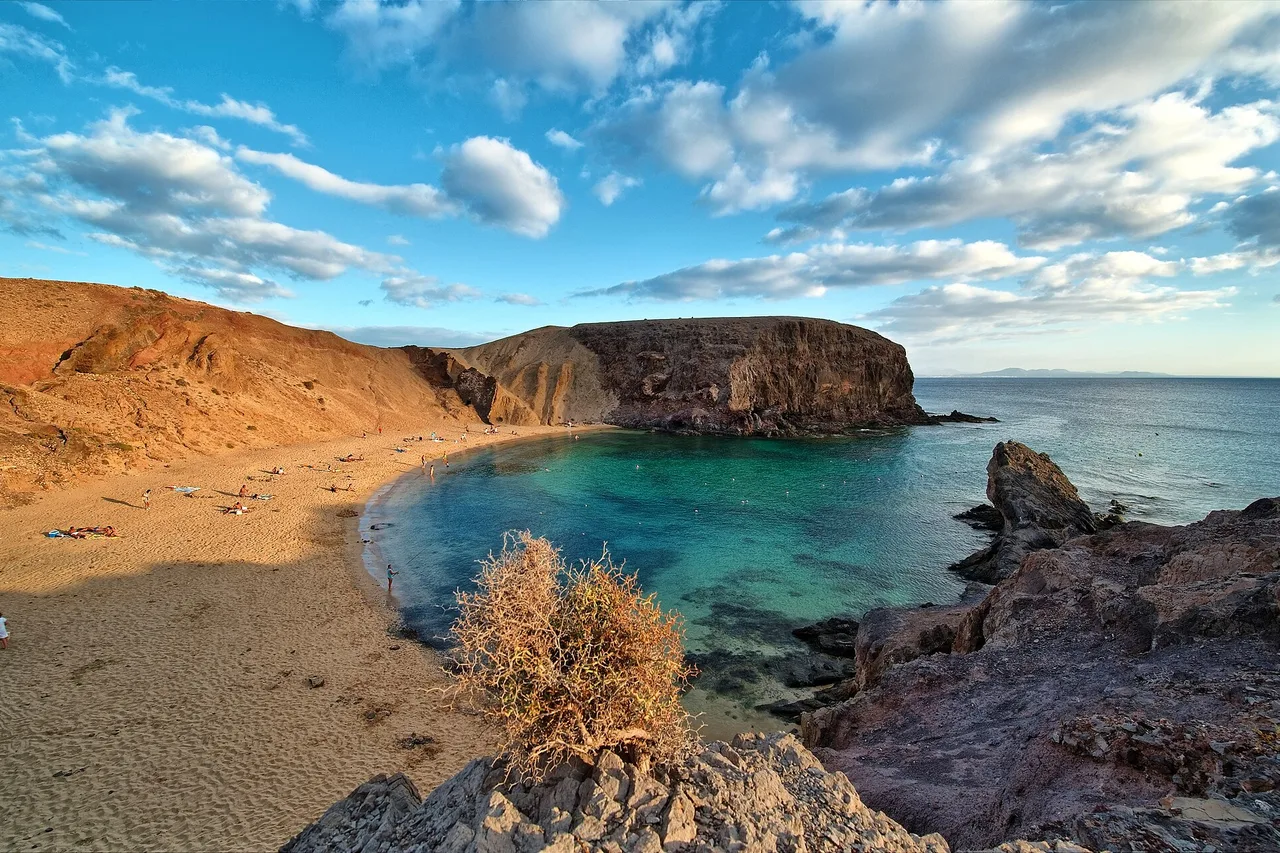
In practice: from Playa Blanca, a dirt track of about 5.5 km leads to the various car parks. At the entrance there is a toll of €3 per car for non-residents, payable by card only — cash is not accepted, and that is exactly the kind of detail that ruins a morning. The car parks open from 9 am to 7 pm. On foot or by bike, entry is free, and the walk from Playa Blanca is pleasant in the morning and far less so at 3 pm.
Full guide: Car hire in the Canary Islands: prices, deposit, ferries
The track is drivable in an ordinary hire car as long as you go slowly: it is earth and stones, not off-road terrain. Just check what your rental agreement says about unpaved tracks — some agencies exclude them from the cover, and that is something you read before, not after.
Day 2 — Timanfaya in the morning, La Geria in the afternoon
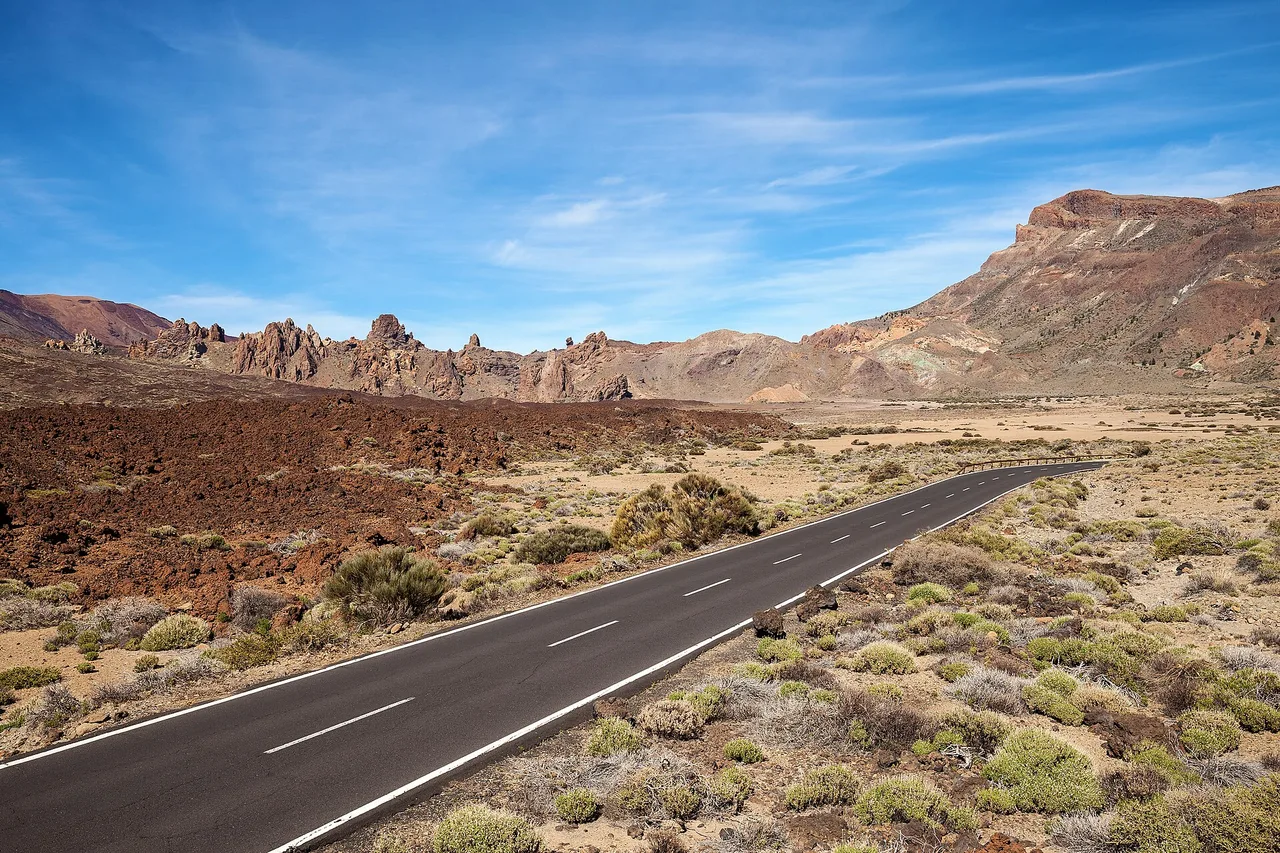
This is the only day of the trip that has a time on it. Timanfaya National Park, the “Fire Mountains”, was created by an eruption that lasted six years in the 18th century and buried much of the island’s south-west. The ground is still hot just below the surface, and the visit consists of two things: the geothermal demonstrations at Islote de Hilario — water poured into a tube comes back as a geyser of steam — and the Ruta de los Volcanes, a loop of road closed to private cars that you cover by coach, with commentary on board.

What to do before you leave home. Since 15 June 2026 tickets are no longer sold at the ticket office: online only, through the official site of the Cabildo de Lanzarote’s art, culture and tourism centres, and with a timed slot. You need to turn up about 15 minutes early to validate your entry. Prices checked on 12 September 2026: €30 per adult, €15 for children aged 7 to 12, free under 7. Open 09:30 to 15:45. The Ruta de los Volcanes and the demonstrations are included in that ticket.
Two tips that cost nothing. Take an early morning slot: the low light picks out the relief, and heat builds fast on black ground. And do not buy this ticket anywhere but the official platform: a timed ticket sold by a middleman is a mismatched-slot risk, for a service the public body provides directly.
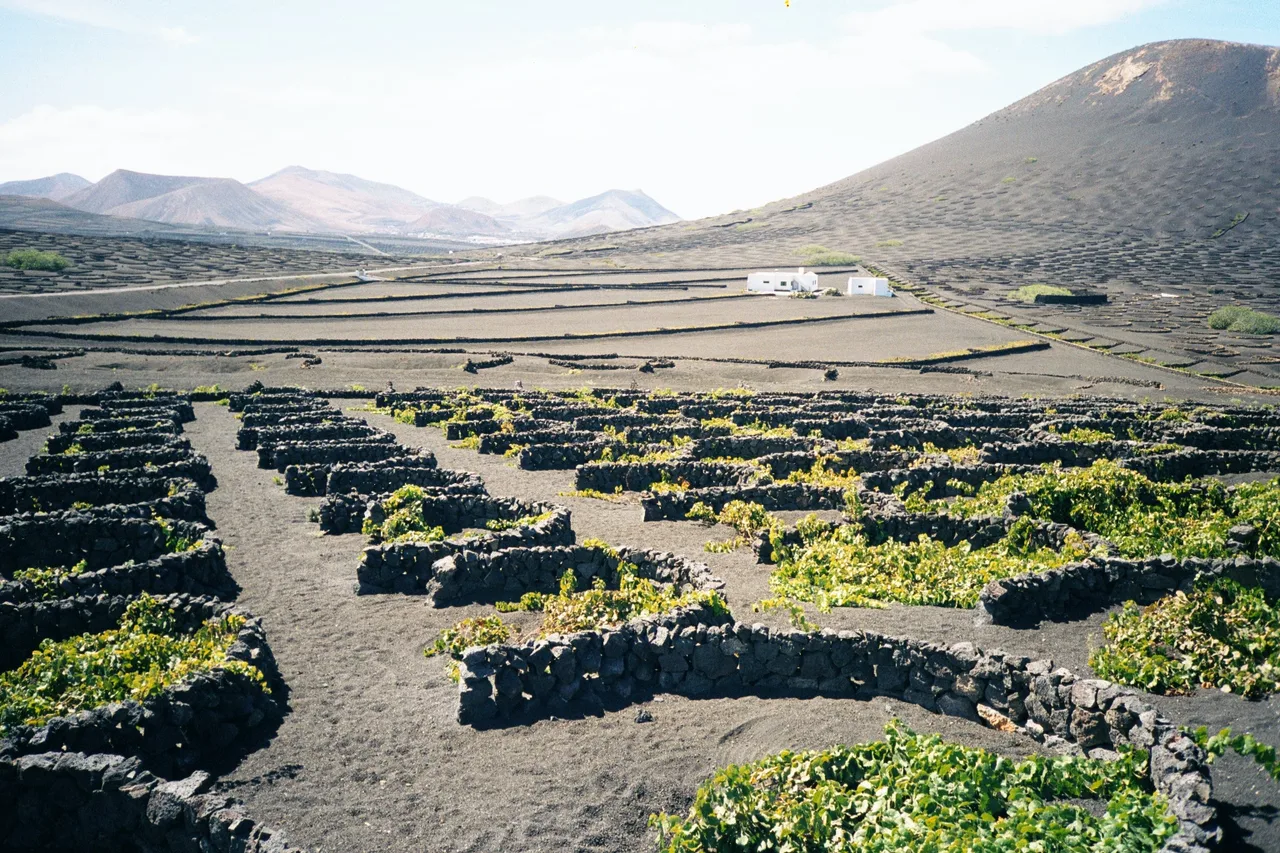
In the afternoon, drop down to La Geria, the island’s vineyard, twenty minutes away. The landscape has no equivalent: each vine grows at the bottom of a conical hollow dug into the lapilli, the volcanic gravel, sheltered by a semicircular dry-stone wall — a zoco — built against the trade wind. Thousands of these hollows cover the valley. Several bodegas along the road are open to visitors and sell volcanic malvasía, the island’s dry white. End the day on the west coast at Los Hervideros, where the Atlantic surges into the cavities in the lava, then at El Golfo and its green lagoon, below a half-crater open to the sea.
Day 3 — César Manrique’s north
The north holds four sites designed or driven by Manrique, all within twenty minutes of each other. It is a full day, and the classic mistake is starting it too late: these places close early.
Jameos del Agua occupies the collapse of a lava tube, turned into a sequence of white terraces, pools and gardens around a small underground saltwater lake. It is the first space Manrique laid out on the island, and probably the most striking: you walk down into the rock and find an inhabited place at the bottom.
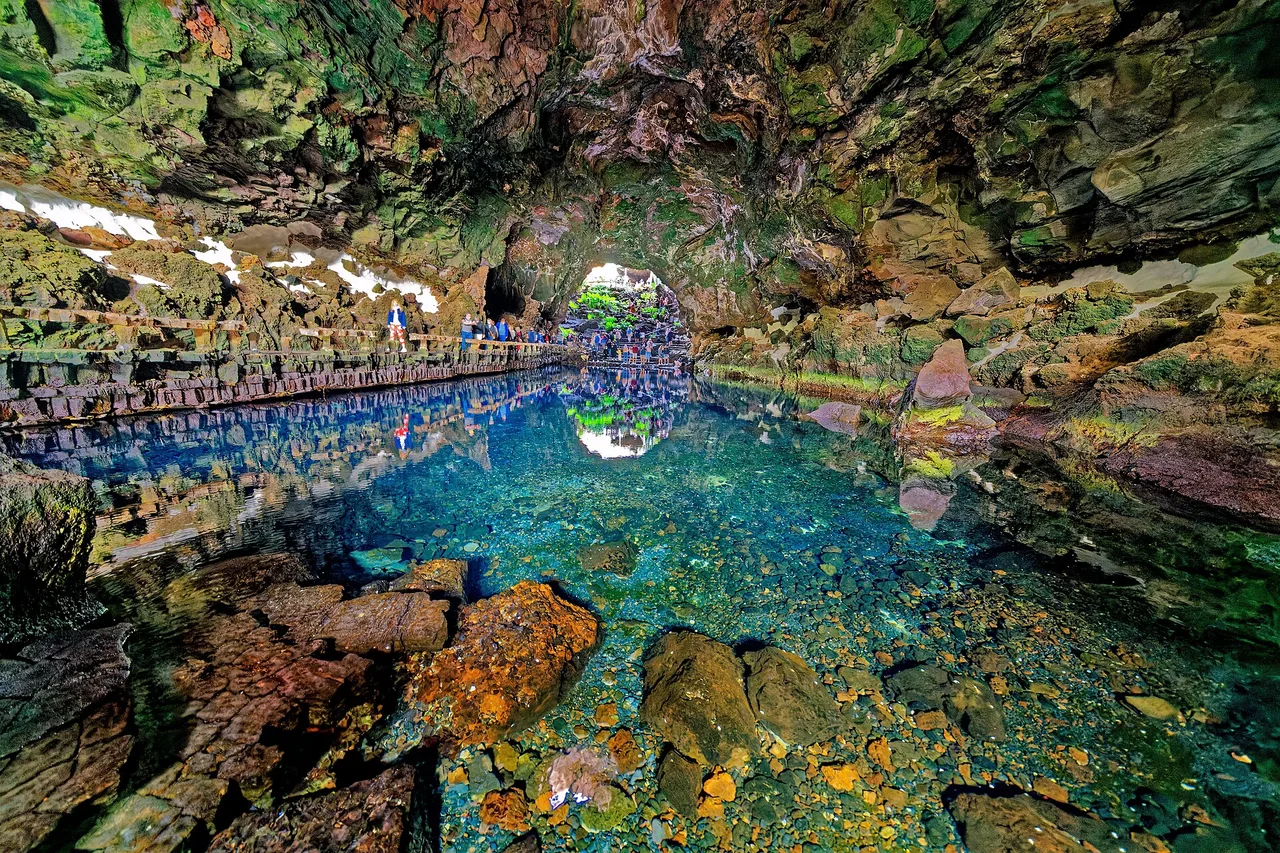
A few hundred metres away, the Cueva de los Verdes is the other end of the same lava tube, left bare: a guided tour of about an hour underground, with no staging, and a final optical trick we will not spoil. Further north, the Mirador del Río is a panoramic chamber cut into the cliff some four hundred metres above the strait between Lanzarote and La Graciosa — the finest view on the island, and excellent reconnaissance for the next day. Finally, on the way back, the Jardín de Cactus fills a former lapilli quarry converted into an amphitheatre of more than a thousand cactus species.
Good to knowIn high season the best slots go fast: booking ahead lets you pick your time, and many activities can be cancelled free of charge up to the day before.
See activities in the CanariesTours, tickets and day trips on GetYourGuidePrices, checked on 12 September 2026 on the official site: Jameos del Agua from €17 (open 10 am to 6 pm), Cueva de los Verdes €17 (09:30–16:45), Mirador del Río €9 (10 am–5 pm), Jardín de Cactus €9 (10 am–5 pm). Free for under-7s everywhere. Each site is paid for separately; combined tickets exist, and that is the one thing worth comparing on the official page before buying, because four entries in a day add up.
Day 4 — La Graciosa, the eighth island
A whole day, and worth it. La Graciosa is the smallest inhabited island of the Canaries and, officially, the archipelago’s eighth since 2018. You reach it from the harbour of Órzola, at Lanzarote’s northern tip: the crossing to Caleta de Sebo takes about 25 minutes and runs year-round with Biosfera Express and Líneas Romero, with around twenty daily departures in high season.

What strikes you on landing is the absence of tarmac: the streets of Caleta de Sebo are sand. You get around on foot, on a rented bike, or in one of the few off-road taxis that serve the beaches. The two classic destinations are Playa de las Conchas in the north, very beautiful and not recommended for swimming because of the currents, and Playa Francesa in the south, sheltered and far safer.
Three practical precautions, because the island does not forgive improvisation. Book the crossing online in July and August and at weekends. Take water, a hat and something to eat if you head north: there is nothing between the village and the beaches. And keep an eye on the last return time, posted at the harbour — missing it is not an anecdote, it is a night on the island.
Day 5 — Famara, Teguise and Manrique’s house
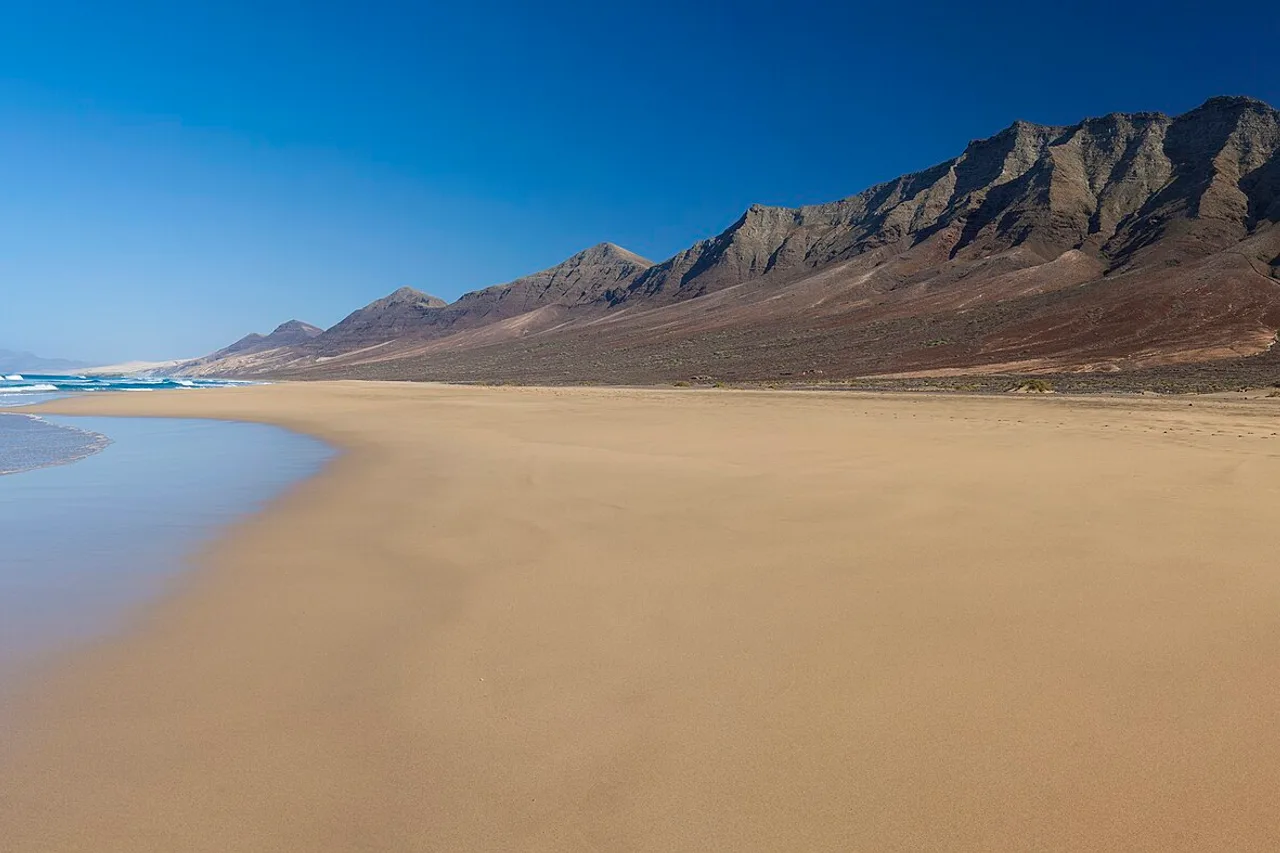
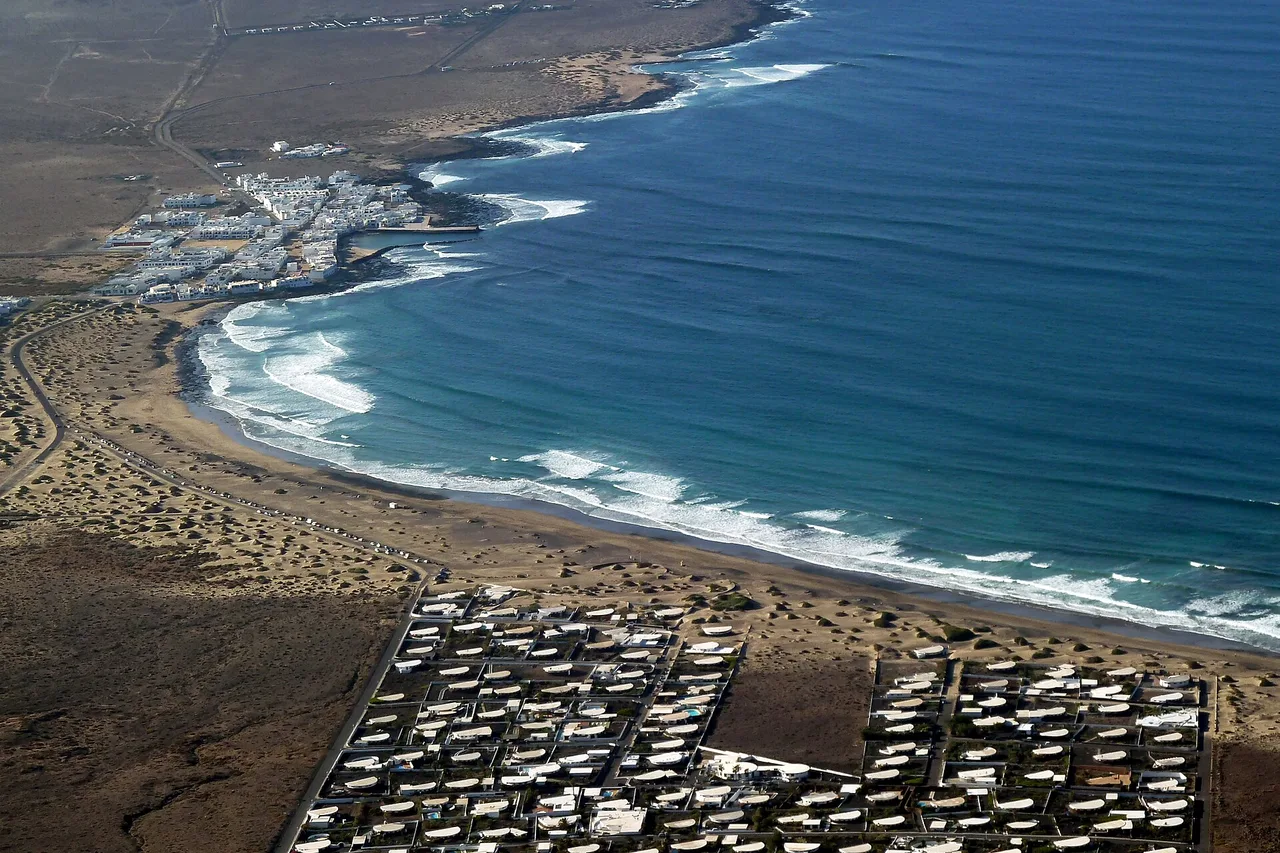
The last day plays out in the north-west and the centre, which keeps it flexible around your flight time. Famara first: a huge sand beach at the foot of the Risco, the cliff that closes the island to the north, and the finest setting on Lanzarote. It is not a swimming beach, and that is not stylistic caution: the Atlantic swell arrives head-on, the currents are strong, swimming is dangerous. The people you see in the water are surfers, usually with an instructor — the village of Caleta de Famara lives off its surf schools, and it is an excellent place for a first lesson.
Then Teguise, the old capital, inland: cobbled streets, low houses, convents, and a large craft market on Sunday mornings — lovely, but very busy, so go early. Above the village, the castle of Santa Bárbara, on a volcanic cone, offers a full circle view over the island and houses a museum of piracy.
Finish at Tahíche, at the César Manrique Foundation, set in the house the artist built for himself on a lava flow: the lower rooms are former volcanic bubbles turned into living rooms, linked by corridors cut through the rock. It is the right visit to close the trip, because it retrospectively explains everything you have seen over four days — the island as it is today is partly the result of his ideas.
The logistics that hold this plan together
This plan rests on one assumption: that you are independent. The four hubs of the trip — Playa Blanca in the south, Timanfaya in the centre-west, the Jameos in the north-east, Órzola at the northern tip — sit at four corners of the island, and no bus route strings them together within a day. Intercity buses do connect the main towns, but not the natural sites to each other, and not to the timing of a booked slot. A hire car is therefore not a luxury here, it is what makes the itinerary possible — and Lanzarote is an easy island to drive, with no mountain hairpins and little traffic outside Arrecife.
One case justifies something else: a night arrival. If your flight lands late and you would rather not hunt for a rental desk at 11 pm, a transfer booked in advance takes you straight to your accommodation, and you collect the car the next morning, rested and in daylight. It is the same logic as at Papagayo: anything settled before departure is no longer settled on site.
Two points of common sense for the road. Fill the tank before heading north or towards Timanfaya: filling stations thin out as soon as you leave the main roads. And keep a card within reach rather than cash — the Los Ajaches toll takes cards only, and the art centres’ tickets are bought online.
What you accept on Lanzarote
An honest itinerary also says what a place does not give you. The wind, first. It blows almost constantly, more on the north and east coasts, and it makes a beach afternoon cooler than the thermometer suggests. This is not a seasonal accident: it is the trade wind, and it is why the vineyard hollows were dug in the first place.
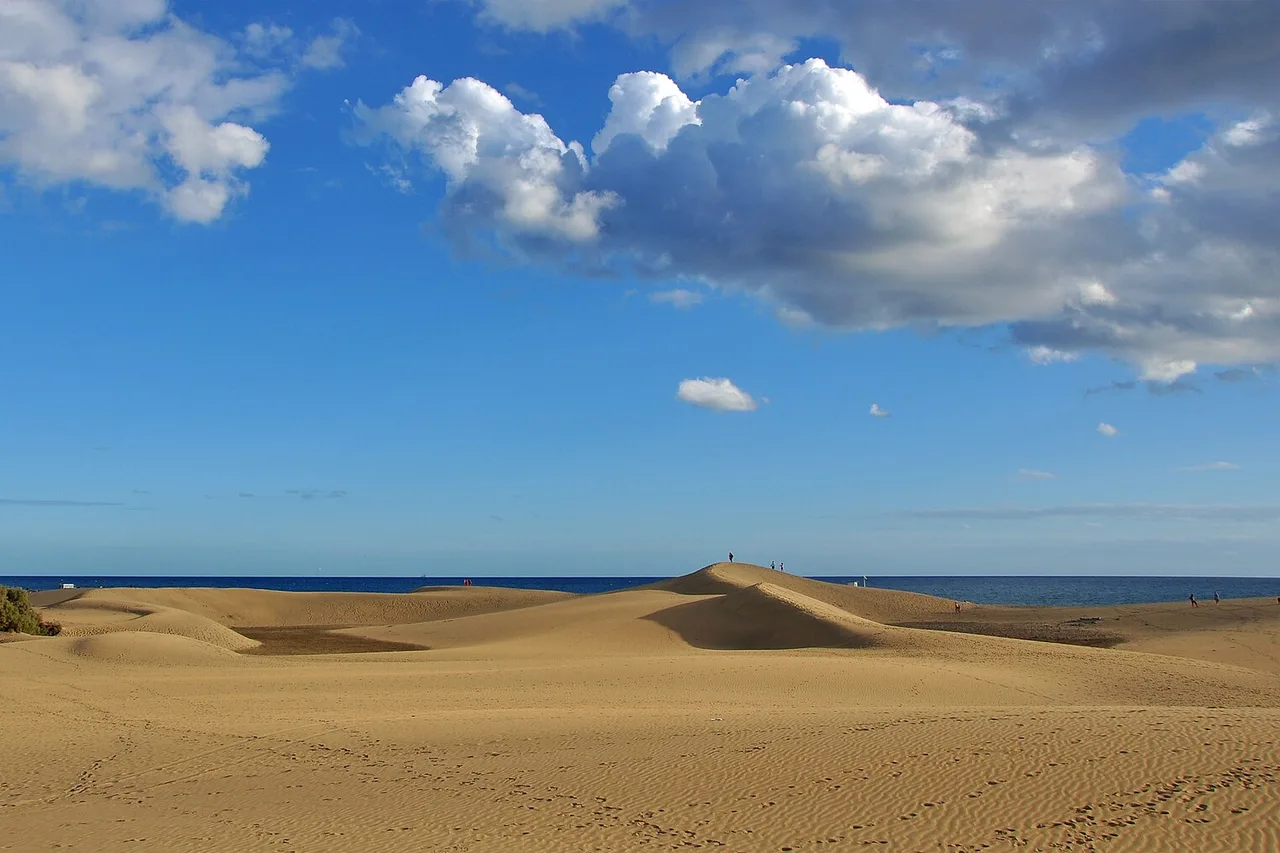
Swimming, next, is not available everywhere. The island’s finest beaches — Famara in the north-west, las Conchas on La Graciosa — are precisely the ones where you do not swim. For swimming you go south: Papagayo, Playa Blanca, Puerto del Carmen, Costa Teguise. A volcanic island is not a lagoon, and Lanzarote does not pretend to be one.
Finally, green is scarce. There is no forest here, no river, no waterfall: black, ochre, white, and the occasional green of the vines and the palms of Haría. It is superb, and disconcerting for the first two days. Those who come looking for a tropical island go home disappointed; those who come to see a landscape find no equivalent in Europe.
A last word on the figures in this article. The prices and opening hours quoted were checked on 12 September 2026 with the official sources — the Cabildo’s art, culture and tourism centres for Timanfaya and the four Manrique sites, Yaiza town council for access to Papagayo. Public prices move: check them again when you book, and above all the Timanfaya slot, the one thing on this trip you cannot fix once you are there.
Top-rated activities in the Canaries, bookable online: