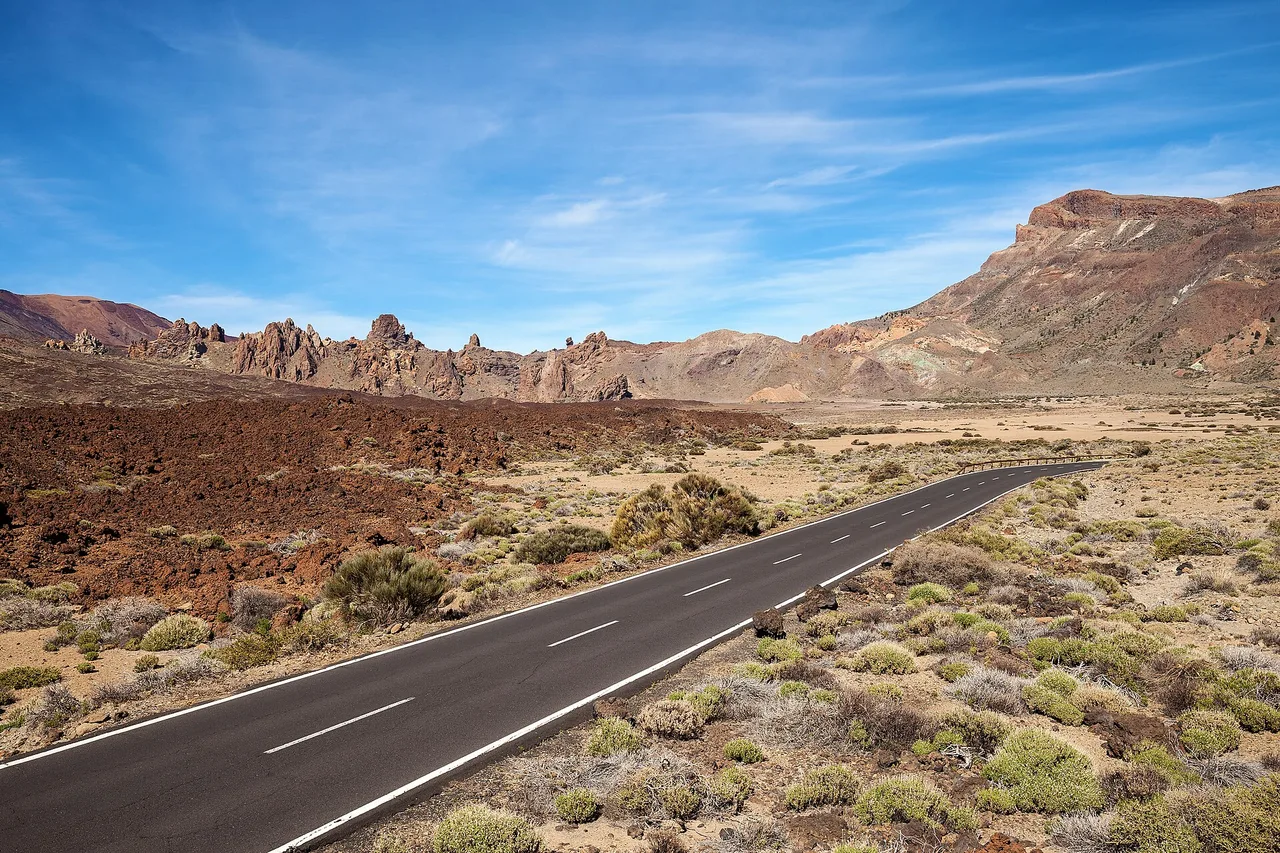
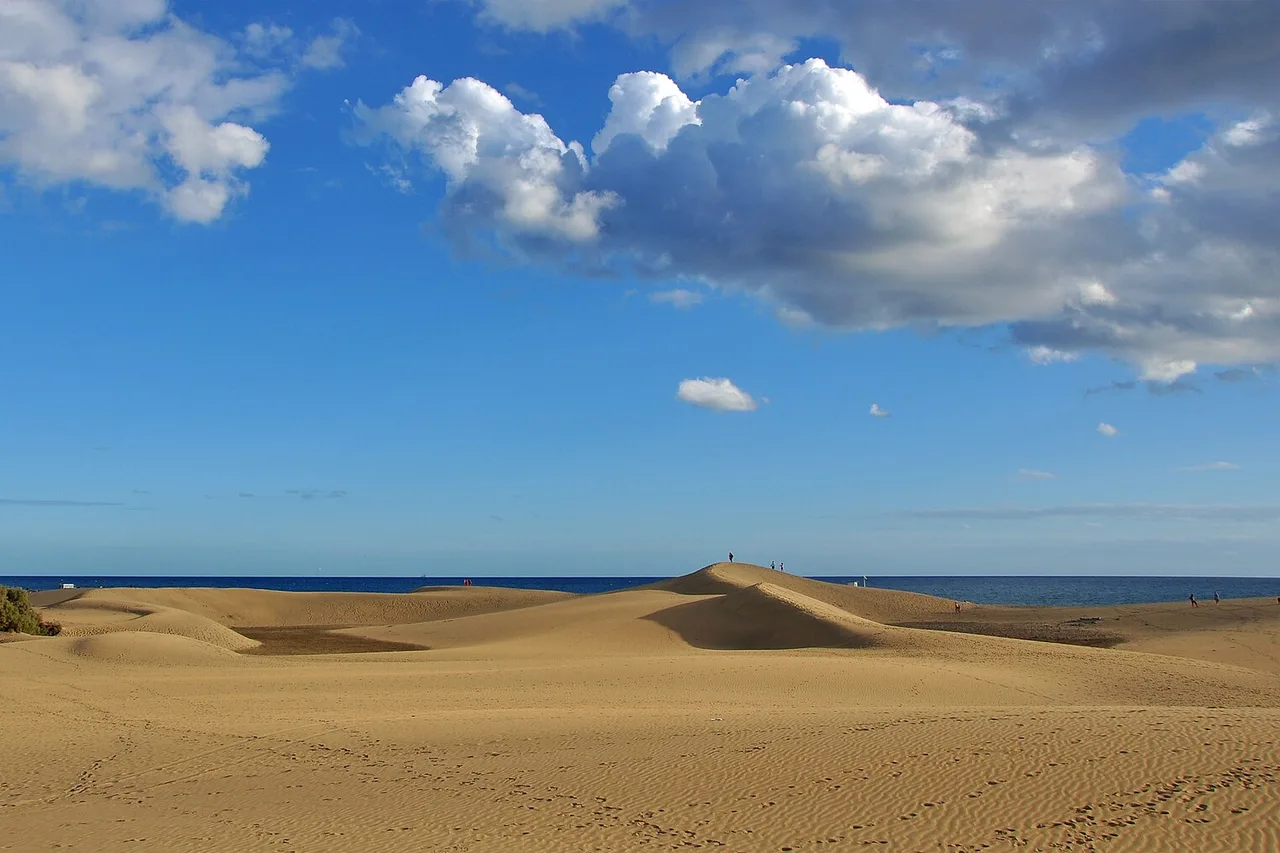
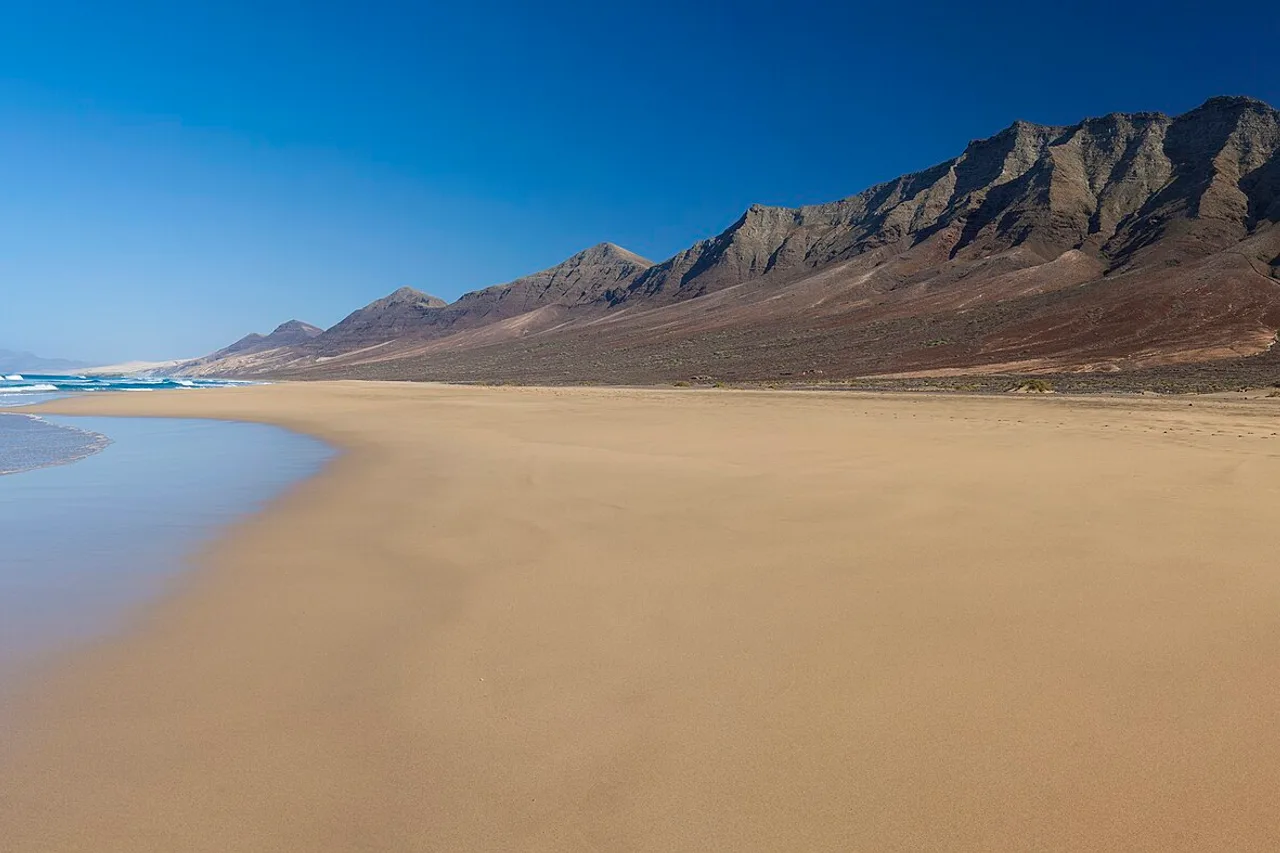
North or south is not a matter of taste, it is a matter of weather. Tenerife covers 2,034 km², but the Teide massif splits it into two distinct climates: on the northern side the trade winds lay down a cloud layer between 1,000 and 2,000 metres; on the southern side the same air comes back down dry and the sun shines on almost every day. Puerto de la Cruz runs 2 to 3 °C cooler in summer and up to 4 to 5 °C cooler in winter than the south coast. Choosing your side of the island means choosing what your mornings will look like — everything else follows from that.
One island, two climates, and a thousand metres of cloud in between
The mechanism is simple, and it explains almost everything that follows. The trade winds blow from the north-east, loaded with Atlantic moisture. Meeting the island, that air is forced upwards; rising, it cools and condenses. The result is a near-permanent cloud layer clinging to the northern slope, usually between 1,000 and 2,000 metres. Canarians call it the panza de burro, the donkey’s belly.
The Teide massif rises far above that layer, so it acts as a dam: the clouds stay on the northern side, and the air coming down towards the south is dry. That is why — not by historical accident — tourism was built in the south: that is where the hours of sunshine are.
What it means in practice: two hotels an hour apart can give you two different holidays. This is not a brochure detail. It is the first variable to settle, before budget, before beach, before neighbourhood.
The south: near-guaranteed sun, and what comes with it
The south of Tenerife means Costa Adeje, Playa de las Américas, Los Cristianos, Los Gigantes, El Médano and a few quieter resorts. The setting is explicit: large seafront complexes, pedestrian promenades, wide beaches, restaurants that operate in four languages, and a sea far calmer than on the other side.

What the south does very well. First the climate: you can plan a beach day in January without checking the sky the night before. Then autonomy: these resorts are designed so an entire stay can happen on foot. Finally logistics: the ferries to La Gomera leave from Los Cristianos, and the international airport is on this side.
What you accept in exchange. The south looks rather little like the rest of the Canaries: it is recent, built for tourism, and the people you meet are mostly other visitors. The villages, the Sunday markets, the streets where Spanish is spoken between neighbours — all of that is elsewhere. That is neither good nor bad, but it is better known in advance than discovered on the first evening.
One useful nuance, because it often surprises: the south-east is not the south-west. El Médano, on the south-east coast, is one of Europe’s windsurf and kitesurf capitals — and the wind that made its name does not pause for your afternoon on a towel. If you want still heat, aim west instead, from Los Cristianos to Playa Paraíso.

The north: greener, cooler, and above all lived-in
The north means Puerto de la Cruz — the island’s oldest resort, long predating mass tourism — La Orotava and its terraced valley, Garachico and its natural pools cut into the lava, Icod de los Vinos, and the two towns that really run the island: Santa Cruz de Tenerife, the capital, and San Cristóbal de La Laguna, a UNESCO World Heritage site since 1999.

What the north does very well. It gives you the real island: villages, markets, neighbourhood restaurants, a life that does not stop when the season dips. It is also markedly greener — the Orotava valley is farmed, and the Anaga massif is covered by a laurel forest listed as a UNESCO biosphere reserve in 2015. And it sits closer to the island’s finest walking.

What you accept in exchange. The sky first: you have to accept overcast mornings, summer included, and some fully grey days. The water next: the north coast takes the Atlantic swell head-on, sheltered beaches are rare, and swimming often happens in natural pools shaped in volcanic rock rather than on sand. Finally the distances: the north is lived by car, not on foot.

The table that settles it, according to what you came for
| You came for… | The side that wins | Why | What you accept |
|---|---|---|---|
| The beach every day | South | Near-guaranteed sun, calm sea, wide lifeguarded beaches | A setting built for tourism, little local life |
| Walking and landscapes | North | Anaga, the Orotava valley, the villages, the laurel forests | Overcast mornings, a car you cannot skip |
| A first family trip | South | Everything on foot, a safe sea, weather you can plan | You will have to leave the resort to see the island |
| Eating and living Spanish | North | La Laguna, Santa Cruz, Puerto de la Cruz: towns that stand alone | Fewer ready-made tourist services |
| The Teide and altitude | Both | The national park is 1 h to 1 h 30 away from either side | Crater access is booked in advance whatever your hotel |
| Wind, boards, waves | South-east | El Médano concentrates the island’s wind nearly all year | That same wind makes afternoons cool |
The table reads simply: the south wins on comfort and predictability, the north wins on interest and variety. There is no universally right answer — only an answer consistent with the trip you have in mind.
The airport decides more than you think
Tenerife has two airports, roughly an hour apart and separated by the whole massif. In 2025 the southern airport handled 13,969,678 passengers and the northern one 7,174,977: the first concentrates international flights, the second many domestic and inter-island routes.
The classic mistake fits in one sentence: you book the cheapest flight, then the most appealing place to stay, without checking they are on the same side. You end up driving an unknown mountain road at 11 pm after a four-hour flight. Two honest ways out: pick up the car at whichever airport you land at, or — if you arrive late and your base is on the opposite side — book a transfer in advance for the first night and collect the car the next morning, rested.
Note in passing that proximity to the northern airport is one of the least quoted arguments in favour of La Laguna: the town is about twenty minutes from the runway, which makes it a particularly simple first or last night.
A car changes the question, and not slightly
With a car, north-or-south stops being a dilemma and becomes a preference: one hour to an hour and a half separates the two sides by the TF-1 or TF-5 motorway. You can stay north and drive down to spend the day in the south when the sky closes in, or the reverse. It is in fact the best way to use the island’s geography rather than suffer it: look in the morning at where the clouds are, and go the other way.
Without a car, the arbitration is sharp. The south is designed for it: the resorts are compact and well served. The north is not: its villages, viewpoints and trails are reached by road, and a week in Puerto de la Cruz without a vehicle quickly shrinks to the town centre. If you stay north, renting a car is not a comfort, it is the condition for seeing what you came to see.
Full guide: Car hire in the Canary Islands: prices, deposit, ferries
Two limits to know before building your days around the wheel. Punta de Teno, on the north-western tip, has been closed to private vehicles, bicycles and pedestrians since 19 January 2026 because of works on the TF-445 road: it is now reached only by bus from Buenavista del Norte. And the descent of the Masca barranco must be booked ahead, with a quota of 275 people a day and a window limited to Wednesday through Saturday.
The simplest answer for a week: both
For a first seven-night trip, the best answer to north-or-south is often both, in this order. Three or four nights on one side, as many on the other, with a single move mid-week. You avoid the hour-and-a-half round trips, and you see two islands instead of one.
The practical rule fits in a line: start with the side furthest from your departure airport. The last day is then spent near the flight, which saves you from ending a holiday against the clock. If you arrive and leave through the South, do north first and south second — and the reverse if your flight leaves from the North.
A last word on the Teide, because it always enters this decision: it should not weigh much. The national park is an hour to an hour and a half from either side, and the rationed accesses — the crater trail, capped at 300 people a day — are booked in advance, on the official platform, whatever your hotel address. What your accommodation decides is your daily life: the morning light, the evening temperature, and whether the beach is at the end of the street or forty minutes away by road.