On a map, the French Basque Country looks tiny. Thirty kilometres of coast, fifty of depth — and every itinerary online concludes that one big loop will do. That is the mistake that costs you a day out of five. This is not one region but three provinces, and the third of them, the Soule, sits nearly two hours from Biarritz on mountain roads. Here is the route as it actually drives: with the distances, with what needs booking — and with the site almost every guide still lists although it has been closed since 2020.
What the map hides: three provinces, two hours apart
The French Basque Country is small. Thirty-odd kilometres of coast between the Adour and the Bidasoa, some fifty of depth before the ridge. On a map everything looks within reach — and that is exactly what wrecks five-day trips.
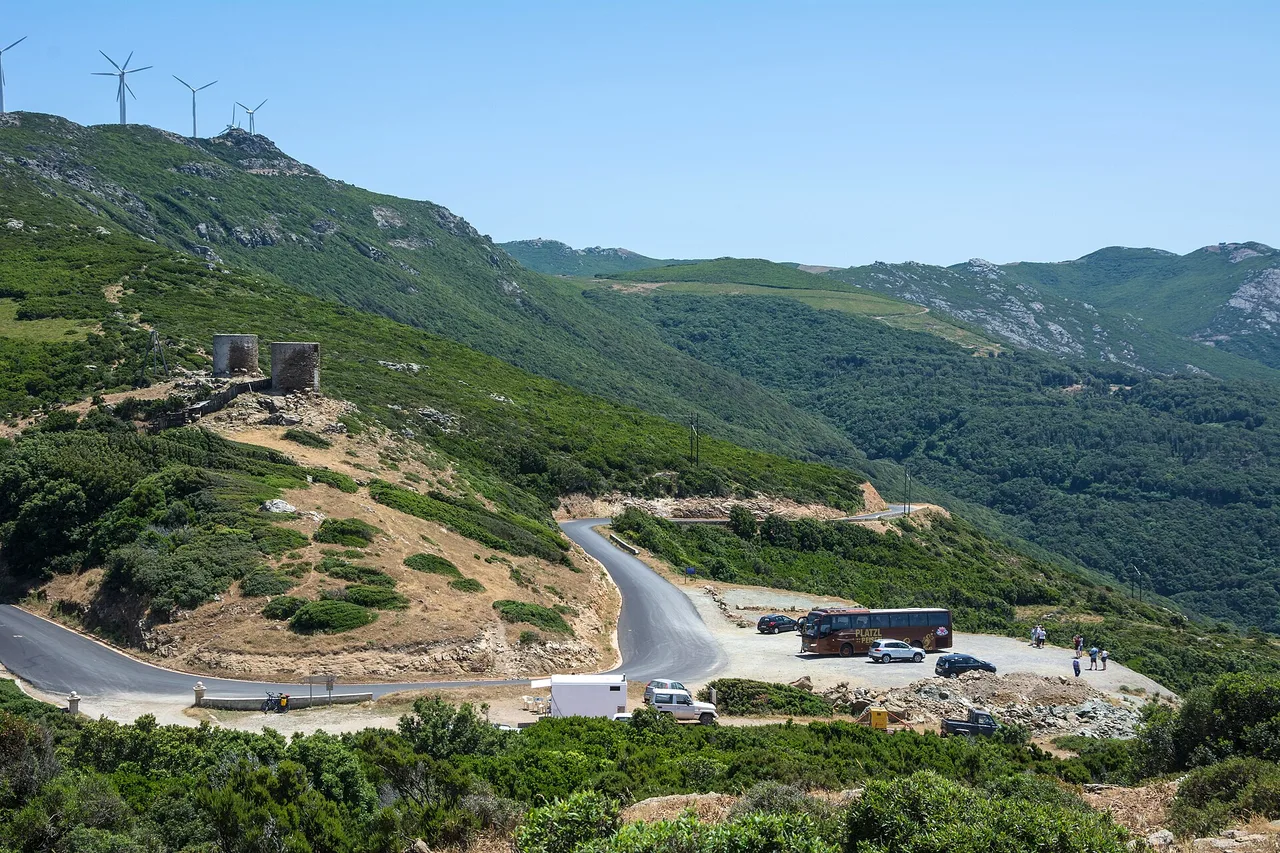
Because this is not one region, it is three provinces, and they are nothing alike. Labourd holds the coast, the seaside towns and the white houses with their red timbers. Basse-Navarre follows the Nive valley inland as far as Saint-Jean-Pied-de-Port. The Soule, to the east, is mountain: gorges, forests, passes, hamlets of a few dozen people.
⚠️ And the Soule is not "just next door". From Biarritz to Larrau, at the head of the valley, expect about 103 kilometres and close to two hours; from Bayonne, 94 kilometres and 1 hr 42. These are not motorway distances: the second half runs on narrow, winding roads, often behind a tractor or a flock. A day trip from the coast means four hours in the car for three hours on the ground.
📌 The consequence fits in one sentence: over five days you need two bases, not one. Two nights on the coast, three inland. Moving once costs you an hour; not moving costs you three.
Day 1 — Bayonne and Biarritz: the one day a car is useless
Start with the coast, and start it without the car. This is the one part of the Basque Country that is genuinely easy by train: the regional line Bordeaux–Dax–Bayonne–Hendaye stops at Bayonne, Biarritz, Guéthary, Saint-Jean-de-Luz–Ciboure and Hendaye. Five stops, the whole seaboard.
Bayonne in the morning. It is the real historic capital of the French Basque Country, and the only town here that does not live off beach tourism. Grand Bayonne, squeezed between the Nive and the Adour, lines its quays with half-timbered houses and holds a Gothic cathedral listed as UNESCO World Heritage on the Santiago pilgrimage routes. It is also France’s chocolate capital: the craft arrived here in the seventeenth century and never left.

Biarritz in the afternoon. Eight kilometres on, the century changes completely: Biarritz is a resort born under the Second Empire, with its villas, its casino and its Grande Plage. The Rocher de la Vierge, joined to the shore by an iron footbridge, is the obligatory image — and in rough weather, the sight of waves breaking clean over it is worth the stop on its own.
🟢 Our advice: if you fly in, do not take the car on day one. Biarritz airport is minutes from the centre, seaside hotels are poorly served for parking, and you will pay a full rental day to leave the car standing. Pick it up the next morning, when it starts earning its keep.
Day 2 — Saint-Jean-de-Luz, La Rhune and the white villages of Labourd
Second day, and the car enters the story — gently, over about fifteen kilometres.
Saint-Jean-de-Luz in the morning. This is the port that made Labourd rich on whaling and Newfoundland cod, and the only genuinely sheltered bay on the whole Basque coast: three breakwaters close it off, which makes it the one beach where you swim rather than wrestle with the surf. The town kept its shipowners’ houses and the church of Saint-Jean-Baptiste, where Louis XIV married the Infanta Maria Theresa in 1660.

La Rhune in the afternoon, and this is the one stop on the whole trip you must book. From the Col de Saint-Ignace, above Sare, a little rack railway climbs to the summit at 905 metres, exactly on the French-Spanish border. The line was inaugurated in 1924 and the climb takes about 35 minutes at 8 kilometres an hour — the carriages are wooden, pottok ponies graze the slopes, and on a clear day the entire coast opens up in a single view.
⚠️ Three things to know before going up. Departures fill in season, so book online. The summit is markedly colder and windier than the car park, even in August. And timetables and fares change from year to year: check the train’s official site — we deliberately quote no figure that might have aged by the time you travel.
Sare and Ainhoa at the end of the day. Two of the four French Basque villages carrying the Plus Beaux Villages de France label. Sare, at the foot of La Rhune, shows Labourd as it was built on the wealth of distant-water fishing. Ainhoa, a few kilometres east, is a thirteenth-century bastide reduced to a single long street of white houses with scarlet woodwork — one street and nothing else, which is oddly what makes it unforgettable.
Day 3 — Espelette, the Nive valley and Saint-Jean-Pied-de-Port
Third day: you leave the sea for good, and this is the day you change base.
Espelette first, ten minutes from Ainhoa. The whole village lives off one pepper, and you see why the moment you look up: from August to November the white facades disappear under strings of peppers hung out to dry. Out of season the village stays pretty, but the image itself is seasonal — worth knowing before you build a day around it.

📌 One weekend to avoid, or to aim for deliberately. The Pepper Festival traditionally falls in late October — the programme announced for 2026 covers 24 and 25 October, free entry, with paid shuttle buses (in the order of €2 to €2.50 a trip) from Saint-Pée-sur-Nivelle, Souraïde, Cambo-les-Bains, Itxassou and Larressore. The very existence of those shuttles tells you what matters: that weekend, you do not drive into Espelette. Confirm the dates with the tourist office — a listings date is not an official one.
Then the Nive valley. You climb through Cambo-les-Bains, a spa town with a distinctly nineteenth-century air, then Itxassou and its Pas de Roland, a gap in the rock that legend credits to the paladin’s horse. The road narrows and follows the river: it is the finest hour of driving of the whole trip.

Saint-Jean-Pied-de-Port at the end of the day. Capital of Basse-Navarre, the fourth classified village on this route, and above all the last French stage of the Le Puy Way before the pass of Roncesvalles. Its Porte Saint-Jacques is inscribed as UNESCO World Heritage on the routes of Santiago de Compostela. The rue de la Citadelle drops down to the old bridge over the Nive, and at any hour you pass pilgrims setting off or arriving — this is a town with a function, not merely a frontage.
🟢 Sleep here, or very close. This is the pivot of the whole itinerary: from tonight, the Soule is one hour away instead of two.
Day 4 — the Soule: the Holzarte footbridge, and what is closed
Fourth day, the most mountainous, and the one to read carefully.
Let us start with the bad news, because almost nobody gives it. The Kakuetta gorges at Sainte-Engrâce are closed. Not closed this season: closed since July 2020, after a fatal accident caused by falling rocks. They nonetheless still appear in nearly every "Basque Country in five days" itinerary online, admission price included.
The site is a building works. The old path along the canyon floor is being abandoned — it was what exposed visitors to rockfall — and replaced by an elevated route of nearly two kilometres, with walkways, two panoramic viewpoints and a suspension bridge, set high above the river. The French construction press reported in March 2026 that the works run until 2027, with reopening planned for that year. The French hiking federation gives no date at all.
⚠️ In other words: do not build your day around Kakuetta, and check with the Soule tourist office before driving two hours. An announced reopening is not a reopening.

What is open, on the other hand, justifies the journey by itself: the Holzarte footbridge, at Larrau. Built in 1920 to join the two sides of the valley, it is 70 metres long and crosses the Olhadubi gorge 150 metres above the void. You reach it from the Auberge de Logibar, two kilometres before the village of Larrau, after an hour’s walk through woodland — a steady path, with ropes fitted along the climb.
🟢 Two useful details. The Logibar car park is small: come early, and be aware that in July and August access has already been handled by shuttle from the valley in past summers — ask locally before driving up. And if you want to go further, the full gorge loop takes about four hours and counts as a difficult hike: that is not the same outing as the there-and-back to the bridge.
📌 The rest of the Soule is driven slowly, which is the point: the Iraty forest, the Bagargi pass, the Romanesque church of Sainte-Engrâce, villages where the Souletin dialect is still spoken. It is the least visited of the three provinces, and by far the wildest.
Day 5 — crossing into Spain, but not by car
Fifth day, back towards the coast, with a border half an hour away. San Sebastián is some thirty kilometres from Hendaye — but the best way there is not the car.
Leave the vehicle in Hendaye and take the Topo. It is the Basque commuter train run by Euskotren, line E2, between Hendaye and Lasarte-Oria. It reaches San Sebastián in 35 minutes, with departures at 3 and 33 minutes past each hour — from 5.33 am on weekdays, 7.03 am at weekends and on public holidays. A single costs €2.90, a return €5.80, and the Euskotren station is to the left of the SNCF station forecourt in Hendaye.
🟢 Why this is objectively better: you skip San Sebastián’s parking, which is difficult and expensive in season; you need not worry about the cross-border clause in your rental contract; and you can eat pintxos in the old town without counting your glasses. From Amara station, a connection on line E1 even runs to Bilbao, two and a half hours further — too far for this day, useful to know for another.
📌 And if you would rather stay in France, the day fills itself: the corniche basque between Saint-Jean-de-Luz and Hendaye, the Fort de Socoa at Ciboure, the bay of Txingudi. It is the finest stretch of coast of the trip, and the only one where the road truly hugs the cliff.
Renting the car: where to pick it up, and the clause nobody reads
Let us be blunt: two of the three provinces are not reachable any other way. The inland villages of Labourd, the Nive valley beyond Cambo and the whole Soule have no service a visitor can use. Here the car is not a comfort: it is the condition of access.
Where to pick it up. Two entry points serve the whole route: Biarritz Pays Basque airport, minutes from the centre, and the railway station, for those arriving by train. compare the rental desks in Biarritz and the Basque Country gives access to the agencies based at the airport and in town, with the conditions displayed before you book — and it also covers San Sebastián and Bilbao if you arrive through Spain.
⚠️ The clause nobody reads. The Basque Country straddles two countries, and plenty of travellers cross the border without thinking about it. Cross-border driving conditions vary from one rental company to another: some allow it with no formality, others require a declaration or an insurance extension. Read that clause before signing, not at the border. And if your only trip into Spain is San Sebastián, the question disappears: take the Topo from Hendaye.
🟢 Two points matter more than the daily rate: the size of the excess, and the fuel policy — full-to-full is the only one that does not make you pay for fuel you will not burn. Take a compact car: village streets and Soule roads were laid out for carts, and the parking spaces still keep that measure.
Where to sleep: two bases
The choice of bases genuinely changes the trip.
First base, on the coast, two nights. Saint-Jean-de-Luz is the best compromise: pedestrian centre, a station on the regional line, a sheltered beach, and inland Labourd under twenty minutes away. Bayonne suits anyone who prefers a real town, with restaurants open late and good connections.
Second base, inland, three nights. Saint-Jean-Pied-de-Port or a village in the Nive valley. You sleep more cheaply, you eat better, and above all the Soule drops from two hours to one. This is where the trip is won or lost.
⚠️ One seasonal exception: during the Fêtes de Bayonne in late July the entire seaboard fills up and prices climb well beyond the city itself. If you are not coming for them, come before or after.
The summary: the five days, what to book, what is closed
This table sums up what we checked on 10 September 2026. Timetables, fares and seasonal openings change from year to year: always check the official information of the moment before you leave.
| Day | Where | Car | What to know |
|---|---|---|---|
| Day 1 | Bayonne and Biarritz | Not needed | Regional train Bayonne–Biarritz–Hendaye. Collect the car the next day, not on arrival. |
| Day 2 | Saint-Jean-de-Luz, La Rhune, Sare, Ainhoa | About 15 km | Rhune train: the only stop to book. Summit at 905 m, climb about 35 min. |
| Day 3 | Espelette, Cambo, Itxassou, Saint-Jean-Pied-de-Port | About 1 hr of driving | Peppers on the facades from August to November. Change base tonight. |
| Day 4 | The Soule: Larrau, Holzarte, Sainte-Engrâce | 1 hr from Garazi, 2 hr from the coast | Footbridge: 70 m long, 150 m high, 1 hr on foot. Kakuetta CLOSED since 2020. |
| Day 5 | Hendaye and San Sebastián | As far as Hendaye only | Topo Euskotren E2: 35 min, €2.90 single, departures at 03 and 33. Do not drive to Donostia. |
| Bases | Coast 2 nights, inland 3 nights | — | A single seaside base adds roughly four hours of driving on the Soule day. |
| Classified villages | Ainhoa, Sare, La Bastide-Clairence, Saint-Jean-Pied-de-Port | Car essential | The four Plus Beaux Villages de France of the French Basque Country. |
| Avoid | Espelette on 24-25 October 2026 | Shuttles only | Pepper Festival: free entry, shuttles €2 to €2.50. Confirm dates with the tourist office. |
🟢 The single rule, valid everywhere on this route: it is not distance that decides your day, it is relief. Fifty kilometres of coast take forty minutes; fifty kilometres in the Soule take ninety. Ask about the real driving time first and the programme second — and you will have five days instead of four.
Top-rated activities in France, bookable online: