North or south is the first question of any first trip to Corsica — and almost every answer online compares scenery. The real criterion lies elsewhere. The island is roughly 183 kilometres long, it has no motorway at all, and a mountain range splits it lengthways. Choosing a base is not choosing a backdrop: it is choosing the hours of driving you will not do.
What the choice really changes: driving hours, not scenery
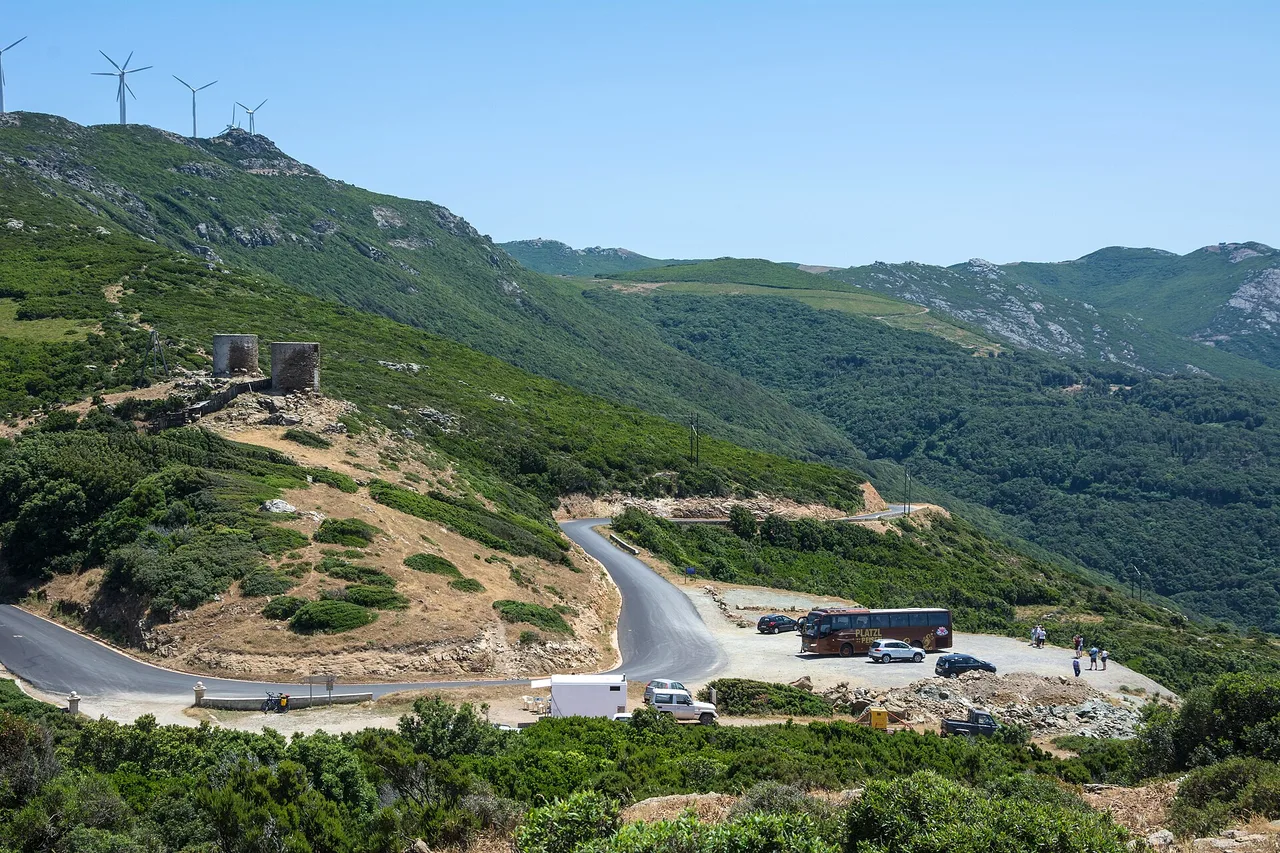
Corsica is a mountain dropped into the sea. About 183 kilometres from north to south, 83 kilometres at its widest, a high point of 2,706 metres at Monte Cinto — and not one metre of motorway. That last fact explains everything else.
Two numbers are enough. From Bastia to Bonifacio, expect roughly 171 kilometres and 2 hours 20: that is the island’s fastest axis, because it follows the flat eastern plain. From Ajaccio to Calvi the distance is identical — 171 kilometres — but it takes close to three hours, and the quickest route runs inland, not along the coast. The coastal road through Porto is more beautiful; it is also longer and far slower.
⚠️ In other words, the two halves of the island are three hours apart. A day trip from your base to the other end means six hours behind the wheel for a few hours on the ground. That is not a question of stamina: it is relief, and relief does not negotiate.
📌 So the useful question is not “which half is prettier”. Both are. It is: what do I want to reach in under an hour from my bed? Everything beyond that radius will cost you a whole day.
The south: the postcards you have in mind, and what they demand
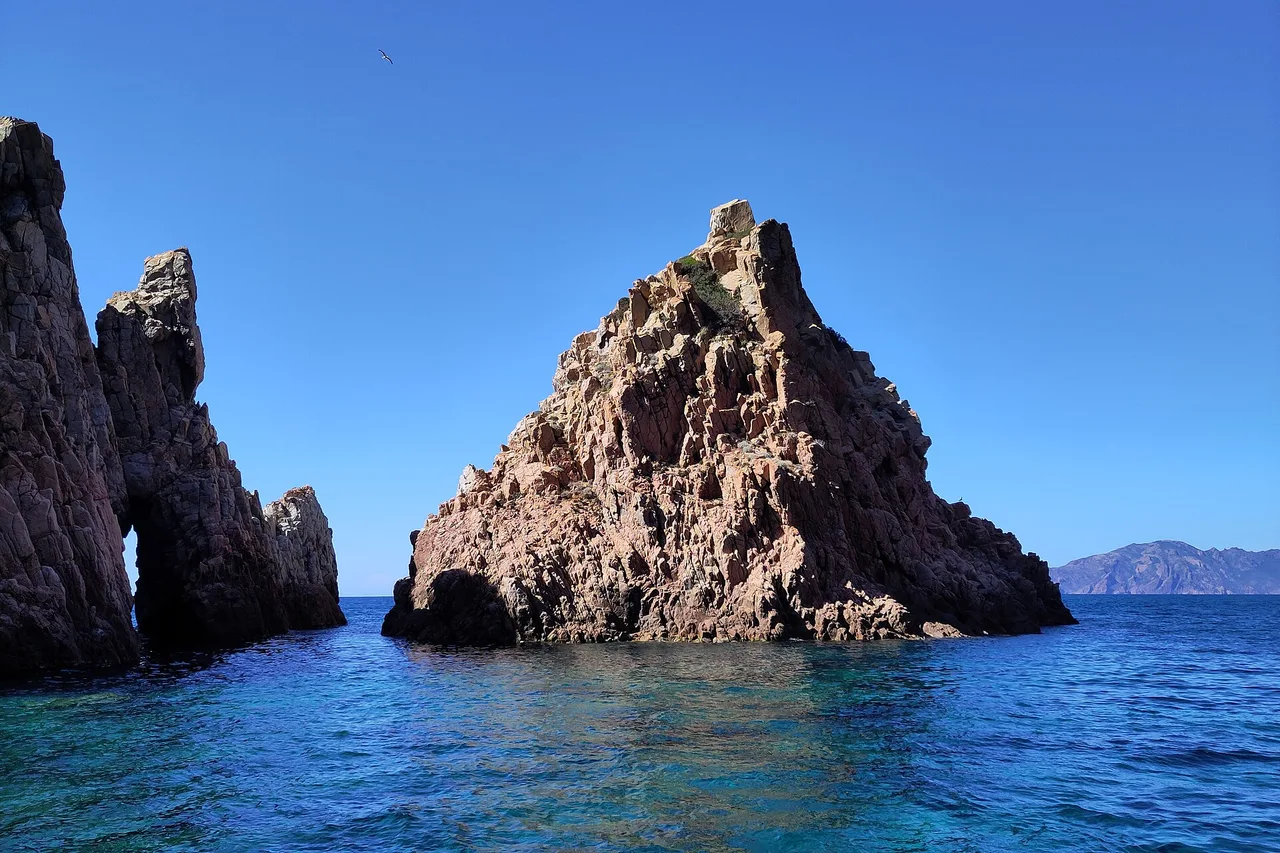
If you hold one image of Corsica in your head, chances are it comes from the south. Bonifacio, with its houses perched on a limestone cliff; the Lavezzi islands and their rounded granite boulders; Palombaggia, Santa Giulia, Rondinara; and behind them, the Bavella needles.

Its logistical advantage is real. Figari–Sud Corse airport sits 22 kilometres from Porto-Vecchio and 22 kilometres from Bonifacio — about half an hour either way. That is a rare set-up: one airport within thirty minutes of both poles of the holiday. You can land at noon and be on the sand by one.
⚠️ What the south asks in return: a car, all the time. There is no railway south of Ajaccio, and that is not an oversight. The eastern coastal line, which once ran down to Porto-Vecchio, was closed on 8 September 1943 beyond Folelli-Orezza, and its final section was removed in 1953. It was never rebuilt. Without a vehicle, the south shrinks to the beach in front of your hotel.
🟢 Book the car before the room. It sounds backwards, but in July and August the vehicles available at Corsican airports go weeks in advance, and last-minute rates are among the highest in France. If your trip depends on a car — and in the south it does — start by comparing rental firms at the island’s four airports before you commit to anything else.
The south is right for you if: you are coming above all for the sea, you travel with small children (the bays of Santa Giulia and Rondinara are sheltered and shallow), you want Bonifacio and the Lavezzi without spending a day driving to them, and you accept high-season crowds.
The north: the Balagne, and the only region where you can skip the car
The north means the Balagne first: Calvi and its Genoese citadel, L’Île-Rousse, and behind them a string of hill villages — Sant’Antonino, Pigna, Lumio, Corbara — set among olive groves twenty minutes from the sea.

And it has something the south simply does not: a train that runs along the beaches. The Tramway de la Balagne links Calvi to L’Île-Rousse in about 40 minutes, with request stops in front of the beaches — Algajola, Bodri, Sant’Ambrogio, Sainte-Restitude. It runs in season only, roughly from mid-April to mid-October. Timetables change every year: check the official Chemins de fer de la Corse website before you plan days around it.
The rest of the network is two lines and 232 kilometres of metre-gauge track: Bastia–Ajaccio, 158 kilometres, 3 hours 35 at best; and Ponte-Leccia–Calvi, 74 kilometres in 1 hour 50. It is slow, it is a mountain railway — but it exists, it serves Corte, and it completely changes what a car-free trip can look like.
🟢 If you are not renting a car, do not grab a random taxi on arrival: a pre-booked transfer from Calvi, Bastia or Figari usually costs less than a rental car left sitting in a hotel car park for a week — and far less than an improvised late-night ride in August.
Full guide: Renting a car in Corsica: prices, deposit and roads
The north is right for you if: you want to alternate sea and villages without spending your days driving, you are considering a car-free stay, you hike (the GR 20 starts at Calenzana, above Calvi), or you want a slightly less crowded Corsica in mid-August.
Cap Corse and the Agriates: what the north has and the south does not
Two places in the north have no equivalent anywhere else on the island, and they are sometimes enough to settle the question.
Nonza beach, on the western side of Cap Corse, is a vast expanse of grey and black pebbles — and its origin is not volcanic at all. It is made of tailings from the old Canari asbestos quarry, whose operation stopped in 1965. The spoil tipped into the sea added 26 hectares to the commune and buried the old harbour of Marina di Nonza. It is a beach born of a factory, and one of the most striking sights in Corsica.

⚠️ Do not swim there without looking. Violent waves are common on the western side of the cape, and the steep profile of this artificial shore makes them worse: swimming is dangerous whenever the sea is rough. No photograph shows that.
The Agriates desert, for its part, protects the beaches of Saleccia and Lotu with the only thing that still works: no road. Two ways in, and no more. The 12-kilometre track from Casta, three and a half kilometres from Saint-Florent, takes 45 minutes to an hour of careful driving in a high-clearance vehicle — which is exactly why local 4×4 shuttles exist. Or the boat from Saint-Florent, 20 to 25 minutes, by inflatable because there is no landing stage at all: budget around €30 return per person depending on the operator, a figure to confirm when you book.

📌 A beach as beautiful as Palombaggia, but one you have to earn — the temperamental difference between the two halves, in a single image.
The middle: the third answer nobody gives
There is one option comparison articles systematically forget, because it has no beach: Corte. The town sits on the Bastia–Ajaccio railway, roughly halfway, which makes it the only inland base reachable by train from both major ports.
It is also the gateway to the Restonica valley, and access there is regulated. Beyond the Tuani site, six kilometres from Corte, motor traffic is banned in season: you leave the car in Corte’s paid car parks and take the shuttle from the railway station, running from early May to the end of September, at around €4 return, booked online through the Via Corsica app.
⚠️ Two caveats, and they matter. Dates, fares and rules change from year to year — confirm with the Centre Corse tourist office before you go. And the upper valley road, the one leading to the Grotelle shepherds’ huts, was destroyed by storms Ciarán and Domingos in November 2023: check its condition before planning the walk up to the lakes.
North or south: the table that decides
This table sums up what we verified on 10 September 2026. Seasonal timetables, fares and access rules change from year to year: always check the official source of the moment.
| What you are after | The north — Balagne, Cap Corse | The south — Porto-Vecchio, Bonifacio |
|---|---|---|
| Airport | Calvi–Sainte-Catherine, Bastia–Poretta | Figari–Sud Corse, 22 km from both Porto-Vecchio and Bonifacio |
| Car-free stay | Possible in the Balagne: Calvi–L’Île-Rousse tram, ≈ 40 min, beach stops, in season | No. No railway south of Ajaccio since 1953 |
| The beaches | Saleccia, Lotu, Ostriconi: wild, deliberately hard to reach | Palombaggia, Santa Giulia, Rondinara: easy to reach, very busy |
| The villages | Balagne: Sant’Antonino, Pigna, Lumio, 20 min from the sea | Alta Rocca and Bavella: superb, but higher and further from the coast |
| The one-off | Cap Corse and the Agriates desert | Bonifacio, its cliffs and the Lavezzi islands |
| Seeing the other half | ≈ 3 h drive to Bonifacio | ≈ 3 h drive to Calvi |
| A week in one place | One base is plenty if you stay in the Balagne | One base is plenty between Porto-Vecchio and Bonifacio |
Five bases that work, and who they suit
Calvi — the simplest base for a first car-free trip: an airport minutes away, a citadel, a long sandy beach, and the tram that serves the neighbouring coves.
Saint-Florent — for Cap Corse and the Agriates. Quieter than Calvi, within immediate reach of the boats to Lotu and Saleccia, and of the Patrimonio vineyards.
Corte — for the mountains, the Restonica, the GR 20 and a Corsica that does not live off beach tourism. Reachable by train, and markedly cheaper than the coast in August.
Porto-Vecchio — the most practical base in the south: Figari half an hour away, the big beaches to the south, Bavella to the west, and all the services of a real town.
Bonifacio — for those who want the cliff under their window. Sardinia lies opposite, barely a dozen kilometres away: the Strait of Bonifacio is narrow enough that you see it clearly from the ramparts.

📌 And if you stay longer than a week: take two bases, one per half, rather than a central base “to do everything”. Moving once costs three hours; not moving costs six per excursion. If you truly do not want to move, Ajaccio is the honest compromise — airport, railway, and a halfway position on the west coast. To plan the southern part, our one-week southern Corsica itinerary sets out the stages and the real distances.
🟢 The single rule of this article: do not choose half an island, choose an airport — then everything within an hour of it. That one-hour radius is what will make your holiday, not the map.