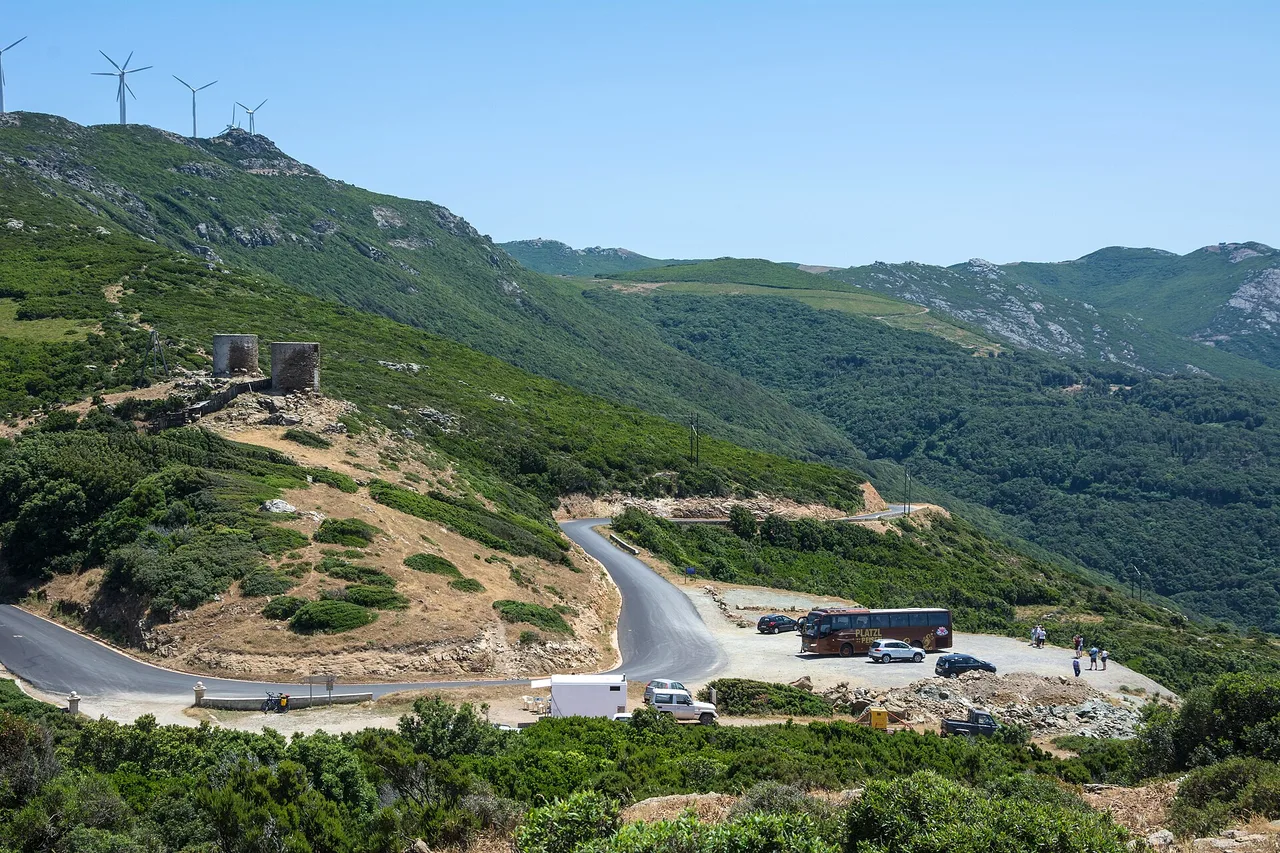
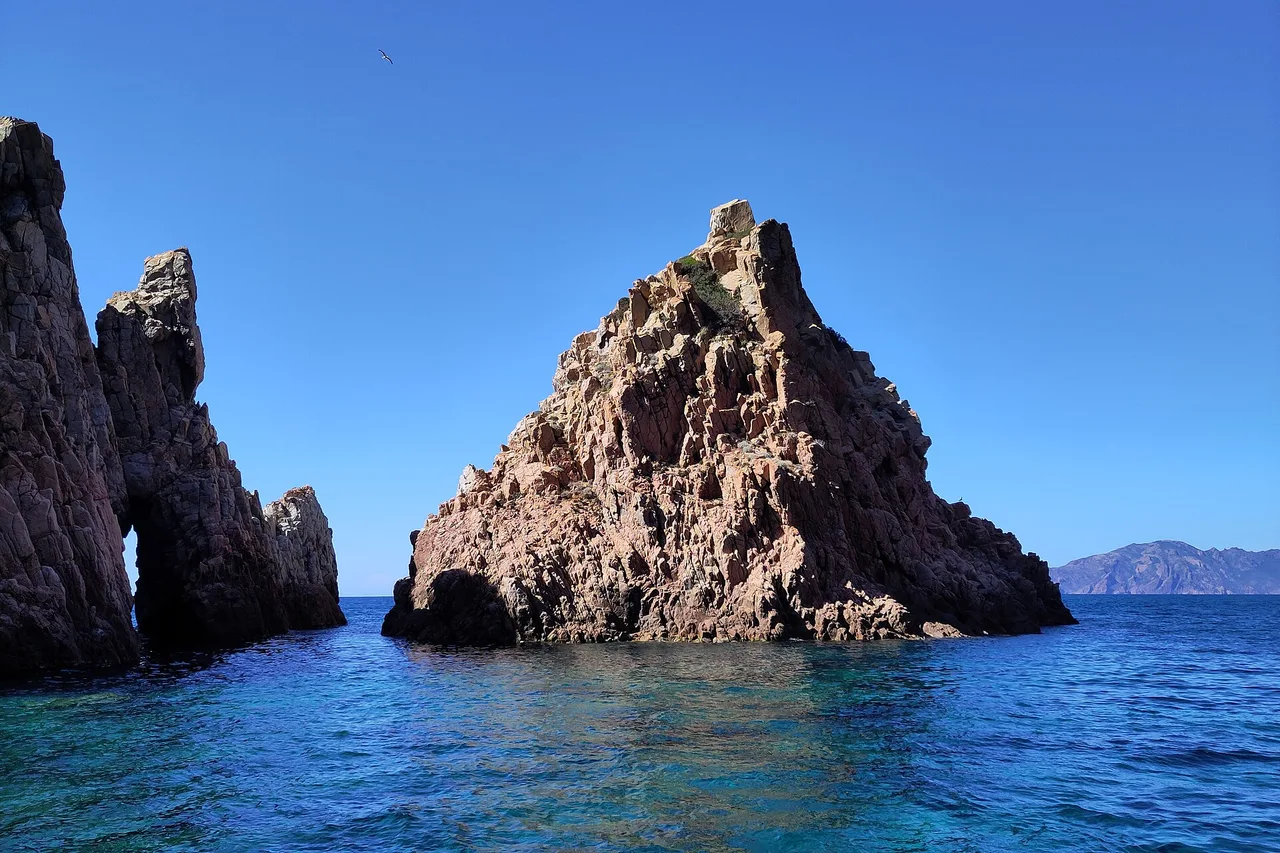
The loop is well known: Bonifacio, the Lavezzi islands, the beaches around Porto-Vecchio, the Bavella needles. That is not where a week goes wrong. It goes wrong at doors that close — a mountain range shut that very morning, an island you can no longer land on without a booking, a canyon you may only enter with a guide. Here is the route, and how to build it so that a closed door never costs you a day.
What ruins a week in southern Corsica is not the driving
Every itinerary will give you the same loop, and they are right to: Bonifacio, the Lavezzi islands, Porto-Vecchio and its beaches, the Bavella massif. That is not where it is decided. What derails a week is three doors that may be shut on the day you turn up, each for a different reason — and all of them perfectly lawful.
The first is the mountain. In Corse-du-Sud, access to forested massifs is regulated every year from 15 June to 30 September. A fire-risk map is published every day at 6 p.m. for the following day, and flagged massifs can be closed during the day if conditions deteriorate.
The second is the island. On the Lavezzi, visitor numbers are now capped: a maximum of 200,000 visitors a year and, from 2026, 150,000 landings on the land part with no more than 2,000 people present at any one time, each holding an authorisation or a booking. Corsican residents have priority.
The third is the canyon. A municipal order dated 29 April 2024 bans access to Purcaraccia, Pulischellu and la Vacca without an accredited professional. Fourteen professionals are licensed on site. The rule follows serious accidents — three deaths in 2021 and 2022 — on a steep, poorly marked path that comes out at the top of a slippery waterfall.
📌 Everything that follows comes from that. This itinerary is not built in kilometres, it is built in flexibility. No day is pinned to a single place that might be shut, sea and mountain stay interchangeable, and decisions are taken the evening before, when the risk map comes out.
Arriving and driving: Figari, and why a car is not optional
Southern Corsica is one of the few places where the answer to "do I need a car?" is blunt: yes. The towns are walked — Bonifacio cannot be done any other way — but the beaches, the Bavella massif and the Sartène coast are not served usefully by public transport.
The right airport is Figari. Figari South Corsica sits about 5 km from Figari and roughly twenty kilometres from both Porto-Vecchio and Bonifacio: you are inside the itinerary the moment you leave the terminal. Ajaccio Napoléon-Bonaparte, the island's busiest airport, is a valid gateway if you want to run the loop the other way round, but it adds a good two hours of driving at the start.
Full guide: Renting a car in Corsica: prices, deposit and roads
For a pick-up at Figari or Ajaccio, comparing the rental companies present on site gives access to the desks operating at both airports, with the conditions shown before you book. Two things matter more than the daily rate: the size of the excess, and the fuel policy — full-to-full is the only one that does not make you pay for fuel you will not burn.
⚠️ What about the ferry? It is a real alternative, not an obvious choice. Allow at least six and a half hours of crossing from the mainland — Marseille, Toulon and Nice serve Ajaccio, Bastia and Porto-Vecchio among others — and book three to six months ahead for the best fares, some operators opening sales up to eleven months before. For a week as a couple, flying plus a rental is usually simpler; with a family, a lot of luggage and a fortnight ahead, the ferry becomes competitive again.
🟢 One order of magnitude that changes your planning: in Corsica you drive slowly. Mountain roads are narrow and winding, and an average of 45 to 50 km/h is already optimistic on the D268 or the Ospedale road. Plan in hours, never in kilometres.
The evening habit: read the map before deciding tomorrow
This is the single most useful piece of advice in this article, and it fits in one sentence: every evening, look at the fire-risk map published for the next day, then decide what you will do. It goes online at 6 p.m. and covers the whole island; massifs marked with an asterisk can be closed during the day.
⚠️ This is not a theoretical precaution. On 17 July 2026, two prefectural orders closed the Bavella (municipality of Quenza) and Illarata-Taglio Rosso (Zonza) massifs. The RD268 was cut between kilometre points 28+742 and 10+089, with a diversion via the RT10 and RD368; the GR20 was interrupted between Asinau and Paliri and the Paliri refuge closed until 21 July inclusive. The reason: a risk rated "very severe" by Météo-France. Bavella reopened on 20 July.
🟢 The practical consequence is simple. Book nothing binding in the mountains for a single fixed date, and always keep a sea day in reserve. A closure is not a disaster if your programme can be swapped around; it becomes one if everything was pinned to one day.
Days 1 and 2 — Bonifacio, on foot
Bonifacio is the most logical base to start from: twenty minutes from the airport, at the foot of the cliffs, and within boat reach of the Lavezzi.

The old town is visited on foot, and only on foot: you park at the marina or up on the heights, and you climb. The King of Aragon staircase, the ramparts, the marine cemetery in late afternoon, the lanes once the day coaches have left — two days are not too many, especially as the second doubles as your weather reserve for the boat trip.
🟢 Go out to sea at least once from Bonifacio, even without heading to the Lavezzi. The cliffs only make sense from below: it is from the water that you grasp how precisely the town balances on its limestone. Trips towards the caves and the Madonetta leave from the marina and last under an hour.
Day 3 — the Lavezzi, the day that must be booked
It is the finest day of the week, and the only one that requires a step taken in advance.

The archipelago is tiny: 69 hectares, 9,000 m² of beach and 3 km of permitted paths, according to the Corsican environment office. That is exactly why visitor numbers are now capped — 200,000 visitors a year, and from 2026 150,000 landings with a maximum of 2,000 people at any one time on the land part, each holding an authorisation or a booking.
📌 What we will not tell you, because we have not verified it: that a single booking desk exists. There is none as we write. Implementation runs through the Bonifacio boat operators and an agreement on the use of the pontoon with the environment office. So the right move is this: book your crossing with a company at the marina, ask explicitly whether landing on the island is included, and keep the confirmation.
⚠️ On site, everything is forbidden except walking and swimming: it is a nature reserve, the marked paths must not be left, no litter, no fire, no picking. Bring water and shade — there is no shop, no bar and no drinking water.
Days 4 and 5 — Porto-Vecchio, and the hour that changes everything
Twenty-seven kilometres separate Bonifacio from Porto-Vecchio, and that is where the beaches everyone comes for are: Palombaggia, Santa Giulia, and the Rondinara a little further south.

🟢 The only thing that really matters fits into one time: 8.30 a.m. The car parks at the big beaches are paid — reported rates run around 8 to 12 € a day depending on proximity and season, figures to be taken as an order of magnitude because they come from unofficial sources — and above all they are full very early in July and August. Arriving before 8.30 costs you an hour of sleep and buys you a parking space, an hour not spent circling, and a beach that is still breathable.
On the second day, reverse it: the beach in late afternoon, when the car parks empty and the light goes low, and the middle of the day in town. Porto-Vecchio has an upper old town, salt pans and a harbour that deserve more than a refuelling stop.
⚠️ Do not expect a Corsican beach to be both free and empty in August. Both exist, but rarely in the same place: the quiet coves are earned on foot, and the easy beaches are paid for in parking and in neighbours.
Day 6 — Bavella, the day to keep flexible
This is the mountain day, and also the one that may fall through. From Porto-Vecchio, allow about fifty kilometres to the pass via the Ospedale road, but more than an hour of driving: the D268 climbs, turns and takes its time.

The pass offers the most photographed viewpoint on the island, and the paths leaving from it cross a forest of Corsican pines. It is a busy site: the massif takes close to a million visitors a year, and the car park at the pass is full by about 9.30 a.m. in July and August — one of the rare places where arriving before 9 genuinely changes the day.
🟢 A free shuttle runs in high season. From 1 July to 31 August, from the paid car park at the Viséo racecourse in Zonza, a shuttle climbs to the pass every ten minutes. It is the calmest option if you arrive late: you pay for parking at the bottom and stop looking for anything at the top.
⛔ The canyons may only be entered with a guide. Since the municipal order of 29 April 2024, access to Purcaraccia, Pulischellu and la Vacca is banned without an accredited professional — fourteen are licensed on site — and checks are carried out, mainly between June and September. This is not administrative fussiness: it is the answer to three deaths in 2021 and 2022. If those waterfalls appeal to you, book a guided outing; otherwise the freely accessible paths of the massif are more than enough for a day.
⚠️ And before driving up: yesterday evening's map. This is the day of the week when the evening habit matters most.
Day 7 — the western road: Sartène and Roccapina
Most one-week itineraries stop at Porto-Vecchio and turn back. That is a pity: the road climbing west between Bonifacio and Sartène is one of the finest stretches on the island, and the least crowded.

The Roccapina lion, a reclining rock topped by a Genoese tower, is visible from the road and overlooks a pale sandy cove. Sartène, higher up, is a town of dark granite, austere and magnificent, which Prosper Mérimée once called the most Corsican of Corsican towns. Further north again, Propriano and the Campomoro peninsula close the loop if you have the time.
🟢 If your flight leaves from Figari, this loop works as a day trip and brings you back to the airport without a detour. If you fly out of Ajaccio, it simply becomes your way home — one of the rare times when the last day's drive is worth a visit in itself.
Distances, as orders of magnitude
The figures below are there to build your days, not to measure a route to the kilometre. In Corsica, time matters more than distance: a mountain road averaging 45 km/h has nothing in common with the same distance on the fast east-coast road.
| Leg | Distance | Type of road |
|---|---|---|
| Figari airport → Bonifacio | ≈ 20 km | open, fast road |
| Figari airport → Porto-Vecchio | ≈ 25 km | open, fast road |
| Bonifacio → Porto-Vecchio | ≈ 27 km | main east-coast road |
| Porto-Vecchio → Palombaggia | ≈ 12 km | narrow, saturated in summer |
| Bonifacio → Rondinara beach | ≈ 20 km | beach access, narrow at the end |
| Porto-Vecchio → Bavella pass | ≈ 50 km | mountain, allow over an hour |
| Bonifacio → Sartène | ≈ 50 km | winding coastal road, very beautiful |
| Sartène → Roccapina | ≈ 20 km | ridge road |
| Porto-Vecchio → Ajaccio | ≈ 140 km | about 2 h 15, passes included |
Regulated access, site by site
The table below sums up what we verified on 9 September 2026. These rules change from season to season: always check the official information of the day before setting off, and the fire-risk map in particular.
| Site | What applies | What you must do |
|---|---|---|
| Forested massifs of Corse-du-Sud | Access regulated from 15 June to 30 September; risk map published daily at 6 p.m. for the next day; closure possible during the day. | Read the map the evening before and keep a fallback by the sea. |
| Lavezzi islands | Quotas: 200,000 visitors a year; from 2026, 150,000 landings and at most 2,000 people at any one time, with an authorisation or a booking; residents have priority. | Book the crossing with a Bonifacio operator and have them confirm that landing is included. |
| Purcaraccia, Pulischellu and la Vacca canyons | Municipal order of 29 April 2024: access banned without an accredited professional; 14 licensed professionals; frequent checks from June to September. | Book a guided outing, or give it up — there is no lawful third option. |
| Bavella pass | Car park full by around 9.30 a.m. in July and August; free shuttle from the paid car park at Viséo (Zonza), every 10 minutes from 1 July to 31 August. | Drive up before 9 a.m., or take the shuttle from the bottom. |
| Porto-Vecchio beaches | Car parks are paid (order of magnitude 8 to 12 € a day, unofficial sources), full from 8.30 a.m. in high season. | Arrive before 8.30 a.m., or come in late afternoon. |
🟢 One rule holds everywhere: in southern Corsica, what must be booked is booked well ahead, what can close closes without notice, and the only defence is a programme willing to be reshuffled. It also happens to be the most pleasant way to travel on this island.
Top-rated activities in France, bookable online: