Seven nights do not contain seven island days. Arrival day goes on the transfer, every island change costs half a day, and taking the boat home costs the whole of the last one. Three islands and a ferry back, and four and a half days are left out of the seven you paid for. Here is the full calculation — and the one leg to move to win a day back, without changing anything else.
Seven nights are not seven island days
Almost every one-week Cyclades itinerary is a list of places. None of them starts with the one operation that really decides the trip: the subtraction. Let us do it, because it is harsher than it looks, and because it changes the itinerary before a single island has been chosen.
Three items eat days, and none of them can be compressed:
Arrival day counts as half a day. Flights into Athens rarely land in the morning; then you have to reach the port, board, cross, find the room and settle in. Nobody makes it to the beach on day one.
Every island change costs half a day. The room is released around eleven, the boat rarely leaves before mid-afternoon, the crossing takes one to four hours depending on the vessel, and then you have to reach the next place. That half day is the worst of the week, because you spend it with the bags.
And going home costs a whole day — if you take the boat. It is the heaviest item, and the only one you can really act on. We come to it in a minute.
| The plan | Usable days | Days lost |
|---|---|---|
| 2 islands, fly home | 5.5 | 1.5 |
| 2 islands, ferry home | 5.0 | 2.0 |
| 3 islands, fly home | 5.0 | 2.0 |
| 3 islands, ferry home | 4.5 | 2.5 |
Read the last row: three islands with a ferry home leave four and a half usable days out of seven nights paid for. That is not bad planning, it is how an archipelago works. What would be bad planning is not knowing it before booking.
The lever is not which islands you pick: it is the way home
Here is the most profitable single decision of the week, and almost no itinerary leads with it. Flying home from Santorini instead of taking the ferry wins back half a day, with nothing else changed — not the number of islands, not the number of nights, not the order of stops.
The Santorini – Athens ferry takes about 5 hours on a fast boat and up to 8 hours on a conventional one. Add check-in, crossing the port and the ride into Athens: the day is over. The flight takes 45 minutes, which is 4 to 5 hours door to door — the spread between those two figures comes from airport check-in time and the ride into town, not from any uncertainty about the flight.
| Getting home from Santorini | Ferry | Plane |
|---|---|---|
| Journey time | ≈ 5 h – 8 h | 45 min in the air |
| Door to door | the day is gone | ≈ 4 – 5 h |
| Indicative price, from | 46.50 € – 55 € | 50 € – 180 € |
| What is left of the day | nothing | half a day |
And the price does not decide the way you would expect. The conventional ferry starts around €46.50, the fast one around €55, and flights sit between €50 and €180 depending on date and how early you book. In other words: the cheapest flight costs about what a fast ferry costs, and hands back half a day. These are market orders of magnitude recorded in late August 2026, not guaranteed fares — but the structural gap does not move.
The practical consequence is simple: look for the flight home before you fix the nights, not after. Comparing domestic flights on your real dates takes two minutes and decides the last day of the trip; doing it the other way round — booking the nights, then finding the flight is out of budget — leaves the ferry as the only option.
⚠️ An honest caveat: on a three-day trip this gain is decisive; on seven, it does not transform the holiday. It returns half a day out of five, which is a great deal for two minutes of searching, and little next to the mistake of planning four islands.
The itinerary runs one way, never in a loop
Second rule, and it follows straight from the table: every doubling back costs the same half day as an outward leg, for a journey you have already made. A loop — Athens, one island, a second, back via the first — therefore pays full price twice for the same scenery.
The most efficient shape runs north to south, one way only: Athens → Paros or Naxos → Santorini → flight home. It has three qualities few itineraries combine. It counts a single island change. It never repeats a leg. And above all it places the hardest island to leave at the end: Santorini is a terminus of the network, superbly connected outwards but awkward to leave for one particular island — in the middle of a trip it blocks; at the end it blocks nothing.
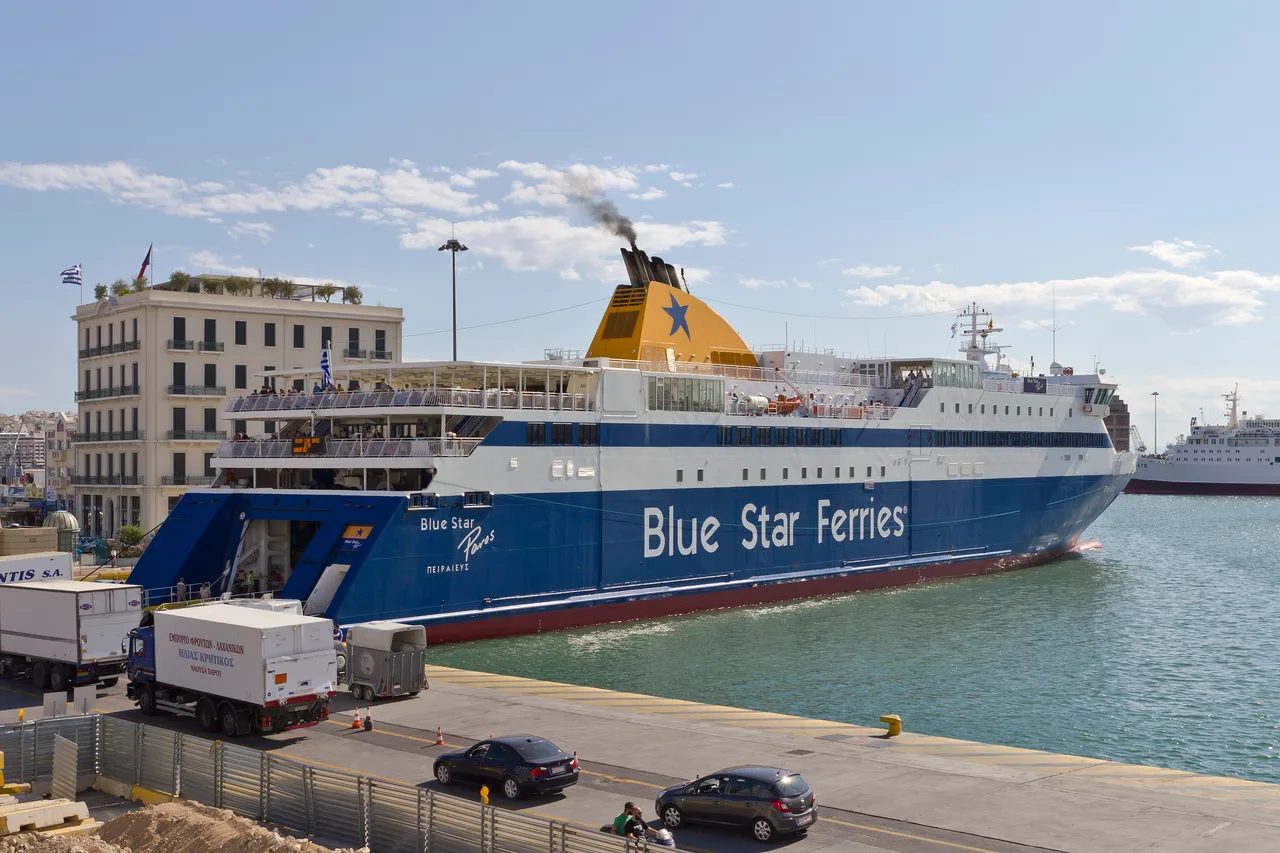
A word on the departure, because it happens before the itinerary itself. Piraeus serves everything and has the most frequent departures in Greece — up to 8 daily crossings to Santorini in summer — but it is vast, and the Cyclades leave from gates E6, E7 and E8, which you reach on foot. It is the one leg of the week where a delay costs a whole day, because a plane waits and a boat does not. A transfer booked ahead between airport and port does not remove the risk of a late flight, but it removes the part that is yours: hunting for a taxi, going to the wrong gate, discovering the distance.
📌 If your first island is Mykonos, Tinos or Andros, the port is not Piraeus but Rafina, about ten kilometres from the airport. The detail is developed in our article on choosing the island — and it can win you the first evening.
Full guide: Athens Airport to Piraeus: Metro, Bus, Taxi or Transfer?
Days 1 to 3 — Paros or Naxos, and why not both
The first island is chosen on one criterion only: it must be a hub, so that what follows stays open. Paros and Naxos both are, twenty-five to fifty minutes apart, with about a dozen daily sailings between them.
Naxos is the largest of the Cyclades and the most lived-in in the literal sense: a mountain, inland villages that farm for a living, long sandy beaches on the west coast, and direct access to the Lesser Cyclades. Paros is more compact, more turned towards the sea, and sits a notch closer to the northern routes.
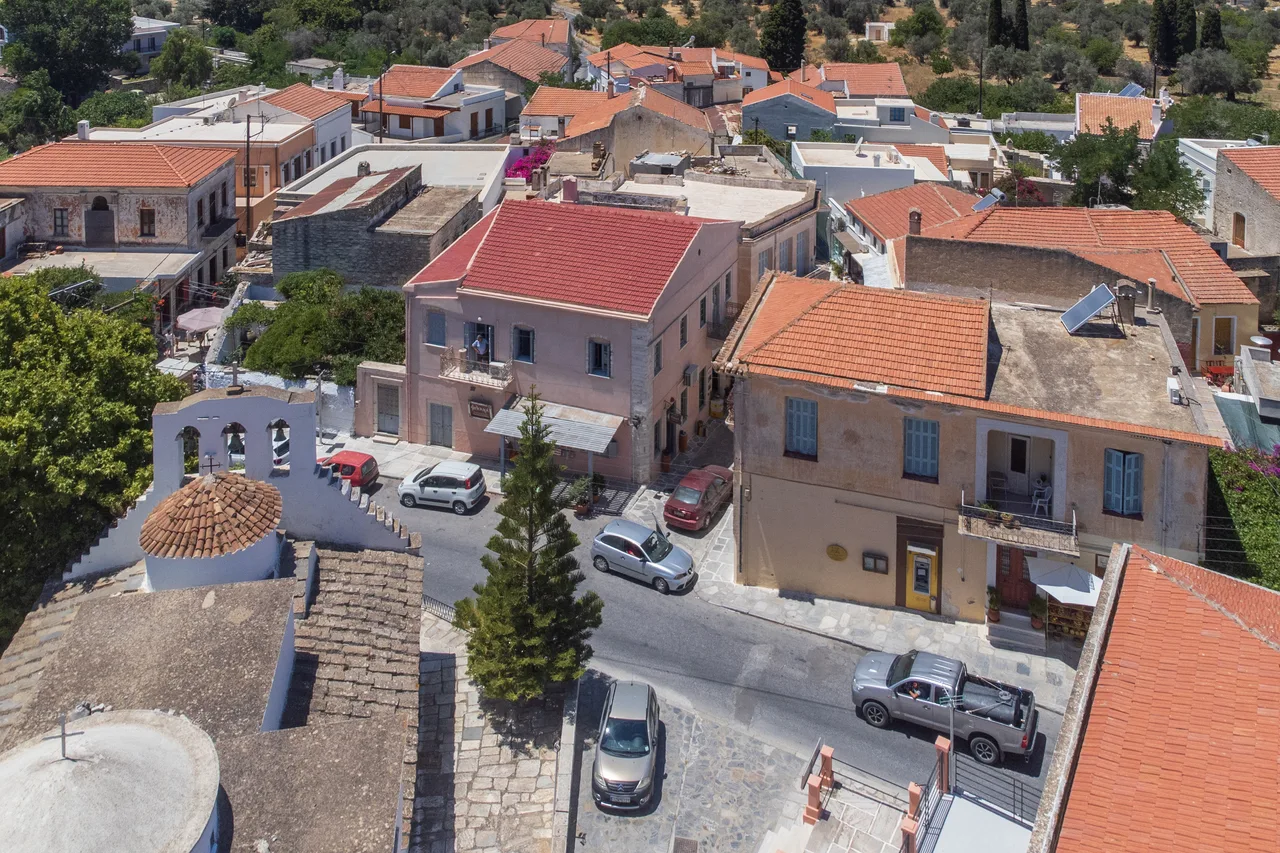
Here is the advice that changes those three days, and it holds for both islands: the interior is what you miss by staying near the port. Halki and Apiranthos on Naxos, Lefkes on Paros, the southern beaches of both — none of it is served by the bus more than two or three times a day. A car or a scooter, even for one of the three days, is enough to transform the stay, and it should be booked ahead in August: an island’s fleet is finite, and it empties. On Santorini, by contrast, rent nothing: the island is small, dense, impossible to park in, and the buses are enough.

And if you want to see both? Do not sleep on both. Twenty-five minutes of crossing and twelve sailings a day make the other island a day trip — no bags, no change of accommodation, no half day lost. That is exactly the kind of trade the table in section 1 makes visible: you pay half a day for a night elsewhere, never for a visit.
Days 4 to 6 — Santorini, and how not to endure it
Changeover day starts with the gap nobody plans for: the room is released around eleven and the boat leaves mid-afternoon. That is four to six hours with the bags, often at thirty degrees. Left luggage near the port solves it for the price of a lunch and turns that last morning into something usable rather than endured — it is the one item of the week where a small outlay buys time directly.
On the island, one thing has genuinely changed and the guides have not caught up: since 2026 Santorini applies a cruise passenger cap that has cut scheduled calls by about eighteen per cent. The midday pressure in Fira has eased accordingly. But the cap covers cruises only: arrivals by air and ferry are not limited, and it is those that fill Oia at sunset. The evening crowd has not moved an inch.
Full guide: Santorini Excursions: What to Book and What It Costs
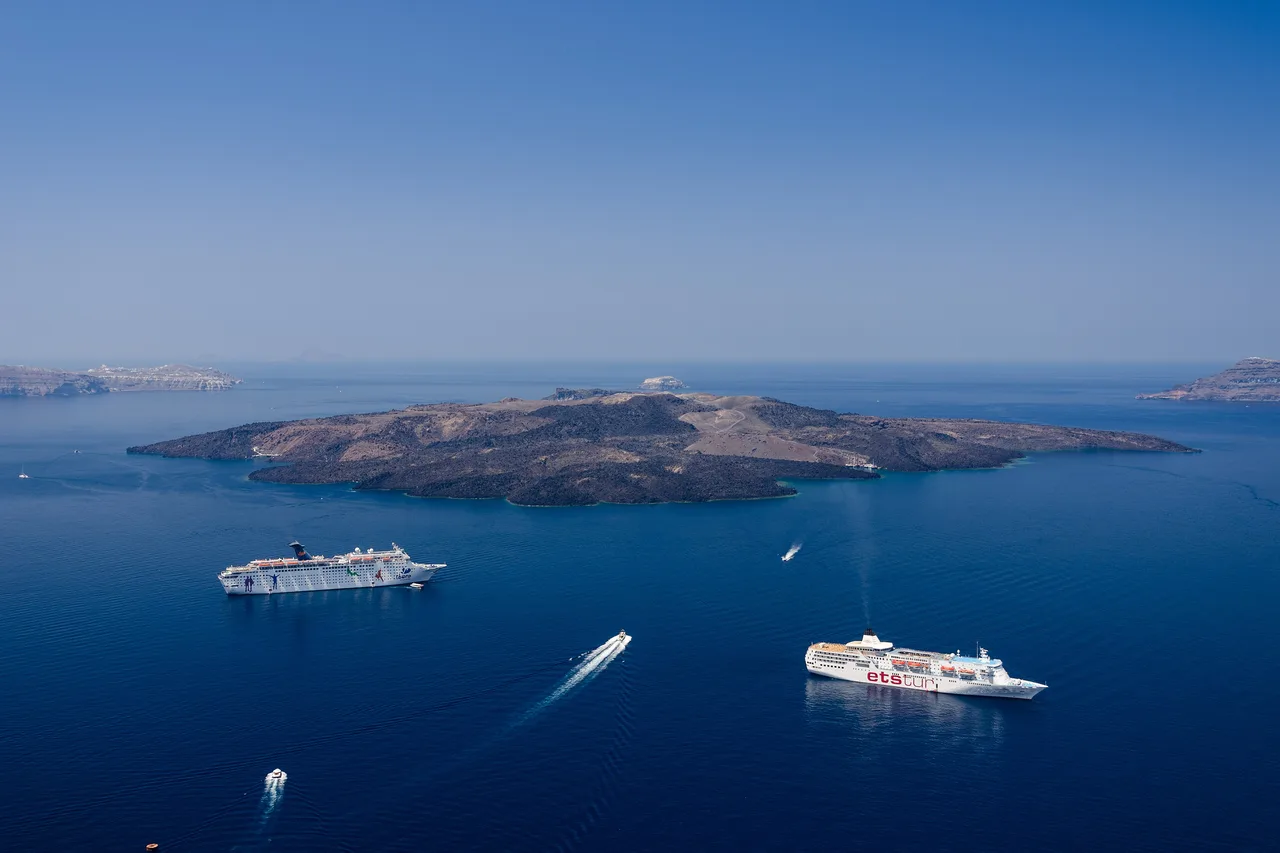
Three practical consequences for those three days. Sleep on the island — the difference between visiting Santorini and staying there happens between seven in the evening and nine in the morning, exactly when the day visitors are absent. Invert the hours: the caldera at dawn rather than at sunset, Oia in the morning. And keep half a day with nothing planned: that is your margin if a boat is cancelled upstream, and Santorini is the worst place in the Cyclades to improvise a recovery.
The western variant, for those who have already done Santorini
The itinerary above is the best one for a first trip. It is not the only one, and second time round the western line is better: Serifos, Sifnos, Milos, Folegandros. These are slower islands, far less visited, with hilltop villages the central Cyclades no longer have.

What you need to know before choosing it, and it is a real cost: these islands are served by a single line from Piraeus and by smaller boats, which stop far earlier than the big ones when the wind gets up. Milos has an airport, but domestic flights only — so no shortcut home. In practice the western variant works with two islands at most, with a day’s margin before the flight home, and never in July or August if your calendar is rigid.
The rule governing that choice is developed in our article on which Cyclades island to choose: the quieter the island, the more fragile its link to the rest of the world. That is not a reason to give it up, it is a reason to keep margin.
What genuinely needs booking — and what does not
Book ahead: the long crossings and anything touching Santorini in July and August; the flight home, for the reason developed above; the car or scooter in August. Ferry booking is done online, and you board with the barcode emailed to you — there is no paper ticket to collect.
Does not need booking, and should not be: the short hops between neighbouring islands, where a few days ahead is plenty; restaurants, with rare exceptions; and above all, the days themselves.
And cannot be booked at any price: the weather. A paid ticket does not make a cancelled boat sail, and that is the one line in this article no optimisation can move. Hence the rule that outweighs all the others: never chain a non-refundable night to a boat, and check the sailings on the morning itself rather than the night before.
The five mistakes that each cost a day
1. Planning four islands. Three changes, a day and a half of moving, and the feeling of having toured some ports. It is the most common and the most expensive mistake.
2. Taking the ferry home out of thrift reflex. A whole day against half, for a price gap that overlaps heavily. The calculation is in section 2; it only asks to be done before booking.
3. Putting Santorini in the middle. It is a terminus: easy to reach from far away, awkward to leave for one particular island. At the end of the trip that flaw disappears entirely.
4. Making a loop. Going back through an island you have already seen costs the same half day as an outward leg, and adds nothing to the trip.
5. Keeping no margin before the flight home. It is the only mistake on this list that costs not a day but the flight itself. Keep the last night on a hub, or in Athens — and accept in advance that a leg may fall through. The Cyclades do not reward rigid schedules: the wind that makes their light is the wind that cancels the boats.
Top-rated activities in Greece, bookable online: