Every guide tells you where to buy a Greek ferry ticket. None of them tells you what you are buying. Because in Greece you are not booking a boat — you are booking a risk, and that risk depends on the shape of the hull. The fast catamaran stops sailing one notch of wind before the big ferry does, so there is a whole band of weather in which one stays tied up while the other leaves. Add a summer wind that builds through the afternoon, and a timetable that does not exist yet when you are planning, and you have the three reasons a Greek ferry ticket is nothing like a train ticket.
The wind rule: what you are booking is a hull
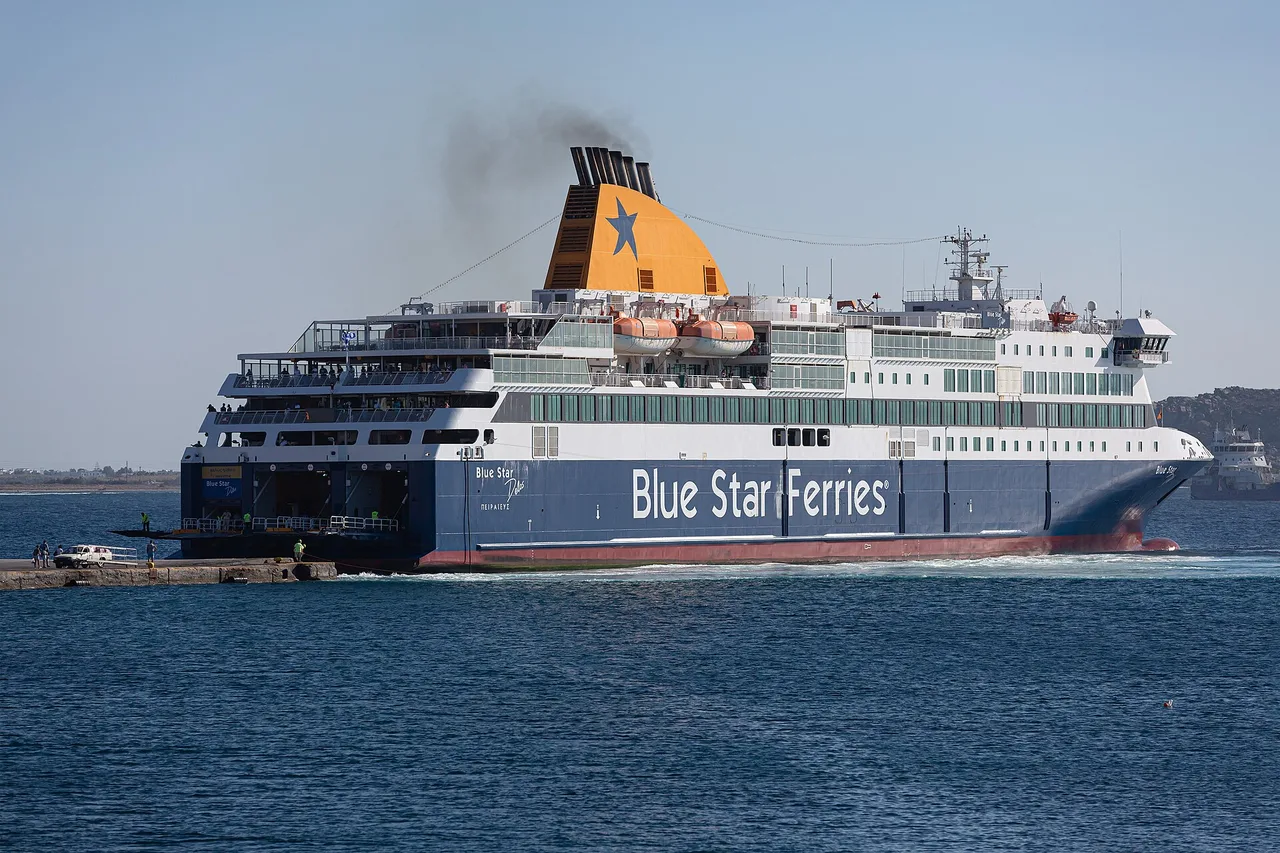
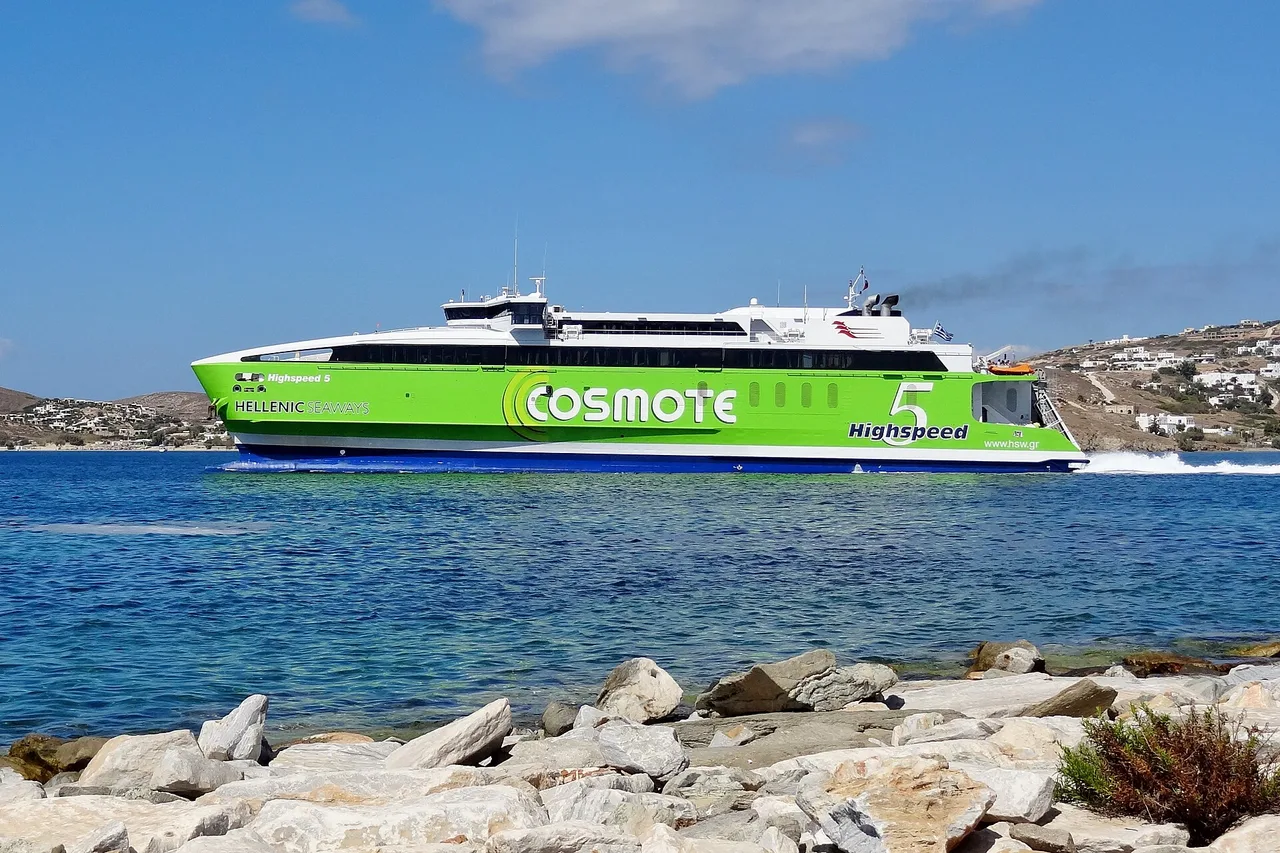
Here is the fact that ought to open every “how to book a Greek ferry” page, and opens none of them. The two families of Greek boats do not have the same wind limit. The high-speed catamaran can be stopped from around 7 Beaufort; the conventional ferry usually holds one notch longer and is only cancelled from 8 upwards.
| Wind | High-speed catamaran | Conventional ferry |
|---|---|---|
| 5 Beaufort | Sails | Sails |
| 6 Beaufort | Sails | Sails |
| 7 Beaufort | Stays in port | Sails |
| 8 Beaufort | Stays in port | Stays in port |
Look at the third row, because that is the whole point of this article: there is a band of 1 Beaufort in which the catamaran stays tied up while the big ship sails. This is not a difference in comfort, it is a difference in kind — a heavy hull takes a sea that two light hulls cannot.
⚠️ One honest caveat, and it matters: these are not regulatory thresholds. The call belongs to the master and the port authority, and it varies with the route, how exposed the crossing is, and the vessel itself. Take the table for what it is: an order of magnitude that explains why, on some summer mornings, half the departures are cancelled and half are not.
What does not vary is the consequence: on the last crossing before your flight, take a conventional ferry. You lose two or three hours; you remove the one failure on the whole trip that nobody will reimburse. Routes served only by small catamarans — a good part of the western Cyclades — are the first to be cancelled or heavily delayed as soon as the wind gets up.
The departure time matters as much as the date
The summer wind of the Aegean has a name: the meltemi. It comes from the north, it blows hardest in July and August, and it mostly affects the central and southern Cyclades — which is to say, precisely the islands everyone goes to.
Its one quirk is a gift to anyone who knows it: it builds through the day and peaks in the afternoon and early evening. A seven or eight o’clock departure will almost always see a calmer sea than a two or four o’clock departure on the same day, on the same boat, with the same ticket.
📌 And it costs nothing. Booking the morning rather than the afternoon is the cheapest move of the whole trip: zero euros, and a good share of the risk gone. The price is an early alarm, and you arrive on your island with the day ahead of you rather than the end of an evening.
The second thing the calendar does not tell you: the summer timetable does not exist yet when you are planning. Operators publish gradually from November to May — mainland-to-island routes first, inter-island connections afterwards. And those are precisely the ones an island-hopping itinerary depends on.
Hence the right order, which is the opposite of what most people do: lock in the outbound and return crossings from Athens as soon as they appear — 2 to 3 months ahead for June, July and August, more with a vehicle or a cabin — and keep the island-to-island hops loose until their schedules are out. Building a rigid itinerary on connections that have not been published yet is building on something that does not exist.
How many islands? The sum nobody does
There is a very simple reason not to pile up islands, and it has nothing to do with tiredness: every hop is a crossing, and every crossing eats a whole day. A 7-night trip with 3 islands is not 3 journeys, it is 4: the way out, the hops, the way back.
| Islands visited | Crossings | Full days |
|---|---|---|
| 2 islands | 3 | 4 / 7 |
| 3 islands | 4 | 3 / 7 |
| 4 islands | 5 | 2 / 7 |
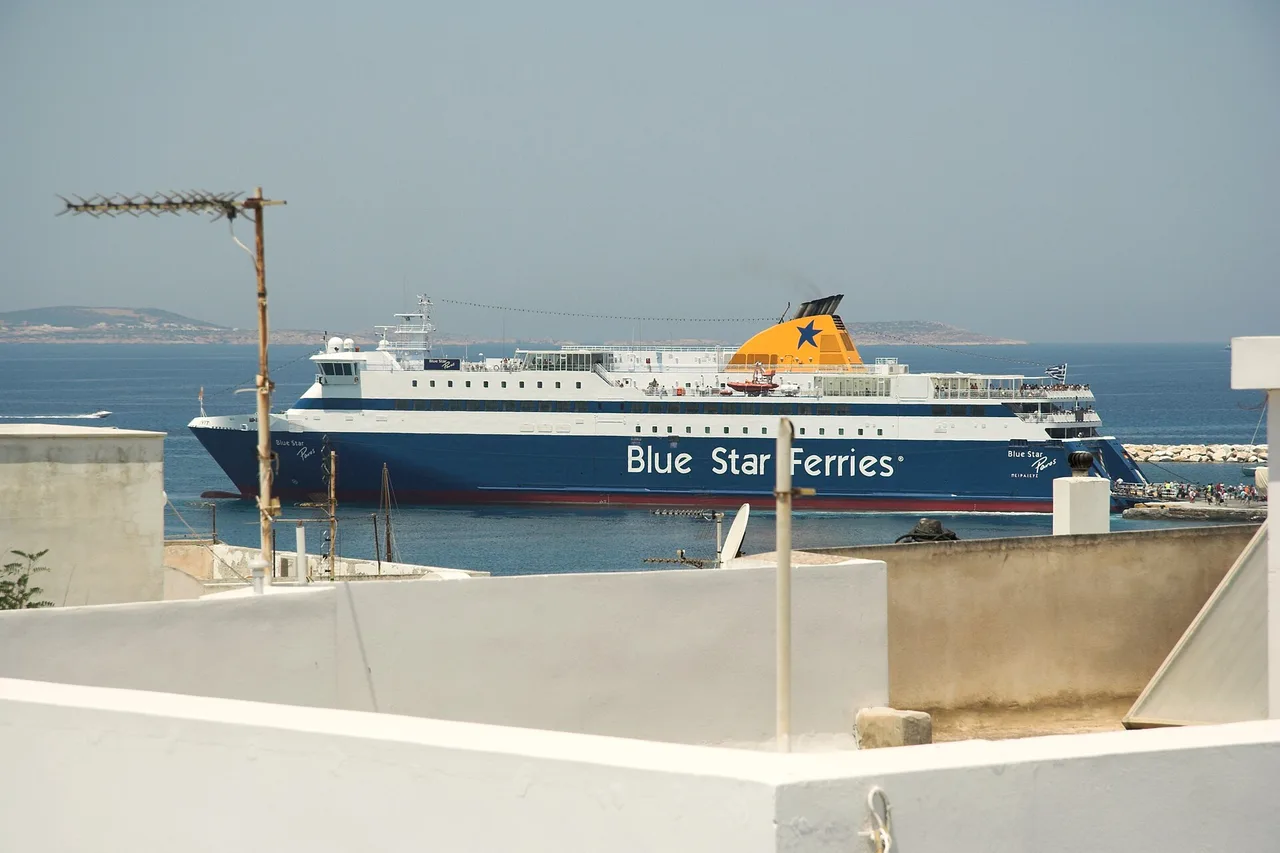
The right-hand column is the one that counts. Going from 2 to 4 islands drops your full days from 4 to 2 out of 7 — and that is before packing, checking out and getting to the port. Half a day on a boat is not half a day of holiday.
The second effect is the one from section 1: more crossings means more chances that one of them does not happen. Two well-chosen islands stand up to wind far better than a four-island tour built on catamarans.
Athens has three ports, and the right one is not always Piraeus
This is the most ordinary opening mistake, and it is paid for in travel hours on day one: booking a ferry “from Athens” without looking at which port it leaves from.
| Port | From the airport | What sails from there |
|---|---|---|
| Piraeus | About 1 hr, direct metro | The widest choice, Crete, Cyclades, Saronic islands |
| Rafina | About 16 km, 25 to 30 min | Andros, Tinos, Mykonos |
| Lavrio | About 30 km | Kea, Kythnos |
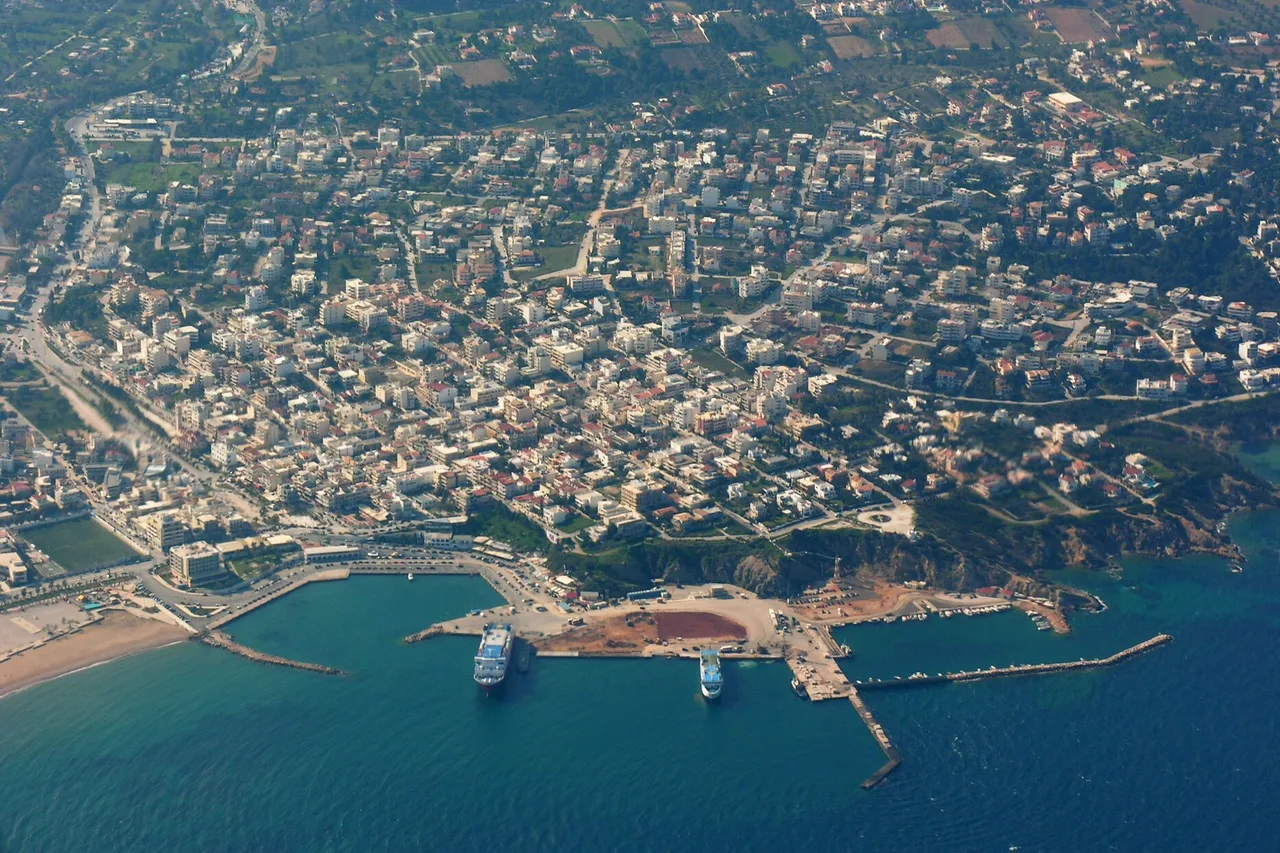
Piraeus remains the default, and for good reasons: it has the most routes, it is the port for Crete, the Cyclades and the Saronic islands, it is linked to the airport and the city by metro, and it is where you will have the most fallback options if a sailing is dropped. Rafina is a very different case: about 16 kilometres from the airport, 25 to 30 minutes by taxi against roughly an hour to Piraeus, and it is the port for Andros, Tinos and Mykonos. Lavrio, some thirty kilometres out, mainly serves Kea and Kythnos.
⚠️ The detail that decides it, and that no map shows: the metro goes to neither Rafina nor Lavrio. If you land in the evening for a first boat in the morning, or leave from either port with luggage, transport is not a side question — it is the question. A transfer booked in advance, from the airport straight to the quay does not save you any kilometres; it removes the part that depends on you, namely finding a vehicle at six in the morning for a port the metro does not reach.
Full guide: Athens Airport to Piraeus: Metro, Bus, Taxi or Transfer?
📌 Where this does not apply: you are staying in Athens, you are leaving from Piraeus, and your boat goes in the middle of the day. The metro is then perfect, direct and far cheaper.
Piraeus: your gate is not printed on your ticket
Piraeus is not a railway station, it is a commercial port with a dozen entrances numbered E1 to E12, spread over several kilometres of quay. Your ticket gives you a boat and a time; it does not give you a gate.
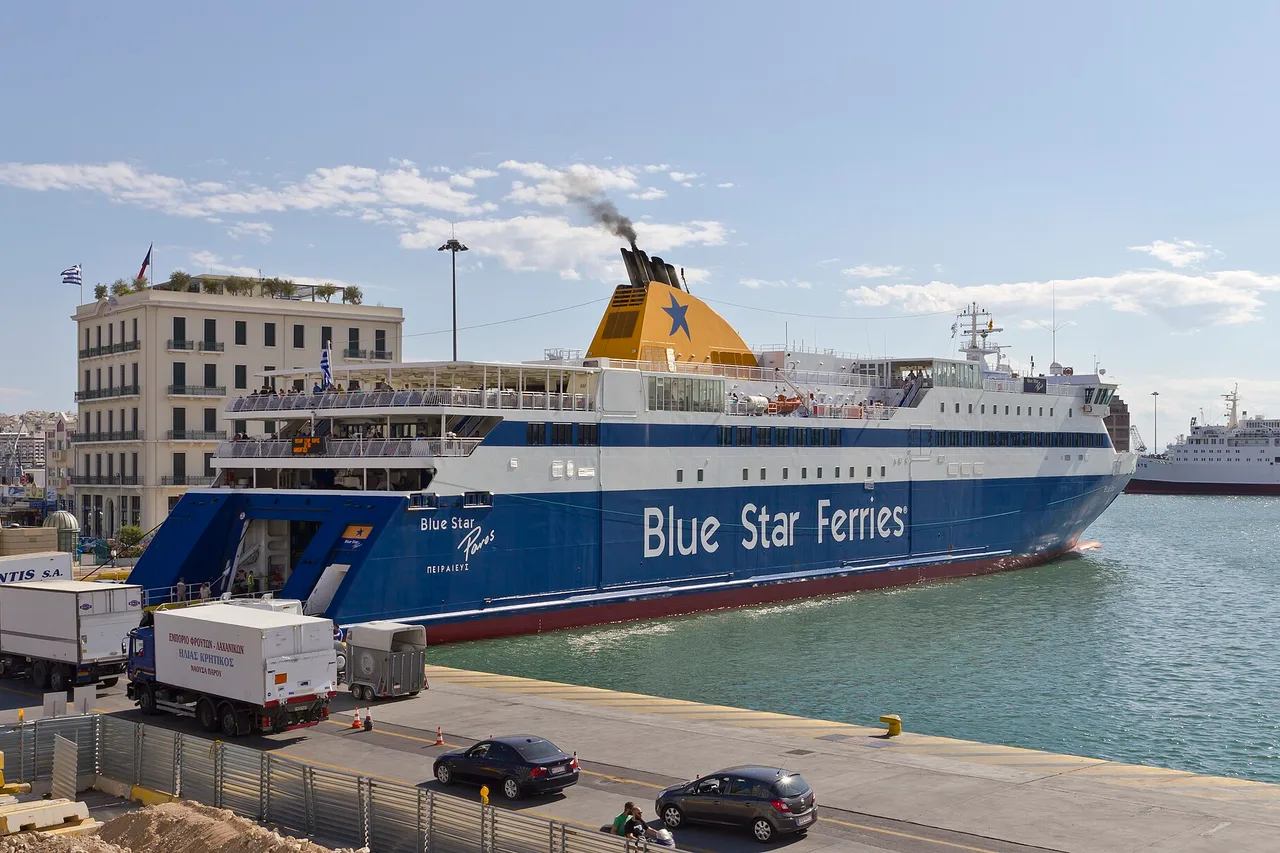
The useful landmarks: the Cyclades generally leave from gates E6 to E10, often E7; Crete — Heraklion and Chania — from gates E2 and E3. The metro arrives near E6 and E7, which puts the Cyclades within a reasonable walk and Crete distinctly further. A free shuttle bus loops the port from the main entrance near E5, every 10 to 15 minutes at peak times.
⚠️ And here is the point on which you should never trust an article, this one included: the gate can change with the day’s traffic. The port’s display boards and your operator are the authority. Check them on arrival, not the night before on a page written three years ago.
Timing follows the same logic: about 45 minutes before departure on foot, 60 to 90 minutes with a vehicle — and more, up to three hours with some operators, four if you have booked camping on board. At Piraeus, add the walk to your gate.
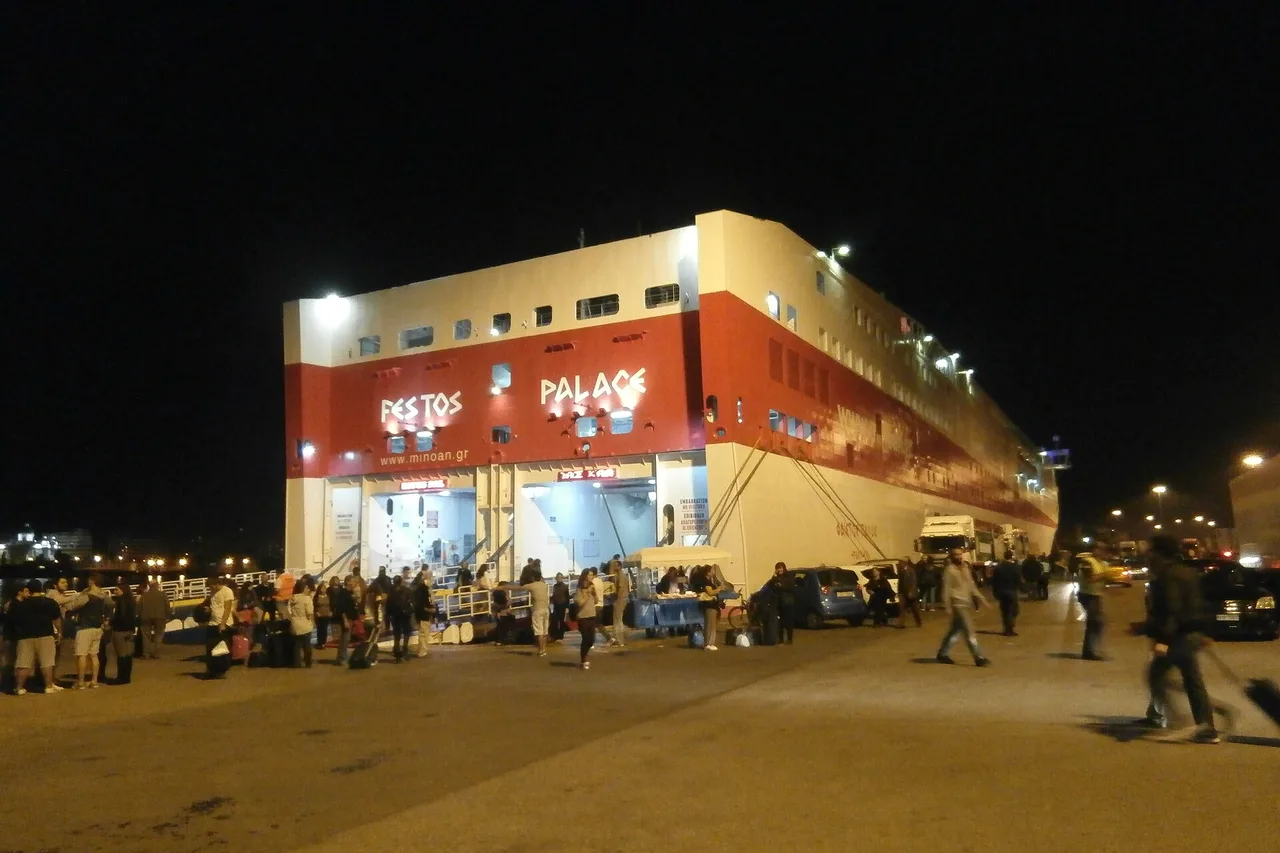
Then there is the ticket itself. Almost every Greek operator now issues an e-ticket with a QR code, attached to the confirmation email and shown from your phone: no paper pick-up. Almost: it still depends on the operator and the ticket type, and some have to be collected at the company kiosk in the port on the day of departure, with the confirmation and an ID document. That is something to read when you pay, not the night before you sail.
📌 Online check-in, where it exists, opens 48 hours before departure and closes 30 minutes before. Do it at the hotel and save the QR code offline — a screenshot, or your phone’s wallet. Mobile coverage in ports is often poor, at the exact moment three hundred people are trying to open the same email.
The buffer night: the only insurance that works
Everything above reduces the risk; none of it removes it. So one question remains, and it is the most important of the trip: what happens if the last boat does not sail?
The answer fits in a sentence, and it surprises people: you are owed a refund or another boat, and nothing else. EU maritime passenger rights give you the choice between a refund of the ticket — paid within 7 days — and re-routing at no extra cost. The Greek coastal shipping charter says the same. But when the weather is severe, no compensation and no hotel are due. And your flight is nobody’s problem but yours.
| Before your flight | Cancellations absorbed | If the boat does not sail |
|---|---|---|
| Last boat on the day you fly | 0 | Flight missed, at your expense |
| One buffer night in Athens | 1 | You take the next one |
| Two nights | 2 | You take the next one |
The table reads in a second: each spare night absorbs exactly one cancellation. Zero nights, zero cancellations absorbed — one gale and the flight is gone, at your expense. One night in Athens before you fly, and the same gale becomes an inconvenience.
That night has exactly one drawback, and it can be dealt with: the room goes at eleven and the plane leaves in the evening. Left luggage, near the port or in central Athens costs about what lunch costs and turns a day of waiting into a real day. It is the same expense people refuse on principle and regret every time.
📌 One nuance, so as not to overstate it: outside July and August, on the main Piraeus routes worked by conventional ferries, the risk is low. The buffer night earns its place mainly in high summer, on catamaran routes, and when the return flight cannot be changed. Look at those three criteria, not at fear.
The six mistakes that cost real money
1. Choosing the fastest boat for the crossing before your flight. That is exactly backwards: on that particular crossing, slow is safe.
2. Booking the afternoon in high summer. The meltemi builds through the day. The same route, in the morning, is not the same sea.
3. Building the whole itinerary in January. Inter-island connections are published last. Lock the ends, keep the middle loose.
4. Booking “from Athens” without checking the port. Rafina and Lavrio are not Piraeus, and the metro does not go to either.
5. Turning up at the port exactly on time. At Piraeus the gate may be a twenty-minute walk away, it may change, and some tickets still need collecting.
6. Not keeping a spare night before the flight. It is the only mistake on this list that can cost you the price of a plane ticket.
📌 And if you remember one thing: in Greece, you do not pick a crossing on how long it takes, you pick it on what is still possible when the wind gets up. The rest — sun on the deck, islands growing on the horizon — you will get anyway.
⚠️ One last case, the one nobody plans for: when it is the plane that makes you miss the boat. An inbound flight runs late, the ferry you paid for sails without you — the ticket is gone, and no shipping line owes you anything. The flight delay, on the other hand, may give you a claim under air passenger rights. Checking whether your delayed flight qualifies for compensation will never recover the price of the ferry — but it is the only money from that day that can be recovered at all.