The Cyclades are not a collection of islands, they are a network — with hubs and dead ends. Paros and Naxos are linked by about a dozen twenty-five-minute crossings a day; Folegandros and Amorgos depend on small boats that the meltemi stops before it stops the big ones. In other words: the quieter the island, the more fragile its link. Here is how to choose on that basis — and what changed on Santorini in 2026.
The vibe ranking cannot be checked from any quayside
Open ten Cyclades comparisons and you will read the same sort order ten times. Mykonos for partying, Santorini for romance, Naxos for families, Folegandros for authenticity. That ranking is not wrong — it is simply useless for deciding, because it describes what you will find on the island and never what it takes to get there and to leave again.
And that is where the holiday is actually won or lost. An island is not an isolated place: it is a node in a network of boats, and that network has hubs you pass through ten times a day, and branches you reach when the wind allows. Two islands that look adjacent on the map can be half a day apart if no direct line connects them.
So this article turns the problem round: choose the position in the network first, the character of the island second. It is less romantic, and it is the only criterion you can verify before you leave.
The Cyclades are a network: hubs and branches
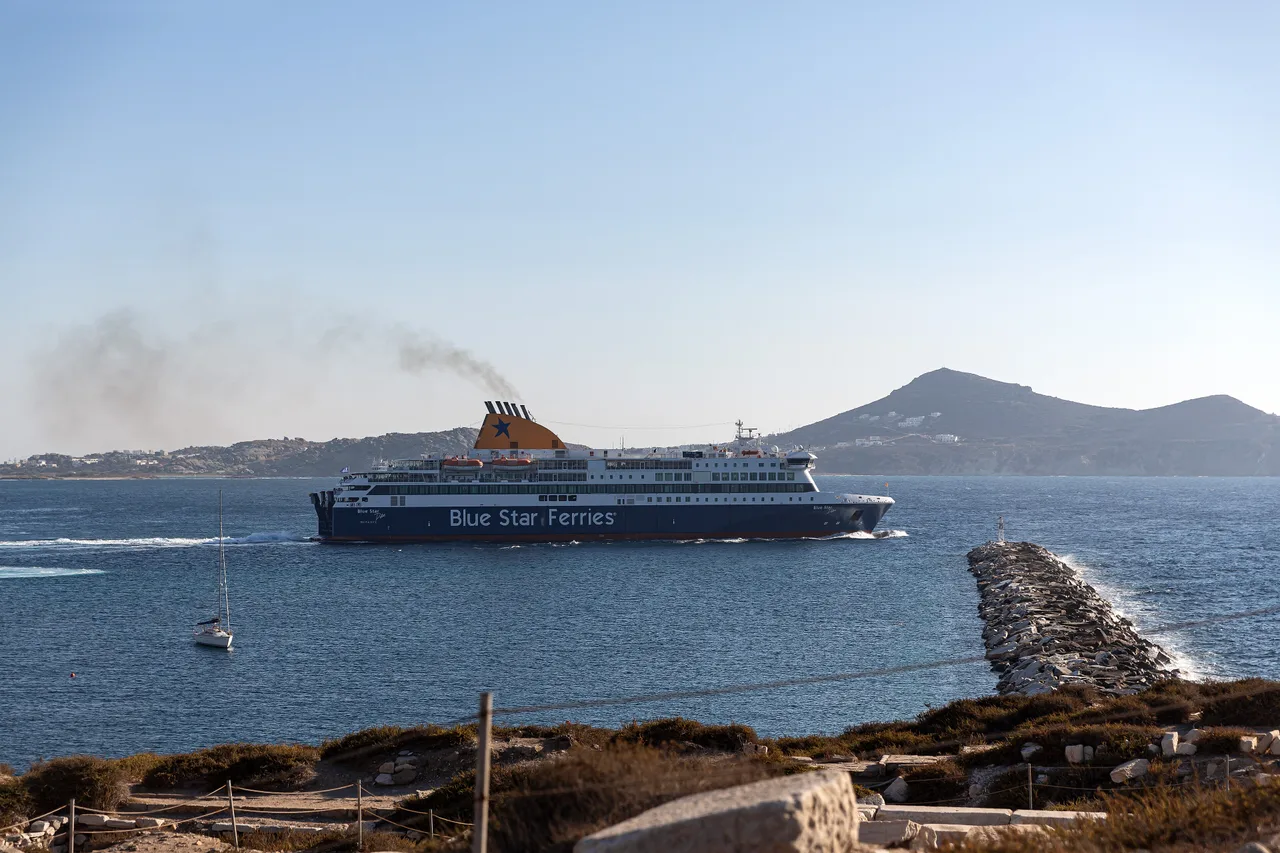
Paros and Naxos are the heart of the network, and they work as a pair. They are 25 to 50 minutes apart, with up to 12 sailings a day and 4 companies on the route — Blue Star Ferries, SeaJets, Fast Ferries and Golden Star. It is the shortest and densest inter-island link in the Cyclades; in practice, a day on the island next door can be decided over breakfast.
They do not, however, open the same doors. Naxos opens the Lesser Cyclades — Koufonisia, Donousa, Schinousa, Iraklia — which nothing else serves conveniently. Paros opens Antiparos, a few minutes away, and sits a notch closer to the northern routes. For the rest, they share most of the sailings from Piraeus, Mykonos, Ios and Santorini.
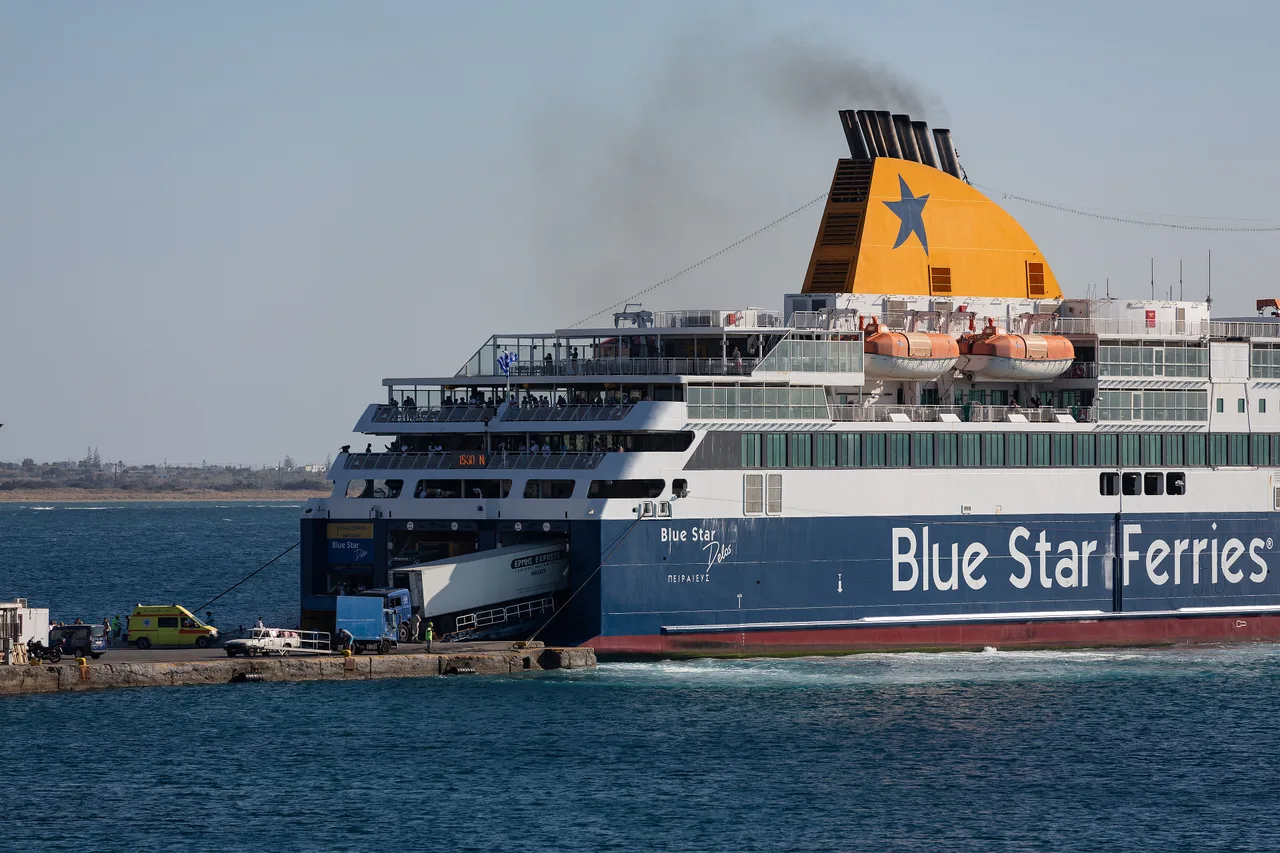
At the other end of the network are the branches: Folegandros, Sikinos, Amorgos, Kimolos, the small islands of the south and east. You can reach them, of course — but often on a single line, a few times a week, and on smaller boats. Getting from one branch to another usually means going back through the hub, which turns a thirty-mile hop into a whole day.
A third category deserves to be separated out, because it is routinely mistaken for the first: the gateways. Santorini and Mykonos are extremely well connected to the outside world — they are the only two Cyclades islands with direct international flights — but they are termini more than crossroads. You arrive easily from far away; you leave less easily for a particular island.
| Island | Role in the network | What it opens directly |
|---|---|---|
| Paros | Hub | Naxos in 25–50 min, Antiparos, Mykonos, Ios, Santorini, Piraeus |
| Naxos | Hub | Paros, the Lesser Cyclades, Ios, Santorini, Piraeus |
| Syros | Hub | Mykonos, Tinos, Andros, Piraeus — administrative capital of the Cyclades |
| Mykonos | Gateway | Rafina and Piraeus, Tinos, Syros, Paros, Delos; direct international flights |
| Santorini | Gateway | Ios, Naxos, Paros, Piraeus; direct international flights |
| Milos | Branch | Piraeus, Sifnos, Serifos, Kimolos; domestic airport |
| Folegandros, Sikinos | Branch | Santorini, Ios, Milos — irregularly, and on small boats |
| Amorgos, Lesser Cyclades | Branch | Naxos above all; everything else goes back through the hub |
The wind does not cancel “the ferries”: it cancels the small ones first
The meltemi is the north wind of the Aegean. It blows from June to September, hardest in July and August, and it strengthens in the late morning and through the afternoon — a pattern that is especially marked over the Cyclades. It is a feature of the season, not an accident.
Here is what almost no comparison says, and what ought to decide the choice of island: cancellation thresholds are not the same for every boat. Passenger-only shuttles go first. Small fast craft stop at 7 Beaufort. Most conventional operators — the big ferries that load lorries — hold on until around 9 Beaufort. And on an exposed crossing like Santorini ↔ Mykonos, right in the middle of the archipelago, catamarans are frequently cancelled or delayed from 5 Beaufort.
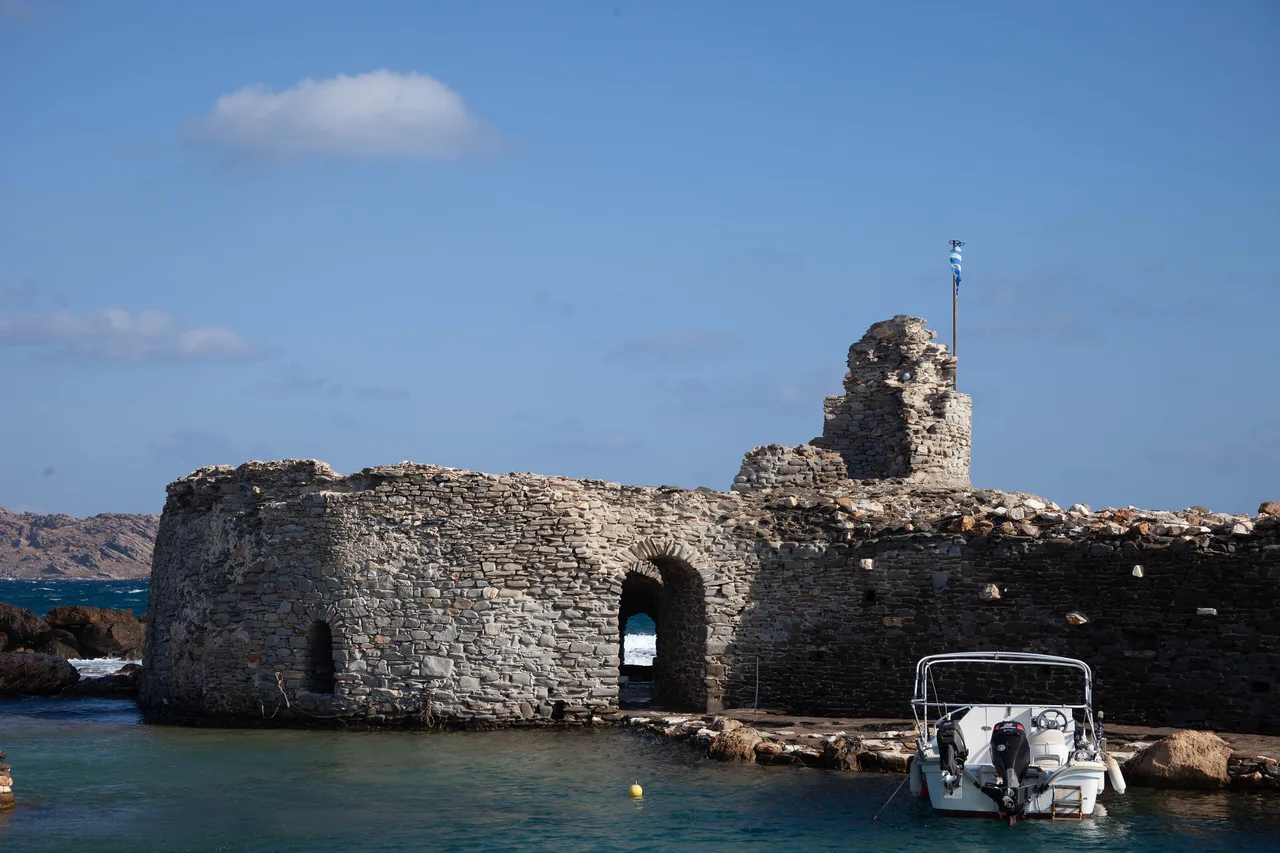
Now add the two facts together. The small quiet islands are served mainly by small fast boats; small fast boats are the ones that stop earliest. The consequence is counter-intuitive, and it is the heart of this article: the quieter the island, the more fragile its link to the rest of the world. The vibe ranking suggests exactly the opposite — that quiet is a bonus with no downside.
This is not a hypothesis. In mid-August 2026 a single meltemi episode was enough: sailing banned from Rafina and Lavrio; the Blue Star Paros to Syros, Tinos and Mykonos did not run; the Super Speed 4 to Paros, Naxos and Koufonisia was cancelled, along with sailings to Kythnos, Sifnos, Serifos, Kimolos and Milos. In one day half the archipelago was unreachable — and the big Piraeus lines resumed before the small ones.
The practical rule that follows fits in one sentence, and it applies to everyone: never put a branch island on the last leg before your flight home. Keep the final night on a hub, or better still in Athens. An island you love in the middle of a trip becomes a trap when it is the last stop.
What changed on Santorini in 2026, and the guides have not caught up
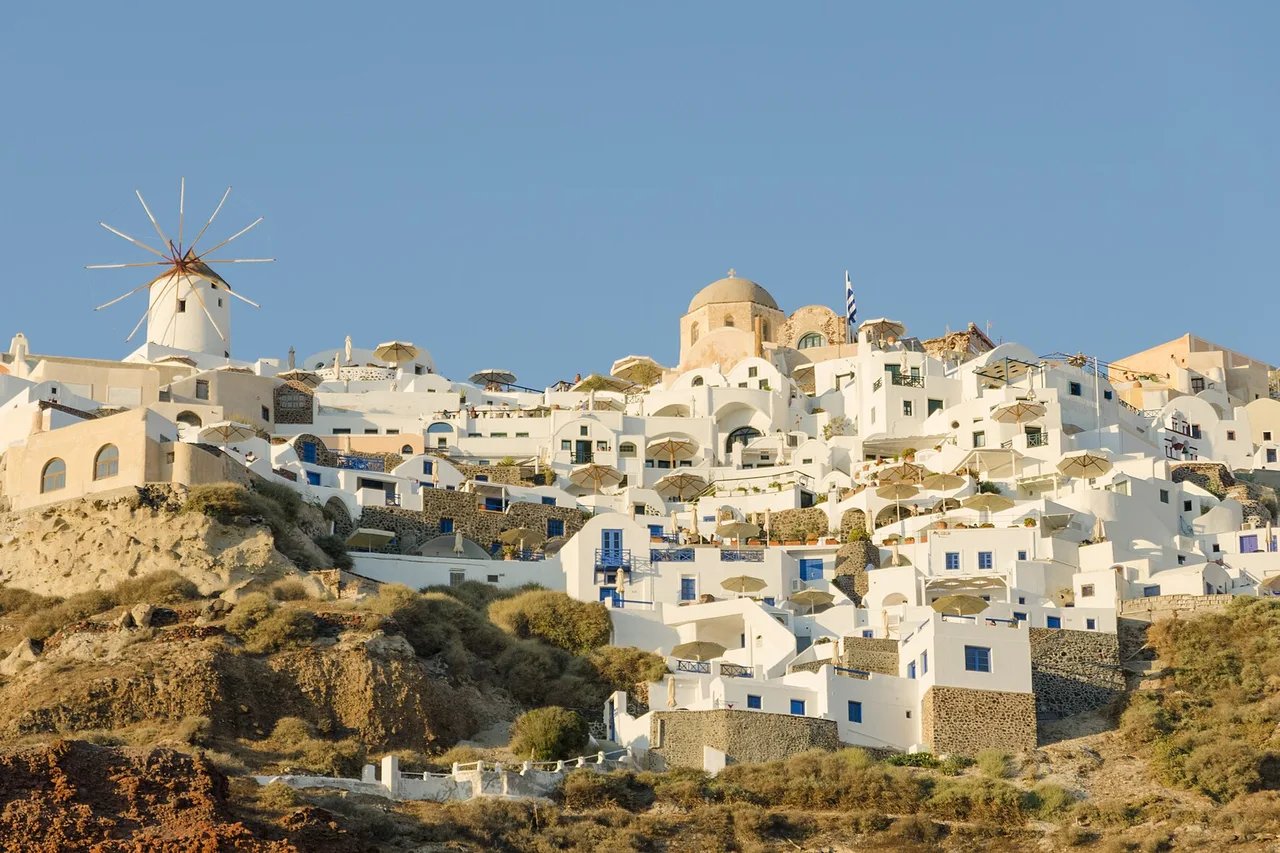
Santorini’s reputation was formed between 2023 and 2025, and it is one reform out of date. Since 2026 the island has applied a cap of 8,000 cruise passengers a day, and that cap has a technical detail that changes everything: the occupancy assumption has risen to 100%. A ship with 3,000 berths now uses 3,000 of the day’s slots, not 2,400 as before.
Nor is the allocation done on the day, at the gate. It runs through a ranked berth allocation algorithm: when a day’s total would exceed the cap, the lower-ranked calls are moved to other dates. The result is measurable in the port calendar, and it is clear: 595 ships scheduled in 2026 against 728 in 2025 — a fall of about 18.3%.
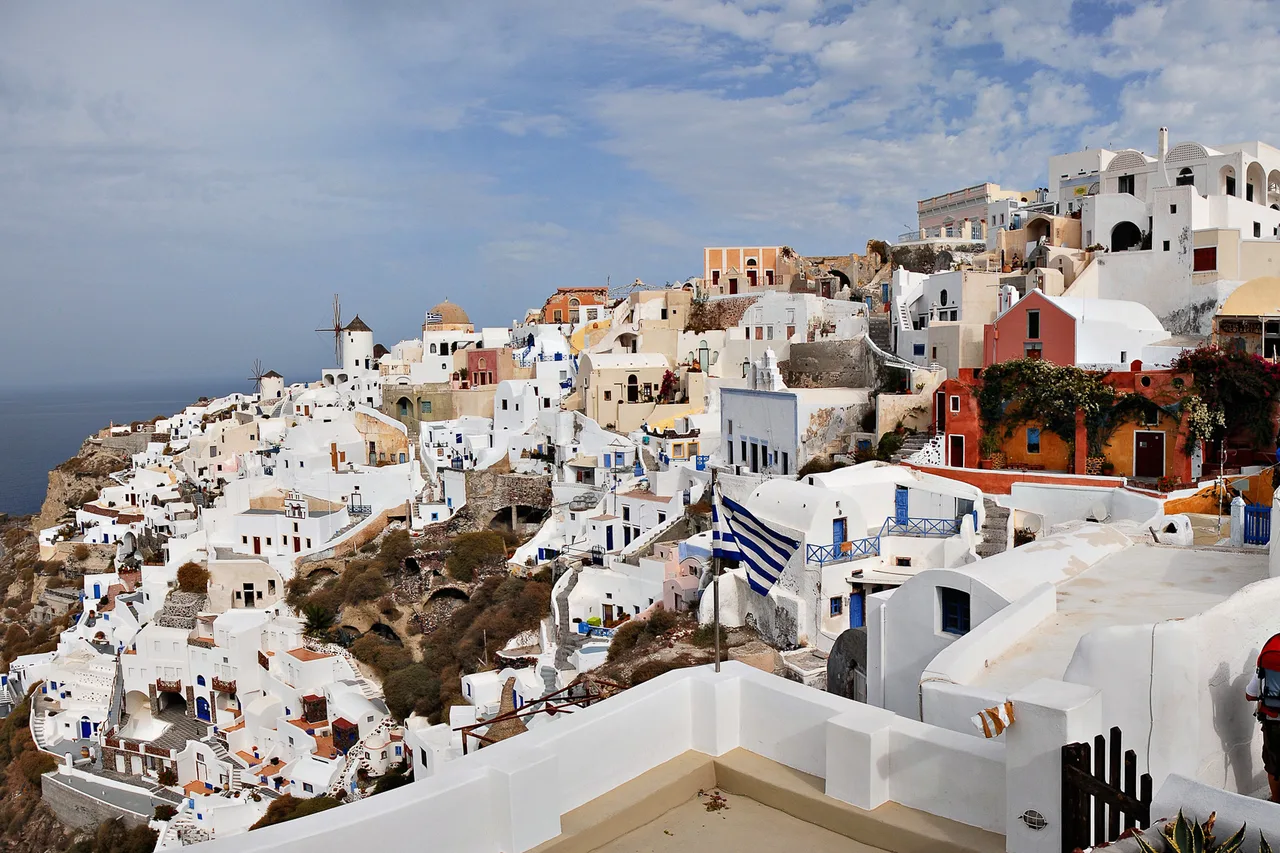
And here is the other half, without which the figure misleads. The cap concerns cruises only. Arrivals by air and by ferry are not capped, and never have been. Yet those are what fill Oia at sunset: cruise passengers are long back on board by the time the evening crowd forms. What has eased is the midday pressure in Fira and on the cable car; the sunset crush sleeps on the island, and has not moved.
Full guide: Santorini Excursions: What to Book and What It Costs
Mykonos for its part applies daily caps and strict limits on very large ships, and Rhodes is watching both before considering the same. On top of that comes a tax many discover at the gangway: cruise disembarkation costs €20 per person at Santorini and Mykonos in high season, against €5 per person per day at other Greek calls.
| What you pay on top | 2026 amount | Who pays, and how |
|---|---|---|
| Climate resilience fee | 0.50 € – 15 € | per property per night — never per person; two seasons, April-October and November-March |
| Cruise disembarkation, Santorini and Mykonos | 20 € | per cruise passenger, in high season; under-twos exempt |
| Cruise disembarkation, other Greek calls | 5 € | per cruise passenger per day — Athens, Crete and the rest |
A word on the top line, which concerns everyone and not only cruise passengers: the climate resilience fee is owed per property per night, never per person. Four of you in one apartment does not quadruple it — good news worth knowing before the line on the bill surprises you.
Branch islands are worth the detour — but never at the end
Nothing above says to avoid the small islands. They are often the best memory of the trip, and Milos is the perfect example: the white rocks of Sarakiniko have no equivalent anywhere else in Greece, the island has a domestic airport and a real line from Piraeus, shared with Sifnos, Serifos and Kimolos.
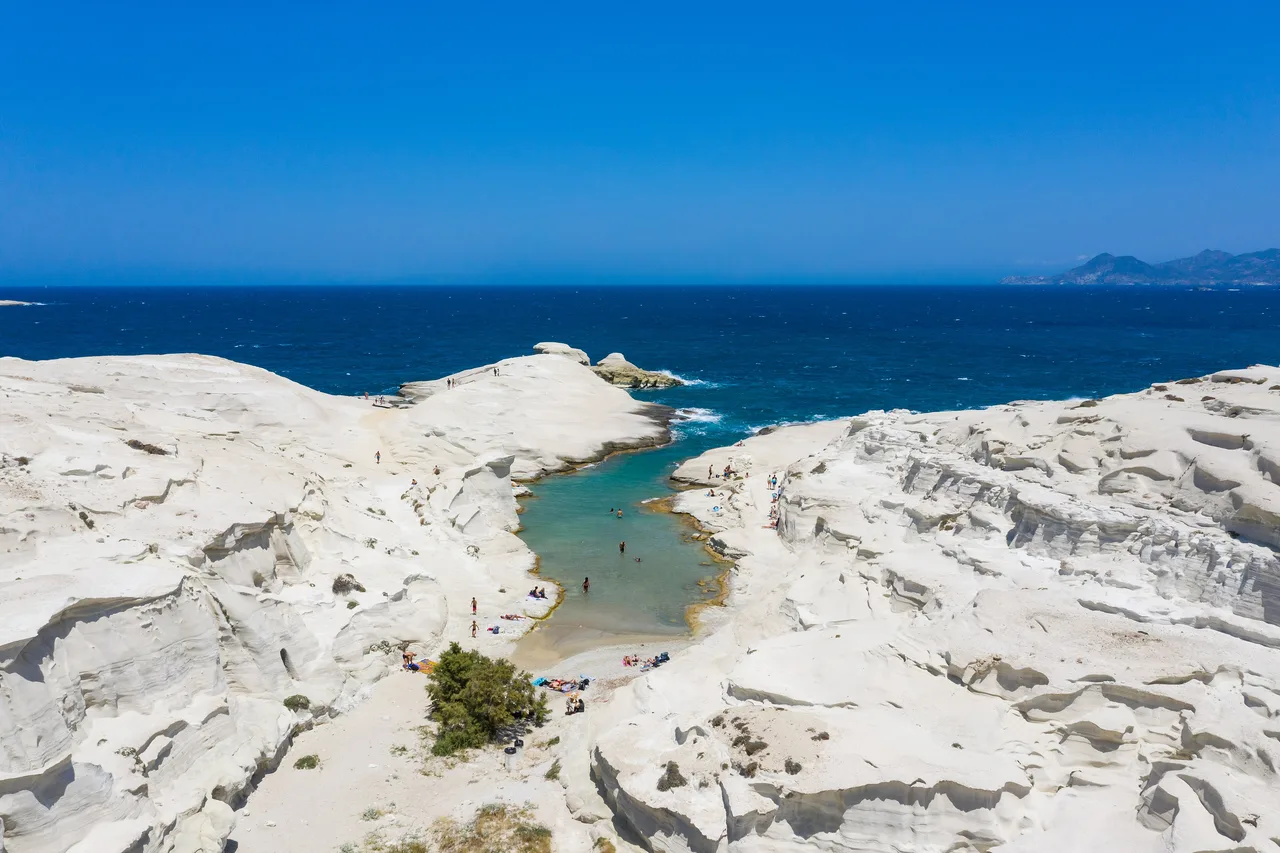
What needs care is where you put it in the chain. A branch goes in the middle of a trip, never at the end, and only one per trip. Two branches in the same week means two return trips through the hub — and, statistically, two chances for the wind to decide on your behalf.
One more thing is settled at the same time as the island, and it weighs on the budget: wheels. Naxos, Paros and Milos are real islands, with beaches and villages the bus serves only a few times a day; you will not see much of them without a car or a scooter. Santorini and Mykonos, by contrast, are small, dense, hard to park in and well served by buses and taxis: a car there is often money wasted. On the islands where it is essential, rental goes mostly through local agencies, and it pays to book ahead in August: an island’s fleet is finite, and it empties.
How many islands in a week: the answer is three, and often two
Let us do the arithmetic honestly, because it is harsher than it looks. Every island change costs half a day: the room is released around eleven, the boat rarely leaves before mid-afternoon, the crossing takes one to four hours depending on the vessel, and then you have to reach the next place and settle in.
Three islands in seven nights means two changes — a whole day of the week spent moving. Four islands make it a day and a half, and you come home feeling you have seen a lot of ports. For a first trip, two well-chosen islands almost always leave better memories than four skimmed.
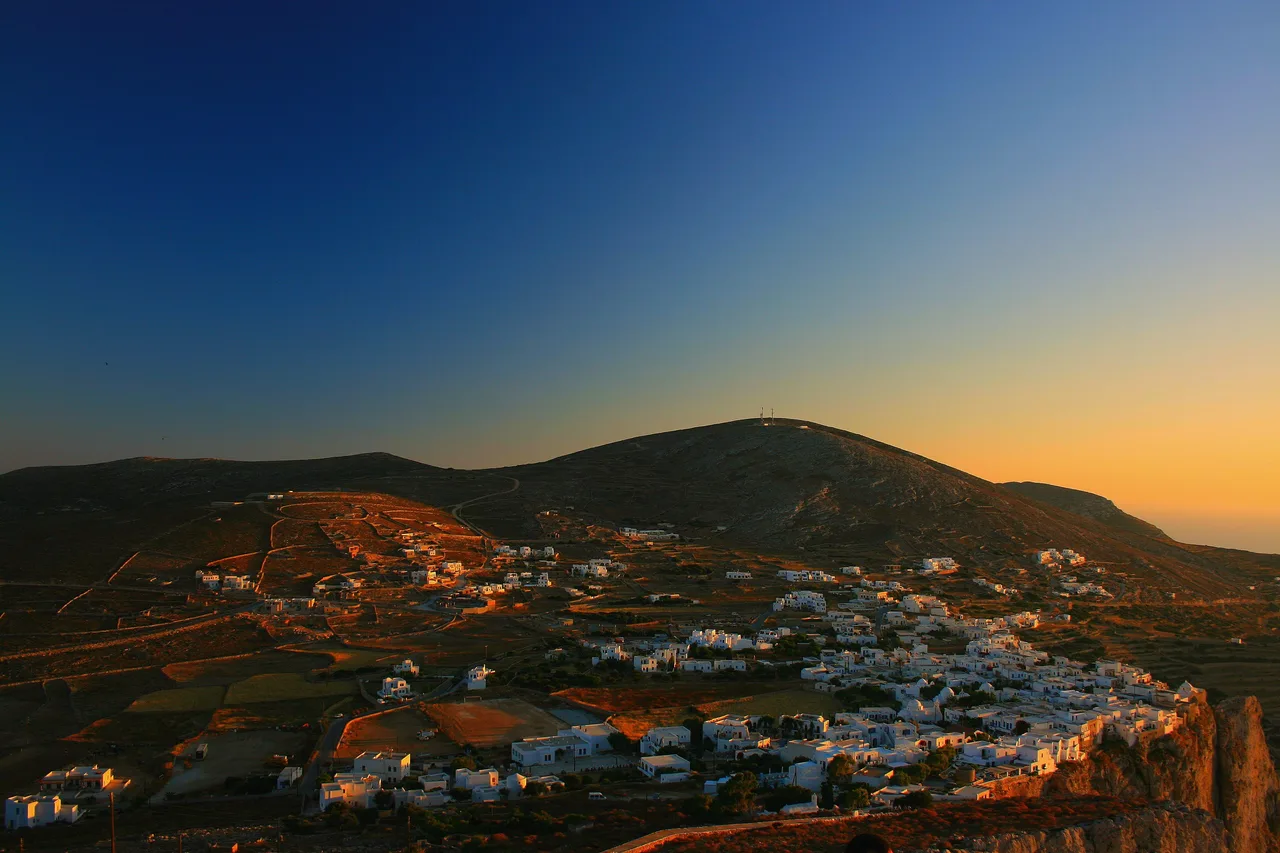
That leaves the gap in the middle, the one nobody plans for: the six hours between checkout and the boat. It is a direct arithmetic consequence of everything above, and it is the most trying part of island-hopping — especially at thirty degrees, with the bags. Left luggage near the port solves it for the price of a lunch, and turns your last day on the island into something usable rather than endured.
Where to start: Piraeus, Rafina, and the flight that changes everything
Athens has two ports for the Cyclades, and the choice is not yours to make: it depends on your island. That is why it belongs in this article.
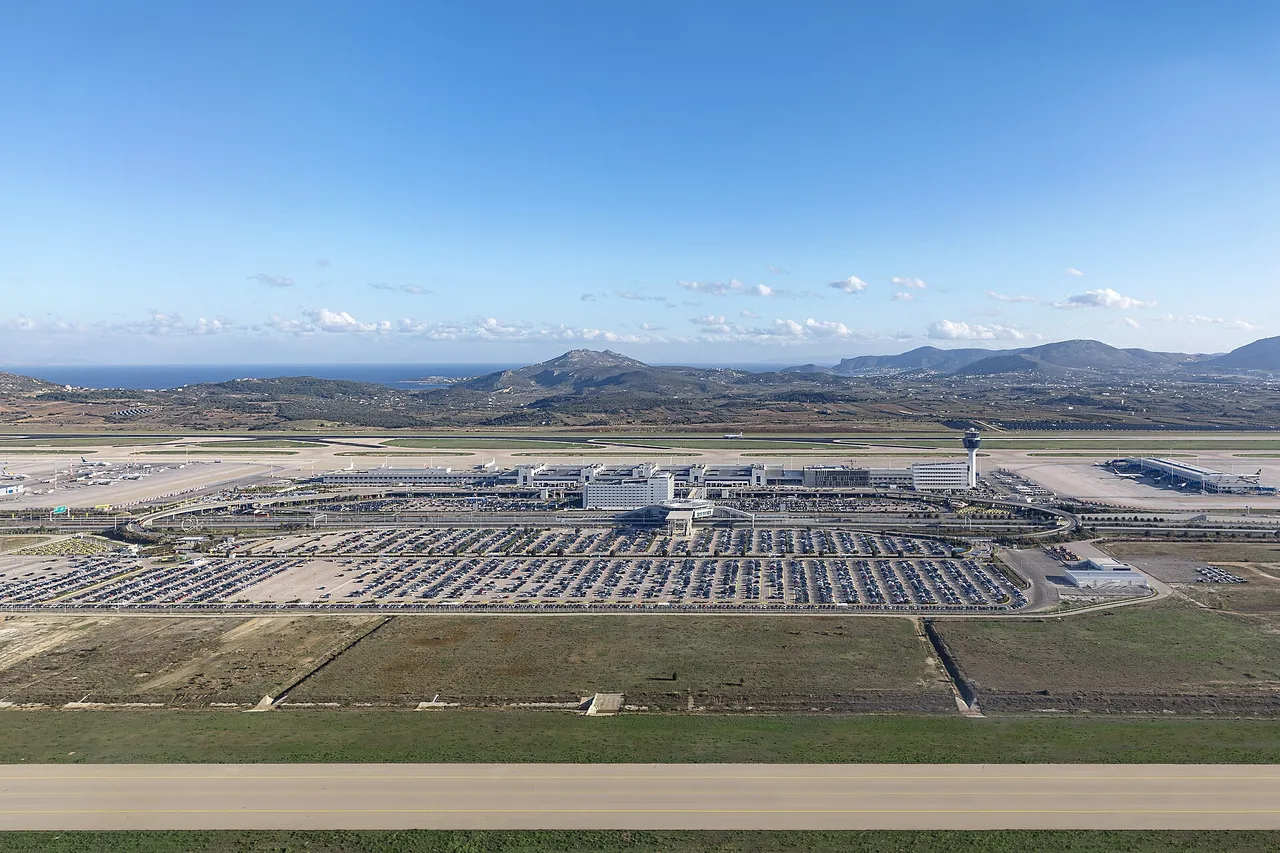
Piraeus is the main port, about ten kilometres south-west of central Athens and roughly 25 km from the airport. It has the widest network in Greece — all the Cyclades, Crete, the Dodecanese — and the most frequent departures: up to eight daily sailings to Santorini, up to five to Mykonos. The Cyclades leave from gates E6, E7 and E8, and the port is vast: allow time to cross it on foot.
Full guide: Athens Airport to Piraeus: Metro, Bus, Taxi or Transfer?
Rafina is the second port, about thirty kilometres from the centre — but only 10 km from Athens airport, roughly 30 minutes by KTEL bus, with nine departures a day. It is the main gateway to the northern Cyclades — Andros, Tinos, Mykonos — plus seasonal fast boats to Paros, Naxos, Ios and Santorini.
The consequence is concrete: land in Athens for Mykonos or Tinos and you can sail the same day; if your island leaves from Piraeus and you land late, the night in Athens is not an option, it is a leg. The most fragile link in the whole trip is that transfer, because a plane waits and a ferry does not: an hour’s delay on arrival can cost a full day. A transfer booked in advance between airport and port removes the part of the problem that is yours to control — the time spent hunting for a taxi or the right gate — and that is where it earns its price, not elsewhere.
Finally, flying. 6 Cyclades islands have an airport: Santorini, Mykonos, Paros, Naxos, Milos and Syros. But only 2 take direct international flights, Santorini and Mykonos — which explains a good deal of their visitor numbers, and has nothing to do with their atmosphere. The other four go via Athens, 35 to 45 minutes in the air, all year, with Aegean, Olympic Air and SKY express.
Paros may join the short list, and that is something to watch rather than to assume. The island is building a 12,117 m² terminal to replace the current 745 m² — more than 16 times the floor area — in a project worth over €41 million, delivery announced in phases for summer 2026, which would open international operations. Flights have continued throughout the works. We write this as a state of affairs dated 27 August 2026: an announced terminal is not an open air route, and you should check that a direct flight actually exists before building a trip on it.
So which one? — three answers, depending on what you refuse to miss
First trip, one week, several islands wanted. Take Paros or Naxos as a base, and one neighbour only. Naxos if you want a real island with a mountain, inland villages and access to the Lesser Cyclades; Paros if you want the shortest hops and, perhaps, the new airport. Either way you keep the choice every morning instead of freezing it three months ahead.
You are coming for Santorini. Go — but sleep on the island, and aim for the shoulder season. The cruise cap changed the day, not the evening: Fira breathes better at noon than it did two years ago, Oia is as full as ever at sunset. And know that Santorini is a terminus: leaving it for one particular island takes more patience than the map suggests.
You are coming for the quiet. Folegandros, Sikinos, Amorgos and Kimolos all keep their promise, and generously. But one per trip, in the middle of the stay, and with a day’s margin before the flight home. That is the price of quiet, and it is paid in flexibility, not in money.
One thing stays true whichever island you choose: never chain a non-refundable night to a boat. Check the sailings on the morning itself rather than the night before, keep the last night on a hub or in Athens, and accept in advance that a leg may fall through. The Cyclades do not reward rigid schedules — the wind that makes their light is the wind that cancels the boats.
One last example, because it sums up the whole article. Delos, the sanctuary island off Mykonos, can only be visited by boat: it has no hotel and no scheduled port, and you reach it solely on a shuttle from Mykonos. It is one of the most extraordinary sites in the Mediterranean, and the visit is booked in advance because departures are few. It is also the most frequently cancelled excursion in the whole archipelago when the meltemi gets up — proving, one final time, that in the Cyclades it is the boat that decides.
Top-rated activities in Greece, bookable online: