Since 1 March 2026, Kyoto charges the highest lodging tax in Japan. Every headline quoted the spectacular figure — ¥10,000 a night — which applies to almost nobody. The threshold that actually matters sits much lower, at ¥6,000, and it doubles the tax on precisely the room most travellers book. Here is what each district really costs once transport is counted, and how to read a scale that several guides explain backwards.
What changed on 1 March 2026 — and why the headline number is not about you
Kyoto has levied a lodging tax since 2018, and most visitors never noticed it: ¥200 a night, buried in a bill at check-out. Since 1 March 2026 the scale has gone from three bands to five, and the city now charges the highest accommodation tax in the country. The ordinance was passed by the city council in March 2025 and confirmed by the Ministry of Internal Affairs that October: it is not a rumour, it is in force.
Every headline picked the same figure: ¥10,000 per person per night, ten times the old ceiling. It applies to rooms from ¥100,000 upwards — that is, to people who are not reading this. The threshold that changes something for you sits far lower, and nobody put it in a headline.
| Rate per person, per night | Before 1 March | Since 1 March | Change | Who pays this band |
|---|---|---|---|---|
| Under ¥6,000 | 200 ¥ | 200 ¥ | = | Hostel, dorm bed, budget business hotel |
| ¥6,000 to ¥19,999 | 200 ¥ | 400 ¥ | ×2 | The room most travellers actually book — this is where it doubled |
| ¥20,000 to ¥49,999 | 500 ¥ | 1 000 ¥ | ×2 | Smart hotel, ryokan with dinner and breakfast |
| ¥50,000 to ¥99,999 | 1 000 ¥ | 4 000 ¥ | ×4 | High-end ryokan, suites |
| ¥100,000 and above | 1 000 ¥ | 10 000 ¥ | ×10 | The number every headline quoted |
Look at the second row. Between ¥6,000 and ¥19,999 per person, the tax goes from ¥200 to ¥400: it doubles, and that is exactly the band of a decent hotel in the centre. For two people over five nights that is ¥4,000 instead of ¥2,000 — twenty-odd euros, hardly ruinous, but payable on top of what you paid online, often in cash, at a desk where you were not expecting it.
The reading trap: per person, not per room
Here is where several guides get it wrong, and it costs money. The city’s official scale applies to the accommodation fee per person, per night — that is the exact heading on the tables published by the municipal tourism board. So you divide the room price by the number of occupants before looking for your row.
One example measures the gap. A family of four in a ¥40,000 room: each guest is at ¥10,000, so ¥400 of tax, meaning ¥1,600 for the night. Reading the table against the total room price would land you in the ¥1,000 band and announce ¥4,000. A ¥2,400 gap per night, from one misread table. If a site quotes you a figure that looks absurd, this is almost certainly why.
Two useful details, often missing: school trips remain exempt, and the tax applies to every form of accommodation in the city — hotel, ryokan, hostel, licensed rental. It does not depend on the district. What does depend on the district is everything else, and that is what follows.
Around the station: the most practical area, and the least charming
Start with the one people choose for the wrong reasons and sometimes keep for the right ones. Kyoto Station is not merely a building: it is a fifteen-storey hall of glass and steel, with department stores, a hundred-odd restaurants, and half the city’s bus routes leaving from its northern forecourt.
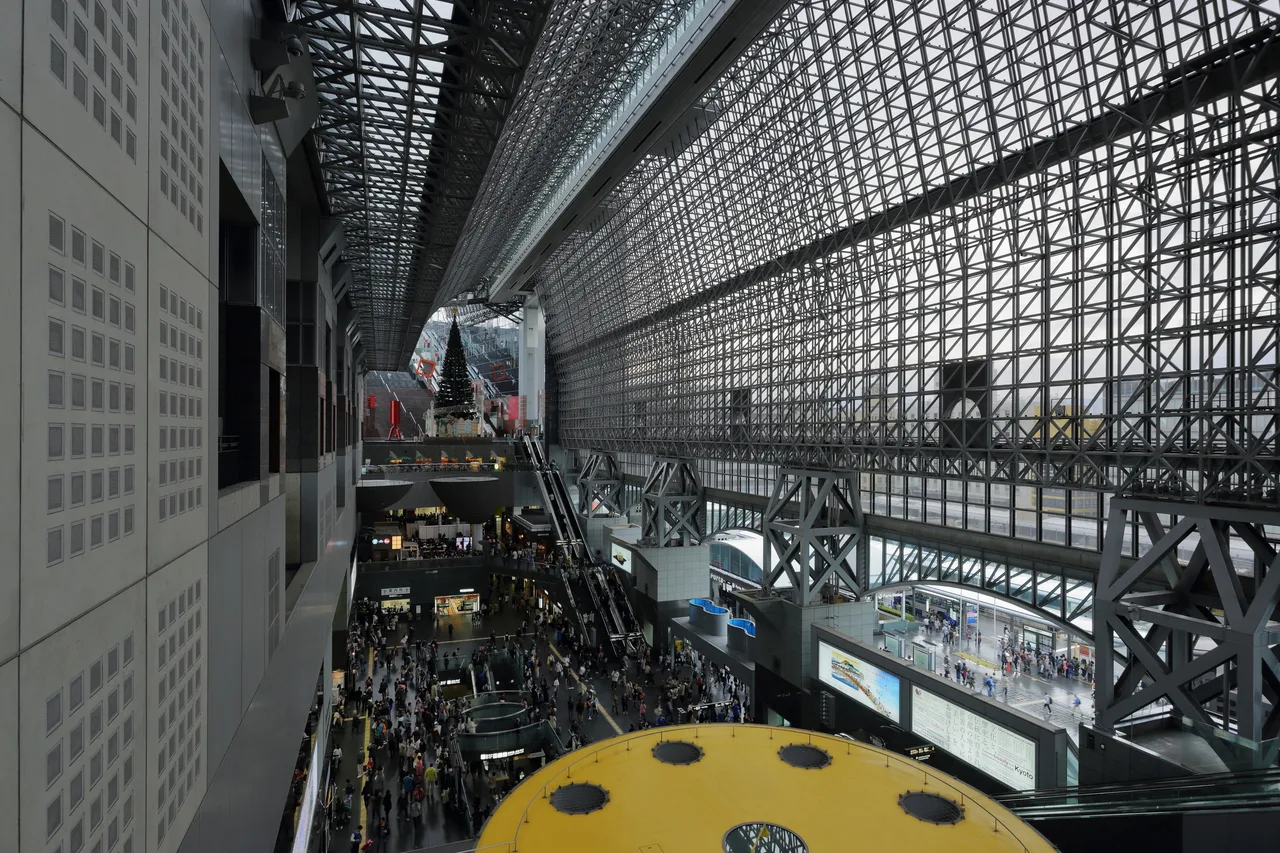
What you gain is concrete. The Shinkansen stops here: arriving from Tokyo, you drop your bag ten minutes’ walk from the platform, and leave the same way on the last morning. The Kansai airport train arrives here. Buses to Kiyomizu, Kinkaku-ji or Arashiyama leave from here. For a two-night stay, or a stopover between cities, it is objectively the rational choice.
What you lose is just as real. South of the station is a zone of hotels and offices that goes quiet after ten at night; the north side is better, but remains a traffic junction. In Kyoto the evening happens two kilometres away, along the river — and two kilometres, on the third night, is a bus ride you no longer feel like taking.
One nuance that matters since March: the station concentrates standardised business hotels, often around ¥8,000 to ¥12,000 per person. That is exactly the band whose tax doubled. The gap with a central hotel, tax included, has narrowed slightly.
Full guide: Where to Stay in Tokyo: Pick the Loop, Not the District
The centre — Karasuma, Shijō, Pontochō: the best compromise
If you keep only one district, make it this one. Central Kyoto fits in a rectangle: Shijō avenue running west to east from Karasuma to Kawaramachi, then the Kamo river and its alleys.
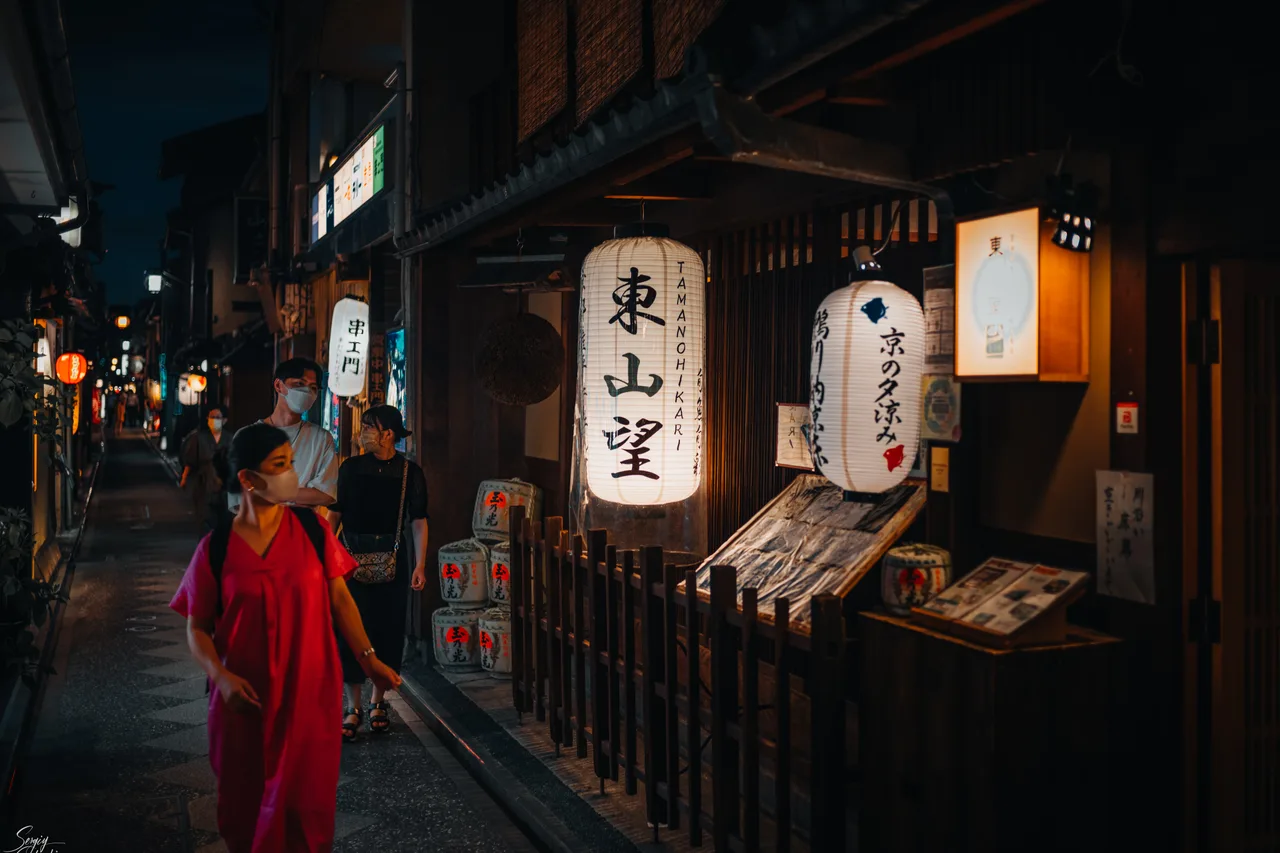
The first reason is technical, and it decides your days. Kyoto has only two subway lines — Karasuma north-south, Tōzai east-west — and they cross here, at Karasuma-Oike. It is the only place in the city where both axes are within walking distance, from ¥220. Everywhere else you depend on buses: ¥230 flat, in traffic that is anything but quick at temple hours.
The second reason is the evening. Pontochō, Kiyamachi and the streets running off Shijō hold the densest concentration of restaurants in the city, and Gion starts across the bridge, ten minutes away on foot. You walk home. That is a detail right up until you realise that in Kyoto, the last bus decides your dinner time.
The downside is price, and the noise of a shopping street if your window opens onto Shijō. Two reflexes are enough: ask for a room on the courtyard, and look at a map rather than a district name — “central Kyoto” covers a building on Karasuma just as happily as an address twenty minutes from the nearest station.
Higashiyama and Gion: the postcard, and the rule to know first
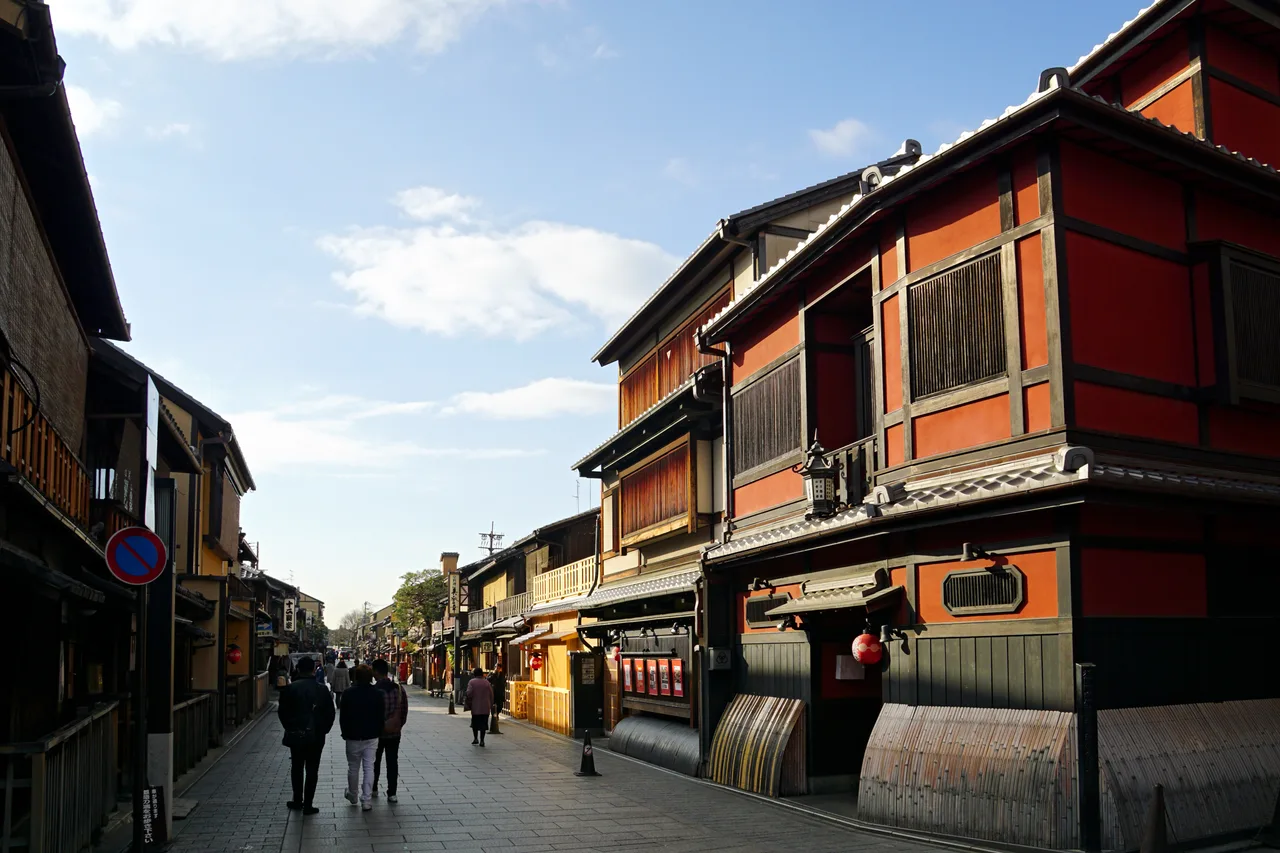
This is the Kyoto you came to see: sloping lanes, wooden houses, tiled roofs, Kiyomizu-dera at the top. Sleeping here has one merit no other district offers.
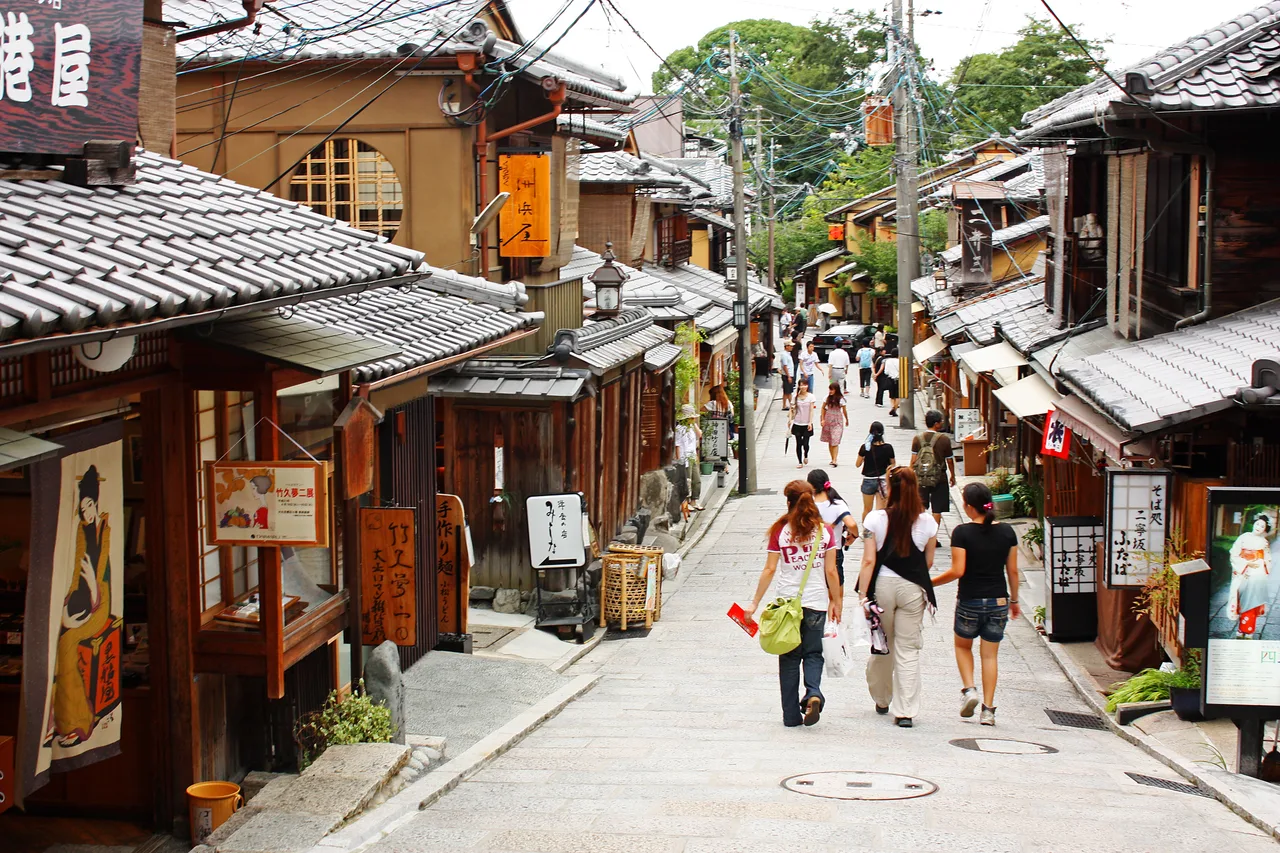
The morning. Sannenzaka at seven is nearly empty; by eleven it is a river of people. Staying in Higashiyama buys you two hours a day in the most photographed places in Japan, before the coaches arrive. For an early riser that is the decisive argument, and it has no substitute.
The rest is more mixed. The slopes are real, suitcases hate them, and the district is poorly served by the subway: you walk or bus back down to Shijō. In the evening many streets close early and you come down to eat elsewhere.
One rule, finally, worth knowing before you arrive. Since 2024, entering Gion’s private alleys has been forbidden to visitors: the neighbourhood council put up signs in three languages — the first at the entrances to Kosode, on 29 May 2024 — with an announced ¥10,000 fine, photography of geiko and maiko being banned on those lanes too. The public streets, Hanamikoji included, remain open. This is not a closure of the district; it is the distinction, invisible on a map, between a street and private property. It follows years of tourists chasing maiko for a photograph.
Arashiyama and the north: what “quiet” costs in journeys
Arashiyama, Kinkaku-ji, the north-western hills: genuine places to stay, often offered at gentler prices, and regularly chosen for that reason.
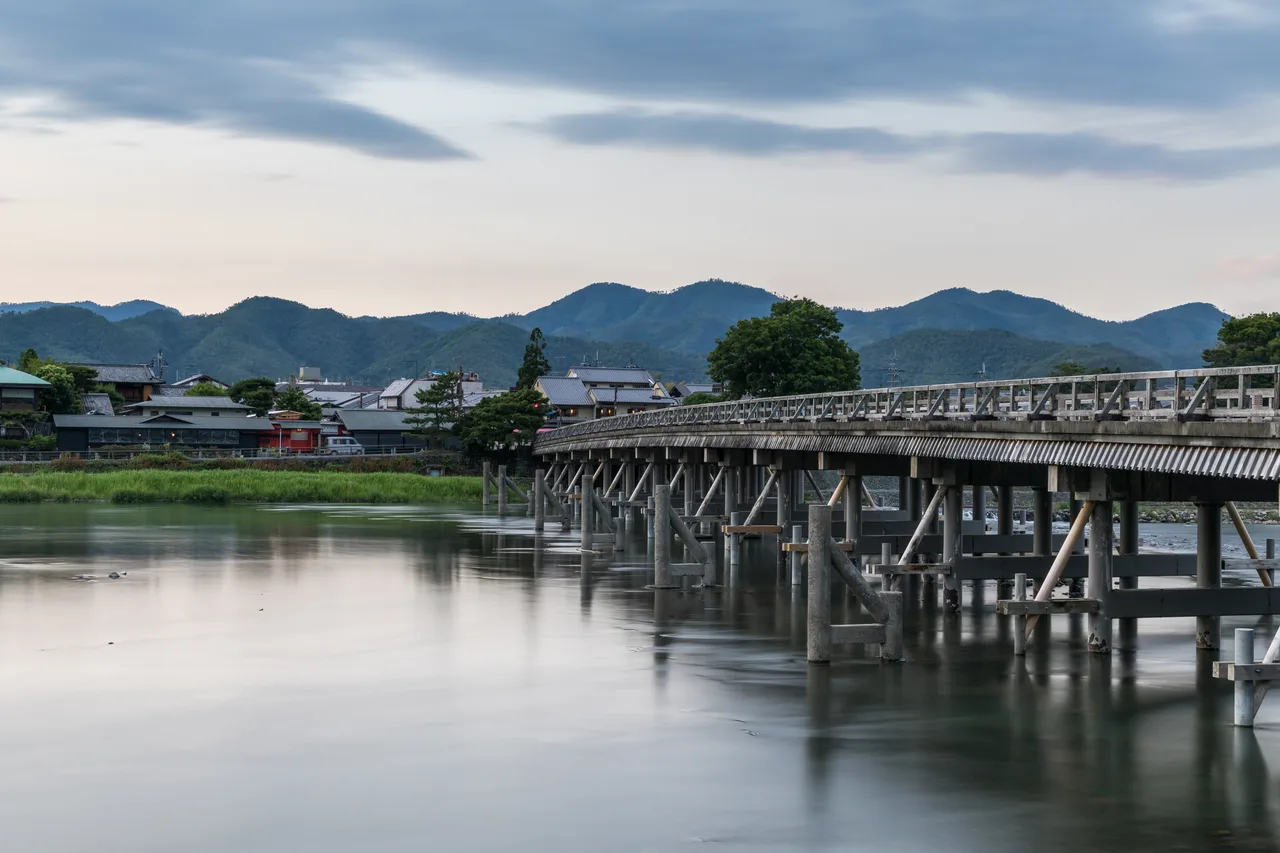
The arithmetic deserves to be done honestly. Count thirty to forty-five minutes to reach the centre, by suburban train or bus, and as long coming back. Over five days at two return trips a day, that is several hours and a dozen journeys. At ¥230 each, the saving on the room largely goes back to the transport network — leaving aside the tiredness, which is not counted in yen.
There is a one-day subway-and-bus pass at ¥1,100, worth it from five rides, and a “tourist express bus” at ¥500 linking the station to the major sites without the intermediate stops. Note in passing that the ¥700 bus pass many guides still mention no longer exists: sales stopped at the end of September 2023 and it was no longer accepted after March 2024. The city scrapped it to unclog routes residents could no longer board.
These districts remain an excellent choice in two precise cases: a long stay, where you are not doing the city in two days; and a second visit, when you want something other than the temple checklist. For three nights and a first time, it is the wrong trade — the commute eats what the room saved.
Ryokan, machiya, rental: what you are actually booking
In Kyoto more than anywhere, the type of accommodation counts as much as its address — and one of them is governed by a local rule that explains a great deal.
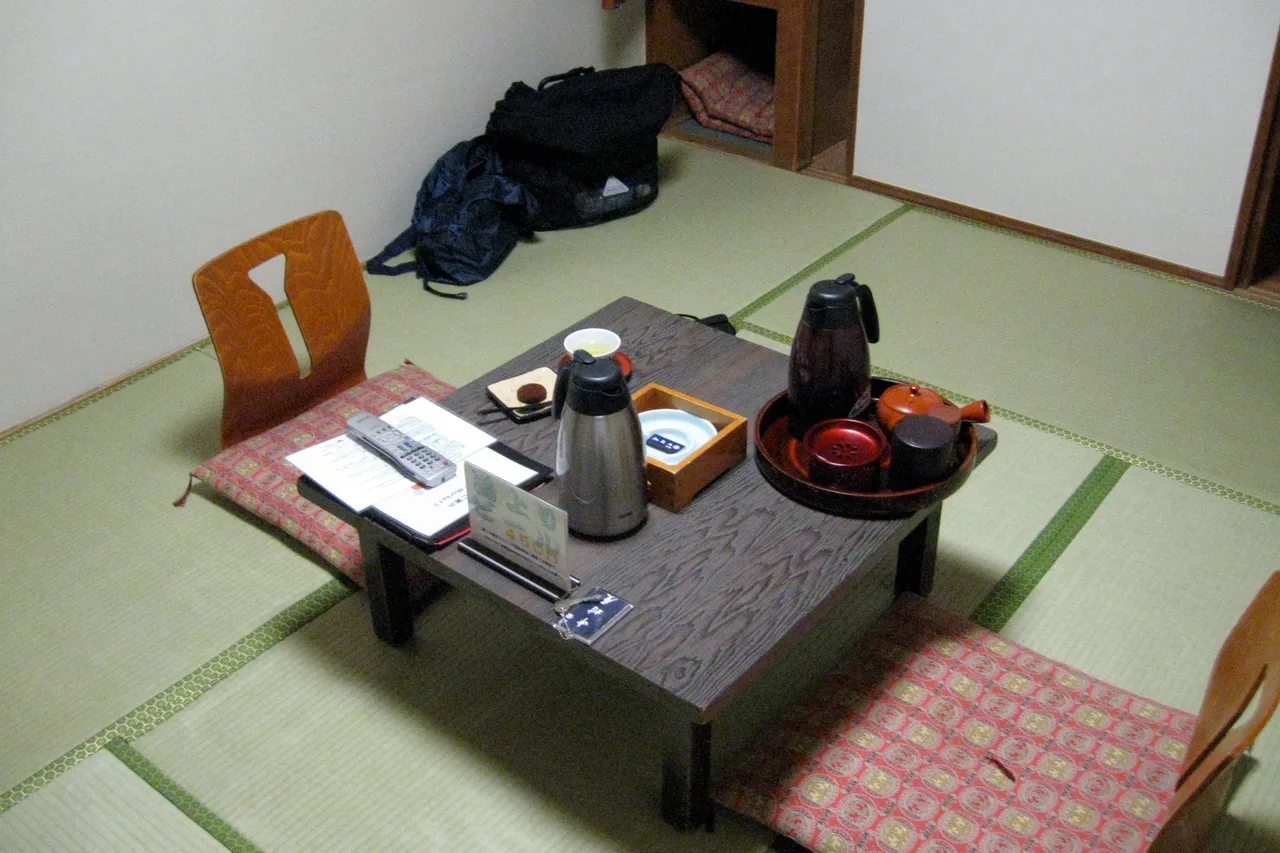
A ryokan is not a Japanese-style hotel, it is a different grammar: a tatami room, a futon laid out after dinner, often a meal served at a fixed hour and a communal bath. One night there is worth more than three, and it books up early. Watch the tax calculation: a ryokan with meals easily clears ¥20,000 per person, hence the ¥1,000 band — double the pre-March figure.
Short-term rentals, by contrast, are far rarer here than in Tokyo or Osaka, and that is no accident. National law allows 180 nights a year; Kyoto restricts residential zones to the single window of 16 January to 15 March, some sixty days. Certified machiya — those narrow, deep wooden townhouses — and home-sharing escape the limit. The practical consequence is simple: a whole-apartment listing available in April on a residential street is either a certified machiya or a listing to avoid. An unlicensed address means cancellation the day before, with no recourse.
A word on arrival, whichever you choose. Kyoto addresses are not read as numbers but as intersections: you start from a crossing of two streets, then go up, down, in to the east or the west. It is logical once understood, unreadable before, and many machiya have neither sign nor front desk. Japan being outside the European Union, your plan does not include roaming there: an eSIM activated before take-off spares you hunting for an address of that kind without a map, suitcase in hand, in a nameless lane.
Full guide: Japan eSIM: networks, prices and traps before you buy
Arriving, dropping the bags, leaving
That leaves the day nobody plans, and which often decides what you remember of a district: arrival day.
The Shinkansen drops you at ten or eleven in the morning; rooms open at three. Those four hours are the real logistical problem of a Kyoto stay, because they are spent with the luggage, and the station’s coin lockers are taken by midday in high season. Two solutions: leave your bags at the hotel before check-in, which almost all of them accept, or use a luggage point booked in advance near the station or in the centre — the first being free, provided you have already reached your district.
From Kansai airport, the JR Haruka takes about seventy to seventy-five minutes to Kyoto Station at ¥3,060 in a non-reserved seat, with a departure every half hour; there is a discounted one-way ticket for foreign visitors, around ¥2,200. It is the right call in most cases — unless it does not go where you sleep. Three or four of you, with large cases and a ryokan fifteen minutes’ walk from the nearest station, and the sum of four tickets plus a local taxi compares honestly with a private transfer booked in advance, door to door.
One last piece of advice, in a single sentence, valid for every district above: choose your accommodation according to the hour at which you want to be out in the street. Early morning in the lanes of Higashiyama, late evening along the river, or nowhere before nine because you travel with children. Kyoto can be crossed in thirty minutes; what changes everything is the moment you open the door.