On the same August day, Marrakech averages a high of 37.4 °C and Essaouira 21 to 23 °C — and they are 175 km apart. Morocco does not have one hot season: it has three climates that do not heat up together. And the heat that ruins trips appears in no average at all — it arrives in waves, it has a name, and no calendar can predict it.
The average says 37.7 °C, the record says 49.6 °C — between the two there is a wind
This is the figure no guidebook leads with, and it is the one that decides your trip.
Marrakech averages a high of 37.7 °C in July. The record for that same month is 49.6 °C, set in July 2012 — August 2012 managed 48.6 °C. Between the promise and the worst day there is therefore 49.6 − 37.7 = 11.9 °C. That is not a statistical quirk: it is a phenomenon with a name.
The chergui is a continental wind out of the Sahara, from the east or south-east, which heats up further as it descends the flank of the Atlas. It routinely pushes temperatures beyond 40 °C, up to around 48 °C in summer, and it dries everything out: relative humidity falls almost always below 15 %. The towns it hits hardest are exactly the ones people visit — Marrakech, Fez, Meknes, Beni Mellal, Ouarzazate, where more than 47 °C has been recorded.
Its seasonality is the real information: it is most frequent in July and August, common from May to September, and it turns up occasionally in spring or autumn. In other words, picking the right month lowers the risk, it does not remove it. Someone who leaves in May on the strength of a 29.5 °C average can perfectly well land on a 40 °C day — and will be far more surprised than the traveller who went in July knowing what was coming.
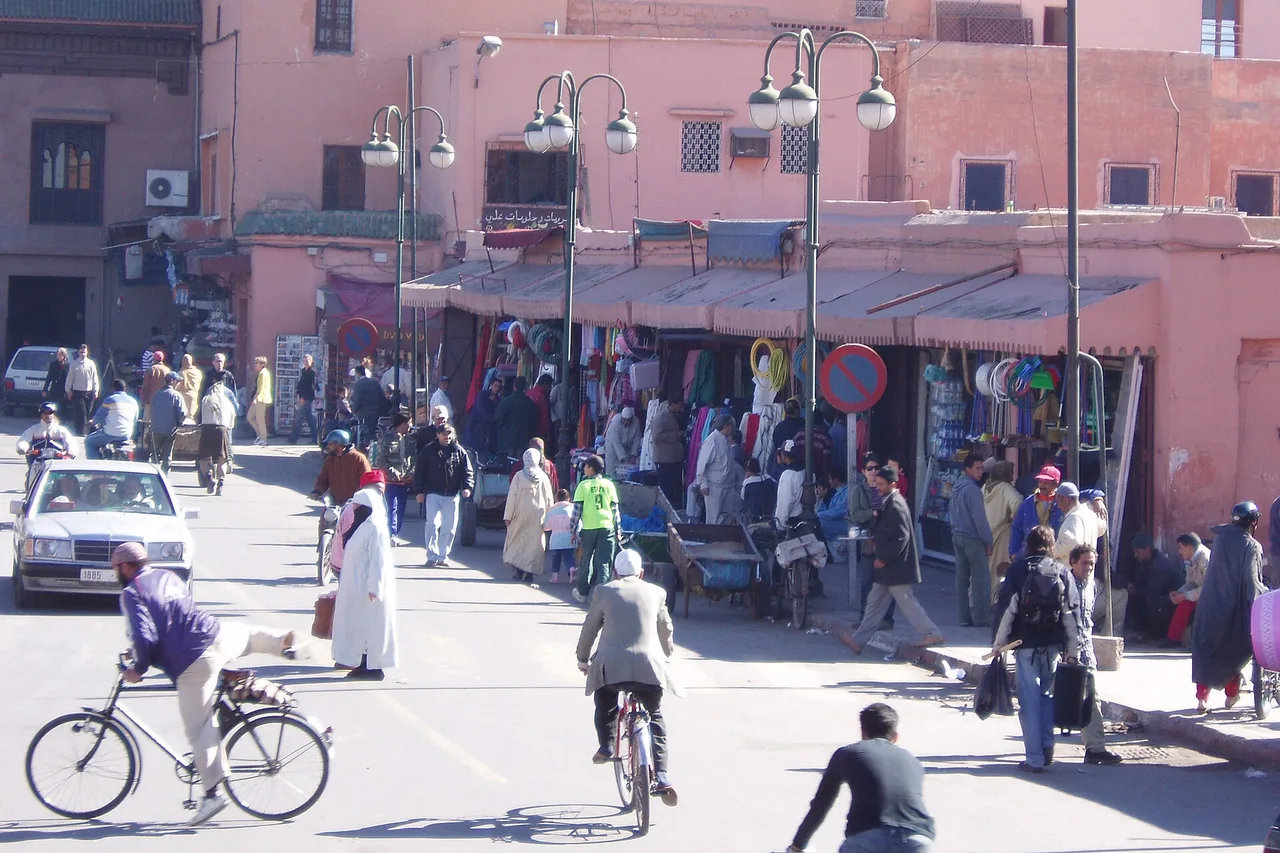
Morocco does not have one hot season, it has three climates that do not heat up together
Here is why the question is badly framed. These figures all describe the same time of year, July and August:
| Where | Average highs | What it means |
|---|---|---|
| Essaouira (Atlantic coast) | 21 to 23 °C | Cool, windy, rarely above 26 °C |
| Agadir (southern coast) | ≈ 28 °C | Warmer than Essaouira, less windy |
| Fez (420 m) | 26.8 °C mean in August | But Saharan spikes to 45 °C |
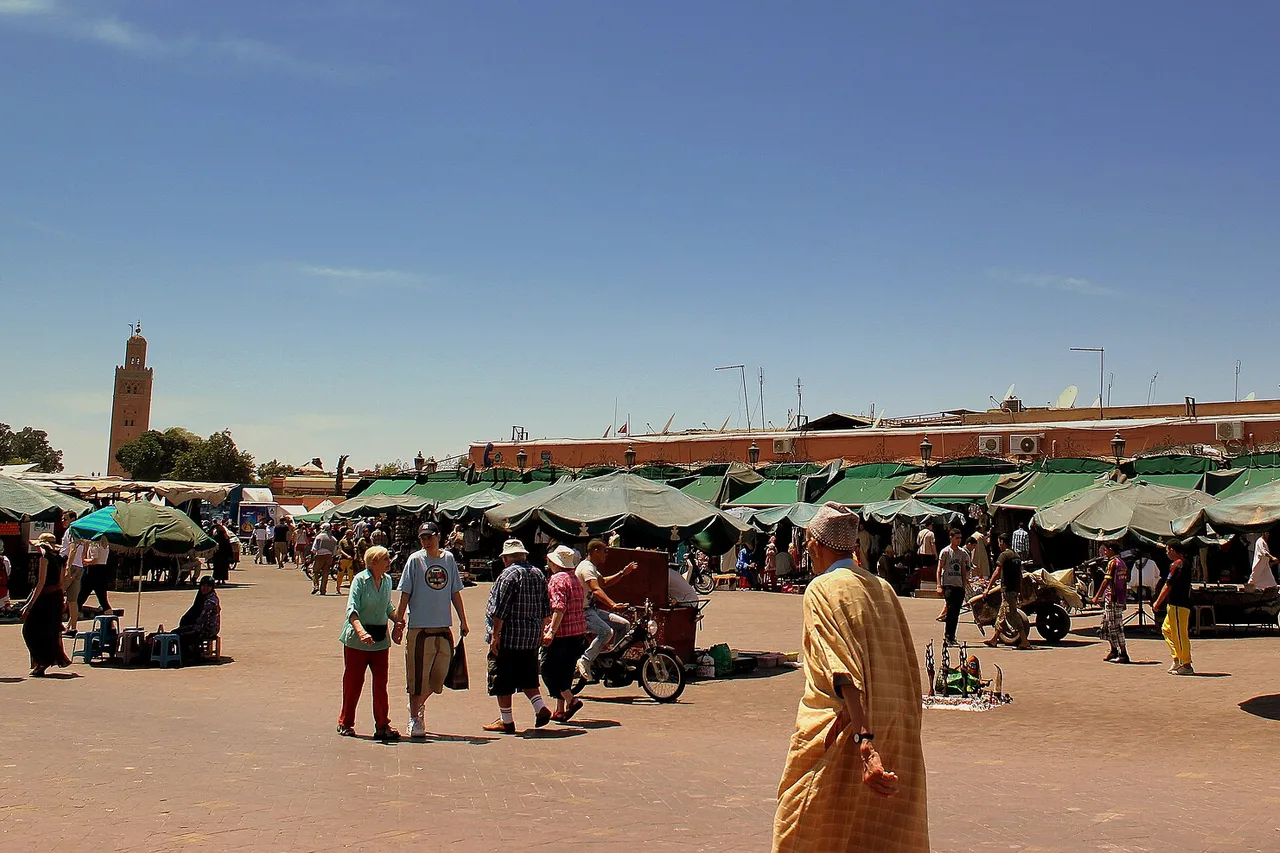
| Marrakech (inland) | 37.4 to 37.7 °C | Walkable early and late only |
| Ouarzazate (1,150 m) | 30.8 °C mean in July | Beyond 35 °C regularly |
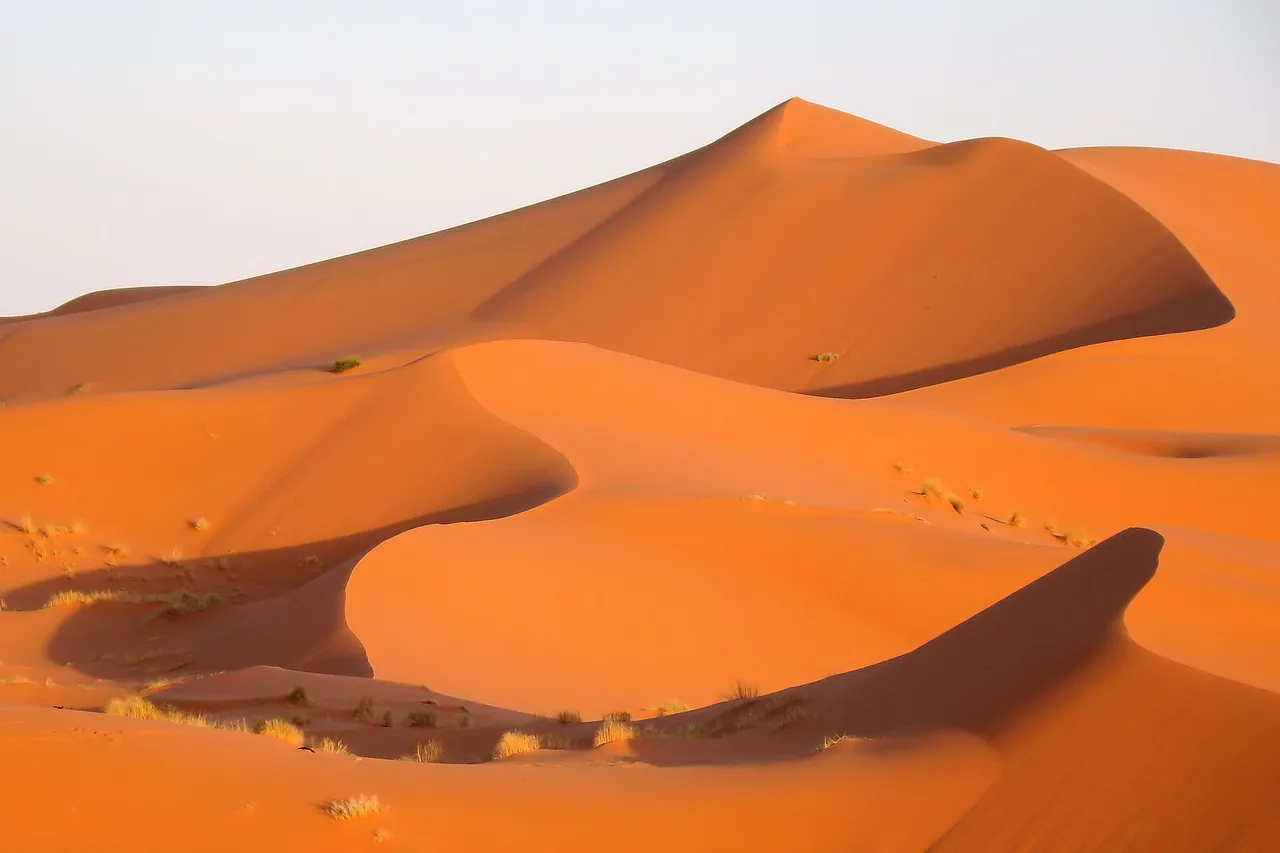
| Desert (Merzouga, Zagora) | 45 to 50 °C | Walking in the dunes inadvisable |
Do the subtraction that matters: 37.4 − 23 = 14.4 °C between Marrakech and Essaouira in the same month, over 175 km of road and 2 h 30 to 3 h of driving. No other Mediterranean country offers a gap like that over so short a distance.
The consequence is liberating: going to Morocco in July is not absurd at all. Going inland is. An August stay on the Atlantic coast is a very good idea; the same stay in Marrakech and the south will keep you indoors six hours a day.
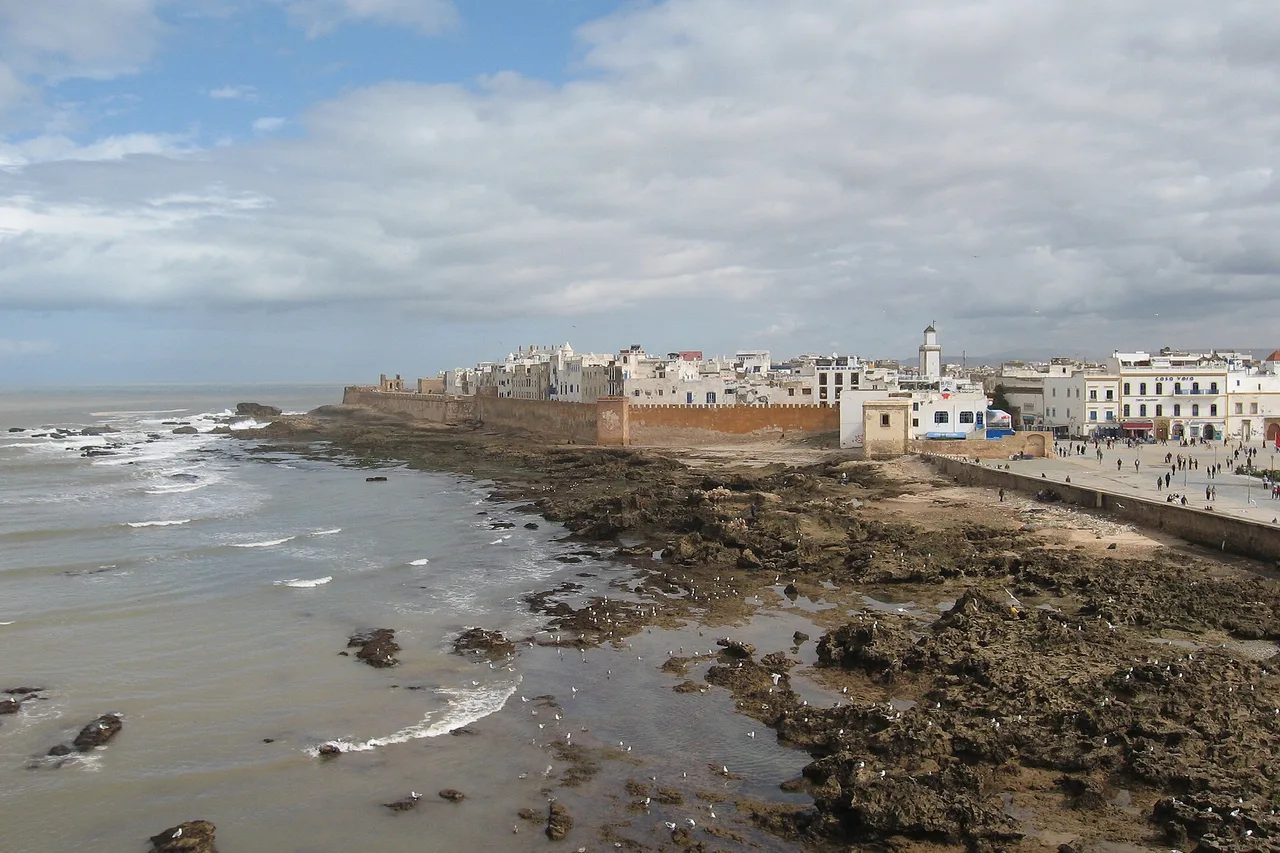
Marrakech through the year, and what each line means on foot
Marrakech is the reference because it is the gateway for most trips. Averages are given as daytime high / night-time low:
| Month | Day | Night | What that gives on the ground |
|---|---|---|---|
| January | 19.2 °C | 5.9 °C | Very pleasant by day, genuinely cold at night |
| February | 20.8 °C | 7.7 °C | Same profile, a notch milder |
| March | 23.7 °C | 10.4 °C | Comfort begins, rain is still possible |
| April | 25.8 °C | 12.4 °C | The best window, along with October |
| May | 29.5 °C | 15.1 °C | Still good, but a chergui can change everything |
| June | 33.7 °C | 18.0 °C | The tipping point: +4.2 °C in a single month |
| July | 37.7 °C | 20.6 °C | Out early and after 6 pm, otherwise nothing |
| August | 37.4 °C | 21.0 °C | Identical, with nights that no longer cool down |
| September | 32.4 °C | 18.1 °C | Still a summer month, contrary to belief |
| October | 28.4 °C | 15.3 °C | Comfort genuinely returns |
| November | 23.3 °C | 10.5 °C | Excellent until the 15th, wetter after |
| December | 20.2 °C | 7.4 °C | Mild by day, bring a real jacket for the evening |
Three lines deserve a second read. The May-to-June jump: 33.7 − 29.5 = 4.2 °C, the biggest step of the year — that is where the country tips over, not in July. September is still at 32.4 °C: plenty of people book it thinking they are getting the shoulder season and land in high summer. And January shows 19.2 − 5.9 = 13.3 °C between afternoon and night: you dress twice in the same day.
In the south you do not live in the sun, you live in the shade
Southern Morocco is not built to be walked at midday, and its architecture says so: thick earthen walls, narrow lanes, courtyards, reed canopies. Local days are organised around shade, not around opening hours. A traveller who keeps a European rhythm is worn out in three days.
Altitude, contrary to what people hope, saves very little during the day. Ouarzazate sits at 1,150 m — higher than many Alpine resorts — and July there still means 30.8 °C on average, with spells beyond 35 °C. What altitude changes is the night: it drops sharply, and that is when you recover.
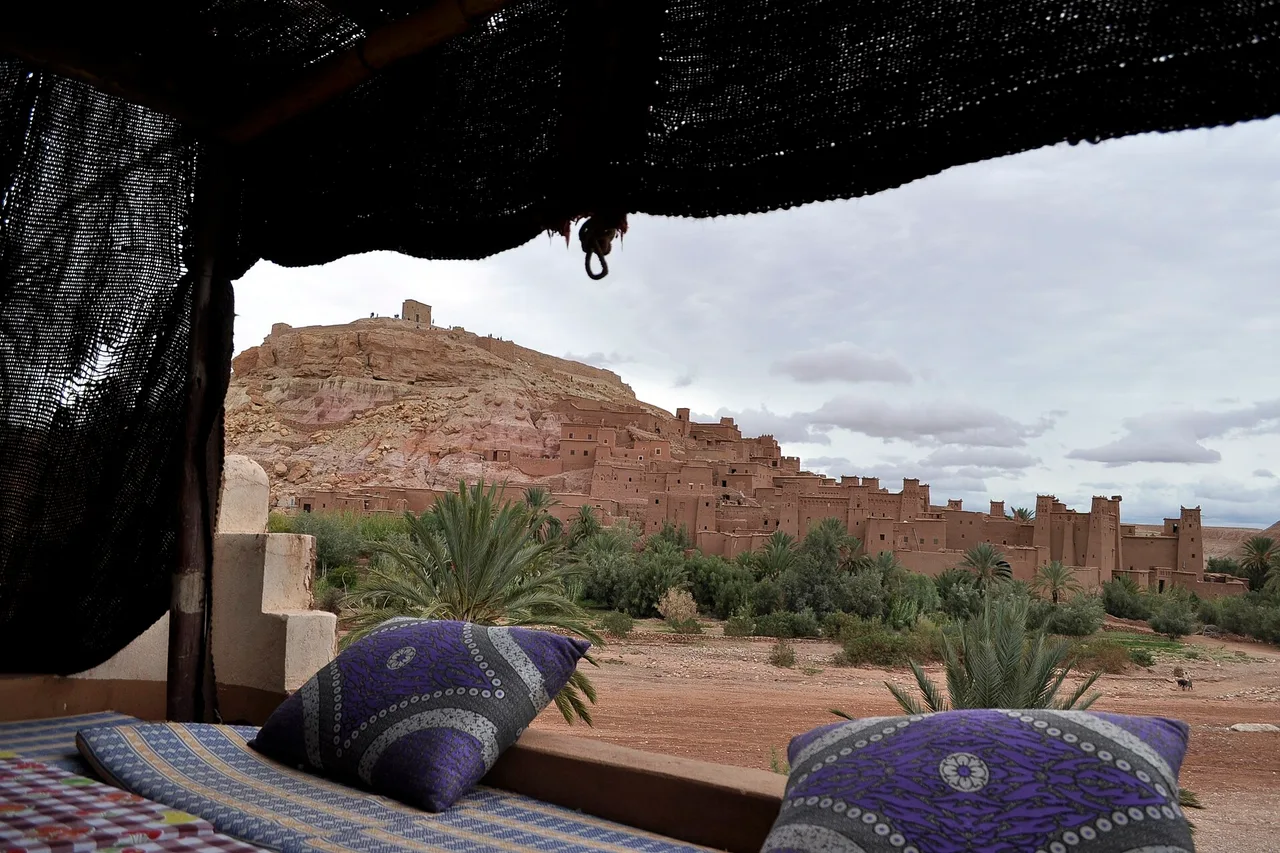
Oases follow the same logic. The green strip at Tinghir, like the one along the Draa, is a few hundred metres wide in the middle of a bare plain: it is an irrigation system centuries old, and it is the only thing that makes this climate liveable. Visiting the south means moving from one patch of shade to the next.
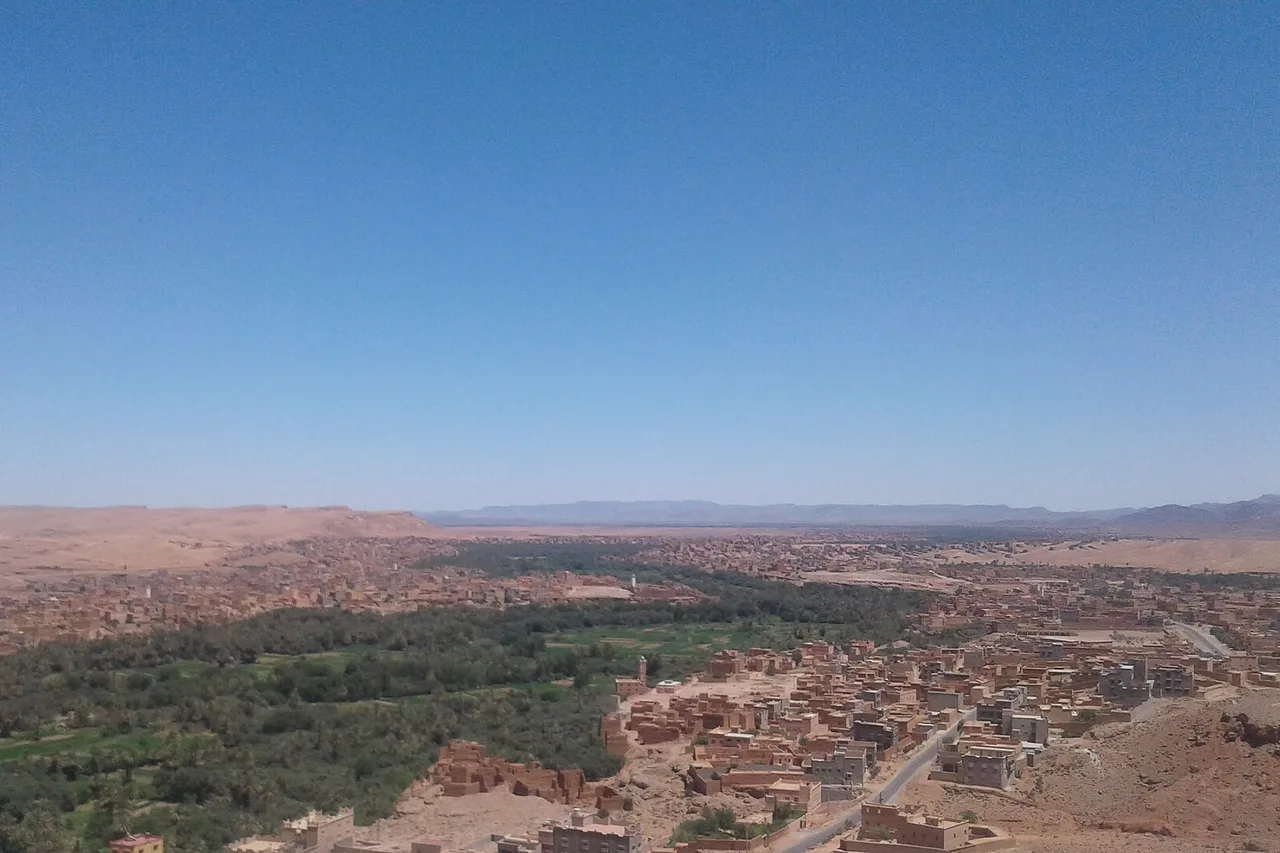
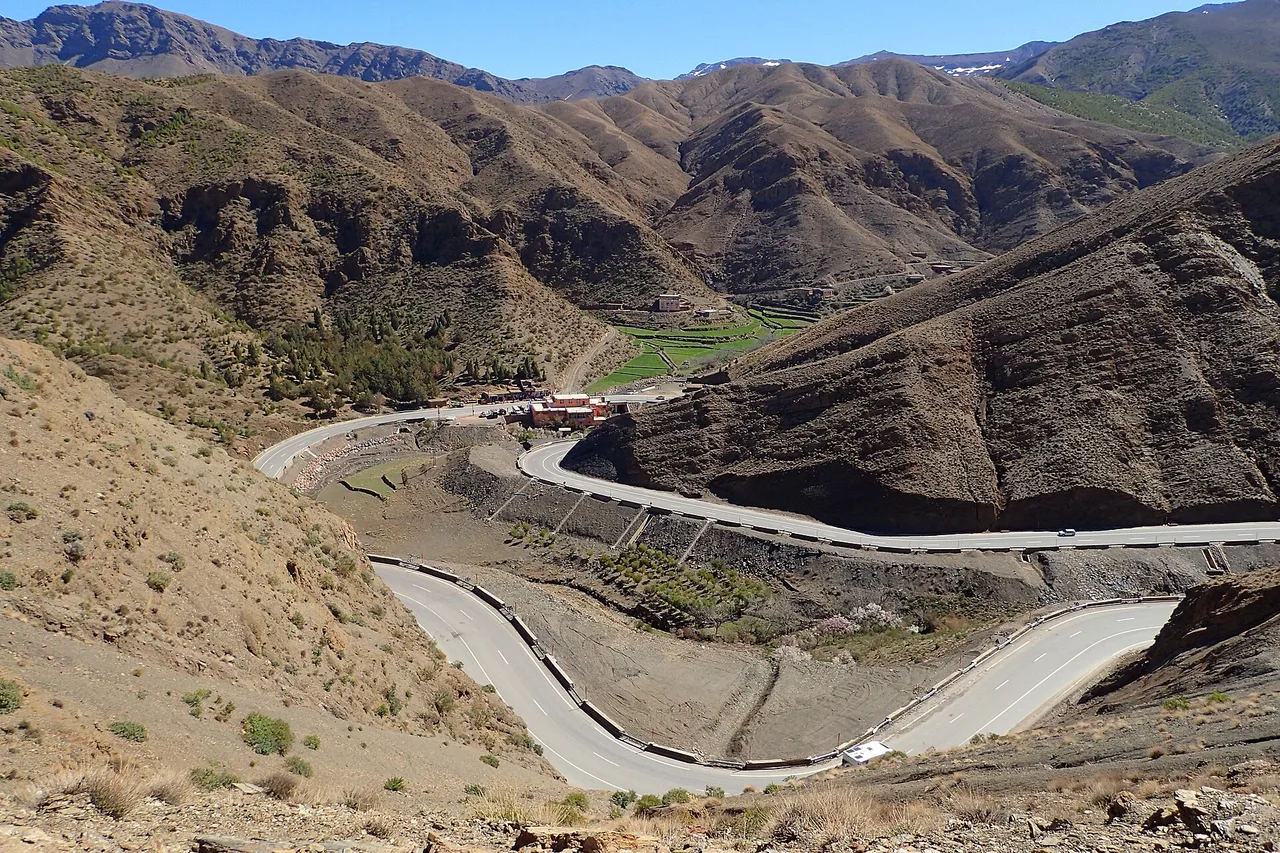
For the desert itself the window is clear: October to April. In July and August it records 45 to 50 °C, and the day-to-night swing stays large all year, summer included. A useful reminder if you are aiming for Merzouga (560 km from Marrakech) or Zagora (350 km): the road crosses the Tizi n’Tichka, a pass at ≈ 2,260 m, where it is never the same temperature as down below.
The other extreme nobody mentions: Morocco has a cold problem
People come to Morocco to escape the heat and get caught by the cold. It is a classic, and it rests on three figures.
Ouarzazate, at 1,150 m: winter nights below freezing. Fez, at 420 m, runs at 10 °C on average in January, it can snow there, and the cold record is −8 °C (January 2005). And the High Atlas, less than two hours from Marrakech, is under snow for a good part of the winter: people ski there.
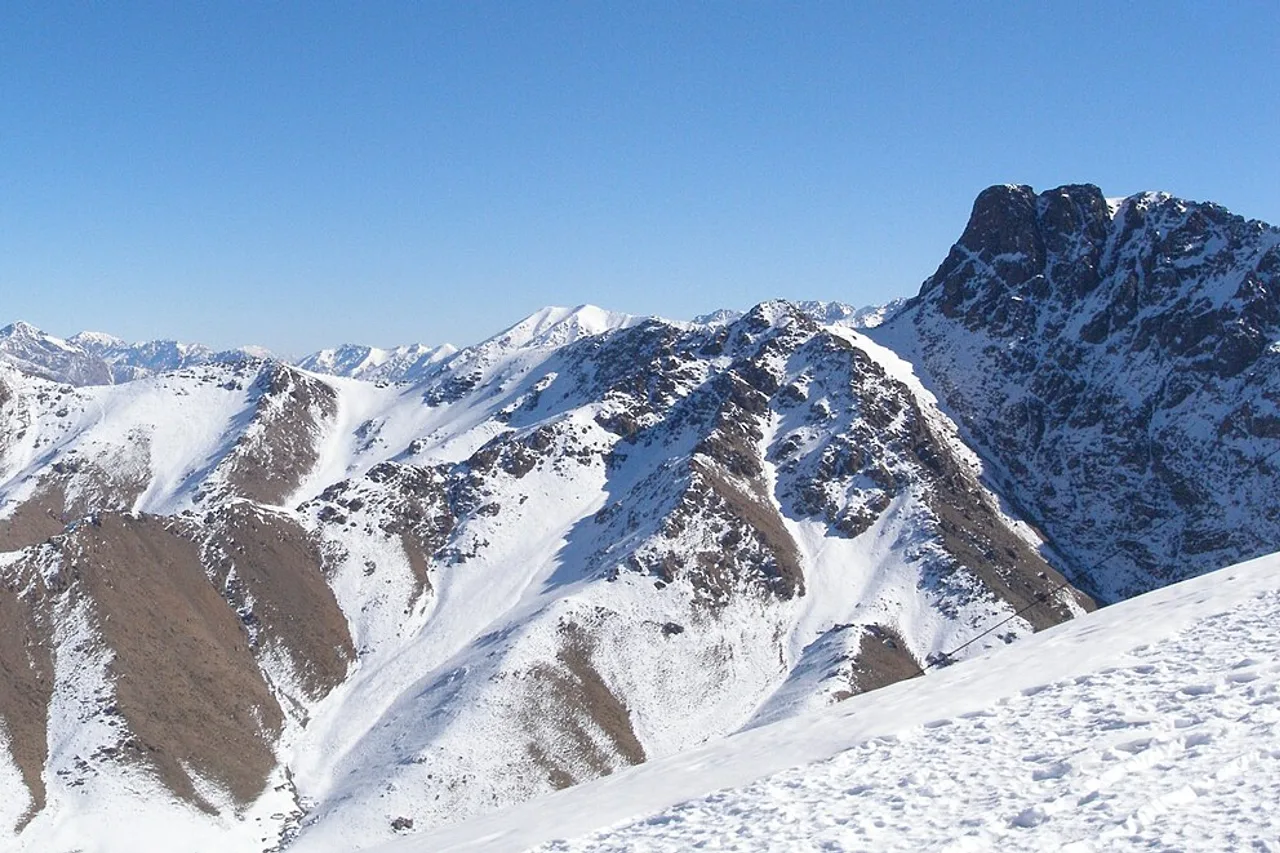
In other words, a winter trip to Morocco is not a trip somewhere warm. It is a trip to 19 to 20 °C in the afternoon and 6 to 8 °C at night in Marrakech, in riads and guesthouses often designed to shed heat rather than hold it. The question to ask your accommodation in January is not whether it has air conditioning, but whether it has heating.
Full guide: Where to stay in Marrakech: medina or Guéliz
What you can plan for, and what you can only watch
Three things weigh on a Moroccan trip. Two can be planned months ahead; the third cannot — and that is the one that costs the most when it is ignored.
① Rain can be planned for. Marrakech gets about 280 mm a year, from October to May, and practically nothing from June to September. Fez gets 490 mm, that is 490 ÷ 280 ≈ 1.75 times more, peaking in November around 66 mm. Essaouira runs at about 300 mm, from October to April. Escaping the heat by travelling in winter therefore means accepting rain in the north, and almost none in the south.
② Ramadan can be planned for. It changes nothing about the temperature, but a great deal about the rhythm: shifted hours, restaurants often closed by day, very lively evenings. It moves about eleven days earlier each year. It began on 19 February 2026 in Morocco, with Eid al-Fitr on 20 March 2026 — which puts Ramadan 2027 around 8 to 10 February. The date is only official once the moon has been sighted by the Ministry of Habous, a few days before, so check it if your dates fall in that window.
③ The chergui cannot be planned for, only watched. No calendar carries it, but forecasts see it coming 48 hours out. The right response is not to cancel: it is to flip that day around — sights early and after 6 pm, a museum or a hammam in the middle, and the hike moved to tomorrow.
🟢 For that kind of watching you need to buy nothing if you check the forecast in the morning before heading out: the wifi in a riad or guesthouse is more than enough, and it is everywhere. The question only arises in one precise case: if you are stringing together southern roads over several days, between Ouarzazate, the gorges and the desert, where wifi coverage is not guaranteed and you want to check the night before. That case, and only that one, justifies getting an eSIM before you leave — Morocco being outside the European Union, your home plan covers nothing there.
Full guide: Morocco eSIM: networks, prices and airport SIMs compared
The verdict, by type of traveller
| You want… | The window |
|---|---|
| The imperial cities on foot | April-May and October to mid-November |
| The desert and the gorges | October to April — and cover up at night |
| To travel in July or August | The Atlantic coast, and nothing else |
| Warm sea to swim in | No window at all: the Atlantic tops out at 21 °C |
| To hike in the High Atlas | May-June and September-October |
| Fewest people and lowest prices | January-February, accepting 6 °C nights |
| To do everything in one trip | Late March to early May — the only stretch where everything is open and liveable |
In short
If you remember only five things:
① The average does not describe what you will experience: 37.7 °C advertised for July in Marrakech, 49.6 °C at the record. ② The gap is called the chergui, it cannot be planned for and it can strike from May to September. ③ 14.4 °C separate Marrakech from Essaouira at the same moment, over 175 km: in Morocco you escape the heat by moving, not by changing dates. ④ September is still a summer month (32.4 °C) and June is the real tipping point (+4.2 °C in a month). ⑤ Winter is not warm: sub-zero nights in Ouarzazate, snow in the Atlas, and 6 °C at night in Marrakech.