The question “is Morocco safe?” is almost always the wrong one. Violent assault on a traveller is rare there; what does happen, every day and to everyone, is commercial: help you did not ask for, a gift that is not one, a price named after the service. These are not improvisations, they are scripts, always the same ones. Knowing them in advance strips them of nearly all their power — and makes the country far more enjoyable.
What people fear, and what actually happens
The gap between the two is the first thing to understand — it explains why so many travel accounts of Morocco contradict one another.
Searches about safety in Morocco are driven by a vague unease: people picture a physical risk. That is not what visitors meet. Violent assault on a traveller is rare, including in the big medinas after dark. What you do meet, within the first hour and absolutely everywhere, is constant and very well-practised commercial pressure.
| The fear | The reality | The answer |
|---|---|---|
| Being attacked | Rare; the country lives on tourism and protects it | The reflexes of any large city |
| Being robbed | Pickpocketing in crowds, snatching from scooters | Bag in front, phone away while walking |
| Getting lost in the medina | Certain — and harmless | Keep going: the lanes always come out |
| Being “had” | Frequent, and the real subject | Know the scripts — the rest of this article |
📌 We are not writing “Morocco is safe” as a slogan. We are saying the risk there changes in nature: it is financial and social, not physical. That is good news, because a risk of that kind is defused with vocabulary, not with luck.
The single rule that defuses almost everything: nothing is free
If you take one sentence away from this article, take this one.
The sprig of mint handed to you at the tanneries, the glass of tea poured while a rug is unrolled, the child who “walks you back” to the square, the man who puts a monkey on your shoulder, the woman who takes your hand to draw henna on it: all of these are services, and every service is billed. The gesture is offered; the price comes afterwards.
There is nothing dishonest in this once you have understood it — it is a way of trading, old and entirely open. The misunderstanding is ours: we read “gift” where we should read “start of a transaction”. The answer is a single gesture: do not let it begin. A “no thank you” said early, while still walking, costs infinitely less than one said after accepting the tea.
⚠️ Never take an object that is handed to you — jewellery, herbs, an animal, a scarf. Once the object is in your hand or on your shoulder, the discussion is no longer about “would you like this?” but “how much?”, and the balance has shifted.
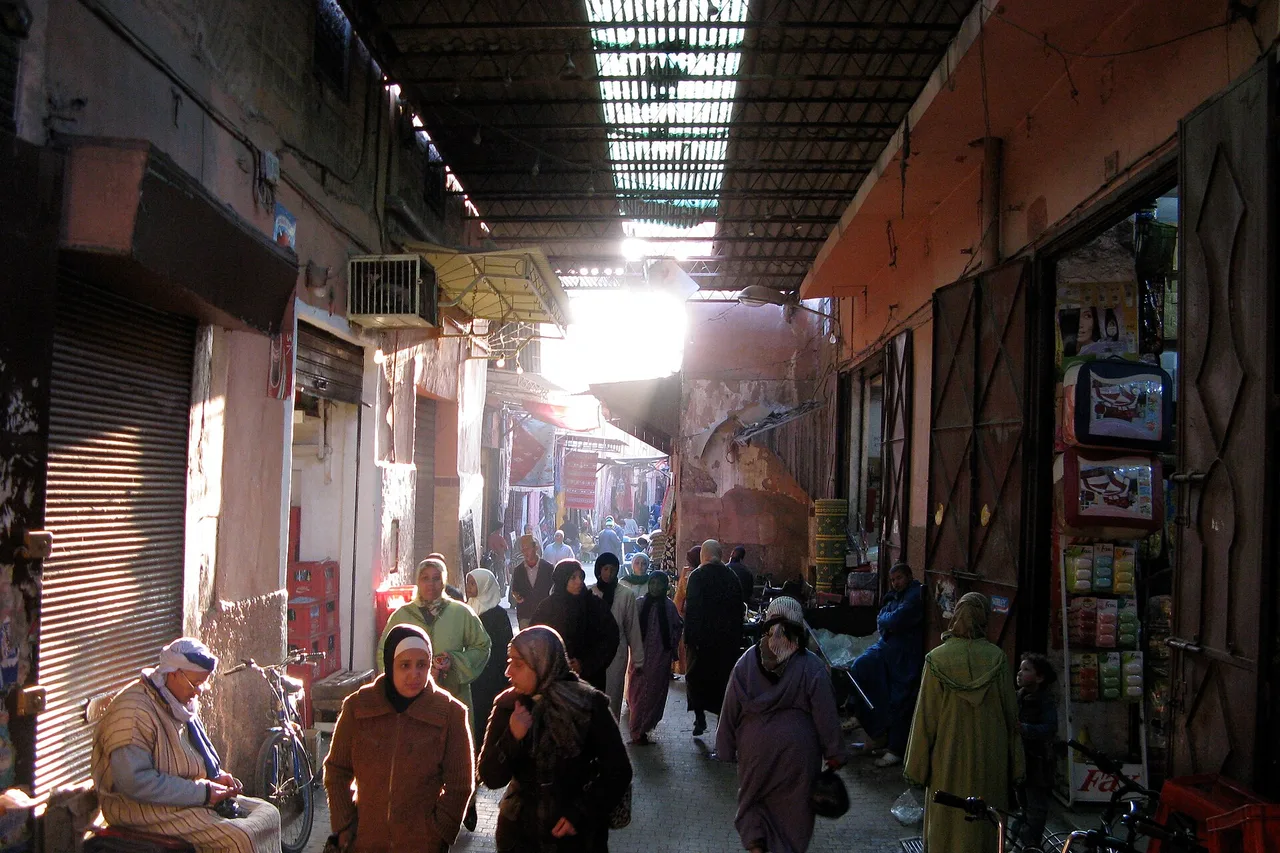
Fake guides: the script, word for word
It is always the same, in every city, and has been for decades. Recognising it takes three seconds.
The approach comes in French or English, in a helpful tone, and rests on a piece of false but plausible information:
- “This street is closed today.” — It is not.
- “The square is the other way, I’ll show you.” — It is not the other way.
- “There’s a Berber market, today only, the last day.” — There is not.
- “The tannery closes in ten minutes.” — It does not.
The walk that follows always ends at a shop, where your companion takes a commission, and finishes with a request for payment for the guiding itself. Unlicensed guiding is illegal in Morocco: an official guide holds a professional card and shows it unprompted. Marrakech and Fes have a tourist police brigade created for exactly this problem.
🟢 What works, and costs nothing: do not stop, do not explain, do not argue. A negotiation begins the moment you reply. A calm “no, thank you” without slowing your pace ends 90 % of approaches; stepping into a shop or café settles the remaining 10 %.
📌 And if you are lost? Ask a shopkeeper inside their shop, a woman, or anyone who did not approach you first. That is the whole distinction: help you seek out is free, help that comes to you is not.
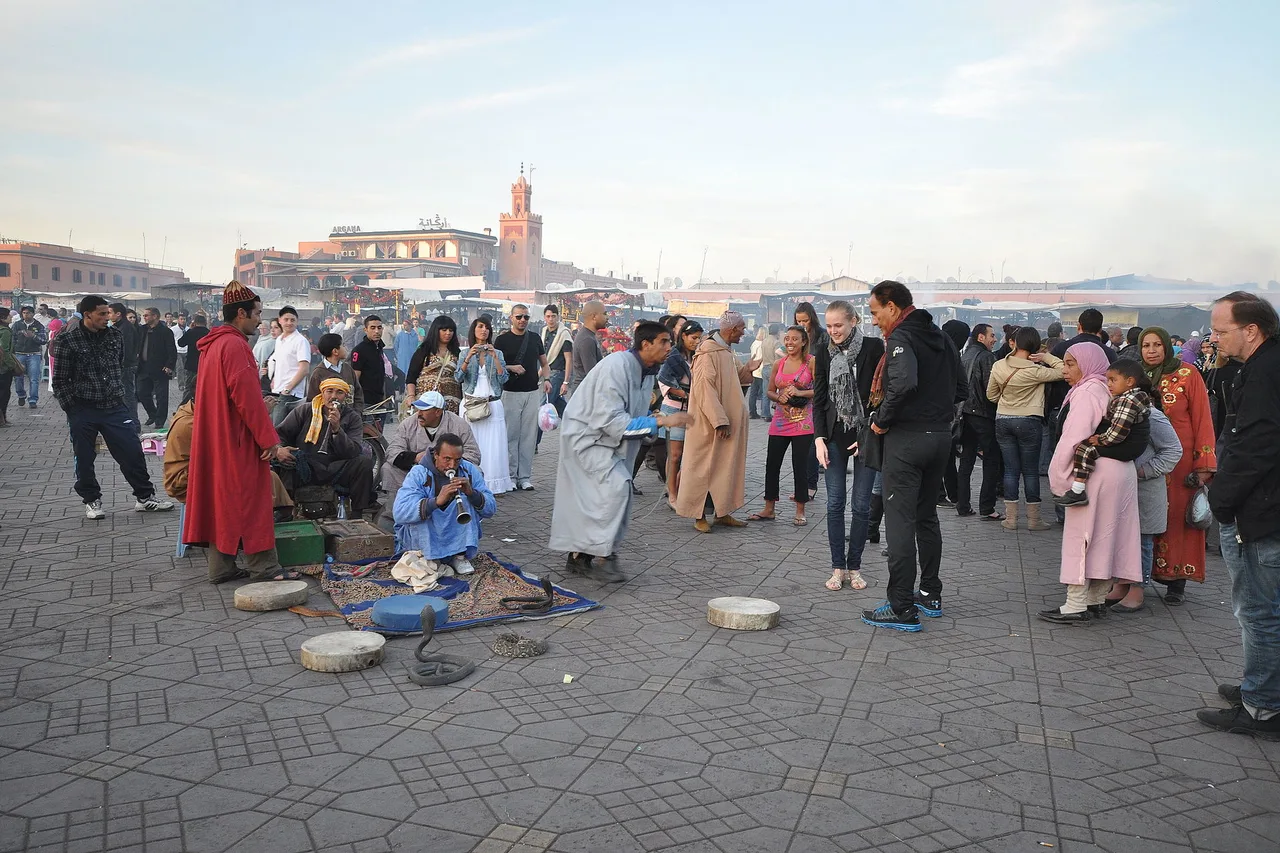
Jemaa el-Fna: the entire square is a business
It is a magnificent spectacle, and it is an enterprise. Both are true at once.
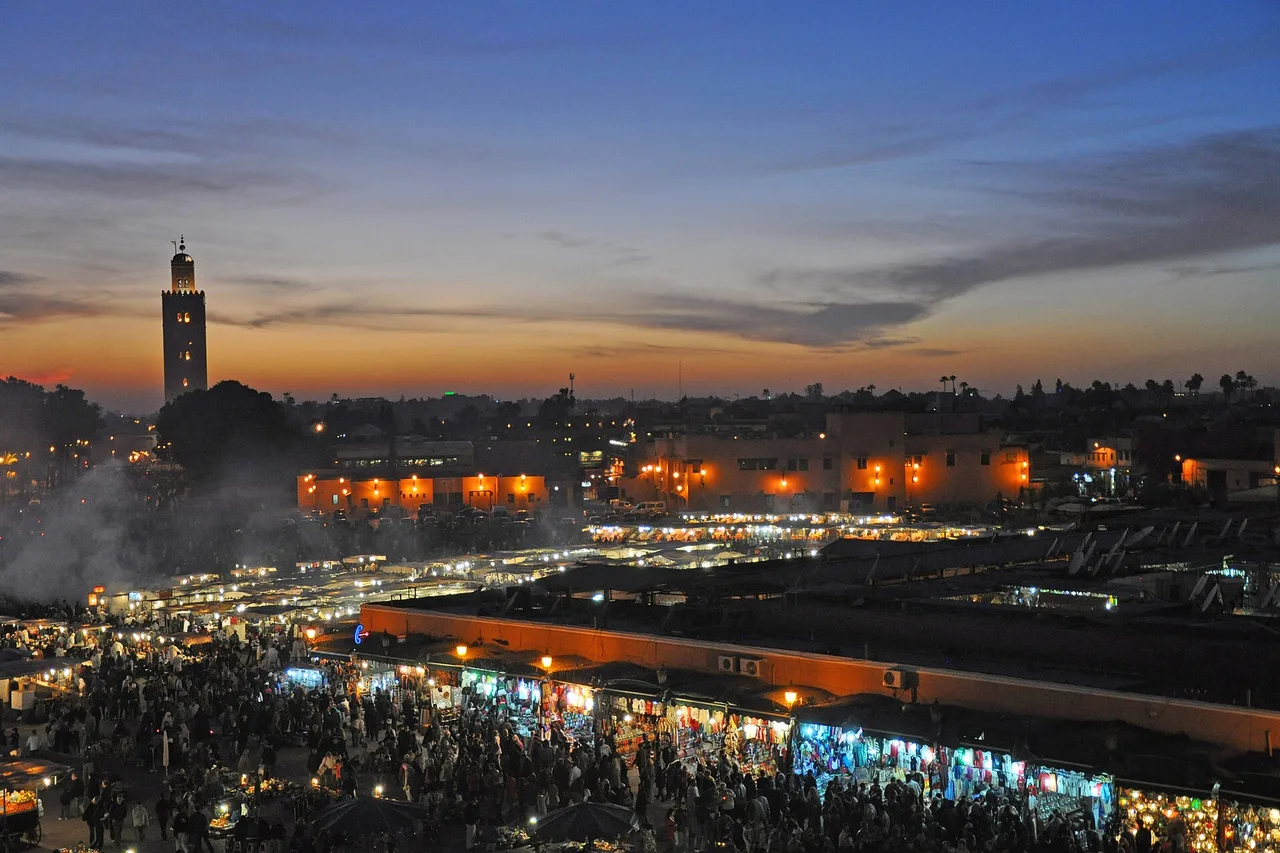
On Marrakech’s great square, every ring of onlookers surrounds a paid activity: Gnaoua musicians, storytellers, monkey handlers, snake charmers, henna artists, open-air dentists. The principle is constant: nothing is asked of you beforehand, a great deal is asked afterwards. A photo taken from the far pavement is free; one taken from three metres is not, and a raised camera counts as consent.
If you want the photograph, the honest way is to ask first and agree the price before — a modest sum, in the order of a few tens of dirhams. The conflict never arises from the principle of paying; it arises because the amount is named when it is too late to say no.
⚠️ Two caveats we stand behind. The Barbary macaques kept on chains on the square belong to an endangered species, and their capture feeds a trade; paying for the photo funds that chain. As for black henna, it is not henna: the dark shade comes from a chemical additive that causes genuine skin burns in some people, sometimes days later. Real henna is brownish-orange, never black. These are the only two points on this square where we advise refusing outright rather than negotiating.
Tanneries and “Berber pharmacies”: two staged routines
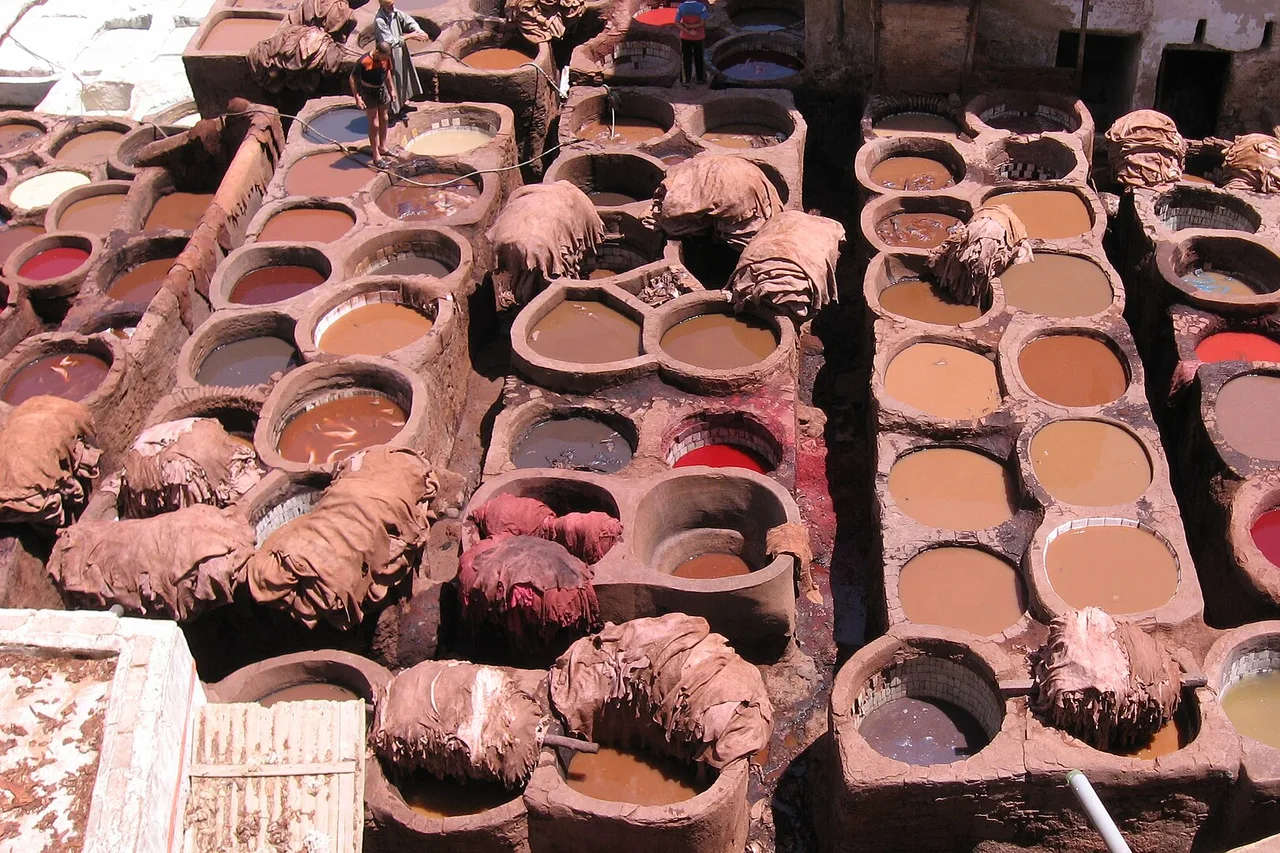
These are the country’s two most polished routes, and the easiest to walk through once you know where you are.
At the Fes tanneries, you are handed a sprig of mint at the entrance — a gesture that has become iconic, and genuinely useful given the smell. What is said less often: the terrace from which you admire the vats belongs to a leather shop. The visit is the opening of a shop visit. Nothing illegitimate about it; simply, the “free” entry is not quite free, and a contribution is expected even if you buy nothing.
In the herbalists’ shops presented as “Berber pharmacies”, the demonstration is well run: argan oil, black seed, ghassoul clay, crystals that clear the nose, alum stone. The products are real and often good; the prices charged to tourists are not. The same argan oil is found in a women’s cooperative in the Souss, or in a Moroccan supermarket, for a fraction of the price.
🟢 The honest answer: visit, listen, thank them, and decide to buy elsewhere. You owe nobody anything for a demonstration you did not request — except, at the tanneries, a reasonable tip for the terrace.
Taxis: the meter, or a price before you get in
This is where travellers lose the most money, and it is the easiest thing to fix.
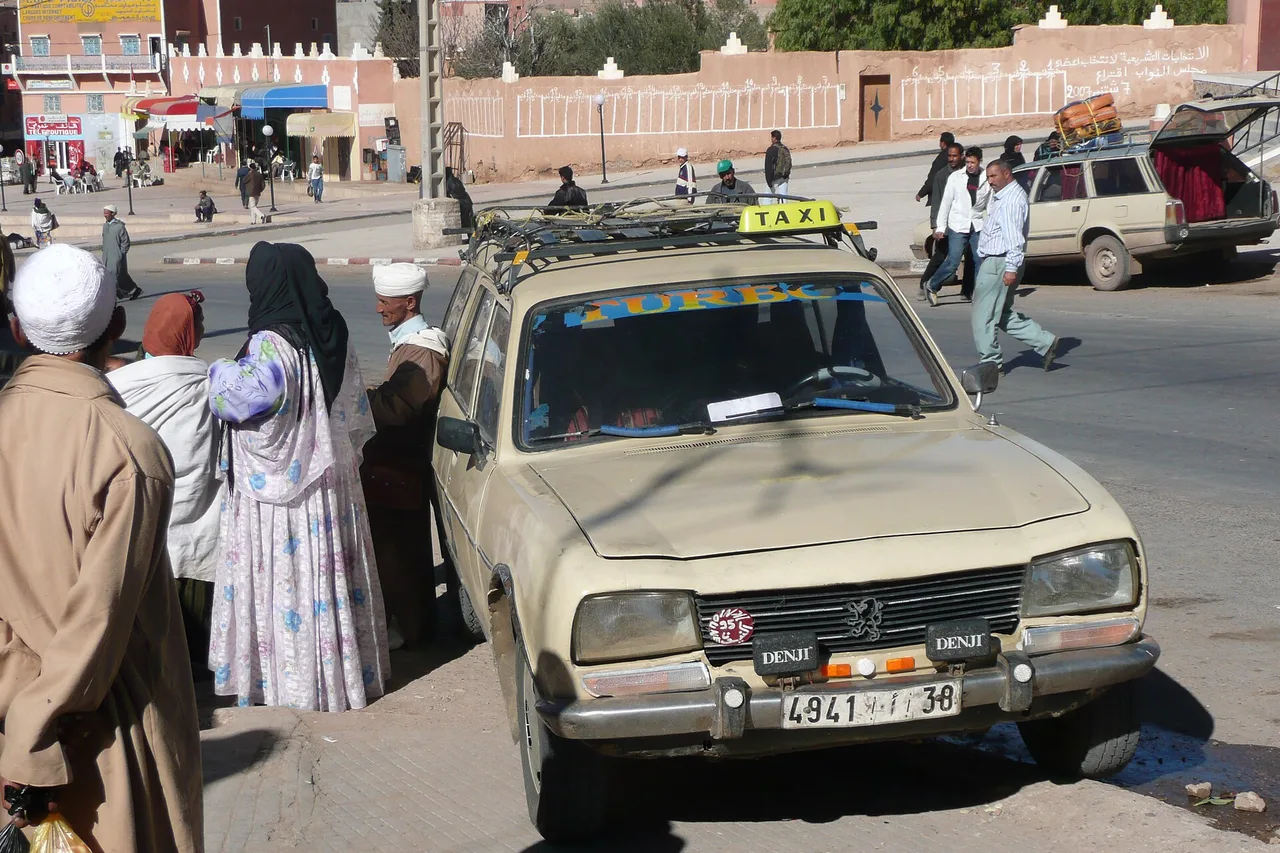
Morocco distinguishes two vehicles. Petits taxis work within a city, take three passengers and have a meter — their colour changes from town to town. Grands taxis, often old saloons, run between towns on a shared basis, with fixed seats and fixed fares.
The rule is one sentence: “meter, please” before getting in. If the driver refuses or says it is broken, you agree the price then and there, or you take the next taxi — there is always one. What you must not do is get in without settling it: once you have arrived there is no negotiation, only a figure announced.
Full guide: Marrakech airport transfer: taxi, bus 19 or pre-book?
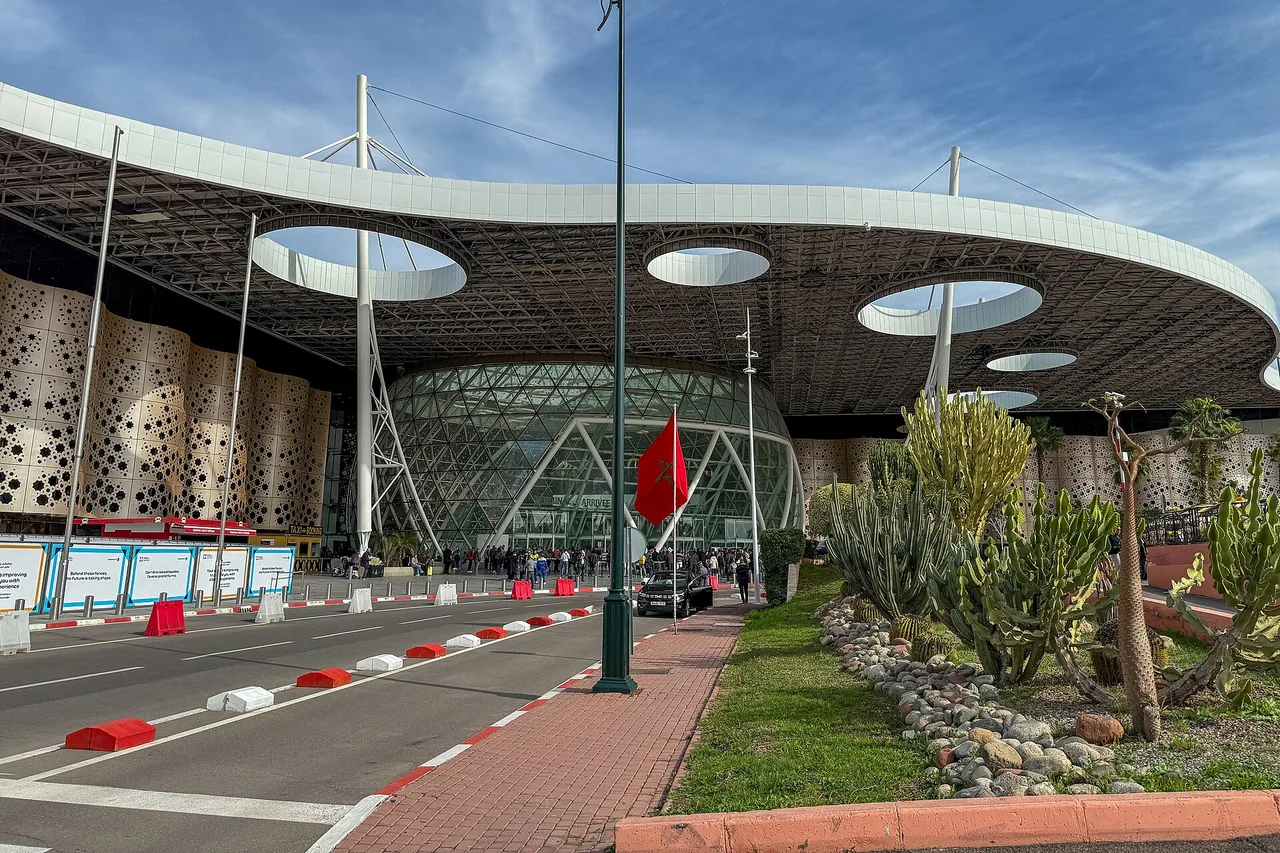
🟢 At the airport you have a choice, and the cheapest is not the link below. The big cities have a bus or train into the centre for a few dirhams — Casablanca and Marrakech in particular — and that is by far the most economical option if you travel light and by day. Airport taxis charge more and rarely negotiate. For a night arrival, with a family, or in a city you do not know, a transfer booked in advance removes the negotiation at the terminal door, at the cost of being fixed before you leave. That is the case that justifies it — not the others.
Haggling: where, how, and above all where not to
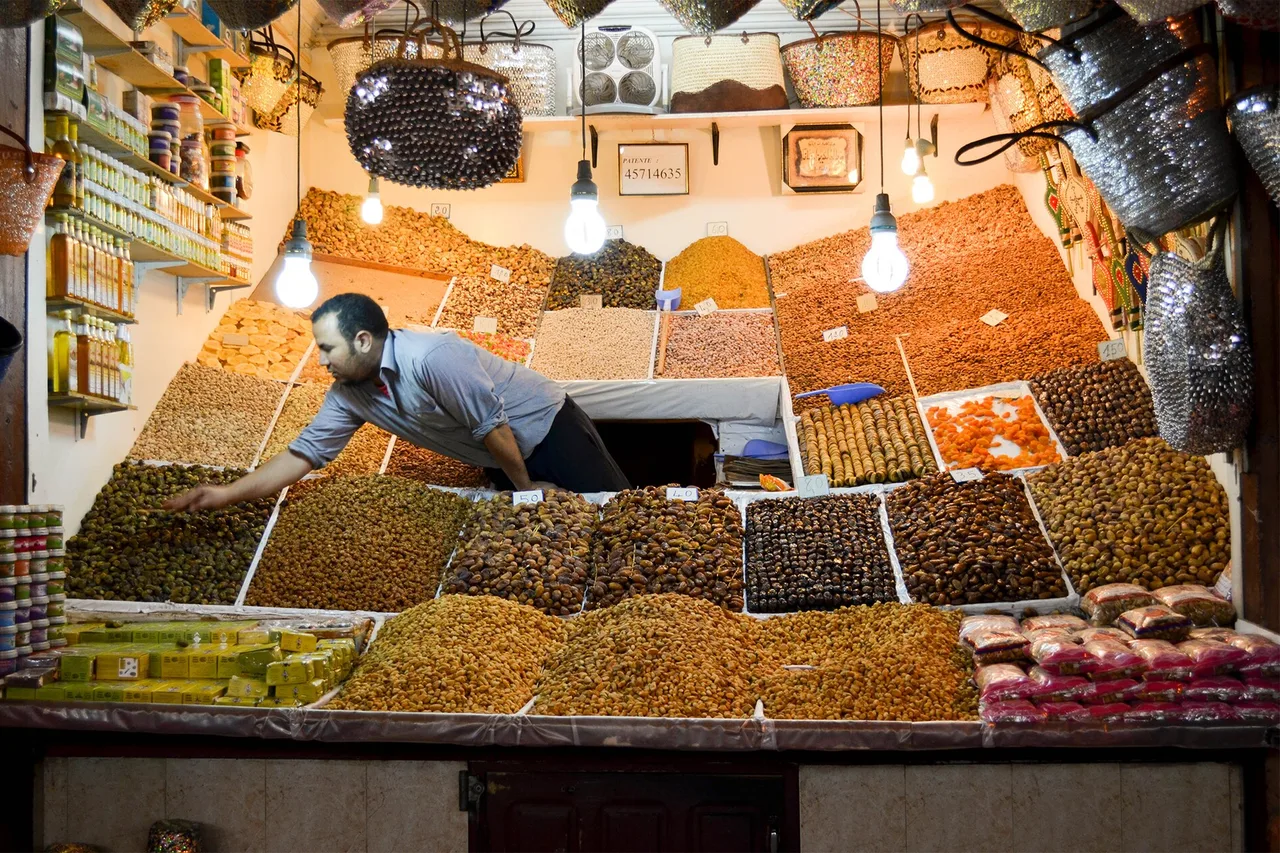
Haggling is not a game of dupes, it is a form of conversation. You just need to know when it is taking place.
You haggle where no price is displayed: souks, crafts, rugs, babouches, lamps, leather. You do not haggle in a supermarket, a pharmacy, a restaurant with a menu, a metered taxi, or a fixed-price cooperative. Trying is not shrewd: it is simply out of place.
Forget ready-made rules of the “offer half” variety. The opening price depends on the shop, the hour and the look of the customer, and there is no universal coefficient. The only useful question is: what is this object worth to me? You name that figure, hold it, and are prepared to leave. Leaving is in fact the only way to discover the real floor — if the seller lets you walk out, you were at it.
📌 A courtesy that changes everything: do not ask the price of something you have no intention of buying. Opening the discussion and then withdrawing because you “only wanted to look” is, from the seller’s point of view, a real waste of time — and a good deal of the irritation on both sides starts there.
Tipping: who, how much, when
It is everywhere, it is modest, and it is confusing mainly because nobody explains it.
Tipping is part of the ordinary working of many trades, often poorly paid. The orders of magnitude below are what is commonly practised; they move with the city and the standing of the place, and we give them as markers, not as tariffs.
| Situation | Custom |
|---|---|
| Café, tea | A few dirhams, or the rounding up |
| Restaurant | Round up, or 5 to 10 % if service is not included |
| Porter, delivery | Around ten dirhams |
| Guide or driver, full day | Considerably more: a whole day is acknowledged |
| Parking attendant | A few dirhams as you leave |
| Hammam | A tip for the person who looks after you |
📌 The parking attendant is not a scam. The men in high-visibility vests waving you back into a space are an informal trade established across the country: they genuinely watch the street. A few dirhams as you leave settles it, and refusing on principle goes down very badly for a trivial saving.
Full guide: Car Rental in Morocco: Prices, Deposit and Police Checks
Health, phone, and the practical things that reassure
Four concrete points, one of which is worth settling before you leave.
Water and food. In the cities, mains water is treated and drunk by residents; many travellers prefer bottled water for the first few days. The real source of trouble is not the tap but poorly rinsed raw vegetables, unpeeled fruit and diluted juices. Pharmacies are plentiful and well stocked, and the pharmacist will gladly advise; a duty pharmacy system covers nights and public holidays.
Emergency numbers. 19 for the police in town, 177 for the Royal Gendarmerie outside built-up areas, 15 for the emergency services and ambulance. Note them offline: it is precisely when you need them that you have no signal.
🟢 Staying reachable, starting with the cheapest option. Morocco is outside the European Union: your plan does not cover it and roaming is billed dearly. A Moroccan SIM card — Maroc Telecom, Orange, inwi — can be bought at the airport or in any shop for a few tens of dirhams with data, gives you a local number, and remains the most economical option: it is what we recommend as soon as the trip runs beyond a week. It does mean queuing with your passport on arrival. To land already connected — which matters when you arrive at night or must reach your accommodation straight away — an eSIM activated before departure avoids that step. It is a convenience, not a saving, and we would rather write it down.
Money. The dirham is a closed currency: you can barely obtain it abroad and you are not supposed to take it out. Change on arrival or withdraw locally, keep small notes and coins — tips, taxis and souks run on cash — and do not count on a bank card inside the medinas.
What genuinely warrants vigilance
The rest of this article is about irritations. These four points are of another order.
Snatch theft from scooters, on the busy streets of the big cities: phone away while walking, bag carried on the wall side. It is the only genuinely frequent risk that can injure you.
Cannabis. It grows in the Rif and you may well be offered some in Tangier or Chefchaouen. Possession is illegal in Morocco, and accepting exposes you to far worse than a fine: blackmail, extortion, real trouble with the police. There is no cautious version of this advice — refuse.
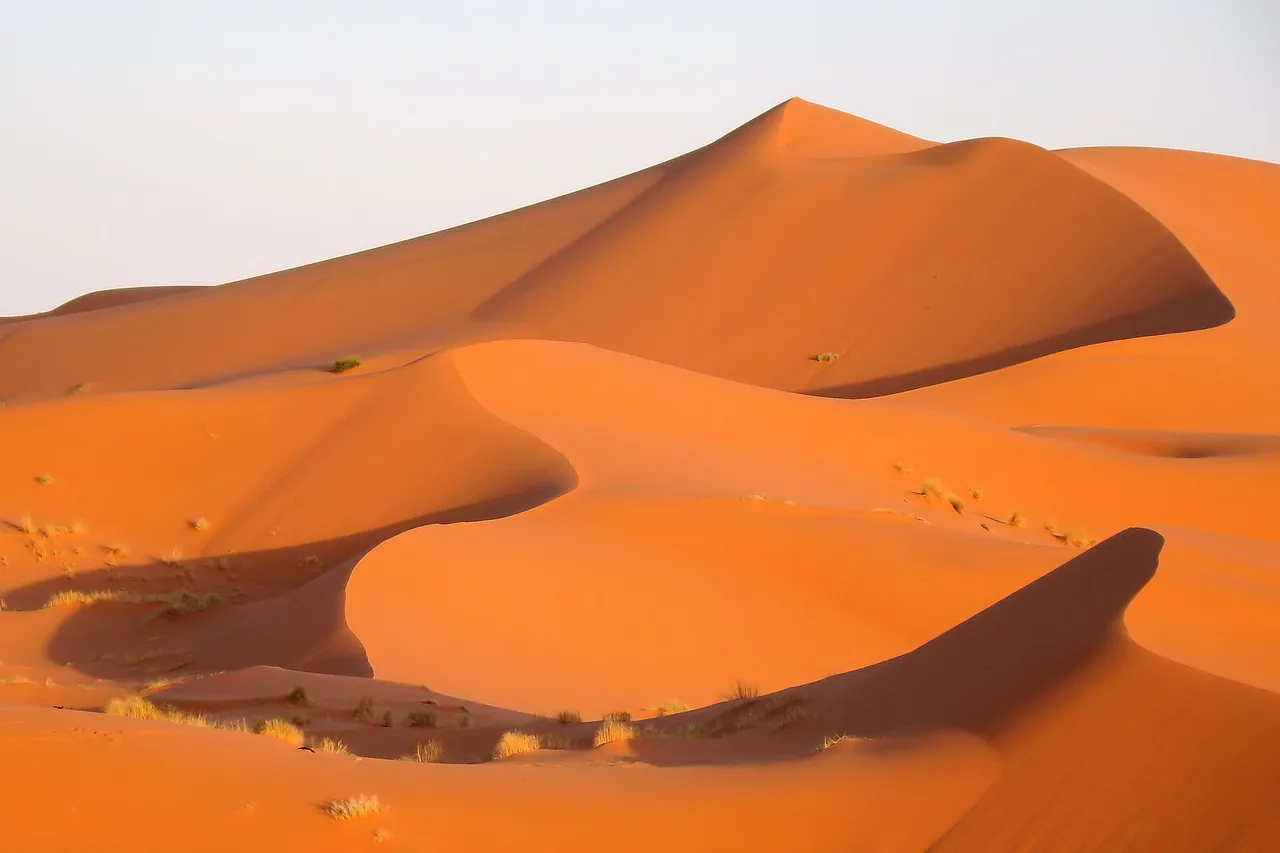
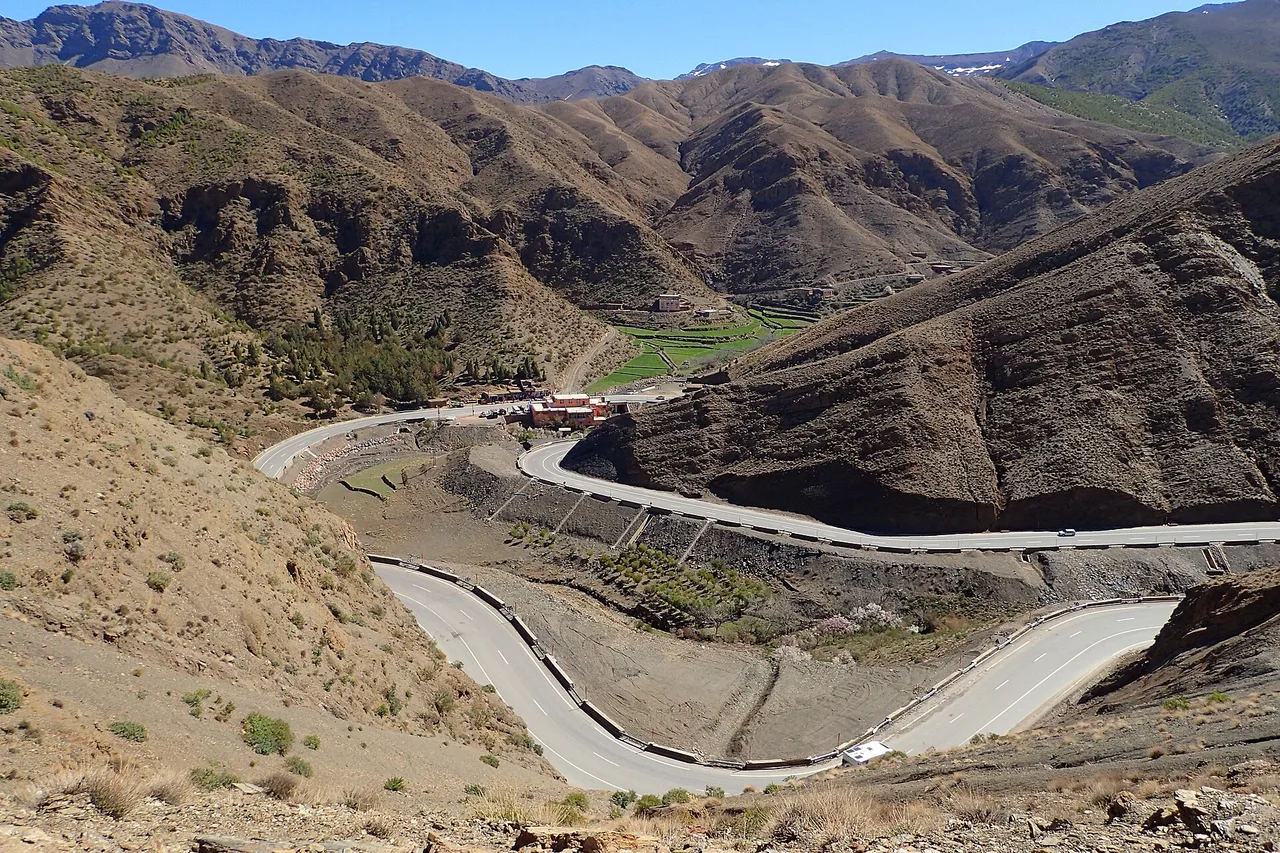
The mountains and the desert. The Atlas and the gorges are travelled with someone who knows them: flash floods there are brutal and temperatures drop at night. A Saharan piste is not driven in a hire car, and no insurance will cover you on one.
Respecting local custom. Do not photograph people without asking — it is a courtesy, and it heads off the request for money that follows. During Ramadan, eating, drinking or smoking in the street during daylight causes offence, even if nobody says so. None of this is a heavy constraint: it is the same consideration you would expect at home.
So, should you go?
Yes — and the useful preparation fits into three sentences, not three pages.
Nothing is free: an offered gesture is the start of a transaction, and you decline before it begins, not after. Help you seek out is reliable, help that comes to you is not: that settles the fake guides, the invented shortcuts and the markets that do not exist. The price is fixed beforehand: in a taxi, under a camera, in front of a rug.
Those three sentences strip the trip of its friction and leave the rest — which is considerable. Morocco is not a country to be wary of; it is a country where you need to know how to say no early and without anger. Once that reflex is acquired, the same insistence that exhausted you on the first day becomes what it really is: a form of conversation.