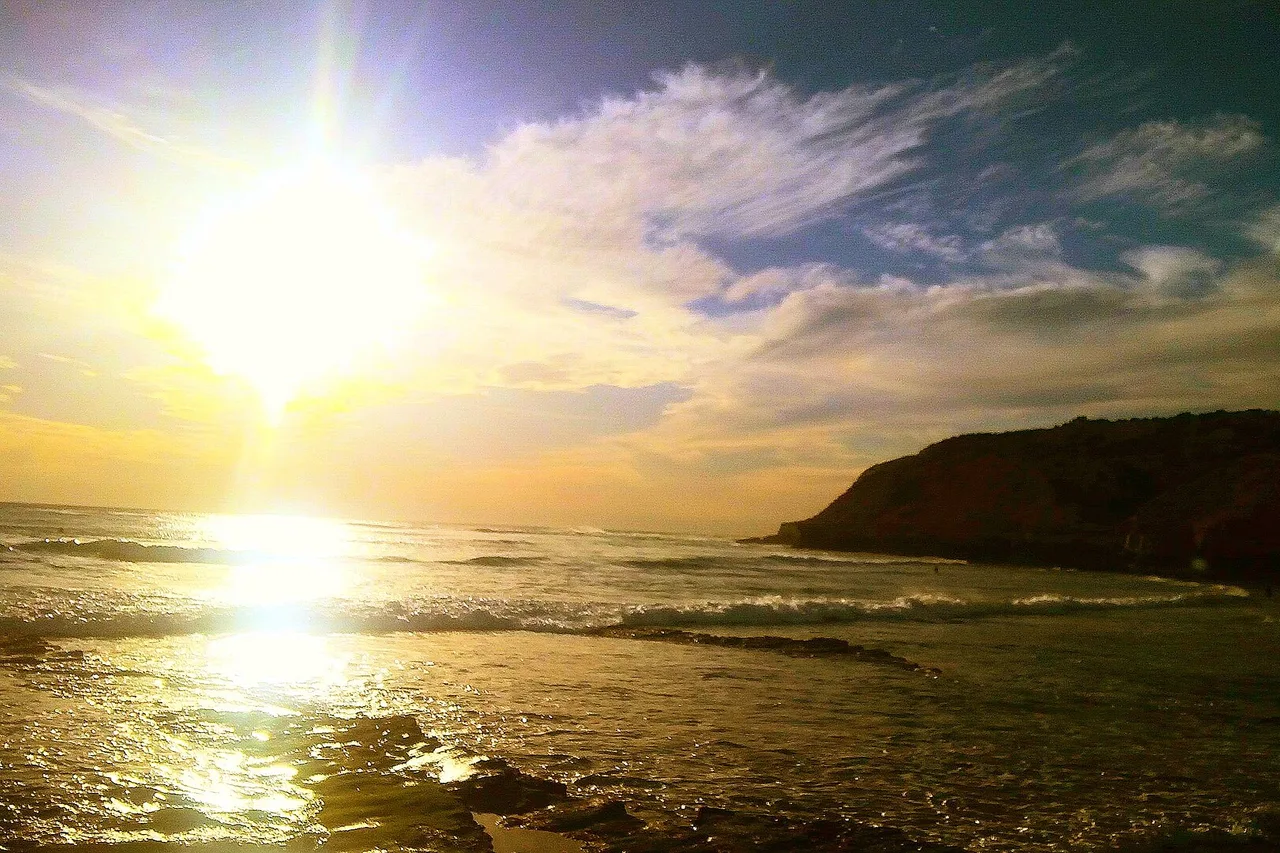
Taghazout is not visited like a beach, but like a series of rocky headlands. A dozen spots follow one another over some fifteen kilometres, almost all of them right-handers breaking over rock, and they are not interchangeable: Anchor Point is a winter wave for experienced surfers, while beginners learn on the sand of Banana Beach, five kilometres to the south. The rest comes down to three things: season, tide and time of day — the wind gets up in the afternoon almost every day.
There are two Taghazouts, five kilometres apart
The name now covers two very different places, and the brochure photos rarely come from the same one.
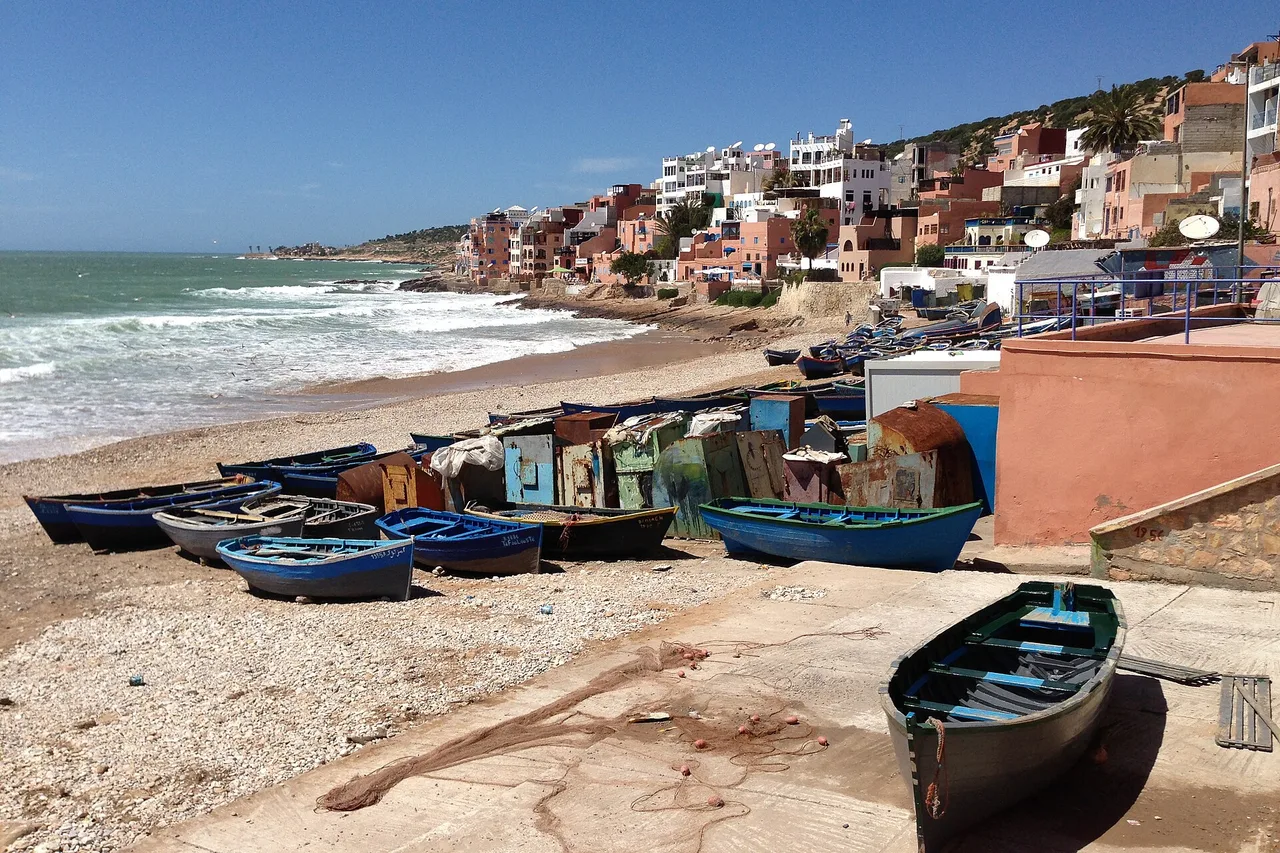
Taghazout village is a fishing town clinging to a headland, some twenty kilometres north of Agadir. Narrow lanes, blue boats hauled up on the sand, a mosque, orange-juice terraces: the population runs to a few thousand, and half the economy still comes out of the sea. Surfers arrived in the 1960s and 1970s, on the road to India; they never left.
Taghazout Bay is a purpose-built resort area, developed from the 2010s on the coast between Aourir and the village: chain hotels, a golf course, apartments, a promenade. It is clean, it is quiet, and it has almost nothing to do with the village. Many travellers book one believing they are getting the other.
| What you book | What it is | Who it suits |
|---|---|---|
| “Taghazout” | Fishing village, guesthouses, surf camps, lanes | Surfing, tight budgets, local life |
| “Taghazout Bay” | New resort area, chain hotels, golf, promenade | Comfort, families, a beach holiday |
| “Tamraght” / “Aourir” | Two villages in between, quieter | Beginners, long stays, low prices |
A coast of right-hand points, not a coast of beaches
This is the fact that explains everything else: here the wave does not break over sand, it peels along a rocky headland.
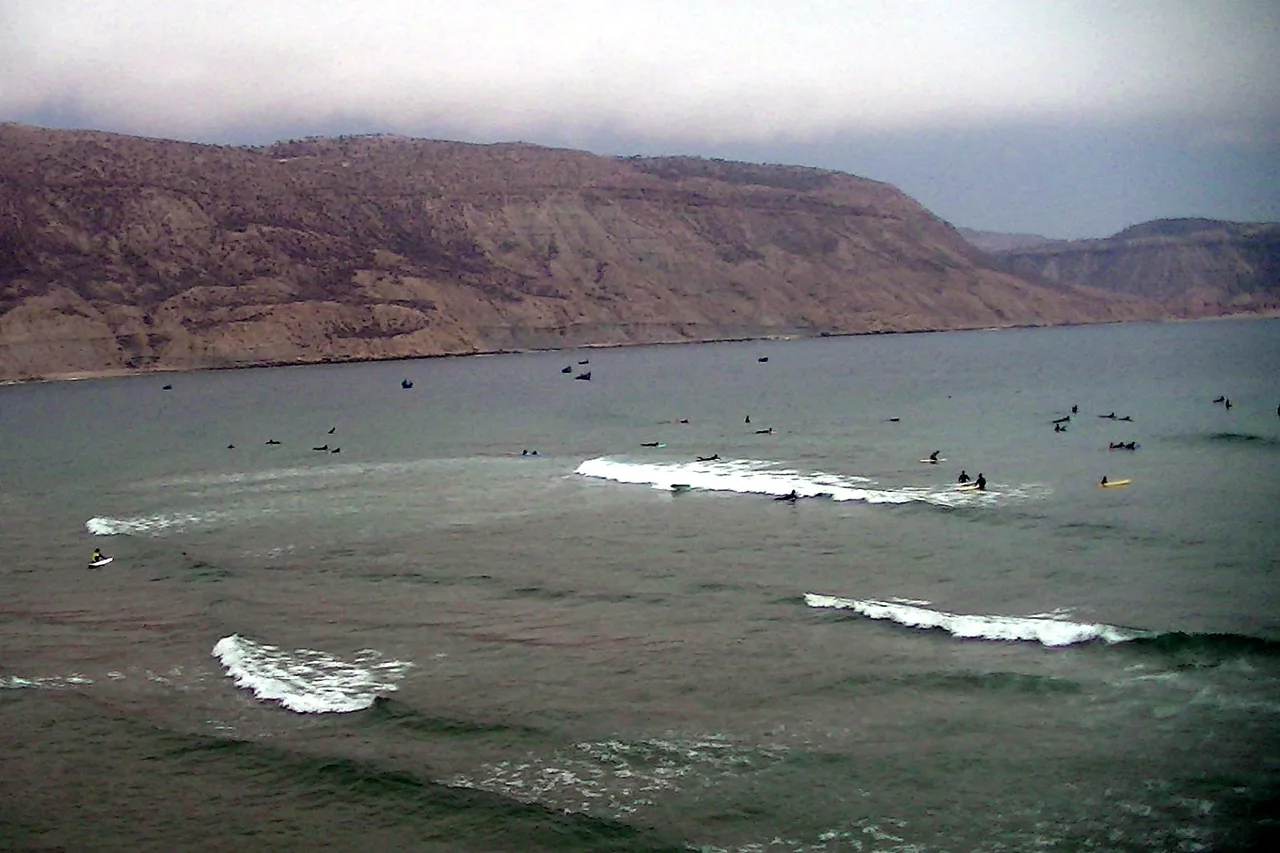
North Atlantic depressions send west to north-west groundswell towards Morocco. It meets a coast whose headlands run roughly along the same axis: instead of closing out, the swell wraps along the rock and peels to the right, sometimes for several hundred metres. Hence the string of points that made the region’s name — and hence, too, the fact that a day without westerly swell gives almost nothing.
| Spot | What it is | Level |
|---|---|---|
| Killer Point | Powerful right north of the village, long paddle out | Experienced |
| La Source | Right over the shelf, named after a freshwater spring | Experienced |
| Anchor Point | The benchmark right, very long on a good winter swell | Experienced, and very crowded |
| Hash Point | Right directly in front of the village | Intermediate |
| Panorama | Sand and rock south of the village, more forgiving | Intermediate |
| Devil’s Rock, Crocodile | Mixed bottoms between Taghazout and Tamraght | Supervised beginner |
| Banana Beach | Sand point at Aourir, slow and forgiving | Beginner |
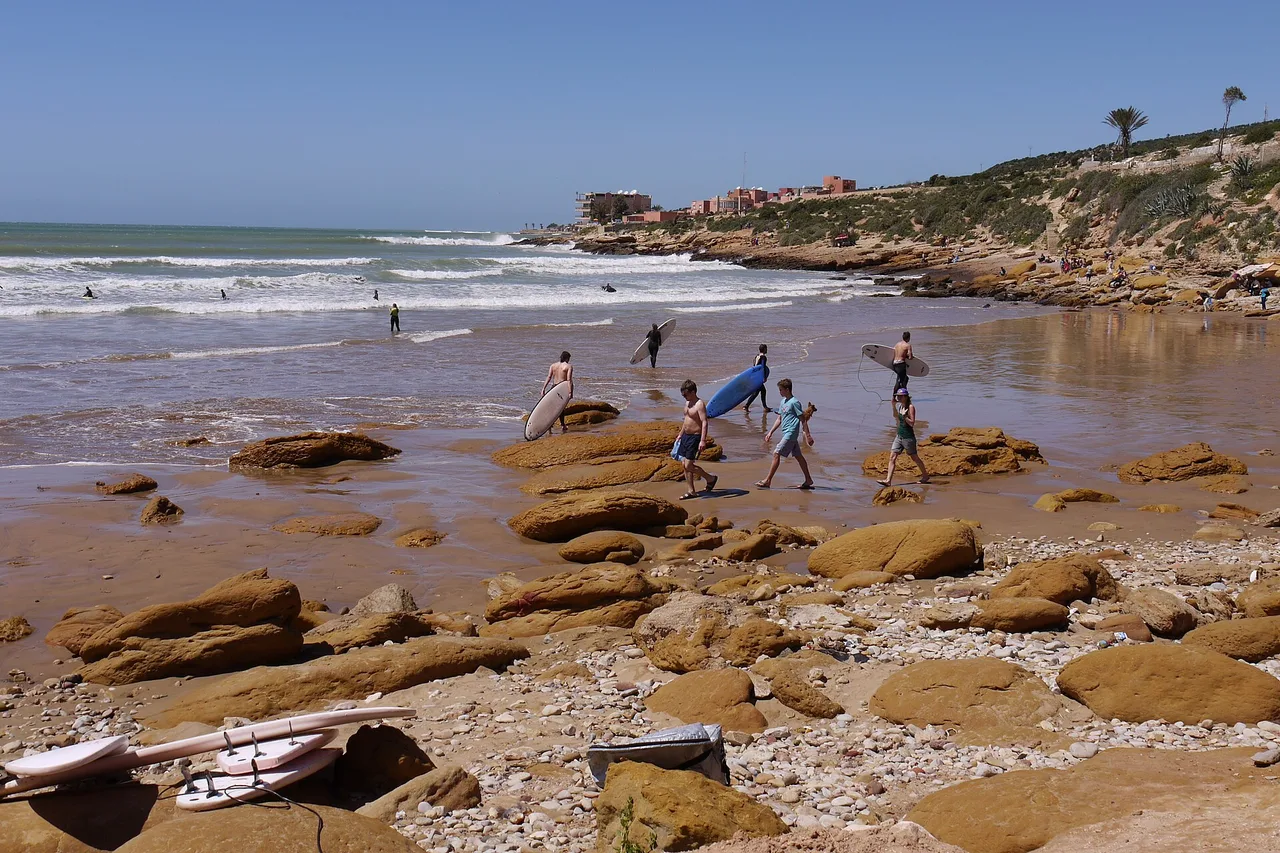
📌 Two practical consequences. First, you often enter the water walking across the shelf: booties save you from urchins and cuts. Second, each point has a tide that suits it and one that kills it — asking “what tide does it work on?” at any school in the village beats any chart.
The season: winter for swell, summer for learning
This coast runs on the opposite calendar to a beach destination.
From October to March, North Atlantic depressions do their work: swell arrives regularly, the points wake up, Anchor Point earns its reputation. This is the surf high season, and the only one in which you see the wave from the photographs. From May to September the swell is smaller and more spaced out: less interesting for an experienced surfer, but far more reassuring conditions in which to learn.
The climate works in the coast’s favour all year. The cold Canary Current and the upwelling of deep water temper the air: when Marrakech and the interior spend the summer above 40 °C, the coastal strip stays in the mid-twenties. That is why this coast can be visited in August without suffering, at a time when the rest of the country becomes hard going.
| Period | Swell | Water | Who for |
|---|---|---|---|
| October – March | Consistent, sometimes big | ≈ 17–19 °C | Experienced; supervised beginners on the sand spots |
| April – May | Easing, still decent | ≈ 18–19 °C | Good compromise, fewer people |
| June – September | Small and inconsistent | ≈ 20–22 °C | Beginners, family stays |
🟢 The advice worth all the others: go in early. The sea breeze gets up almost every day by mid-morning and chops the surface until evening. All else being equal, a 7 a.m. session and a 2 p.m. session are not the same wave. A 3/2 mm wetsuit covers the year; some add a thin hood in January, others switch to a shorty at the end of summer.
Learning here: definitely not at Anchor Point
This is the most common mistake, and it is paid for in fear and cuts.
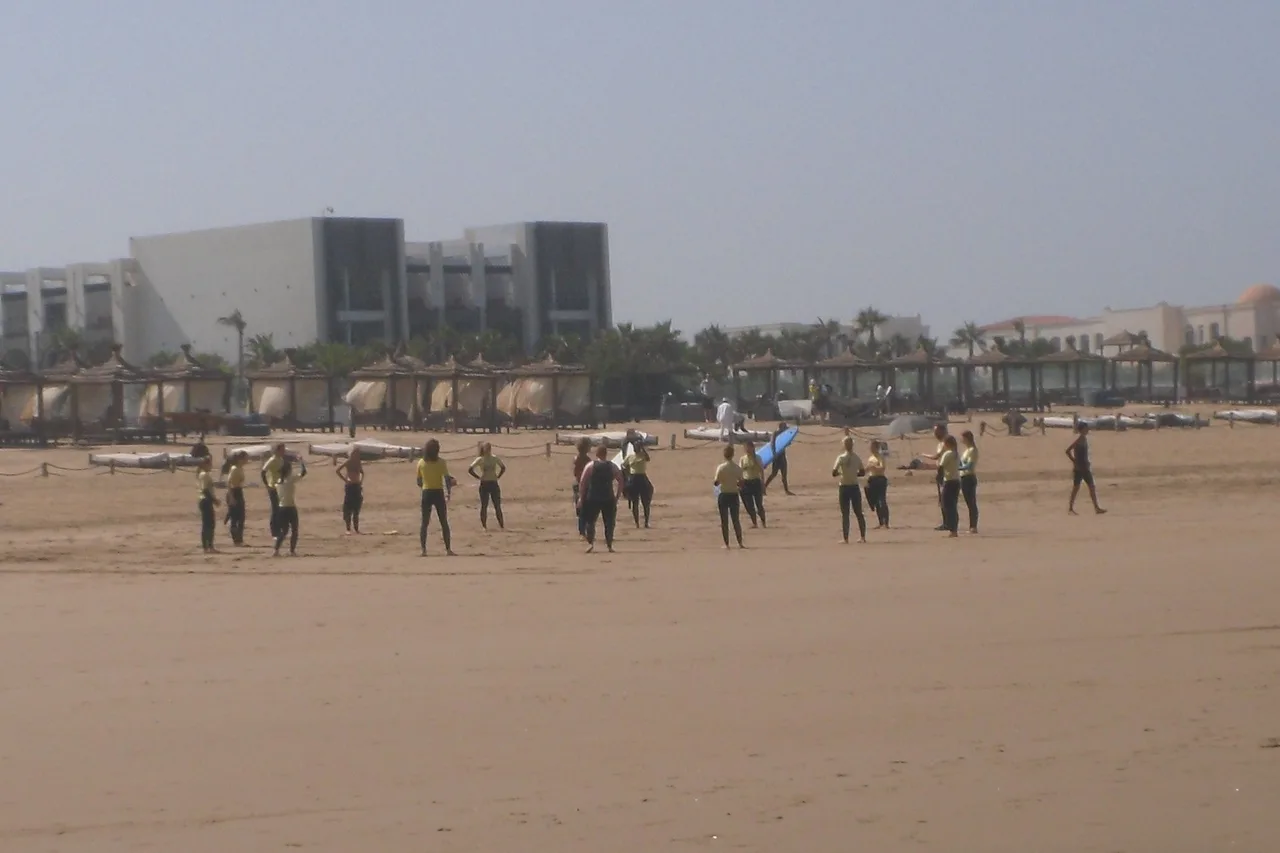
The waves that made Taghazout’s name break over rock, often run long, are often packed in winter, and carry currents that sweep along the point. A beginner has no business there — and no serious school will take one. Lessons are given on the sand bottoms to the south: Devil’s Rock, Crocodile, and above all Banana Beach at Aourir, a slow sand point that forgives a great deal.
The village has dozens of schools and surf camps, most of them selling week-long packages with accommodation, lessons, board and transport to the spot of the day. Prices move enormously with season, package and exchange rate: we do not publish precise figures we have not checked ourselves this season. Two markers do hold over time, though: day rental of board and wetsuit remains among the cheapest anywhere on the Atlantic, and a group lesson costs a fraction of its European equivalent.
📌 On boards, a simple calculation. Most airlines charge for a board bag in the hold, often heavily, in each direction. For a one-week trip, renting on the spot almost always works out cheaper than flying your own board — and spares you arriving with a broken one.
Where to base yourself: Taghazout, Tamraght or Aourir
Three villages along eight kilometres, three different trips, and a price gap that is not small.
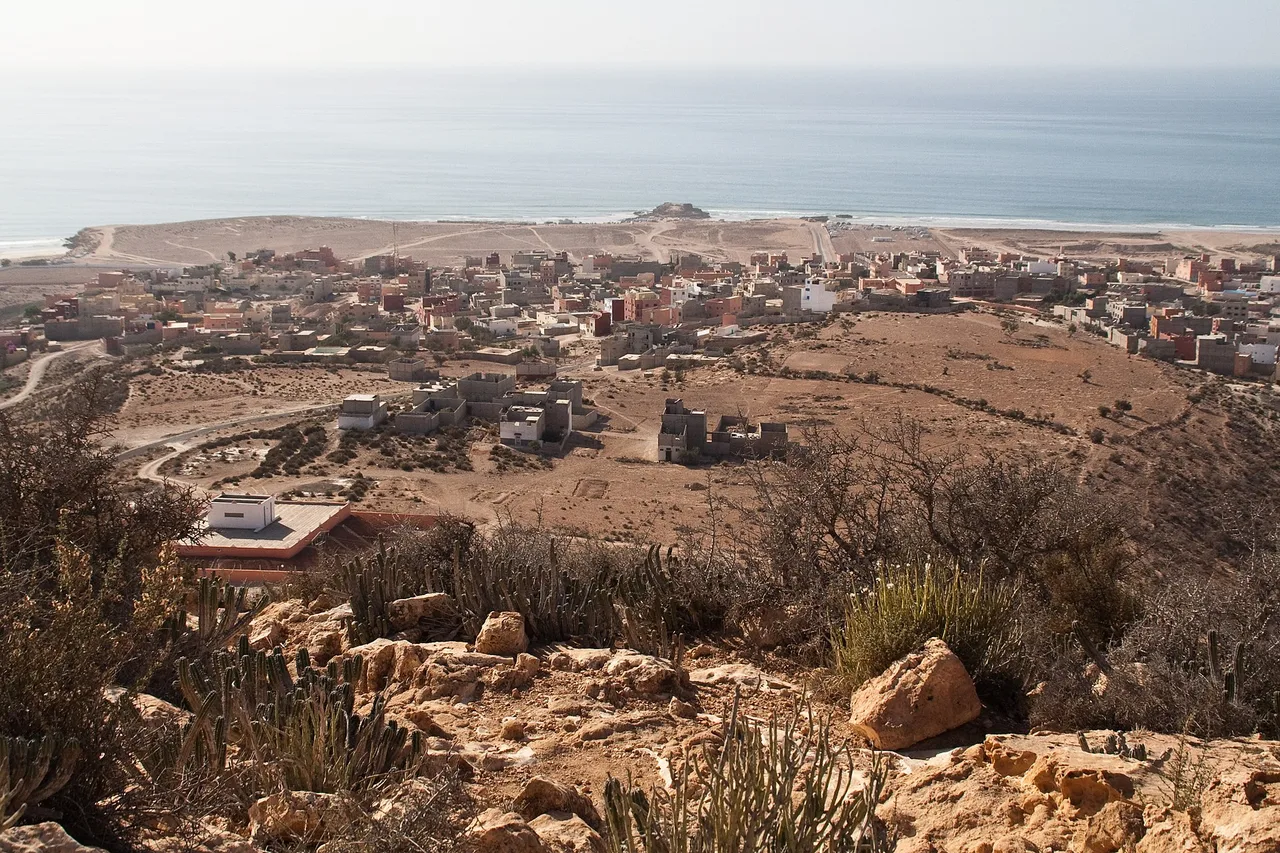
Taghazout puts the atmosphere and the points on your doorstep, but it is the most expensive of the three and the densest: in high season the village is full and the nights are noisy. Tamraght, five kilometres south, is quieter, noticeably cheaper, and sits right above the beginner spots — the compromise most long stays end up choosing. Aourir, a little further south again, is the most Moroccan of the three, the cheapest, and the best served by buses from Agadir; in exchange, you are ten minutes’ drive from the points.
Around it: Imsouane, Paradise Valley, Tamri
The village takes half a day. It is the coast around it that fills the week.
Imsouane, about 80 km north, is the great detour. Swell wraps side-on into a bay and unrolls for a very long time, very slowly: it is one of the longest and gentlest waves in this part of the Atlantic, and probably the only one in the region where an intermediate can stay on their feet until their legs give out.
📌 A caveat we publish as it stands. The informal buildings along Imsouane bay — cafés, camps, shops — were largely demolished by the authorities in early 2024, and the village has changed a great deal since. The wave itself has not moved. But what is on offer there was turned upside down and we have not verified its state this month: check what is open before booking a week there, rather than going on the strength of an article — including ours.
Paradise Valley runs inland from Aourir: a palm gorge with clear rock pools, some thirty kilometres from the coast. It is superb — and it is seasonal: the level depends entirely on the previous winter’s rain, and at the end of some summers the pools are low or dry. Ask before driving up.
To the north, the road runs on to Tamri, its banana plantations and Cape Rhir, through increasingly dry argan country. South of Agadir, Souss-Massa National Park holds one of the last wild colonies of Northern Bald Ibis — a bird seen almost nowhere else.
⚠️ The goats in the argan trees. On the Essaouira road the scene is often staged: animals placed in the tree and kept there for the photograph, in exchange for a tip. It does happen naturally, but not at a fixed hour by the roadside. Know what you are photographing.
Getting there, and getting around without a car
The airport is close, but the last leg has no obvious solution.
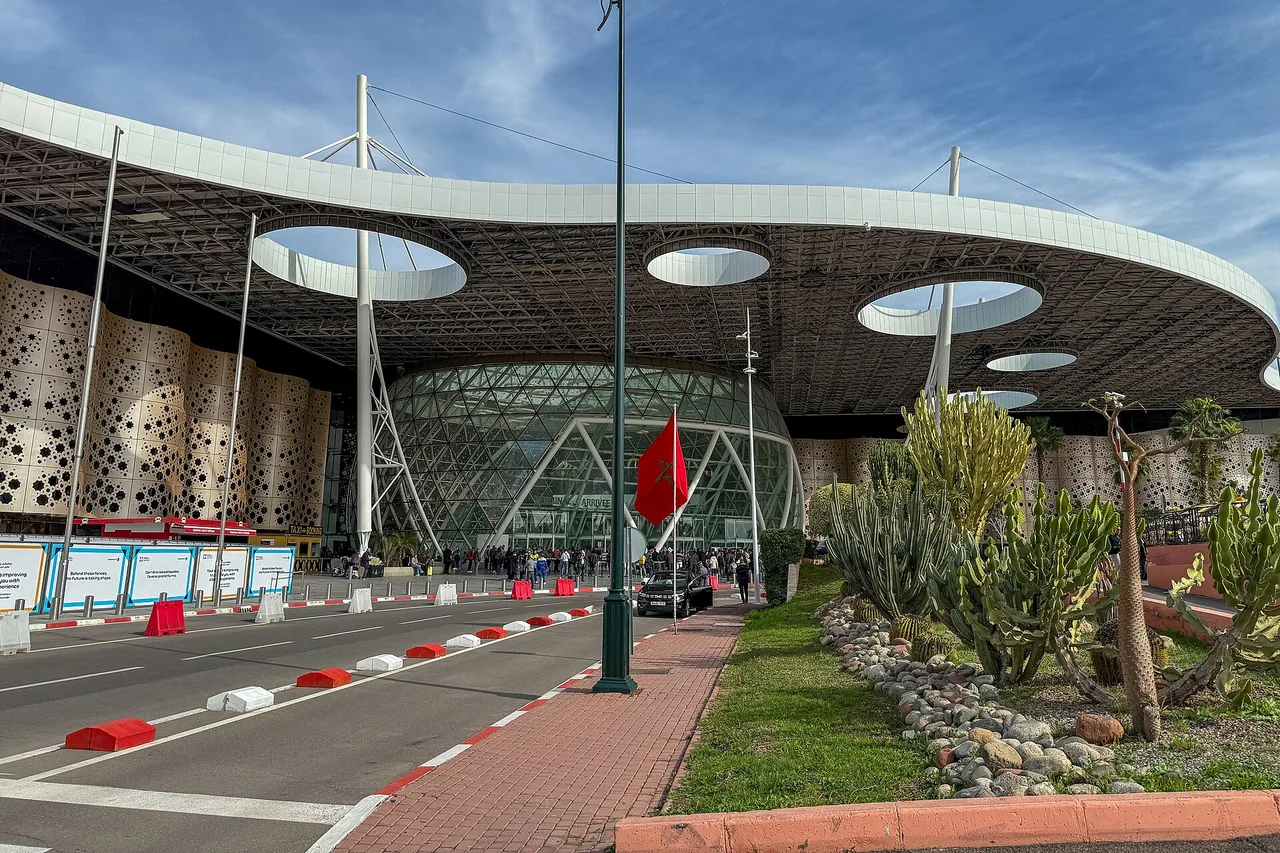
You arrive at Agadir – Al Massira (AGA), about thirty kilometres south-east of Agadir: allow 45 minutes to an hour to Taghazout. The railway does not come down this far — Marrakech is the southern terminus of the network — and you reach the Souss by road, on a CTM or Supratours coach from Marrakech, in three to four hours.
🟢 Once there, you do not need a car. A city bus links Agadir to the village, calling at Aourir and Tamraght, for a few dirhams; shared grand taxis run the same route continuously; and the schools drive their students to the spot of the day. It is by far the cheapest option.
The weak link is the airport-to-village leg: there is no direct service, you have to go via Agadir and change, which is slow with luggage and impossible with a board bag. A taxi negotiated on arrival does the job by day. For a night arrival, as a group or with equipment, a transfer booked in advance to Taghazout has the advantage of a fixed price known before you leave — that is the case that justifies it, not the others.
A car, meanwhile, is only justified for leaving the coastal strip: Imsouane on a swell morning, Paradise Valley before the crowds, Tamri at sunset. If that is your plan, comparing local rental agencies in Agadir on the total including insurance, rather than the headline price, avoids the nasty surprise at the counter. If you are staying between Aourir and Taghazout, keep your money: a car there is mostly a parking problem.
Full guide: Car Rental in Morocco: Prices, Deposit and Police Checks
The practical things you always find out too late
Four points that cost time or money when you have not planned for them.
The dirham is a closed currency. You can barely obtain it abroad and you are not supposed to take it out: change on arrival or withdraw locally. Taghazout has cash machines, but few of them, and they sometimes run dry at weekends — Agadir is safer for a large sum.
🟢 For your phone, the cheapest solution is a local one. Morocco is outside the European Union: your plan does not cover it and roaming is billed dearly. A Moroccan SIM card bought at the airport or in any shop costs a few dozen dirhams with data and gives you a local number — the most economical option, and the one we recommend for a stay longer than a week. It does mean queuing with your passport. To land already connected, or for a short trip, an eSIM activated before departure avoids that step; it is a convenience, not a saving.
Full guide: Morocco eSIM: networks, prices and airport SIMs compared
The village is dry, or nearly. Taghazout is a fishing town: you will find almost no alcohol there. Hotels in Taghazout Bay and supermarkets in Agadir do sell it. During Ramadan, many cafés close during the day and the rhythm of the village changes completely — not an obstacle, but something to prepare for.
⚠️ In the water, three concrete risks. The currents along the points, which run seaward and cannot be swum against — you let them carry you and come back in at an angle. The urchins and rock at low tide, hence the booties. And the crowd at Anchor Point in winter, which is a genuine danger factor: a wave shared by thirty people is not the same wave.
So who is this coast for?
An answer in three cases, because the answer is not the same for everyone.
If you already surf, come between October and March, stay in Taghazout or Tamraght, get up early and accept that you will share Anchor Point. If you are learning, come between May and September instead, stay in Tamraght or Aourir, and know that you will be surfing on sand to the south — which is good news, not a disappointment. If you do not surf at all, the coast still holds up: Imsouane, Paradise Valley, Souss-Massa and the mildest summer climate in Morocco are enough to fill a week, provided you are not looking for a seaside resort — it is not one, and that is precisely what makes it worth the trip.
Top-rated activities in Morocco, bookable online: