No vehicle reaches a riad’s door. The taxi leaves you at a named gate in the city walls, and the rest is on foot, through alleys, with your suitcases, towards an address no GPS resolves. And the “car-free” medina is not quiet for that: two-wheelers ride through it freely, often above 80 decibels. Here are the two criteria that really decide — and neither is charm nor distance from the centre.
The one criterion that really decides: the last three hundred metres
Before comparing districts, one thing listing photos never show: how you arrive, and with what in your hands.
The medina of Marrakech has been a UNESCO World Heritage site since 1985. It covers 600 to 700 hectares depending on the source — we publish the gap rather than pick one — and holds close to 170,000 inhabitants: it is the largest medina in Morocco and the most populous in North Africa. It was not drawn for cars, and it still is not.
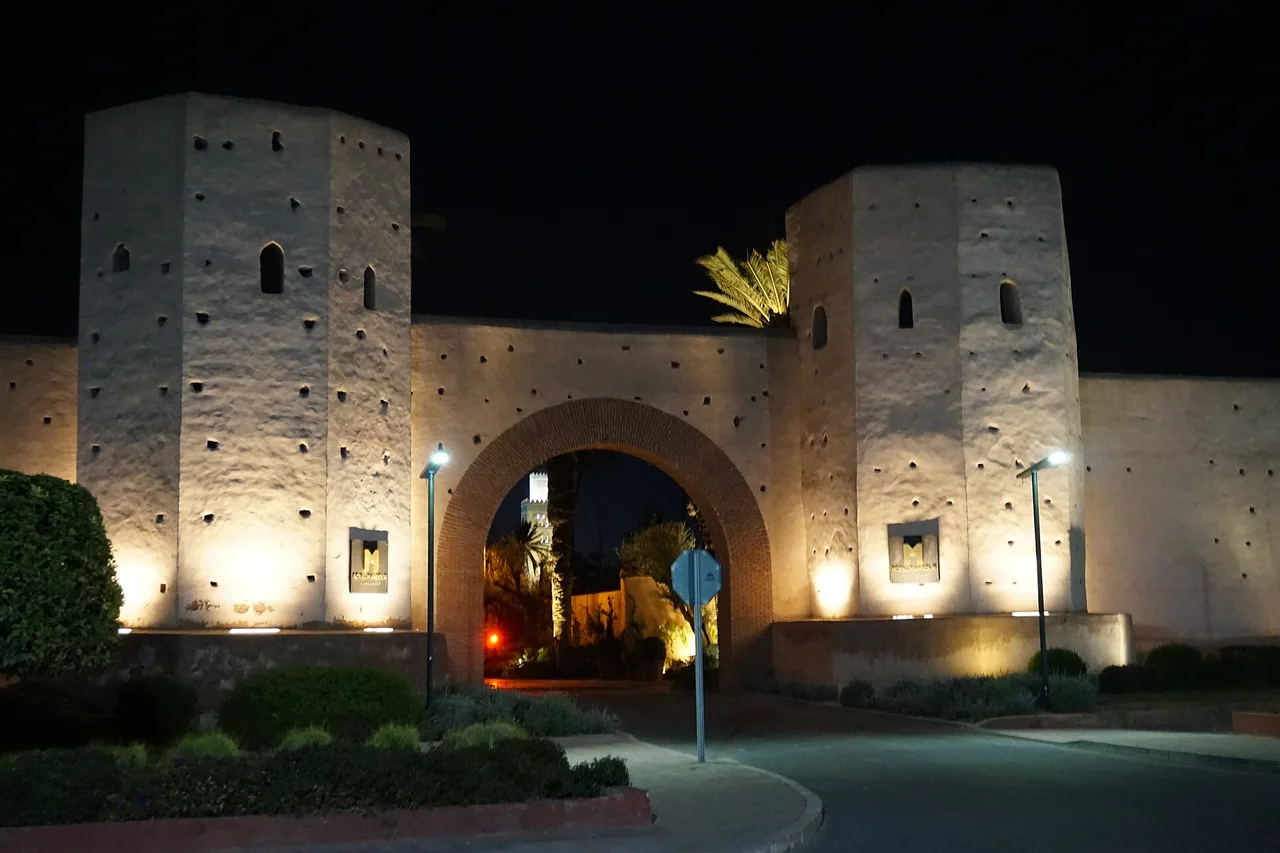
The practical consequence, and the only one that matters on the first evening: your taxi will not drop you outside your riad. It will stop at the nearest point a vehicle can reach, which means a gate in the walls with a name — Bab Doukkala, Bab Ftouh, Bab Agnaou. From there it is five to twelve minutes on foot through alleys.
Full guide: Marrakech airport transfer: taxi, bus 19 or pre-book?
Three consequences, in the order they will reach you:
| What you assume | What happens |
|---|---|
| “I’ll give the driver the address” | Your address is a derb number — a dead-end lane. The driver will know the gate, rarely the house. |
| “It’s only three hundred metres” | Three hundred metres of alleys, at night, in a maze you are discovering, is not three hundred metres of pavement. |
| “I have wheeled suitcases” | They do not roll on that ground. They get carried. |
🟢 Start with the two free answers — they exist, and they are almost always enough. ① Ask the riad to send someone to the gate: nearly all of them do, often with a handcart for the luggage, and usually at no extra charge — you only have to give your arrival time. ② The grand taxi remains the usual local answer from the airport, price agreed before you get in. Only if you land late, with children or a lot of luggage, does a transfer agreed in advance with a fixed drop-off point earn its price: you know who is waiting, exactly where they stop, and what you pay.
“Car-free” does not mean “quiet”
This is the costliest misunderstanding about Marrakech, and it rests on one badly chosen word.
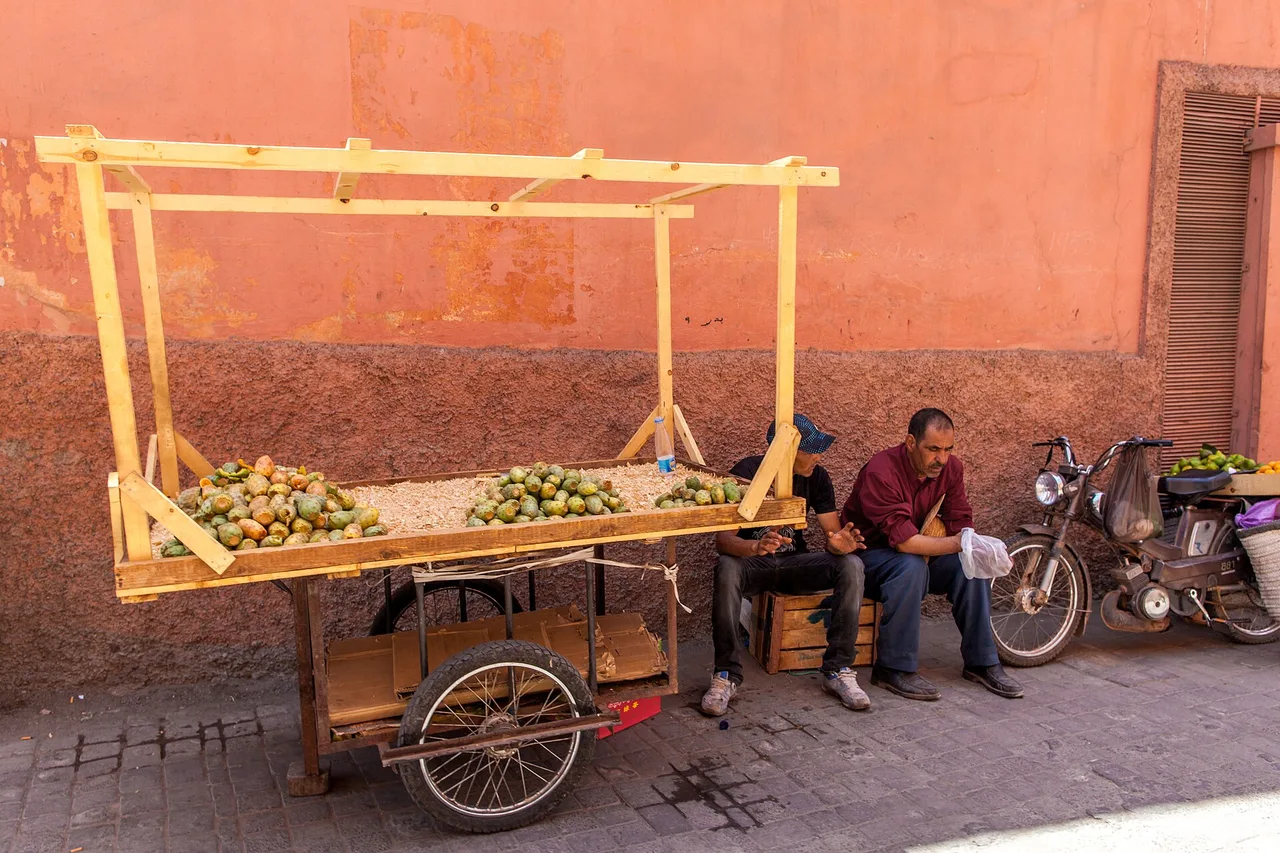
The medina is closed to cars. It is not closed to two-wheelers, and that is not a detail: they ride through it freely, including on pavements and paved streets, with no observed speed limit. Most exceed 80 decibels, and many run with a tampered exhaust.
To place that figure, here is what the World Health Organization recommends for traffic noise:
| Reference | Level |
|---|---|
| WHO recommended threshold, daytime | 53 dB |
| WHO recommended threshold, night | 40 dB |
| A two-wheeler in a medina alley | over 80 dB |
Not every alley is affected. Some are barred to motorised vehicles or reserved for residents, and most souk arteries are closed to cars. But scooters pass through the wider alleys — and the easiest riads to reach, the ones praised precisely for being “steps from a drivable street”, are exactly the ones that open onto those alleys.
Full guide: Car Rental in Morocco: Prices, Deposit and Police Checks
📌 What to take from this, and it is not “avoid the medina”. It is that “pedestrian” describes the cars, not the noise — and that the question to ask a riad is not “are you quiet?”, which nobody answers no to, but “does my room face the courtyard or the alley?”. A house turned inward protects very well: that is its architectural reason for being. You just have to be on the right side of the wall.
Riad, dar: what you are actually booking
The two words are used as synonyms in listings. They are not.
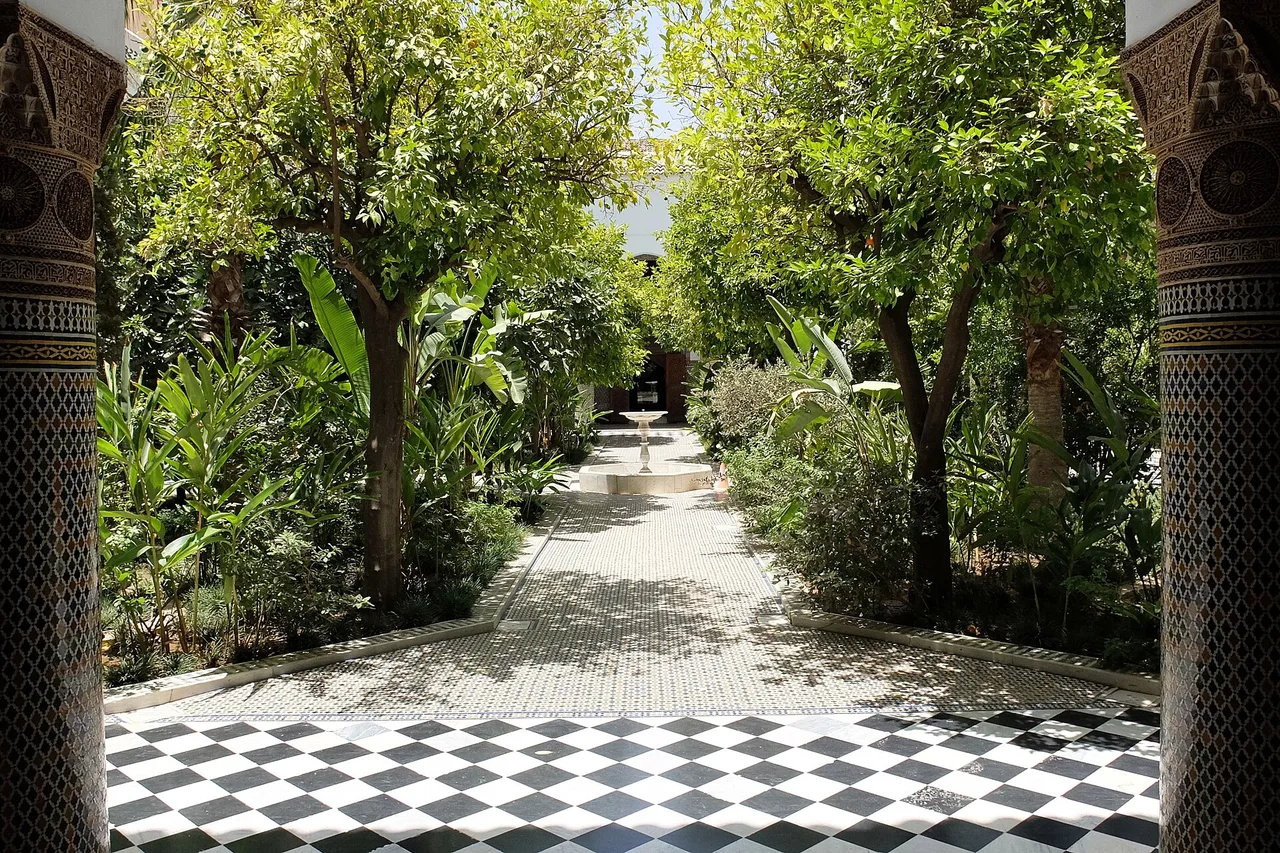
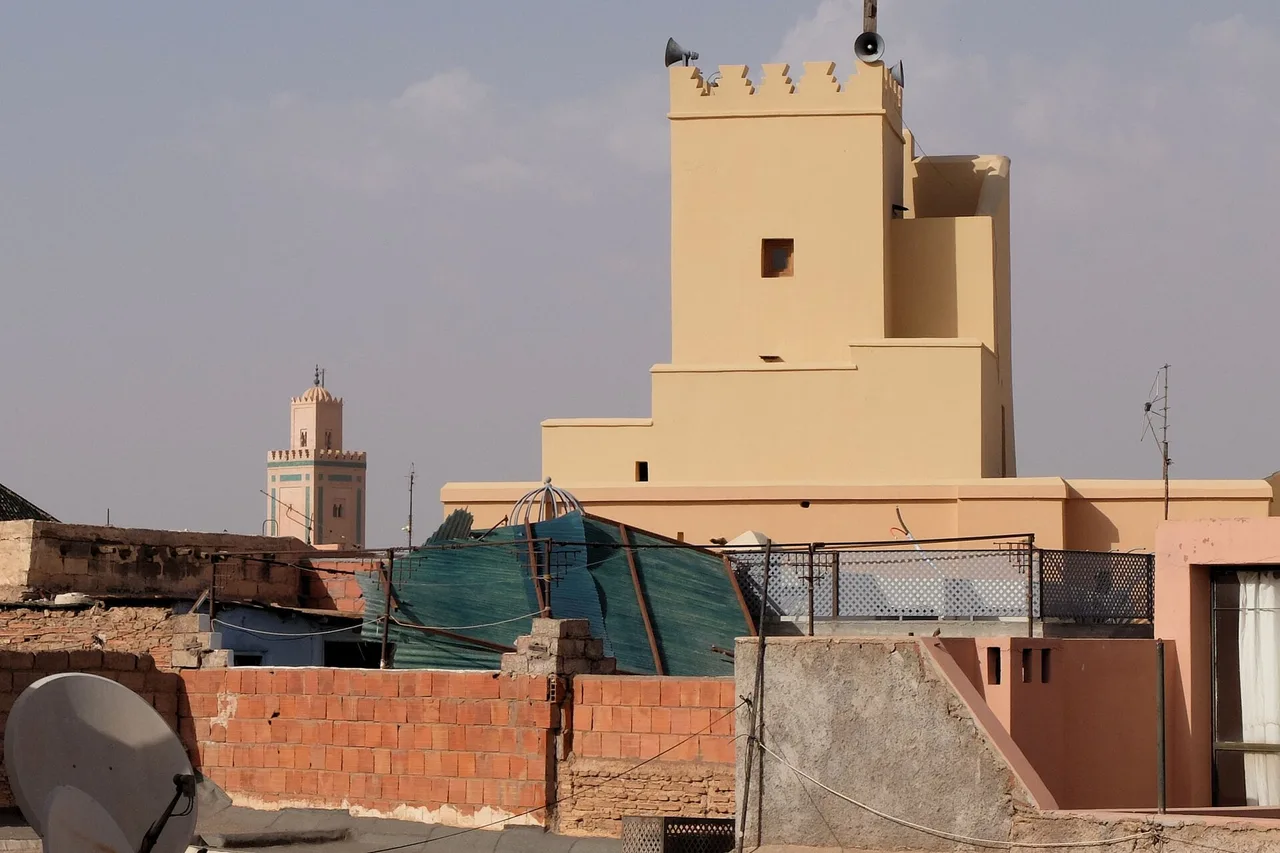
A riad is a house built around a genuine planted garden: the rooms turn inward, there is zellij tilework and a rooftop terrace. A dar — “house” in Arabic — does have a central courtyard, but not a full garden: most often a tiled patio, a light well, a plain court. All riads are dars; not all dars are riads.
That architecture explains, at a stroke, three things travellers discover on site:
① It is cool, and that is deliberate. A house that opens only onto its courtyard, with thick walls and water at the centre, keeps the heat at bay without air conditioning. That is the riad’s real summer argument, and it is a solid one.
② It is dark, by the same mechanism. No window on the street means no window on the street. Ground-floor rooms in a riad are often dim at midday. That is not poor upkeep, it is the principle.
③ The terrace is the real living room. That is where breakfast happens and where the evening ends, and it is what to look at in the photos before booking — more than the bedroom.
Guéliz: two kilometres, and everything those two kilometres change
Many travellers picture Guéliz as a suburb. It starts just outside the walls.
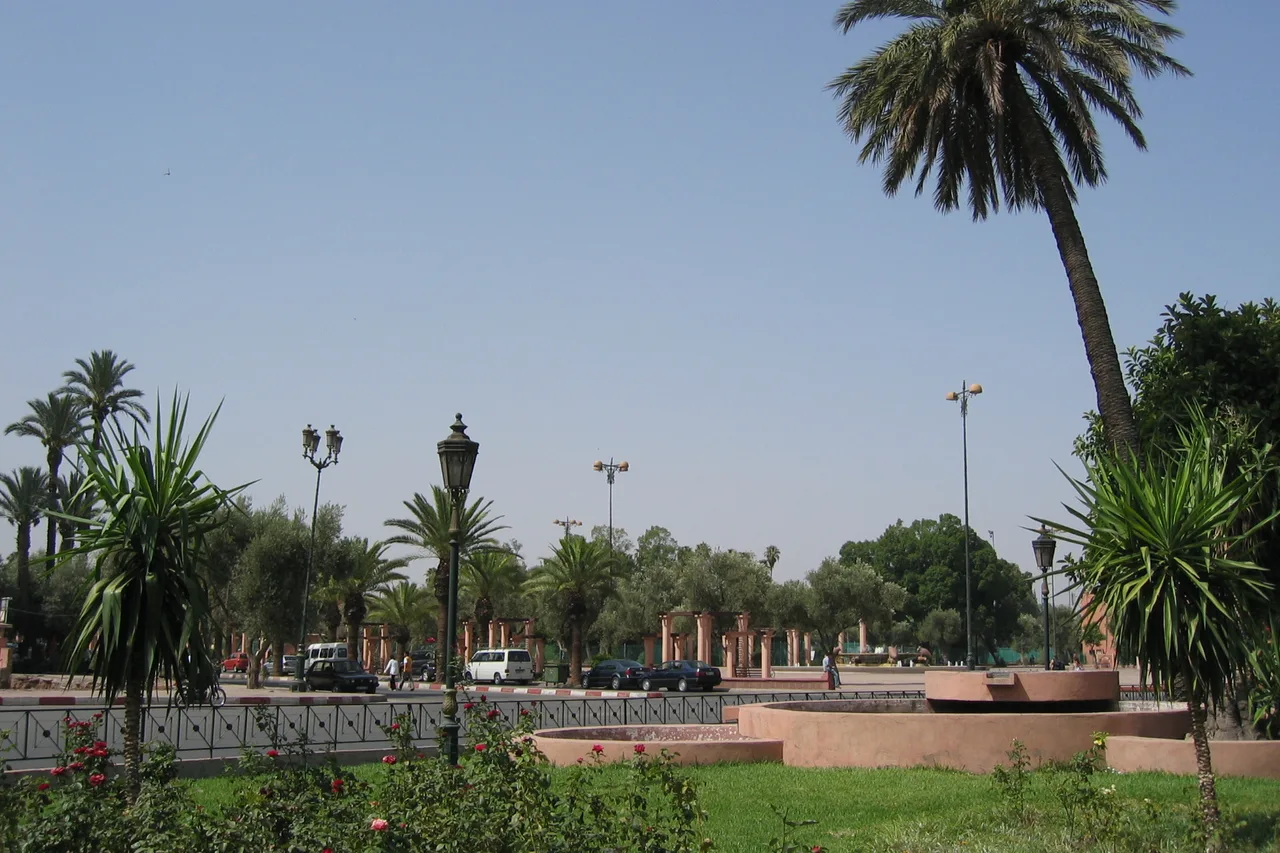
Guéliz is the new town, laid out from 1913: Captain Landais was its chief architect from that date, Henri Prost later adding only supplements to what had already been built. The protectorate’s planning charter fixed a maximum height of three storeys and imposed the ochre colour — which is why the district looks like no suburb anywhere and has kept its outline. Its axis is the former Avenue Charles Mangin, running from the Koutoubia to Jbel Guéliz, renamed Avenue Mohammed V in 1957.
| Measure | Value |
|---|---|
| By road | 2 km |
| From the Avenue Mohammed V area | 1.9 km |
| On foot | 15 to 20 minutes |
What you gain: the car stops at the door, there are lifts, parking, pavements, and you come home at one in the morning without crossing a maze. What you lose: you are not sleeping in the setting you came for, and you will do those two kilometres several times a day.
📌 Guéliz’s only real drawback is not the distance, it is the season. Two kilometres walk very pleasantly in the evening. In the hot hours of summer they are done by petit taxi, and that belongs in the budget as much as in the planning.
What is not in the price you are comparing
Three items that appear on no comparison site, two of which depend on the district you choose.
① The tourist tax, due per person per night, paid on the spot. Its existence is certain; its amount is disputed between sources, and we publish both readings rather than choose one:
| Source | Amount per person per night |
|---|---|
| Reading A — guest house | municipal tax 15 MAD + tourism promotion 11 MAD = 26 MAD |
| Reading B — scale by classification | 10 to 25 MAD (furnished flats at the bottom, upmarket riads at the top) |
| What both sources note | each commune may revise its scale by decree |
For two people over a week that comes to between 10 × 2 × 7 = 140 dirhams and 26 × 2 × 7 = 364 dirhams. It will not decide your trip — but it is a sum that appears as you leave, and it is better to have expected it. Ask your host for the exact amount before you arrive: they collect it, and only they know the scale applied to their establishment.
② Parking, if you have a car. It does not go into the medina. It will spend your nights in a guarded car park outside the walls, and you will walk both ways. In Guéliz the question does not arise. That is not a reason to rent a car for Marrakech itself — walking and petits taxis work very well there — but it is a reason to choose your district differently if you have one for the rest of the trip.
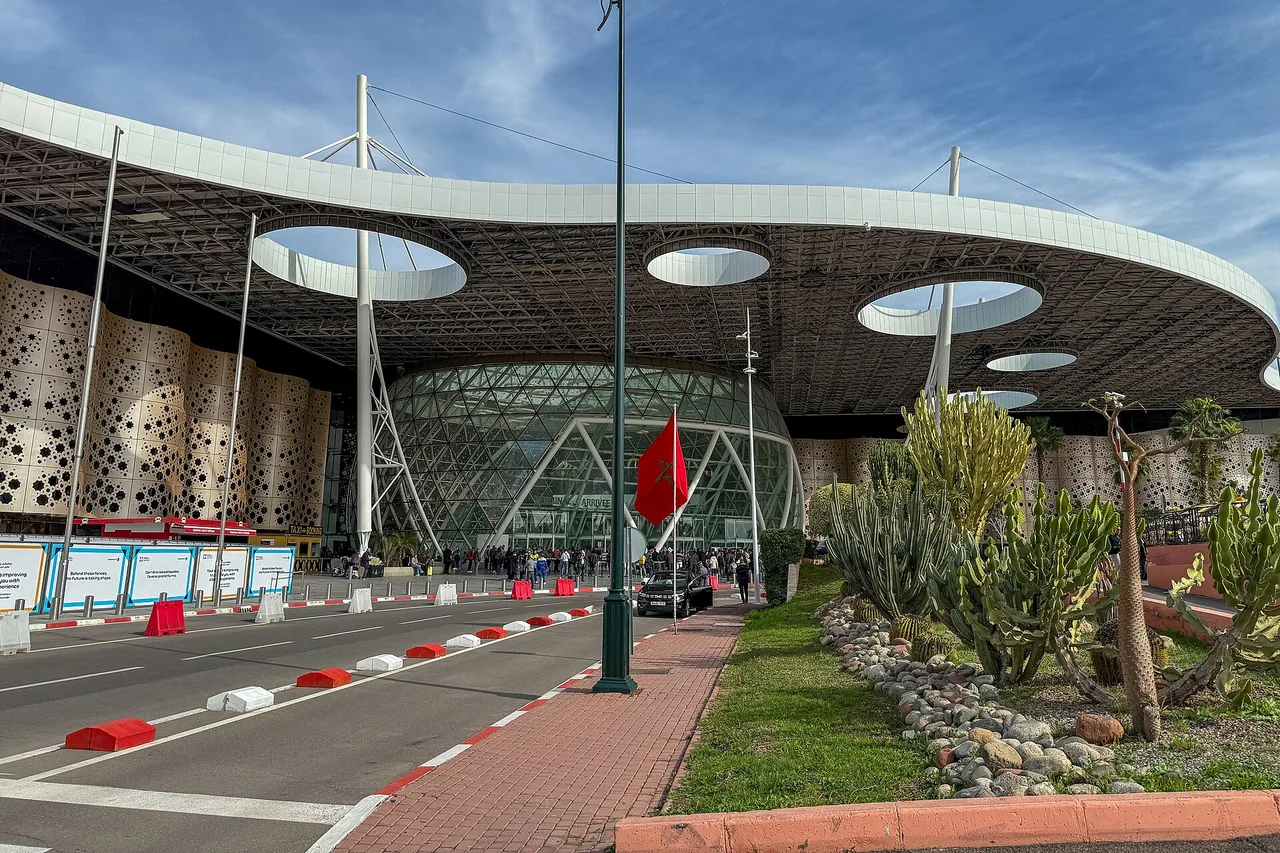
③ The airport runs, and the building site that goes with them. Menara is about 6 km south-west of the centre, that is 15 to 20 minutes by taxi to the medina: one of the closest airports to its own city anywhere. We deliberately publish no firm fare: sources range from 70 to 200 dirhams for the same run, which is not a measurement but a negotiating range. Agree the price before getting in, as residents do.
📌 And the terminal is under construction. Menara is going to 142,000 m² and its capacity from 9 to 16 million passengers a year, in a 220-million-dollar project awarded to Jet Contractors, under the 2030 World Cup infrastructure programme. Two high-speed rail stations are planned for Marrakech, one of them at the new airport. In practice, until then: allow margin on arrival and on departure.
The table that settles it, by situation
There is no good district in the absolute. There is your arrival, your luggage and your sleep.
| Your situation | What will suit you |
|---|---|
| First visit, two or three nights, no heavy luggage | Medina — it is what you came for, and the three-hundred-metre constraint is paid once |
| Arriving at night, or an early-morning flight | Guéliz — or a riad very close to a gate, with the welcome agreed in advance |
| With small children, a pushchair | Guéliz — alleys and steps are not negotiable with a pushchair |
| Light sleeper | Medina possible, but a courtyard-facing room is essential, never on the alley |
| Difficulty walking, heavy suitcases | Guéliz — the vehicle stops at the door |
| You have a rental car | Guéliz or the new town — otherwise a guarded car park outside the walls, every night |
| A week or more | Both: a few nights in a riad, the rest in the new town — the best of each, and nobody suggests it |
In short
If you were to remember only five things:
① No vehicle reaches a riad’s door: the taxi stops at a gate in the walls, then it is five to twelve minutes on foot through alleys. ② “Car-free” does not mean “quiet”: two-wheelers pass freely, above 80 dB, when the WHO recommends 53 by day and 40 at night — ask for a room facing the courtyard. ③ Guéliz is 2 km from Jemaa el-Fna, fifteen to twenty minutes on foot, not a suburb. ④ The tourist tax is paid on the spot, per person per night, and appears on no comparison site: ask your host for the exact amount. ⑤ Over a week the real luxury is to do both — a few nights in the medina, the rest where the car stops at the door.