The Yucatán has thousands of cenotes, and the first mistake is assuming they are all much the same. Between the open sinkhole in the middle of Valladolid at 60 pesos and the developed cave on the Riviera Maya at 400, there is a sevenfold difference in price, two hours of driving, and above all two experiences with nothing in common. Here is which ones are worth the detour, what they actually cost in 2026, and when to turn up so you are not queueing.
Three families of cenote, and what that changes on the day
A cenote is a collapse of the limestone roof above a freshwater aquifer. Depending on how old that collapse is, you get three very different things — and that distinction, far more than any ranking of the “most beautiful”, should drive your choice.
The open cenote looks like a small lake ringed by cliff, entirely under the sky. The collapse is ancient, vegetation has taken over, and roots sometimes hang ten metres down. You swim in full sun, the water is warmer, and there is enough light to actually see the bottom. It is the most photogenic form late in the day.
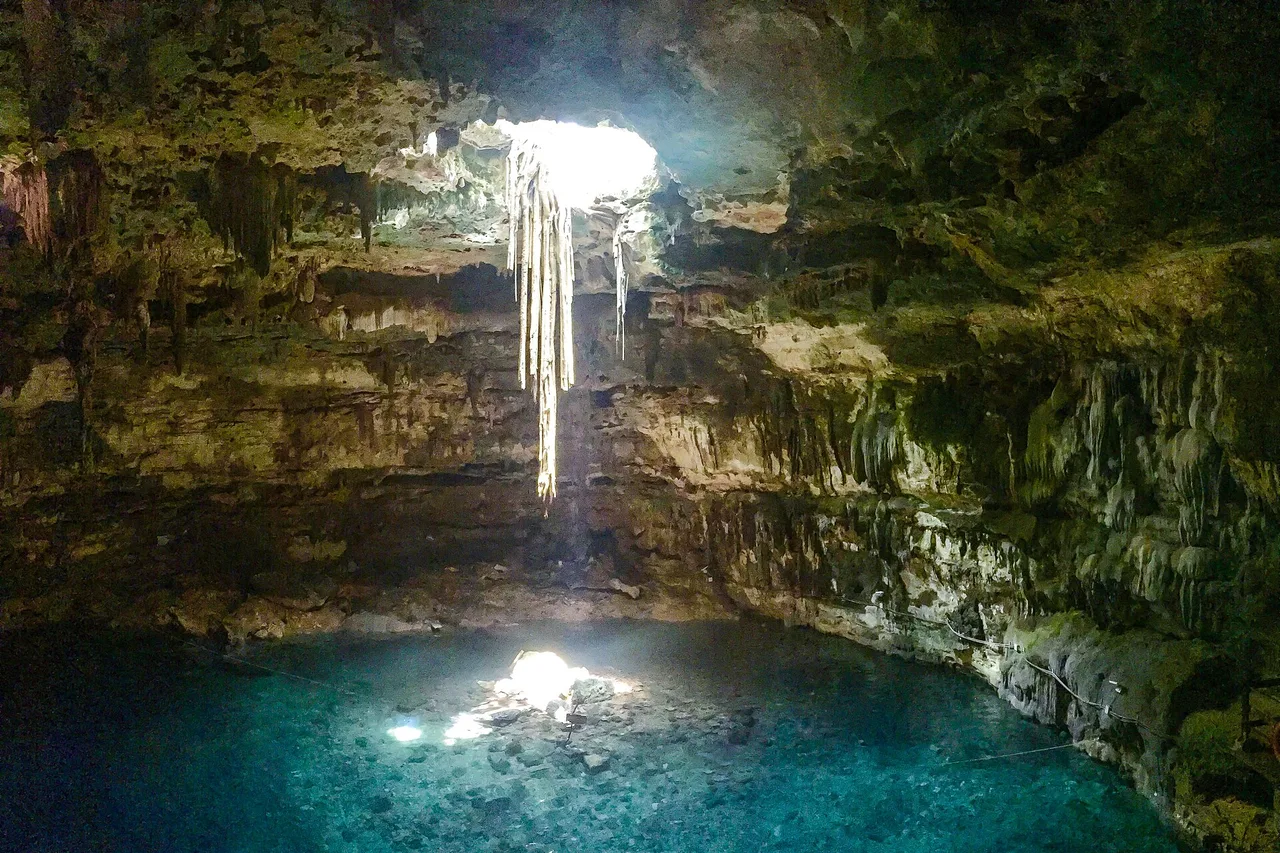
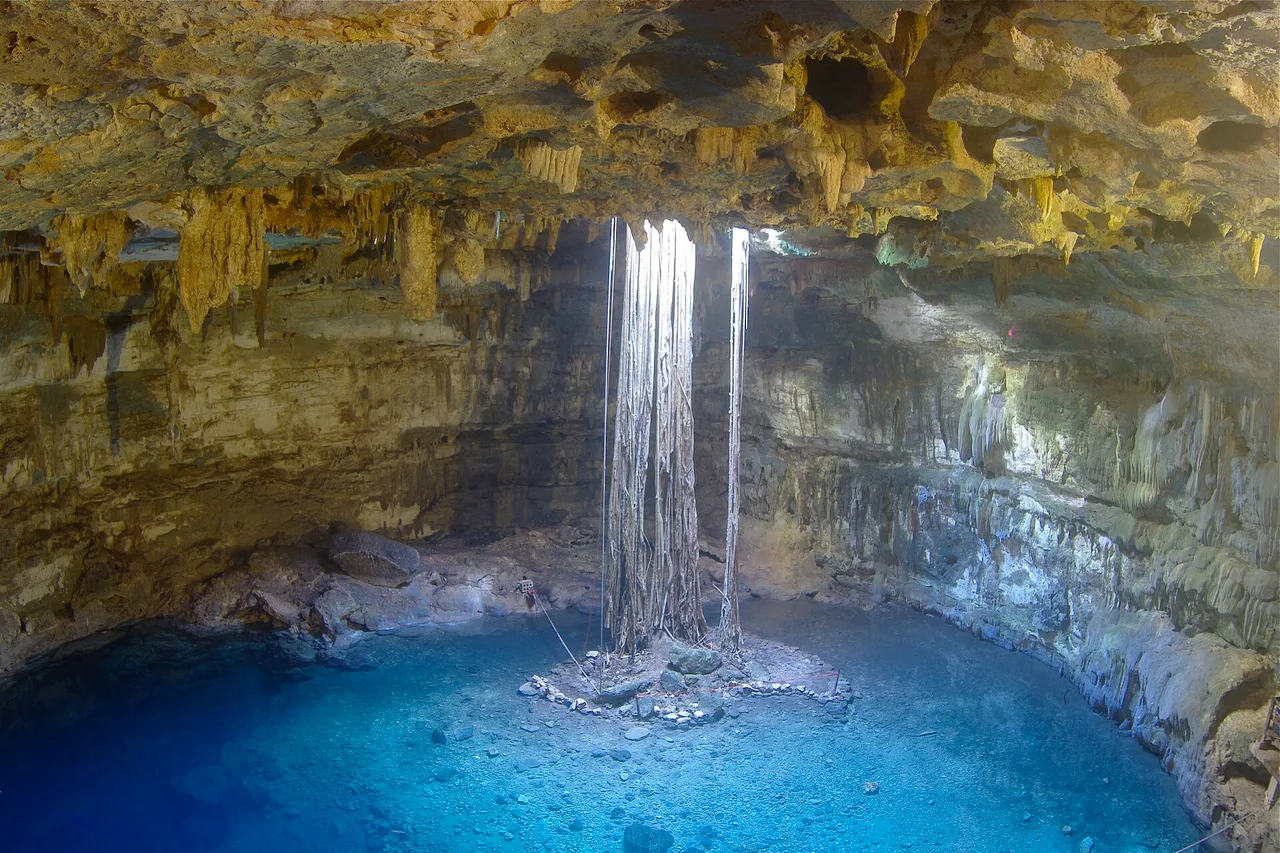
The semi-open cenote keeps a vault with a hole punched through it. That is where the famous vertical shaft of light appears, roughly between 11am and 1pm, when the sun passes over the opening. Outside that window the same cave is simply dark: if you are coming for that photograph, the hour is not a detail, it is the condition.
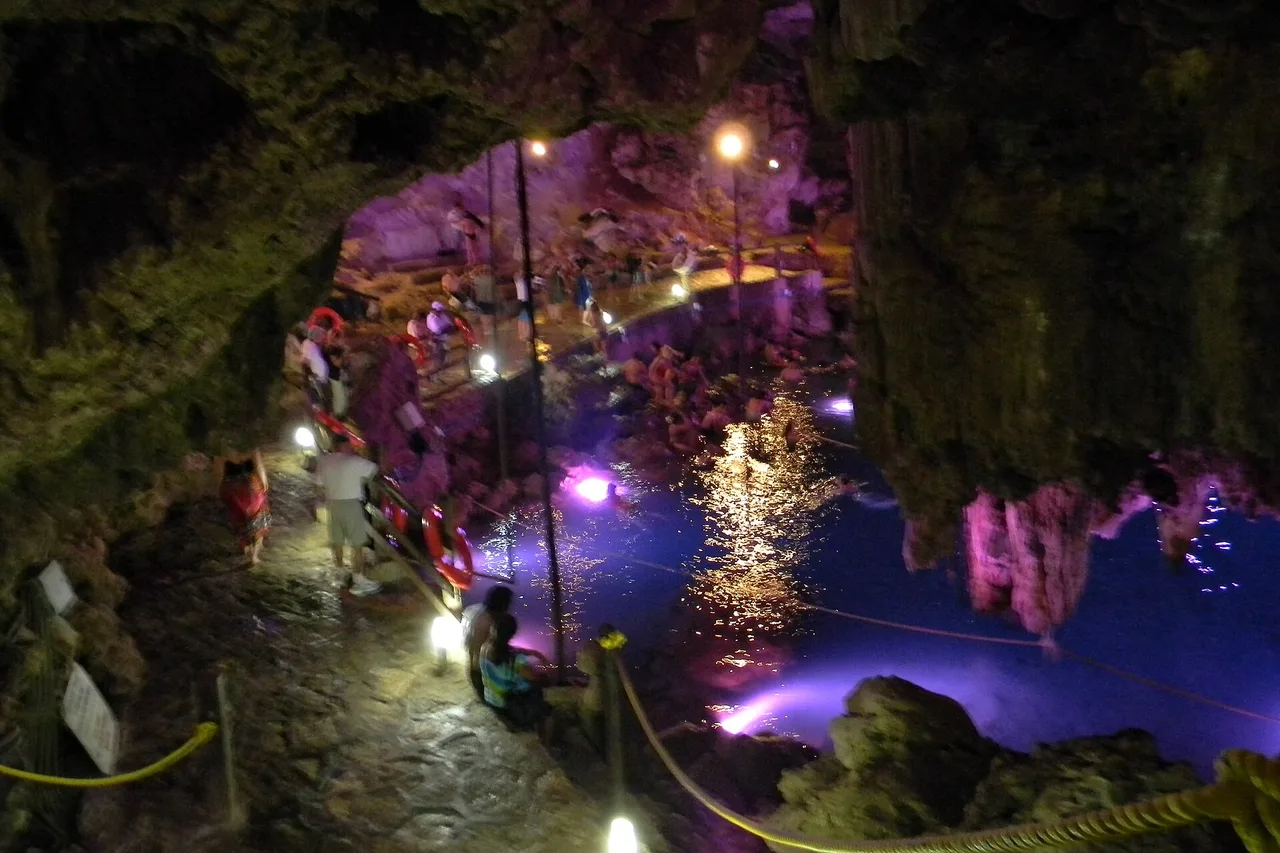
The cave cenote is visited entirely underground, in water of unreal clarity and artificial light. It is a few degrees cooler, the acoustics are strange, and it is the only type where you physically understand what the Yucatán’s underground network is. It is also the one that unsettles hesitant swimmers most: you are never in your depth and the walls are vertical.
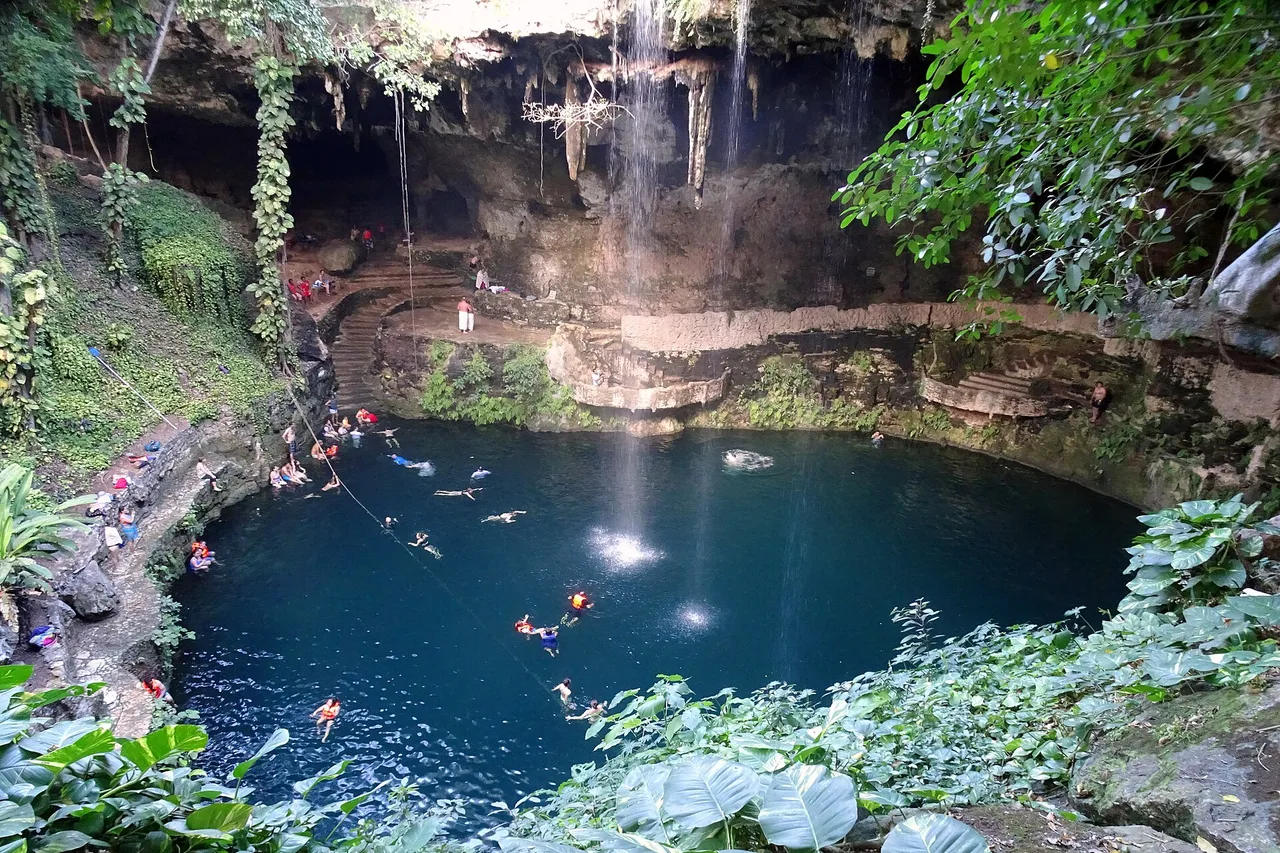
The rule that holds for every itinerary: do not string together three cenotes of the same family. Three caves in a row and the third will do nothing for you. One open cenote in the morning, one cave in the afternoon, and you will remember two places instead of one repeated.
Around Valladolid: the famous ones, and the price of fame
Valladolid is the best cenote base on the peninsula: six major sites within twenty minutes, and Chichén Itzá within forty.
Ik Kil, five minutes from Chichén Itzá, is the postcard cenote: a perfectly circular sixty-metre shaft, vines falling to the water, a staircase cut into the rock. It is also the one every coach schedules, so it is at its fullest between 10am and 2pm. Adult entry in 2026 is 180 pesos, around 9 euros.
Suytun became famous for a single image: a circular stone platform in the middle of a cave, crossed by a beam of light. Two things to know before you go. The beam only appears in clear weather and around midday. And you queue on the platform for the photograph, one group at a time. Entry to the eco-tourism centre is 250 pesos per adult, life jacket and access to both cenotes included, 9am to 5pm with last entry at 4pm.
X’kekén and Samulá, known together as Dzitnup, are two neighbouring caves seven kilometres from Valladolid, and our pick if you only see one pair. The price, however, is the one point on which we cannot be categorical: sources published in 2026 quote anywhere from 125 to 235 pesos for both, with the gap explained nowhere. Budget for the top of the range and you will not be caught out.
Zací sits in the town itself, three minutes on foot from the main square, open-air and edged by a restaurant: 60 pesos, the cheapest on this list, and an excellent first contact when you arrive tired. Oxman, ten minutes south, adds a swimming pool and a hacienda garden: 150 pesos for the cenote and pool, 350 with lunch at the restaurant.
| Cenote | Where | Entry | What you get |
|---|---|---|---|
| Zací | Central Valladolid | 60 pesos | Open-air, in town, restaurant. The cheapest. |
| X’kekén + Samulá | Dzitnup, 7 km | 125 to 235 pesos | Two neighbouring caves. Sources disagree on the fee. |
| Oxman | 10 min south | 150 pesos | Semi-open, pool and hacienda. 350 with lunch. |
| Ik Kil | By Chichén Itzá | 180 pesos | The postcard shaft. Very busy midday. |
| Suytun | 8 km from Valladolid | 250 pesos | The platform and the beam. Jacket and 2 cenotes included. |
| Homún cenotes | 1 h from Mérida | 30 to 100 pesos each | Dozens of village cenotes, very few people. |
| Dos Ojos | North of Tulum | 350 to 400 pesos | Cave, diving and snorkelling. The dearest. |
Homún: where the queueing stops
If one name should survive this article, it is this one.
Homún is a village an hour south-east of Mérida, sitting on a particularly perforated stretch of the underground network: it counts dozens of cenotes, most run by village families, and many have no concrete car park, no souvenir shop and no queue. You move between them by mototaxi, the three-wheeler that serves as the local cab.
The numbers explain everything: entry to a single cenote is usually 30 to 50 pesos, up to 80 or 100 for the better-equipped ones — against 250 at Suytun. The mototaxi that takes you to three cenotes of your choosing runs 250 to 350 pesos for the vehicle, up to four people, and that price does not include the entries. Opening hours are generously wide, typically 8am to 6pm.
Two honest reservations. The facilities are basic: steep wooden ladders, minimal lighting, rudimentary changing rooms — that is the price of the quiet, and it is not ideal with very young children. And absolutely nothing takes a card: arrive with the day’s cash, because there is no ATM in the village.
The Riviera Maya: the cenotes you swim with a mask
Between Playa del Carmen and Tulum the cenotes change in nature: you no longer come to bathe, you come to see underwater.
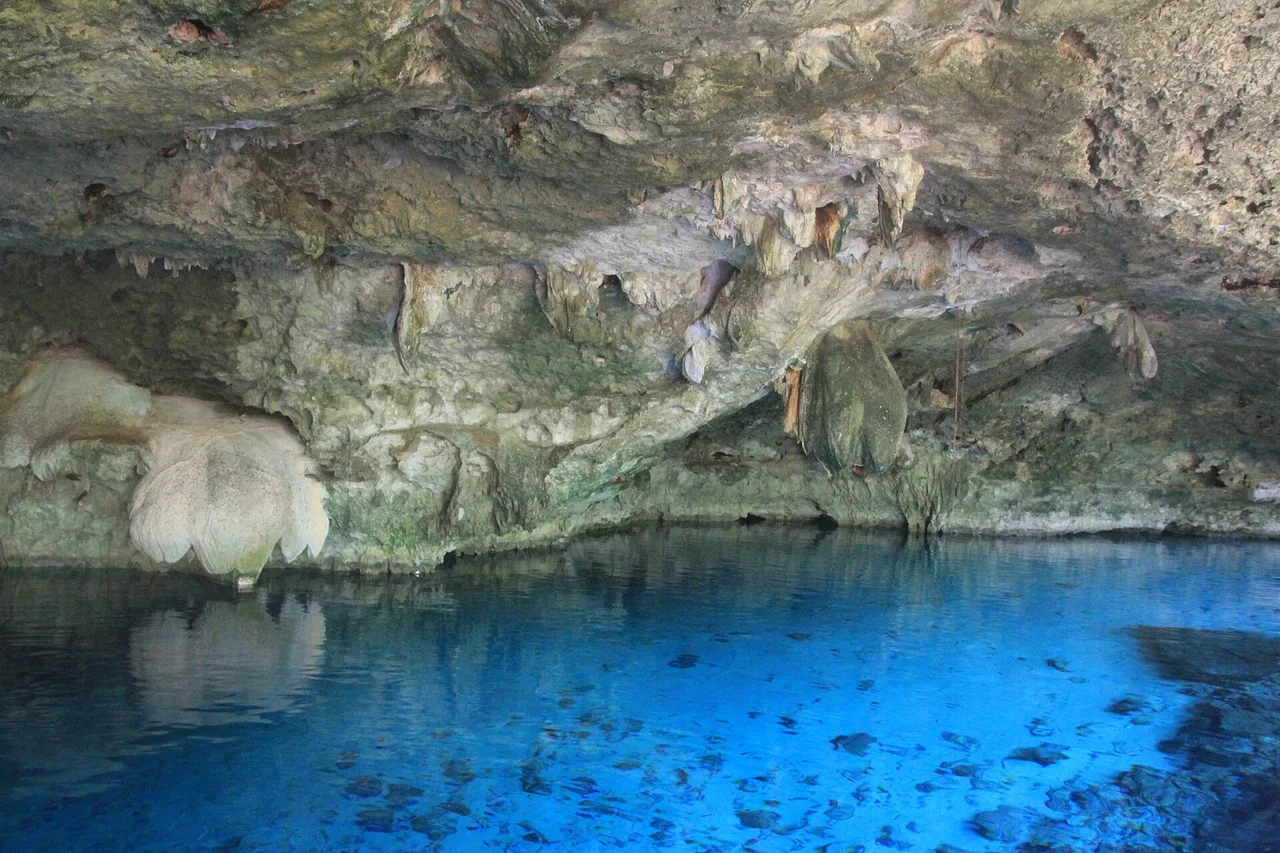
Dos Ojos, north of Tulum, belongs to one of the longest known flooded cave systems in the world. Two basins joined by a submerged passage, visibility of several tens of metres, and formations that give a mask a purpose no Valladolid cenote can match. It is also the dearest on our list: general entry sits around 350 to 400 pesos depending on the source, and the guided tour with mask, snorkel and lamp — the one that opens the bat cave — runs 600 to 800 pesos. Scuba is a dive-centre package, in another bracket entirely.
Gran Cenote, five minutes from Tulum, is the other big name in the area: less spectacular below the surface, but bright, partly open, with freshwater turtles you meet without looking for them. It is the best compromise for a first snorkelling experience, and you can cycle there from central Tulum.
The distinction that matters when you plan the day: these cenotes are expensive, busy and close to the coast. They earn their place if you dive or care about snorkelling. If what you want is a swim and a setting, the interior gives you ten times more for five times less.
The hour you arrive decides everything
It is the one variable entirely in your hands, and it changes the day more than any other.
The peninsula runs to a remarkably regular rhythm. Coaches out of Cancún and the Riviera Maya reach the big sites from 10am and leave around 2pm. The cenotes near Chichén Itzá — Ik Kil first among them — therefore fill up just afterwards, in the middle of the day, as groups chain the ruins to a swim. The same pool, at opening time, can be yours alone.
That gives one simple rule, valid everywhere: do the first cenote of the day at opening, and the second after 3pm. In between, visit an archaeological site, have lunch, or drive. It is the exact opposite of what most visitors do, and it costs nothing.
One exception, and it is a big one: if you are coming for the shaft of light in a semi-open cenote, you have to be there between 11am and 1pm, at peak crowding. You cannot have both. Decide what you came for — the photograph or the quiet — and accept the price of it.
A last planning point: the water stays around 24 to 26 °C all year, winter included. It is not the season that governs your swim, it is the hour. A cave always feels cold on entry, and that passes in two minutes.
The four rules that are not up for discussion
They are not decorative: three of them are genuinely enforced at the gate.
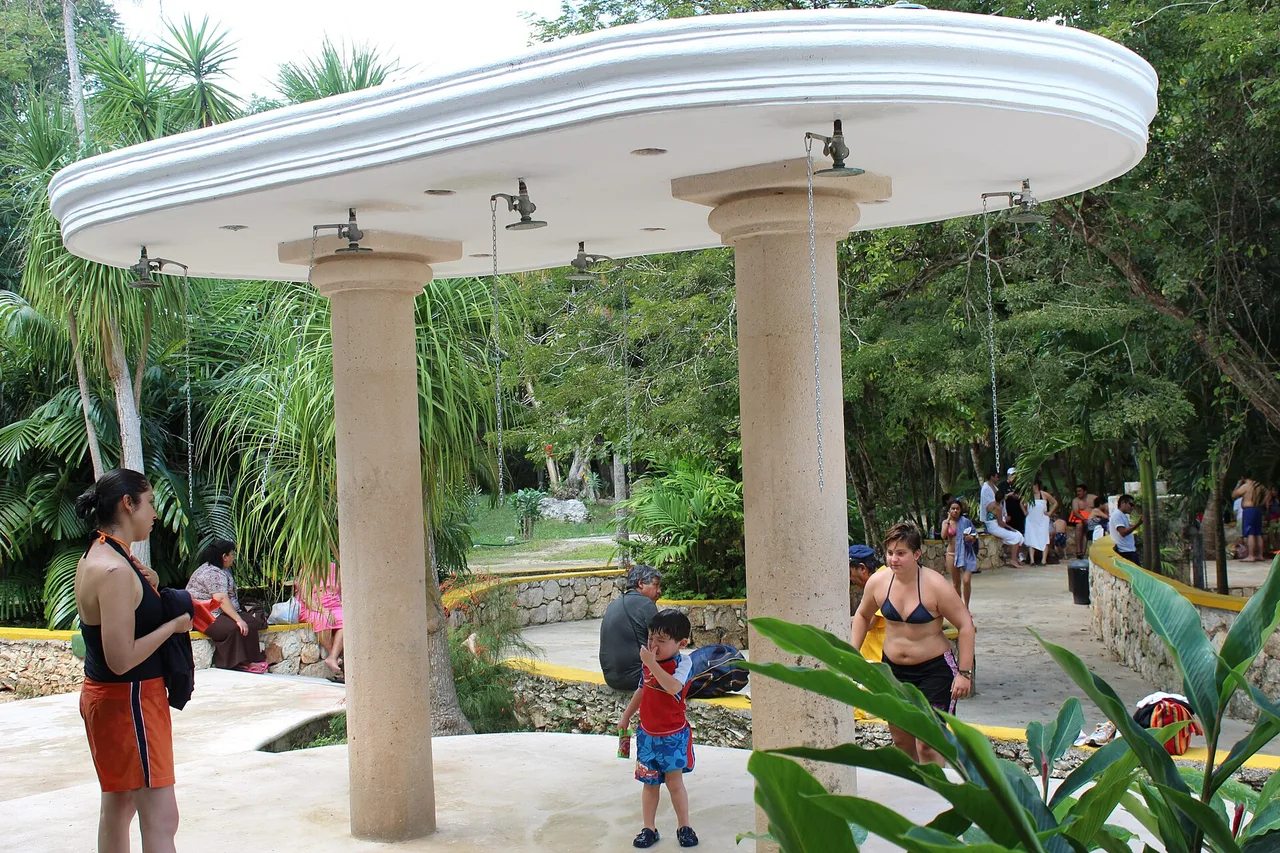
Showering before you swim is compulsory. A member of staff checks, and you will be sent back if you skipped it. The reason is simple: a cenote is a closed basin fed by an aquifer, with no tide and no current to flush anything away. What you bring in stays in.
Sunscreen is banned, including the kind sold as biodegradable, along with oils, insect repellent and make-up. It is the most misunderstood and most important rule: chemical filters destroy the basin’s ecosystem. The workaround is one word — a long-sleeved t-shirt or rash vest, put on before you arrive, protects better than a tube and raises no objection.
Cash is essential. Community-run cenotes, mototaxis, car parks, life-jacket hire: none of them take a card. Withdraw in Valladolid or Mérida, and at the machine always decline conversion “in your own currency” — it costs 5 to 10 % more than the real rate.
A life jacket is often compulsory, even for strong swimmers. This is not fussiness: in a cave cenote you are never in your depth, there is no edge to sit on, and you leave by a ladder. It is included at Suytun; elsewhere expect a hire charge of a few tens of pesos.
Getting there: mototaxi, car or organised tour
Three formulas, three budgets, and only one that opens the genuinely quiet cenotes.
🟢 Start with the cheapest, because it is often enough. If you sleep in Valladolid, Zací is walkable, and a mototaxi takes you to Oxman or Dzitnup for a few tens of pesos. The Tren Maya and ADO coaches serve Valladolid from Cancún and Mérida. In other words: to see five cenotes around a single base, you need no vehicle of your own.
A car changes things elsewhere. Homún, the Ruta Puuc, the Gulf coast cenotes: nothing scheduled goes there, and that is precisely where the queue-free pools are. If you take that route, one warning is worth real money: in Mexico, third-party liability is the only insurance required by law, and comparison-site headline rates almost never include it — the desk adds it afterwards, often 20 to 30 dollars a day. Compare on the total price, insurance included. That is why we point to local agencies in Cancún, Playa del Carmen or Tulum, which quote insurance-inclusive rates. One limit, checked on the day of publication: this comparison site has no branch in Mérida — if you want to start from Mérida for Homún, you will have to look elsewhere.
Full guide: Renting a Car in Yucatán: Insurance, Deposit, Real Prices
That leaves those who will not drive but still want Chichén Itzá and two or three cenotes in a day. An organised tour settles transport, entry and lunch in one go; it costs more than a mototaxi and imposes its own pace, but it saves you assembling four hours of buses. Guided tours from Valladolid, Mérida or Tulum can be booked ahead at a known price — just check, before paying, that cenote entries are included: that is the line that varies most between operators.
What the sargassum does not change
This is the argument that, in 2026, turns the cenotes from an excursion into the main plan.
Sargassum is the brown seaweed that washes onto the Caribbean side from March to October, worst between May and August. The University of South Florida has flagged 2026 as a record year after readings at their highest across almost the whole region. On the Riviera Maya that means beaches raked by tractor at dawn and a smell by late afternoon in the worst-hit stretches.
Cenotes are unaffected: they are underground fresh water, with no connection to the swell. The same is true of the Bacalar lagoon, also fresh water, and far more true of the Gulf coast — Celestún, Progreso, Río Lagartos — which faces the other way.
The practical conclusion fits in one sentence, and it beats a long argument: between May and August, change the place, not the date. A trip built around Valladolid, Homún and Mérida, with the sea as a bonus rather than a promise, does not suffer from sargassum at all. And if you want the full loop, we set it out day by day in our two-week Yucatán road trip itinerary.
Top-rated activities in Mexico, bookable online: