“Is Mexico dangerous?” is the question people ask most before a Yucatán trip, and the honest answer rests on a distinction almost nobody makes: Mexico is not one place. The United States rates Yucatán and Campeche at the lowest level on its scale — the only two states in the country to hold it — while other regions are flatly off-limits. Here is what the official advisories actually say as of 6 September 2026, the one genuinely documented trap on the peninsula, and the six or seven habits that settle the matter once you are there.
What the advisories say, and why you must read them state by state
Mexico has thirty-two federal entities and is five times the size of France. Talking about "safety in Mexico" makes about as much sense as talking about "safety in Europe".
The official advisories, however, go down to state level — and that is where the picture changes. The US State Department publishes a four-level scale, state by state. As of 6 September 2026, Yucatán and Campeche are rated Level 1, "exercise normal precautions", and they are the only two Mexican states at that level. No travel restrictions apply to US government employees there, which is the most concrete indicator on that scale.
Quintana Roo — Cancún, Playa del Carmen, Tulum, Bacalar — sits at Level 2, "exercise increased caution". That is the level given to France, Spain or Italy on the same scale. It is neither a red light nor a blank cheque: it is an invitation to watch specific things, which we set out below.
On the French side, the foreign ministry's security page, updated on 26 August 2026, places the area under reinforced vigilance (yellow), with targeted warnings for Cancún, Playa del Carmen and Tulum. None of those cities is advised against. Elsewhere in the country, by contrast, several states are formally off-limits — and it is that information, blended with the previous kind in casual conversation, that produces the vague fear the Yucatán suffers from so unfairly.
One last thing about these advisories, so as not to read them naïvely: they mostly measure organised-crime violence, which does not target tourists and plays out in circles you do not wander into. What genuinely threatens a traveller belongs to a much more mundane category, and that is the subject of the rest of this article.
Cancún airport: the one real trap, and it is documented
If you take one paragraph away from this page, make it this one. The first hour of the trip concentrates more risk than the following two weeks.
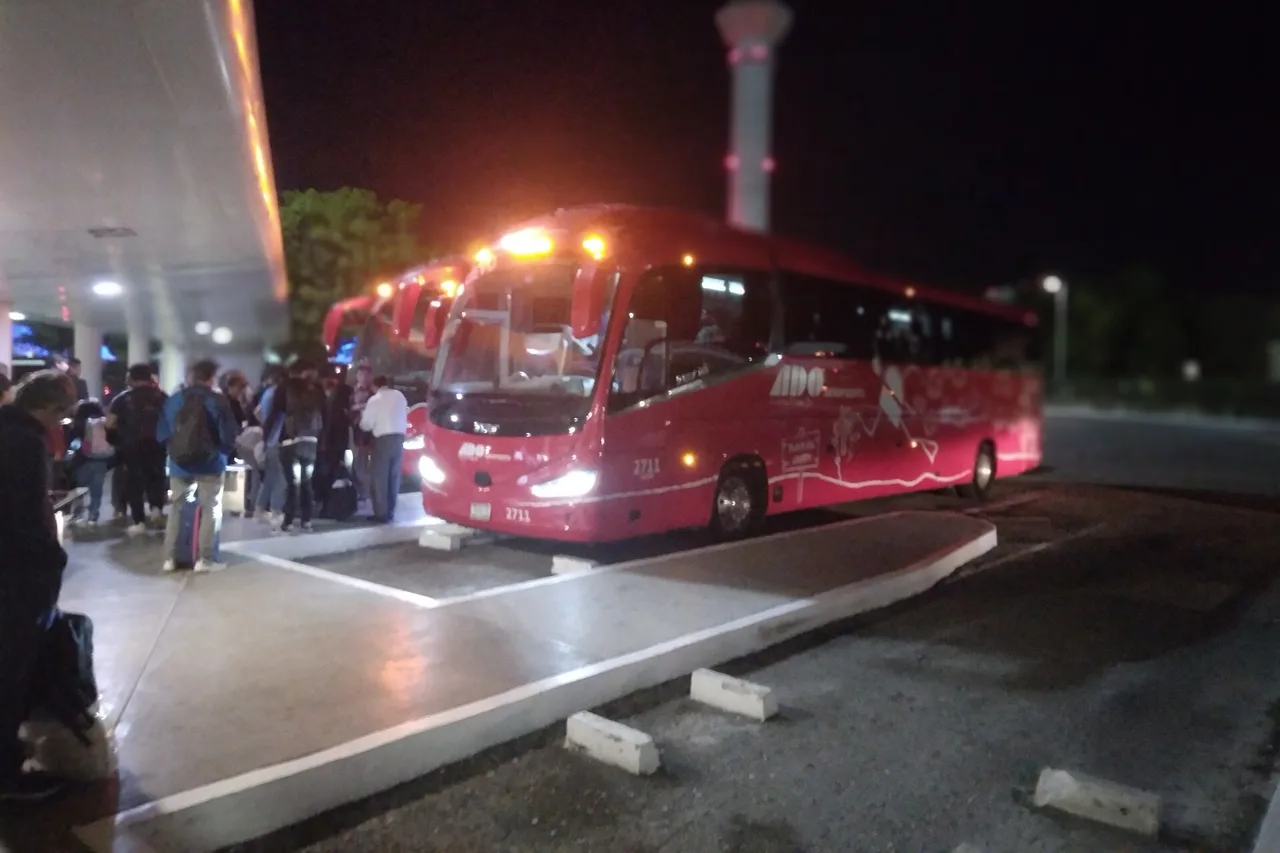
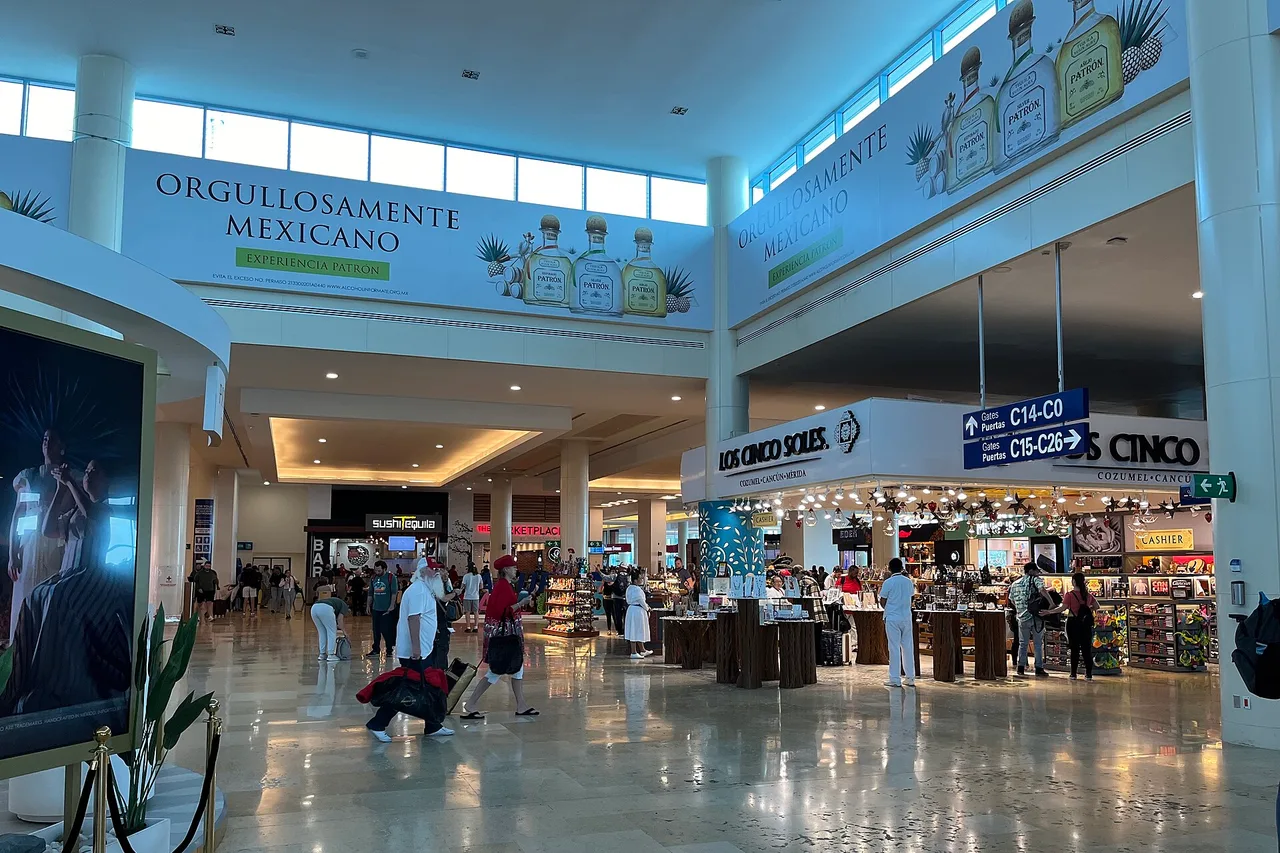
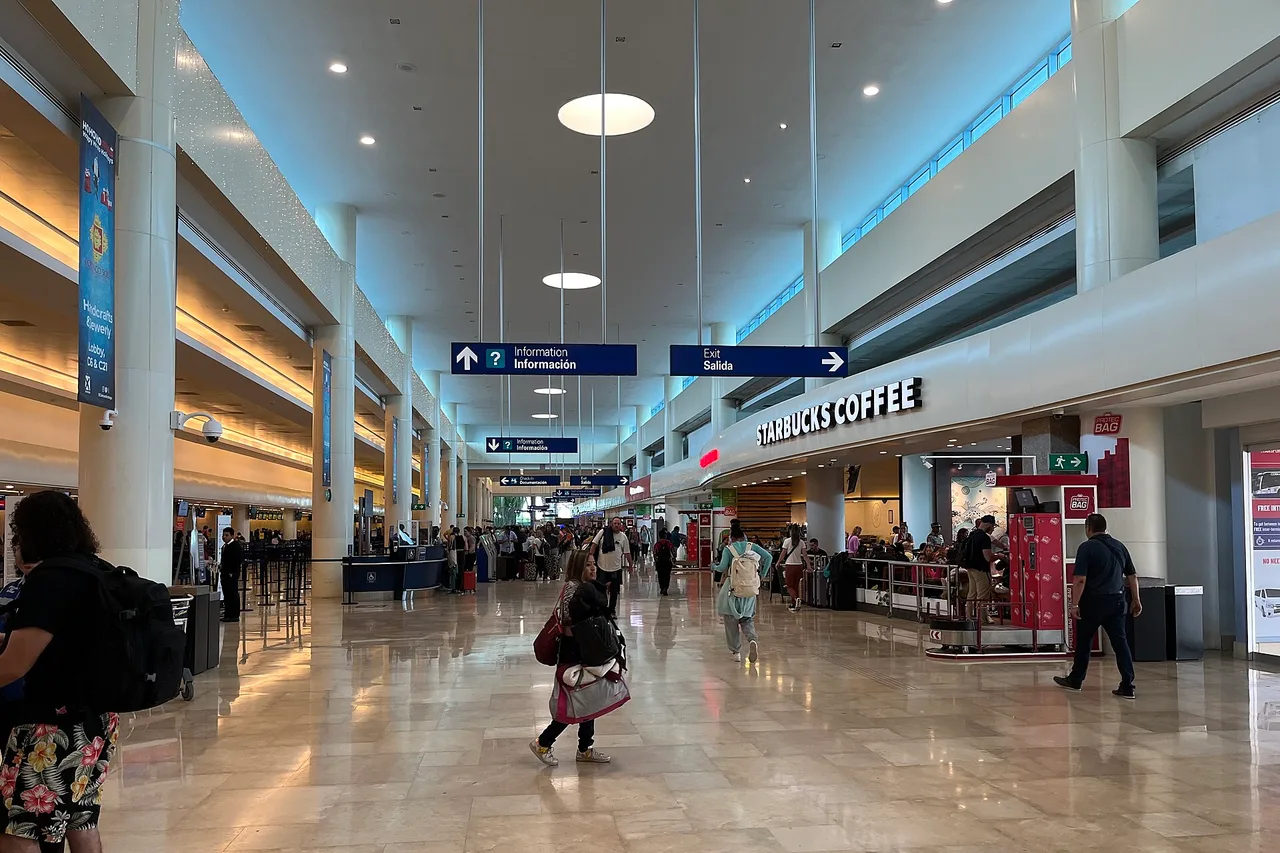
The mechanism is always the same. The moment you clear customs, inside the terminal itself, touts approach arrivals. They often wear a logo shirt, speak good English, and offer a taxi, a transfer, sometimes a "booking check". None of it is official. The fake taxis — known locally as pirate taxis — quote a vague price, then produce a card terminal on arrival that displays one amount and charges another.
Full guide: Cancún Airport Transfer to Tulum and Playa del Carmen
One case reported in 2026 stuck in people's minds: a five-minute ride billed at 6,000 dollars, which the traveller only discovered days later on their bank statement. We cite it as an extreme case, not as the norm — but it illustrates the mechanism exactly, and explains why this trap earns a section of its own when everything else fits in a list.
The defences, in ascending order of cost:
- Free and simplest: the ADO coach. It leaves directly from the airport terminals for central Cancún, Playa del Carmen, Tulum and Mérida, on fixed timetables at posted prices. It is what we recommend by default, and it is what the French foreign ministry spells out too: use "the direct services of the major bus companies".
- The apps. Uber has been authorised in Quintana Roo since a 2019 court ruling, extended to Cancún airport in 2024 with a dedicated product limited to licensed drivers. Friction with the taxi unions persists in the immediate vicinity of the terminal: the pickup point the app gives you is not always where you would expect, and it is worth reading before you walk out.
- A transfer booked in advance, if you land at night, travel as a family, or face a long run such as the port of Chiquilá. The price is fixed before departure and the driver waits with your name: there is nothing left to negotiate or verify. Private transfers from Cancún airport can be booked online at a known rate.
And the rule that covers all of it: never get in with someone who approached you. A legitimate driver does not tout in the hall.
Driving: two rules do eighty per cent of the work
Renting a car in the Yucatán is a very good idea, and the freest way to see the peninsula. Road safety there fits in two sentences.
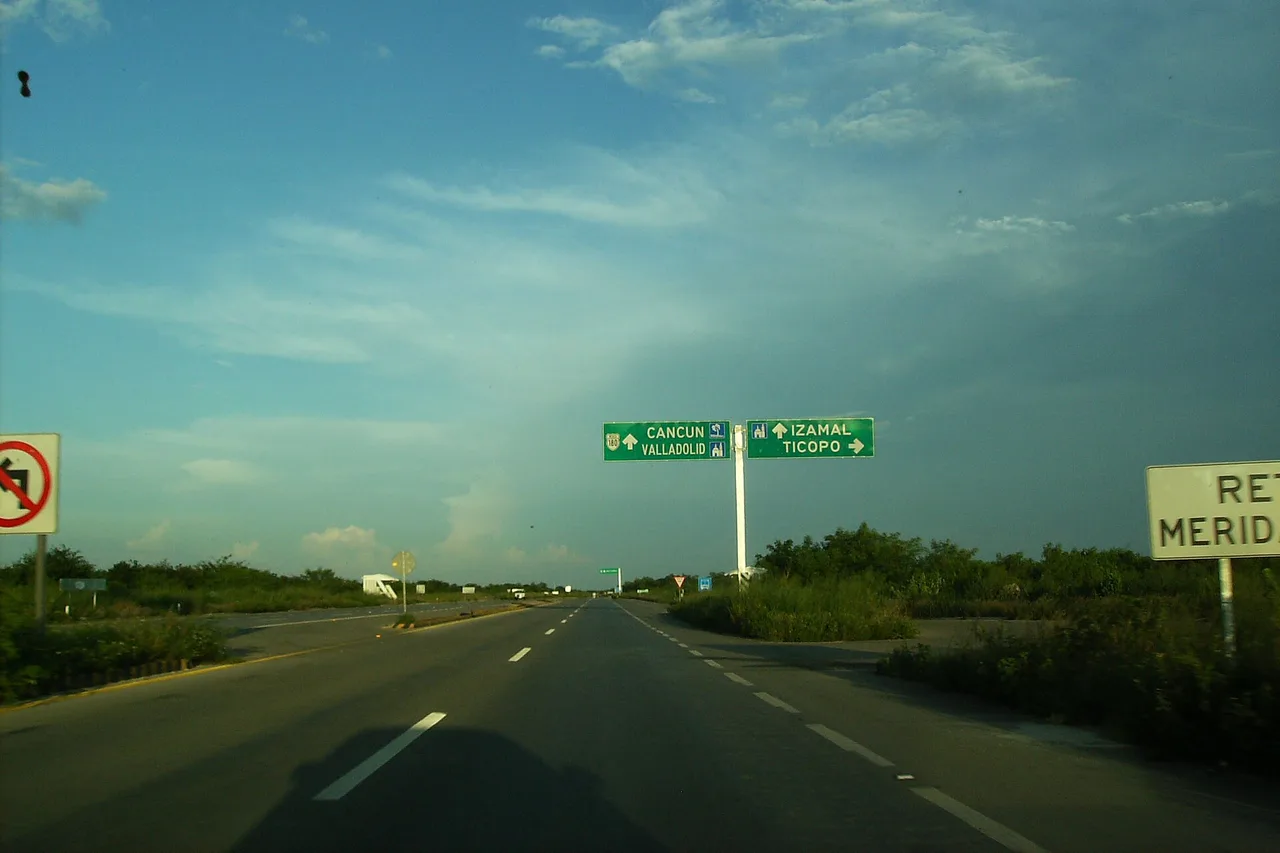
First rule: do not drive at night. That is the explicit recommendation of the French foreign ministry, and it is broader than people assume. In the dark you cannot see the topes — those massive, often unpainted speed bumps planted at the entrance to every village — nor unlit bicycles, nor livestock on the carriageway. Roadside crime exists, but it comes well behind those three in accident figures.
Second rule: take the cuota where it exists. Toll motorways are better maintained, better lit and patrolled, and the time difference is real. On the Cancún-Mérida run, the gap between the motorway and the free road is measured in hours.
Full guide: Renting a Car in Yucatán: Insurance, Deposit, Real Prices
That leaves insurance, which is not a safety matter but a billing one. Third-party liability is the only insurance required by Mexican law, and comparison-site headline rates almost never include it: it gets added at the counter, often 20 to 30 dollars a day. Compare on the insurance-inclusive total — which is why we point to local Yucatán agencies, which quote insurance-inclusive rates. The cost breakdown is in our two-week Mexico road trip budget.
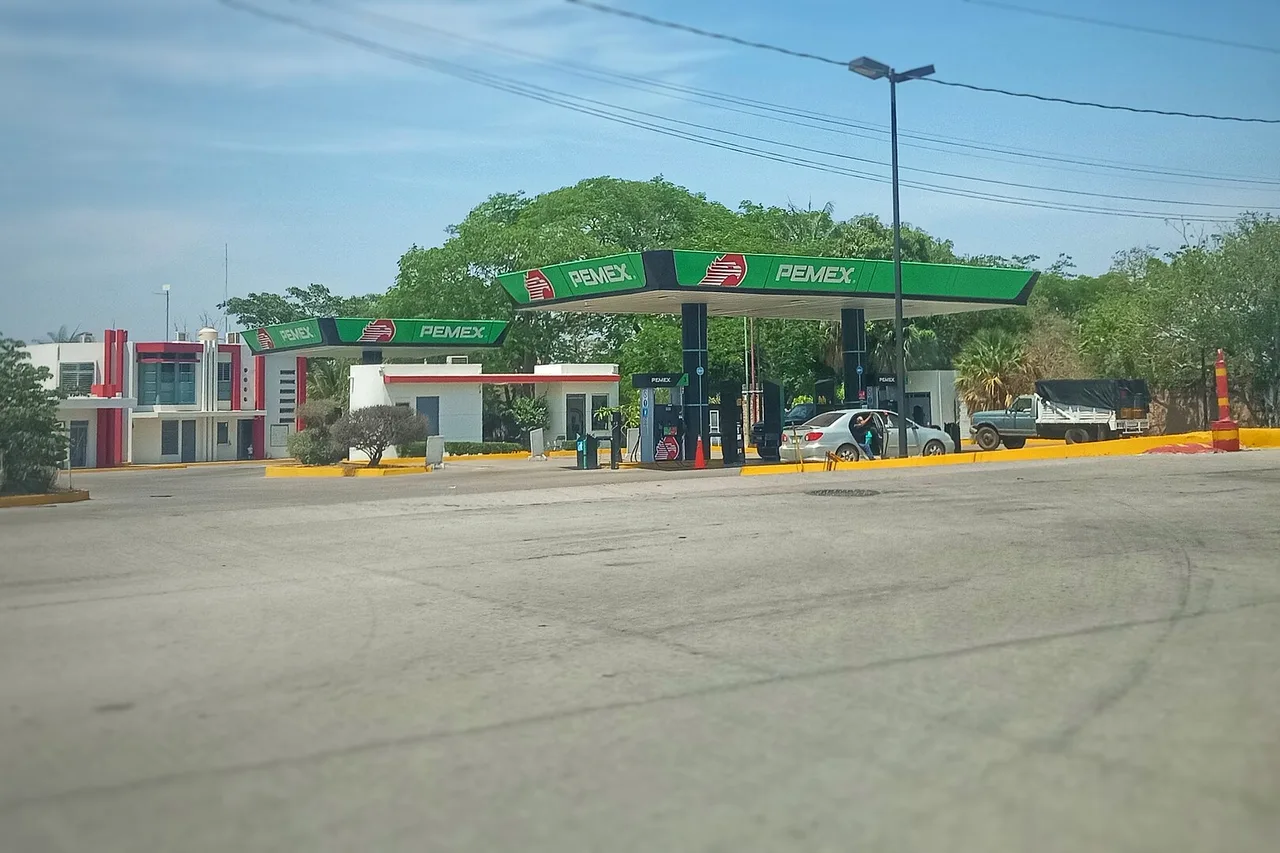
One last point, and it is where travellers get caught most often: the filling station. Pumps are attended by staff. Three gestures settle it — get out of the car, check the meter reads zero before the pump starts, and state an amount rather than asking for "full". It is never violent, it is petty short-changing, and it evaporates the moment you show you are watching.
Money: what the advisories say, and what they leave out
Cash remains essential in the Yucatán, and that is precisely what creates the one genuinely vulnerable moment of the day.
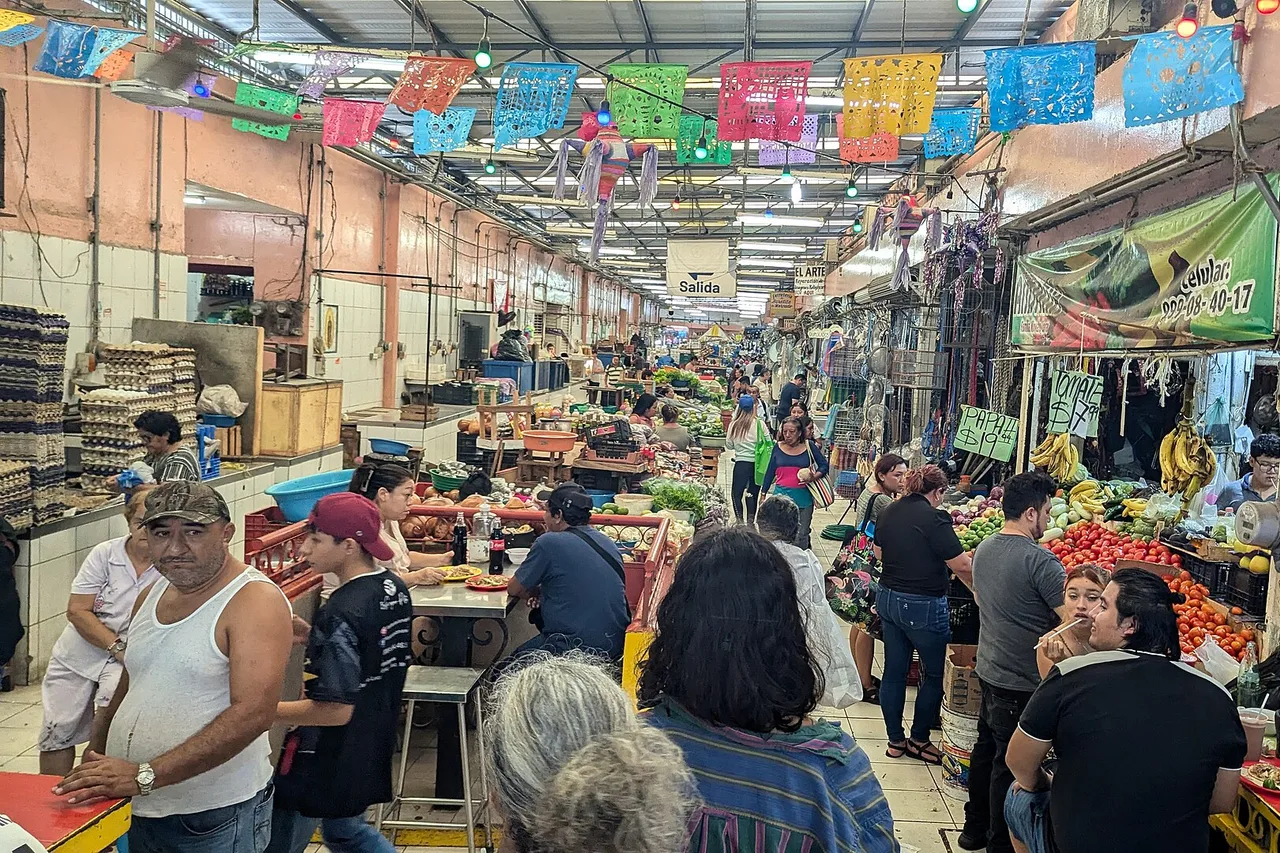
Community-run cenotes, moto-taxis, car parks, markets and most small restaurants work in cash, and there is no ATM in the villages. The official recommendations are unambiguous: withdraw in daylight, inside a bank rather than at a street machine, and accompanied where possible. Add the usual common sense: do not recount notes on the pavement, split your money between two places, leave the passport at the hotel and keep only a photo.
What the advisories leave out, because it is not their subject, is that dynamic currency conversion costs you more than everything else combined. When the ATM or the card terminal offers to charge you in your home currency rather than pesos, it applies its own rate: reckon on losing 5 to 10 per cent. Always decline, choose pesos, and let your bank do the conversion.
In markets like Mérida's, the issue is not insecurity but pickpocketing in a dense crowd: bag in front, pocket zipped, and that is that.
In the street, at night, on the beach
The recommendations here fit in a few lines, and they look like those for any large tourist city.
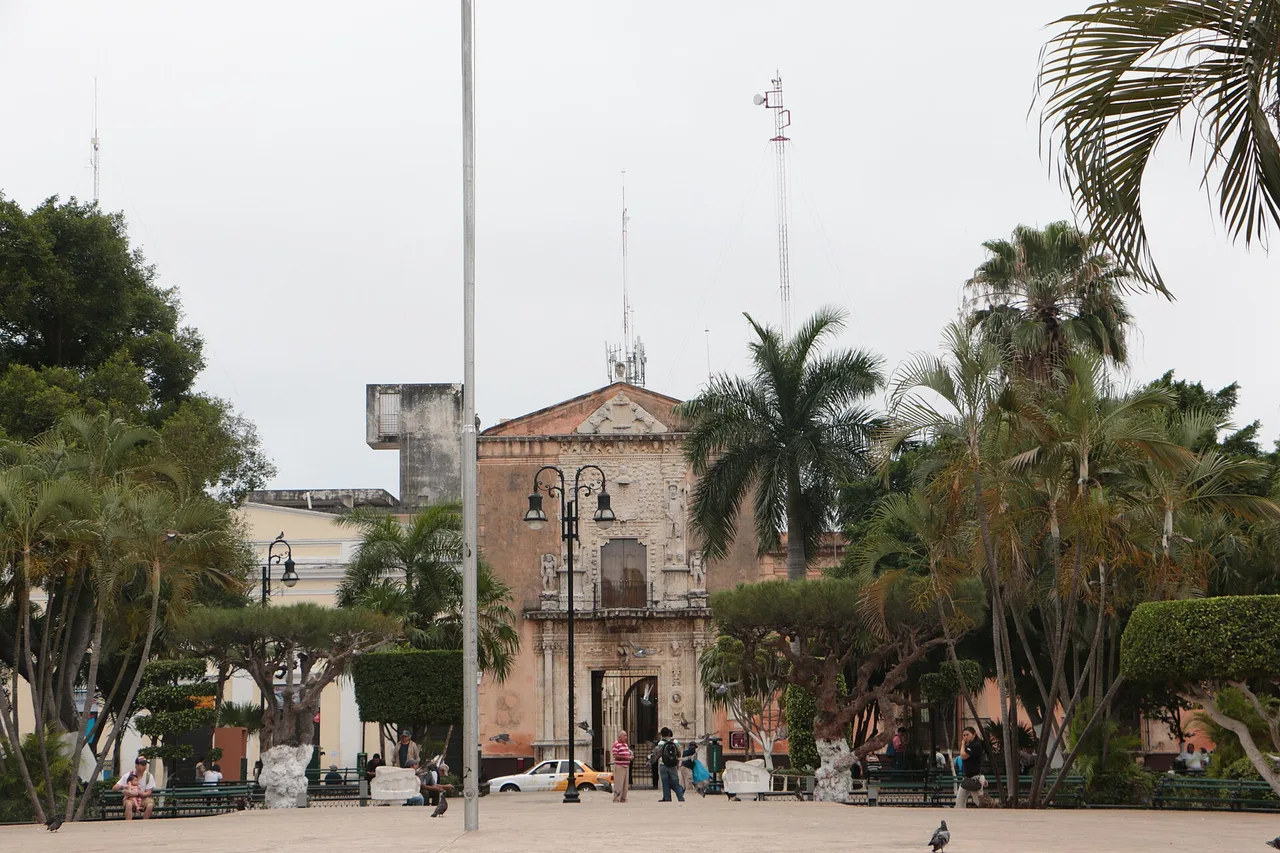
The historic centres of Mérida, Valladolid and Campeche can be walked in the evening without a second thought — Mérida is routinely named among the safest cities in the country, and its state sits at Level 1 on the US scale. In Cancún, Playa del Carmen and Tulum, caution attaches to specific situations rather than to neighbourhoods: leaving a nightclub at dawn, buying drugs — the common factor in the great majority of serious incidents involving foreigners — and deserted beaches after dark.
Two official recommendations deserve quoting as they stand, because they are counter-intuitive. First: avoid deserted or unsupervised beaches — that is as much a drowning instruction as a security one. Second, for a street taxi: check that the number plate matches the displayed insurance document, and compare the licence photograph with the driver's face. It takes five seconds, and it rules out the unlicensed cab.
A final word on the timeshare touts, everywhere in Cancún and Playa del Carmen: they promise a free breakfast, tour or transfer in exchange for a ninety-minute "presentation" that runs to three hours. It is not dangerous, it is lost time and a signature you regret. A firm "no thank you" with no explanation is the only reply that works.
What actually injures travellers, and nobody mentions
Look at what genuinely sends holidaymakers to a doctor in the Yucatán and crime is not at the top of the list. It is not on it.
Sun and dehydration come first, by a distance. The peninsula is flat, humid and very exposed; you walk for hours around archaeological sites with no shade. Two litres of water per person per day is not excessive.
Water next: tap water is not drinkable in Mexico. That applies to brushing your teeth in modest lodgings and to ice outside established venues — proper restaurants use industrial ice, which is fine.
Cenotes are the third cause, and an underestimated one. You are never in your depth, the sides are vertical, the rock is slippery and there is almost never a lifeguard. A life jacket is often compulsory and sometimes charged for, and that is not an administrative formality. We cover each site in our guide to the best cenotes in the Yucatán.
The sea, finally, with two distinct phenomena. Currents on the exposed east coast, where there is not always a flag or a lifeguard. And hurricane season, from early June to late November on the Caribbean side, which is not a security risk but a weather one: it is watched, not ignored. The brown seaweed arrives in the same window, and we gave it a whole article: when sargassum arrives and which beaches stay clear.
The habits worth having, and the numbers
Here is the list we would carry, cut down to what actually gets used.
| What | Detail |
|---|---|
| Emergencies | 911 — police, fire and medical, everywhere in Mexico. |
| Documents | Passport in the safe, photo on the phone, copy in your inbox. |
| Money | Withdraw in daylight, inside a bank. Always decline conversion to your own currency. |
| Taxi | Never someone who approached you. Plate = insurance, licence photo = driver. |
| Car | Not at night. Toll motorway where it exists. Third-party liability is compulsory. |
| Water | Bottled, including for teeth in modest lodgings. |
| Insurance | Number noted separately from the phone. Check water sports are covered. |
One practical note: most of these habits assume a phone that works the moment you land — to open the ride app in the right place, read a map, or dial 911. An eSIM activates before departure in a few minutes and skips the counter queue, in precisely the hall where the touts operate: data plans for Mexico cover the whole peninsula. Check your own plan first — some premium European tariffs already include Mexico, in which case you need nothing at all.
A sense of proportion, to close
A conclusion should neither pretend everything is fine nor sustain a fear the facts do not support.
The Yucatán receives tens of millions of visitors a year, and the overwhelming majority come home with sunburn as their only incident. The strictest advisories in the world place two of its three states at the lowest level of their scale. What genuinely threatens a traveller — a fake taxi on arrival, a filling station short-changing you two hundred pesos, an unsupervised cenote, an underestimated sun — is handled by gestures that cost nothing and spoil nothing.
The right way to prepare this trip, then, is not to ask whether it is dangerous, but to decide where you sleep and how you get around. Our two substantial pieces on that: the two-week road trip itinerary, and the comparison of Tulum town versus the beach strip.