Between January and July, Reykjavík gains eleven degrees — less than Berlin’s annual swing. What changes by a factor of five is the light: 4 hr 07 of daylight at the winter solstice, 21 hr 04 at the summer one. And the criterion that should really decide is neither of those: it is what is open. The highlands and the natural ice caves share not a single day of the year. Here is the access calendar, season by season, and what each one costs.
The temperature gap is smaller than Berlin’s
Let us start by dismantling the criterion almost everyone chooses on. In Reykjavík the January mean is 0 °C and the July mean 11 °C: an eleven-degree annual swing. In Berlin, the gap between the coldest and warmest month reaches nineteen degrees.
Put plainly: an Icelandic winter is milder than a German one, and an Icelandic summer is not warm. The Gulf Stream tempers the island in both directions, stripping it of continental winter severity and of summer heat alike. A traveller choosing a season on the “cold or mild” axis is choosing on the variable that moves least.
The practical consequence is immediate, and it simplifies packing: you take much the same clothes in July as in January — waterproof shell, warm layers, a hat. In July the daytime mean climbs to 16 °C but drops back to 9 °C at night, and a headwind is enough to cancel the difference.
| January | July | |
|---|---|---|
| Mean temperature | 0 °C | 11 °C |
| Daylight at the solstice | 4 hr 07 min | 21 hr 04 min |
| Sunrise – sunset at the solstice | 11 h 20 – 15 h 30 | 2 h 55 – 0 h 03 |
| Mean daily sunshine | 0.7 h | 6 h |
One row of that table deserves reading on its own, and it is the one that actually decides.
What changes by a factor of five is the light
At the summer solstice the sun rises in Reykjavík at 02:55 and sets at 00:03: twenty-one hours and four minutes of daylight. And for several weeks true night vanishes altogether — the sun dips below the horizon without the sky going out. At the winter solstice, sunrise is around 11:20 and sunset around 15:30: four hours and seven minutes. The ratio is more than five.
That figure, not the temperature, is what changes a trip. In December you get one “day” per day and it lasts four hours: a three-hour driving leg eats almost all the available light, and the itinerary has to be built around that constraint rather than the other way round. In June light stops being a constraint at all — the only limit becomes your own stamina, and it arrives later than you expect, because nothing in the sky tells you it is time to stop.
Sunshine follows the same gap: six hours of sun a day on average in July, against forty-two minutes in January. The two problems are therefore inverted, and rarely anticipated: in summer you struggle to sleep, in winter you struggle to do.
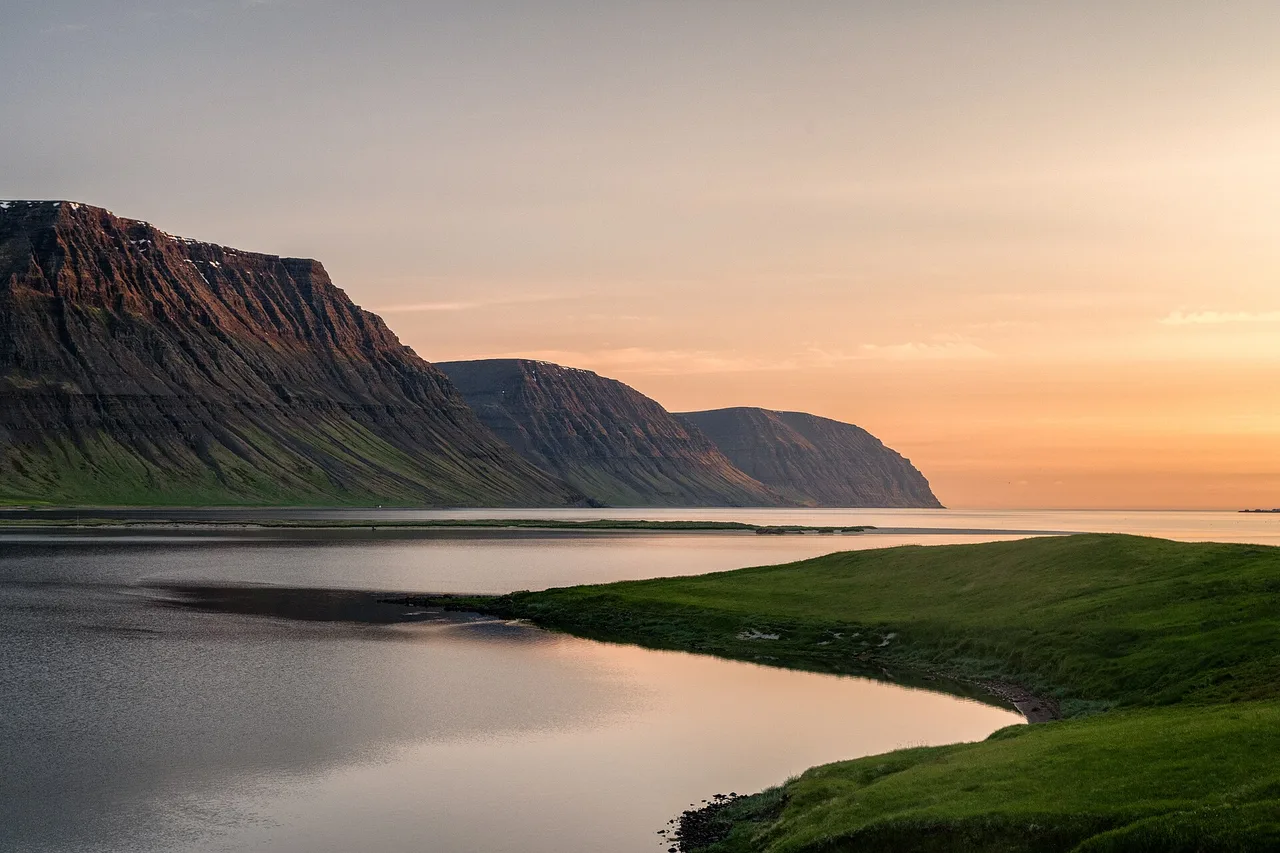
The real criterion: what is open
Here is the table that should replace every weather comparison. It does not say what the weather will be, it says what exists — and that is the only thing a season genuinely decides.
| What you came for | Real window | Season |
|---|---|---|
| Northern lights | early September → mid-April | Winter |
| Natural ice caves | early November → late March | Winter |
| F-roads and the highlands | early June → late September | Summer |
| Midnight sun | late May → mid-July | Summer |
| Puffins | mid-April → late August | Summer |
| Whales at Húsavík | early April → late October | Summer |
| Winter tyres compulsory | 1 November → 15 April | Winter |
Read the middle column twice. The highlands and the natural ice caves share not a single day of the year. The F-roads usually close in the second half of September; natural caves only become stable in November. Between the two sits a six-week gap in which neither is accessible.
That is what the question “winter or summer?” hides. The two seasons are not two intensities of the same trip, with more or less comfort: they are two disjoint sets. You are not choosing a climate, you are choosing a list — and the other list you will not get.
Winter: four hours of daylight, and two things you see only then
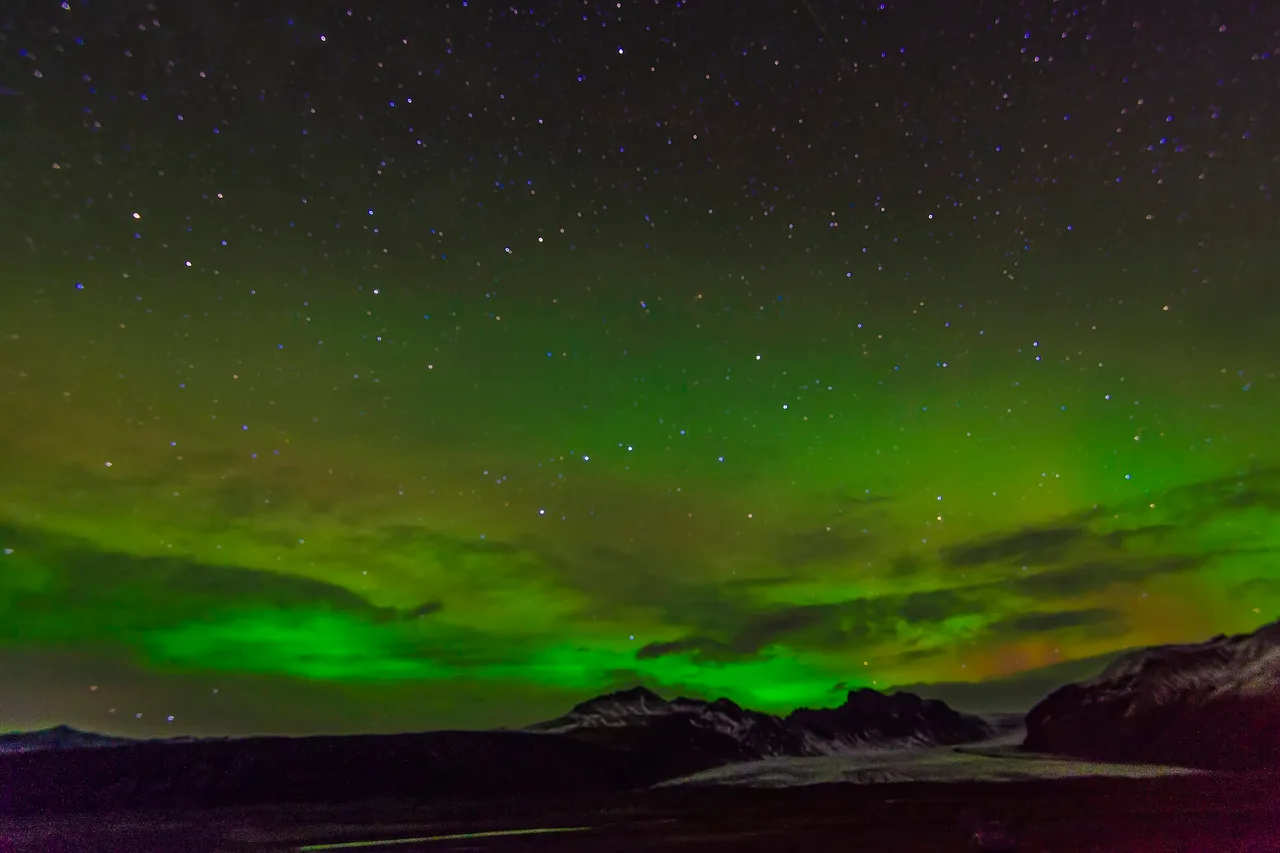
The aurora season runs from late August or early September to mid-April. It is dictated not by cold but by hours of true darkness: five to eight in late September, fourteen to sixteen in November and December. The useful window is roughly 21:00 to 02:00.
Two points are worth knowing, because they contradict intuition. First, the darkest month is not the best one. February is often named the best compromise — still long nights, but steadier weather and therefore more clear skies, and it is the clear sky that is usually missing, not the aurora. Second, NASA and NOAA data show that auroral activity in the equinox months — March-April and September-October — runs roughly double that of the solstice months. December has the longest night, not the likeliest aurora.
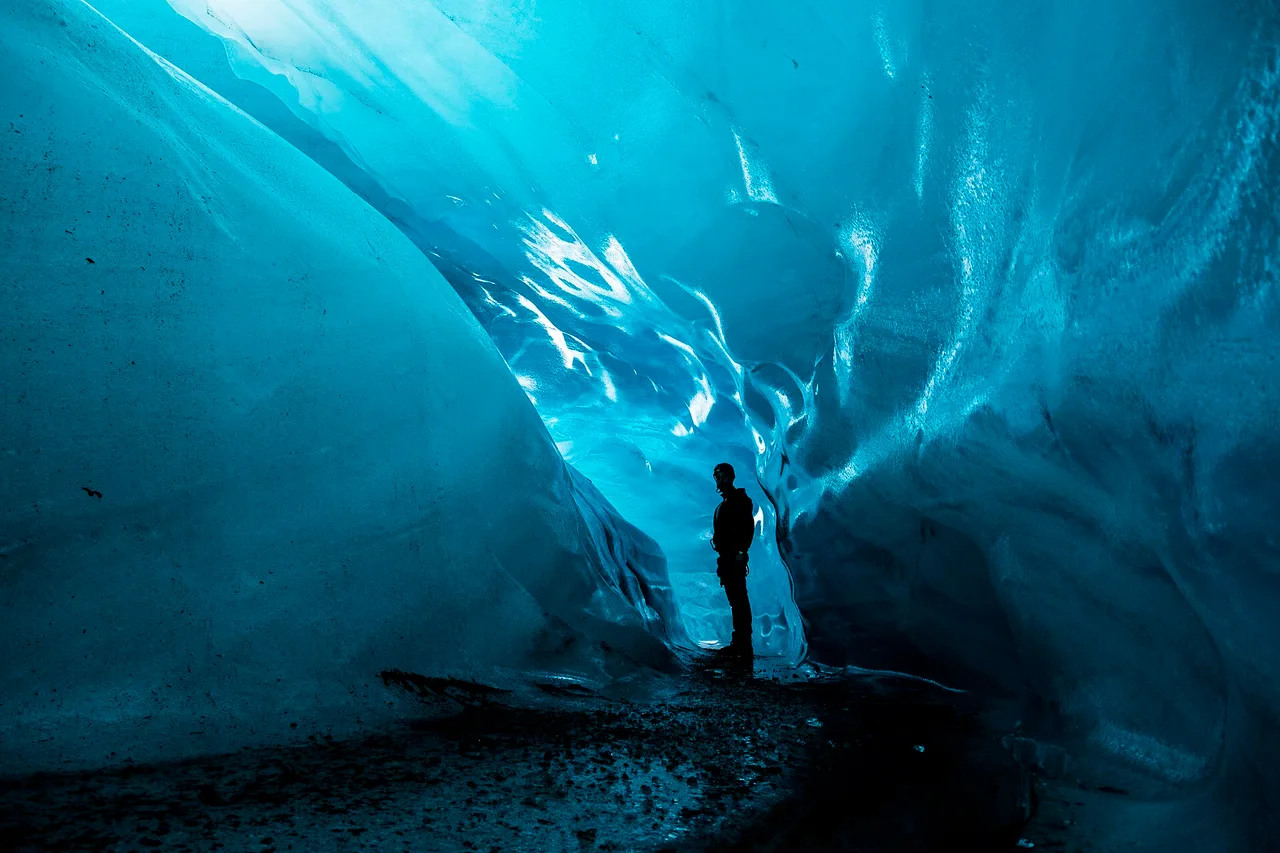
Winter’s second exclusive is the natural ice caves, from November to March. They form and hold only under sustained cold, and they close up in spring. One point is not negotiable and is nothing like a commercial precaution: entering without a licensed guide is forbidden. Every cavity is reassessed for safety daily by licensed operators and the Association of Mountain Guides of Iceland, and a departure is cancelled without notice if the ice moves. An ice cave is therefore booked through an operator, never improvised — it is the one thing on this trip that cannot be done alone.
In winter the risk is not the cold: it is the wind
Route 1 has priority for snow clearing and stays open all year, except in severe storms. The difficulty lies elsewhere, and it is meteorological without being thermal.
Above 25 m/s of sustained wind — 90 km/h — roads close to high-sided vehicles; above 30 m/s, restrictions apply to everyone. A closure typically lasts six to twenty-four hours, and a single storm can cut Route 1 in three or four places on the same day. The most frequently closed section is well known: the black sand plains around Vík, where the wind raises sandstorms that erase visibility and strip paintwork.
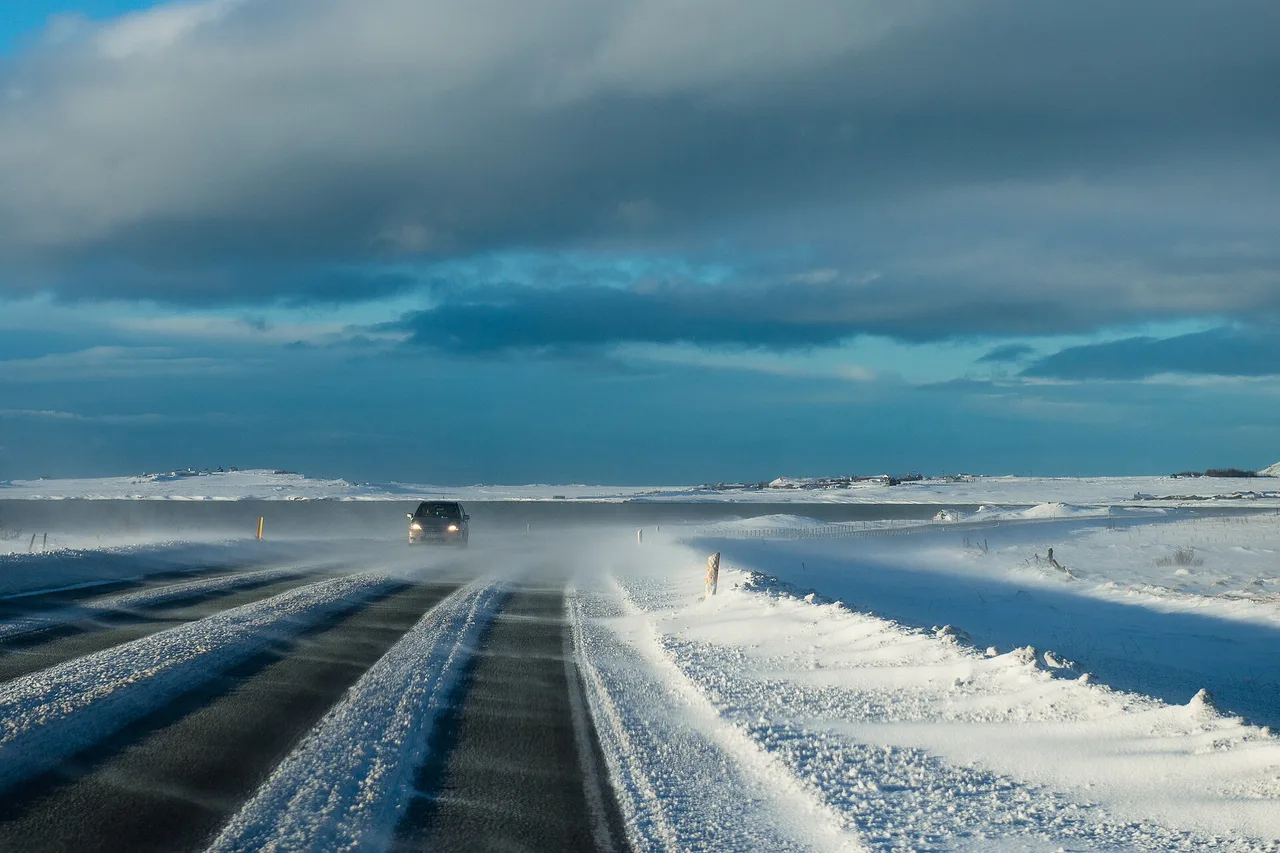
Two legal obligations frame the season. Winter tyres are compulsory from 1 November to 15 April, with a minimum tread depth of 3 mm; reputable rental firms fit them as standard over that window. Studded tyres are permitted over exactly the same period and banned outside it — the fine is ISK 20,000 per tyre (March 2026 rate).
The practical consequence is the only thing in this section that really matters: a winter itinerary must be elastic. Do not chain non-refundable nights across six different towns; keep a spare day before the flight home; accept in advance that a leg may be dropped. It is also why it helps to know that EU Regulation 261/2004 applies to Iceland, through the European Economic Area agreement: it covers all flights departing the country, and those arriving on an EU carrier. For a cancellation, denied boarding or a delay of three hours or more attributable to the airline, compensation is due, and it can be claimed; the national enforcement body is Samgöngustofa. Weather, by contrast, counts as an extraordinary circumstance: it entitles you to care and assistance, not to the payment.
Finally, a recommendation few articles dare to make. If driving four hours a day on a snow-covered road, in the dark, with a crosswind, does not appeal — then do not. Winter works perfectly well from a Reykjavík base, heading out each day to the south coast or the Golden Circle with a driver. A transfer from Keflavík plus day tours costs less than a week of rental, protections and fuel, and removes the only real risk of the winter trip.
Summer: twenty-one hours of daylight, and the interior
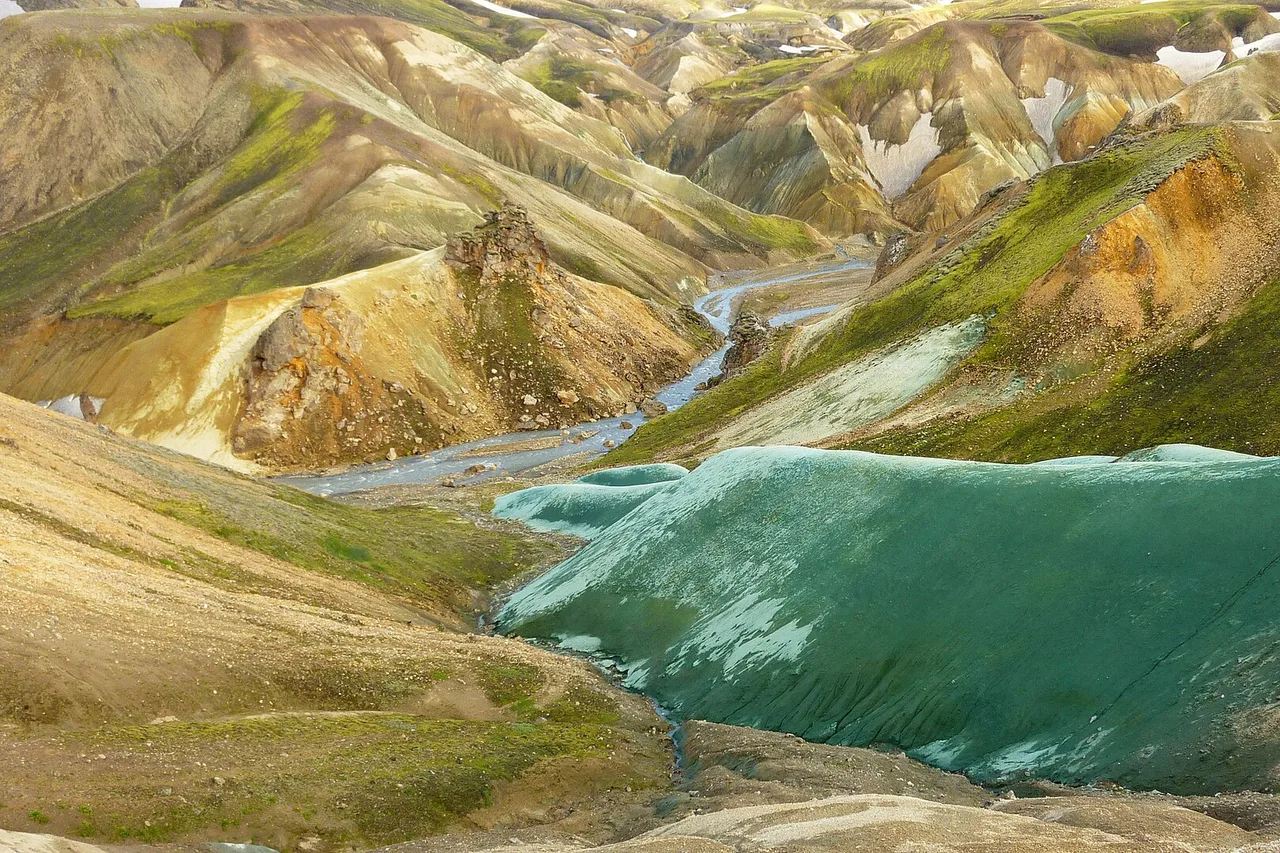
Summer opens something winter will not sell at any price: the highlands. Iceland’s interior is served only by the F-roads, tracks barred to ordinary cars and demanding a genuine 4x4, and they open in stages as the snow melts: the F35 over Kjölur generally in early June, the F208 to Landmannalaugar between 10 and 20 June, the F26 over Sprengisandur in late June or early July, and the far interior — Askja, Kverkfjöll — rarely before July. The dates cannot be planned for: they are set road by road by the roads administration and published on umferdin.is on the morning itself.
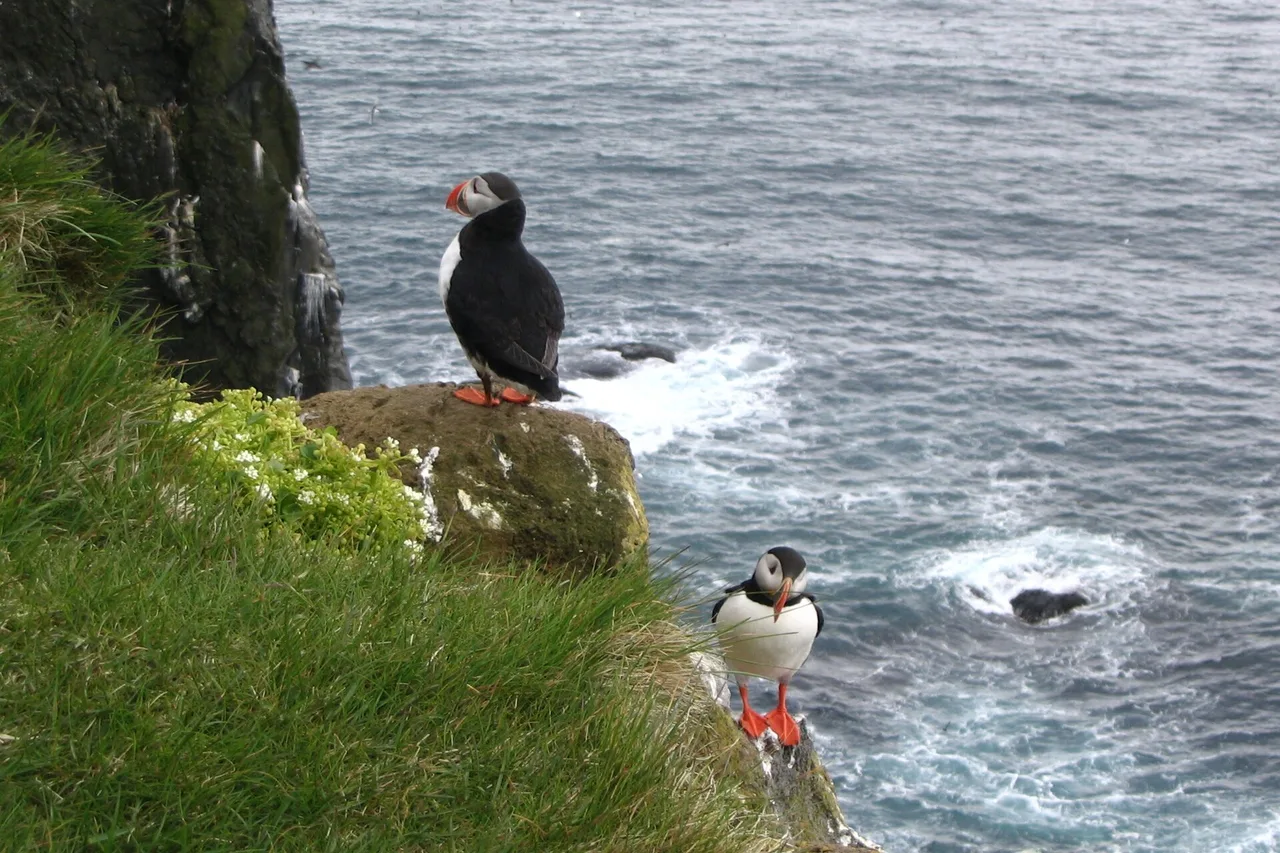
Summer also opens the wildlife. Puffins arrive in mid-April and leave at the end of August; the best period is June-July, when they are feeding chicks and sitting out in the open on the cliffs. The country’s largest colony is at Látrabjarg in the Westfjords, though Vestmannaeyjar and Dyrhólaey are far easier to reach. In winter the birds are out at sea: there is nothing to see, and no tour offers it.
Whales follow a wider calendar — April to October, peaking June to August. Operators in Húsavík, on the north coast, report sighting rates above 95 % in peak season; that is an operator figure and should be read as one, but Skjálfandi bay has not stolen its reputation. Tours also run from Reykjavík in winter, with distinctly lower odds.
Full guide: Things to Do in Iceland: Tours to Book, Prices 2026
What summer costs: the crowd and the price
The other side of the scale has to go on the table. August 2025 was the busiest month in the history of Icelandic tourism: about 313,000 foreign tourist departures through Keflavík, above the previous record of August 2018; July followed at 302,000. The three months from June to August concentrate 37.4 % of the year’s departures — more than a third of the visitors in a quarter of the calendar.
Price follows the same curve, and the gap is wider than people imagine. August is the dearest month to rent a car, around 51 % above the annual average; January, February and November are the cheapest, and the summer peak can reach double the winter rate for the same car.
Full guide: Car Rental in Iceland: Prices, Insurance and F-Roads
But give the other half of the sum, or the figure misleads. In winter many travellers take a larger, better-shod vehicle, which claws back part of the headline gap. And one line does not move between seasons at all: the kilometre charge of ISK 6.95 per kilometre, in force since 1 January 2026, depends on neither the month nor the fuel — so it does not separate the two seasons, though it weighs on both.
The practical conclusion is simple: the gap between two months far exceeds the gap between two rental firms. So compare on your real dates, adding up the totals rather than sorting on a headline rate — and if your dates are flexible, moving the trip by a month pays better than any amount of shopping around.
So which one? — the answer few articles give
For two profiles there is no debate at all, and it is the access table that settles it. If you are coming for the highlands, Landmannalaugar, Þórsmörk, hiking, puffins or the midnight sun: summer, and nothing else — those things simply do not exist in winter. If you are coming for the northern lights and the natural ice caves: winter, and nothing else, for precisely the same reason.
That leaves the traveller who wants to “see Iceland” with no particular exclusive — and that is most people. For them the true answer is neither winter nor summer: it is the shoulder season, and September first. The first two weeks keep the F-roads open and about thirteen hours of daylight; in the last two, true darkness returns to five or eight hours and the aurora season begins, while prices have already left the August peak. It is the only moment of the year when the two sets come close to touching.
Its cost, stated plainly: the weather deteriorates, Atlantic depressions close in, the first snow falls on the highlands and F-road closures accelerate through the second half. You are trading certainty for range.
Late March and early April form the mirror image of the same compromise: aurorae remain possible until mid-April, the days lengthen fast, prices are still low — but the interior is still shut, and will stay shut for two more months.
One last thing, true in both seasons and often learned too late. Iceland does not reward rigid itineraries. Whatever date you pick, get into the habit of checking umferdin.is for road conditions, vedur.is for wind and safetravel.is for alerts every morning. It takes two minutes, and they are the two minutes that separate a trip gone awry from a trip gone wrong.