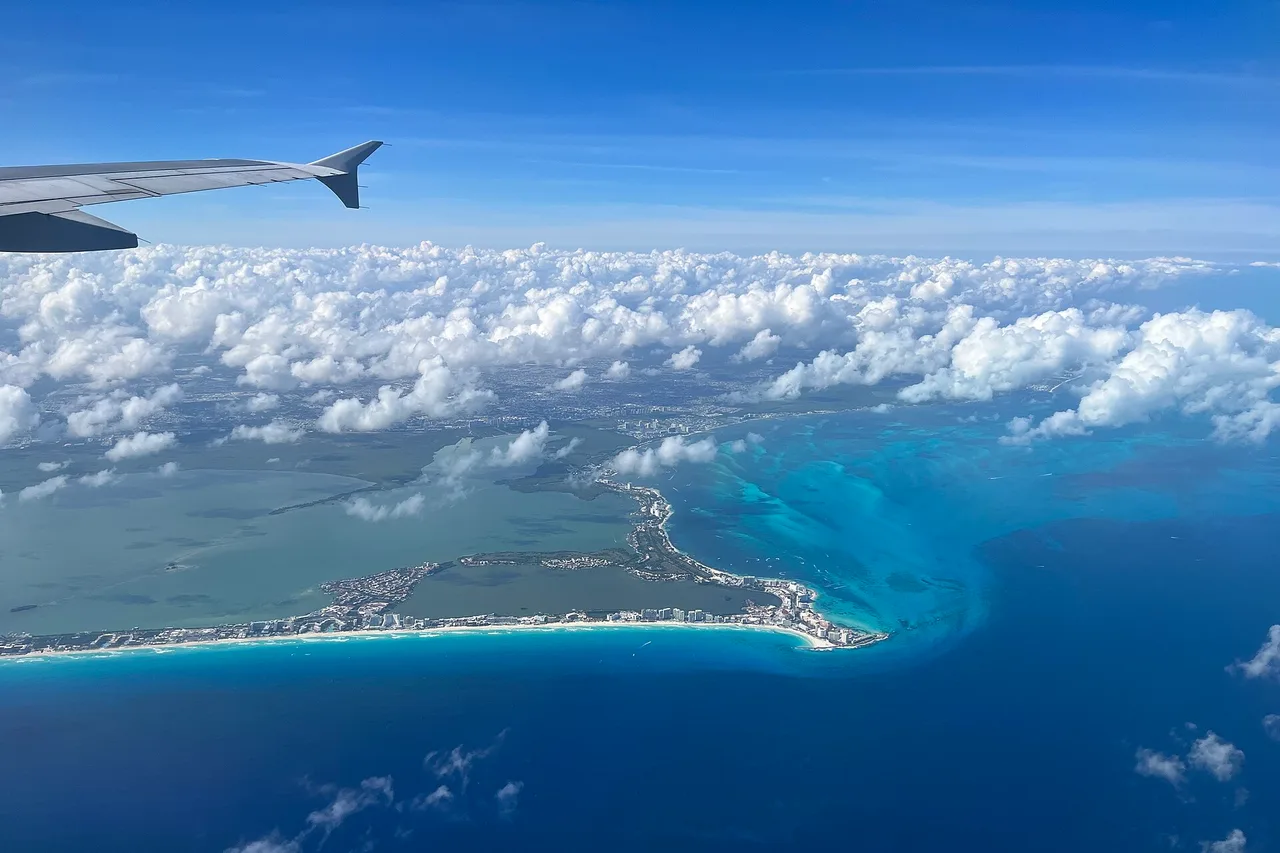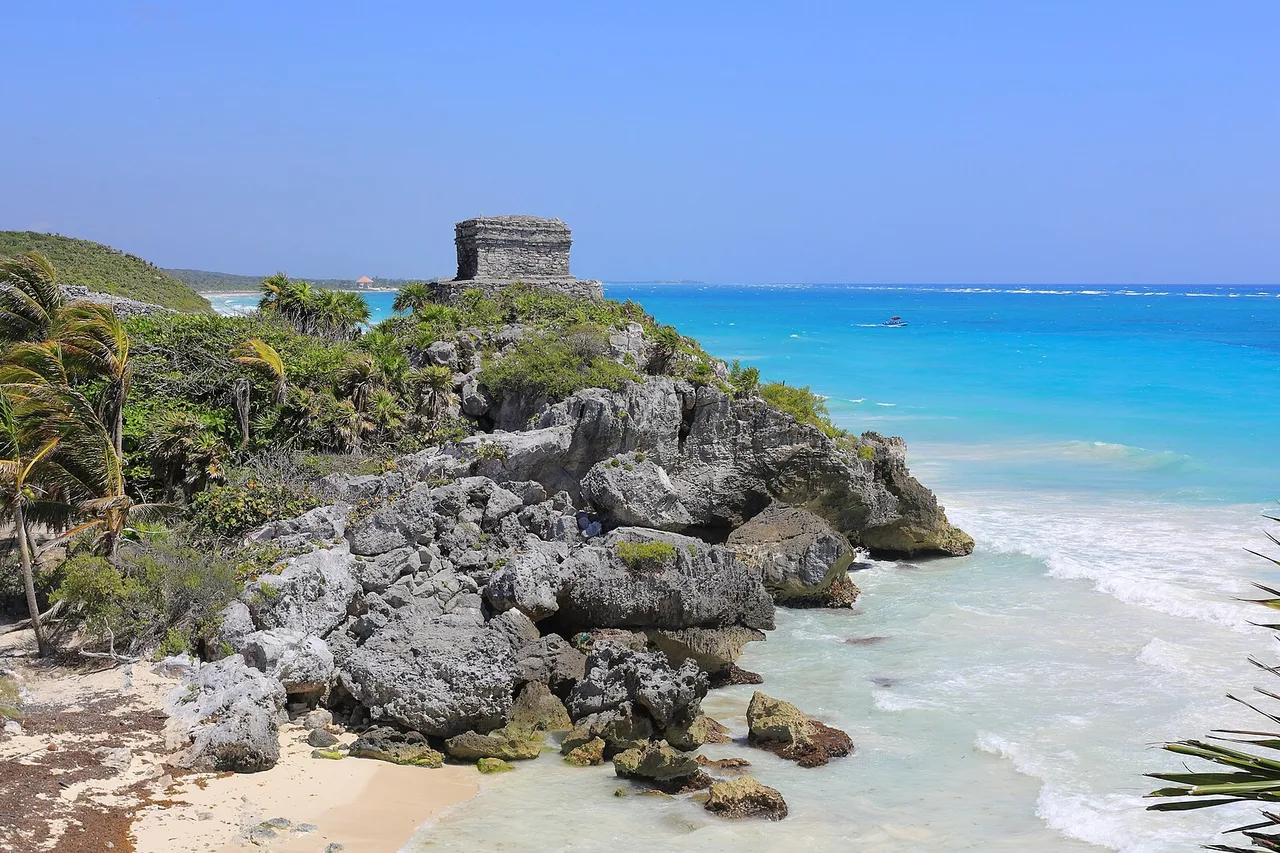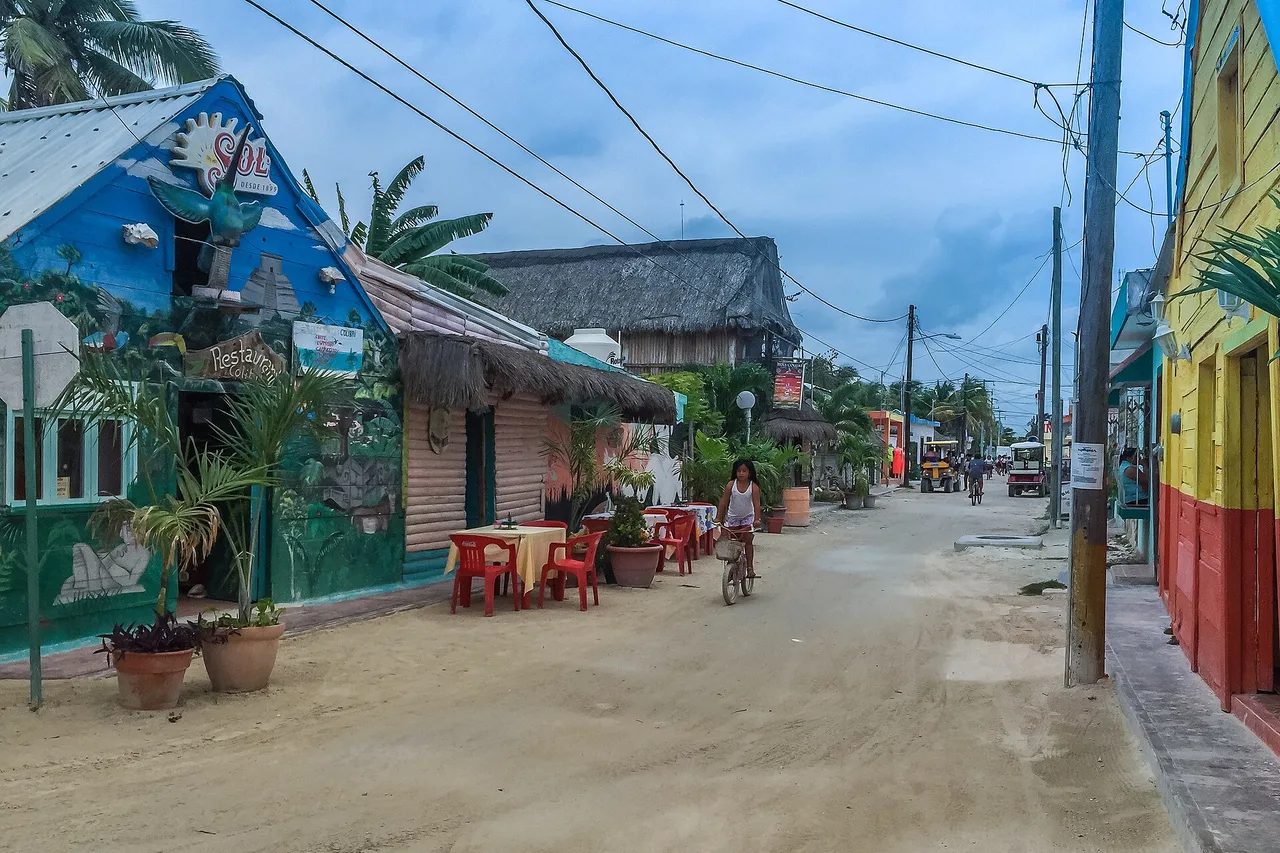
People put them in the same sentence — “the two islands north of Cancún” — and that is already the mistake. One is thirty minutes away by ferry and works as a day trip; the other takes half a day to reach and does not forgive being rushed. One has the turquoise water of the postcards; the other a milky lagoon where you wade three hundred metres before you are out of your depth. Both are explored by golf cart, and that is very nearly all they share. Here, point by point, is which one matches your trip.
The one genuine thing in common: the golf cart
Before the differences, let us settle what actually brings these two islands together — and the list is short.
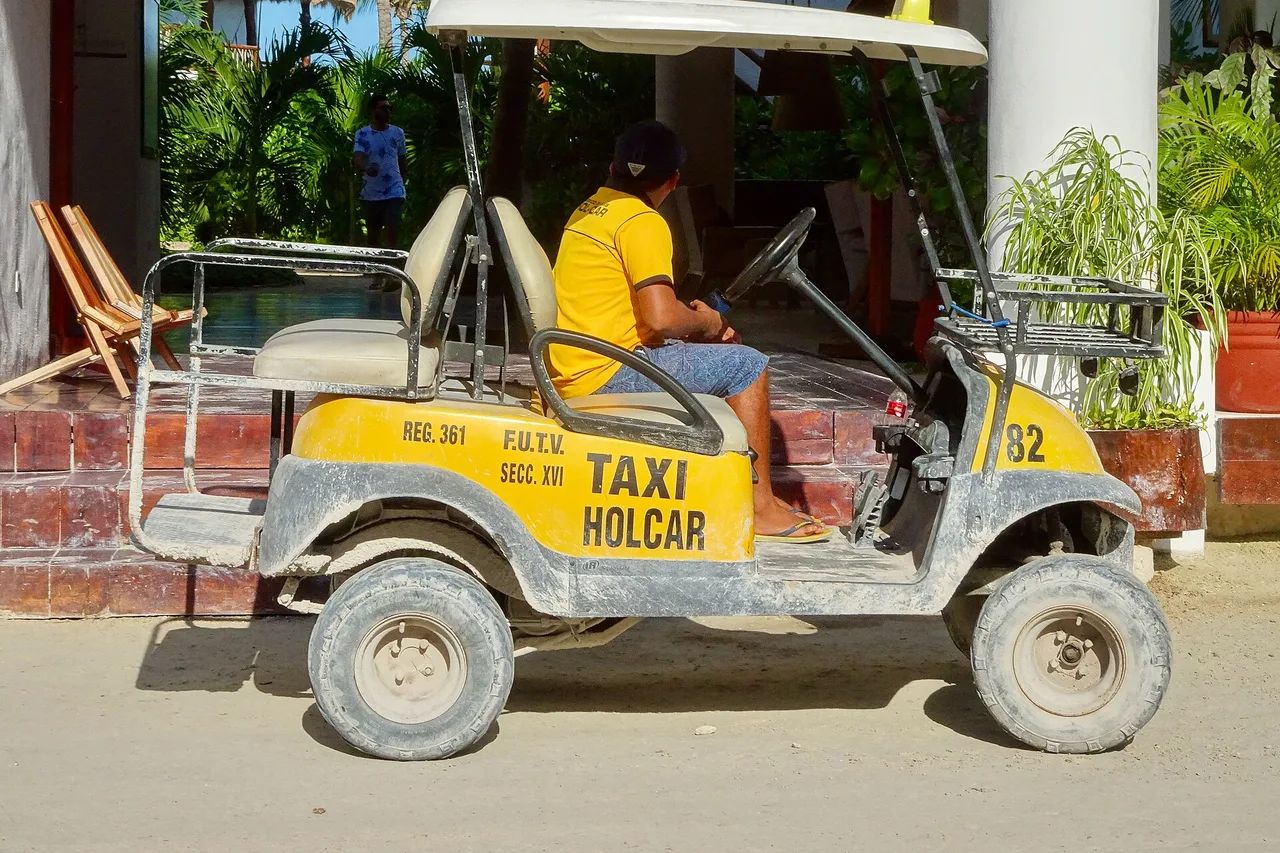
Neither is visited by car. You get around by golf cart, by bicycle or on foot, and that detail changes more than it seems: no horns, no traffic, a pace that drops a gear the moment you step off the boat. Both are also barely touched by sargassum, which in a record year like 2026 is not a minor argument — more on that below.
And that is about it. From there everything diverges: journey time, the colour of the water, the price of a plate, the kind of evening, right down to the reason you go. Confusing the two risks organising three hours of travel for a beach you do not like, or rushing in a day an island that needed you to sleep on it.
Access: thirty minutes against three hours
This is the decisive criterion, the one that settles half the cases on its own. It is not about distance but about changes of transport.
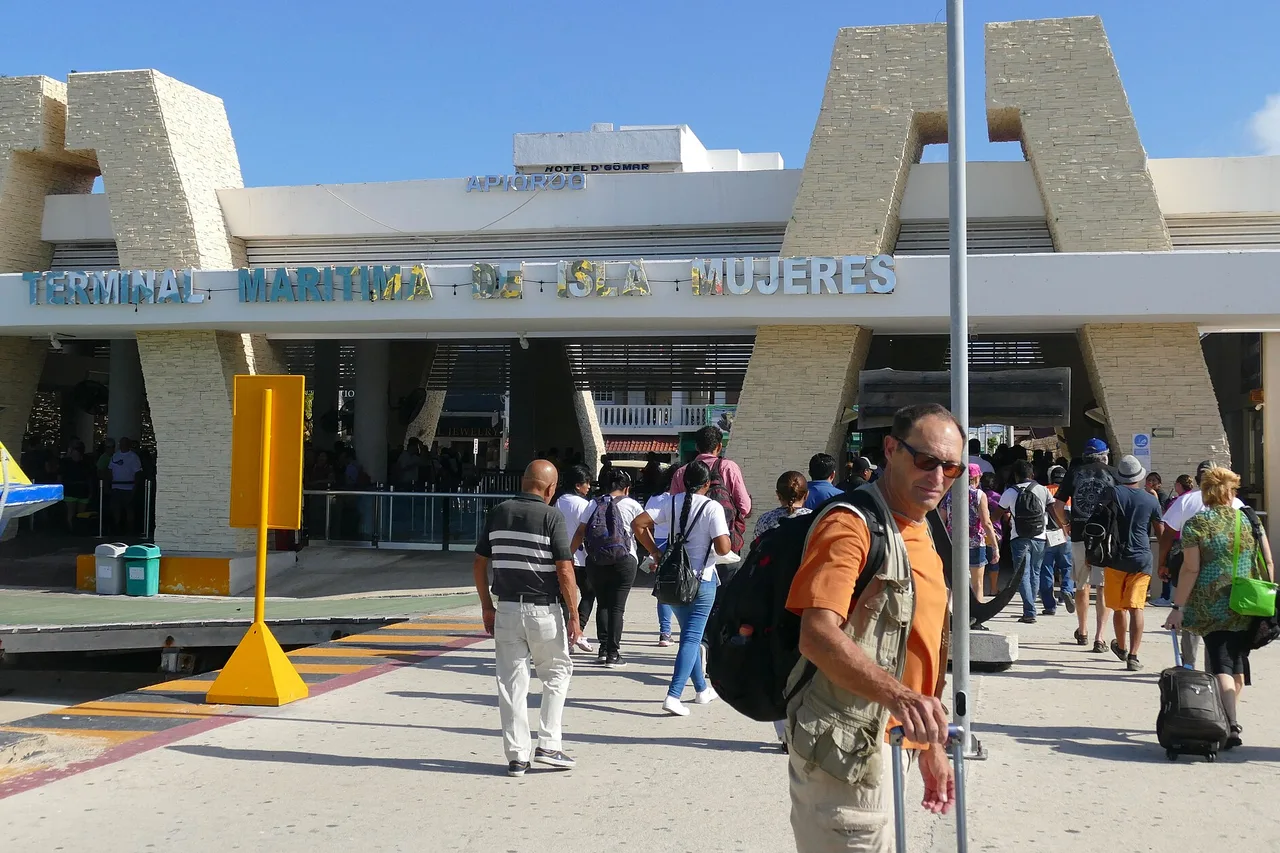
Isla Mujeres is one ferry from Cancún. You leave from Puerto Juárez or Gran Puerto, the crossing takes twenty to thirty minutes, departures run all day, and the ticket costs roughly 5 to 8 dollars depending on the operator. The practical result: the island works as a day trip, slots into an itinerary without distorting it, and can be decided on the morning itself.
Holbox takes an operation. First you reach the port of Chiquilá — allow two and a half hours from Cancún airport — then a 25-minute ferry. Two companies, Holbox Express and 9 Hermanos, run the route at the same fare, with a departure every thirty minutes from 6am to 9.30pm.
On the price of that ferry we have to be honest: the figures published in 2026 do not agree, ranging from 220 to 330 pesos one way per adult, with the gap explained nowhere. Budget the upper end. Children up to eight pay around 160 pesos.
To reach Chiquilá, the cheapest and often sufficient option is the ADO coach, which serves the port directly from Cancún. If you land late, travel as a family with luggage, or are aiming for a specific ferry, a private transfer from Cancún airport to Chiquilá can be booked at a fixed price and removes the uncertainty from one link in the chain. The matter of fake taxis on arrival is covered in detail in our article on safety in Mexico.
Full guide: Cancún Airport Transfer to Tulum and Playa del Carmen
The consequence, and it is firm: Holbox does not work as a day trip. Five to six hours of transport for three hours on the ground is a bad trade. Two nights is the minimum, three the right format.
Water and beaches: two seas, not two beaches
This is the difference photographs never convey well, and the one that produces the most disappointment.
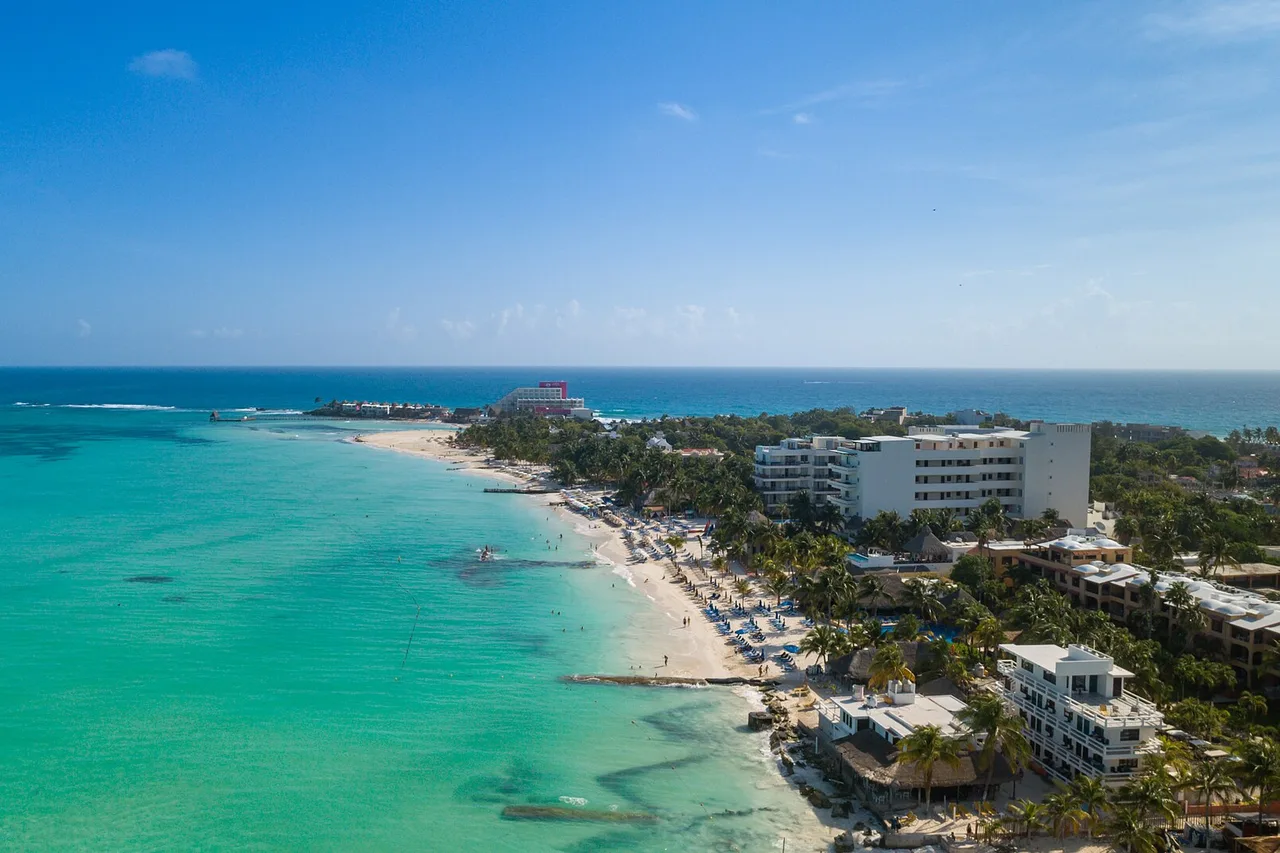
Isla Mujeres is in the Caribbean. Playa Norte is exactly the expected picture: clear turquoise, fine white sand, a gently increasing depth, palm trees. It is a conventional swimming beach, with bars at the water's edge and loungers for hire. It is also fairly busy, especially between 11am and 3pm when the day trips arrive.
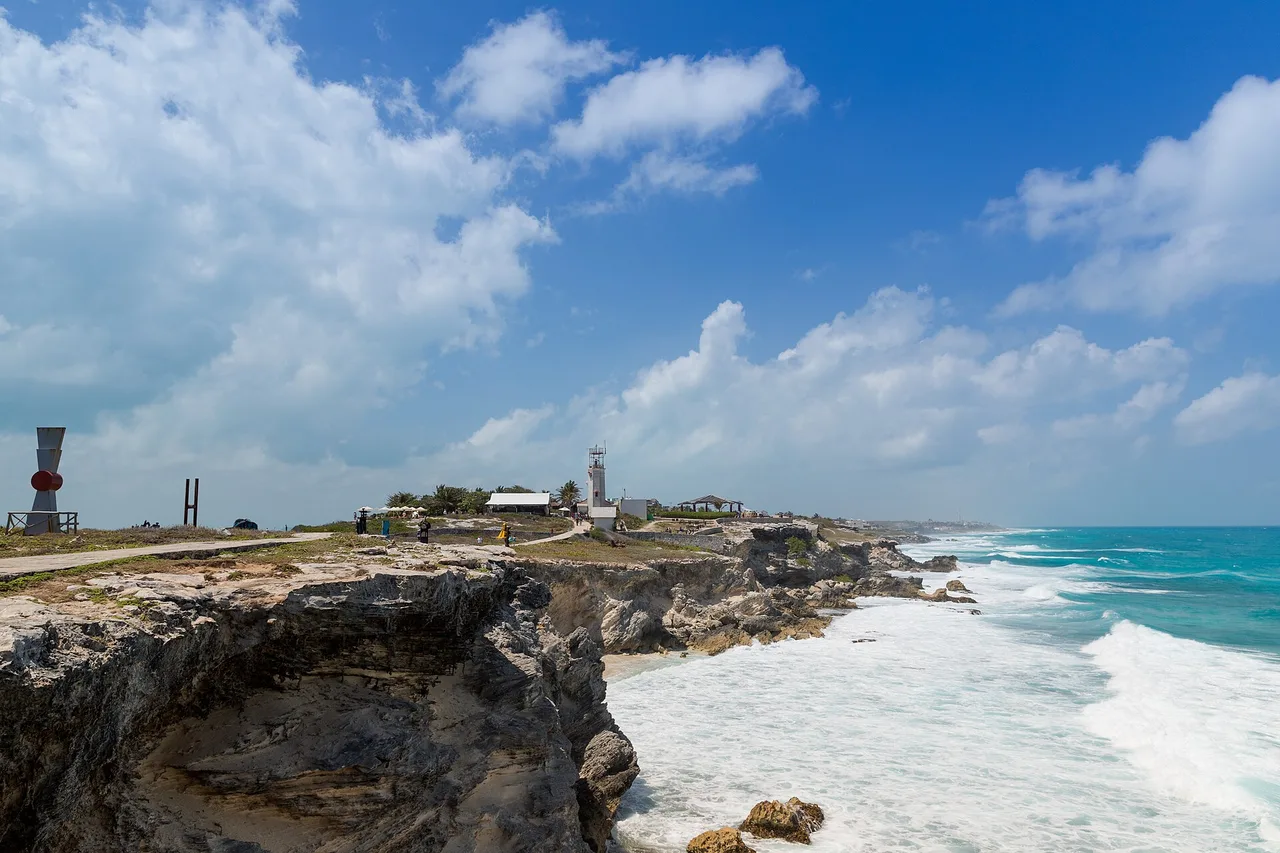
The island has a second face, a very different one: Punta Sur, at the tip, with its low cliffs beaten by the swell and its sculpture trail. You go for the view and the sunrise, never to swim.
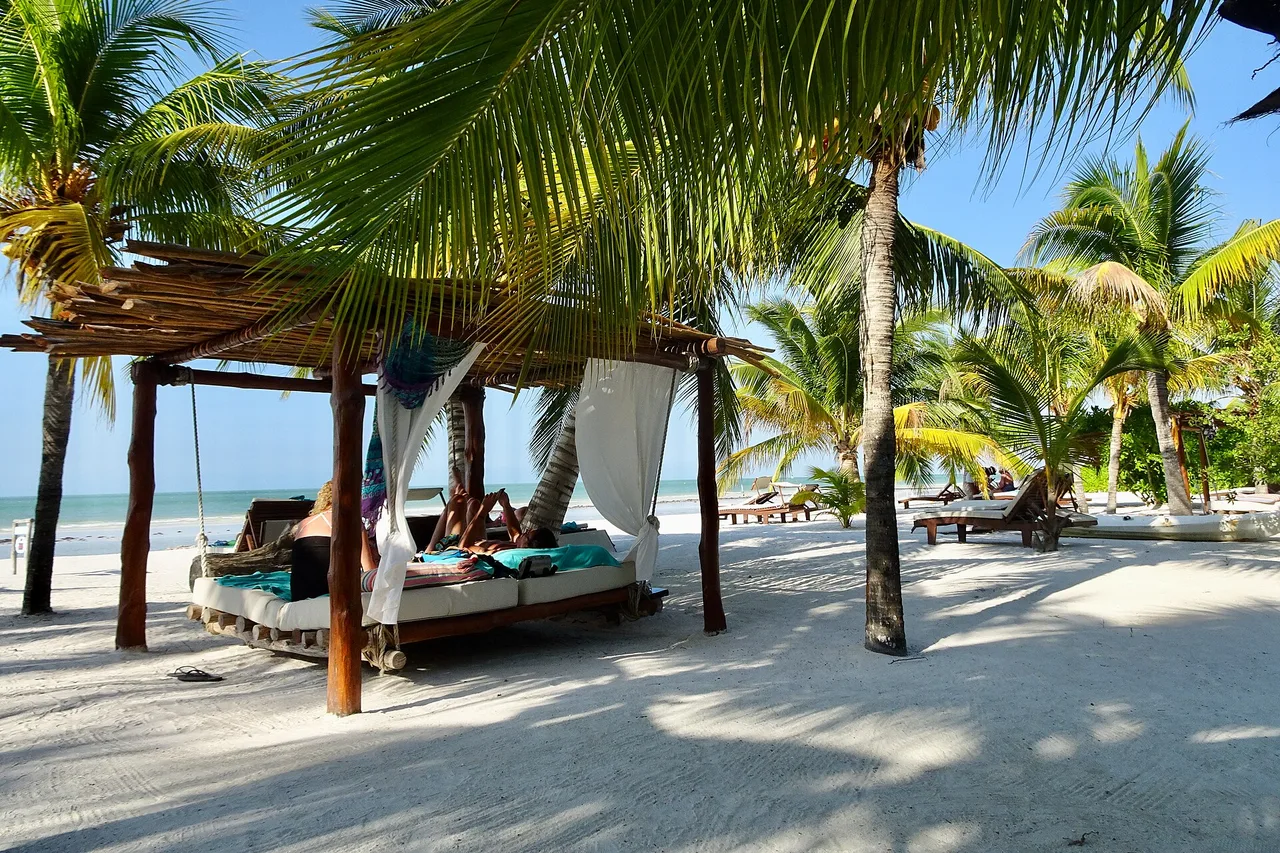
Holbox is in the Gulf of Mexico, and the water looks nothing alike. It is milkier, greener, sometimes frankly cloudy depending on the wind — because the bottom is sandy and stirred up, not because it is dirty. Above all it is extremely shallow: you wade two to three hundred metres before you are out of your depth. That is paradise with small children and a disappointment if you came to swim.
In exchange, Holbox offers what Isla Mujeres does not: kilometres of empty beach, flamingos, sunsets with nobody in front of you, and on moonless nights a bioluminescence that is not guaranteed but is entirely real.
Atmosphere: beach bar against sand street
Two villages, two entirely different ideas of a holiday.
Isla Mujeres is developed and busy. The centre concentrates restaurants, bars, shops and cart rentals; activity is continuous, by day and in the evening. It is an island where you are never alone, where you find everything, and where life does not stop at 10pm. For a couple who want to go out to dinner without planning it, this is the right call.
Holbox sits at the other end of the spectrum. The streets are sand, the buildings low, there is no large resort, and street lighting is modest. You eat well — the cooking is often better than on Isla Mujeres — but in a bohemian register, with places that close early and a village you can cross on foot in a quarter of an hour.
An honest reservation about that charm: Holbox has become expensive. Restaurants, shops and rentals are noticeably dearer than on the mainland, which surprises people on an island that presents itself as rustic. You are paying for the isolation, not for the comfort.
Whale sharks: same season, two logistics
This is often the reason for the trip, and the point is badly explained everywhere. Here is how it actually works.
The season runs from mid-May to mid-September, with the best density-and-weather compromise from mid-July through August. The animals gather at a spot called Afuera, about ten kilometres offshore from Holbox. In other words: it is the same aggregation from both islands, and nobody has whale sharks of their own.
The difference is logistical. From Isla Mujeres the organisation is simpler and the offer more plentiful — that is the base to pick if watching them is the trip's only aim and you want the fewest constraints. From Holbox you are already there, and the outing fits into a slower, more remote stay.
Two things to check before paying, whichever the departure point. First, the activity is regulated by CONANP, Mexico's protected-areas agency: operators must hold a permit and the number of places is capped. A provider who cannot prove it is not a cheaper provider, it is an illegal one. Second, ask what is included — the protected-area entry fee is the line that varies most between operators.
Boat trips and day tours from Cancún and Isla Mujeres can be booked ahead at a known price, which spares you the haggling on the jetty — but if you are staying on the island, village agencies often charge less, and that is honestly the first thing to compare.
Sargassum: the shared advantage that matters in 2026
In a record year, the argument deserves figures rather than assertion.
The official summer 2026 monitoring rated the Holbox ferry pier as "no sargassum" through the heaviest weeks of the season, while one Quintana Roo beach in two was going red. On Isla Mujeres, Playa Norte, Playa Centro and Punta Sur stayed green or blue over the same period.
The reason is neither luck nor cleaning: it is orientation. Holbox faces the Gulf of Mexico, not the Caribbean Sea; Playa Norte turns its back on the open water and looks into the bay. We gave the subject a whole article, with the official map and the calendar: sargassum in Mexico, season and beaches that stay clear.
What nobody tells you about each
The drawbacks, because a comparison that names none is not comparing anything.
On Holbox, three reservations come up regularly in travellers' accounts. Mosquitoes, very present in the wet season: a serious repellent is not an accessory. The state of the streets, which are sand, where standing puddles settle at some junctions after rain — reviews sometimes mention sewage, and good sandals beat good shoes. And the prices, already mentioned. Add that ATMs are scarce and sometimes empty: arrive with cash.
On Isla Mujeres, the flaw is the opposite and fits in one word: crowds. The island is thirty minutes from the country's biggest resort strip, and it shows. Playa Norte fills up mid-morning with the day trips and empties mid-afternoon; sleeping there changes the experience entirely, since you get the early morning and the end of the day back. The centre is also markedly more commercial: restaurant touts, souvenir shops, constant solicitation along the main street.
The verdict, by traveller type
There is no winner, there is a match to find. Here is ours, stated without hedging.
| Criterion | Isla Mujeres | Holbox |
|---|---|---|
| Access from Cancún | Ferry 20-30 min, $5-8 | 2 h 30 by road + 25 min ferry, ~330 pesos |
| Format | Day trip or stay | 2 to 3 nights minimum |
| Water | Turquoise, gradual depth | Milky, extremely shallow |
| Atmosphere | Lively, restaurants, nightlife | Bohemian, sand streets, quiet |
| Whale sharks | Simplest logistics | Already there, slower stay |
| Sargassum summer 2026 | Green or blue | "No sargassum" at the pier |
| Main drawback | Daytime crowds | Journey, mosquitoes, prices |
Choose Isla Mujeres if this is your first time in Mexico, if your trip is short, if you want the turquoise water of the photographs, if you like eating out and going out, or if whale sharks are the trip's only purpose. It is also the right call when the itinerary is already full: it adds without breaking anything.
Full guide: Things to do in Yucatán: 15 highlights (and what to skip)
Choose Holbox if you want calm more than the postcard, if you travel with small children — knee-deep water for three hundred metres is an unbeatable argument — if you have at least two nights to give it, and if the idea of an island without cars or large hotels matters more to you than the colour of the water.
And if you are still torn, the real question is not "which is more beautiful" but "how many nights can I give it". One night: Isla Mujeres. Three nights and the urge to slow down: Holbox. To fit the whole thing into a coherent route, our two-week Yucatán road trip itinerary places both in the right spot.
Top-rated activities in Mexico, bookable online: