On Reunion Island, four continents simmer in the same pot: the cari — meat or fish stewed with tomato, onion and turmeric — is the dish that explains the island. This guide crosses Creole cuisine the way locals eat it: from rougail saucisses to street-stand samosas, from open-air markets to tables d’hôtes up in the cirques, down to the last glass of rhum arrangé — with prices checked on 21 October 2026.
Four continents in one pot: where Creole cooking comes from
Reunion was uninhabited until the 17th century: everyone who lives here came from somewhere else, and everyone arrived with a cuisine. From Madagascar and East Africa came the slow stews and the brèdes, leafy greens cooked in the pan. From India, after slavery was abolished in 1848, came indentured workers — and with them the massalé spice blend, samosas and a taste for chilli. From southern China came merchant families, to whom the island owes its steamed bouchons and caramelised sarcives pork. And from France: gratins, slow braises, and the baguette still sold on every corner.
The result is not a food court of separate national cuisines but one single, fused cuisine — Creole, precisely. On the same plate you’ll find Indian-spiced pulses, an African-style stew, an Asian-inspired condiment and French bread. Learning the island through its plates is a faster history lesson than any museum.
The cari: the plate that explains the island
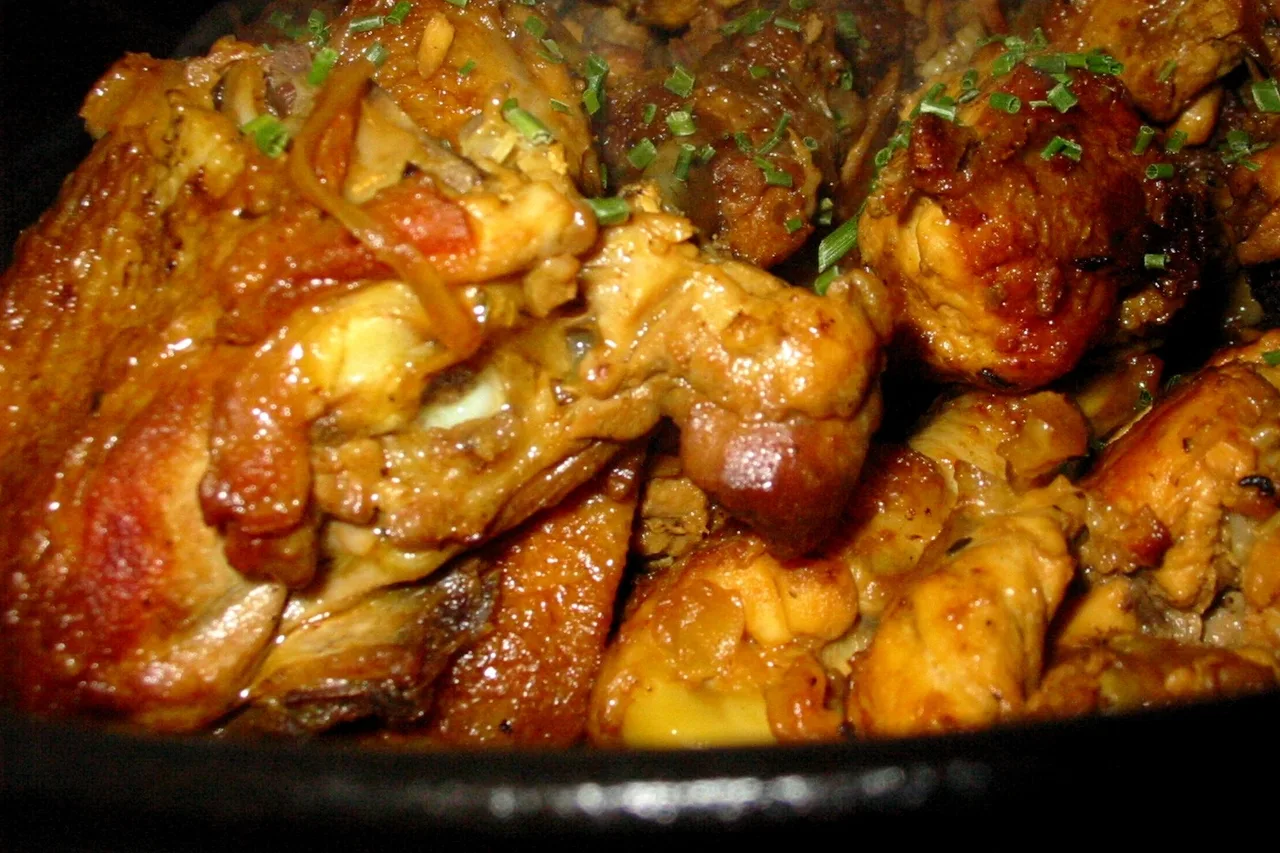
The national dish is the cari (also spelled carri or carry): meat, chicken, fish or octopus, browned then simmered with onion, garlic, tomato, thyme and turmeric — known here as safran péi, “country saffron”, traditionally grown at Plaine des Grègues in the south. Unlike an Indian curry, a cari is not hot: the fire arrives at the table, one spoonful of rougail at a time.
A cari is never served alone but as the full plate: rice as the foundation, grains — lentils, red beans or Cape peas simmered into a silky side —, brèdes, and the fiery rougail. The island’s most famous lentils grow on the terraces of Îlet à Cordes, in the Cilaos cirque, at around 1,130 metres: some 400 hectares harvested by hand in September and celebrated with their own festival in October — our Cilaos guide tells their story.
Rougail saucisses and the classics to know
One word, two meanings — the local cuisine’s most common confusion. As a condiment, a rougail is a raw, chilli-spiked relish: tomato, onion, chilli, sometimes green mango or combava. As a dish, rougail saucisses is THE classic: smoked sausages simmered with tomato and spices, served with rice and grains. Then come civet de zourite (octopus stew), cabri massalé (goat in Indian spices, the feast dish of Tamil families) and boucané, smoked pork — as ti-jacques boucané, with young jackfruit, it’s a monument.
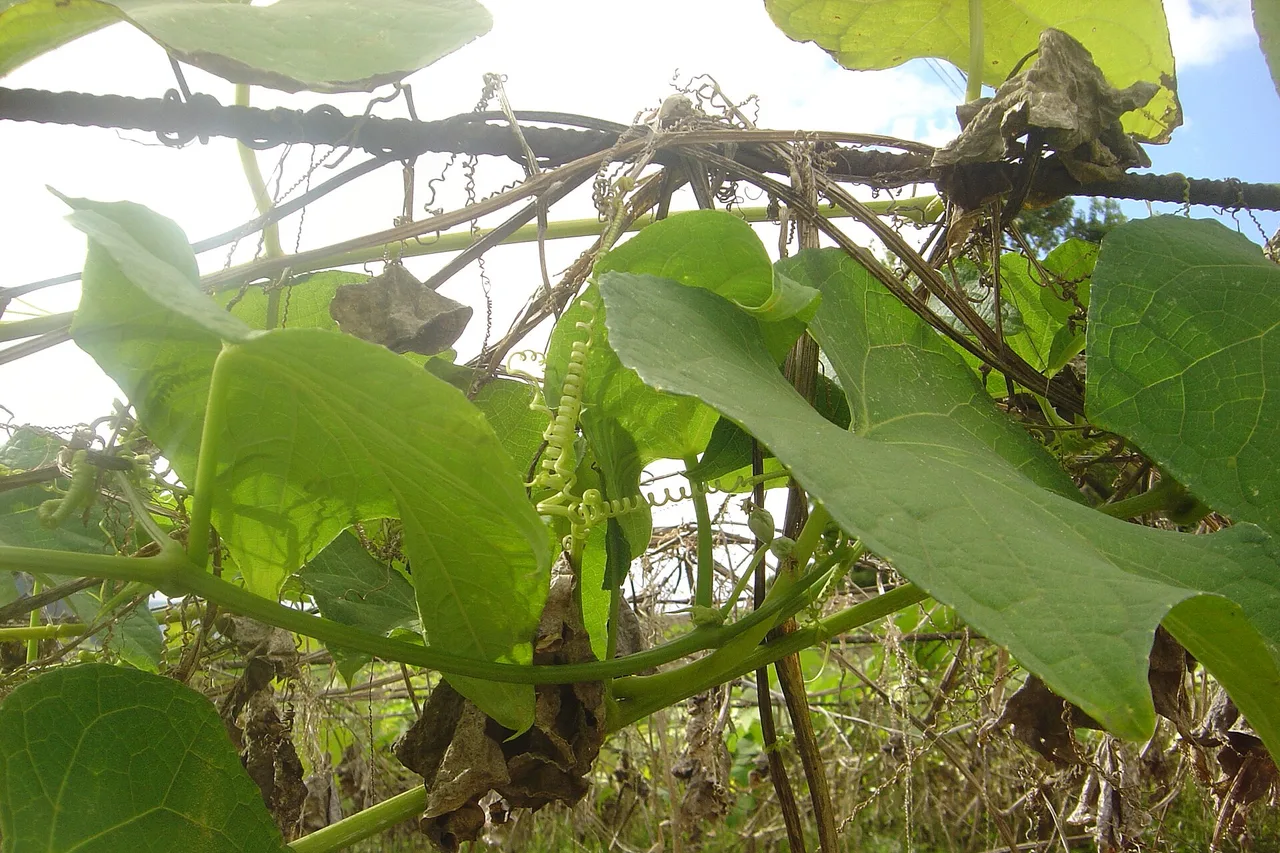
The quiet star among side dishes is the chouchou (chayote), which climbs on trellises above the roads of Salazie, the rainiest of the three cirques. As a gratin it is at home on nearly every table d’hôtes; its young shoots end up pan-fried as brède chouchou. To see how much one vegetable can shape a landscape, read our guide to Salazie, the greenest cirque — including Hell-Bourg, listed among France’s “Most Beautiful Villages” since 1998.
Street food: samosas, bouchons, bonbons piments
Creole food doesn’t start in restaurants: it starts at the snack-bar counter and on the market. The holy trinity of the apéro: samosas (fried triangles filled with chicken, fish or cheese, an Indian legacy), bouchons (steamed pork dumplings, a Chinese legacy — also served “gratinés”, in a baguette under melted cheese) and bonbons piments, split-pea fritters with chilli, crisp outside, soft inside.
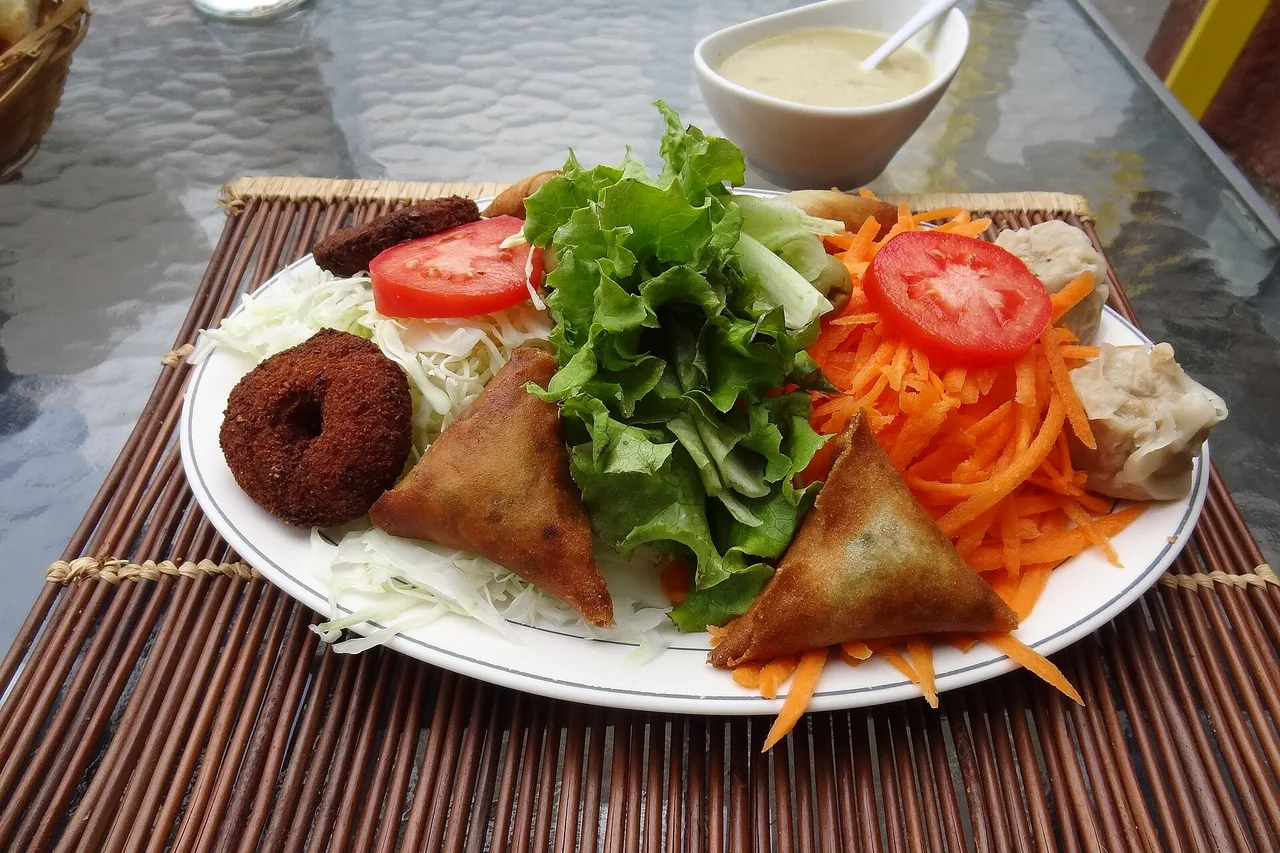
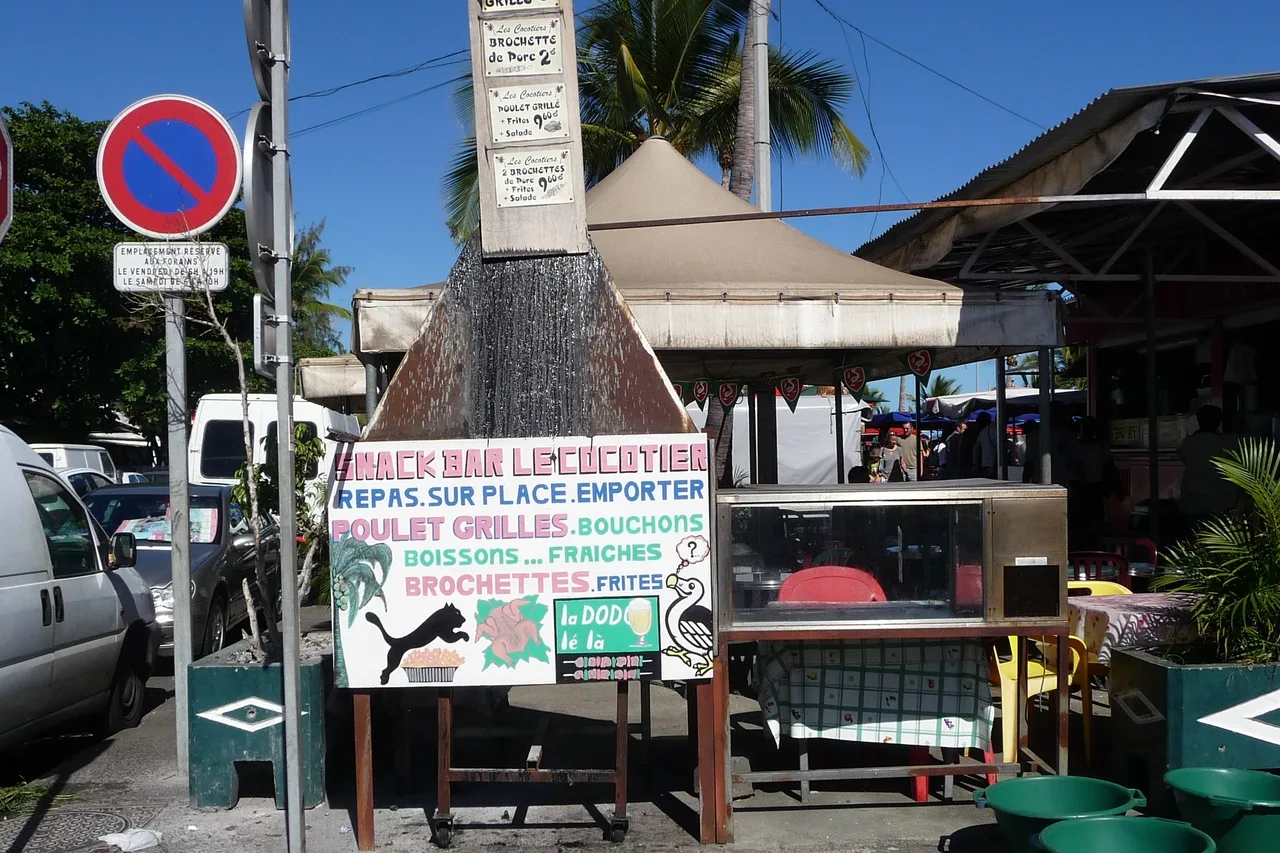
At lunchtime, enter the barquette: a takeaway tray of cari or rougail with rice and grains, from a snack bar or a camion-bar parked by the roadside. It is how the island itself has lunch — and the gentlest option for your budget: cost-of-living comparison sites put a simple lunch on Reunion in 2026 at around €9 on average (roughly €4 to €25 depending on the address).
The markets: Saint-Paul, the belly of the island
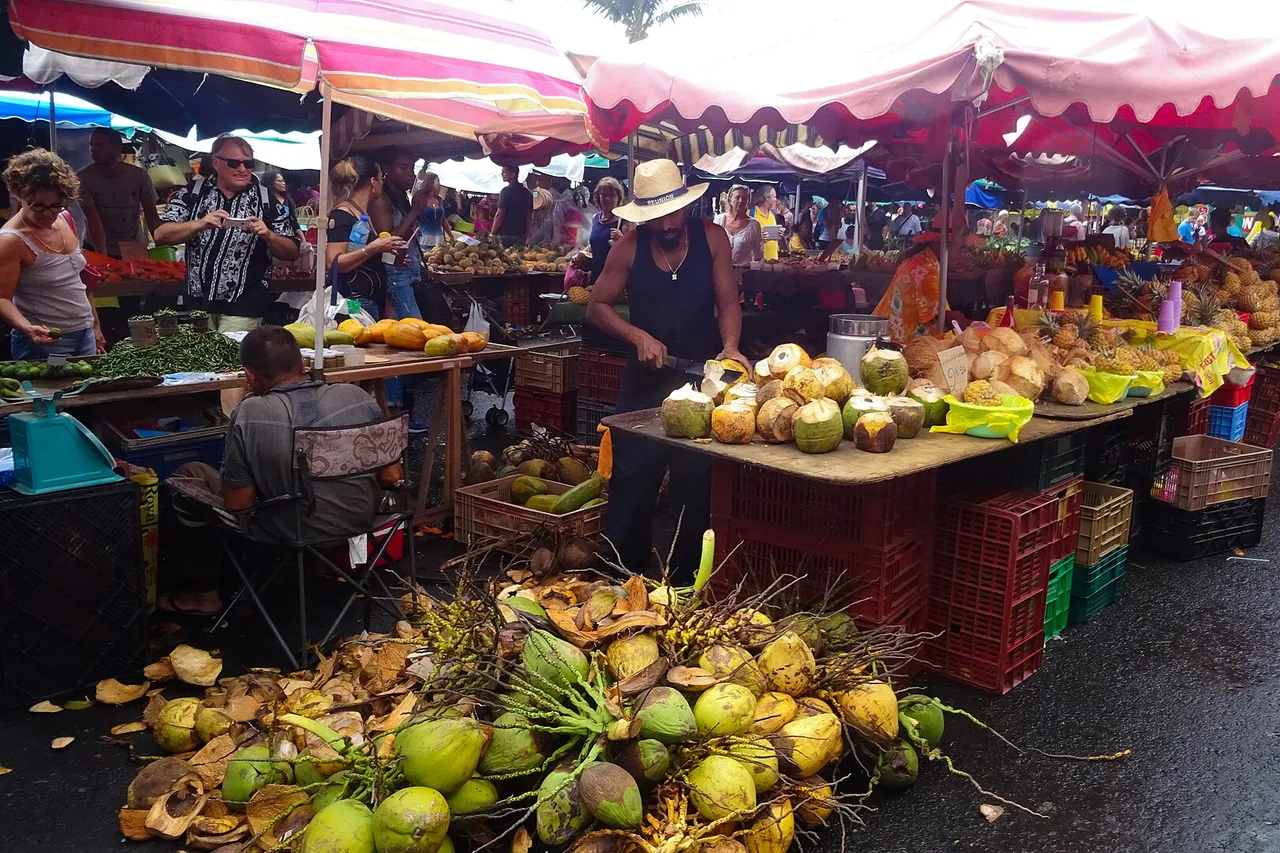
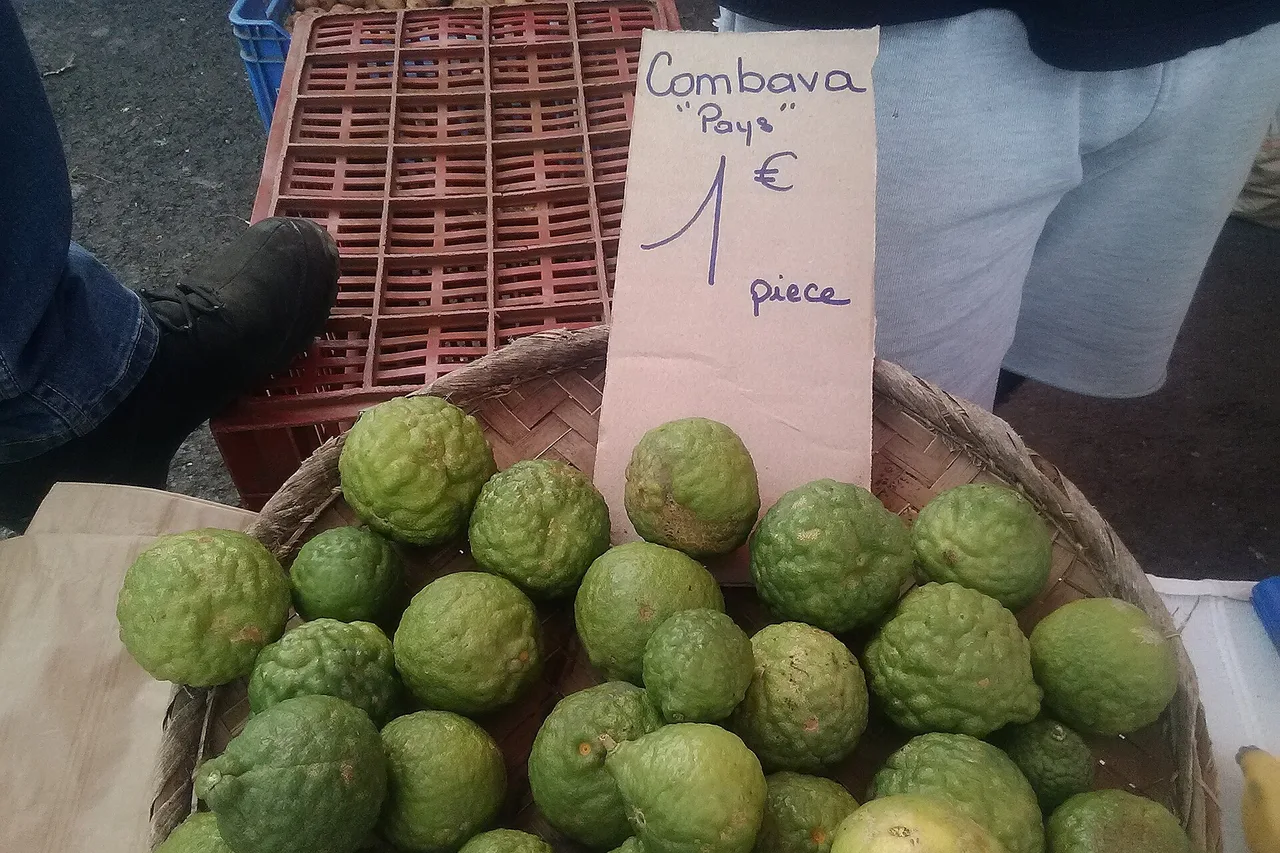
The island’s most famous market is the Saint-Paul open-air market, on the seafront of the old capital: all day Friday, Saturday until noon. Between pyramids of fruit and sacks of spices you’ll find nearly everything this cuisine is made of: Victoria pineapple, lychees in December, vanilla pods, turmeric, chilli — and combava, the small wrinkled citrus whose zest perfumes rougails and marinades.
Bourbon vanilla even has its own trail: in the wild south you can follow the journey from flower to black pod — at Escale Bleue (weekdays, €5) or the Jardin des Parfums et des Épices (daily, €7). Addresses and times are in our guide to Reunion’s wild south.
Where to eat: from food truck to table d’hôtes
The hierarchy is simple. At noon: a barquette from the snack bar or camion-bar, eaten on a car park facing the sea. In the evening: a restaurant in the coastal towns — or, the island’s loveliest experience, a table d’hôtes in the cirques: hosts cook for a single table, the cari comes out of the family pot, often off a wood fire, the rhum arrangé out of the house bottle, and the story of the dish comes with it. Booking is mandatory — there is only that one table.
Up in the mountains you eat Creole too: mountain huts serve half-board at around €34 (the gîte standard, as at Caverne Dufour below Piton des Neiges), and in roadless Mafate the guesthouses charge €60 to €75 half-board — a cari after a day’s hiking counts double. To add up plates, car and bed, our guide to the real cost of a Reunion trip does the maths.
Full guide: Renting a Car on Réunion Island: Tips and Pitfalls
Rum: rhum arrangé and the Saga du Rhum
Rhum arrangé is the island’s liquid memory: white rum in which fruit and spices steep for weeks or months — vanilla, pineapple, lychee, ginger, faham orchid. Every family, every table d’hôtes has its own recipe, and the bottle lands on the table at the end of the meal as a matter of course. Alongside it, the pale Dodo lager from Brasseries de Bourbon, whose signs are as much part of the scenery as the caris.
To understand where it all comes from, head to Saint-Pierre and the Saga du Rhum, the rum museum housed in the Isautier distillery — a family house since 1845. Open daily, 10 am to 6 pm (ticket desk until 5 pm); entry €12, reduced €9, free under 10, tasting included (an alcohol-free alternative is offered); 1 h 15 guided tour by reservation — checked on 21 October 2026. And as everywhere: rum is a culture, moderation is the rule.
Full guide: Things to Do in Réunion Island: 25 Unmissable Spots, Chosen by Locals
Enjoying the island without missteps: practical tips
You choose your own heat. Dishes arrive mild, the fire sits on the side — taste the rougail before spooning it over your plate, as some local chillies take no prisoners. The island lunches early: between noon and 1.30 pm, snack bars and camions-bars are at their best, and by early afternoon the best barquettes are gone. In the evening, outside tourist areas, many kitchens close early — and a table d’hôtes is always booked ahead.
Vegetarians manage well: grains, brèdes, chouchou gratin, achards (crisp pickled vegetables) and bonbons piments make a meal without trying. For dessert: Victoria pineapple, lychees picked from December into January, and gâteau patate, the sweet-potato cake. If you’re here in December, eat lychees until your fingers stick — it’s part of the trip.