Every austral winter, the giants come back. From June to October, humpback whales travel thousands of kilometres up from the icy waters of the Antarctic to calve and mate in the warm seas around Réunion Island. In good years you can watch them blow from a café terrace in Saint-Gilles; mothers glide past with their calves a few hundred metres from shore, while males sing and slap their fins. It is one of the great free shows of the Indian Ocean — and the island has made a clear choice: since 2025, whale watching here is among the most strictly regulated in France. Here is where, when and how to see the whales, without disturbing them.
The season: austral winter, June to October
Humpback whales visit Réunion's waters during the austral winter, from June to October, with the heart of the season in July, August and September — the whale-specific regulations apply from 1 July to 30 September. They do not come here to feed: there is almost nothing for them to eat. They come to do what polar waters do not allow — mate, give birth, and let the calves build up strength in calm, warm water before the long journey back to the Antarctic.
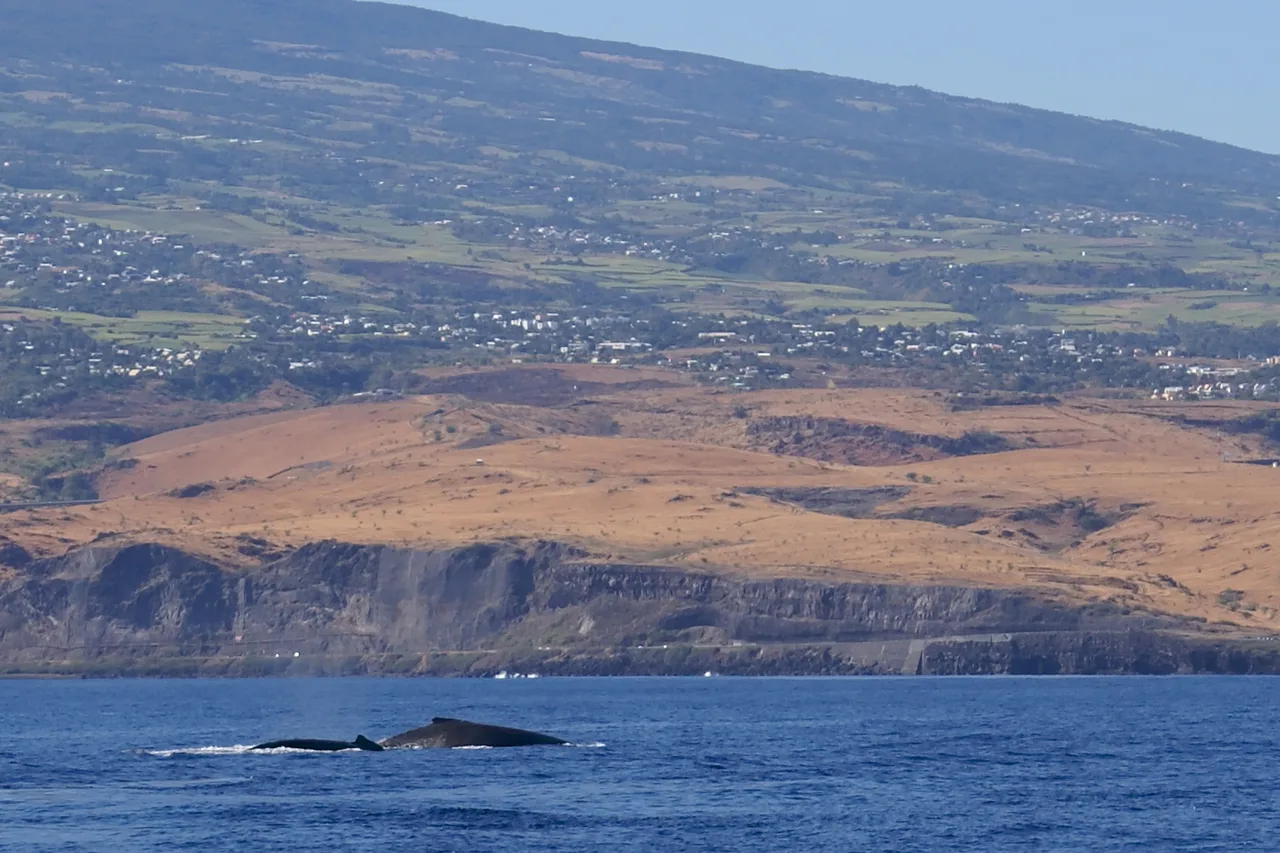
That is what makes whale watching in Réunion so special: you mostly encounter mothers with their calves, resting close to the coast, and displaying males — spectacular breaches, fin slaps, and those complex songs that carry for kilometres and reach hydrophones long before the eye catches a blow. If your trip falls between July and September, you are in the best window; our guide to the best time to visit Réunion details what each month holds.
A real presence — never a guaranteed one
Let's say it plainly, because few brochures do: no two seasons are alike. Since 2004, the Globice association has been photo-identifying the whales that visit the island, and its yearly count swings between 13 and… 1,156 individuals. 2023 was an all-time record (1,156 whales identified), 2024 was still a fine year (416), and 2025 was the quietest in a long time: 79 whales identified. The most likely culprit is krill availability in the Antarctic — underfed whales shorten or reroute their migration, and that year many favoured the coasts of Mozambique or southern Madagascar instead.
Add to this that Réunion's whales are passing visitors: barely 4 to 5% of identified individuals return from one year to the next, and two thirds are seen only once in a season. In practice: between July and September your chances of seeing a blow, a back or a breach are real and often excellent — but nobody can "guarantee" you a whale, and beware of anyone who promises one. That is the deal with wild animals, and it is also what makes every encounter unforgettable.
From the shore: free, and disturbing no one
It is often forgotten: Réunion is one of the rare places in the world where you can watch whales very well from land. The island has no continental shelf: deep blue water starts a few hundred metres from shore, and mothers favour precisely these sheltered west-coast waters. A pair of binoculars, some patience, a calm sea — and the show is yours, without burning a drop of fuel or approaching anyone.
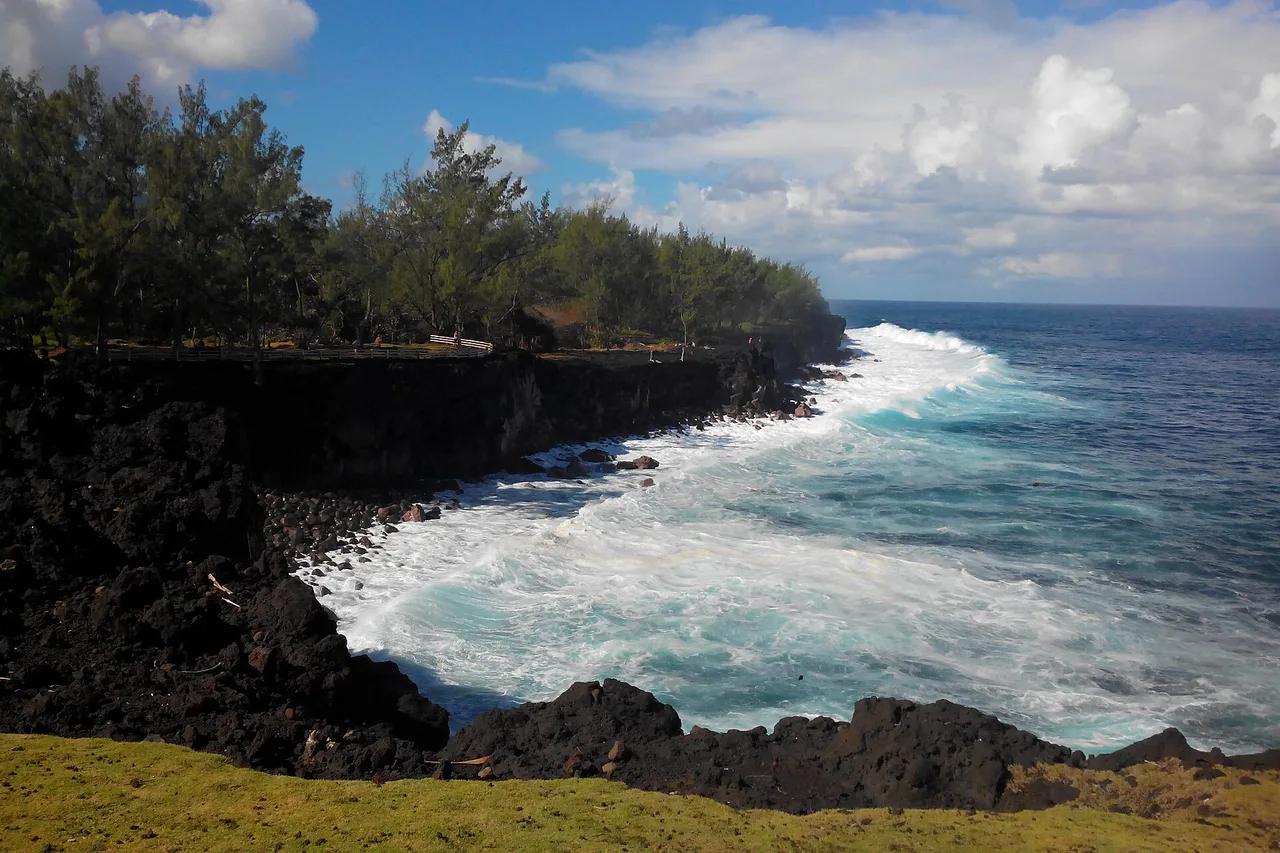
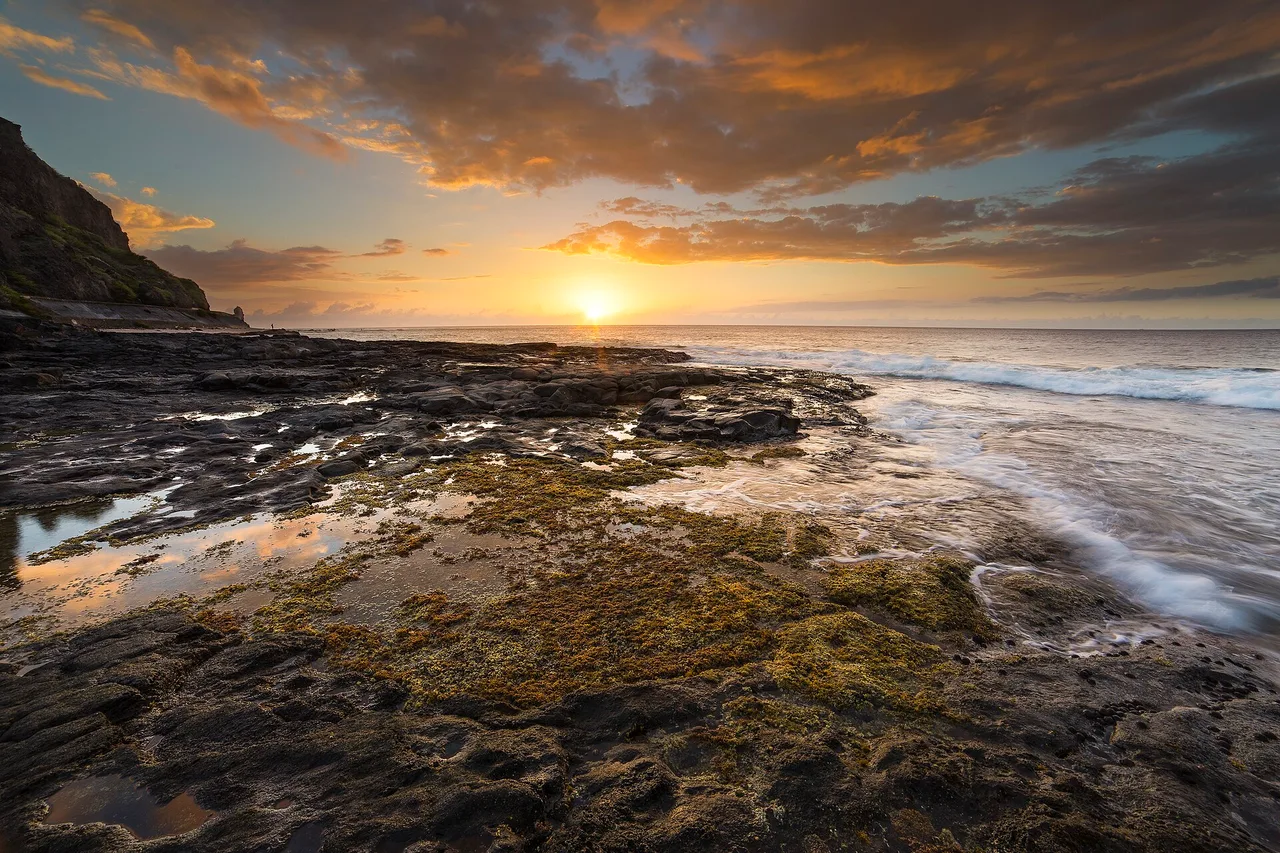
The best lookouts line the west and south coasts: Cap La Houssaye in Saint-Paul (the most famous — whales sometimes pass a few hundred metres from the low cliffs), Boucan Canot and its heights, the Saint-Leu area — Pointe au Sel and Le Souffleur —, Pointe des Châteaux, and in the south Grande Anse and its headland. In the morning, before the trade winds raise a chop, a blow can be spotted with the naked eye kilometres away. And if the whales do not show, the lagoon and the west-coast beaches are a towel's throw away.
By boat: choosing an operator, understanding the rules
A good twenty operators run whale-watching trips out of Saint-Gilles, Saint-Leu and Le Port — expect roughly €40 to €90 per adult for two to three hours at sea, often around €30 for children; longer swim-with-whales trips usually cost over €100. The right reflex: choose an operator committed to the O²CR scheme ("Certified Responsible Cetacean Observation in Réunion"), driven by the Quiétude Cétacés team, which has been patrolling and raising awareness on the water since 2017.
Since 2025 the rulebook is no longer a voluntary charter but a prefectural decree (no. 944 of 4 June 2025, amended in late June 2025), and it is precise. Around a group of cetaceans, the 300-metre zone is a caution zone: 3 vessels maximum, 4 knots maximum, 30 minutes maximum per vessel. You approach from the rear three-quarter, never head-on nor straight from behind, and stop at 100 metres from whales (50 metres from dolphins). Boat observation is allowed from 9 am to 4 pm — from 4 pm to 6 pm only zero-emission vessels and beach craft may stay, and then the animals get their night. Between Saint-Paul bay and Grand Cap, speed is capped at 10 knots near the coast for the whole season. Even drones are now regulated.
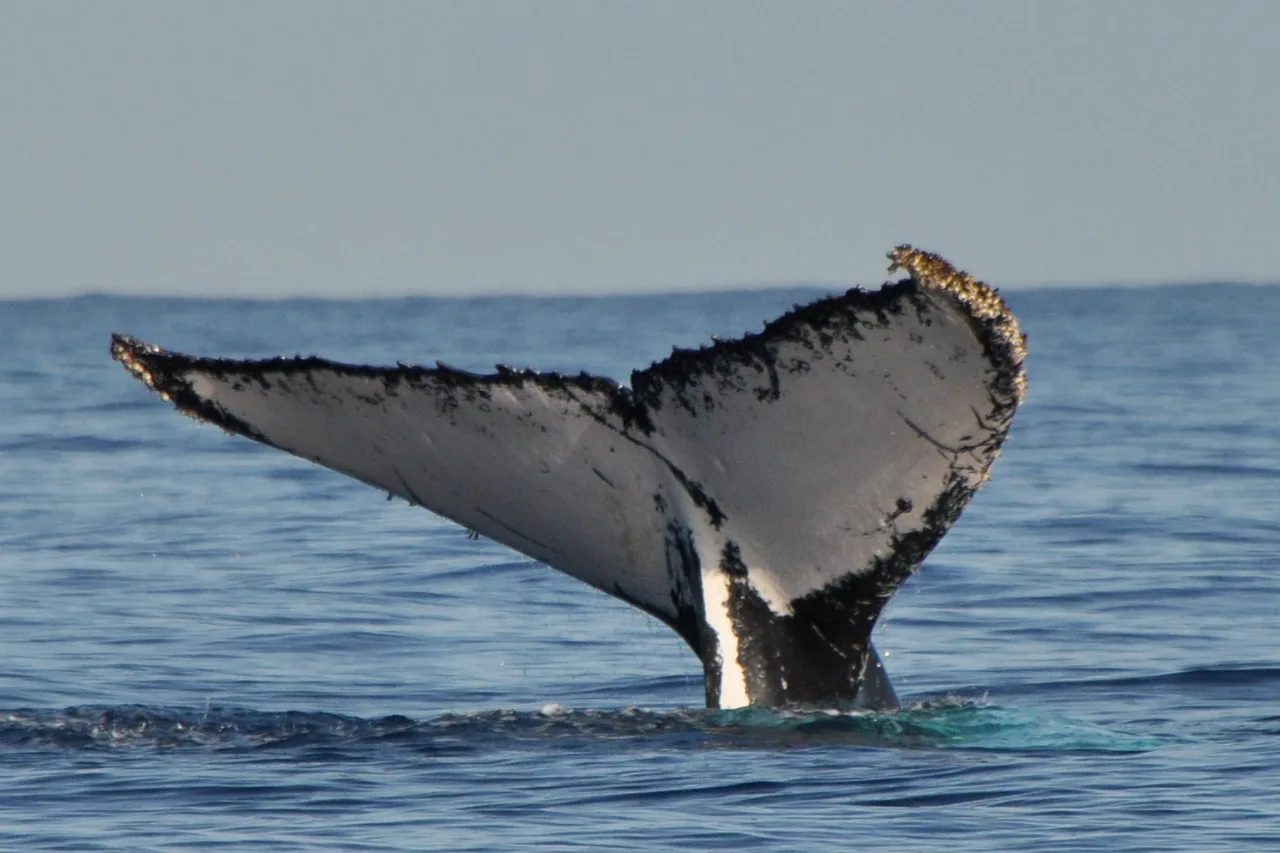
These trips also serve science: the underside of the fluke is as unique as a fingerprint, and your photos can help. Globice's participatory programme KODAL collects fluke shots to feed the identification catalogue — your best holiday picture can become a research data point.
Swimming with whales: yes, but strictly regulated
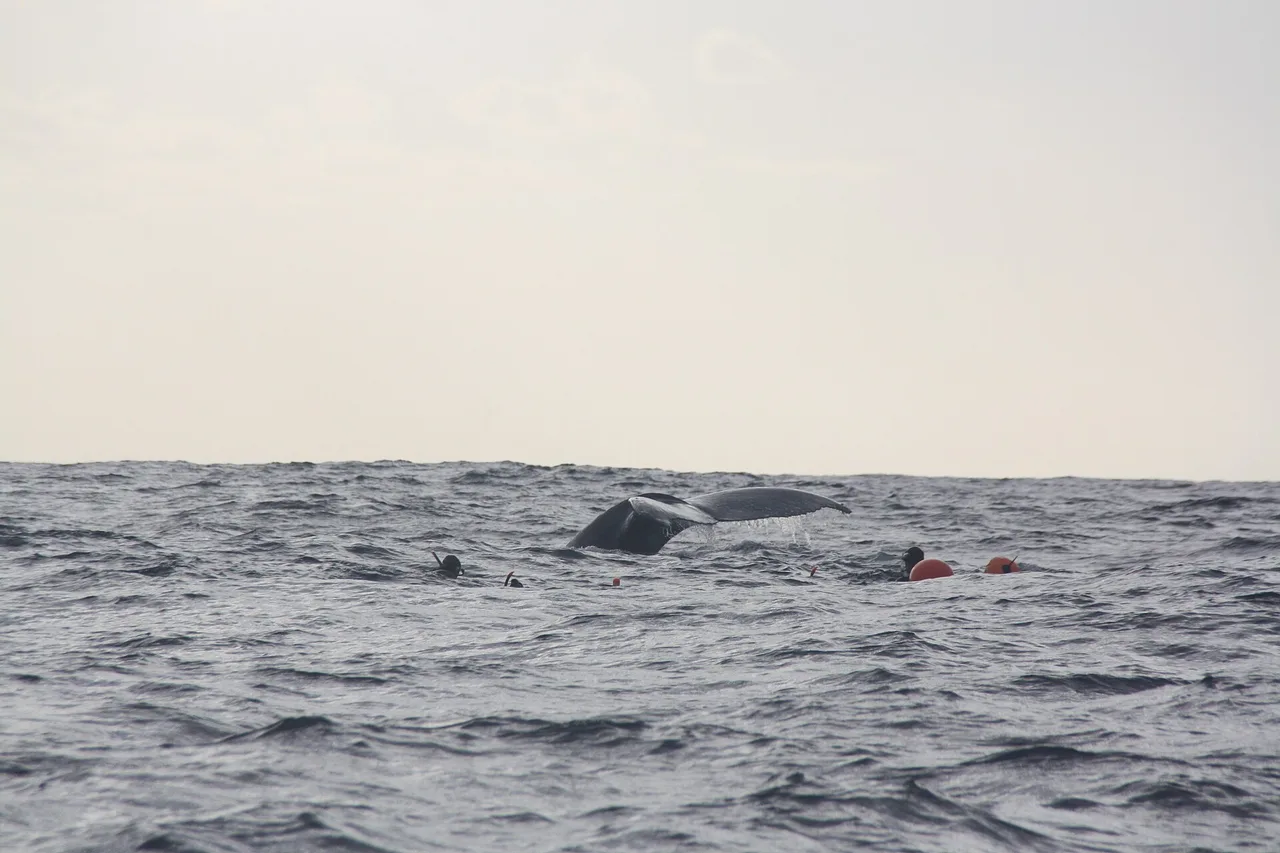
Entering the water near a whale is one of the island's most sought-after experiences — and one of the most regulated in France. The 2025 decree confines it to 9 am – 1 pm, with at most 7 people in the water, guides included, for 30 minutes — and it is forbidden if three vessels already occupy the 300-metre zone. Commercial supervision requires a certified instructor and specific training for the skipper. In short: it happens with a professional, in a small group, early in the day, and never on demand.
Before booking, be honest with yourself on two counts. First, your comfort in the water: you swim in open ocean, no bottom in sight, sometimes in swell — this is not a lagoon outing. Second, the outcome: a serious operator will cancel the swim if the animal dives, moves off or shows the slightest sign of disturbance — and that is exactly what should happen. A nursing mother needs rest, not a circle of fins. If your priority is to see whales for sure, the shore and a good pair of binoculars offer a far better emotion-to-disturbance ratio.
And the dolphins? They are here all year
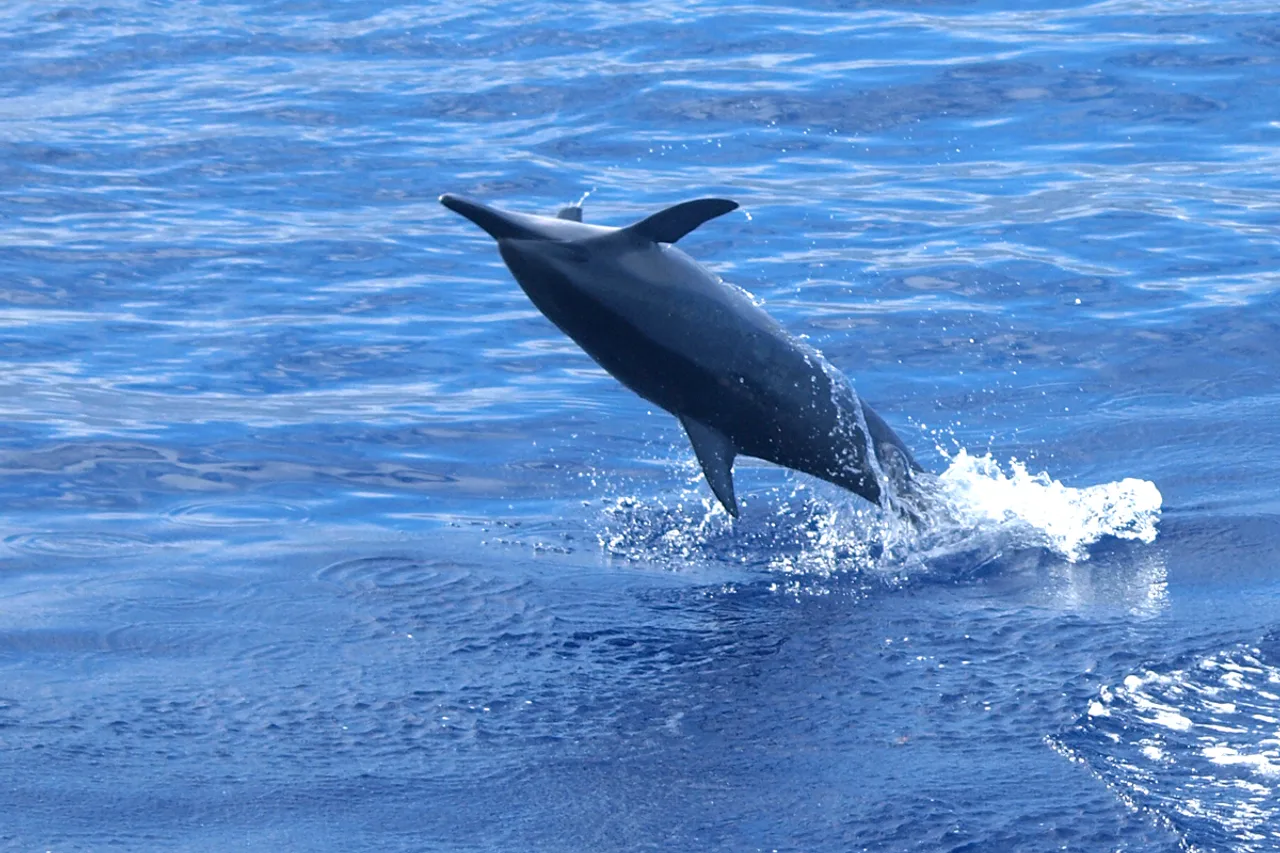
Whales have a season; dolphins do not. Réunion's waters count 25 recorded cetacean species — out of 33 potentially present in the south-west Indian Ocean — and three coastal dolphin species live here year-round: the Indo-Pacific bottlenose dolphin, with a faithful group of about 92 identified individuals in Saint-Paul bay, the common bottlenose dolphin, and the graceful spinner dolphin, famous for its aerial spins at daybreak. "Dolphin" trips therefore run all year, and a July whale trip very often meets both.
Full guide: Things to Do in Réunion Island: 25 Unmissable Spots, Chosen by Locals
A local's advice
Start from the shore: a sunrise at Cap La Houssaye with binoculars, in season, is worth many boat trips — and disturbs no one. If you do head out to sea, pick an O²CR-committed operator, leave early when the water is glassy, and judge them by their restraint: the skipper who cuts the engine at a distance and lets the whale decide will give you the finest moments. And keep a sense of the privilege: these animals cross an ocean to bring their young into the world here. Watching them without weighing on them is the very definition of a successful trip — and it slots perfectly into a ten-day itinerary, between a volcano sunrise and a cirque.