Almost every guide sorts Bangkok’s districts by atmosphere — nightlife, temples, business — and that is exactly the ranking that makes people book the wrong room. Bangkok is a city where street traffic is unpredictable and where the rail network is not. So the criterion that decides your ten days is not the name of the district: it is the number of minutes on foot between your door and a BTS or MRT station. Here are the eight districts, their station, their catch — and one budget fact almost nobody tells visitors.
The one criterion that actually decides
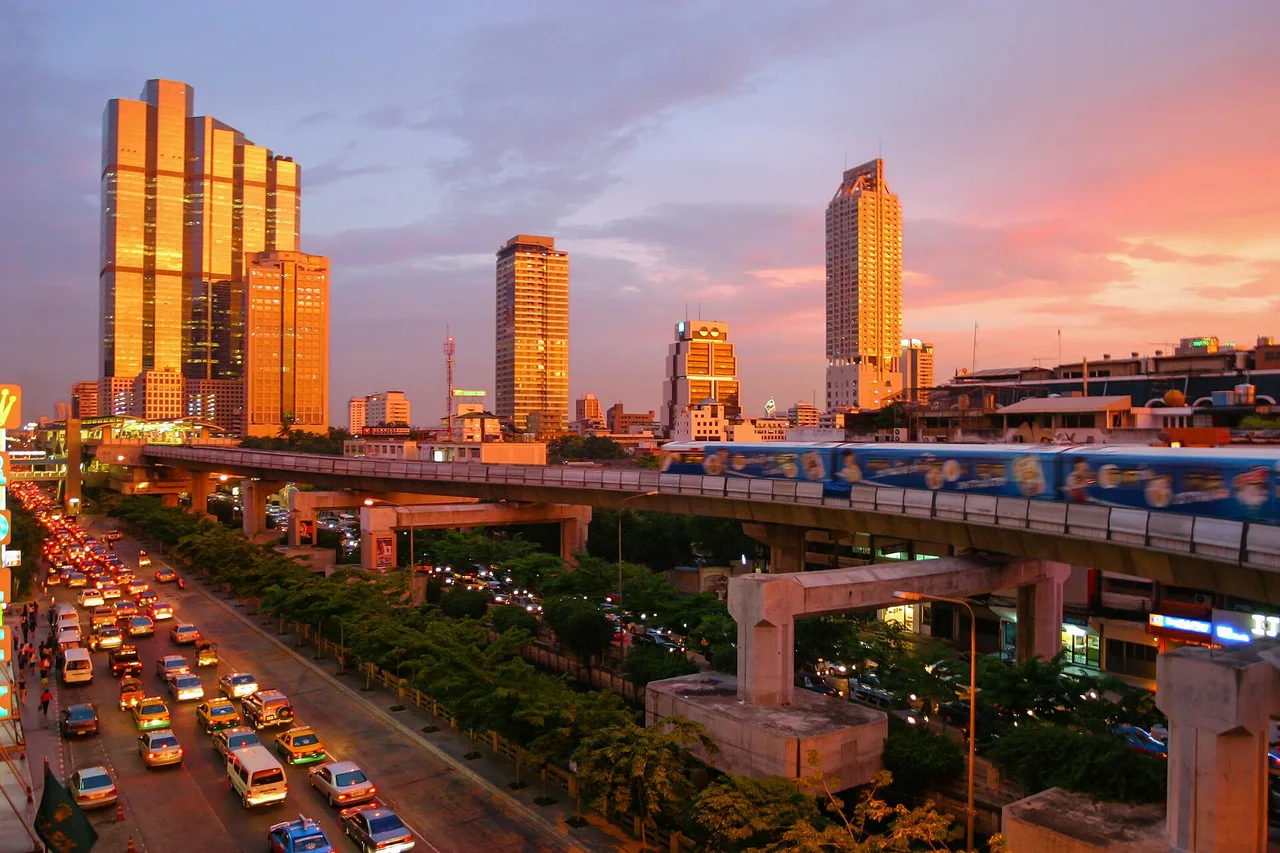
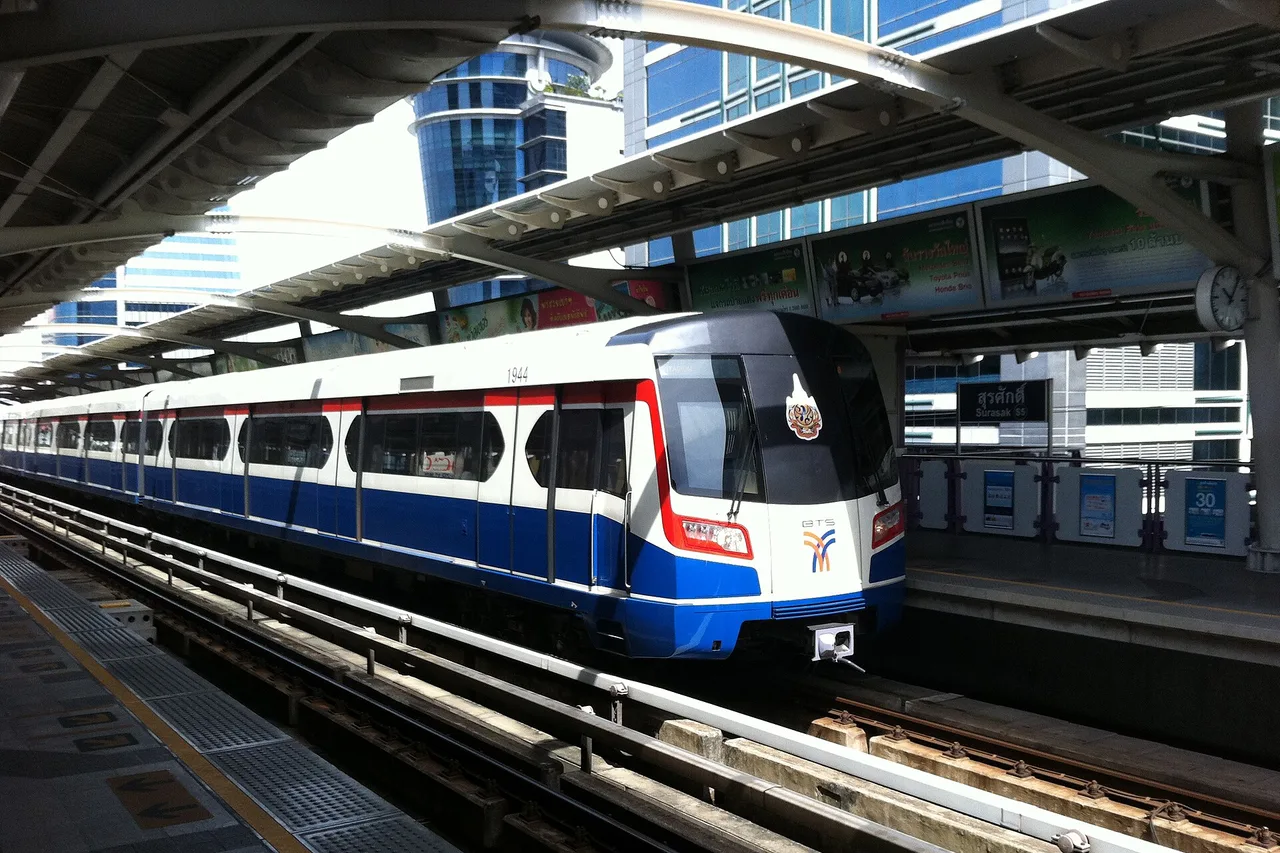
Bangkok covers more than fifteen hundred square kilometres, and its street traffic is the opposite of reliable data: the same journey can take twelve minutes or fifty depending on the hour, the rain and the day. The elevated BTS and the underground MRT, by contrast, run at a constant frequency whatever happens below or above them.
Every sensible district choice follows from that asymmetry. A beautiful hotel eight hundred metres from a station will cost you, every single day, two walks in thirty-five degree heat or two negotiated rides. An ordinary hotel two minutes from a platform hands you the entire city. The right question is therefore not "which district?" but "how many minutes on foot to the platform?" — and the useful answer is counted in minutes rather than metres, because Bangkok’s pavements are uneven and often interrupted.
One simple benchmark, valid across the city: under five minutes on foot the district barely matters; beyond fifteen, nothing will make up for it.
The eight districts, their station, their catch
| District | Nearest station | Who it suits | The catch |
|---|---|---|---|
| Sukhumvit | BTS Asok · MRT Sukhumvit | First visit, everything comes to you | Long: the far ends are far from everything |
| Siam | BTS Siam | Short stay, all on foot | Expensive, and empty after dark |
| Silom · Sathorn | BTS Sala Daeng · MRT Si Lom | Business, dining, walking at night | Very quiet at weekends |
| Riverside | BTS Saphan Taksin | Monuments, the river, the setting | One station only, at the very end of the line |
| Ratchada · Huai Khwang | MRT Huai Khwang | Tight budget without losing the metro | No charm at all, but it works |
| Ari | BTS Ari | Longer stay, living local | Far from the monuments |
| Rattanakosin (old town) | MRT Sanam Chai | Temples the moment they open | Little nightlife |
| Khao San | ⚠️ aucune | Nightlife, smallest budgets | Noise until 2am, and a 25-minute walk to the metro |
This table is not read top to bottom like a ranking. Read it by the middle column: first pick out the districts whose station works for you, then separate them with the last two columns. The most instructive row is the final one — it is the only one where the station cell is empty.
Sukhumvit: the default choice, and a good one
Sukhumvit is an avenue several kilometres long, and that is the first thing to grasp: saying "I am staying in Sukhumvit" means almost nothing. The useful stretch runs from Nana station to Ekkamai, with a core around Asok and Phrom Phong. That is where — and only where — the BTS and the MRT cross, a detail that changes everything, since it opens both networks from the same doorway.
The appeal of the district fits in one sentence: everything comes to you. Restaurants open late, air-conditioned malls for the hot hours, pharmacies, laundries, hotels in every bracket within a few streets. The sois — the perpendicular side streets — are numbered, even on one side and odd on the other, which makes orientation surprisingly simple.
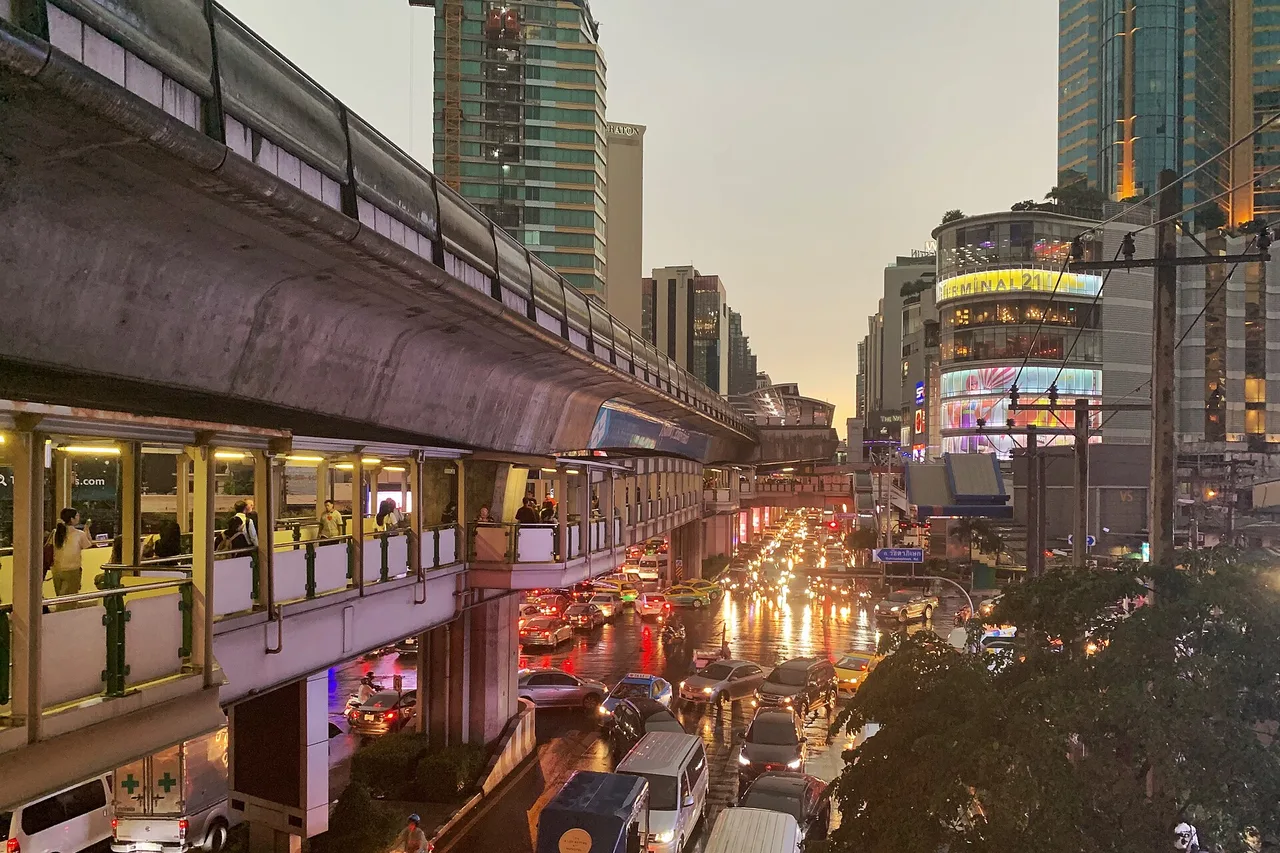
Its catch is geographic. Past Ekkamai to the east, or before Nana to the west, you quickly move away from everything, and prices do not fall proportionally. One more thing worth knowing: some sois around Nana and Soi Cowboy have a very pronounced, very localised nightlife, which you can avoid entirely by checking the street number before booking.
Silom and Sathorn: the district that changes face at weekends
Silom is the historic business district, doubled as a restaurant district. On weekdays it is dense and alive, and you eat remarkably well there — Convent Road and the Patpong night market have nothing in common yet sit in the same few blocks. Sala Daeng on the BTS and Si Lom on the MRT are linked by a walkway, making this the second point on the network where the two systems meet.
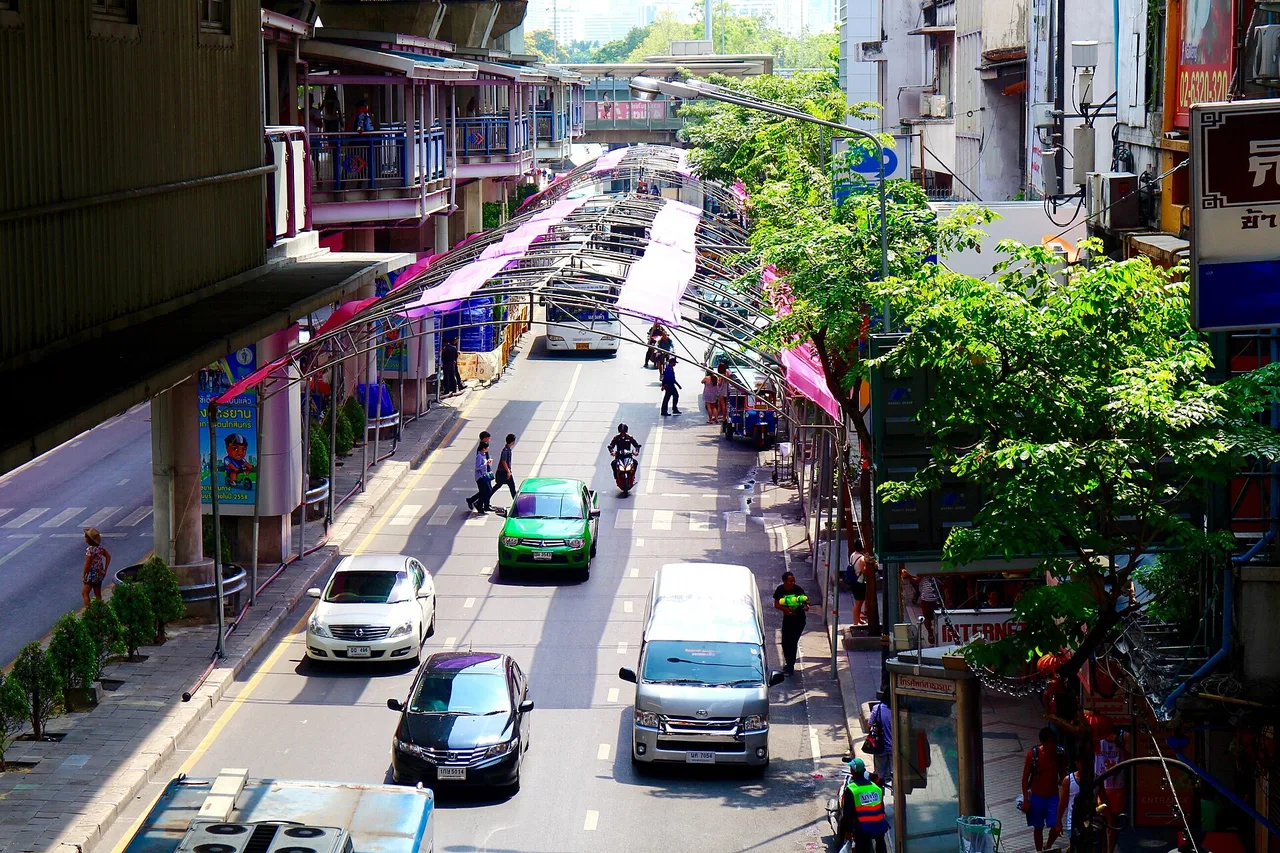
Its peculiarity is rarely written down: at weekends the district empties out. Offices close, so do some restaurants, and Saturday morning can be strangely quiet. For some travellers that is precisely the appeal; for others it is a disappointment. Lumphini park at the northern end more than compensates: at six in the morning it offers the best free show in the city.
The river and the old town: beauty on one side, the rail on the other
This is the hardest trade-off in Bangkok. The monuments — the Grand Palace, Wat Pho, Wat Arun — are clustered in Rattanakosin, the old town, on the eastern bank of the Chao Phraya. And that is precisely the area least served by rail: a single useful metro station, Sanam Chai, opened in 2019, and no BTS station at all.
The river is the answer, and it is also the most pleasant transport in the city. The orange-flag express boat links the central piers for roughly 17 to 18 baht a trip — the fare was revised twice in 2026, hence the range. You catch it at Sathorn, at the foot of Saphan Taksin BTS station: that single interchange, and nothing else, is what makes the Riverside liveable without taxis.
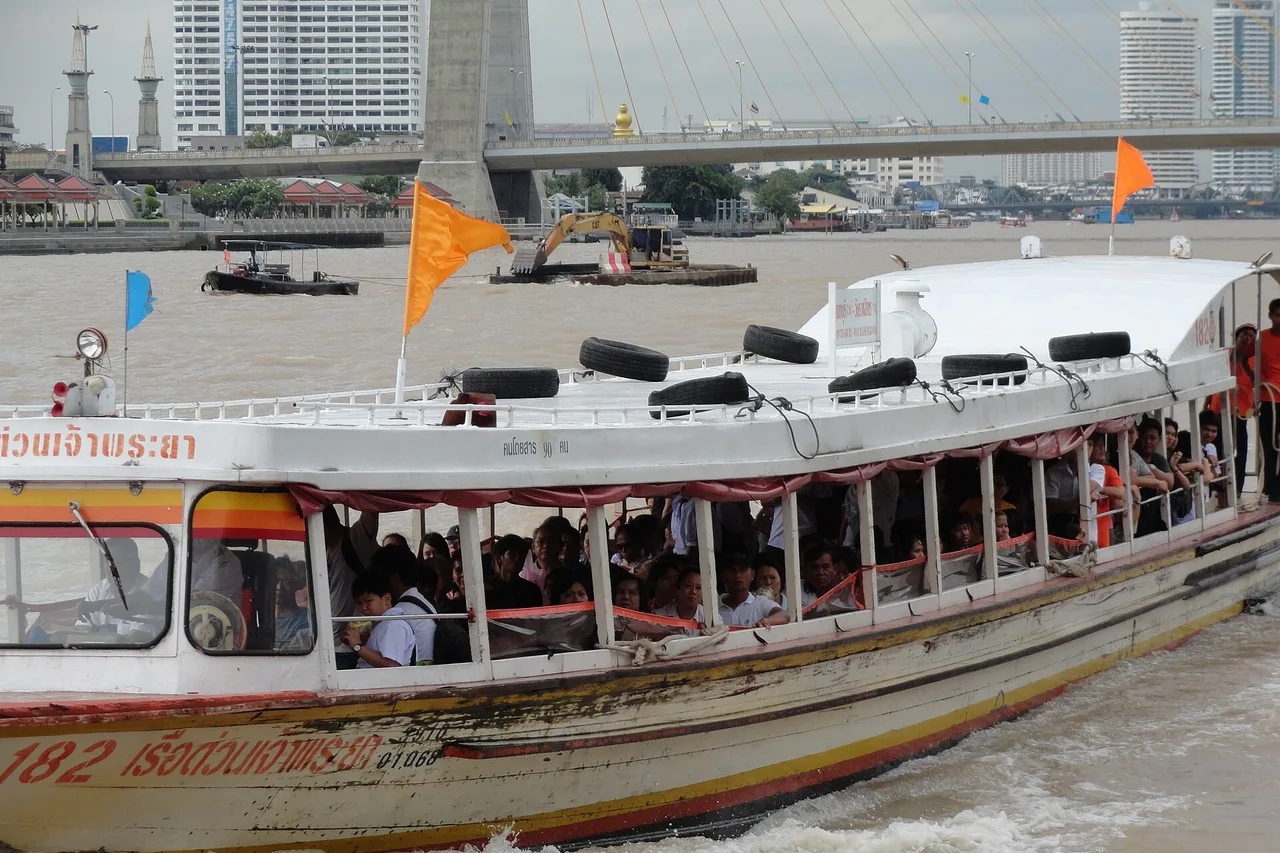
The compromise we recommend: stay within reach of Saphan Taksin rather than in the heart of the old town. You keep the boat for the temples and the train for everything else. Staying inside Rattanakosin itself is justified by one thing only — standing in front of Wat Pho as it opens, ahead of the groups — and that thing is worth one night, rarely four.
Khao San: the only district where you sleep without rail
Khao San deserves to be described plainly, because it is the district people get wrong most often. It is no longer the backpacker street of the nineties; it is now a going-out street, busy with Bangkokians themselves at weekends, with bars, stalls, music — and noise until the middle of the night.
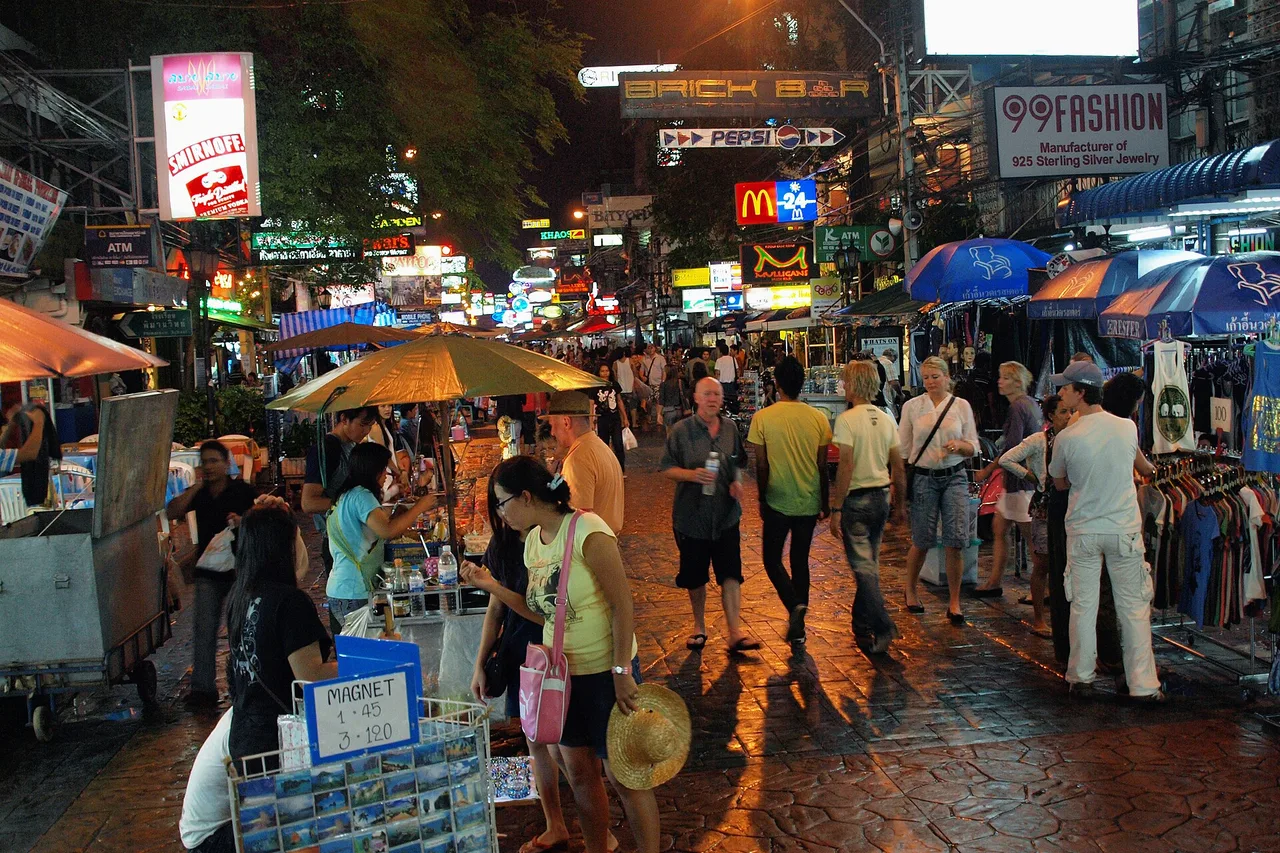
The hard part lies elsewhere, and it is structural: Khao San has no BTS station, and the nearest metro station, Sam Yot, is about 1.6 kilometres away — twenty to twenty-five minutes on foot via Dinso Road and the Democracy Monument. Sanam Chai, on the other side, takes about the same. Every outing of the day therefore begins with that quarter of an hour of walking, or with a negotiation.
In exchange — and it is a real one — this is the only area from which you reach the great temples on foot, with the cheapest accommodation in the city. The sound use is usually this: one or two nights at Khao San at the start of the trip, for the monuments, then the rest elsewhere. Plenty of travellers do the opposite and regret their tenth journey.
🔴 The transport budget: the 20-baht cap is not for you
Here is the fact that district comparisons almost always leave out, and it weighs on the budget of an entire stay. The much-discussed 20-baht cap, extended since 1 October to eight lines — green, gold, yellow, pink, blue, purple, red and the Airport Rail Link — is reserved for Thai nationals. It requires registering a national ID card and a travel card in an app.
A foreign visitor therefore pays the standard fare: 17 to 45 baht on the MRT, 17 to 65 on the BTS. Worth noting in passing that the BTS moved to distance-based fares in November 2025, after more than five years of a flat fare: figures read in an older guide are out of date. A unified fare plan, capped between 17 and 45 baht regardless of how many lines you use, was approved by the cabinet in June 2026 — approved, not yet running.
This is not a scandal, it is a budget input, of the same kind as the national park entrance fee, five times higher for foreigners, which we detail in our three-week budget breakdown. The practical consequence is simple: at two trips a day per person, rail costs a couple the equivalent of a good meal every day. Staying five minutes from a station does not only save fatigue — it avoids the catch-up journeys, which are the expensive ones.
Arriving and leaving: the two airports do not point to the same district
Bangkok has two airports, and they do not impose the same choice. Suvarnabhumi (BKK) is linked to the centre by the Airport Rail Link: eight stations, terminus Phaya Thai, 45 baht, twenty-six to thirty minutes. It is unaffected by traffic, which makes it the only option whose duration is predictable at rush hour. Contactless payment has been accepted since December 2025.
Don Mueang (DMK), the low-cost airport, has no dedicated rail link. You take the SRT dark red line to Krung Thep Aphiwat for 33 baht, then the MRT blue line; the station requires walking the length of the terminal and through the car park, which counts when you have luggage. A 40-baht daily cap applies to contactless payment on that line until 30 November 2026.
Two situations are worth not leaving to chance. First, arriving at night: it is the worst moment to argue a price — tired, with no reference point, facing a line of vehicles — whereas a transfer booked before departure is paid at the quoted amount. Second, the late departure: most hotels release rooms at noon, while long-haul flights leave in the evening. That eight-hour gap is pleasant enough in the city, provided you do not spend it holding your suitcases — a luggage locker booked near your station costs about the price of a meal and gives you the whole final day.
What the district really changes, and what it does not
Once the station is settled, the district decides very little about sightseeing: the Grand Palace is the same distance from anywhere, measured in minutes of train. It does, however, decide your evenings, because that is the only time you go out on foot. That is the real tiebreaker between two otherwise equivalent hotels.
It also decides where excursions start. Most day trips — Ayutthaya, the Damnoen Saduak floating market, the Mae Klong railway market — leave early and gather their passengers in the centre, around Sukhumvit or Silom. Comparing what each tour includes before leaving avoids the street-counter surprises: day trips from Bangkok can be compared online, and the gap between two identical offers is often twofold.
Finally, the district changes nothing about the season. Bangkok is perfectly visitable during the rainy season, when showers are short and often late in the day; the month matters far more than the address, as our guide to the seasons explains.
The verdict, according to your trip
First trip, three or four nights: Sukhumvit, between Asok and Phrom Phong. Both networks at the same station, everything open late, nothing to manage.
Two nights, a stopover: Siam. It is the BTS hub and the useful geographic centre; you lose the least time there, at the price of a district with no soul after dark.
Temples first: Rattanakosin for one night, provided you accept depending on the boat and on walking, then move to the rail.
Tight budget, no compromise on transport: Ratchada or Huai Khwang. The district has no charm and nobody comes for it, but the MRT is immediate and prices are markedly lower than in the centre.
Long stay, two weeks or more: Ari. Cafés, neighbourhood markets, local life, a direct BTS station — the only address on this list where you stop being a visitor after a few days.
Bangkok as a springboard south: remember that the islands cost 40 to 60 % more than the capital at equal comfort. Two more nights in Bangkok and two fewer on a beach is an entire excursion budget — the full trade-off is in our fifteen-day itinerary, and the island choice in our Phuket or Krabi comparison.