
Halong Bay is famous, neighbouring Lan Ha Bay is quieter – and both are made of the same limestone karsts. So the real question is not which one is prettier, but what you are after: the well-known caves and viewpoints, or kayaking and swimming among fewer boats. Here are the differences, the journey from Hanoi and the prices published in 2026.
At a glance: three bays, three travel styles
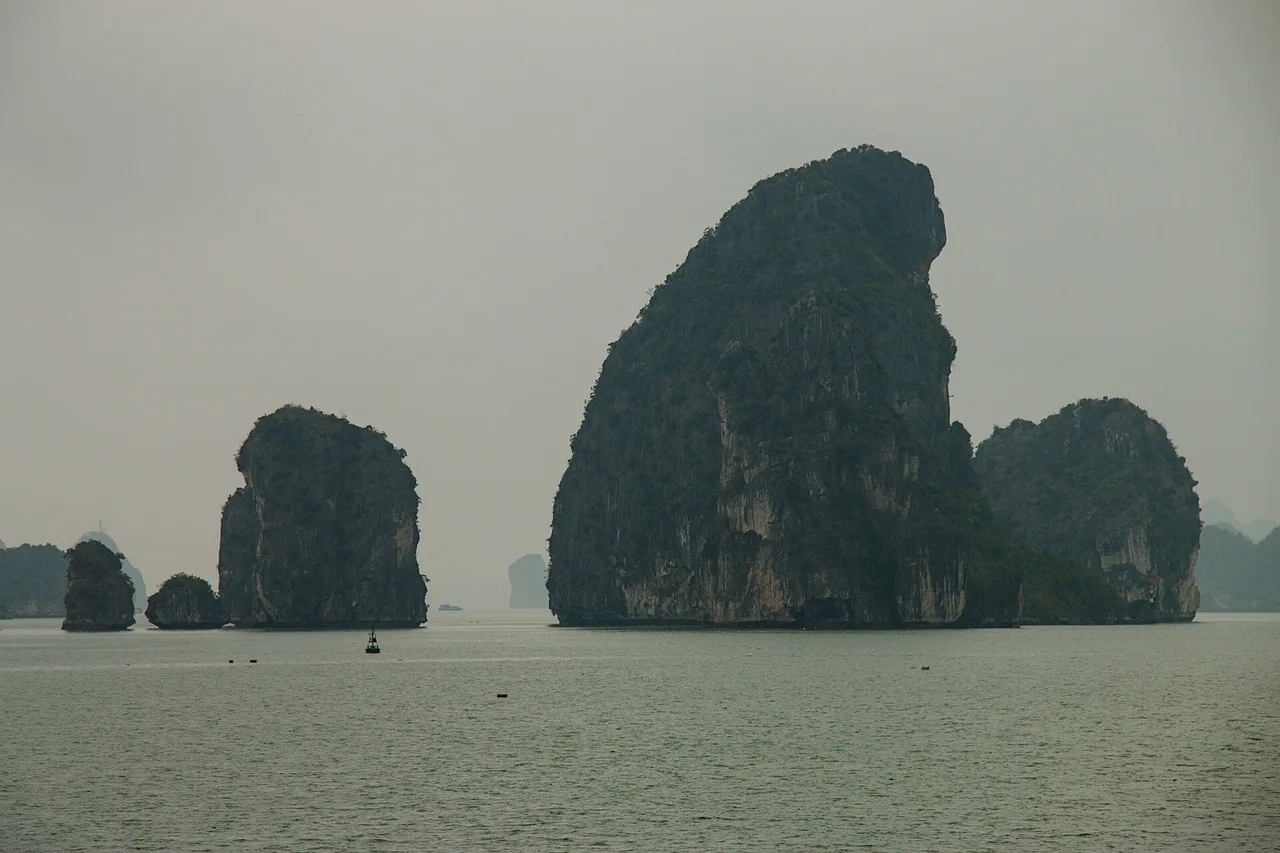
Halong, Lan Ha and Bai Tu Long are parts of the same landscape in north-east Vietnam: thousands of limestone karsts rising out of the Gulf of Tonkin. The difference lies less in the scenery than in the number of boats, the excursions on offer and how you get there.
| Halong Bay | Lan Ha Bay | Bai Tu Long | |
|---|---|---|---|
| Location | Quang Ninh province, near Ha Long city | To the south, by Cat Ba Island (Hai Phong) | North-east of Halong Bay |
| Typical excursions | Sung Sot Cave, Ti Top Island, Luon Cave | Kayaking, swimming, cycling on Cat Ba | A quiet sail among the rocks |
| Crowds | The busiest | Capped: 135 boats allowed | The quietest |
| Best for | First visit, little time, caves | Calm, water and being active | Avoiding crowds at all costs |
In short: with just one day and a wish to see the famous views, choose Halong. With a night on board and more interest in paddling than in queuing for a cave, pick Lan Ha, or a route that links both bays.
What the three bays have in common
Halong Bay has been on UNESCO's World Heritage List since 1994. On 16 September 2023 the site was extended and is now called "Ha Long Bay – Cat Ba Archipelago": Vietnam's first World Heritage site spanning two provinces. The Cat Ba Archipelago, which includes Lan Ha Bay, has more than 360 islands on its own.
In practice, you do not have to choose between a "real" bay and a "second" bay. Both are protected, both are made of the same limestone, and many boats sail through both. The choice is mostly about the rhythm of your day.

Halong Bay: the caves and the classics
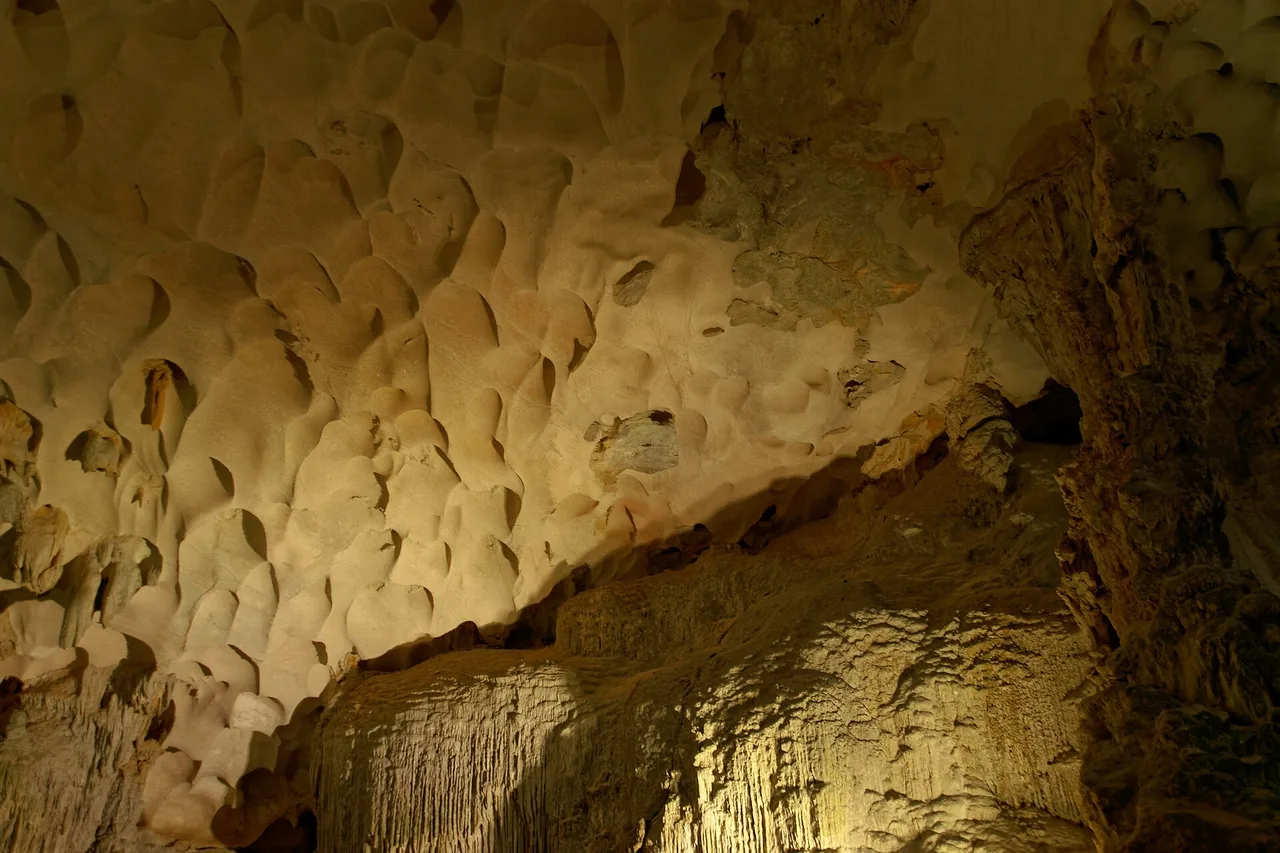
Most cruises in Halong Bay follow set routes. The best known is Route 2, about six hours long: it takes in Ti Top Island, with its viewpoint and small beach, Sung Sot Cave – the largest in the bay – and Luon Cave, which you usually pass through by rowing boat or kayak.
The sightseeing fee for Routes 1 and 2 is 290,000 VND according to the published rates, about €10; free for children under 7, half price from 7 to 16. On a booked cruise it is almost always included – ask anyway. At Ha Long International Passenger Port, the port ticket has cost 80,000 VND return since 1 July 2026.

The downside is well known: the classics are busy. On the Ti Top viewpoint path and inside Sung Sot you are rarely alone, and day boats in Halong Bay often carry several hundred passengers.
Lan Ha Bay: the same rocks, fewer boats
Lan Ha Bay lies south of Halong Bay, along the east side of Cat Ba Island. According to a guide updated in June 2026, only 135 boats are allowed there. They leave from Ben Beo, about 2 km from Cat Ba town, or from Gia Luan; but many cruises board at Tuan Chau near Ha Long and then sail across to Lan Ha.
The programme is more active: kayaking between the rocks (usually 45 minutes to an hour and a half), swimming from small beaches, a bike ride to Viet Hai village on Cat Ba. Boats are smaller – one travel blog describes a day trip with about forty passengers. What you miss are Halong's big caves.

Bai Tu Long: the quietest choice
North-east of Halong Bay lies Bai Tu Long Bay. The landscape is the same, the boats far fewer, and there are fewer fixed stops. It suits travellers who already know Halong or who put peace and quiet first. If you want to see the famous caves, this is not the bay for you.
Day trip or overnight: 2026 prices
For Lan Ha Bay, the guide updated in June 2026 gives these ranges per person: 1,000,000–1,500,000 VND for a day trip (about €33–50), 2,200,000–6,500,000 VND for two days and one night (about €73–217), and 5,000,000–10,000,000 VND for three days and two nights (about €167–333). A travel blog from January 2026 quotes 40 to 60 US dollars for a day cruise in Halong Bay.
The day trip from Hanoi has a catch: the expressway gets you to Ha Long in two to two and a half hours, but the round trip still means about five hours on a bus for four to six hours on the water. With a night on board, you see the bay in the evening and early morning, while the day boats are still in port – for many, the best part.
To reach Cat Ba on your own there are two options: bus and ferry for 200,000–350,000 VND in three and a half to four hours, or the direct hydrofoil for 450,000–600,000 VND in about two and a half hours. From Cat Ba, day trips into Lan Ha Bay can be booked locally.
When to go, and what to watch out for
Guides recommend October to April, at 18–25 °C. In winter the northern sky is often grey and hazy: the rocks look like paper silhouettes and long-distance views are rare. Summer is hot and humid, and during typhoon season the authorities can cancel sailings at short notice. Keep a spare day before any flight out of Hanoi.
Three things to check before booking: is the bus transfer from Hanoi included? Are sightseeing fees and kayaking included? And which route does the boat actually follow – "Lan Ha" in the name does not always mean it spends long there.
Our verdict
For a first visit with little time: a day trip on Halong Bay's Route 2, for the cave and the view. For everyone else: a night on board in Lan Ha Bay, or on a route linking both bays – with kayaking instead of queuing. Bai Tu Long remains the choice for those who want calm above all.
To fit the bay into your trip, see our two-week Vietnam itinerary and our 15 highlights from north to south. For your arrival: Hanoi airport to the city centre. All our guides to the country are on the Vietnam blog.