Bali does not have four seasons, it has two — and the gap between them is far less brutal than most guides suggest. August gets 15 mm of rain; January gets 350. Between those extremes, the real question is not “when is the weather good”, but “what am I coming for”: waves, green rice terraces, a tight budget, or temples without the crowds. Here are the real monthly averages, and what they actually change about a trip.
Two seasons, one mechanism
Bali sits eight degrees south of the equator, in a monsoon regime. From April to October the trade winds blow dry from the south-east: this is the dry season, with clear skies and bearable humidity. From November to March the wind swings north-west and arrives loaded with moisture: the rainy season. Between the two sit two shoulder months — April and October — which many travellers consider the best of the year.
Three clarifications beat the postcard. First, temperature barely moves: between the coolest and the warmest month the average shifts by less than two degrees. Second, wet-season rain is tropical — a violent one-hour downpour in the late afternoon, not three days of drizzle. Third, altitude matters more than the calendar: the beach south, the Ubud rice fields at 200 metres and the Bedugul lakes at 1,200 metres do not share the same rainfall or the same temperature on the same day.
Month by month, with the numbers
The averages below are for Denpasar, in the south, where almost every visitor lands. Highlighted rows are the dry-season months.
| Month | Min / max | Rainfall | Rainy days | Sea |
|---|---|---|---|---|
| January | 24.8 / 30.8 °C | 350 mm | 19 | 29.0 °C |
| February | 24.8 / 31.0 °C | 280 mm | 18 | 29.0 °C |
| March | 24.8 / 31.1 °C | 215 mm | 20 | 29.5 °C |
| April | 24.8 / 31.2 °C | 90 mm | 12 | 29.5 °C |
| May | 24.5 / 30.7 °C | 75 mm | 8 | 29.0 °C |
| June | 24.1 / 29.9 °C | 70 mm | 7 | 28.0 °C |
| July | 23.8 / 29.2 °C | 50 mm | 4 | 27.0 °C |
| August | 23.5 / 29.2 °C | 15 mm | 3 | 27.0 °C |
| September | 23.6 / 30.1 °C | 40 mm | 3 | 27.0 °C |
| October | 24.4 / 31.1 °C | 90 mm | 6 | 28.0 °C |
| November | 25.0 / 31.7 °C | 150 mm | 10 | 29.5 °C |
| December | 25.1 / 31.0 °C | 290 mm | 16 | 29.5 °C |
What the table says, and what summaries rarely spell out: August is an almost rainless month (15 mm over three days), January is genuinely wet (350 mm over nineteen days), and May, June, September and October are dry months that nobody calls high season. The sea stays between 27 and 29.5 °C all year: swimming is a non-question, twelve months out of twelve.
The dry season (April → October): what it really delivers
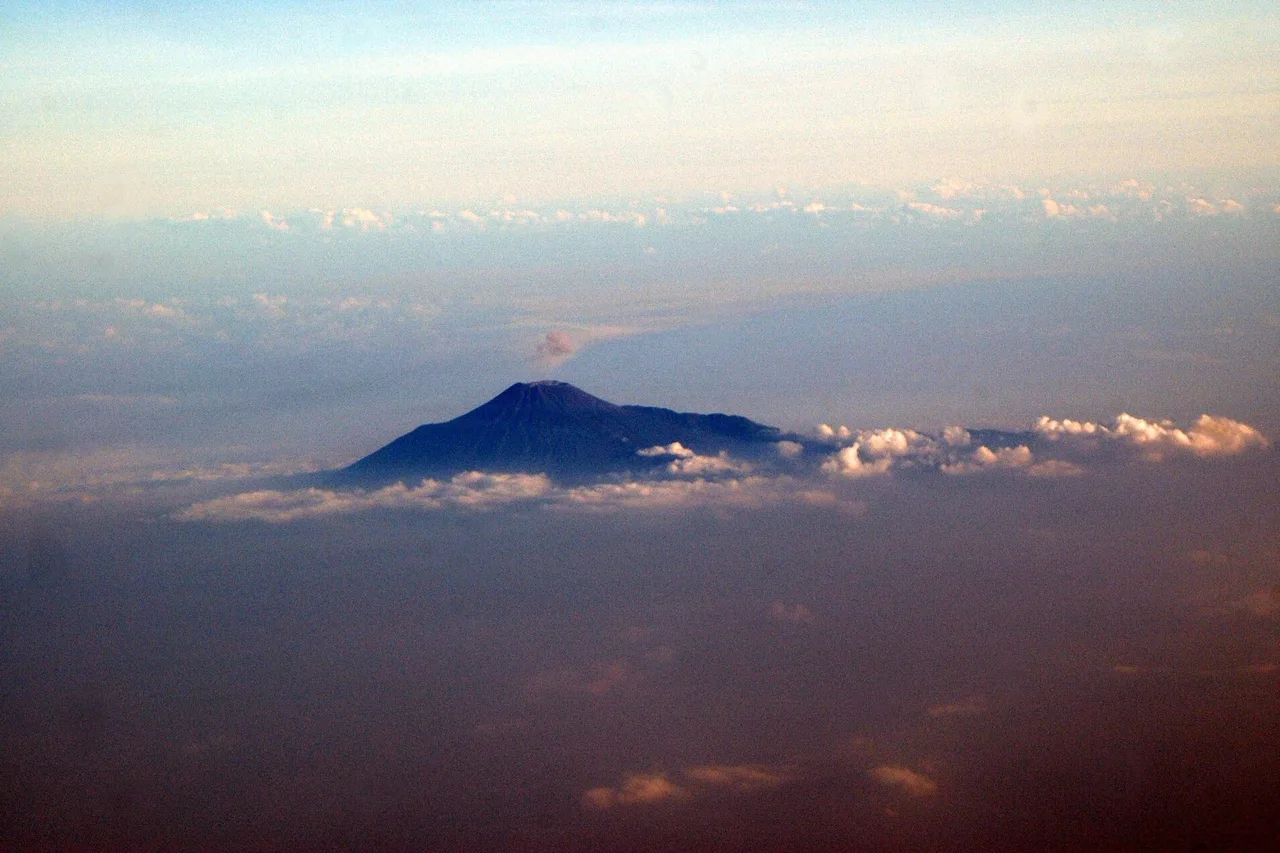
This is the season of long days: ten hours of sunshine a day in July and August, lighter air, volcanoes clear at dawn. Three activities depend on it directly. First, sunrise on Mount Batur: you leave around 2 a.m. to reach the summit at first light, and the walk only makes sense under a clear sky — in the wet season one climb in two ends inside the cloud. Second, diving, especially around Nusa Penida, where visibility is better and where the famous mola mola, the ocean sunfish, rises into shallow water between July and October, carried up by cold upwellings. Third, the west-coast surf — Uluwatu, Padang Padang, Canggu — which fires from April to October thanks to those south-easterlies blowing offshore.
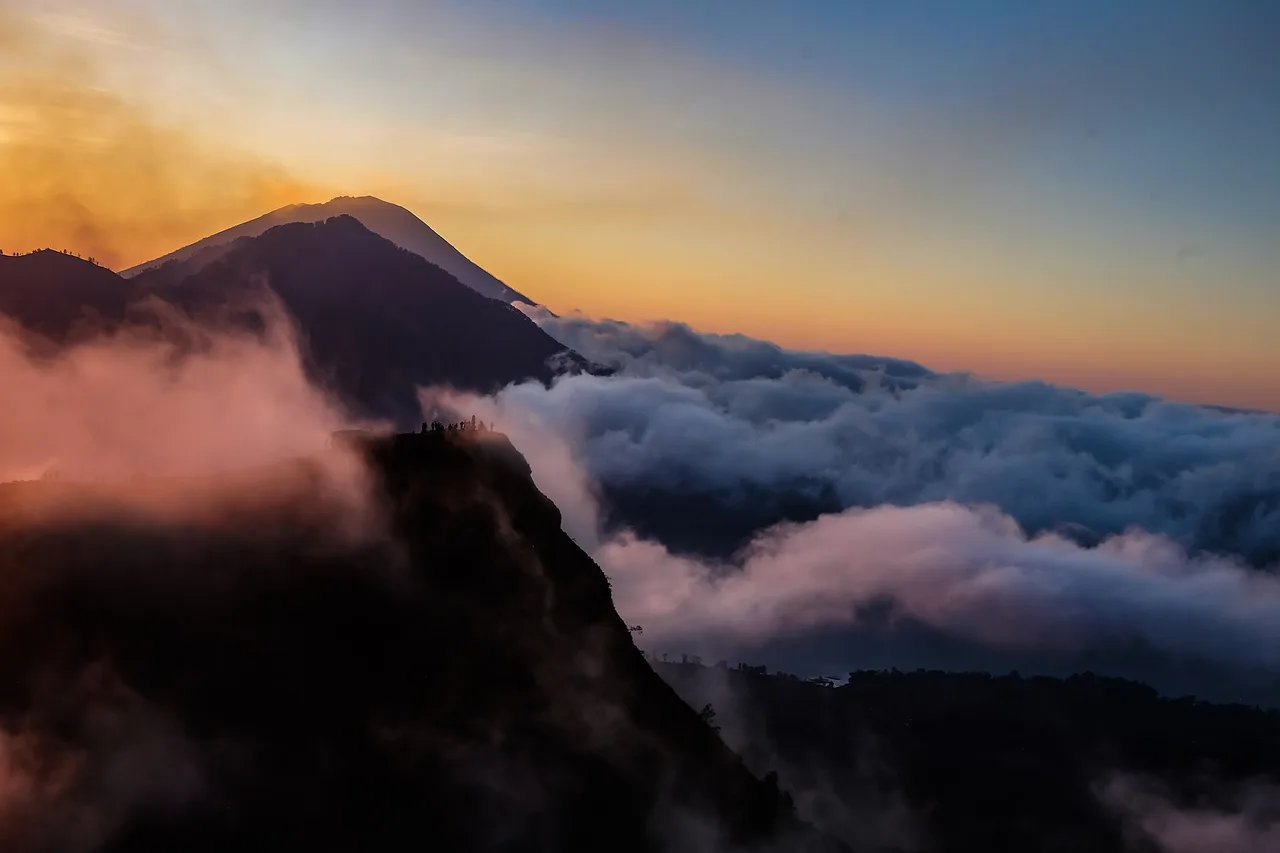
Two caveats, rarely stated. The first: those same cold upwellings that draw the sunfish can push water temperature well below the coastal average in the table at certain Penida sites in August and September — a thicker wetsuit is not a luxury. The second: July and August are also the absolute peak of the tourist year, with European and Australian holidays overlapping. The south of the island — Canggu, Seminyak, Uluwatu — clogs up, and an hour of driving on the map can take two.
The rainy season (November → March): less punishing than its reputation
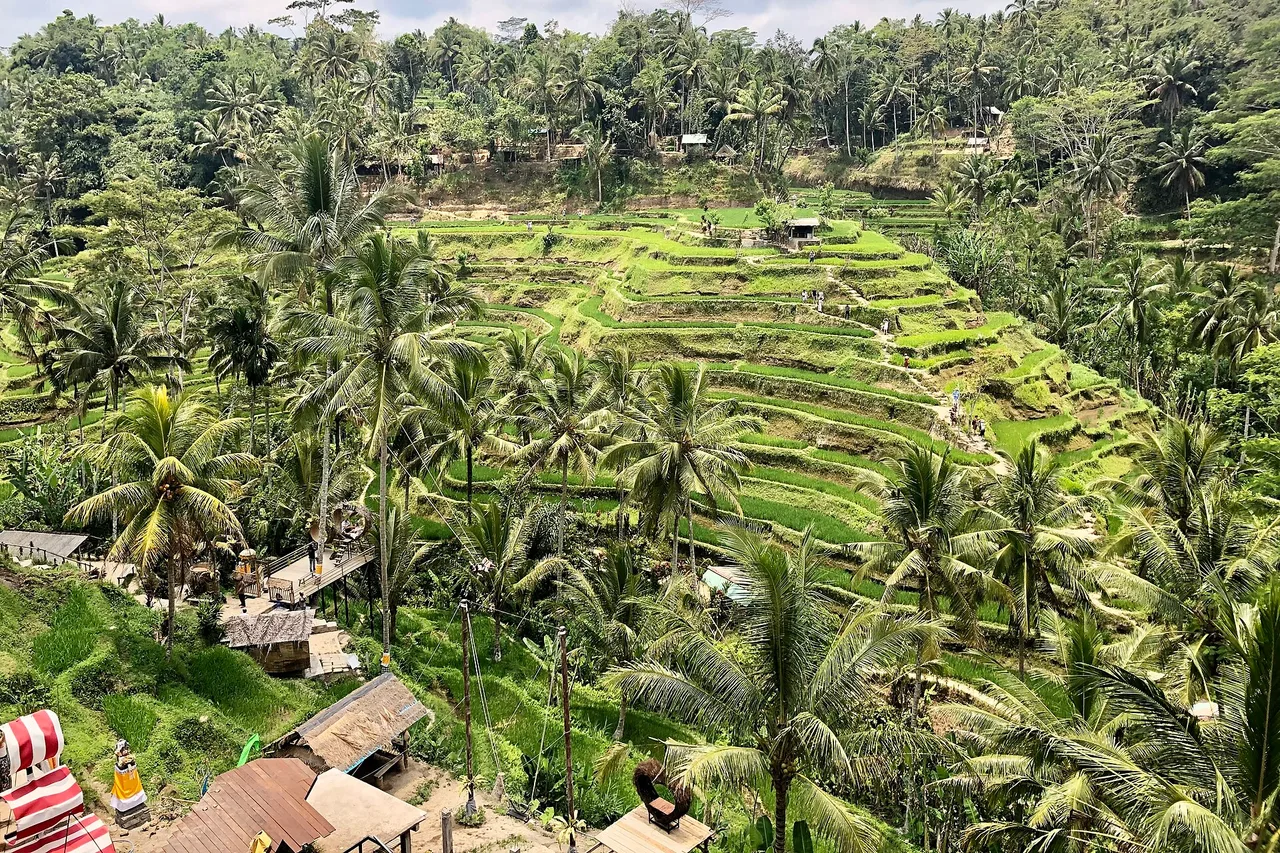
It gets a bad press, and partly an unfair one. Rain falls mostly in the late afternoon and at night; mornings are often fine, and it rarely rains all day. In January, the wettest month, you get nineteen rainy days — not nineteen lost days. The rice terraces are a green the dry season never produces, the waterfalls of the interior run full, and the island is markedly quieter outside the year-end holidays.
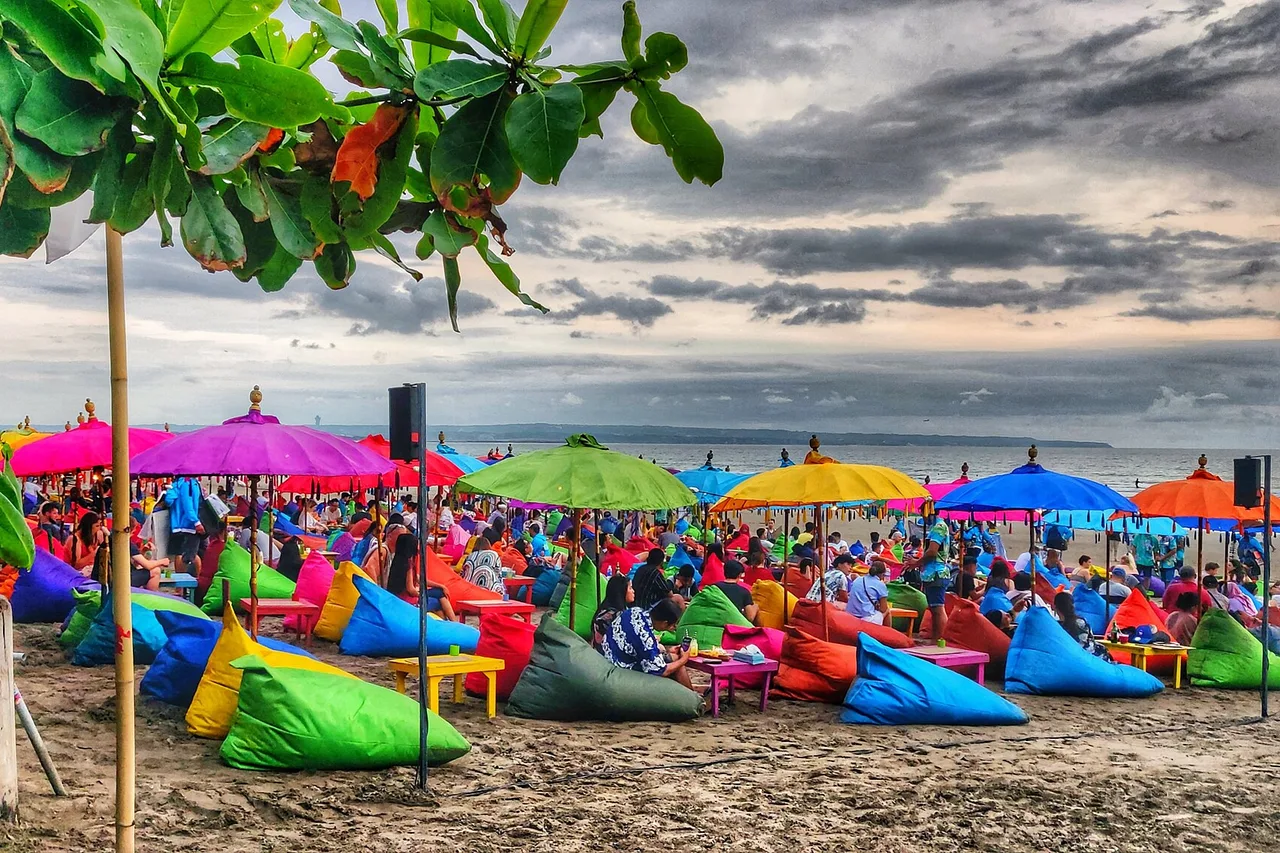
What you accept in exchange: humidity, real and constant; mountain roads that can be slippery; and above all, on the west coast, a well-documented seasonal phenomenon — waste carried in by currents and swollen rivers, washing up on the beaches of Kuta, Legian and Seminyak between December and March. Clean-up crews work every morning, but the picture does not match the brochure. Good news for surfers, though: the wind swings and it is the east coast — Keramas, Nusa Dua, Sanur, Serangan — that becomes the best of the island. In Bali, some coast is always working.
What matters more than weather: crowds and prices
Across twelve months, weather is a weak criterion; crowding is a strong one. Three regimes coexist. High season — July, August and the two weeks around Christmas and New Year — stacks up top prices, accommodation booked out months ahead and gridlock in the south. Low season — January to March — offers the best prices, with the caveats above. And in between sit the shoulders: May, June, September and above all October, where you get good weather without the crush and at reasonable rates. If one piece of advice should survive this article, it is that one.
Full guide: Where to Stay in Bali: An Honest Area-by-Area Guide
A note on booking method: in Bali, what needs booking early is not what people assume. Accommodation can almost always be found; what runs out are dated activity slots in high season — Penida dives, Batur treks, cooking classes, weekend ferry tickets to the Gilis. An August trip is built around those slots; a May trip can be improvised.
The Balinese calendar counts as much as the weather
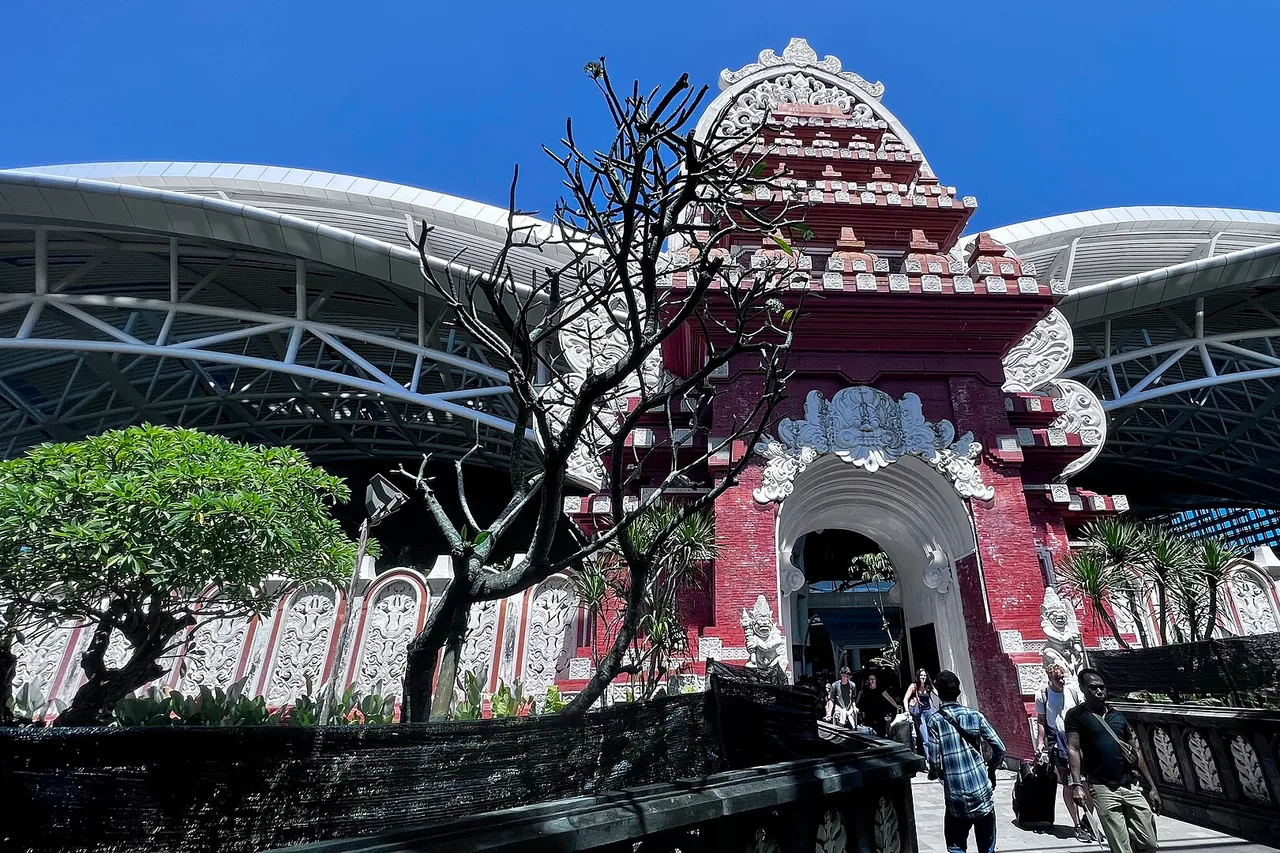
One date dominates the year: Nyepi, the Balinese New Year and day of total silence. In 2027 it falls on Monday 8 March. For twenty-four hours, from 6 a.m. to 6 a.m. the next day, the whole island stops: no going out, no lights, no music, no traffic — and Ngurah Rai international airport closes completely, the only airport in the world suspended every year for a religious observance. You stay at your accommodation, where meals are provided. The evening before brings the ogoh-ogoh parade, giant demon effigies carried through the streets and then burned: one of the finest evenings of the Balinese year.
Full guide: Bali airport transfer: taxi, Grab or pre-booked?
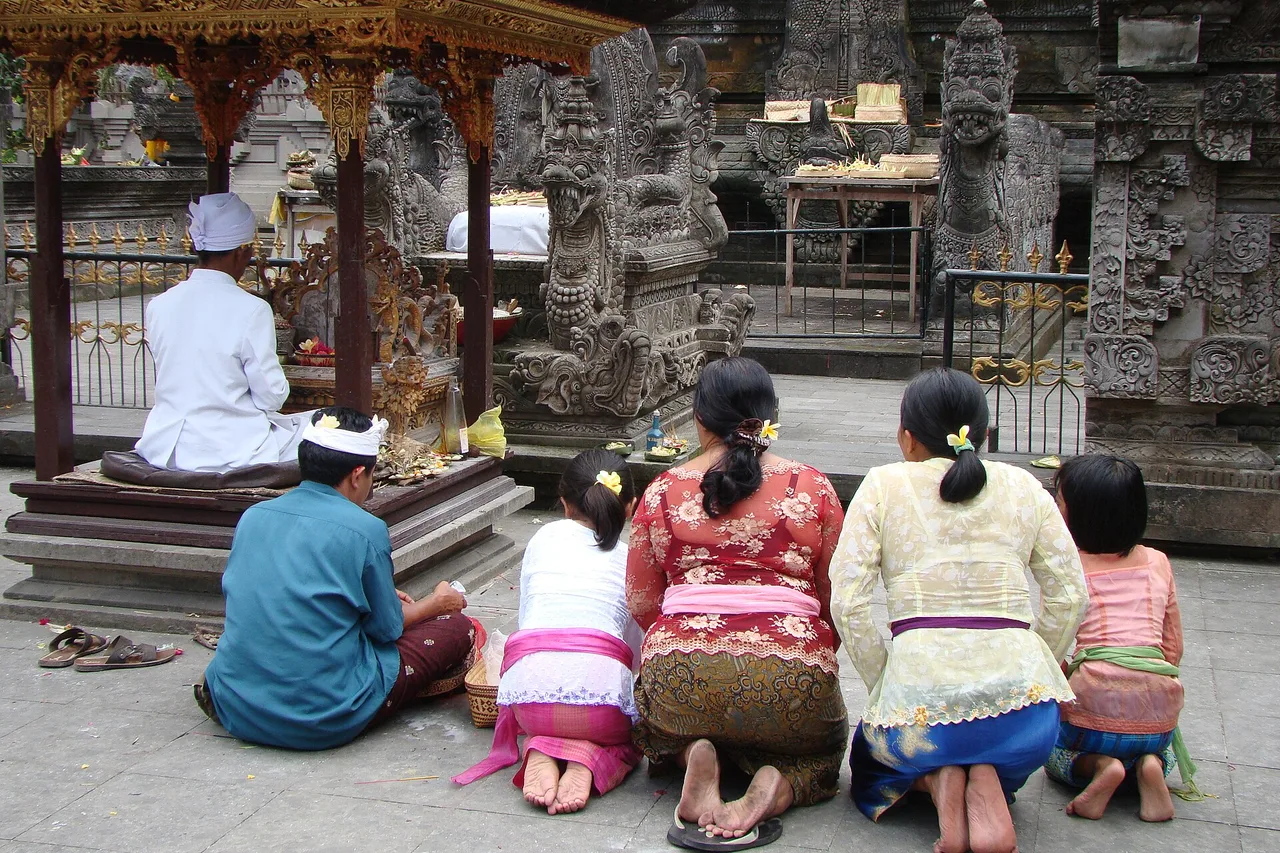
Two practical consequences. If your flight lands or leaves on Nyepi, it will not happen: check that date before booking. And if you are on the island the day before, do not leave — the experience is worth it. The other great occasion is Galungan, celebrating the return of ancestral spirits, followed ten days later by Kuningan: they come round every 210 days of the pawukon calendar, not annually on a fixed date. The next ones fall on 13 January 2027 (Kuningan on the 23rd) and 11 August 2027 (Kuningan on the 21st). Villages then fill with penjor, tall curved bamboo poles decorated with palm leaves: the best moment to see Bali at home, provided you accept that many businesses close.
Above the south: a different climate forty kilometres away
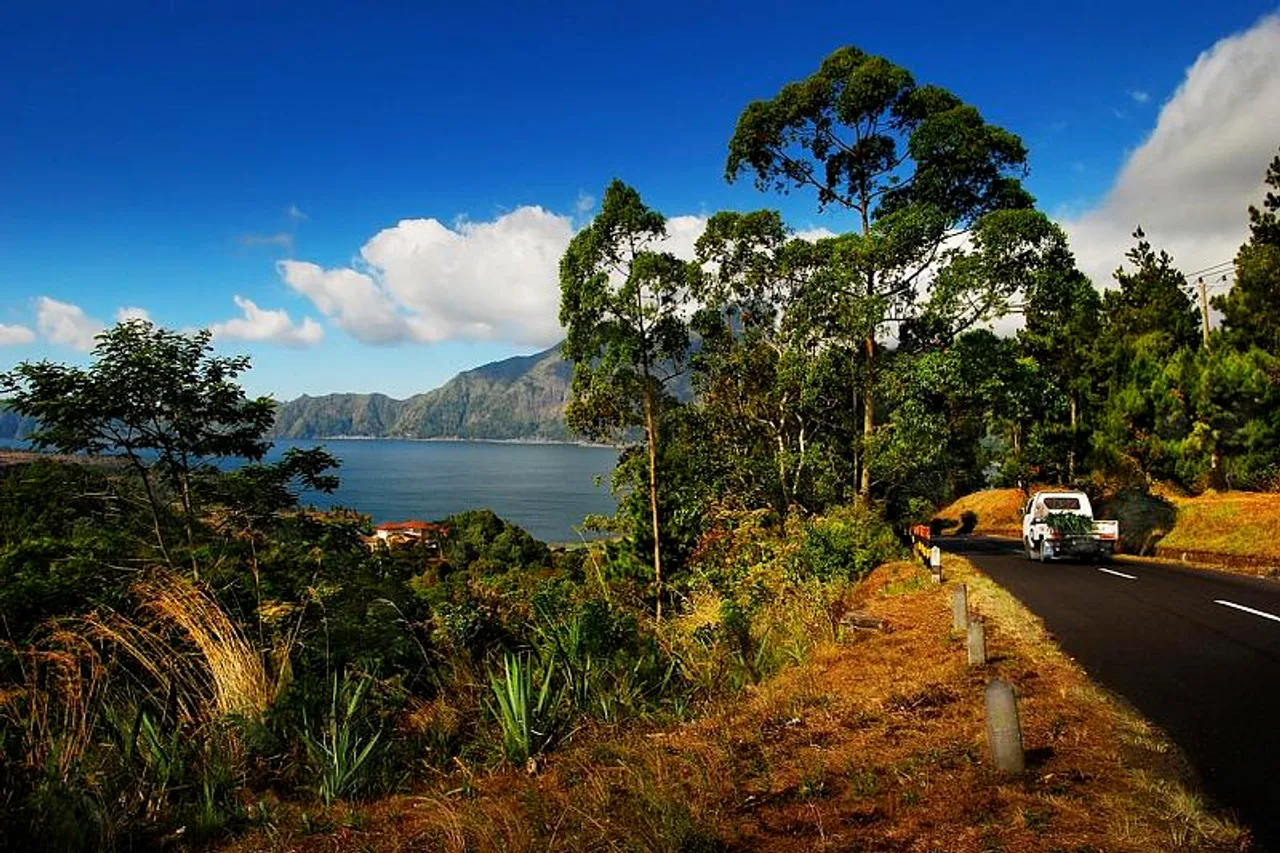
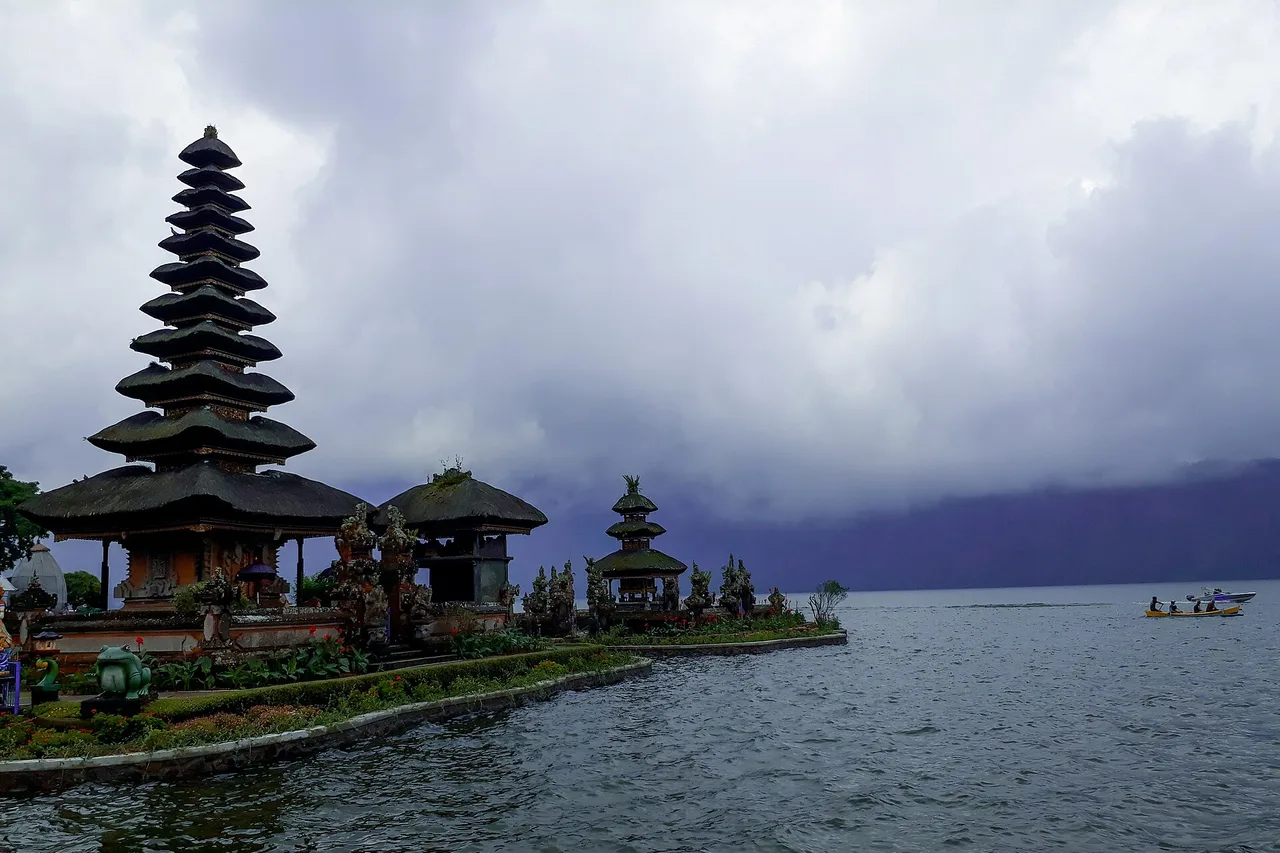
The table above describes Denpasar. Climb to Bedugul, Munduk or Kintamani, between 1,000 and 1,500 metres, and everything changes: it is markedly cooler — a light jumper in the evening is not an affectation — cloud clings to the ridges for much of the day, and it rains more, dry season included. The Ulun Danu Beratan temple, set on its lake, photographs as well under grey skies as under sun; do not postpone the visit waiting for a clear spell that, up there, is slow to come.
Conversely, the north-east coast — Amed, Tulamben — is the driest part of the island, sheltered by Mount Agung. It stays workable when the south is under a downpour, and its calm water makes it the wet-season pick for diving and snorkelling. In other words: in Bali, a rainy forecast in the south does not cancel the day, it moves it.
Paperwork and entry costs, up to date
Two line items to plan before your first meal. The visa on arrival first: 500,000 Indonesian rupiah for thirty days, extendable once by a further thirty. You pay it at the counter on landing or, more simply, online in advance on the official Indonesian immigration portal (evisa.imigrasi.go.id) — since June 2025, however, any extension requires an in-person visit to an immigration office. Then the Bali tourist levy: 150,000 rupiah per foreign visitor, once per trip, with no exemption by age. It is paid on the official Love Bali portal (lovebali.baliprov.go.id), which issues a QR code to show on arrival. Pay it before you fly: the arrival counter queues are long, and copycat sites that overcharge are numerous.
So which month should you pick?
If you are coming for guaranteed sun, clear volcanoes and west-coast surf, aim for July and August — and accept the crowds and the prices. If you want the same weather without the crush, aim for May, June or September, and above all October, our general recommendation: still dry, already quiet, rates back to reasonable. If budget is your criterion, or if you want blazing green terraces and full waterfalls, January to March will give you the best value, provided you take the downpours as they come and skip the west coast for beach days. And in every case, check first whether Nyepi falls inside your window: it is the one day of the year when Bali cannot be visited.