The question that costs a first Bali trip the most is not “which area”, it is “how many bases”. The island is small, but its roads are slow: the thirty-six kilometres between Ubud and the airport take one to one and a half hours in normal conditions, and a good deal more at the end of the day. Picking a single address for ten days means deciding to spend those ten days in a car. Here is what each area really offers — and what you have to accept in return.
The real question is how many bases, not which one
Bali crosses in a day on a map, not on its roads. Between Ubud and the airport there are thirty-six kilometres and one to one and a half hours in normal conditions — double that at peak times. Between Canggu and the airport, allow forty-five to sixty minutes, for a distance that would take a quarter of an hour as the crow flies. Those numbers decide everything: a single base forces a return trip every day, and half the plan quietly gets dropped.
The rule that works is simple. One week: two bases. Ten days: two, possibly three. Two weeks: three, rarely more — each move costs half a day. A well-split trip feels like an island; a single-base trip feels like a road. The rest of this guide is about choosing those two or three.
| Area | Feel | Best for | What you have to accept |
|---|---|---|---|
| Seminyak / Legian | Shops, restaurants, beach | A first trip without a vehicle | High prices, crowded pavements |
| Canggu / Berawa | Cafés, surf, remote work | A long stay, a social life | Gridlocked lanes, grey sand |
| Kuta / Tuban | Nightlife, low prices | The arrival or departure night | Noise, touts |
| Ubud | Rice fields, culture, wellness | Culture, nature, walking | No beach within an hour |
| Uluwatu / Bingin | Cliffs, reef breaks | Surf, sunsets, couples | You need wheels, water is scarce |
| Jimbaran | Fishing village, grilled fish | Families, an early flight | Little going on after dark |
| Nusa Dua | Resort enclave, calm lagoon | Families, safe swimming | You never bump into the island |
| Sanur | Walkable seafront, lagoon | Families, quiet travellers | No waves, little nightlife |
Seminyak and Legian: the base where you can skip the scooter
This is the safest compromise for a first visit. Seminyak sits about twelve kilometres from the airport, which in practice means twenty minutes or sixty, depending on traffic — the spread itself is the information. It has the island’s highest density of restaurants, shops and spas, a long pale-sand beach, and above all distances you can walk. With Sanur, it is the only district where a week without renting a scooter is realistic.
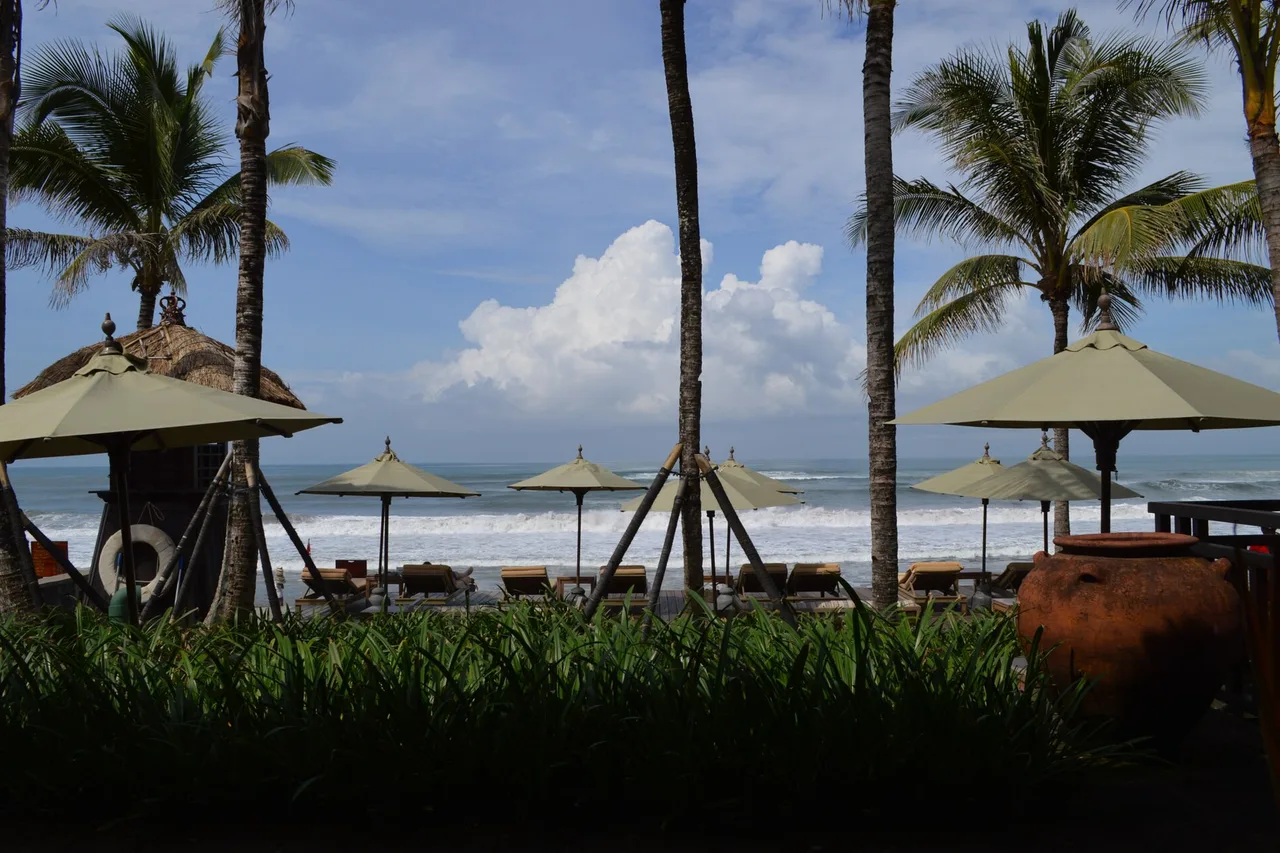
Legian, just to the south, offers exactly the same beach for noticeably less, with a younger crowd and older hotels. What you accept on both sides: pavements often occupied by parked bikes, heavy traffic on the shopping streets, and prices that stopped being Asian some time ago. And one seasonal caveat that rarely makes the brochures: this west coast is where debris carried by currents and swollen rivers washes ashore from December to March — a phenomenon we set out in detail in our guide to Bali’s weather month by month.
Canggu and Berawa: the energy, and the bill in driving time
In ten years Canggu has become the remote-work capital of Southeast Asia: specialty coffee, co-working, surf schools, beach clubs. For a long stay, or for a trip where meeting people matters, it is the liveliest base on the island. The bill is concrete: forty-five to sixty minutes from the airport, and a network of single-lane back roads — the famous shortcuts — that clogs from mid-afternoon onwards.
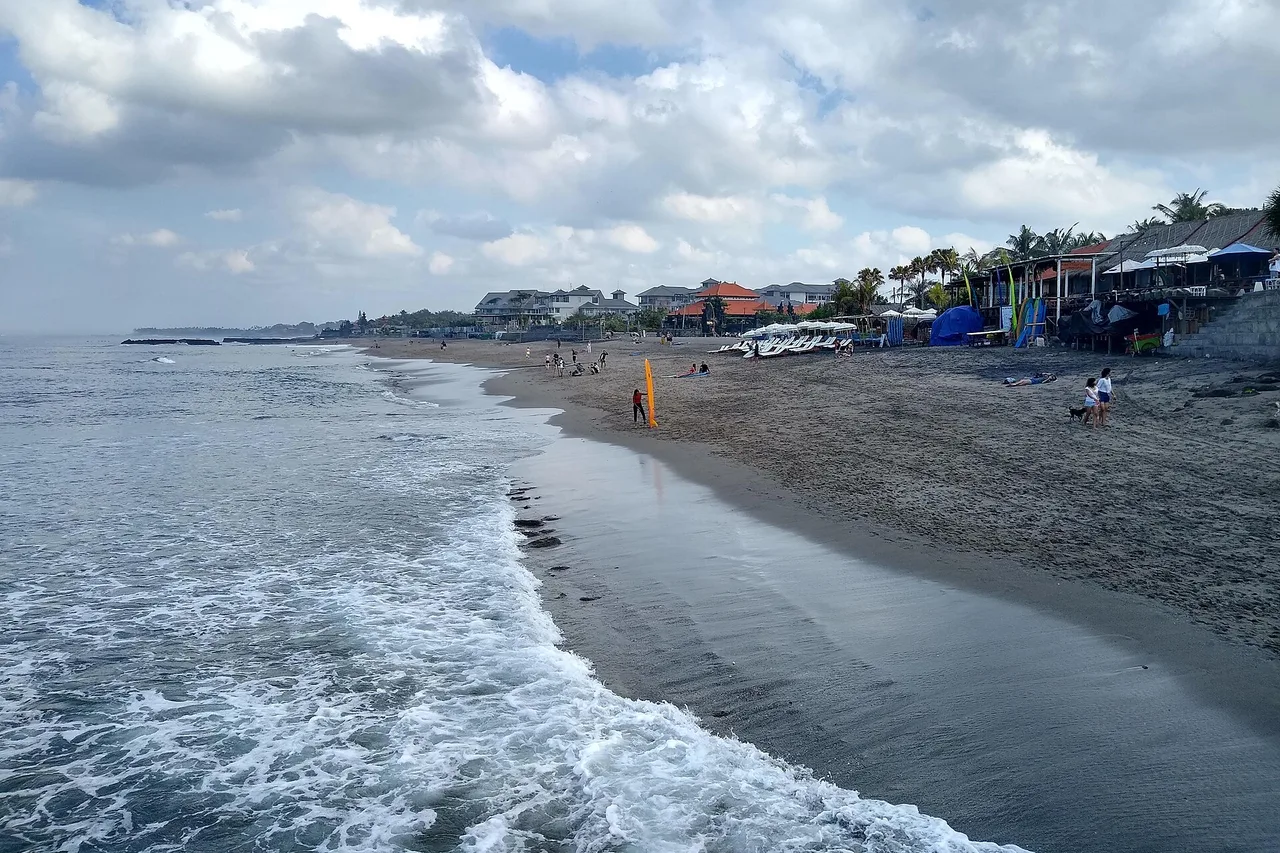
Two honest points. The first is the sand: Canggu’s is grey and volcanic, not white, and the beach is rawer than it is photogenic. The second is the scooter: it is the local answer to the gridlock, and it is also what sends visitors to hospital every year, often without a valid licence or insurance that covers two wheels. Nor should you count on the promised metro: the first stone of the airport – Kuta – Seminyak – Berawa – Cemagi line was laid on 4 September 2024 for an announced 2028 opening, yet in 2026 no construction is visible and the project remains under study. You do not choose a neighbourhood on the promise of transport that does not exist.
The budget corollary of the above: a badly chosen base is not paid for in money but in journeys, and journeys end up costing both. If your accommodation forces a daily round trip to the south, renting a vehicle by the week almost always works out cheaper than paying per ride — and it is the one trade-off in this guide you can calculate in advance.
Ubud: the countryside, an hour from the sea
Ubud is the compulsory other half of a Bali trip, for a simple reason: it holds everything that is not the beach. Rice terraces, temples, cooking classes, craft workshops, late-afternoon walks, and a wellness offer with no equal on the island. Allow thirty-six kilometres and one to one and a half hours from the airport.
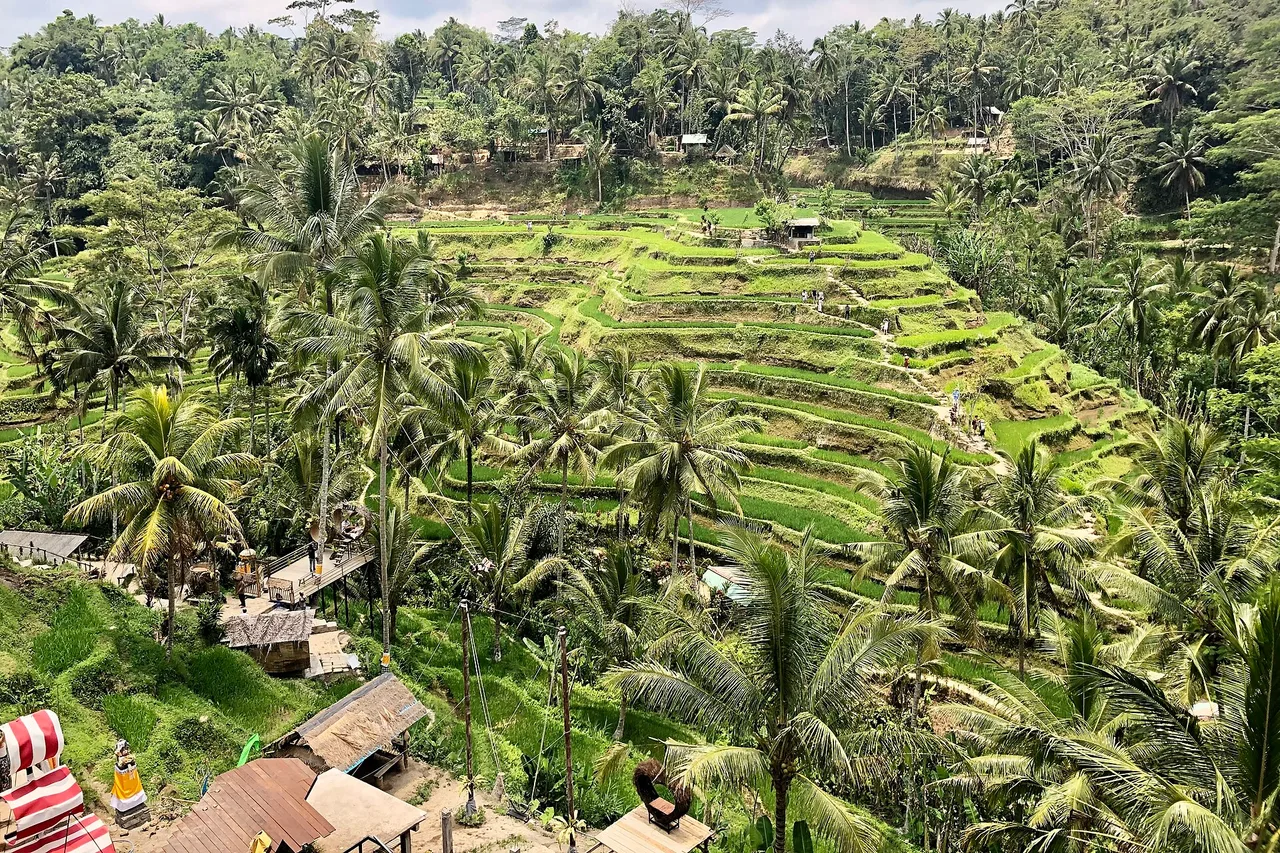
One piece of placement advice beats a long eulogy: do not sleep in central Ubud. The triangle formed by the market, the Monkey Forest and Jalan Raya is saturated, loud and expensive, and it looks nothing like the image that brought you there. The villages around it — Penestanan, Sayan, Nyuh Kuning, Keliki, the Tegallalang valley — are five to fifteen minutes away and deliver exactly what people come for: water running in the channels, terraces below the room, and a town centre you visit when you choose to. Worth knowing too: Ubud is higher, so cooler and wetter than the south, all year round.
The Bukit: Uluwatu, Jimbaran, Nusa Dua — three worlds on one peninsula
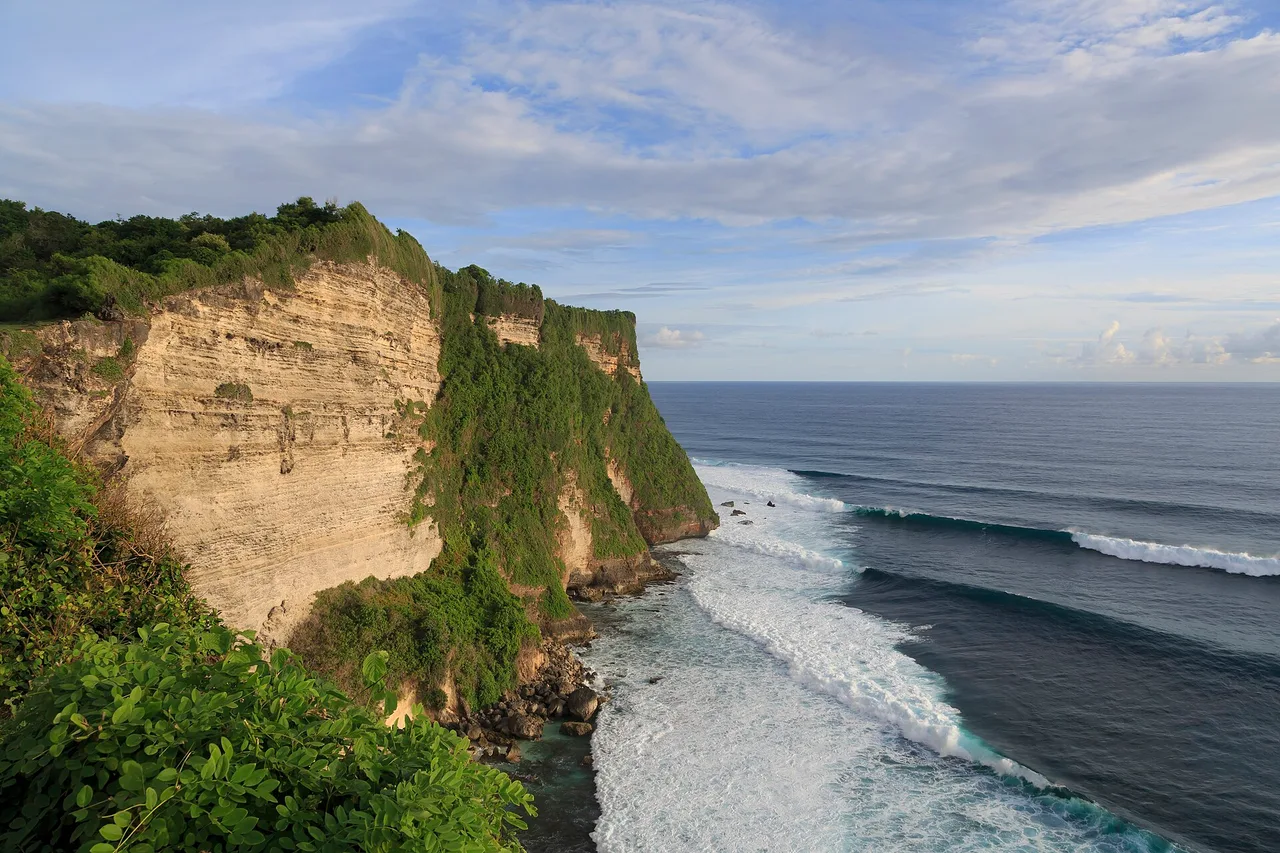
South of the airport, the limestone Bukit peninsula holds three districts with almost nothing in common. Uluwatu, Bingin, Padang Padang: cliffs, the best reef waves on the island, and sunsets that justify three nights on their own. Two caveats: everything needs a scooter or a car, and the beaches have to be earned — they sit at the bottom of steep staircases and are sometimes unreachable at high tide.
Full guide: Car Rental in Bali: Prices, Licence and Pitfalls
Jimbaran, on the peninsula’s west coast, has stayed a fishing village with a resort strip attached: the Kedonganan fish market keeps alive the formula that made its name — you buy your fish, a nearby warung grills it, you eat it facing the sea. Sheltered bay, easy swimming, airport minutes away: it is the rational base for a first or last night, or for a family with a dawn flight.
Nusa Dua, finally, is not a neighbourhood but a development: an enclave of roughly 350 hectares built from the 1970s by a state corporation founded in 1973, gathering more than twenty resorts behind gates and manned checkpoints. It is reached by the toll road in twenty to thirty minutes, the beach is protected and safe for children, and everything is immaculate. The flip side is in the definition of the place: you do not meet Bali here, you stay beside it. That is a perfectly defensible choice — as long as it is a choice.
Sanur: the opposite of the south, and the gateway to the Nusa islands
Sanur sits on the east coast, about thirty minutes from the airport, and works the other way round from everywhere else: an offshore reef breaks the swell and leaves a flat lagoon, wave-free, where children can be let loose without a second thought. A paved seafront promenade of around five kilometres runs the length of the beach — a rarity in Bali, where walking is usually theoretical. The district has aged with its clientele: low-rise hotels, gardens, kitchens that close early.
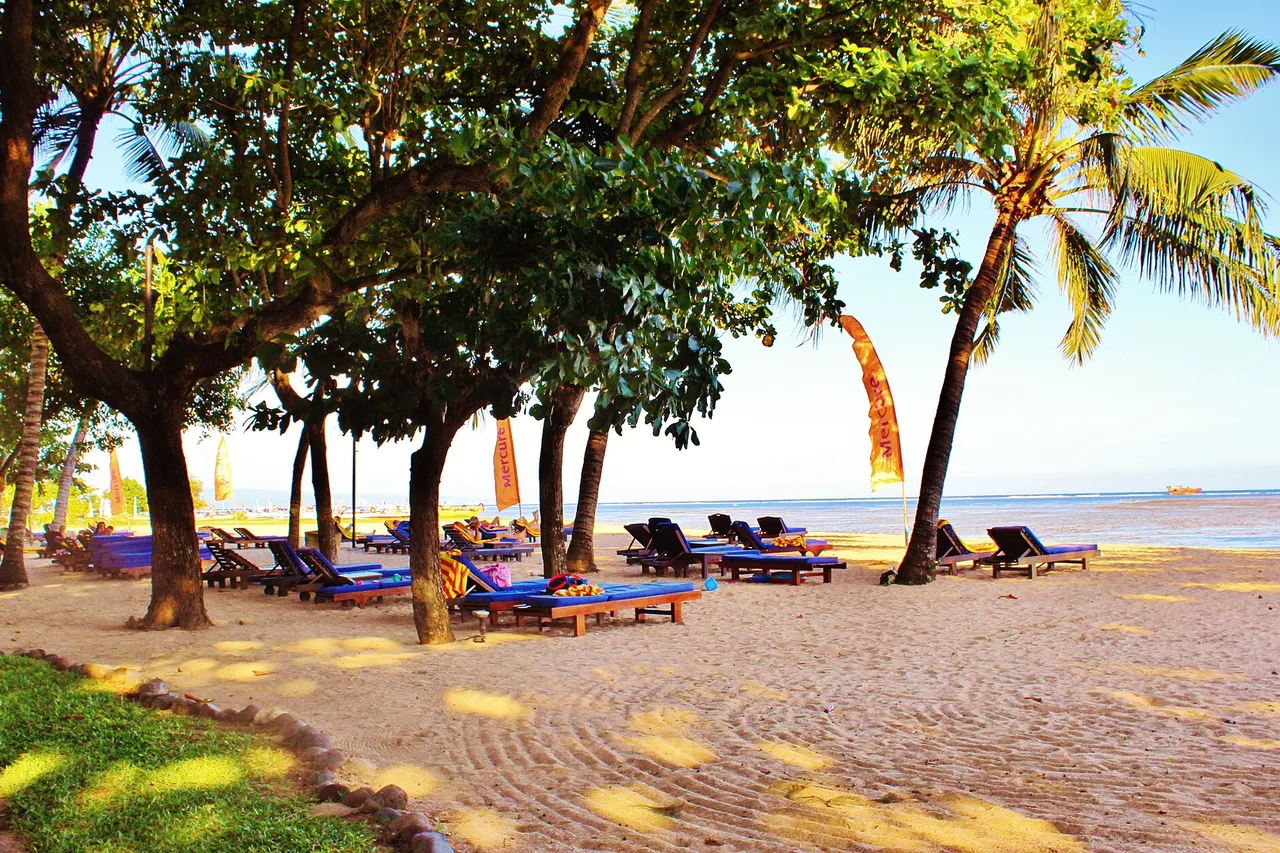
One decisive argument if the Nusa islands are on the plan: Sanur harbour, whose modern terminal has been coming into service in stages since November 2022, puts Nusa Lembongan about thirty minutes away by fast boat, and Nusa Penida barely further. Departures run roughly from six in the morning to six in the evening, and stop entirely on Nyepi. Sleeping in Sanur the night before a crossing saves an hour of pre-dawn driving — a detail that changes a day.
East, north and the highlands: the bases people forget
Four areas are missing from almost every itinerary, and they are the ones that turn a holiday into a journey. Amed, on the east coast, lines up black-sand coves, traditional outriggers and one of the easiest dive sites in Asia, at Tulamben. Sidemen offers the rice valley Ubud had thirty years ago, with Mount Agung behind it. Munduk and Bedugul, around 1,200 metres, deliver waterfalls, lakes and genuine cool — bring long sleeves. Lovina, in the north, closes the loop on a swell-free sea.
None of these four replaces a night in the south; all of them beat a third night in Seminyak. They chain together naturally over a fortnight: we set out a full version in our two-week Bali and Lombok itinerary.
What no brochure mentions: water
There is one subject your choice of accommodation directly engages, and that nobody raises. Bali received more than seventeen million visitors in 2025, four times its resident population. Tourism consumes roughly two thirds of the island’s fresh water; hotels alone account for close to 56% of supply, and a room in a starred hotel uses at least 800 litres a day. On the Bukit, where limestone holds nothing, water comes mostly from private wells — only half of which hold a commercial extraction permit. The consequence is measured: the water table is falling, and the risk of saltwater intrusion along the coast is rising.
This is not an argument for staying home; it is one more selection criterion, and it costs nothing. A private-pool villa on the Bukit in the middle of the dry season is precisely what weighs heaviest; a smaller property on the mains, or one that recycles its greywater, weighs far less. At equal comfort the second almost always exists — you just have to know there is a question to ask.
Three template trips, and how many nights each
One week, first visit: three nights in Ubud, four in Seminyak or Canggu. You see both Balis, spend only half a day in transfer, and keep a day for the Nusa islands out of Sanur. Ten days with children: four nights in Sanur — lagoon and harbour — three in Ubud, three in Nusa Dua or Jimbaran to finish near the airport. Two weeks, surf and nature: four nights in Canggu, four in Uluwatu, three in Amed, three in Ubud; that split covers the fewest kilometres for the most island.
One date to check before booking anything: Nyepi, the Balinese day of silence, falls on Monday 8 March 2027. For twenty-four hours nobody goes out — you stay at your accommodation, and the airport itself closes. If your trip covers that date, choose a property that provides meals on the day: the question arises nowhere else in the world, and here it arises every year.
Full guide: Bali airport transfer: taxi, Grab or pre-booked?