eSIM comparisons rank brands. That is precisely the wrong criterion. A travel eSIM owns no network: it hands you over to an Indonesian carrier, and it is that carrier — not the logo on the app — that will decide whether you have signal in Ubud, on the road north, or on a boat to Nusa Penida. Add a 2026 regulatory change that makes the local SIM markedly less simple than it used to be, and the choice becomes fairly clear.
The question is not the brand, it is the network
Here is the mechanism, in one sentence: a travel eSIM does not build masts. It negotiates access to local networks — in Indonesia, essentially Telkomsel, Indosat and XL — and resells that access under its own name. Two very different providers can therefore deliver exactly the same coverage, and two plans from the same provider can differ.
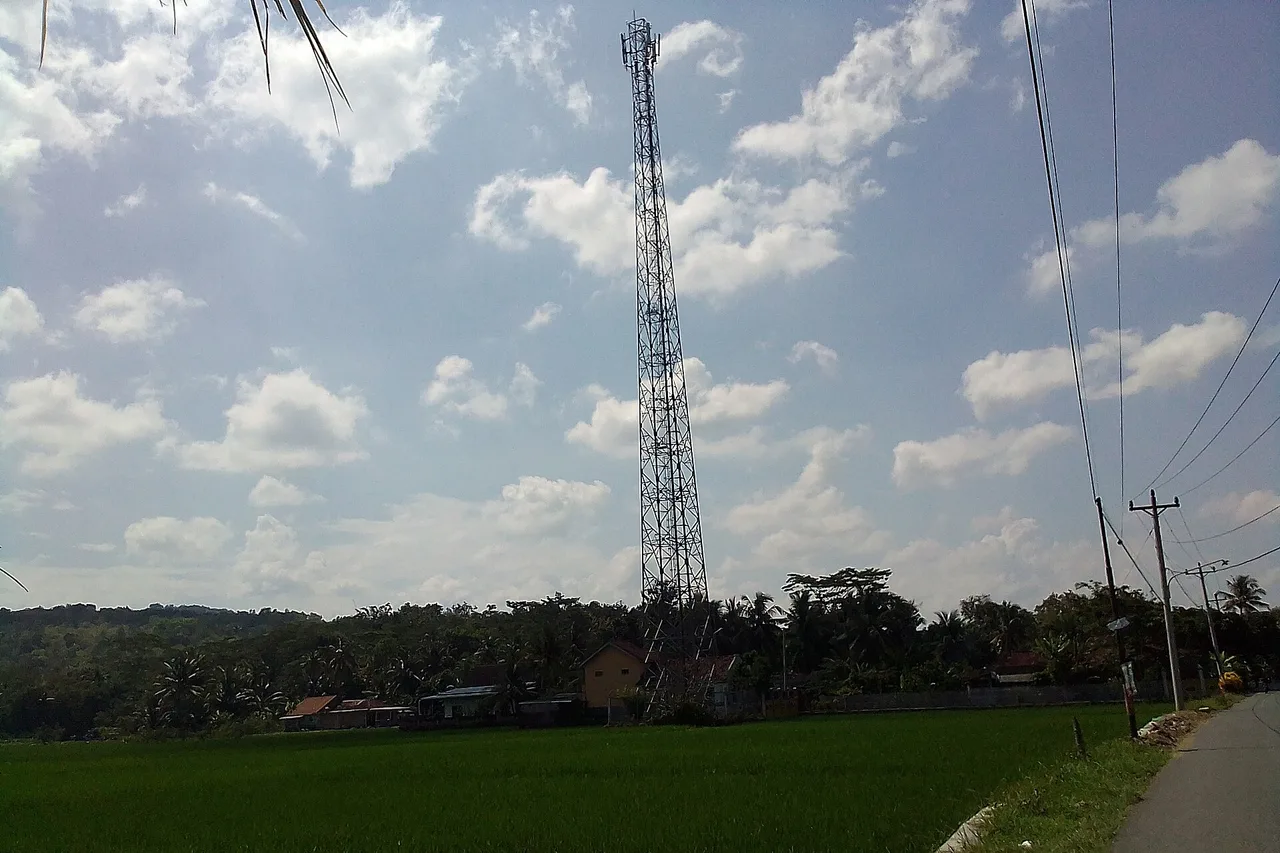
In Bali that distinction has a precise, checkable consequence: Telkomsel is the only network that reliably reaches Nusa Penida and the Gili Islands. On the main island, along the Kuta – Seminyak – Canggu – Ubud corridor, essentially everything works. The gap opens the moment you leave it.
| Provider | Network used | Nusa Penida & Gilis | What to know |
|---|---|---|---|
| Nomad | Telkomsel | Yes | Plans from 10 GB |
| Holafly | Telkomsel | Yes | The widest network in the country |
| Local Telkomsel eSIM | Telkomsel | Yes | Local number, but registration required |
| Yesim | Bali-specific plan | Check before buying | Recorded as the steadiest in Ubud |
| Saily | Tourist corridor | Check before buying | From $4.99 · 7 days / 5 GB at $13.99 · hotspot allowed |
| Airalo | Tourist corridor | Check before buying | Regional “Asialink” plan across 18 countries |
One point of honesty about this table: the “check before buying” cells are not a dodge. Network agreements change from one quarter to the next, and a provider riding Telkomsel last year may route through Indosat this year. The question to put to customer support before paying fits on one line: which Indonesian network does this plan connect to?
Nusa Penida and the Gilis: where the choice shows
As long as you stay in the south, the question is close to theoretical: every network covers the tourist corridor, and café and hotel wifi fills the gaps. The problem only appears once you leave that perimeter — which is exactly what a good trip does.

Three situations where it genuinely matters. On a boat to the Nusas or the Gilis, when you need to warn someone you are late. On the road north, towards Munduk or Sekumpul, where the terrain eats the signal and a broken-down scooter is not a hypothetical. And in gorges and valleys — several waterfalls are reached at the bottom of a canyon, where no network reaches, whoever your provider is.
In short: if your route looks like our two-week circuit or takes you to Nusa Penida and the Gilis, the underlying network stops being a detail. If it stays inside the Seminyak – Canggu – Ubud triangle, almost any plan will do.
What changed in 2026: biometric registration
This is the year’s new fact, and it shifts the balance towards the international eSIM.
Regulation No. 7 of 2026 from the Indonesian Ministry of Communication and Digital Affairs requires foreign nationals to present a passport and a residence permit to register a mobile number, with mandatory facial biometric capture and fingerprints in certain cases. Above all: a prepaid card stays inactive until biometric registration has been completed. This is no longer a counter formality.
Sources diverge on what is genuinely required of a tourist, and we would rather say so than pick a side: other guides state that a short-stay visitor registers with their passport number alone, without a tax ID or residence permit. Both readings coexist today.
The practical consequence is the same either way: getting a local line now means an in-person procedure whose outcome depends on the counter. An international eSIM, which works by roaming, does not go through it — you activate it at home, before you leave.
The IMEI rule, and what we could not verify
A second, older Indonesian peculiarity: since 2020, any device connecting to local networks must have its IMEI registered. The measure targets grey-import handsets rather than travellers, but it is regularly cited as a trap.
Here we should be precise about what we know and what we do not. The rule exists and is documented. However, we found no text establishing a formal exemption for a traveller roaming on an international eSIM rather than using an Indonesian card. In practice the question does not arise on a short roaming stay; we will still not write that up as a guarantee.
That is also why we prefer cautious wording to the categorical claims found elsewhere: on this precise point, most comparisons rule without citing a source.
At the airport or before you fly: the price gap
Buying on arrival is the commonest reflex, and the most expensive one.

At Denpasar airport, tourist packages on a physical card run around 150,000 to 300,000 rupiah for 10 to 25 GB valid 30 days, with wide variation between counters: the shop near the baggage belt was recorded at 400,000 rupiah, about 26 dollars. On the eSIM side, the cheapest Telkomsel option bought on the spot is likewise recorded at 26 dollars, while the same official Telkomsel eSIM ordered online in advance starts around 12.86 dollars.
Full guide: Bali airport transfer: taxi, Grab or pre-booked?
So the gap is not marginal: for comparable service, buying before departure roughly halves the price. This is not specific to Bali — it is the premium you pay for not having planned ahead. Our orders of magnitude for the whole trip are in the two-week budget.
A few plan markers recorded the same day, to be treated as a snapshot: Saily from $4.99, with 5 GB over 7 days at $13.99 and hotspot allowed; Nomad from 10 GB for about $17; Jetpac at $21 for 20 GB. These prices move constantly.
In practice, ordering before departure can be done with any travel eSIM provider — Saily, Airalo and Yesim are among them, as are a dozen others. We do not rank them, and the closing section explains why: the only verifiable criterion remains the Indonesian network used, stated on the plan's own page. Read that before the price.
What a travel eSIM does not do
Three limits, rarely foregrounded by those who sell them.
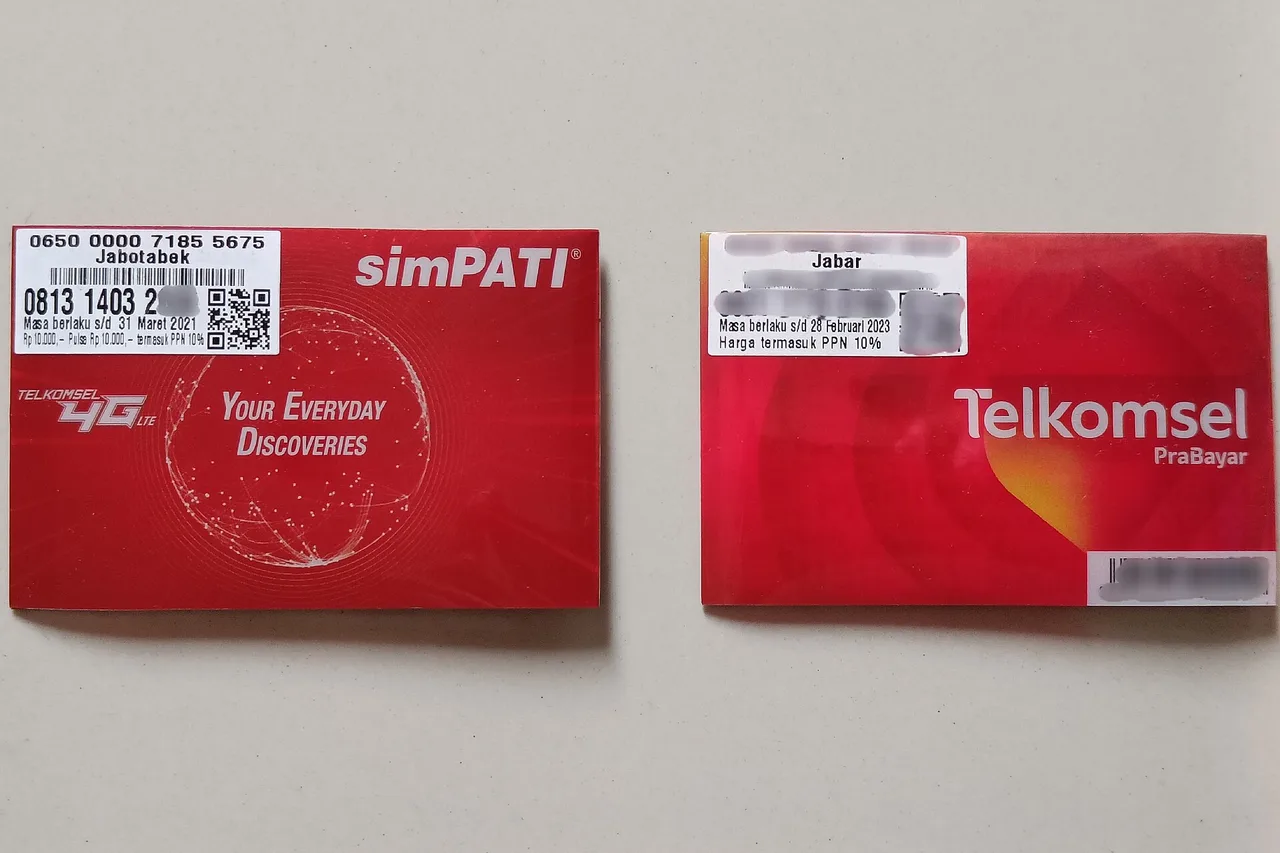
No local number. Almost all travel eSIMs are data-only plans: you keep your usual number for texts, but you have no Indonesian number. It shows the day a driver, a host or a rental agent wants to reach you — in Bali everything runs on WhatsApp, which solves it 95 % of the time, but not when a local service demands a verification SMS to an Indonesian number.
A compatible, unlocked phone. An eSIM assumes a handset that supports it and is not carrier-locked. That covers most recent models; it does not cover all of them.
Hotspot sharing is not automatic. Some plans explicitly allow it, others block it. If you are travelling as a pair and counted on sharing one line, check before paying, not after.
Four checks before you pay
They take five minutes and head off most of the bad surprises.
One — Which Indonesian network does the plan connect to? This is the deciding question, and serious customer support answers it. If the answer is evasive and your route leaves the south, change provider.
Two — Does my phone take an eSIM, and is it unlocked? Check in the settings before buying, never on landing.
Three — Is hotspot sharing allowed? A point that changes everything for couples and families.
Four — When does the clock start? Depending on the provider, validity runs from purchase, from installation, or from first connection to the network. Installing the profile at home and leaving it dormant until you land is generally the right method — but only if the plan counts from first connection. Again, ask beforehand.
How much data to allow for
We will not give an average consumption figure: it depends far too much on your habits for a single number to be honest. But two concrete markers help you place yourself.
First, the packages sold locally run around 10 to 25 GB for 30 days, and that format exists because it matches what an ordinary trip consumes — browsing, maps, messaging, social media. Second, the short plans of international eSIMs run around 5 GB over 7 days, which is roughly the same daily rate.
Two things blow those volumes up: video on the move, and continuous GPS navigation if you drive yourself — worth keeping in mind if you have read our guide to getting around Bali. Two things cut them sharply: wifi, present almost everywhere in accommodation and cafés, and downloading offline maps before you leave. Many travellers overestimate their needs by a wide margin.
What we will not do: publish a ranking
You will not find a one-line “best eSIM for Bali” here, and it is worth saying why.
Most eSIM comparisons look alike, and their “best overall” verdicts rest on tests nobody can reproduce: a handful of speed readings, in one place, on one day. Publishing a ranking on that basis would mean borrowing an authority we do not have.
What we can do is give you the one checkable criterion: the Indonesian network being used, and its real coverage outside the tourist corridor. On that criterion the answer is clear — if your trip leaves southern Bali, look for a plan that runs on Telkomsel; if it does not, take the cheapest one that suits you and stop thinking about it.
And one last thing that costs nothing: buy before you fly, install the profile at home, and keep your accommodation’s wifi for everything that is not urgent. The rest — the season, the distances, the waterfalls — is in our guides to when to visit, where to stay and Bali’s waterfalls.