Perched in the south-western hills, Chamarel packs three very different wonders into a few kilometres: a seven-coloured earth, one of the island's highest waterfalls, and a distillery that turns its own cane into rum. It is one of the most complete outings in Mauritius — provided you know what you are actually going to see, how to chain the stops, and what time of day to go. Well organised, a morning at Chamarel is well worth the mountain road you have to climb to reach it. The three stops are on the island's map, with the plateau's weather — decisive here.
Budget tip: in Mauritius, some of your activities can cost you less. See how to save thanks to discounts on your activities.
We live here and run Moris Insider, the guide and map of Mauritius built with locals. So here is the real how-to for Chamarel: the Seven Coloured Earth and its geopark, the waterfall, the distillery, the giant tortoises, how to get there and how to fit it all into a fine south-west half-day.
Where Chamarel is
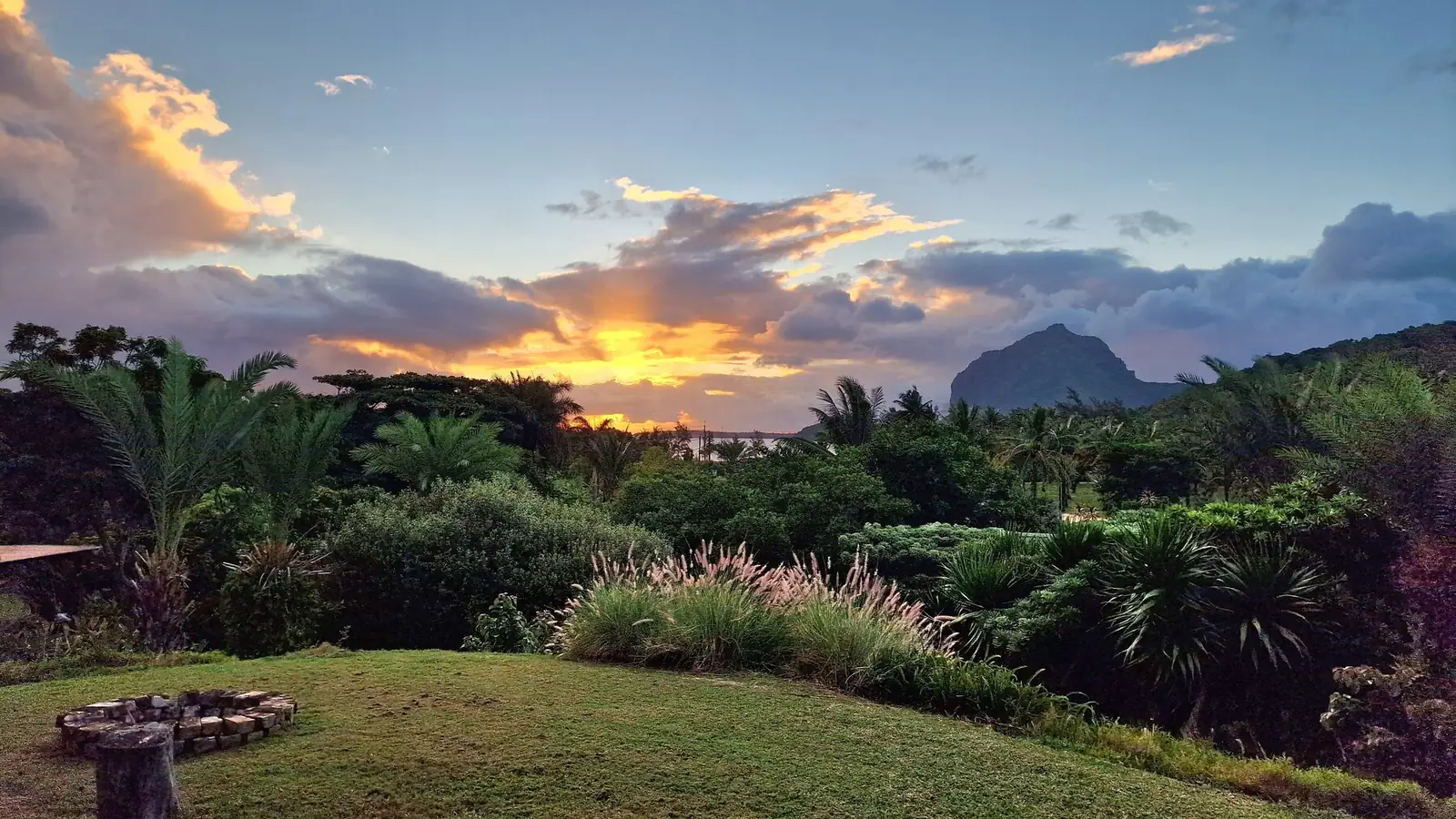
Chamarel is a hilltop village in south-west Mauritius, in the Rivière Noire district, on the heights above the Le Morne and Rivière Noire coast. This is a different Mauritius from the beaches: green hills, forest, cooler and often damper air than by the sea. It is this plateau climate that gives the region its green landscapes and its natural curiosities. The village itself is small and unhurried, a world away from the coastal resorts, and the cooler mountain air is a welcome change on a hot island day; many visitors feel the difference on the very last bends of the climb.
That altitude also explains the road: you climb through the vegetation in hairpin bends to reach the village and the geopark. The drive is part of the experience, with fine views over the south-west coast on the way up. To place Chamarel, the village, the geopark and the area's other curiosities before you set out, the map of locally checked spots helps you understand what is where and which way to go.
The Seven Coloured Earth
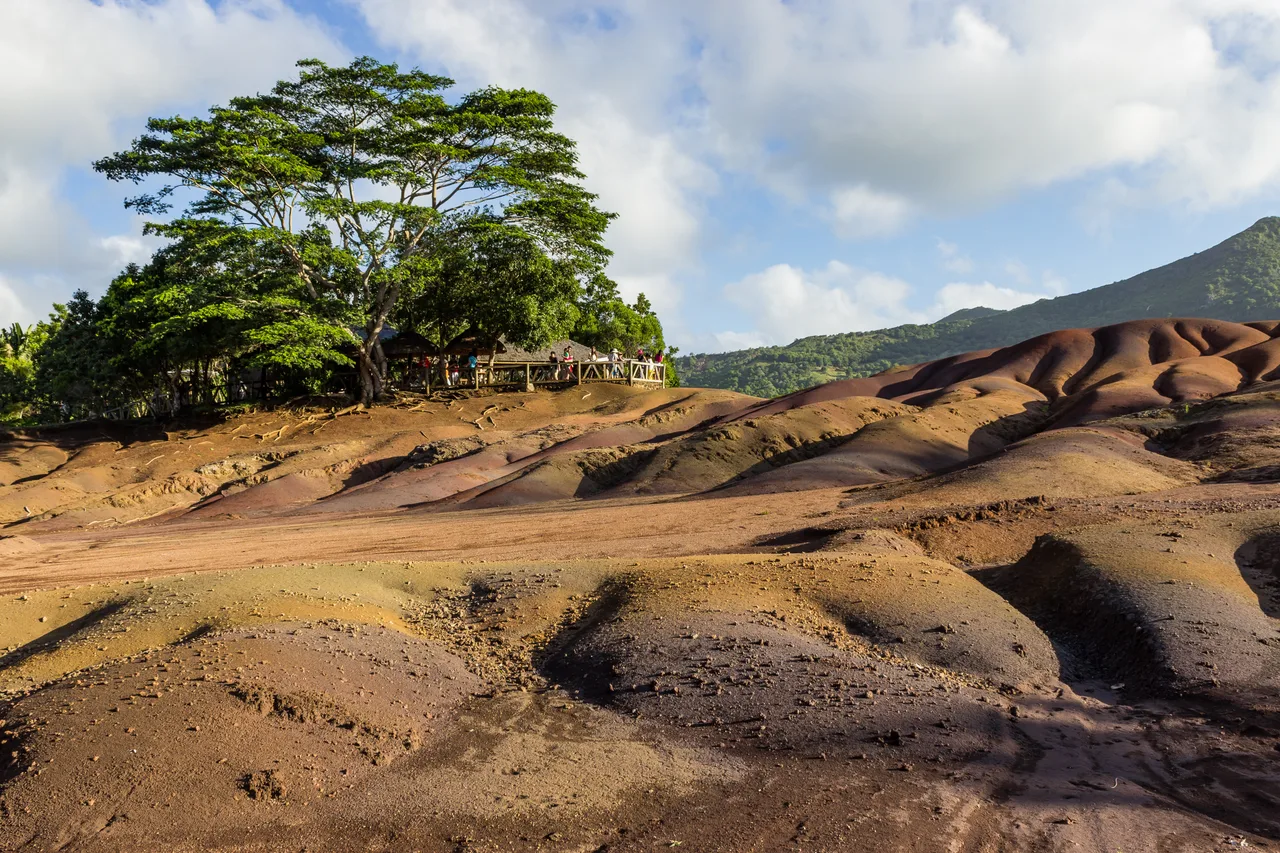
It is the star of Chamarel: the Seven Coloured Earth. Over a small area, gentle rolling dunes show distinct shades — from red and ochre to violet and blue. The phenomenon comes from the very slow decomposition of volcanic rock into clays, over immense geological time: the minerals have concentrated into different colours which, fascinatingly, stay separate rather than mixing. The result looks like a coloured lunar landscape, at its best under strong light.
The site is visited inside a private geopark, along a laid-out trail with viewpoints over the dunes. It is short but spectacular, and the same park gives access to the waterfall viewpoint and the tortoise enclosure: three attractions on one entry. To locate this pocket of nature and the island's other geological wonders, the app's nature section places everything on the map.
The Chamarel waterfall
Still in the same geopark, a short path leads to the viewpoint over the Chamarel waterfall, one of the highest falls in Mauritius. The water drops in a single plunge from the plateau edge into a wooded gorge, a powerful, green setting that stands in complete contrast to the beaches. You admire it from a built platform, with no particular effort.
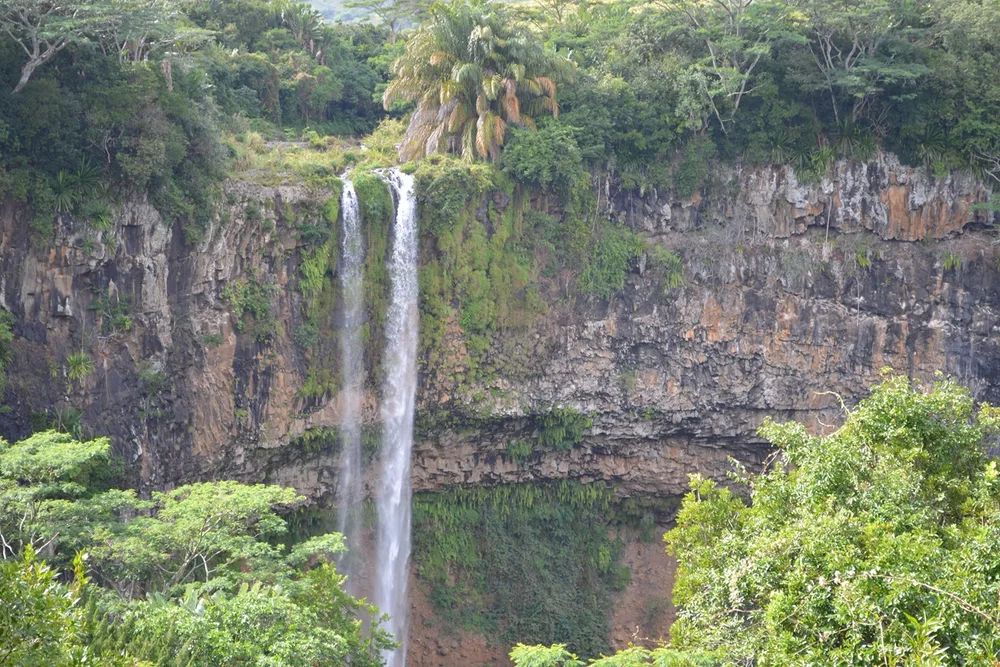
As often with waterfalls, it all depends on the flow: the fall is far more impressive after rain, when the river is high. In the dry season it stays lovely but more discreet. It is one of the few places on the island where you grasp Mauritius's volcanic geology at a glance — the plateau, the fault, the forest. Before you head up, a look at the day's weather, up in the hills too stops you finding Chamarel drowned in mist.
The geopark's giant tortoises
The third attraction included in the visit: a giant Aldabra tortoise enclosure. These imposing reptiles, which can live a very long time, are cousins of the giant tortoises once endemic to Mauritius, gone for centuries. Watching them amble slowly through the greenery is a moment families love, and a fine chance to talk about the wildlife of the Indian Ocean.
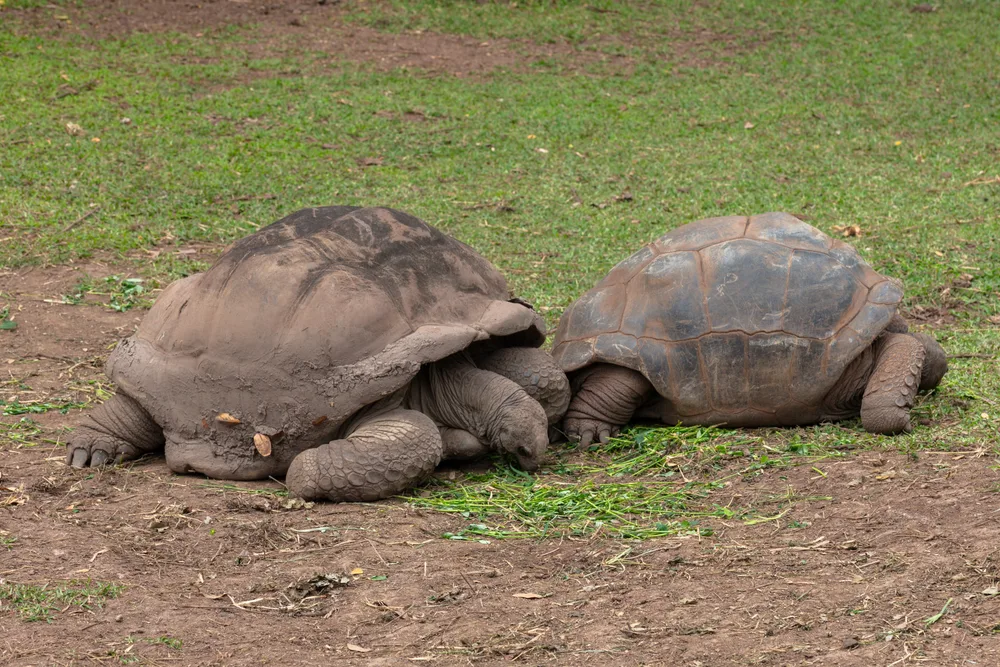
It is also a useful reminder: in Mauritius, you observe wildlife, you do not disturb it. Follow the park's rules, do not feed the animals, keep your distance. If you travel with children, this tortoise stop is often the highlight of their day — jot it down in your travel journal to keep track of the best stops.
The Rhumerie de Chamarel
A few minutes from the geopark, the Rhumerie de Chamarel adds a cultural and gourmet dimension to the outing. It produces an agricultural rum, distilled from sugarcane grown on site — an emblematic Mauritian craft. The guided tour follows the whole process, from cane to distillation, and usually ends with a tasting, while a restaurant lets you eat on site in a green setting.
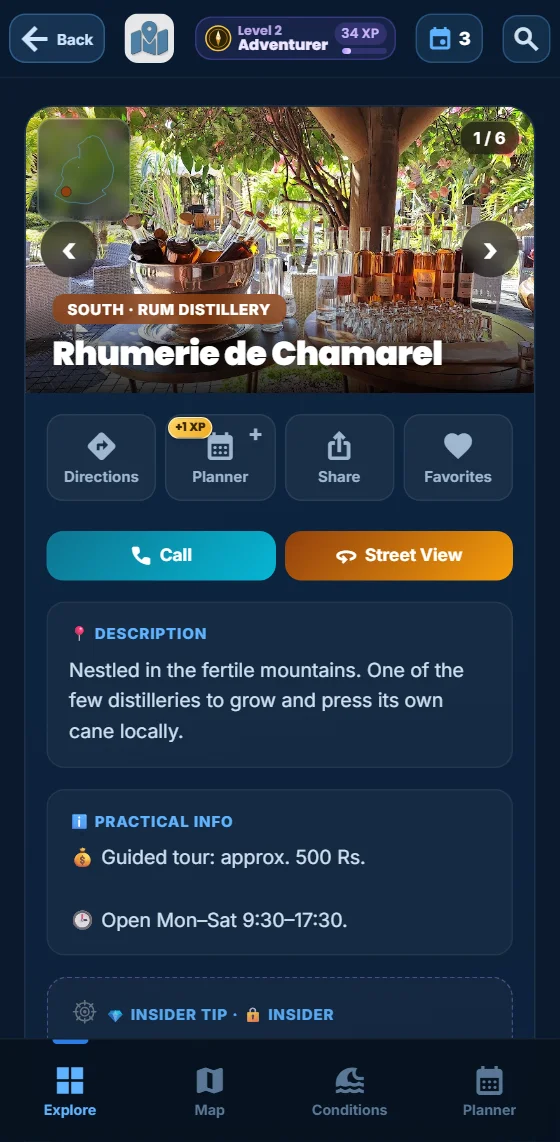
One local tip, plainly put: if you taste, stay sensible, because you will have to take the mountain roads again afterwards. Appoint a driver who does not taste, or keep the tasting for the end of the day. The distillery is an ideal stop to round off the morning, between culture, flavours and a good meal. If you want to follow with a local table, the pick of restaurants and local tables helps you choose without a bad surprise.
Prepare the south-west like an Insider
Moris Insider gathers hundreds of locally checked spots, the day's weather and a day planner. Enough to organise your Chamarel visit and the rest of the south-west — in the app, €24.90 once, for life.
Discover the app →How to get there and plan it
Chamarel is reached by car, on winding mountain roads from the west coast (Rivière Noire, Le Morne) or from the south. The drive, through hills and forest, is splendid but needs concentration: tight bends, sometimes rain and a slippery road. Allow plenty of time and drive carefully. The good news is that the three main attractions — Seven Coloured Earth, waterfall and tortoises — are grouped in the same geopark, which makes the visit very efficient.
Full guide: Renting a Car in Mauritius: Tips & Pitfalls to Avoid
On timing, the geopark visit is fairly short (allow about one to two hours), and the distillery adds an hour or two with lunch. Chamarel therefore fits easily into a half-day, which you can stretch to a full day by exploring the south-west around it. The simplest is to start early with the geopark, then move on to the distillery and lunch. Use the day planner to slot in your Chamarel half-day and chain the rest without stress.
When to go: the weather question
Here is the point few guides stress: Chamarel is on the heights, wetter and cooler than the coast. It can rain or be misty at Chamarel while the beach is sunny a few kilometres away. Two consequences: on one hand, the colours of the Seven Coloured Earth are far brighter under strong light; on the other, the waterfall is more powerful right after rain. Hard to have both at once.

The best compromise is often a clear morning after a night of rain: generous waterfall and still-clear light. In practice, stay flexible and aim for the brightest window of your stay rather than a day fixed in advance. Our guide on the best time to visit Mauritius lays out the seasons and climate region by region, useful for the highlands.
Around Chamarel: the south-west
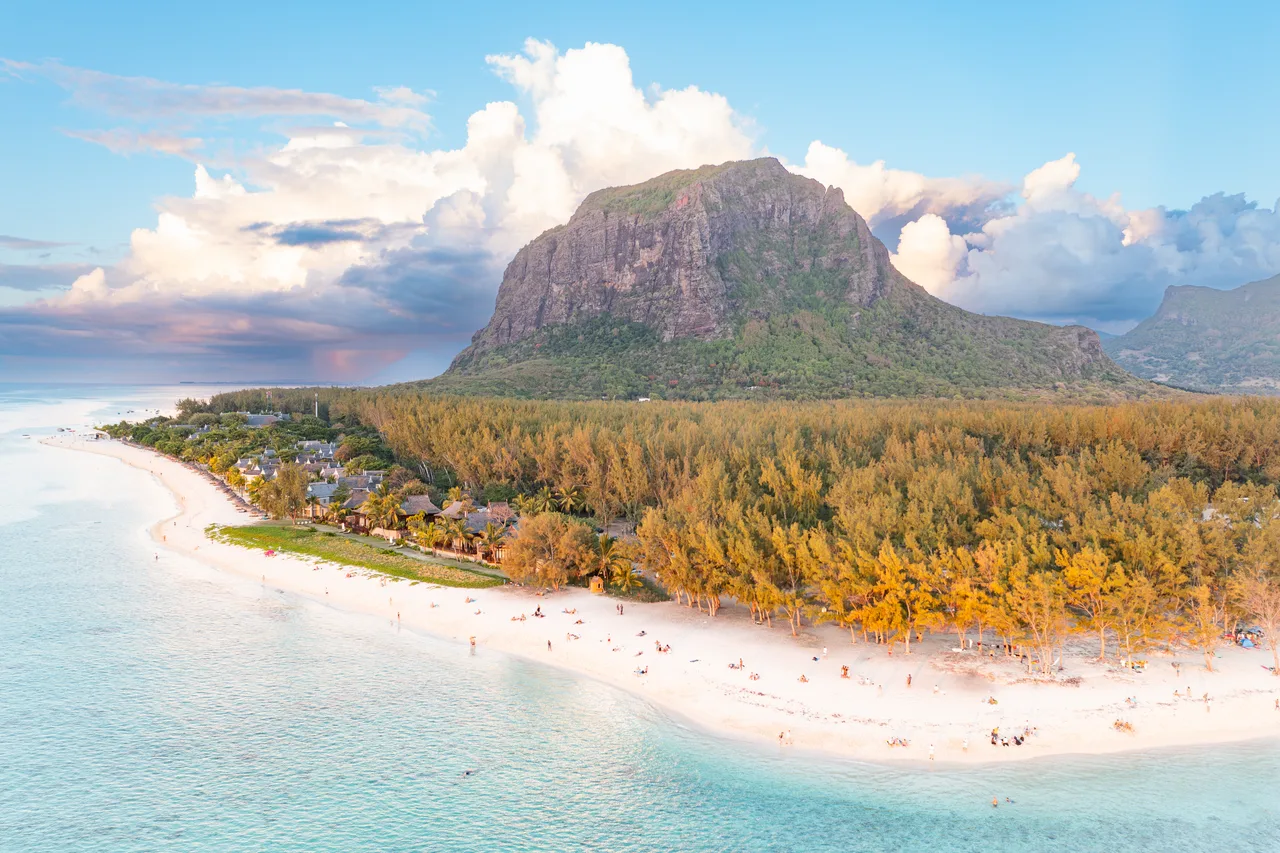
Chamarel is only a gateway to one of the finest corners of the island. All around stretches the wild south-west: the Black River Gorges National Park and its trails, dizzying viewpoints over the mountains, and lower down the Le Morne coast with its emblematic mountain and lagoons. In a day, you can combine the nature of the heights and the sea, which few regions of the island allow so easily. Many visitors pair Chamarel with a slow lunch in the highlands, where the greenery and the quiet make the meal feel like part of the scenery, before winding back down towards the coast in the afternoon light.
If you are staying nearby or heading west, think about combining Chamarel with a well-placed base. Our guide on where to stay in Mauritius lays out the strengths of each coast to help you choose your base. The bottom line on Chamarel: it is a compact but dense outing, between geology, waterfall, wildlife and rum — a facet of Mauritius it would be a mistake to reduce to its beaches alone.
Chamarel and the south-west, in your pocket
Locally checked spots, live weather and a day planner. €24.90 once, for life. 30-day money-back guarantee.
Discover the app →