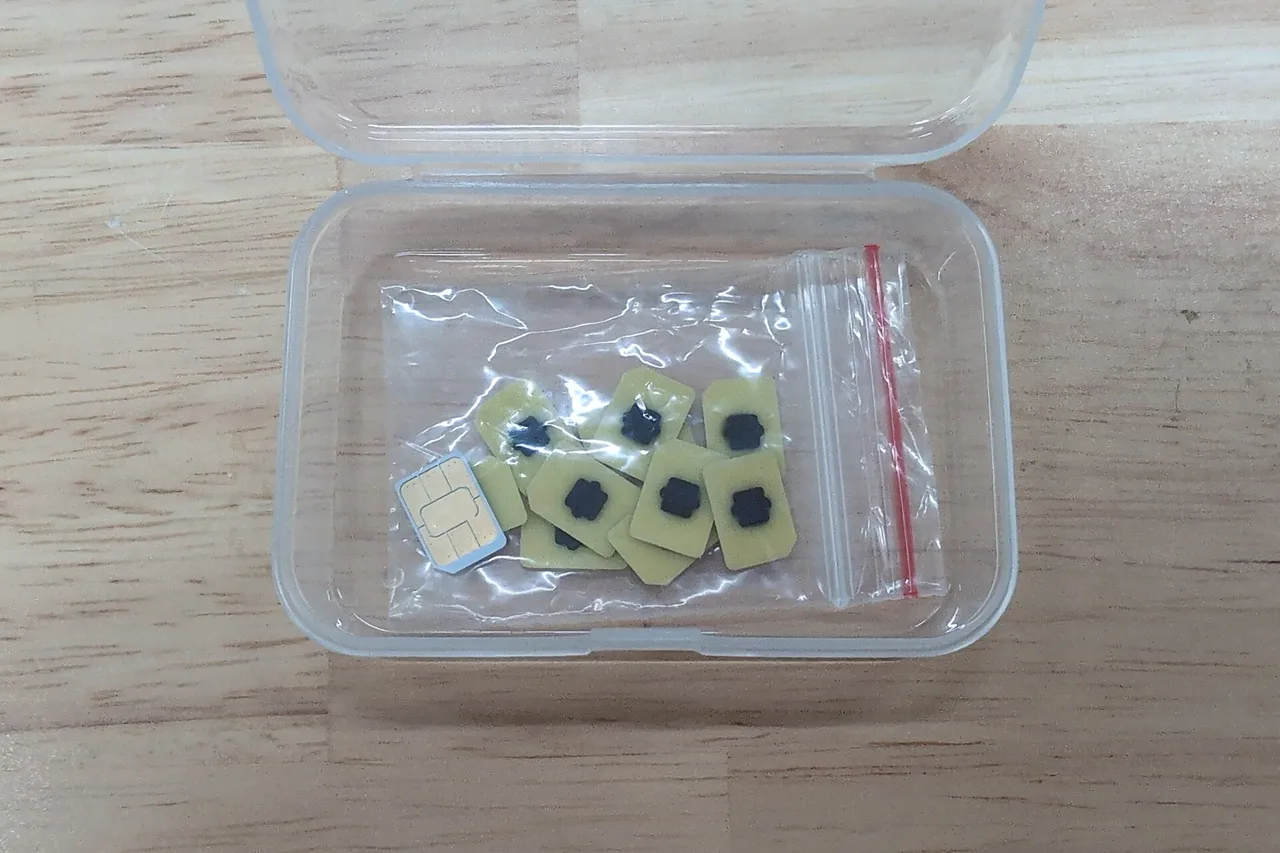
Your plan stops at Europe’s borders — Mauritius is 9,000 km beyond them. EU roaming does not apply on the island, and whoever finds that out on the tarmac either pays a fortune or stays offline. The good news: Mauritius has remarkably good mobile coverage, and the fixes are cheap — provided you pick the right one before you fly. This guide compares the travel eSIM you buy before departure with the tourist SIMs sold at the airport, with prices checked on 8 October 2026. And once you are online, the rest of the trip runs from the explorer map, where the island’s spots are sorted by mood.
Budget tip: in Mauritius, part of what you do can cost you less. See how to save money with discounts on your activities.
The question to settle before take-off
There are exactly two sensible ways to get online in Mauritius — and both are good. The first: a travel eSIM, bought and installed from home. When you land, the phone latches onto the network before your bags reach the belt. The second: a tourist SIM from the local operators, at an airport counter or in a shop — with unlimited data and a Mauritian number.
The honest summary first, the details after. The travel eSIM wins on convenience and short, light-usage stays. The tourist SIM wins on data volume, price per gigabyte and anything that needs a local number. If you are staying two weeks, uploading photos, navigating by GPS and occasionally tethering a laptop, the airport SIM is almost always the better deal.
One thing the eSIM sales pages rarely highlight: nearly every eSIM comparison site earns a cut on each sale. Their rankings (“the best eSIM for Mauritius”) are therefore not measurements. This article refuses to print a leaderboard and only compares what can be verified: prices, volumes, validity — each with its date.
The Mauritian network: my.t, Emtel and CHILI
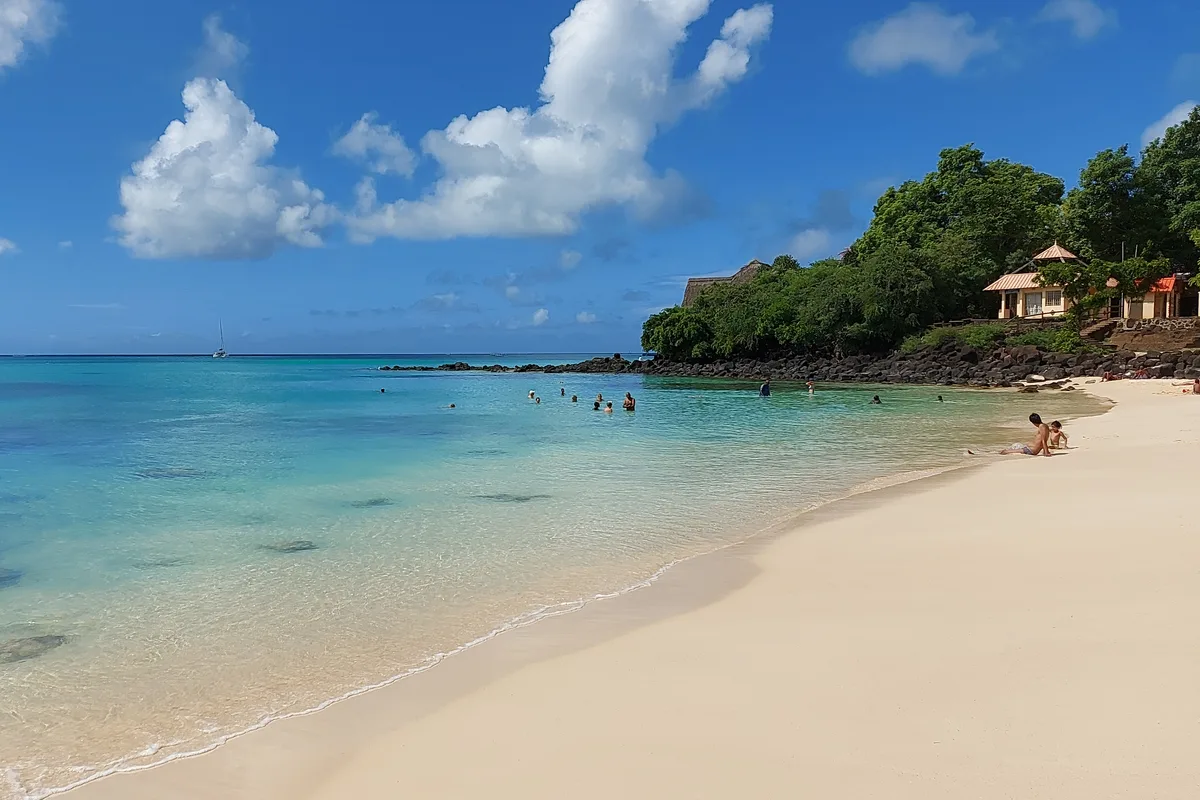
Three operators share the island: my.t (Mauritius Telecom, the historical operator), Emtel and CHILI (MTML). For an island this size, coverage is remarkable: 4G reaches the coasts, the towns and practically every tourist area, and both my.t and Emtel run a 5G network — my.t explicitly sells its tourist SIM as a 5G plan.
Two honest caveats. First, in the gorges of the Black River Gorges National Park and on some inland trails, the signal can weaken or vanish — as in any mountainous terrain. Download maps and your route before a hike. Second, “unlimited” means, everywhere in the world, “unlimited under a fair-use policy” — my.t displays its Fair Usage Policy on the plan’s own page. For normal travel use (maps, photos, video calls), it changes nothing.
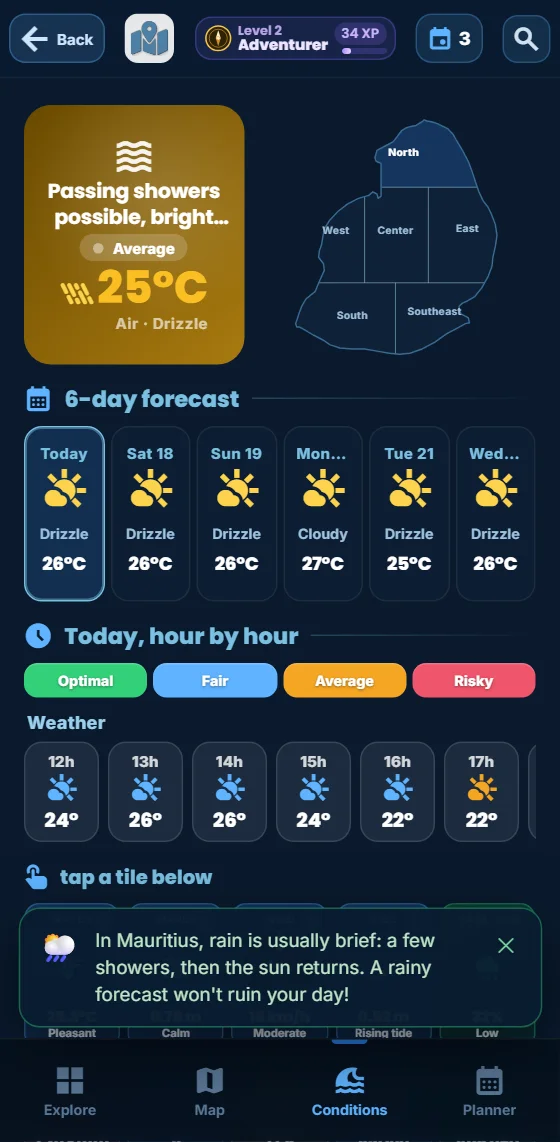
What this means for your trip: in Mauritius — unlike on some other islands — the network is not what separates the operators. What decides is price, volume, and whether you need a local number. The weather, on the other hand, changes from one coast to the other: checking the land and sea conditions, zone by zone, quickly becomes a morning reflex — and that is exactly what the network is for.
The tourist offers on the ground — prices of 8 October 2026
All three operators run their own tourist pack, and all three have a counter at Sir Seewoosagur Ramgoolam (SSR) airport. These figures were checked on 8 October 2026 on the operators’ official pages — prices move, treat them as a snapshot:
- my.t 5G Tourist SIM/eSIM — €30 incl. tax, 30 days. Unlimited 5G data (fair use), unlimited SMS, Rs 200 of credit for local and international calls. Sold online, at the Telecom Shop at SSR airport, as an eSIM at the my.t digital kiosk in the airport, and in every Telecom Shop on the island.
- Emtel Tourist SIM — €30, 30 days. “Truly unlimited” data, unlimited local SMS, Rs 200 of credit. Can be pre-booked before travelling, otherwise at the Emtel counter in the airport or any showroom. Emtel does not offer a tourist eSIM.
- CHILI Tourist SIM — Rs 900 for the SIM, Rs 999 for the eSIM (incl. tax), 30 days. Unlimited data, Rs 200 of call credit, unlimited local SMS. Counter No. 21 in the arrivals hall. CHILI requires a passport and proof of accommodation.
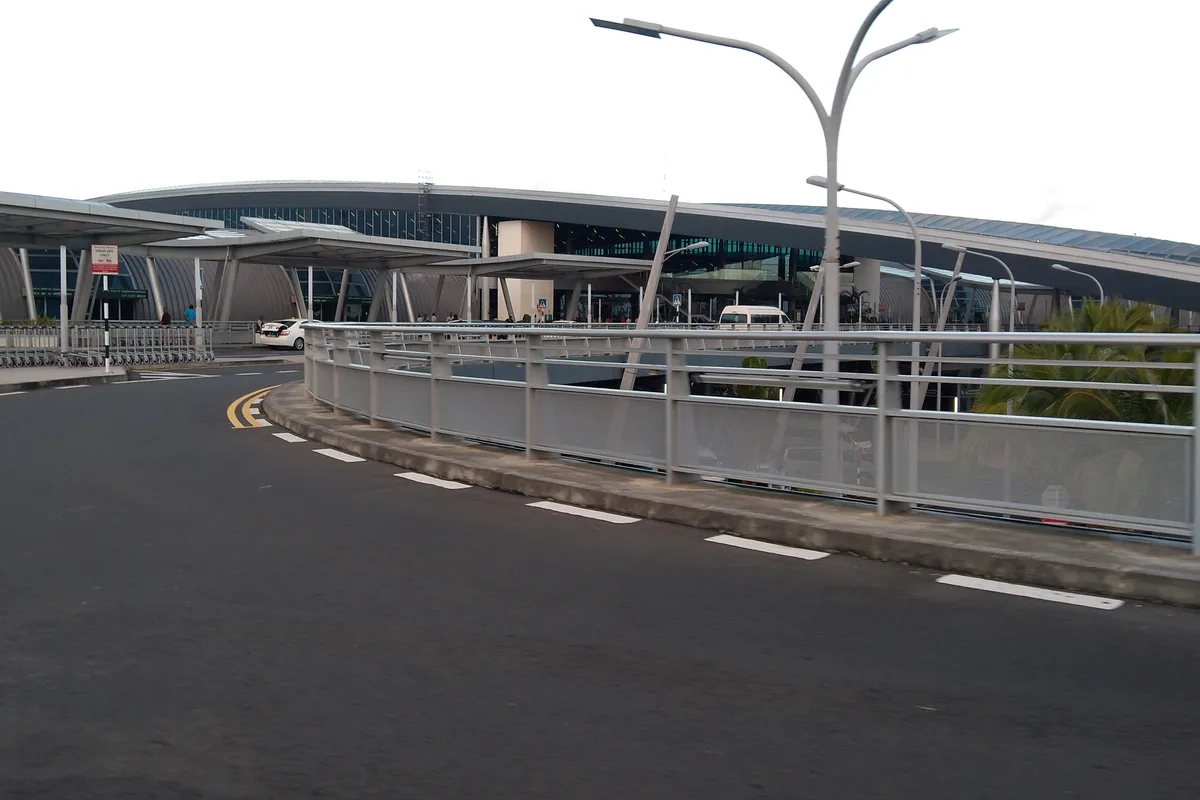
Let’s do the maths: CHILI is by far the cheapest unlimited option at Rs 900. my.t and Emtel both charge €30 — my.t is the only one of the two with a tourist eSIM, handy for phones without a free SIM tray. Registration is mandatory in Mauritius: passport in hand, plus the hotel confirmation at CHILI. At the counter it takes a few minutes — after a night flight and three planeloads of arrivals, sometimes longer.
Full guide: Flights to Mauritius: when to book, direct routes and smart prices
The travel eSIM before departure: prices and limits
The second family: eSIMs bought online before the trip and installed via QR code. Take Saily (from the team behind NordVPN), whose Mauritius plans looked like this on 8 October 2026: 1 GB / 7 days at $7.49, 3 GB / 30 days at $18.99, 5 GB / 30 days at $29.99. Other providers (Airalo, Holafly, Yesim…) sit in similar ranges — and all these prices move constantly.
The strengths are real: installed in five minutes from your sofa, active on landing, no counter, no queue, no passport registration. For a long weekend or a honeymoon where the phone mostly does WhatsApp and maps, 3 GB is often enough.
But the limits belong on the table. Travel eSIMs are data-only plans: no Mauritian number, no calls, no SMS. Booking a table or tomorrow’s catamaran by phone is not possible with one — plenty runs on WhatsApp in Mauritius, but not everything. And the price per gigabyte is a multiple of the local offers: 5 GB at $29.99 with Saily against unlimited data at Rs 900 with CHILI. As for which local network each eSIM rides on the island, providers rarely publish it — one more reason this article prints no leaderboard.
Before you pay: the traps
First check that your phone supports eSIM — and that it is unlocked. eSIM exists on iPhones since the XS and on most recent mid-range and flagship Androids. A carrier-locked phone will accept neither a foreign eSIM nor a foreign SIM — and that gets fixed before departure, with your own operator, not at a counter in Mahébourg.
Install the eSIM before take-off, on Wi-Fi. The QR code needs a connection to install — precisely the one you lack when you land. Install at home, enable data roaming on the eSIM profile, done.
Keep your home SIM active — but without data. Banks, booking platforms and airlines send their confirmation codes by SMS to your usual number. In dual-SIM mode, the home SIM stays reachable for SMS (receiving them costs nothing) while the eSIM or local SIM provides the data. Only one thing to switch off: data roaming on the home SIM — otherwise the bill climbs.
Read “unlimited” before buying it. With the local operators, the fair-use rule sits in the terms; with some travel eSIMs, “unlimited” slows down sharply past a threshold. For streaming by the pool it matters; for maps and photos it does not.
And plan the moment of arrival. If you land late at night and want to head straight to your accommodation, buy the eSIM before departure and the SIM the next day in a shop — the first exploring run will wait until morning anyway.
Which solution for whom?
Short stay up to a week, normal phone life: travel eSIM, 3 GB. You land connected, $18.99 is a fair price for the peace of mind, and a local number is rarely missed in seven days.
Two to four weeks, photos, GPS, tethering: tourist SIM on the ground. CHILI at Rs 900 is the cheapest unlimited, my.t at €30 the most convenient with its eSIM and 5G label, Emtel at €30 the alternative with pre-booking. Per gigabyte, no travel eSIM comes close.
The cautious combo: a small travel eSIM (1 GB) for the landing, plus a tourist SIM the next day without the airport queue. Together it costs less than an airport taxi and covers every mishap.
Whichever path you take: once the network is up, the actual holiday begins. Build tomorrow’s routes and slot them into the weekly agenda, check the lagoon when you wake up, fill in the journal at night — on the map, you can see where the wind comes from that day. That is what the network is for.
FAQ
Will my home plan work in Mauritius?
Mauritius is outside the EU and EEA: European roaming does not apply. Depending on your contract, data is very expensive or blocked. Check your operator’s international options before leaving — a travel eSIM or a local tourist SIM almost always works out cheaper.
How much is a tourist SIM at the airport?
As of 8 October 2026: my.t €30 (30 days, unlimited 5G data, Rs 200 credit), Emtel €30 (30 days, unlimited data), CHILI Rs 900 for the SIM or Rs 999 for the eSIM, 30 days unlimited.
Does a travel eSIM include a local number?
No. Data only — no calls, no SMS. WhatsApp and maps work normally; to book by phone, take the tourist SIM.
What documents do I need?
Registration is mandatory: show your passport, plus proof of accommodation at CHILI. An eSIM bought before departure skips this step.
Is the app paid?
Yes: €24.90 once, for life, no subscription — everything included. 30-day money-back guarantee.