It is one of the dreams behind almost every Mauritius trip: slipping into warm water at first light, in the middle of a group of wild dolphins. The experience is real, on the west coast, and it can be unforgettable. But behind the postcard sits a more nuanced reality that we would rather tell you straight: it is an activity governed by law, sometimes badly run, and it touches a fragile animal. Done well, it is magical. Done badly, it disturbs the dolphins and leaves you with a bitter taste. The west coast and its spots are on the island's map, with the sea state at first light.
Budget tip: in Mauritius, some of your activities can cost you less. See how to save thanks to discounts on your activities.
We live here and run Moris Insider, the guide and map of Mauritius built with locals. So here is the real how-to: where to see the dolphins, why the tours leave so early, exactly what the regulations say, and how to enjoy this encounter without weighing on your conscience — or on the dolphins' rest.
Where to see dolphins in Mauritius
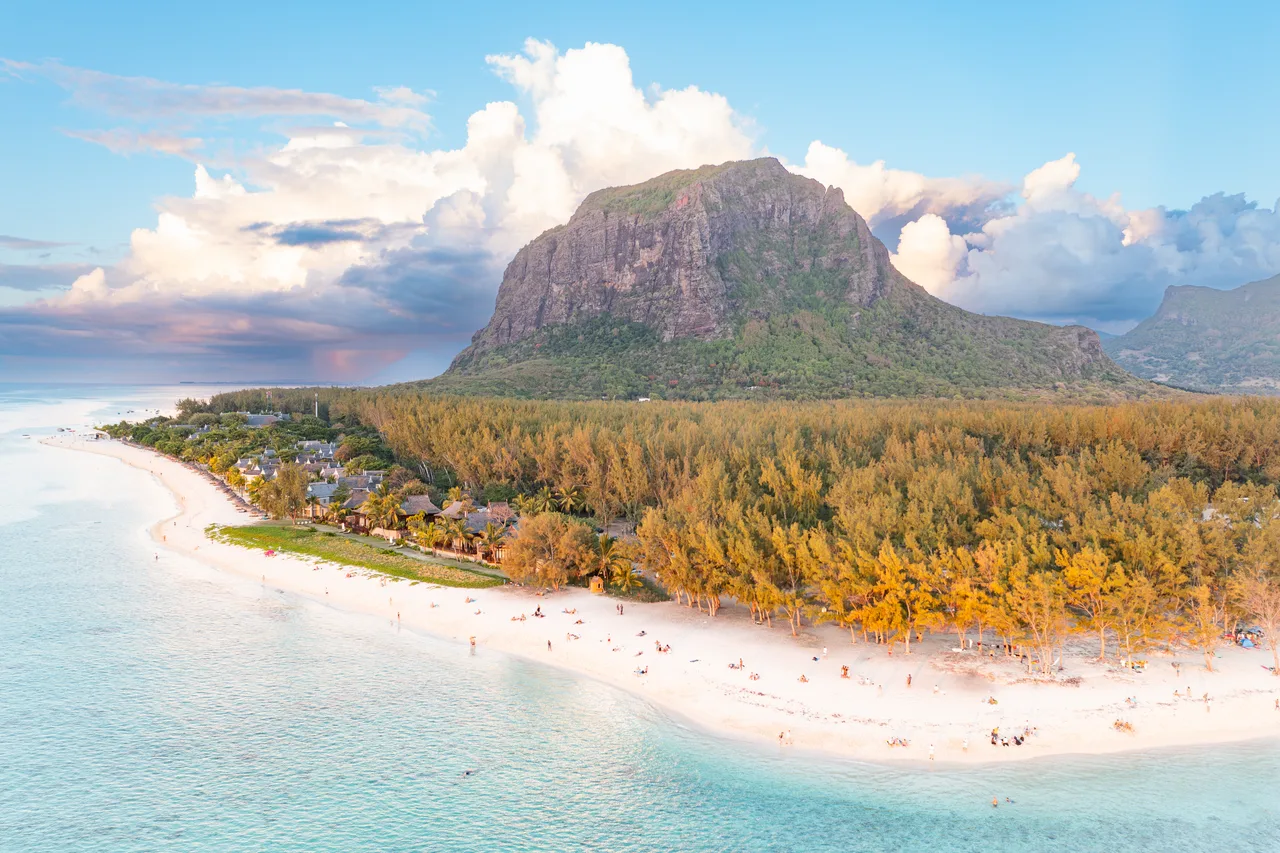
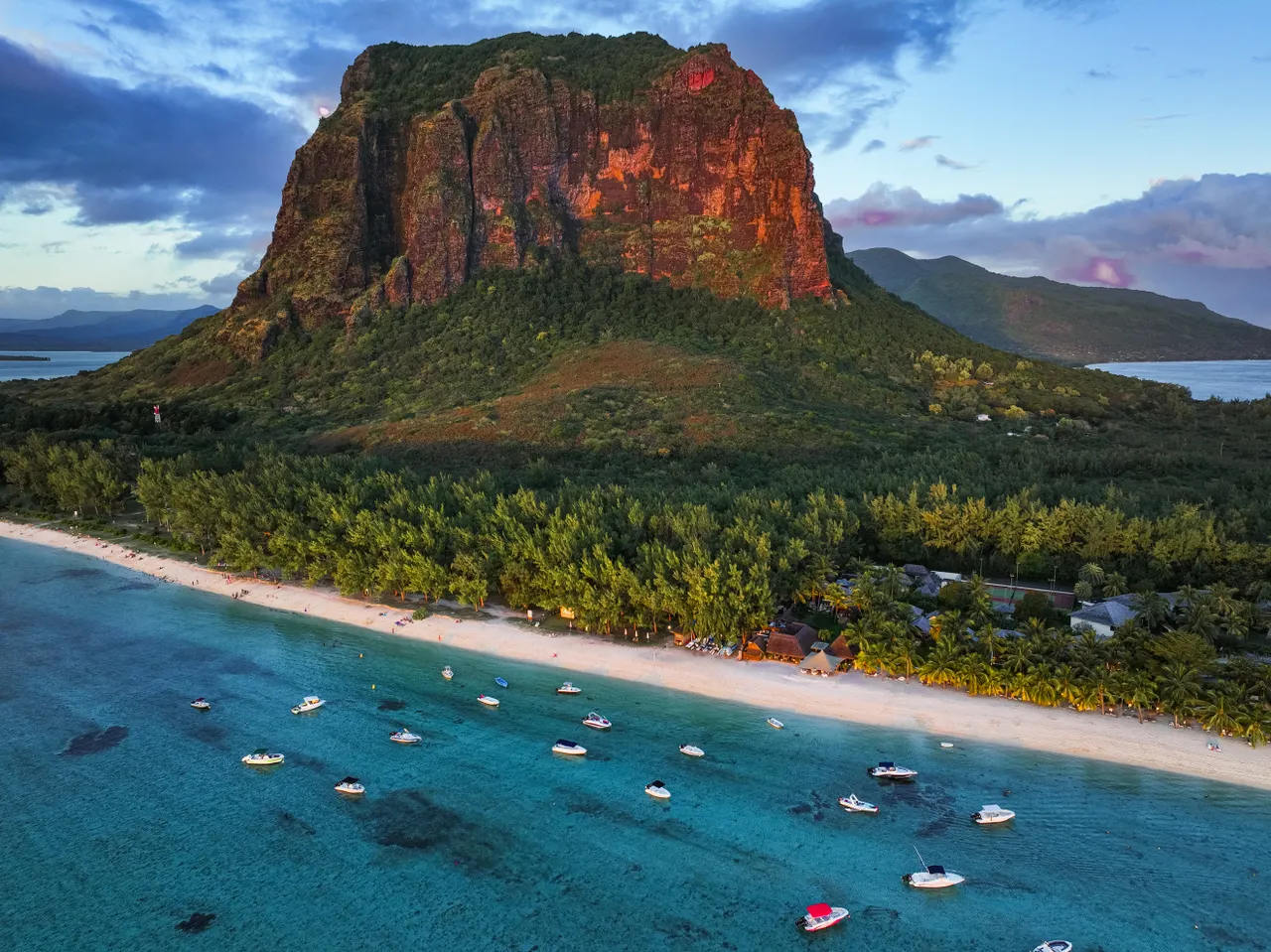
The encounter almost always plays out on the west coast, the most sheltered side of the island. The heart of the activity is Tamarin bay and the waters off Rivière Noire (Black River), with trips also reaching towards Le Morne in the south-west and sometimes Flic en Flac. This western side is protected from the prevailing trade winds: the sea is calmer here in the morning, which is exactly what the dolphins are looking for.
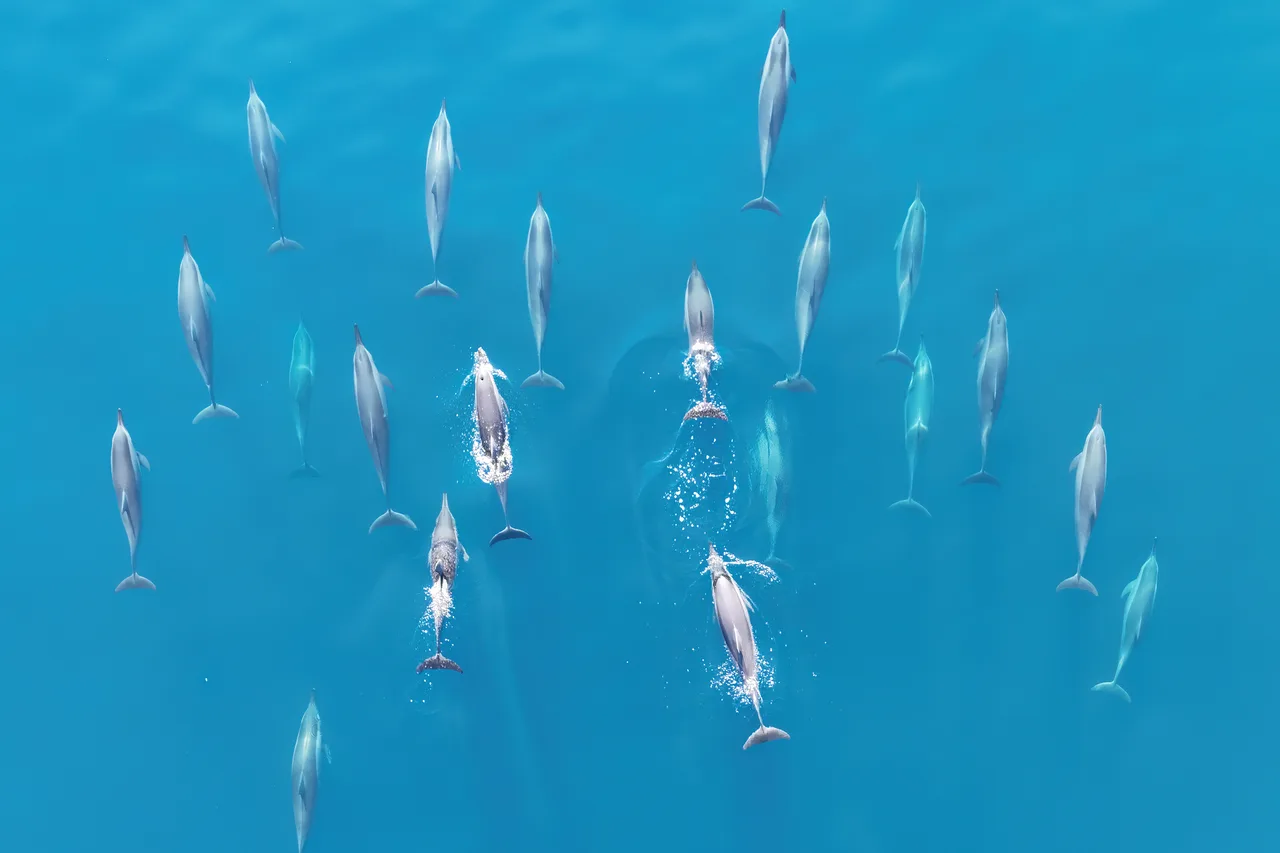
Two species mingle here. The spinner dolphins — famous for their corkscrew leaps — move in sometimes large, lively groups. The bottlenose dolphins, heavier and calmer, tend to travel in smaller pods. Nothing is ever guaranteed — these are wild animals, not a show — but along this stretch of coast, the odds of spotting them at dawn are real. To place the villages, beaches and launch points of the region, the map of locally checked spots helps you understand what is where before you book.
Why the tours leave at first light
If the boats leave the shore at such an early hour, it is not for the folklore: it is the dolphins' rhythm that sets it. At night they head out to hunt in deep water. At dawn they return to the calm, shallow coastal waters to rest, socialise and look after their young. It is this resting window that the tours come to watch.
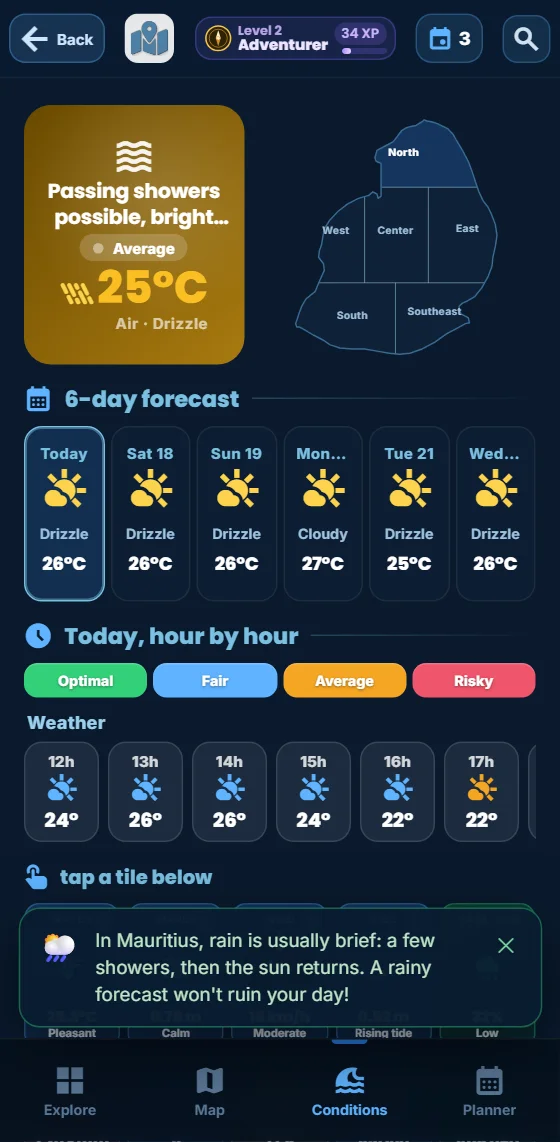
In practice, that means waking before dawn and a very early departure. The further the morning goes, the more the dolphins tend to move back out to sea — and the more the sea builds as the wind rises. The first part of the morning is therefore both the best for the encounter and the most comfortable on the water. Before you lock your slot, a look at the day's marine weather and sea state stops you setting out on a morning when the swell ruins everything.
The uncomfortable truth: an activity under pressure
Let us be honest, because this is the heart of the matter. The Tamarin dolphin encounter has become so popular that, on some mornings, it is a victim of its own success. Mauritian environmental groups have documented the same problems for years: too many boats in one place, unlicensed vessels, engines cut sharply to block the group's path and drop swimmers right in front of it, noisy and disordered leaps for a selfie.
The problem is not trivial. Dolphins are disturbed during their most important resting hours, just after a night of hunting. Engine noise and repeated human presence stress the pods; the most telling documented consequence is that some groups have ended up deserting the busiest spots. Feeding dolphins — an illegal practice that still persists — further alters their hunting instincts, especially in young animals. In other words: badly run, this activity can damage exactly what it claims to celebrate.
Prepare the west coast like an Insider
Moris Insider gathers hundreds of locally checked spots, the day's sea conditions and a day planner. Enough to organise your dolphin morning and the rest of the west coast — in the app, €24.90 once, for life.
Discover the app →What the law really says
Contrary to a widespread belief, approaching dolphins and whales is not a free-for-all in Mauritius. It is governed by the Tourism Authority (Dolphin and Whale Watching) Regulations, adopted in 2012. The first rule, and the easiest to check: the activity must be run by a licensed operator, whose certificate is visible on board. A boat with no licence offering you the trip on the beach is already a red flag.
The text then sets distances and ways to approach. For dolphins, boats must respect an exclusion zone of about 50 metres and a regulated approach zone beyond it, up to around 150 metres. The approach must be made from the side, never head-on or from behind, on a parallel course, at no-wake speed, engine in neutral when stationary, and never cutting across the group. It is strictly forbidden to touch the animals, feed them, throw anything, or make noise to attract them. Boats must also carry a propeller guard, and a lifeguard must be present.
For whales, the distances are larger still — in the order of a 100-metre exclusion zone — and one point is crucial: swimming with whales is banned, only observation from the boat is allowed. The regulations also cap the number of swimmers in the water at once, to avoid a scrum around a single dolphin. Knowing these rules means you can already judge whether your trip is being run correctly — and gives you the right to say no if it goes off the rails.
Swim or watch: the real choice
Here is the question few agencies ask openly: do you really need to get in the water? Regulated swimming is allowed, but watching from the boat, at a respectful distance, is the gentlest option for the dolphins — and often the finest. Seeing a group of spinners roll and leap in the low morning light, without hemming them in, is an emotion that owes nothing to splashing about three metres from them.
Some operators have in fact made the deliberate choice to offer observation only, precisely so as not to add to the animals' stress. If you do want to swim, do it by the book: enter the water calmly, without splashing, without rushing at the dolphins, and let the animal decide whether to come closer. You never chase a dolphin; it comes to you, or it does not. A well-planned boat trip is judged by the calm of the moment, not by how many times you jumped in.
It is also a matter of safety and realism. Out at sea there is swell, current, and dolphins that swim far faster than you. The finest encounter is the one where you make yourself small and watch — not the one where you chase an aquarium dream.
How to spot a responsible operator
It is all decided before you even step aboard. A good operator shows its licence without being asked, sets out with small groups, and clearly explains the rules at the briefing: distances, no touching or feeding, how to behave in the water. They will also tell you the encounter is never guaranteed — an honest operator does not promise dolphins, they promise a respectful trip.
On the water, the signals are just as readable. A good skipper cuts the approach at a distance, goes parallel to the group and waits, engine calm; they do not charge in, cut across the dolphins' path, or box them in with other boats. If you see your vessel chasing a group or forcing its way through, you have the right — and good reason — to ask the skipper to ease off. Note the serious operators you come across in your travel journal: word of mouth among respectful travellers is the best weapon against the abuses.
When to go and how to plan it
The encounter is possible for much of the year, but the morning window remains the key, whatever the season. The difference is mostly about the sea state: on a flat sea the trip is comfortable and watching is easy; on a rough sea or an unusual westerly wind it becomes miserable, or is cancelled. Hence the value of staying flexible on the date and aiming for the best weather window of your stay rather than a day fixed in advance. Our guide on the best time to visit Mauritius lays out the seasons and climate region by region.
On the logistics, the trip is best set at the very start of the day, even if it means staying a night or two in the west (Tamarin, Rivière Noire, Flic en Flac, Le Morne) to avoid a long drive before dawn. The rest of the morning and the afternoon are then perfect for the beach, snorkelling or exploring inland. Use the day planner to slot in your dolphin morning and move on to the rest without stress. Back at the harbour, a seaside eatery or a street-food van rounds off the morning nicely.
Beyond dolphins: whales and snorkelling
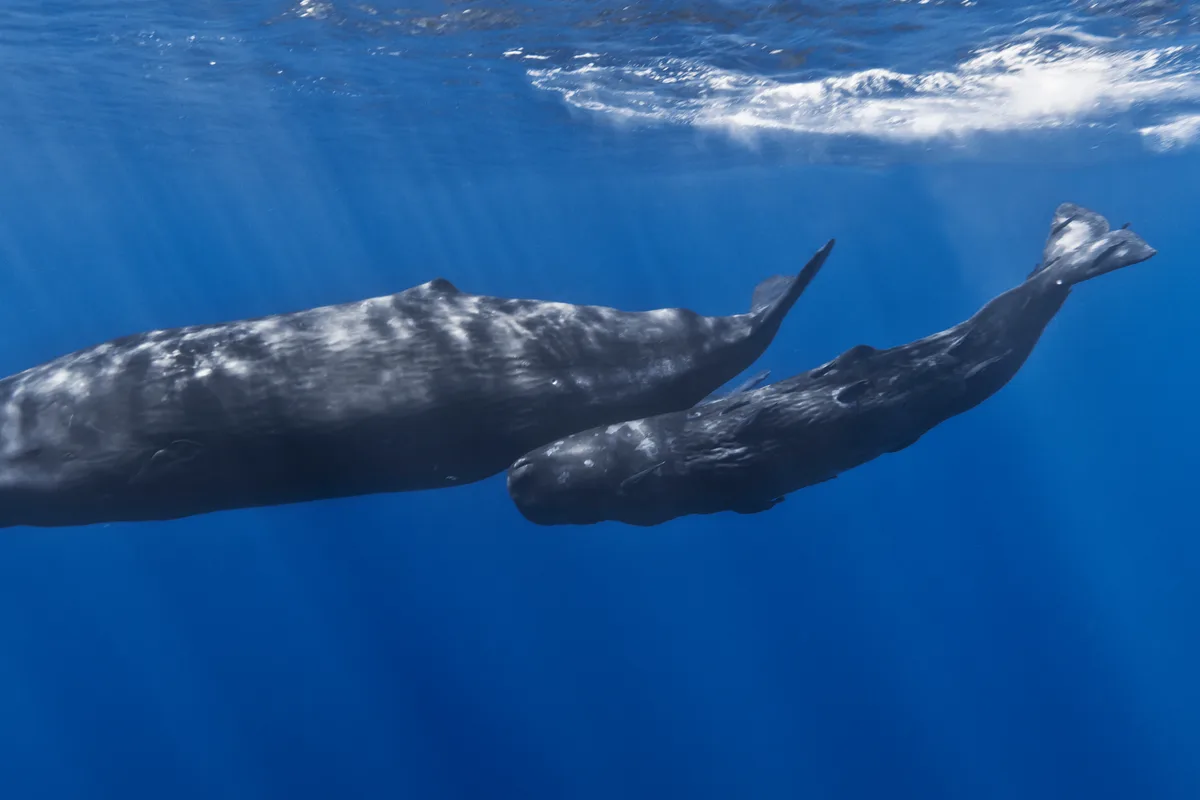
The west coast is not just about dolphins. From roughly June/July through the southern winter, whales — including sperm whales — pass offshore: watching them, from the boat only, is a spectacle of its own. Important reminder, already stated: you do not enter the water with whales, it is banned, and commercial swimming with turtles has also been banned since 2023. Mauritius's marine life is respected from a distance when it comes to the large animals.
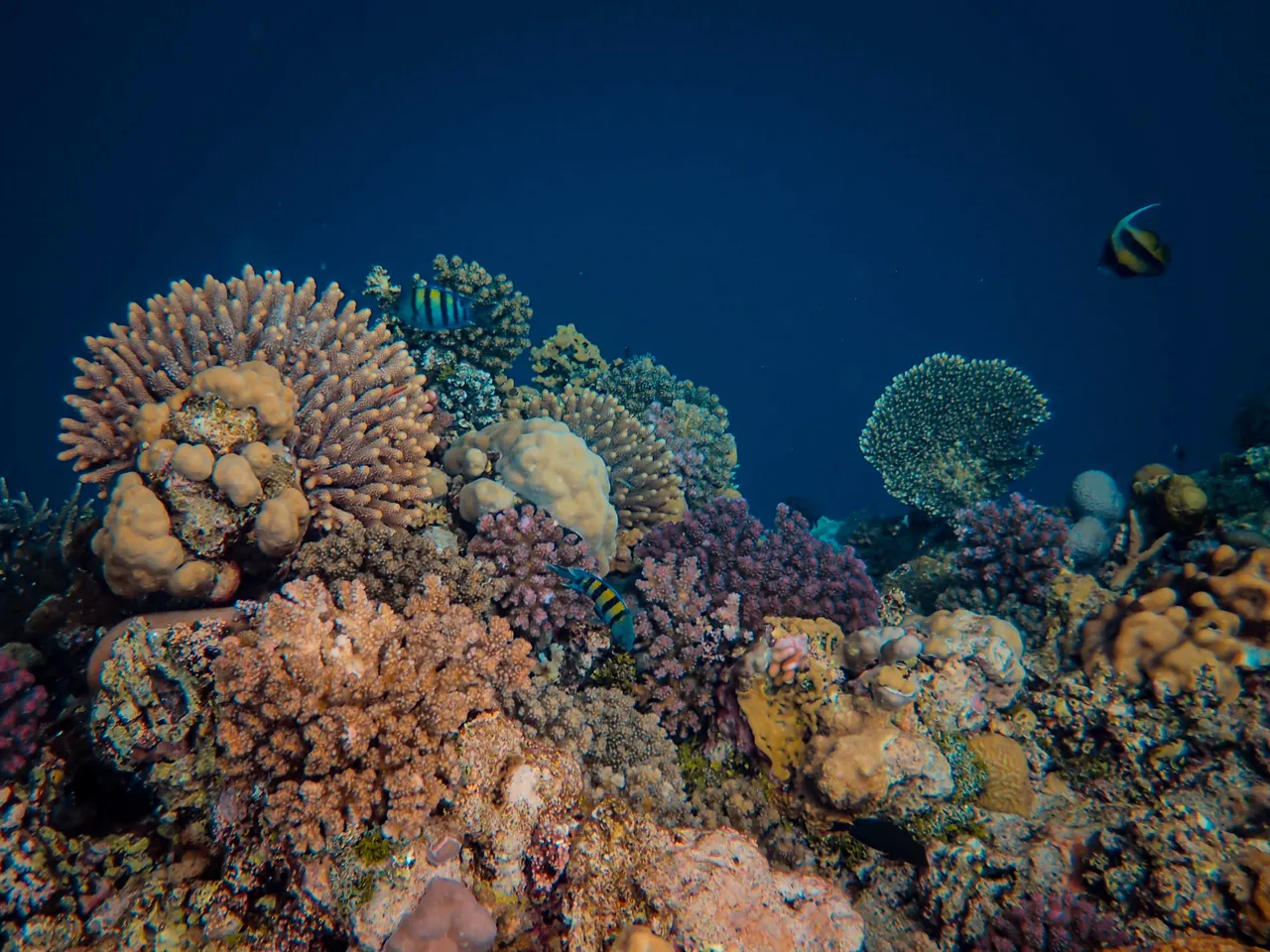
To round out the morning, the western lagoon also offers lovely snorkelling, reachable without a boat. It is often the best way to prolong the marine wonder without weighing on the wildlife. Our guide to the best snorkelling spots in Mauritius gives you the corners worth the mask and snorkel. The bottom line: in Mauritius, the finest wildlife encounter is almost always the one where you take up the least space. The Tamarin dolphins deserve that respect — and you will keep a far stronger memory of it than a mere photo.
The west coast, dolphins included, in your pocket
Locally checked spots, live sea conditions and a day planner. €24.90 once, for life. 30-day money-back guarantee.
Discover the app →