On 1 January 2026, Iceland scrapped fuel duty and replaced it with a per-kilometre charge. Every budget written before that date is wrong twice over: it overstates the petrol, and it ignores the line that replaced it. That line does not appear in the daily rate you compare rental firms on — and depending on how it is billed, its price changes without you driving a single extra kilometre. Here is a full costed week on the Ring Road, line by line, at this month’s figures.
What changed on 1 January 2026, and what most budgets miss
Start with the one thing that makes almost every Iceland budget online wrong. On 1 January 2026, Iceland abolished duty on petrol and diesel and replaced it with a charge on each kilometre driven. The tax base moved from the litre bought to the kilometre travelled.
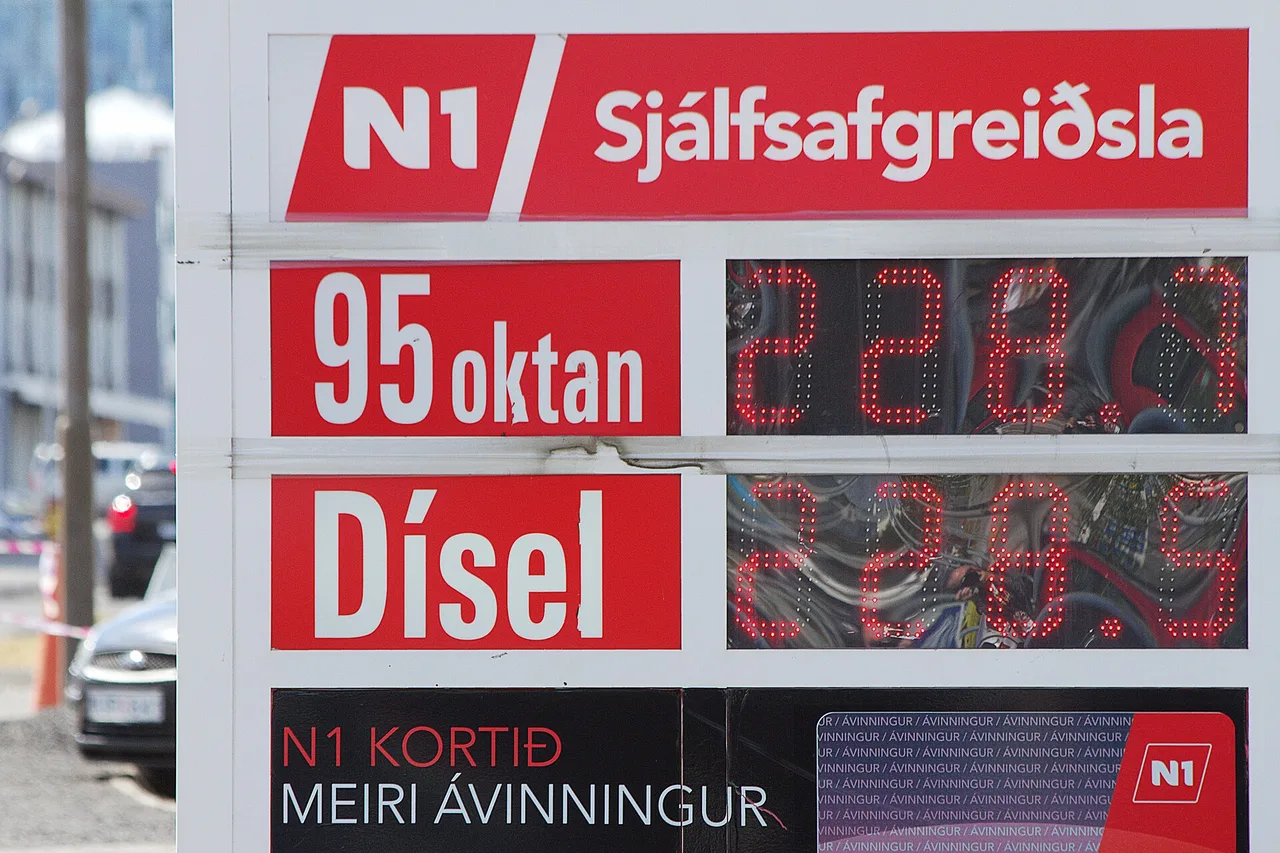
The immediate effect at the pump was dramatic: petrol fell from about 279 to 183 ISK a litre, diesel from around 292 to 205 — close to 34 % overnight. The market has since taken back some ground, and a litre of petrol stood at 219.89 ISK on 17 August 2026. The two figures do not contradict each other: the first measures the reform, the second is the price on the day.
So a budget written before 2026 is wrong twice, in opposite directions. It overstates fuel, sometimes by half. And more importantly it ignores the line that replaced it — the one you cannot see at the pump, because it is no longer paid there.
The kilometre charge: the line that is not in the daily rate
The kílómetragjald is 6.95 ISK per kilometre for any car or SUV up to 3.5 tonnes — which means every normal rental car. It applies to all fuels, including electric and plug-in hybrids, which until now escaped fuel duty altogether.
The mechanism rests on odometer readings, not on declared journeys, and it is run by Iceland Revenue and Customs. An Icelandic owner logs the mileage in an app and pays monthly. For you, none of that applies: rental vehicles are read by the rental company, which reports on your behalf. You have no paperwork — you just have a charge.
And that is where the comparison trap sits. The charge is not included in the daily rate on display: it appears as a separate line, further into the booking flow. Two quotes advertising the same price per day are therefore not the same price, and the gap only surfaces at the payment screen, once you have mentally chosen.
The practical rule is simple, and it holds for the whole trip: never compare a daily rate, compare totals, on your real dates, charge and waivers included. Adding those lines up before sorting is precisely what a comparison site is for, and it is the one point in an Iceland budget where a few minutes of method pay more than any amount of going without on the ground.
Flat fee or meter: the break-even is arithmetic
Not every rental firm passes the charge on the same way. Some bill the kilometres actually driven, read off at return. Others prefer a fixed daily fee — 1,550 ISK a day at Blue Car Rental, for instance — and present it as simpler, which it is: you know the figure in advance, with no odometer to watch.
Simpler is not cheaper, and the question settles with a division. At 6.95 ISK per kilometre, a fee of 1,550 ISK a day is the equivalent of 223 kilometres a day. Below that, you are paying for kilometres you did not drive.
| Kilometres per day | Metered, 7 days | Flat fee, 7 days | Cheaper |
|---|---|---|---|
| 100 | 4,865 | 10,850 | metered |
| 150 | 7,298 | 10,850 | metered |
| 189 (Route 1) | 9,195 | 10,850 | metered |
| 223 (break-even) | 10,849 | 10,850 | level |
| 300 | 14,595 | 10,850 | flat fee |
Look at the middle row. The bare Ring Road is 1,322 kilometres, or 189 kilometres a day across a week — below the threshold. On that trip the flat fee costs roughly 1,662 ISK more than the meter.
The sum is small, and that is not the point. The point is that the billing method of a side charge is enough to separate two identical quotes, and that it settles with one division no comparison site will do for you. You would have to exceed 1,561 kilometres in the week for the flat fee to become the right call: that is a lot, unless you add the Westfjords or the deep north to the classic loop.
The week, line by line
Here is the full costing, for two people, seven nights and 1,322 kilometres. Three comfort levels, and one thing deliberately missing from the table: the car, because it deserves its own section.
| Line, 2 people, 7 nights | Camping | Guesthouse | Hotel |
|---|---|---|---|
| Accommodation | 21,000 | 105,000 | 175,000 |
| Food | 28,000 | 49,000 | 98,000 |
| Fuel | 20,349 | 20,349 | 20,349 |
| Kilometre fee | 9,188 | 9,188 | 9,188 |
| Paid car parks | 3,000 | 3,000 | 3,000 |
| Municipal pools | 9,600 | 9,600 | 9,600 |
| Total, in ISK | 91,137 | 196,137 | 315,137 |
| Per person | 45,568 ISK ≈ 323 € | 98,068 ISK ≈ 696 € | 157,568 ISK ≈ 1,118 € |
The assumptions, so you can redo the sums with your own: fuel consumption of 7 litres per 100 kilometres, about 93 litres over the loop; petrol at 219.89 ISK; camping at 1,500 ISK per person per night, a guesthouse double at 15,000 ISK, a hotel at 25,000 ISK; 3 paid car parks and 4 swims each. The rate used is €1 = 141 ISK, at 25 August 2026.
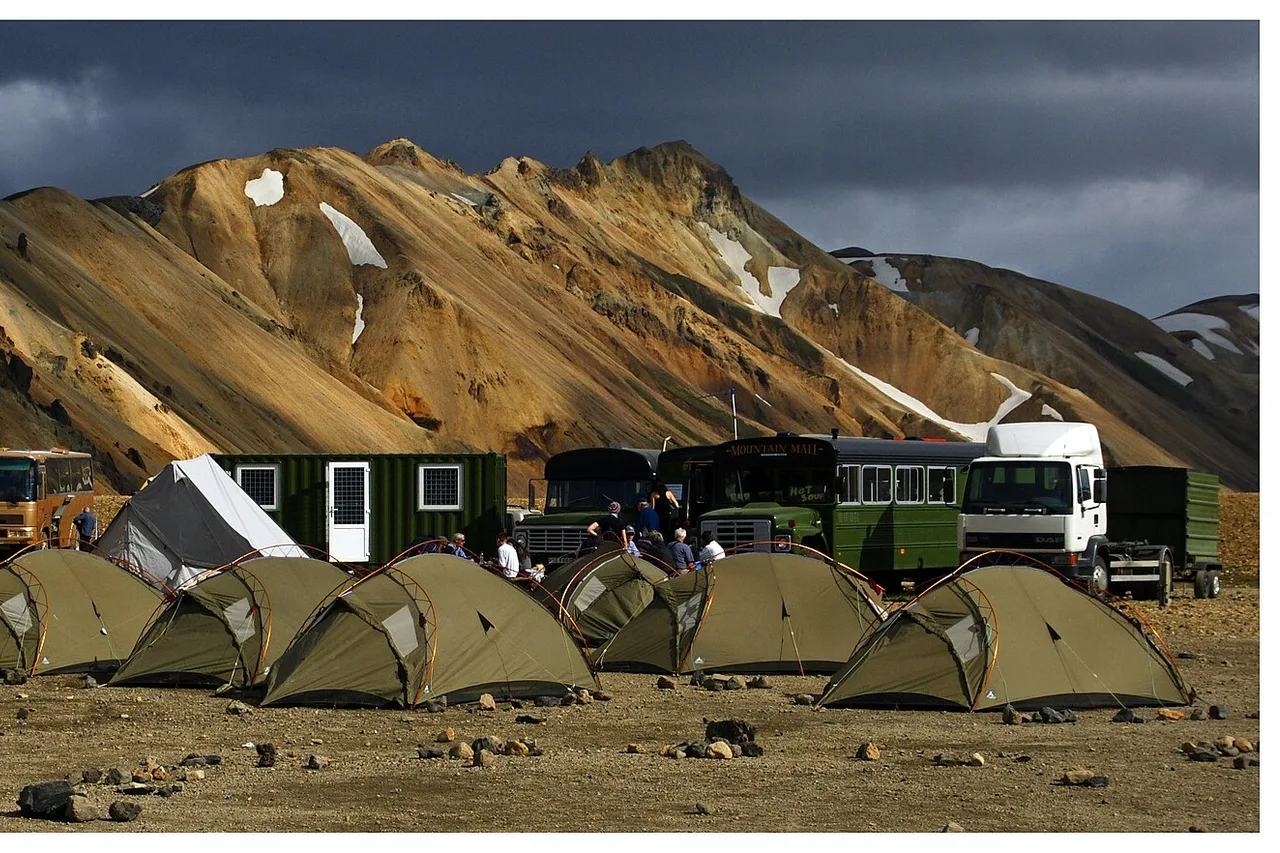
Two rows deserve comment. Accommodation is the only line that varies by a factor of eight between the top and bottom of the table: that, and nothing else, is where the level of your trip is decided. And camping carries a catch budgets forget to mention — most sites open only in summer, which locks the cheapest line to the season when everything else is dearest.
Full guide: Where to Stay in Iceland on the Ring Road: When to Book
Food, by contrast, really is steerable. Self-catering holds at 2,000 ISK per person per day; at a mid-range restaurant a single main already runs 4,000 to 7,000 ISK. Between the two lies a whole country of decent answers: filling-station soup at about 1,500 ISK, and the hot dog at 500 or 700 ISK, still the one Icelandic thing cheaper than at home.

One piece of logistics beats every list of money-saving tips: do the big shop in Reykjavík before you set off. Rural shops run 20 to 30 % dearer than the capital, and across a week for two that gap exceeds the price of a night’s camping.
What budgets forget: the car parks and the lagoon
Two lines almost always escape the estimates, and one of them is new.
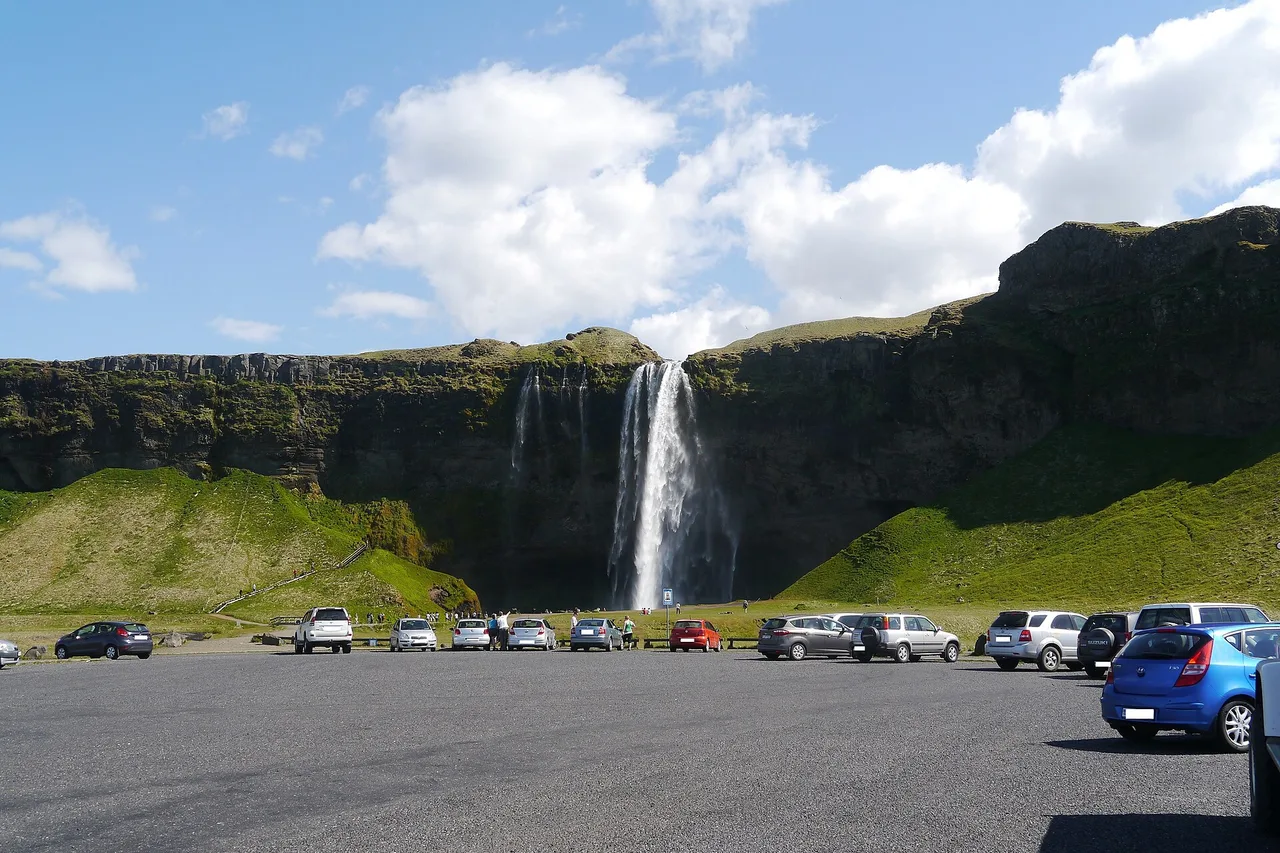
First: parking at the major sites now costs money. Expect 1,000 ISK at Þingvellir, the same at Seljalandsfoss, and from 1,000 ISK at Skógafoss, where the ticket covers eight hours. You pay by scanning the QR code on the sign, which opens a payment page in the browser at Þingvellir and Seljalandsfoss, or through the Parka app at Skógafoss. The site stays free: it is the parking that is billed, and it is worth knowing before you go hunting for a machine that does not exist.
Full guide: Car Rental in Iceland: Prices, Insurance and F-Roads
The second is of another order entirely. The Blue Lagoon publishes prices from 11,990 ISK for entry, 14,990 for the next tier and 18,490 for the third — and it uses dynamic pricing, meaning the price climbs with demand, especially in summer and over the holidays.
Put that figure against the rest of the article, because it says more than an opinion. In the camping column of the table, a full day comes to about 6,510 ISK per person, everything in. One Blue Lagoon entry therefore costs the equivalent of nearly 1.8 entire days of travel.
That is not an argument against going: it is an argument for deciding it deliberately rather than slipping it into a budget as one line among many. If you do go, dynamic pricing rewards whoever books early: a slot booked well in advance sits at the bottom of the range, a same-day one at the top. And there is an alternative Icelanders use every day, which we come to below.
The line that really decides: none of the ones you optimise
Back to the car, left out of the table. Here is why it was left out.
The same Hyundai i10 over seven days costs about 345 dollars in January and 887 dollars in August. A factor of 2.6, for the same car, the same length and the same contract. In round figures the gap is roughly 66,558 ISK, close to 472 euros.
Now set that against the rest of the article. On its own it exceeds the whole week’s fuel (20,349 ISK), the kilometre charge (9,188 ISK), the three car parks and the eight pool entries — added together. Put plainly: the month you travel weighs more than every daily saving combined.
That is the reversal worth taking away. People spend hours choosing between two rental brands, comparing supermarket prices, agonising over one excursion — and all the while the only variable that really counts is the date. If your dates are flexible, moving the trip by a month pays more than any amount of going without; if they are not, better to know it and stop hunting a saving that is not there.
The honest corollary: in low season many travellers take a more capable, better-shod vehicle, which claws back part of the headline gap. And the cheapest months are also the ones with four hours of daylight, which the article on choosing a season sets out in full.
Money coming back: the line nobody budgets
A budget is not only outgoings. One line can come in, and it is ignored almost every time.
EU regulation 261/2004 applies to Iceland, through the European Economic Area agreement: it covers every flight leaving the country, and those arriving on an EU carrier. In the event of cancellation, denied boarding or a delay of three hours or more attributable to the airline, fixed compensation is due — €250 under 1,500 km, €400 between 1,500 and 3,500 km, €600 beyond, outside intra-European routes. Keflavík to mainland Europe falls in the middle band.
Scale that figure too. €400 is about 56,400 ISK — more than double the week’s food budget for two people self-catering (28,000 ISK). It is by far the largest sum in this article, and the only one pointing the right way.
Two caveats, so as not to oversell it. Weather is an extraordinary circumstance: in Iceland, where wind closes roads and delays flights several times each winter, it entitles you to care — meals, accommodation, rerouting — but not to compensation. And the claim is free to make yourself with the airline; services that run it for you take a commission on what they recover, which is worth it for a case already refused once, less so for a straightforward one. The national enforcement body is Samgöngustofa.
What to cut, and what never to cut
Finish with the sorting, since that is what a budget is for.
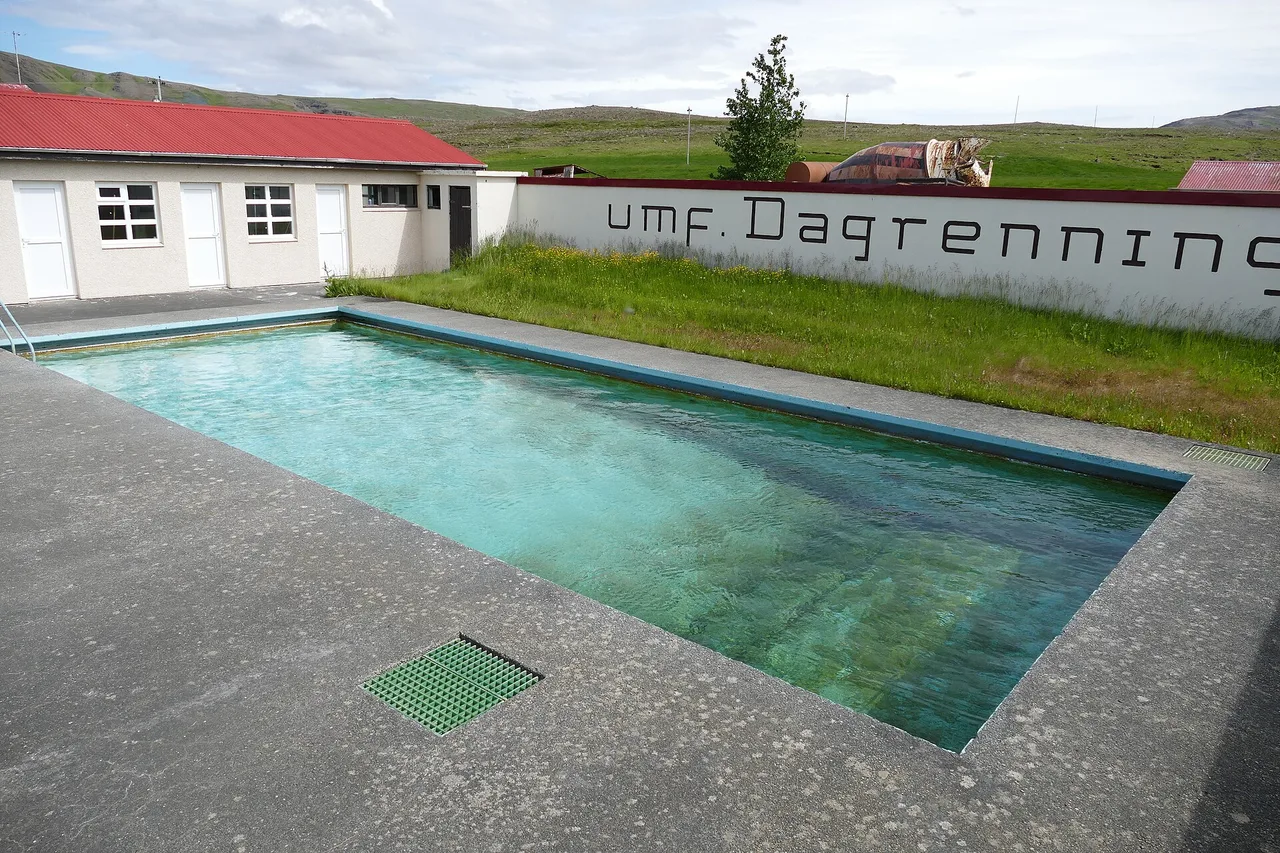
What cuts painlessly. Restaurant meals first: it is the line where the gap between minimum and comfortable is widest for the least satisfaction. The Blue Lagoon next — not because it is not worth it, but because there exists, at 1,200 ISK a visit, a network of geothermal municipal pools open in almost every village, where Icelanders swim all year. It is the best value in the country, and by far the truest way to understand what hot water means here.
What does not cut. The car category in winter, first: saving on tyres or drivetrain buys risk, not economy. Then the insurance waivers, particularly against wind and sand, two specifically Icelandic forms of damage that standard contracts often exclude and that cost more than a whole week. And finally slack in the schedule: keeping a spare day before the flight home does not show up in a budget, but it is what stops a road closure turning into a last-minute replacement ticket.
One last habit, and it is free. Check umferdin.is each morning for road conditions, vedur.is for wind and safetravel.is for alerts. In Iceland the biggest unplanned expense is not a badly negotiated price: it is a lost day.
Top-rated activities in Iceland, bookable online: