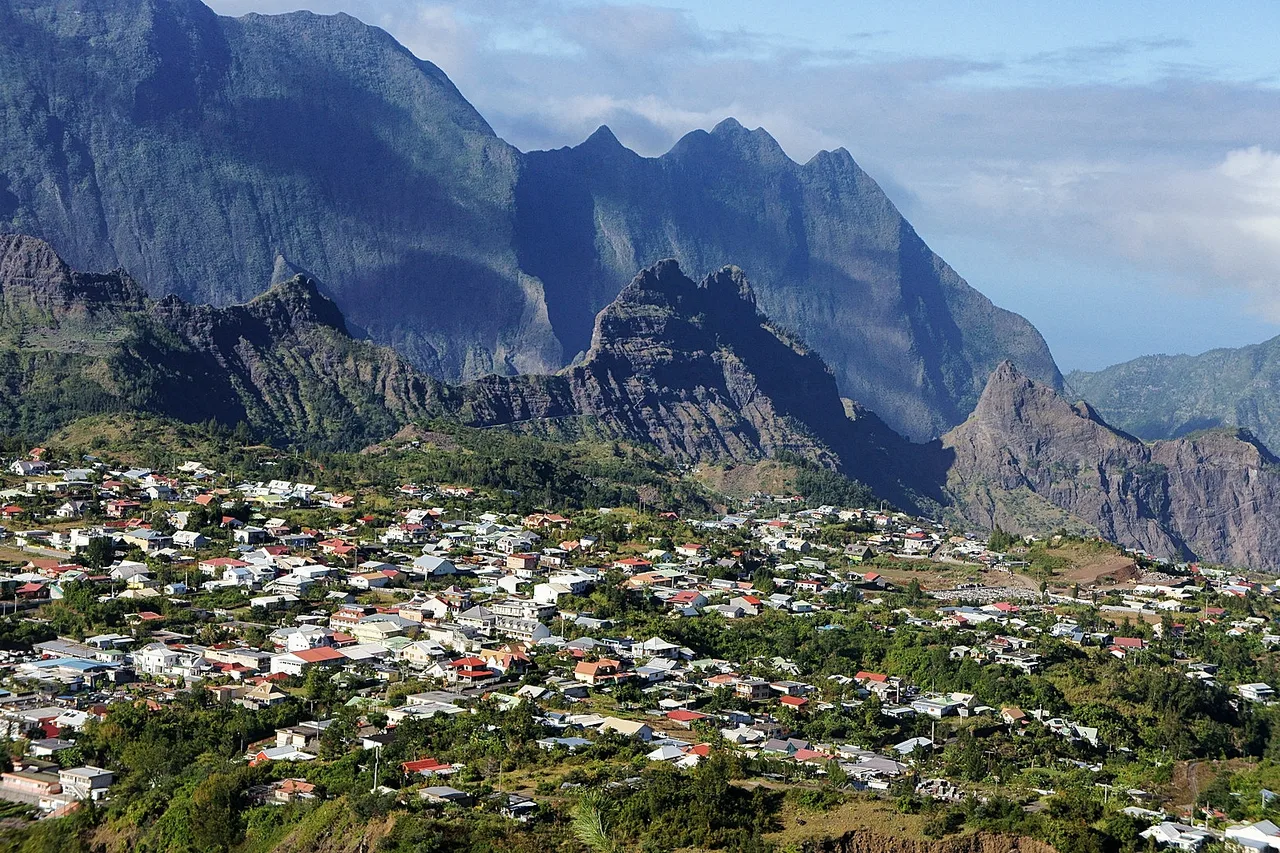
Some places have to be earned. Cilaos is one of them: a village perched at 1,200 metres, at the bottom of a cirque walled in by dizzying ramparts, at the end of a road that officially counts more than 400 bends. The name is said to come from the Malagasy tsilaosa — "the place one never leaves", as tradition has it — and the town made it its motto: "Cilaos, you always come back". Thermal waters, lentils grown on mountain slopes, world-famous canyons and the roof of the Indian Ocean right above: here is why this end-of-the-world village is worth every hairpin.
The 400-bend road: you earn your arrival
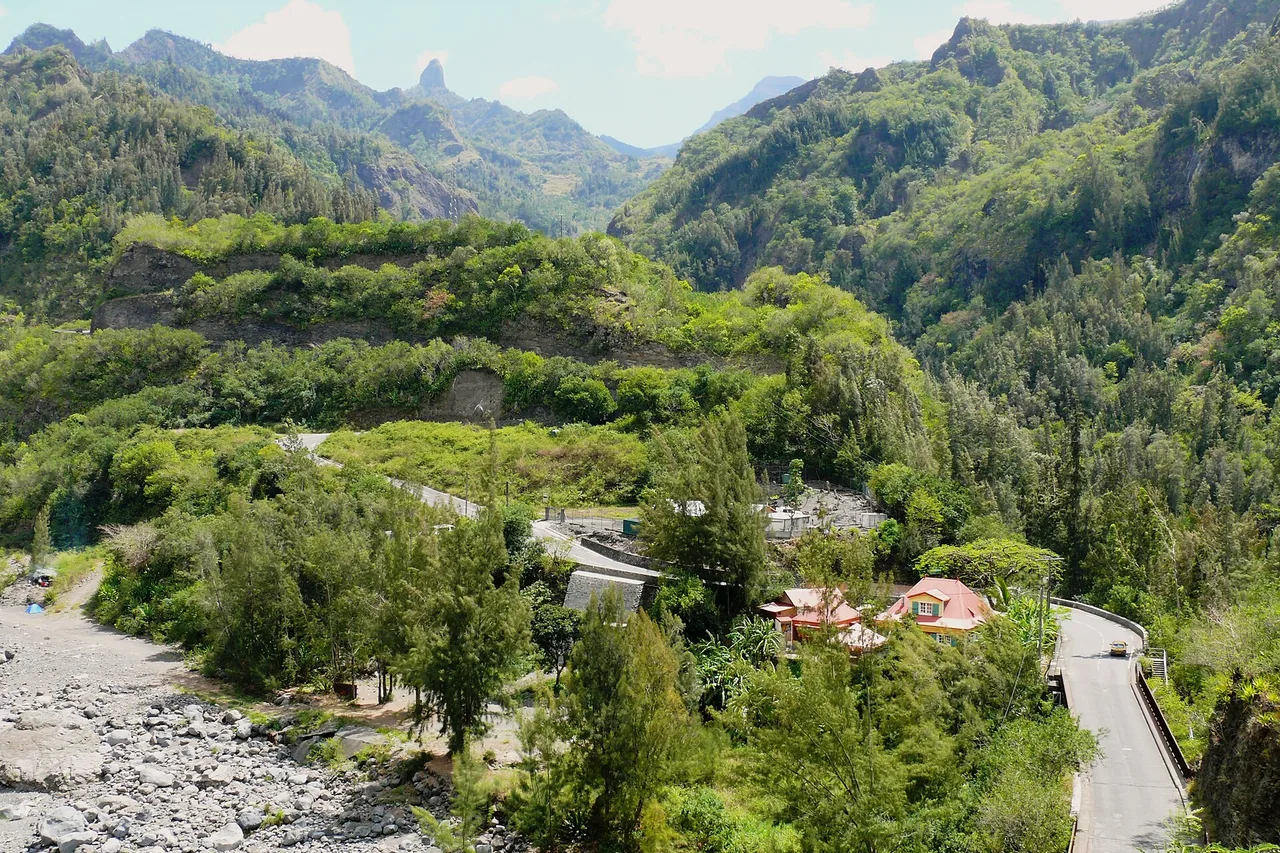
It all starts in Saint-Louis, more or less at sea level. The RN5 then climbs for about 37 kilometres up to the village at 1,200 metres, clinging to the ramparts of the Bras de Cilaos valley. The official count gives around 420 bends — legend rounded it down to 400, and the nickname stuck. Tight hairpins, narrow tunnels carved into the rock, stretches where two cars cannot pass: sound your horn before blind corners, give way to traffic coming uphill, and take your time.
Allow a good hour from Saint-Louis, more if you stop at the viewpoints — and do stop: the view plunges into gorges where the torrent foams a hundred metres below. The driver should keep their eyes on the road; passengers prone to motion sickness should come prepared. In the rainy season, check conditions before heading up: the road can close temporarily after rockfalls. Our guide on the best time to visit Réunion details the ideal weather window for the cirques.
The village: Mare à Joncs, embroidery and mountain air
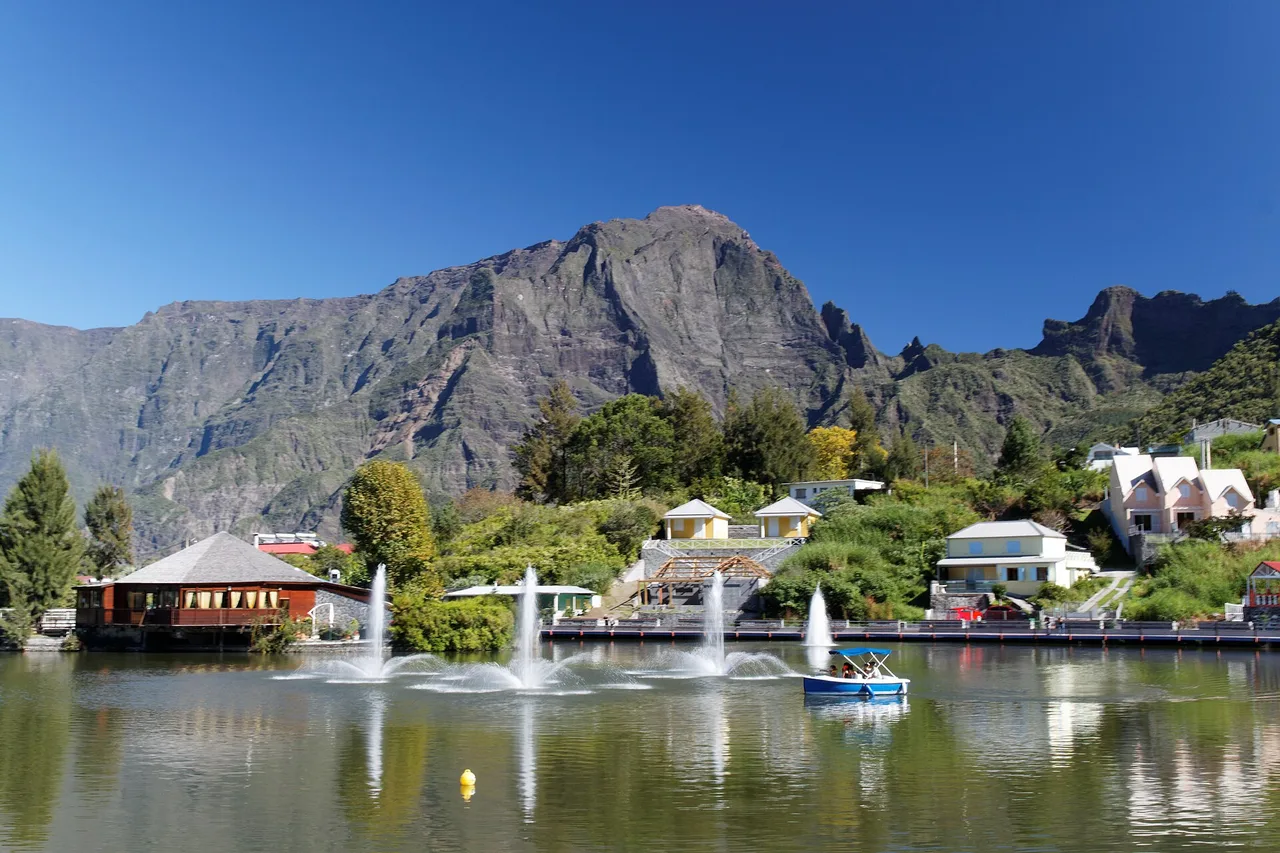
Once at the top, the contrast is striking: the air is crisp, colourful tin roofs are scattered among the gardens, and ramparts close off the horizon on every side. The heart of the village is best explored on foot — the church of Notre-Dame-des-Neiges, rue du Père Boiteau with its Creole houses, the terraces serving the local rhum arrangé. Ten minutes from the centre, the Mare à Joncs is the cirque's prettiest mirror: a small lake ringed by an easy path, with pedal boats in season and the Piton des Neiges massif as a backdrop.
Cilaos is also a village of craftsmanship. The Maison de la Broderie keeps alive the famous "jours de Cilaos", an openwork embroidery created in the late 19th century by Angèle Mac-Auliffe, daughter of the spa doctor: embroiderers work before your eyes, and an authentic doily is one of the island's most sincere souvenirs. The whole village fills an unhurried half-day — ideal for acclimatising before the big hikes. For an effortless first panorama, drive up to the Roche Merveilleuse via the Bras Sec road and a short trail: the village spreads out below, tiny in its amphitheatre of mountains, and you instantly understand why Réunionese people speak of "îlets" — those inhabited plateaus clinging to the slopes, relics of the hidden settlements of escaped slaves who peopled the cirque and gave it its names.
The thermal baths: the island's only spa town
If Cilaos exists on the map at all, it is first of all thanks to its water. In 1815, goat hunter Paulin Técher discovered a hot spring deep in the cirque; by the 1830s the first spa-goers were being carried up in sedan chairs along the porters' trail, long before any road existed. The resort enjoyed its golden age at the end of the 19th century under Dr Jean-Marie Mac-Auliffe, before the cyclone of 1948 destroyed the original facilities.
Today the Irénée-Accot thermal establishment — built in 1987, renovated in 2007 and again in 2017, run by the Département — remains Réunion's only thermal spa. Its sodium-bicarbonate waters, compared to those of Vichy and Mont-Dore, feed two springs: the Véronique spring (31 °C) for drinking cures and the Irénée spring (37 °C) for treatments. It treats rheumatological conditions and post-trauma recovery, but most visitors now come for wellness: whirlpool baths, water jets, massages — book ahead, as the place fills up fast in season. As for the majestic Hôtel des Thermes, closed for more than twenty years, its restoration is finally under way, with reopening announced for 2028.
Îlet à Cordes lentils and highland wine
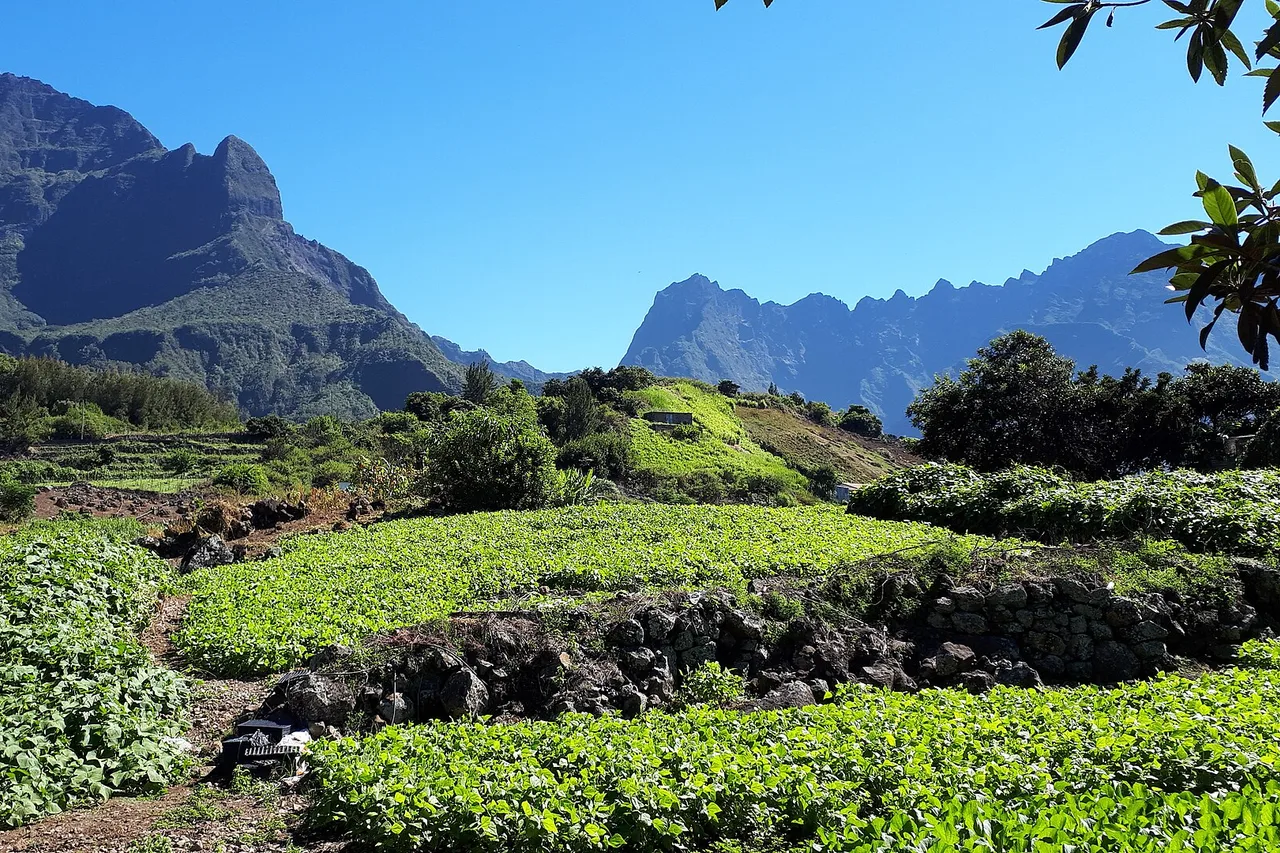
The Cilaos lentil is an institution. Introduced in the 19th century — its cultivation is recorded from 1836 and officially established in 1857 — this small brown lentil grows mainly on the Îlet à Cordes plateau, some 400 hectares perched at around 1,130 metres, where about 130 family farms grow it on stony plots edged with low walls. Sown in April, harvested in September and still threshed by hand, it is scarce and expensive — and a carri served with "real" Cilaos lentils is simply in another league: thinner-skinned, more melting, it cooks without soaking. Buy it directly from the growers or at the village market, and beware of anonymous bags sold too cheap — local production cannot meet demand, and counterfeits exist. The village celebrates its treasure every October at the lentil festival.
The other agricultural pride is drinkable: Cilaos produces one of the rare French wines of the Southern Hemisphere. After the era of the "wine that drives you mad", made from the now-banned isabelle grape, the vineyard was replanted with malbec, pinot noir, syrah and chenin, and a winery collects the harvest of some fifteen growers in the cirque. A tasting — in moderation — is the perfect companion to a plate of lentils.
Canyoning: Fleurs Jaunes, Gobert and Bras Rouge
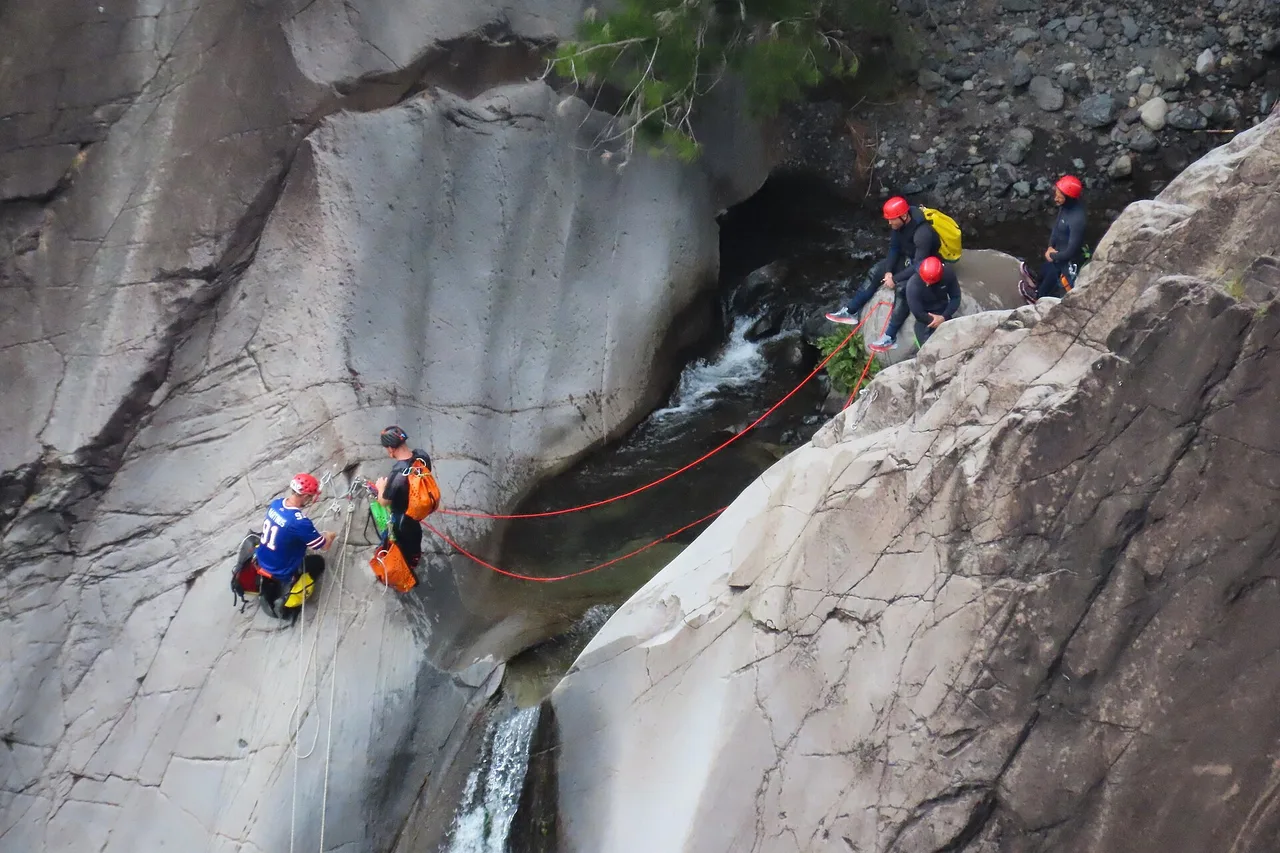
For thrills, Cilaos is quite simply one of France's canyoning capitals. The star canyon is called Fleurs Jaunes: a spectacular gash in the ramparts, stringing together abseils — including a big 55-metre drop — in a gorge gilded by the sun. The classic route is sporty, requiring good fitness and the ability to swim; the full traverse adds, among others, a 90-metre abseil in the sector known as the "chapel". Expect from around €65 per person for the classic option and about €110 for the full traverse, professional guiding included.
Beginners and families are not forgotten: the Gobert canyon is an entry-level run of two to three hours, and the Bras Rouge, more playful and aquatic, alternates natural slides and pools — its waterfall also features in our guide to Réunion's most beautiful waterfalls. In every case, go with a qualified guide: flash floods are unforgiving, and reading the sky over the cirques is a profession in itself.
Piton des Neiges: the roof of the Indian Ocean
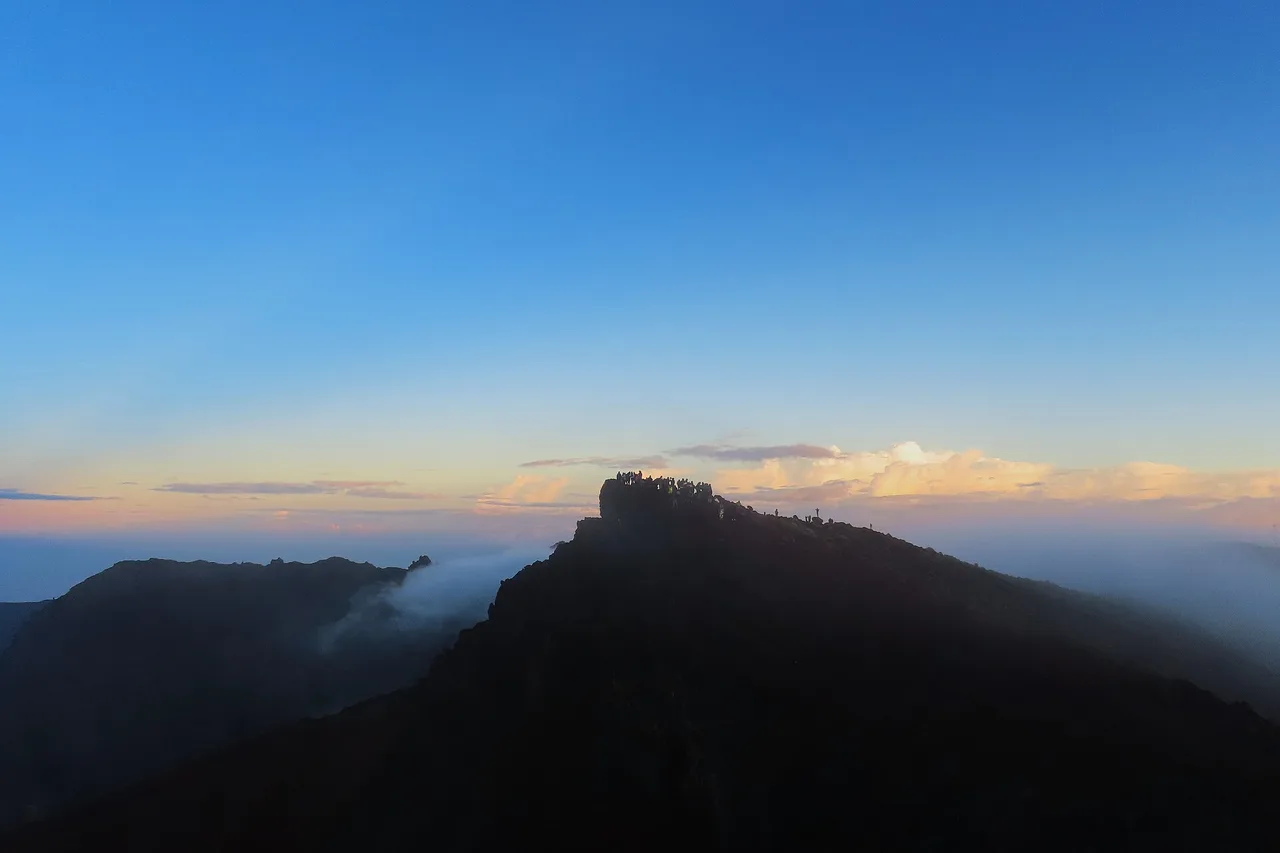
Above the village stands watch the Piton des Neiges, 3,070 metres, the highest point of Réunion and of the entire Indian Ocean. The classic ascent starts right from Cilaos, at the trailhead called Le Bloc: a first sustained climb leads to the Caverne Dufour hut, where you dine on a carri before a short night; departure around 4 a.m. by headlamp to reach the summit before dawn. Sunrise up there — the sea of clouds catching fire, the three cirques at your feet, the volcano's shadow cast over the ocean — ranks among the greatest memories the island can offer.
Two imperatives: book the hut well in advance, and do not underestimate the cold — it regularly freezes at the summit before dawn, even in the austral summer. If you are chaining the cirques together, our 10-day itinerary shows how to fit the ascent in without exhausting the rest of the trip.
A local's advice
Do not treat Cilaos as a day trip: the cirque's light is won early in the morning, before the clouds climb back up from the gorges — by midday the ramparts often vanish into the mist. Sleep at least one night in the village, dine on a lentil carri, and keep the next morning for the Mare à Joncs or the Roche Merveilleuse. Go early in your stay rather than at the end: if the weather turns, you will still have days left to try again. And if you are hesitating between the three cirques, do all three — Salazie you visit, Mafate you hike, Cilaos you live.
Full guide: Things to Do in Réunion Island: 25 Unmissable Spots, Chosen by Locals