Réunion may well be the densest waterfall island on Earth. A landscape that climbs from sea level to 3,000 metres in twenty kilometres, trade winds that dump world rainfall records on the east coast, ramparts everywhere: the water has no choice but to fall, and it falls magnificently. Here you will find the highest waterfall in France, walls of water right by the road, and clear pools at the end of guava-lined trails. These are our twelve favourites — with, for each one, how to get there, whether you can swim, and what you need to know to enjoy it safely. Because that is the other truth about Réunion's waterfalls: some must be earned, some have closed themselves off, and all of them command respect.
The East: the kingdom of water
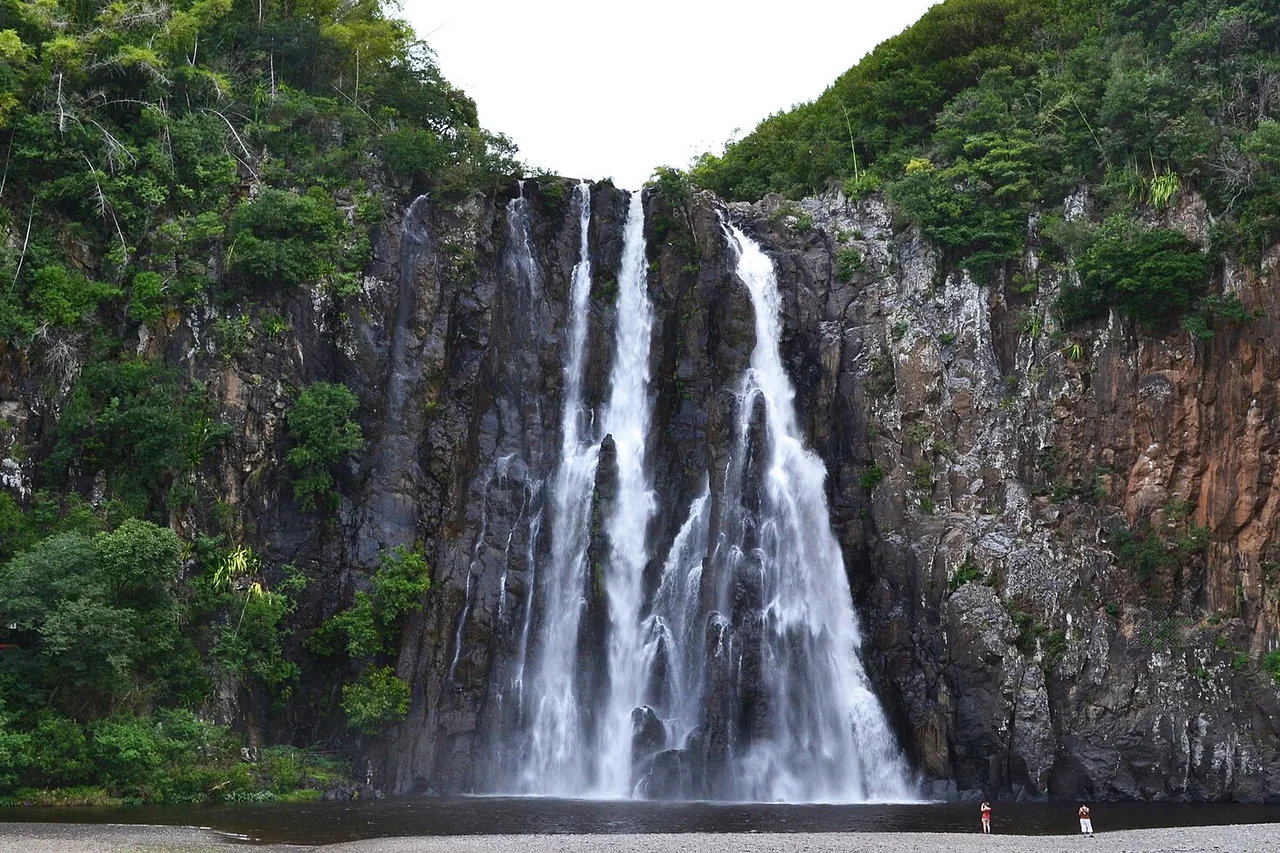
1. The Niagara waterfall (Sainte-Suzanne). The most accessible of all: two kilometres from the centre of Sainte-Suzanne, the car park is thirty metres from the pool. A drop of about twenty metres falls in a single jet down a dark basalt wall into a wide circular pool ringed with greenery. In the dry season swimming is allowed, and the water — cool without being icy — makes it the favourite picnic spot of families in the north-east. Come early at weekends: this secret got out long ago.
Full guide: Renting a Car on Réunion Island: Tips and Pitfalls
2. Bassin La Paix and Bassin La Mer (Bras-Panon) — closed, and here is why. On the Rivière des Roches, these two basins are among the island's most beautiful sites: basalt columns, dark water, powerful falls. But access to Bassin La Paix is forbidden by municipal order since a rockfall seriously injured two people there — a block broke away from the cliff above the bathers — and the closure remains in force until further notice; in May 2026 a court even found the municipality partly liable for the accident. Some visitors still climb over the barriers; do not copy them. This island has more than enough open wonders without risking your life under an unstable cliff.
3. Anse des Cascades (Sainte-Rose). A unique case: here the waterfalls tumble off the cliffs… straight into the setting of the ocean shore. South of Piton Sainte-Rose, this shaded cove with its huge coconut grove, its little fishing harbour and its picnic tables is one of the gentlest stops on the east coast. Damaged by storm Fakir in 2018, the site was repaired and reopened the same year. You do not swim here — the ocean is brutal — but you lunch in the shade, lulled by falling water and answering waves.
4. The Takamaka waterfalls (Saint-Benoît). The valley of the Rivière des Marsouins is a green cathedral: dozens of falls, the tallest close to fifty metres, streak down walls covered in primary forest. The viewpoint is reached by car on the Takamaka road from Saint-Benoît — the panorama from the car park alone explains why Réunion islanders speak of it in hushed tones. Walkers can continue along the river towards the second viewpoint above the dam.
5. The Bras d'Annette waterfalls (Grand Étang). At the end of the trail that loops around Grand Étang — the island's largest natural lake, set beneath the ramparts between Saint-Benoît and Plaine des Palmistes — several cascades tumble down the wall to form the Bras d'Annette. The loop from the car park is a flat, shaded family walk; the finale, with the falls dropping in successive curtains, amply rewards the hour of walking.
The Highlands: the giants
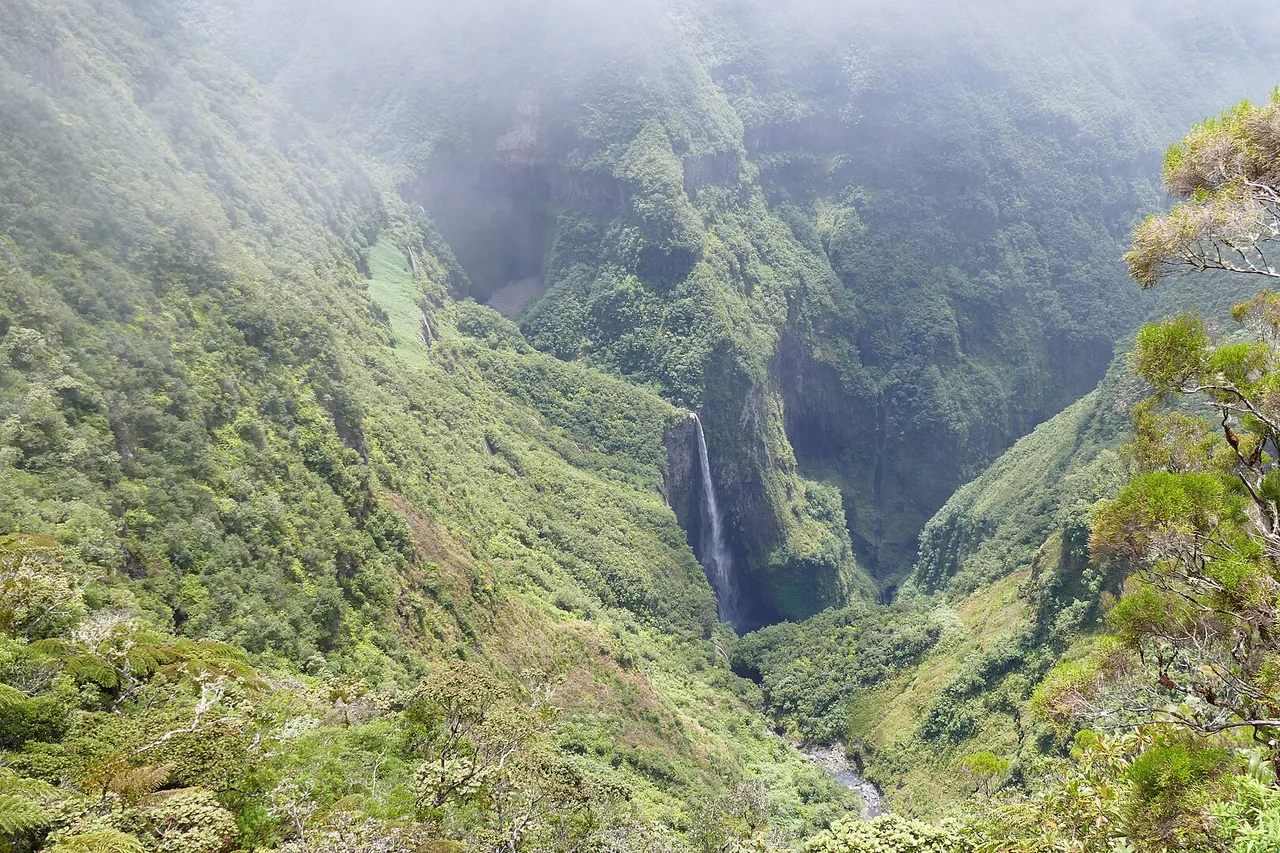
6. The Trou de Fer (Salazie / Bras-Panon). The monument. Into a dizzying chasm shared by Salazie and Bras-Panon, several rivers plunge at once: 725 metres of cumulative drop in four leaps, including a main plunge of about 305 metres — the highest waterfall in France, ranked among the great falls of the world. You admire it from a natural viewpoint at over 1,000 metres of altitude, at the end of the trail from the Bélouve mountain lodge: about two hours' walk each way through a tamarind forest often drowned in mist. Leave early — the chasm clouds over almost every late morning — and in the dry season. Those in a hurry fly over it by helicopter: it is the most spectacular moment of any island overflight.
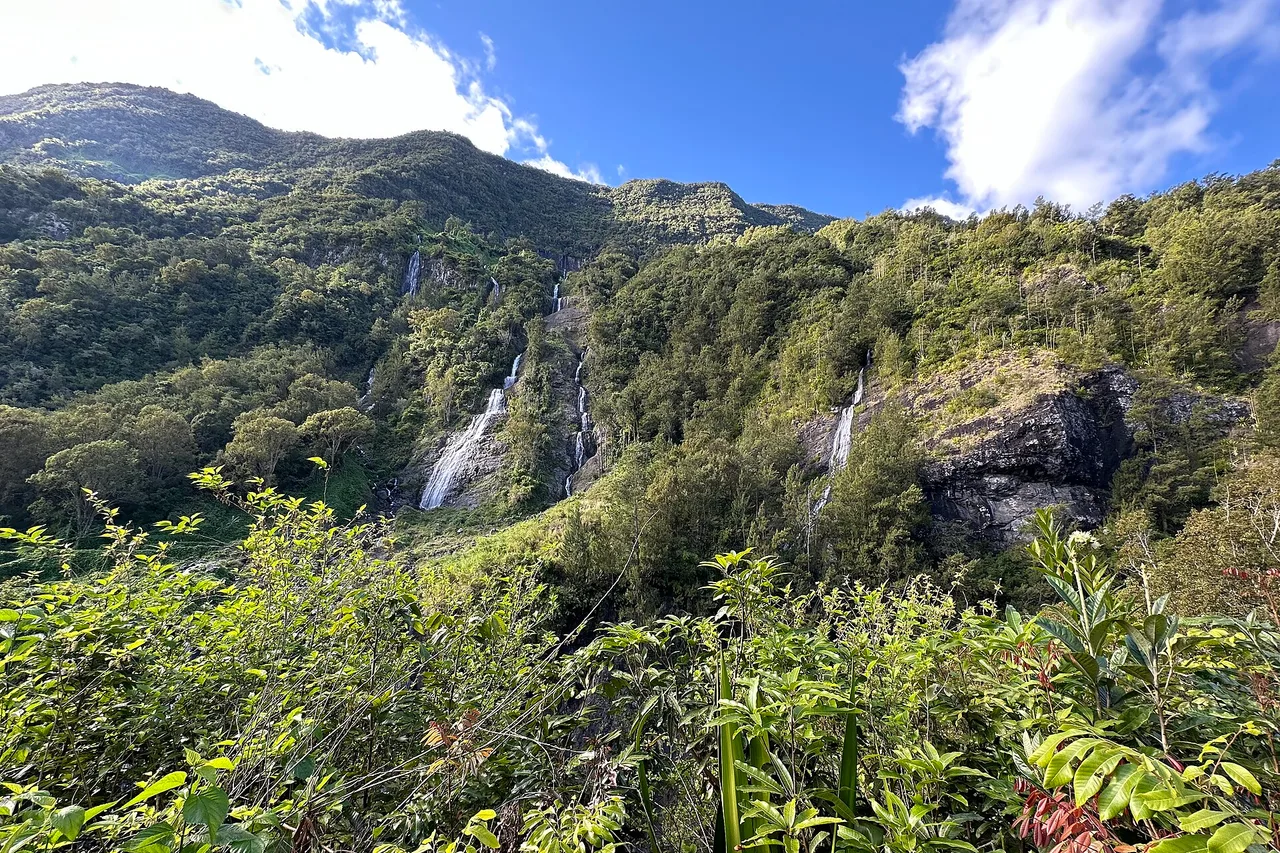
7. The Bridal Veil — Voile de la Mariée (Salazie). On the road climbing to Salazie and Hell-Bourg, at around 500 metres of altitude, a cluster of waterfalls spreads across nearly one hundred metres of cliff, fine and white as tulle — hence the name, and the Creole legend that goes with it: a young bride who, fleeing her father's anger, fell into the ravine and left her veil behind. It is the most photographed waterfall on the island, and it costs nothing: park the car, look up. After heavy rain the veil becomes a curtain — the Salazie cirque is one of the rainiest places on the planet.
8. The Biberon waterfall (Plaine des Palmistes). A 250-metre thread of water dropping from the rampart above Plaine des Palmistes, at around 1,000 metres of altitude. The guava-lined trail leads in about thirty minutes to an observation platform installed when the site reopened in 2019 — it had been closed after a fatal rockfall in 2014. Swimming is forbidden here, and the platform exists precisely so you can admire the fall at a distance from the wall. It is the perfect late-afternoon stroll, when the light rakes across the rampart.
9. The Chaudron waterfall (Saint-Denis) — the forbidden beauty. Nearly 400 metres of drop at the back of the Chaudron ravine, on the doorstep of the capital. But access is closed and forbidden: rockfalls have caused serious accidents there, and the ravine is a flash-flood trap. You glimpse it from afar after heavy rain, or from a helicopter. Listing it here is also a way of saying clearly: do not go — the "secret" paths circulating on social media lead beneath walls that fall.
The South and the cirques
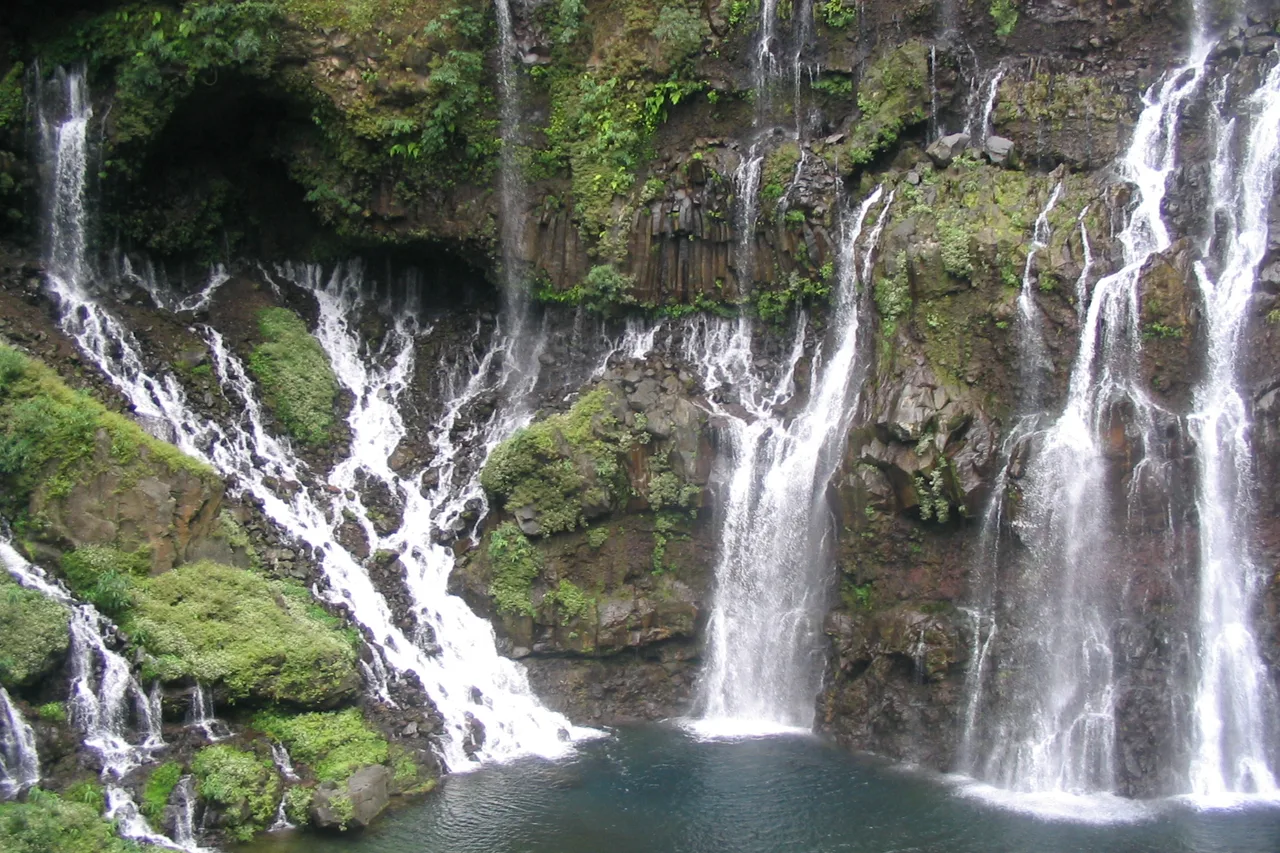
10. The Langevin waterfall, known as Grand Galet (Saint-Joseph). The one on our banner — and probably the most photogenic on the island. This is not one fall but an entire weeping wall: dozens of jets burst from the mossy cliff and converge on a turquoise pool. You reach it on the D33 road that follows the Langevin river up from Saint-Joseph — twenty minutes of narrow, winding road, and the waterfall sits right by the tarmac just before the village of Grand Galet. Downstream, the river strings together a series of pools where swimming is a joy; swim in the calm pools, never under the main fall, whose current and boulders are unforgiving. After a storm in the highlands, you do not go down into the riverbed. Full stop.
11. Grand Bassin and its southern Bridal Veil (Le Tampon). From the Bois Court viewpoint you look straight down onto a village at the bottom of a ravine, reachable only on foot — a little Mafate of the South. The descent is 4.5 kilometres with about 650 metres of vertical drop; from the village, you continue five hundred metres along the river to the waterfall, an elegant veil feeding the basin. The climb back must be earned (allow double the descent time); those who overnight with locals in Grand Bassin describe it as one of the most peaceful nights on the island. The panorama from Bois Court, meanwhile, is free and immediate.
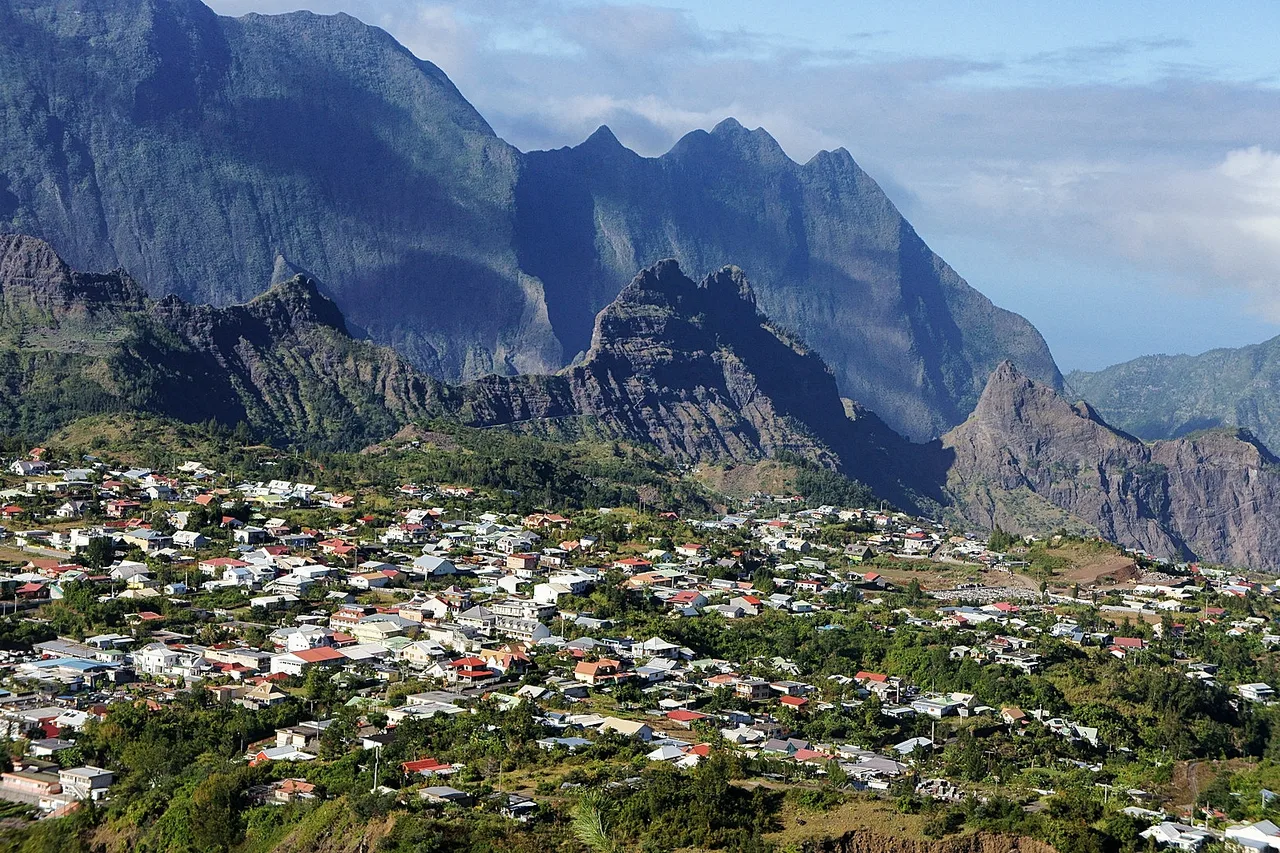
12. The Bras Rouge waterfall (Cilaos). In the heart of the Cilaos cirque, a blade of water glides down a wall of pale rock, smooth as a stone slide. The classic loop leaves the centre of Cilaos via the Sentier des Porteurs and closes in about two and a half hours — a hike rated easy, one of the most rewarding in the cirque for the effort involved. Along the way, the Ravine des Étangs and its pools; all around, the ramparts. If you are staying in Cilaos to continue into Mafate via the Col du Taïbit, it is the ideal warm-up.
Swimming without putting yourself in danger
Réunion's waterfalls are superb, and they do not joke around. Danger number one is the flash flood: a storm in the highlands, sometimes invisible from the coast, can raise a river by several metres in minutes. The locals' rule is simple: check the weather before setting out, never go down into a riverbed when it has rained or is about to rain upstream, and never cross a submerged ford. Danger number two is rockfall: these volcanic walls are young and fragile — that is what closed Bassin La Paix, the Chaudron waterfall and, for a time, the Biberon waterfall. Do not linger beneath a cliff, do not jump from the rocks (the bottoms shift with every flood), and respect the barriers and signs: in Réunion, a closed site is always closed for a reason written in blood. Finally, after heavy rain, avoid swimming with open wounds: as everywhere in the tropics, fresh water can transmit leptospirosis. The dry season, May to November, remains the safest window — and the most pleasant for walking.
A local's word
All twelve are worth the trip, but if we had to keep only three for a first visit: Langevin for the photo and for swimming in the river pools, the Trou de Fer for the thrill of the chasm at the end of the Bélouve forest, and Niagara for the simplicity of a picnic afternoon. Slot them into a ten-day itinerary and you will have seen Réunion's water in all its forms — the veil, the wall, the chasm. And keep the Réunion reflex: the mountains are played in the morning, the river is always respected, and a closed barrier is never an invitation.
The real Réunion, in your pocket
The interactive explorer map: 160 spots checked on the ground, live weather zone by zone and road trips timed on real roads. Free, no account, no card.
Discover Moris Insider →