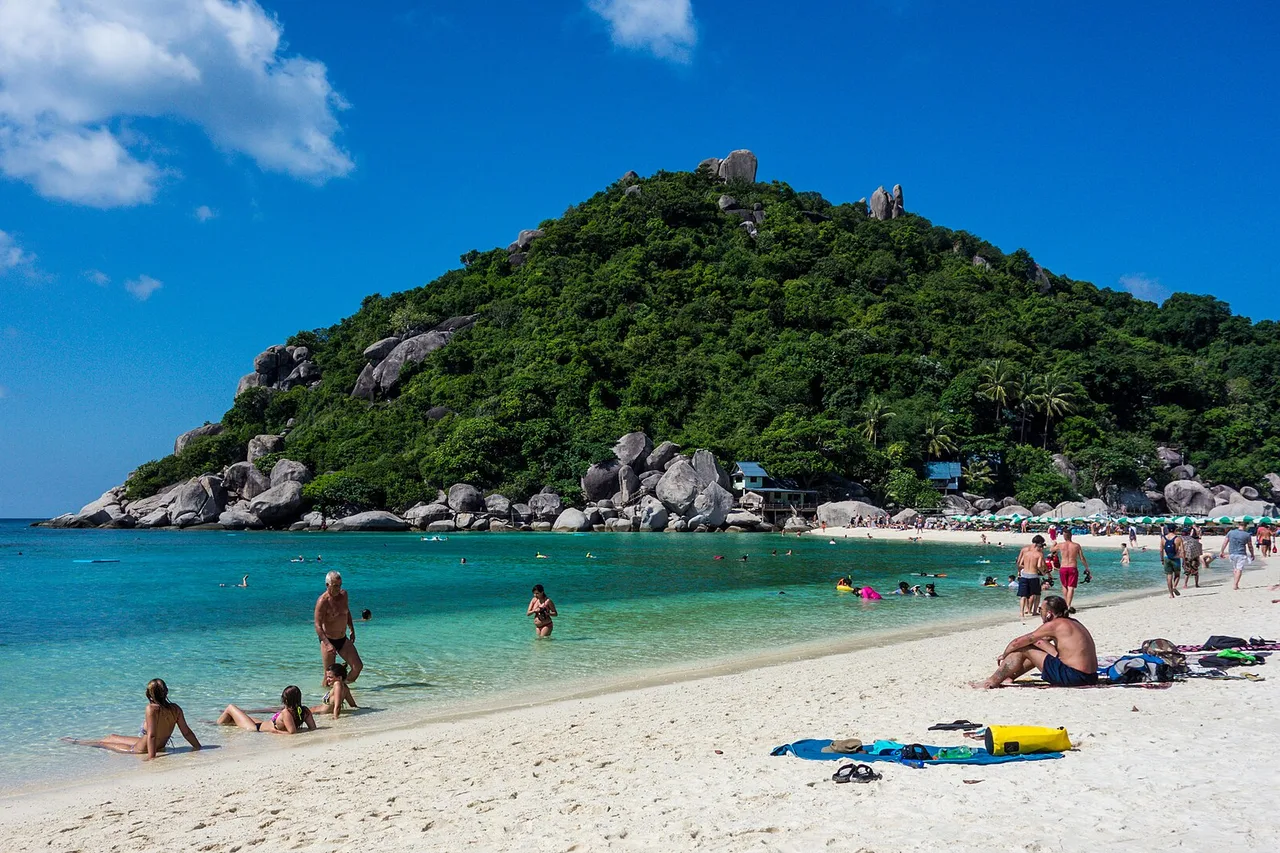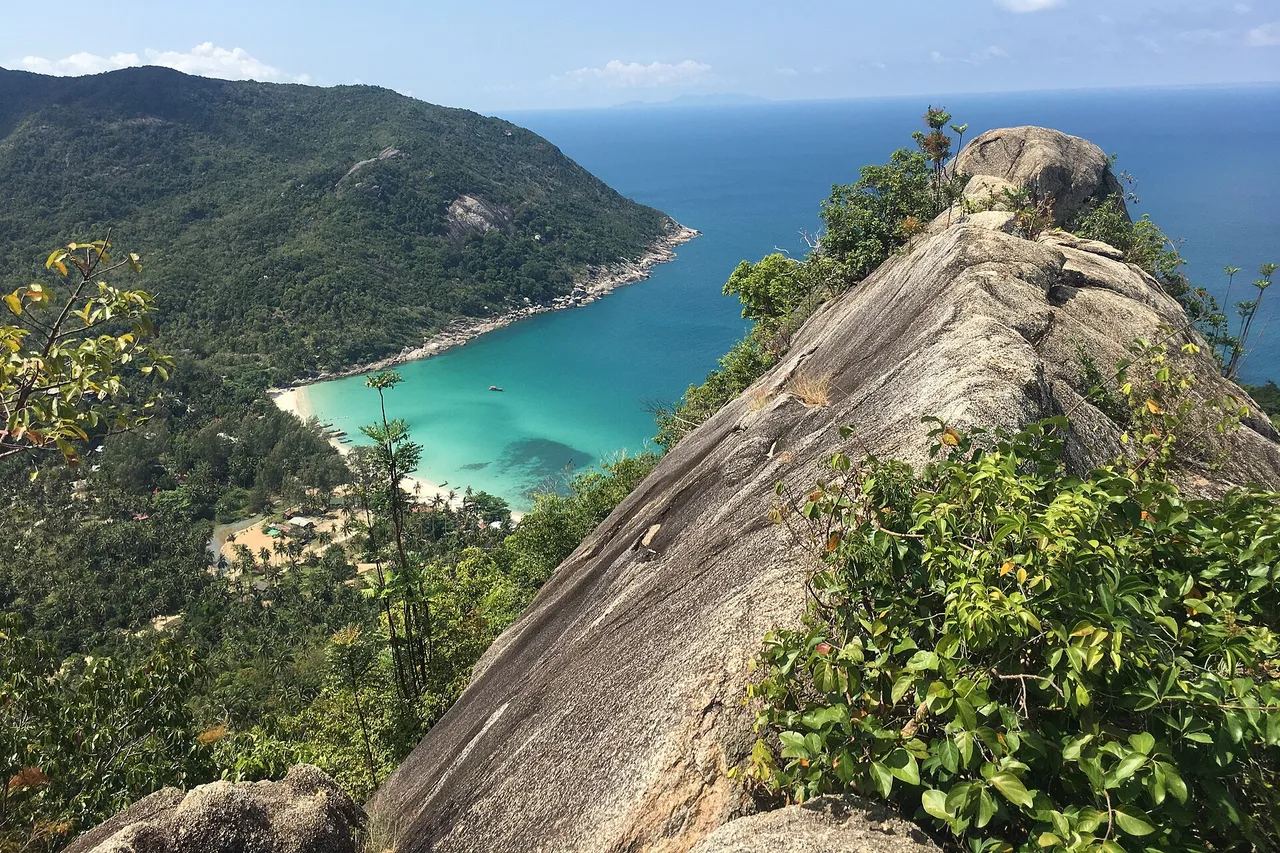
Fifteen kilometres apart, the same sea, the same season, a thirty-minute crossing: these two islands are far more alike than the comparisons suggest. What really separates them does not show up on a map. On one side, Koh Phangan has no airport — you get there through Koh Samui, and the boats stop running in the late afternoon. On the other, Phangan’s character follows the lunar calendar, to the point where the same week can be the quietest or the loudest of the year. Seven criteria, one verdict each, and the answer according to what you came for — and above all when you are coming.
What does not separate them — and that is half the answer
Let us start with the most useful list: everything your choice will not change. Koh Samui and Koh Phangan lie about fifteen kilometres apart, in the same Gulf of Thailand. They share the same sea, the same water temperature, and above all exactly the same season — at their best from July to September, fairly sunny from January to August, with the heaviest rain in October and November, as our guide to the seasons sets out. That is the mirror image of the Andaman coast, and it is what makes these islands so valuable in the middle of a European summer.
They also share their day trips, their restaurant prices and much of their scenery. In other words: unlike a choice between two distant regions, picking the "wrong" island here does not ruin a trip. The crossing takes thirty minutes by fast catamaran, forty-five on a conventional boat, for 200 to 250 baht. You can change your mind once you are there.
What genuinely differs comes down to two things, and neither is a landscape: how you arrive, and when you arrive. Everything else can be filtered through the table below.
Seven criteria, seven verdicts
| Criterion | Koh Samui | Koh Phangan |
|---|---|---|
| Arrival and connections | ✔ advantage | — |
| Healthcare, emergencies | ✔ advantage | — |
| Family comfort and services | ✔ advantage | — |
| Quiet, nature, pace | — | ✔ advantage |
| Accommodation budget | — | ✔ advantage |
| Partying | — | ✔ advantage |
| Boat trips | ≈ tie | ≈ tie |
Three advantages each and one tie: the table is deliberately tight, because these two islands are. Do not count it — filter it. A family with a four-year-old reads the "healthcare" line and the "arrival" line, and gets an answer in two seconds. A twenty-five-year-old travelling alone reads "budget" and "quiet", and gets the other answer, equally correct.
🔴 Arrival: Koh Phangan has no airport, and the last boat leaves early
This is the most concrete point in the whole article, and it is almost always glossed over. Koh Phangan has no airport at all. Every arrival therefore passes through another entry point: Koh Samui, or the mainland at Surat Thani. The comparison is not symmetrical — choosing Phangan means adding a link to the chain, on the way in and on the way out.
And that link runs to a timetable. The first sailings leave between 7 and 8am, the last between 5 and 6pm. A flight landing on Samui at 8pm cannot be extended that same evening: it forces a night on Samui, planned or not. Plenty of travellers discover that night at the airport, booking in hand, on being told the pier has closed.
Full guide: Cheap Flights to Thailand: When to Book, Direct or Stop
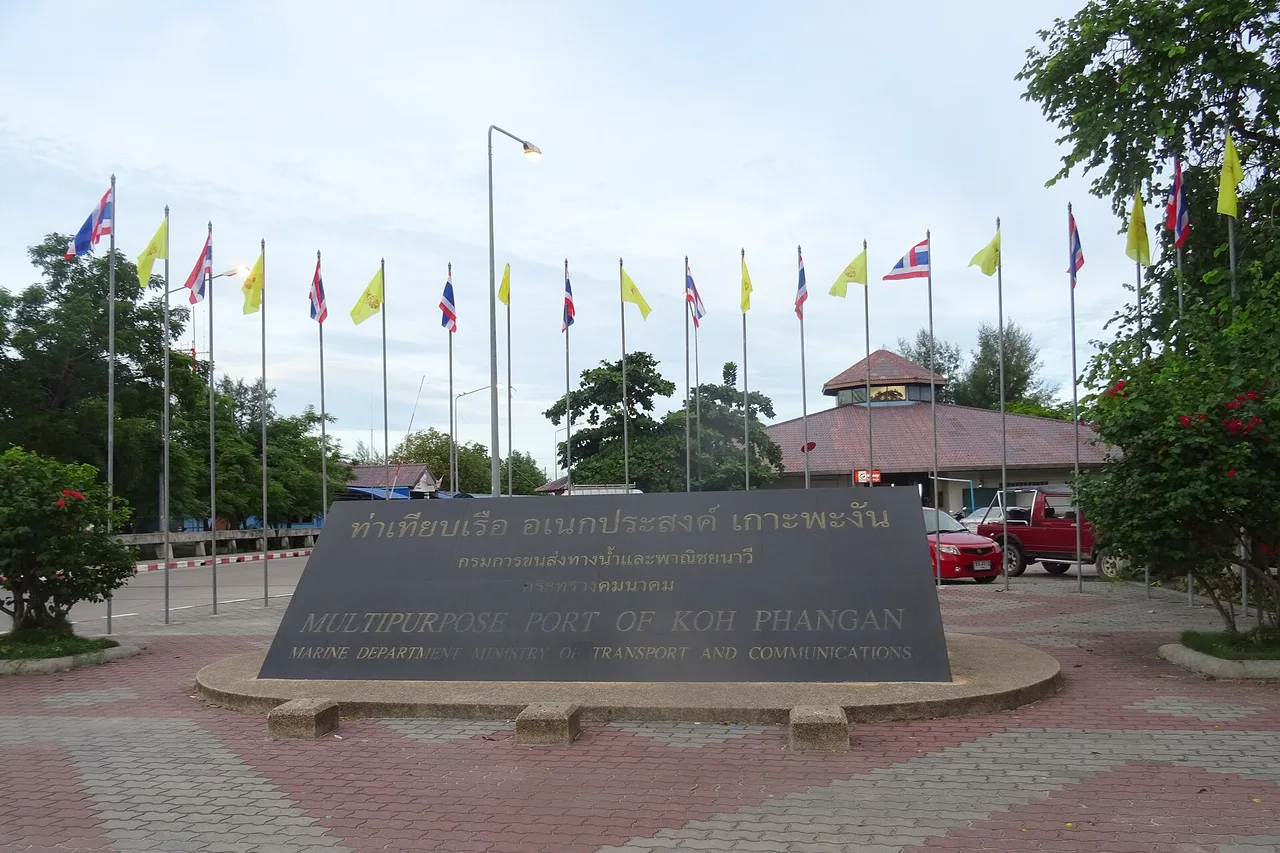
The detail of the crossings, so you can judge: Lomprayah runs a catamaran in 30 minutes (250 THB adult, 125 child), Seatran and Songserm take 45 minutes (200 / 100 THB). Together the operators offer ten to twelve departures a day, mainly from Nathon pier on the west of Samui, and also from Bangrak and Maenam. You land at Thong Sala, Phangan’s single port. In October and November the sea can be choppy: the crossing stays short, but it is not always comfortable.
Then there is the flight itself, and it weighs heavily. Koh Samui airport is owned by Bangkok Airways, which is also the only airline landing there nonstop: the hop from Bangkok costs what a monopoly can charge, namely 70 to 145 $ one way, and 150 to 200 $ per person in high season. The workaround, familiar to regulars, is to fly a budget airline to Surat Thani and take a combined bus and boat ticket: five to seven hours instead of four, for roughly half the price. Comparing the two routes before booking often changes the budget of an entire trip — a flight comparison site shows the gap in one search, provided you test both airports and not only Samui.
One last piece of advice on that chain: it is the airport to pier leg that breaks it, not the crossing. A taxi haggled over outside the terminal, a jam on the coast road, and the last boat is gone. Booking that transfer in advance costs the advertised price rather than the price negotiated with your bags in hand, and above all pins down a time you can plan around.
The date decides more than the island
Here is the second peculiarity, and it has no equivalent anywhere else in Thailand: Koh Phangan’s character follows the lunar calendar. Once a month the Full Moon Party takes over Haad Rin beach, from 6pm until around 6am. Entry costs 200 baht, paid at the gate only — there is no advance ticket, and any online resale should set off alarm bells.
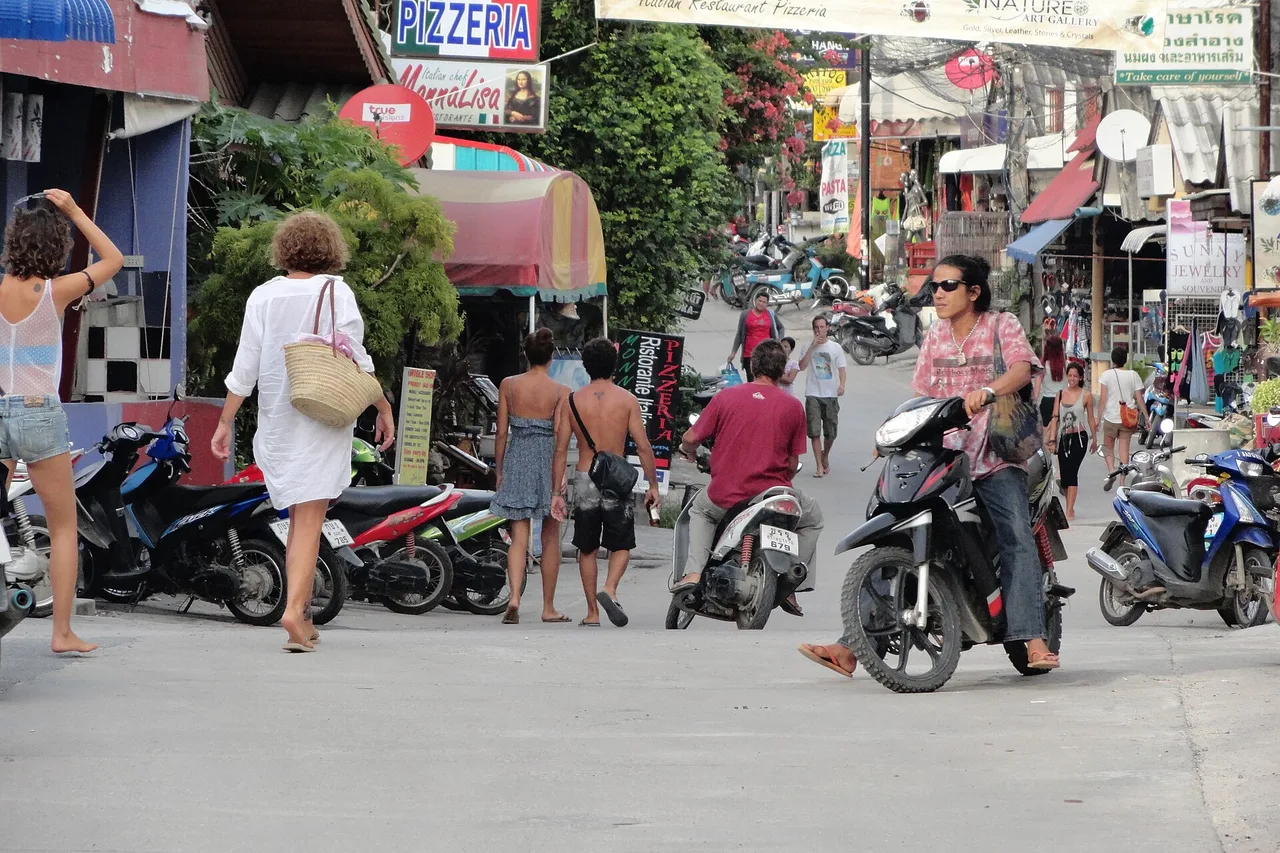
The remaining 2026 dates are 28 August, 26 September, 27 October, 24 November, 24 December and 31 December. Note the detail that trips up calculations made at home: the party does not follow the full moon mechanically — July and October were shifted by a day so as not to fall on a Buddhist holy day. A lunar calendar found online is therefore not enough; you need the announced date.
The effect on a trip goes far beyond the night in question. Around those dates many places to stay in Haad Rin impose a minimum of three to seven nights — four to five being the most common — and you need to book one to two months ahead. Boats fill up, prices rise, and a traveller who came for quiet ends up paying more for precisely what they wanted to avoid.
The good news is that the island is large and the party very localised. The north — Chaloklum, Thong Nai Pan, Bottle Beach — and the west stay calm even on those nights. But prices and transport know nothing of that geography. Hence the simple rule: choose your dates relative to the full moon first, your island second. Doing it the other way round is the most common way to get Koh Phangan wrong, in either direction.
Koh Samui "well equipped": what it is worth, and what it costs the island
Koh Samui has an international airport, hospitals, supermarkets, decent roads and hotels in every category. For a first trip, a short stay or a trip with children, that density of services solves a great many problems in advance — and that is a real advantage, not a cliché.
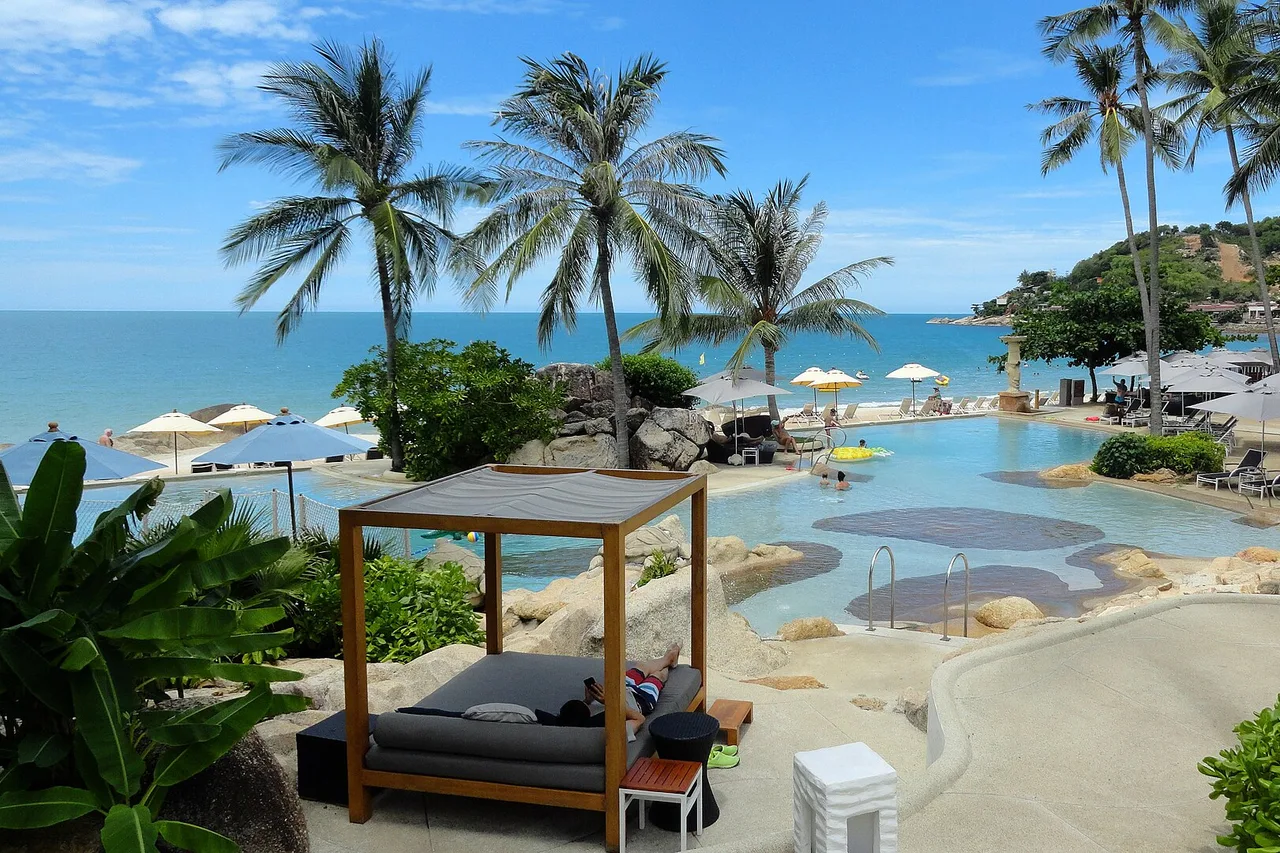
The other half has to be said too, because it has been measured. Samui received 3.54 million visitors in 2023 on an island of 88.3 square miles, roughly 229 km²: its tourist density approaches four times that of the Paris region. The release of the third season of The White Lotus on 16 February 2025 pushed hotel bookings up 65 % year on year.
That footfall has a visible cost: around 200,000 tonnes of waste have piled up on the island, mostly single-use plastic, and the daily balance does not add up — 180 to 200 tonnes generated each day, 60 shipped off. None of this is a reason to give up on Samui, and this guide will not present it as one. It is a reason to know where you are setting foot, and not to be surprised to find, behind the postcard, an island working beyond its means.
The sea: the playground they genuinely share
This is where the tie is clear-cut, and it deserves saying: on the water, choosing one over the other will cost you almost nothing. Mu Ko Ang Thong, the marine national park gathering more than forty limestone islands, is visited on a day trip from both islands. The same boats, often the same operators.
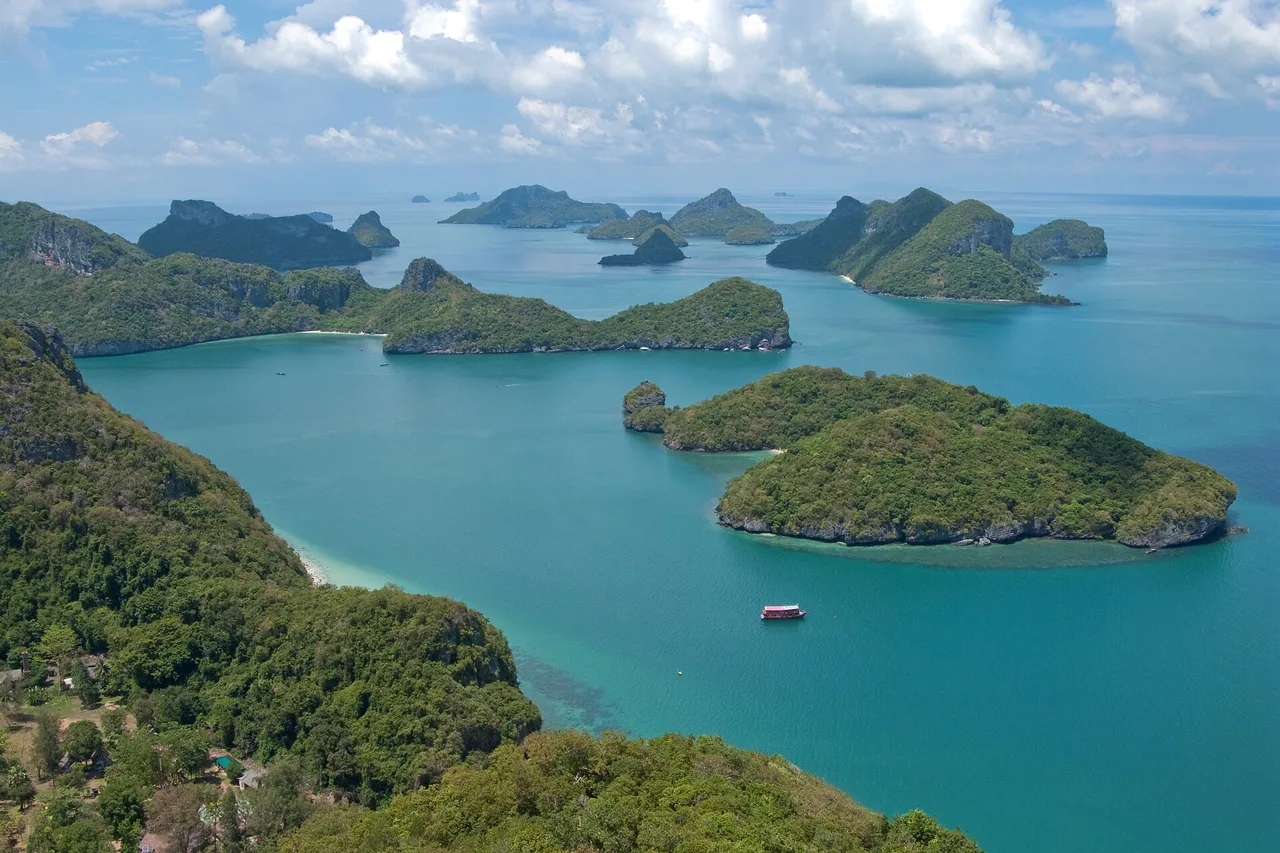
Two caveats that apply on both sides. First, group excursions look very similar and sell at wildly different prices depending on the counter: comparing trips online before you leave mostly saves you from discovering on board what the price did not include. Second, a budget reminder we have costed elsewhere: national park entry is charged at the foreigner rate, five times the Thai rate, on a four-band scale from 100 to 500 baht — and it is almost never included in the advertised price of a trip. The detail is in our budget breakdown.
Getting around: the section that sends the most travellers to hospital
On Koh Phangan, songthaews cover most needs at fixed prices: 100 baht from Thong Sala to Haad Rin, 200 baht from Thong Sala to Chaloklum, and 100 to 200 baht per person for a shared ride — more at night. It is not expensive, but it is slow and it does not wait.
Hence the temptation of the scooter, and the island’s real danger. Phangan’s interior is mountainous: tight switchbacks, steep gradients, tarmac that stops without warning. The road from Haad Rin to Thong Nai Pan is among the steepest on the island. And the leading cause of motorbike accidents is neither speed nor rain: it is the sand and gravel that gathers in the bends, invisible until the front wheel finds it.
Three precautions, in order of effectiveness. The first is to accept not riding on the steep sections: a songthaew costs the price of a coffee. The second is the category A international driving permit, mandatory for a two-wheeler and systematically demanded by insurers after a claim: without it, an ordinary fall becomes a personal bill. The third follows from the second — a rental firm that asks for that permit is precisely the one that has insured its machines, whereas the beach operator who asks for nothing covers you no further than your own good sense. The rest of the country’s transport options are set out in our transport guide.
Finally, some of the finest beaches in the north — Bottle Beach, Haad Yuan — are reachable only by long-tail boat. That is part of their charm, and a genuine constraint: the boat depends on the weather, and it does not run at night.
Healthcare and emergencies: the criterion nobody cares about, until the day they do
Samui wins this one clearly, and it deserves facts rather than impressions. Bangkok Hospital Samui, open since 2004, has 50 beds and is the only JCI-accredited facility on the island. Above all it operates a boat ambulance able to collect a patient from Koh Phangan or Koh Tao — a link that exists nowhere else in this corner of the Gulf.
Koh Phangan is not without resources: Phangan International Hospital, private and English-speaking, has its own resuscitation unit. But its role in serious cases is explicit: it stabilises then transfers, to Samui or to Bangkok. Translated into travel terms: on Phangan, a serious emergency involves transport by sea or by air, with the delay that implies.
This criterion counts for nothing until the day it counts for everything. It weighs on a trip with young children, on a long stay, on diving — and, very concretely, on anyone considering a scooter on the roads described above.
What each one has, and the other does not
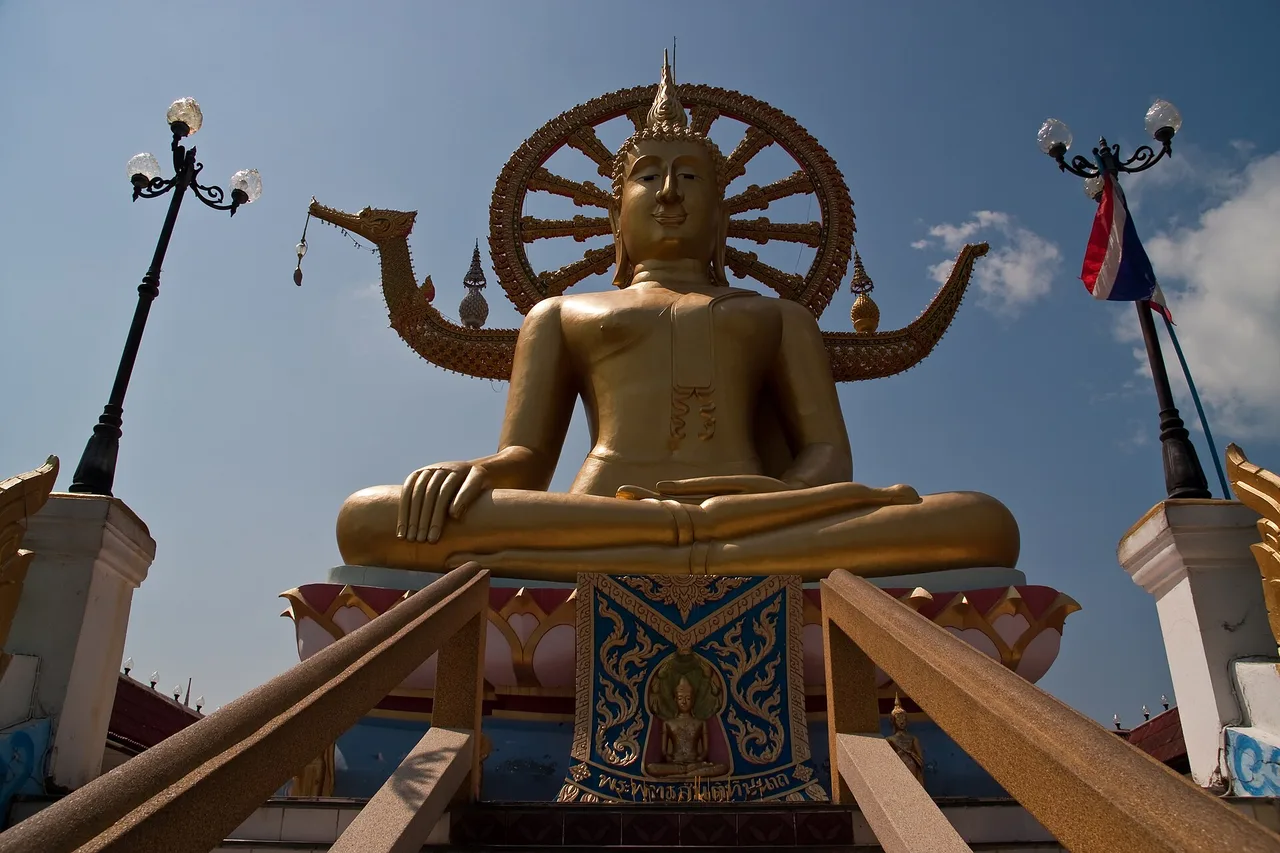
Koh Samui has monuments and a year-round island life. The Big Buddha, the temples, the evening markets, food of an international standard: there is enough to fill days without a beach, which matters more than people expect when the rain settles in for half a day.
Koh Phangan has the north. Bottle Beach, Thong Nai Pan, Chaloklum: bays that geography protects, and a pace Samui no longer has. It also has, and has had for years, a wellness scene along the west coast — yoga, retreats, plant-based food — of a density with no equivalent in the region, and one that has nothing to do with the full moon.
One thing neither has over the other: the weather. They share it entirely, which is why the question "which one in October?" has no answer — the right question is "the Gulf or the Andaman in October?", handled in our fifteen-day itinerary. The reasoning is the same, at the other end of the country, as for Phuket or Krabi.
The verdict, according to what you came for
Short stay, first trip, small children: Koh Samui. The airport, the accredited hospital and the density of services remove every logistical question at a stroke.
Quiet, nature, controlled budget: Koh Phangan, aiming for the north or the west, and avoiding full moon week if quiet is genuinely the point.
The Full Moon Party: Koh Phangan, at Haad Rin, with a booking made one to two months ahead and a minimum stay accepted in advance rather than endured.
Yoga, retreat, long stay: Koh Phangan, west coast — that is its real speciality, and it depends on no date at all.
Ten days or more: both. Four to five nights on each side, starting with Phangan and finishing on Samui: you then fly home without depending on a last boat, and that is exactly the link that breaks return journeys.
And if your dates fall in October or November: know that these are the two wettest months in the Gulf. Neither island will shelter you — on that criterion, the Samui versus Phangan debate simply means nothing.
Top-rated activities in Thailand, bookable online: