
For the classic Hanoi-to-Saigon route, a data-only eSIM is enough: at Saily, 1 GB for 7 days costs $3.99, 3 GB for 30 days $7.99 and 5 GB for 30 days $10.99 (as read on 7 October 2026). Install the profile at home on wifi; according to Saily, the plan starts by itself on arrival. The number-one trap is the network: Saily’s page does not say which of the three operators – Viettel, Vinaphone or MobiFone – it uses, and in the northern mountains that is exactly what decides.
The essentials in numbers (as read on 7 October 2026):
- Saily Vietnam: 1 GB / 7 days $3.99 · 3 GB / 30 days $7.99 · 5 GB / 30 days $10.99 · 10 GB / 30 days $17.99.
- Local SIM: at the airport, 125,000 to 375,000 VND according to one travel site; per the guide vietnamtourism.com, Vinaphone’s tourist SIM costs 199,000 VND for 15 days, with the original passport.
- The network: per Opensignal (September 2025), Viettel has the best coverage: 8.4 out of 10, against 5.3 for Vinaphone and 4.3 for MobiFone.
- Reviews: 4.7 out of 5 on Trustpilot, 31,993 reviews.
What to book, and when
If you travel from north to south – Hanoi, Ha Long Bay, Hue, Hoi An, Saigon, as in our two-week itinerary – you usually don’t need a Vietnamese phone number. A data-only eSIM is enough: a plan that loads onto your phone as a profile, with no plastic card and no counter at landing.
How much data? A rule of thumb, not a measurement: a comparison site that sells eSIMs itself (Travelsim Asia, 26 September 2026) considers 5 GB for 30 days enough for most trips of one to two weeks. With plenty of wifi, 3 GB will do; video, GPS and hotspot use need more. The Vietnam plans from Saily start, per Saily’s page, at $3.99.
Order as soon as your flight is confirmed and install the profile at home on wifi. According to the extract of Saily’s page, every plan has a 180-day activation period and starts by itself on arrival if the eSIM is switched on and roaming is enabled. Ordering early therefore does no harm.
eSIM, local SIM or roaming? The options compared
Three routes lead to mobile internet in Vietnam; sources and dates are under the table.
| Option | Price (read up to 7 Oct 2026) | Network | Worth knowing |
|---|---|---|---|
| Data eSIM (Saily) | 1 GB / 7 days: $3.99 · 3 GB / 30 days: $7.99 · 5 GB / 30 days: $10.99 | not named (Gizmodo: all three) | Installable before departure · hotspot allowed · no Vietnamese number |
| Prepaid SIM at the airport | 125,000 to 375,000 VND · Vinaphone, 15 days: 199,000 VND | Viettel, Vinaphone or MobiFone | Original passport required · registered in your name · a local number |
| Roaming on your home plan | per your operator’s price list | your operator’s network | EU roaming at domestic prices does not apply in Vietnam |
The local SIM brings a Vietnamese number and often plenty of data for little money, but it takes effort: the card has to go into your phone and you must show your passport at the counter. Prices differ widely between sources, partly because packages and durations differ; per the same guide (vietnamtourism.com), the 15-day plan costs 220,000 to 250,000 VND at the airport against 199,000 VND in a shop in town. The operators have counters in Hanoi, per Traveltomtom (September 2026), in arrivals hall 2 (6 am to 2 am), and in Saigon a kiosk stands even before customs.
Full guide: Hanoi & Saigon Airport to City Centre: Bus, Grab, Taxi
Roaming on your home plan is convenient, since there is nothing to install. But the “roam like at home” rule applies, according to the European Commission, only in the 27 EU countries plus Iceland, Liechtenstein, Norway, Ukraine and Moldova – not in Vietnam. Your operator’s price list applies.
Viettel, Vinaphone or MobiFone: which network matters?
A travel eSIM has no antennas of its own; it uses a Vietnamese network: Viettel, Vinaphone (VNPT’s brand) or MobiFone.

| Operator | Coverage per Opensignal (9/2025, out of 10) | Worth knowing |
|---|---|---|
| Viettel | 8.4 | Highest score; best reach in the countryside |
| Vinaphone (VNPT) | 5.3 | Strong in cities and on tourist routes (Travelsim Asia) |
| MobiFone | 4.3 | Fastest upload, weakest coverage |
For measurements we stick to Opensignal. In its September 2025 report (measured 1 June to 29 August 2025), Viettel is well ahead on coverage. On video, all three win jointly, per Opensignal, statistically tied. In the cities, then, all three will do; outside them, the gap matters. Opensignal does measure the operators’ own customers, though, not travel eSIMs.
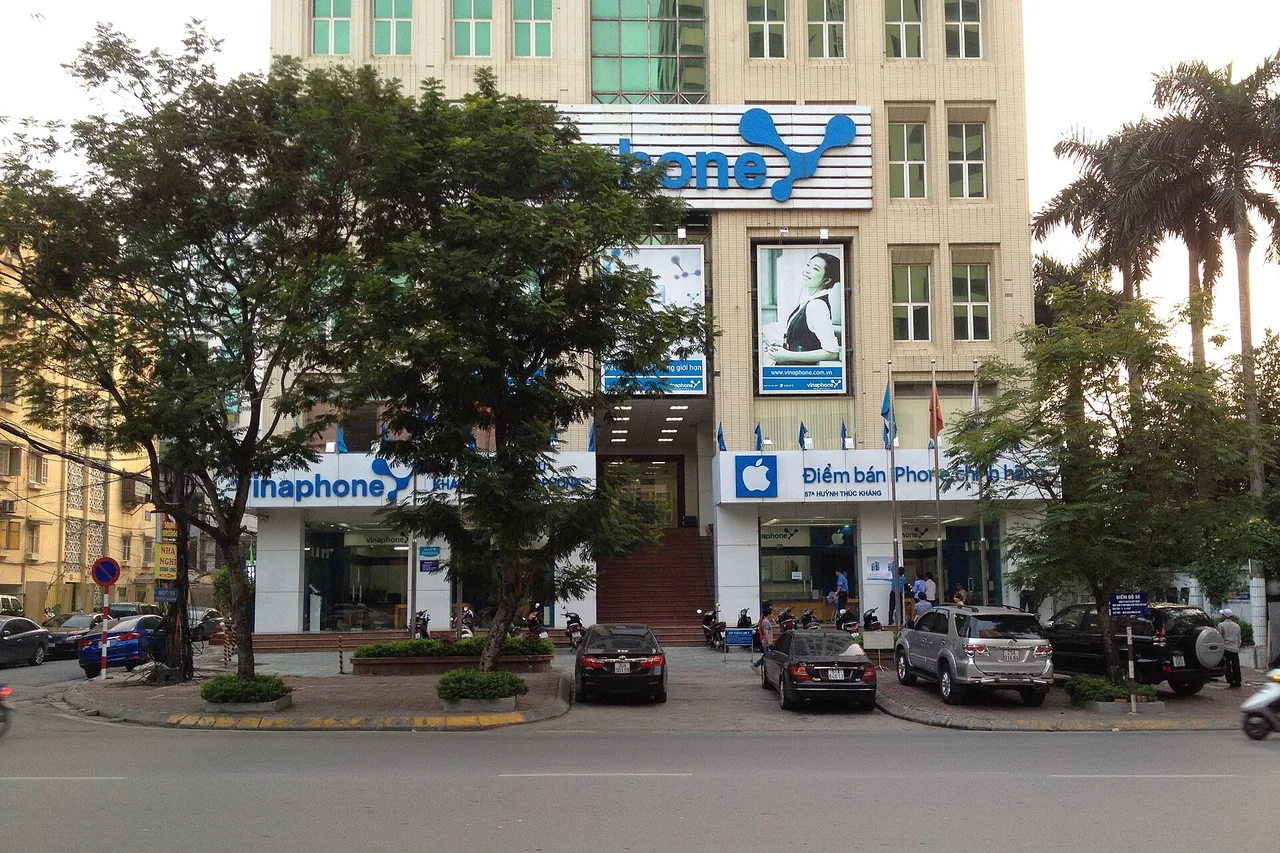
Which network does Saily use? The page doesn’t say. Gizmodo (14 July 2026, with its own discount code) writes that Saily reaches all three operators; Saily itself speaks of the best available local network. For the competitors the sources contradict each other: Airalo lists VNPT, Nomad writes MobiFone and Viettel. We read this as: the question is open – ask it before paying.
From Hanoi to Saigon: where the network matters
On the classic route, things are calm: Saily writes that coverage is strongest in the big cities, then along the Hanoi–Ha Long Bay highway and in the coastal corridor from Da Nang through Hue to Nha Trang. Anyone following our north-to-south route spends much of the trip in those zones. For Ninh Binh and the Mekong Delta we found no dated measurement.

The north is different: for the mountains around Sapa and the Ha Giang Loop, Saily itself says signal strength varies. One comparison site (unusualnomad.com, September 2026) would start with Viettel there – advice, not a measurement, but in line with the Opensignal figures.

To go there, pick a local Viettel SIM (with your passport) or an eSIM whose seller names Viettel; Traveltomtom reports that a SimOptions eSIM connected to Viettel there as advertised. For islands such as Phu Quoc we found no dated measurement. Download offline maps before mountain roads.
The prices: what Saily charges for Vietnam
Saily’s page blocks robots; the table sets the extract from that page beside two pages that reproduce its price list.
| Plan | Saily page (extract) | Two comparison sites (26 Sep and 7 Oct 2026) |
|---|---|---|
| 1 GB · 7 days | $3.99 | $3.99 |
| 3 GB · 30 days | $7.99 | $7.99 |
| 5 GB · 30 days | not in the extract | $10.99 |
| 10 GB · 30 days | not in the extract | $17.99 |
Unlimited plans exist too (15 days: $48.99), with a restriction: full speed up to 5 GB a day, then 1 Mbps. On small plans Saily is level with Nomad ($4 for 1 GB / 7 days at Nomad); at 5 and 10 GB, Nomad is about a dollar cheaper according to Travelsim Asia, at $10 and $17, with Airalo at $11 and $18. Ubigi lists $12.90 for 10 GB but, per Gizmodo, runs on Vinaphone alone.
There are still reasons to pick it: on Trustpilot, Saily stood at 4.7 out of 5 across 31,993 reviews on 7 October 2026, and the company replies there within 24 hours as a rule, according to Trustpilot. Saily is a service of Nord Security, the company behind NordVPN; per Saily’s blog, hotspot use carries no extra restriction (shared data counts against the plan). The amount at checkout is what counts.
Registration in 2026: SIM with passport, eSIM without?
For a local SIM you need your passport: the guide vietnamtourism.com writes that every SIM purchase in Vietnam requires the original passport; copies are not enough. Since 15 April 2026, a circular of the Ministry of Science and Technology (No. 08/2026/TT-BKHCN) requires facial biometric verification for new mobile subscriptions and device changes (VietnamPlus). The reports don’t say whether or how the rule applies to tourists; they mention cross-checking against national population databases, and vietnam.vn says foreigners registered by passport follow a separate verification procedure in store. Allow time at the counter and bring the original passport.
A travel eSIM runs in roaming over the Vietnamese networks. Several sellers write that it does not go through this registration; the reports on the new rule mention neither eSIMs nor roaming. We found no legal text on the point. Check shortly before you leave.
The pitfalls, and how to avoid them
A compatible, unlocked phone. According to Apple, the iPhone XS, XS Max, XR and all later models support eSIM; two carriers work only with an unlocked iPhone or two plans from the same carrier. On Android, check the settings before you pay, not at landing.
No Vietnamese phone number. Saily’s plans are data-only; calls and messages go through WhatsApp, which per Saily’s help pages needs the number only once, for verification. Saily offers a US number (+1) as an option. For a +84 number, take a local SIM or a Vinaphone eSIM – the guide vietnamtourism.com warns that SMS codes for banking apps and Zalo are not guaranteed with an eSIM. For your bank, keep your home SIM active.
Network not named, “unlimited” not limitless. Before paying, ask customer service which network the plan uses in the mountains. And after 5 GB a day, speed drops to 1 Mbps: enough for maps and messaging, not for video.
Data roaming on your home SIM. Switch it off, or your operator may charge you; Keepgo advises turning off the primary line. You use the eSIM with roaming switched on.
Before you pay: the checks
- Does my phone qualify? eSIM-capable and not carrier-locked.
- Which network? For Sapa or the Ha Giang Loop, ask before buying.
- How much, for how long? GB, days and when validity starts.
- Do I need a number? Then a data eSIM is the wrong choice.
- Final price? The amount at checkout counts.
Then: at home on wifi, open the QR code or link from the order and add the profile in settings. Leave it switched off until landing, then switch it on, enable data roaming and select it for mobile data.
When another solution is better
If your trip takes in Sapa, the Ha Giang Loop or remote valleys, a plan whose seller expressly names Viettel is safer – or a local Viettel SIM with your passport. If you need a Vietnamese number, a data eSIM is the wrong choice.
If your route stays on the coast and in the cities, the sum is simple: a data eSIM of 3 or 5 GB for 30 days, installed at home, switched on at landing. The Vietnam plans from Saily are one way to do it; check the network and the price on the order screen before paying. More guides are in the Vietnam blog.