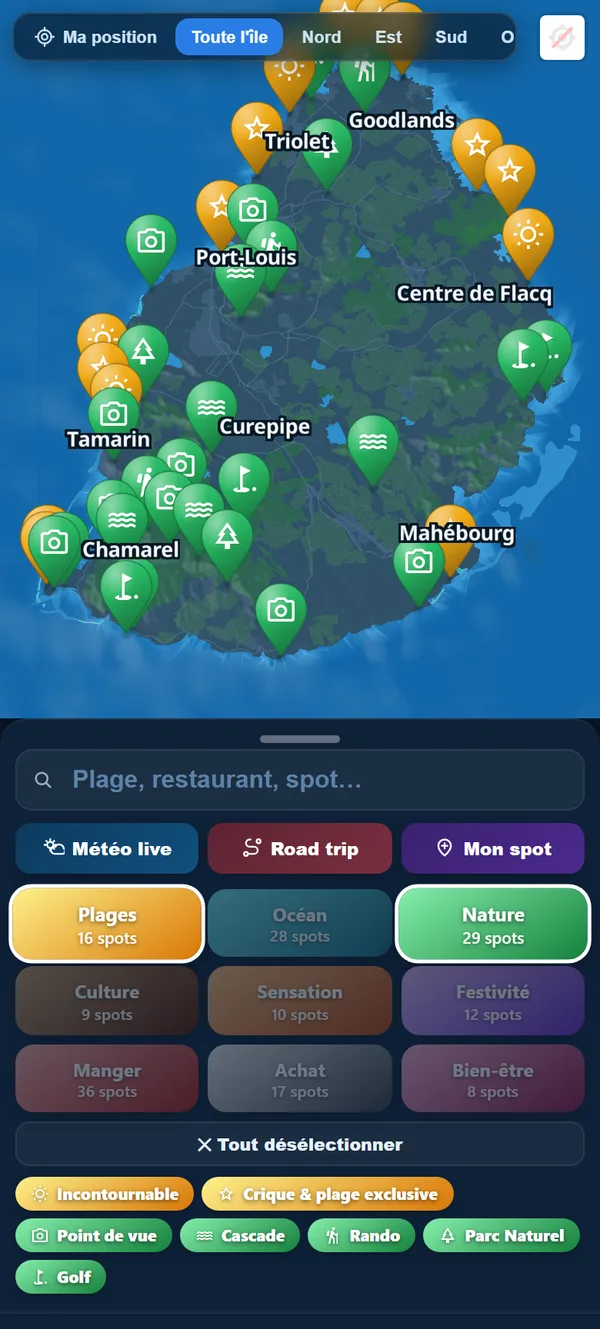
In Mauritius you can eat everywhere, all the time — and often better by the roadside than behind a white tablecloth. Four cuisines share this island: Creole, Indian, Chinese and French. They have been crossing paths on the plate for two centuries, which is why the "best restaurant" can be a food truck parked under the filao trees just as easily as a gourmet table facing the lagoon. We live here, we eat here every day, and these are the addresses where we take visiting friends — all of them among the 225 places of the app, including 36 addresses just for eating.
Budget tip: in Mauritius, part of your activities can cost you less. See how to save money with discounts on your activities.
We run Moris Insider, the Mauritius guide and map co-created with locals. No sponsored menu, no commission at the end of this article: just the tables we genuinely go back to, and how to choose them.
One cuisine, four heritages
To understand where to eat, you need to understand what you are eating. Mauritian cuisine was born of four waves of arrivals: the Creoles gave it tomato rougailles and fish vindayes sharpened with turmeric and mustard; the Indian communities brought biryani, curries and dholl puri, the split-pea-stuffed flatbread that became the national snack; the Sino-Mauritians put mine frit (stir-fried noodles) and the "upside-down bowl" into every kitchen on the island; and the French heritage lives on in the tables d'hôtes, the slow-cooked daubes and the menus of the grand houses. Travellers from India will recognise half the vocabulary — and discover what two centuries of island life have done to it.
The practical consequence: no single restaurant sums up the island. A successful trip alternates registers — a dholl puri eaten standing up on a market morning, a mine frit in a neighbourhood snack bar, a seafood dinner facing the lagoon, a Creole lunch in a family home. Our guide to Mauritian street food covers what to eat dish by dish; here, we talk about where.
The great tables facing the sea
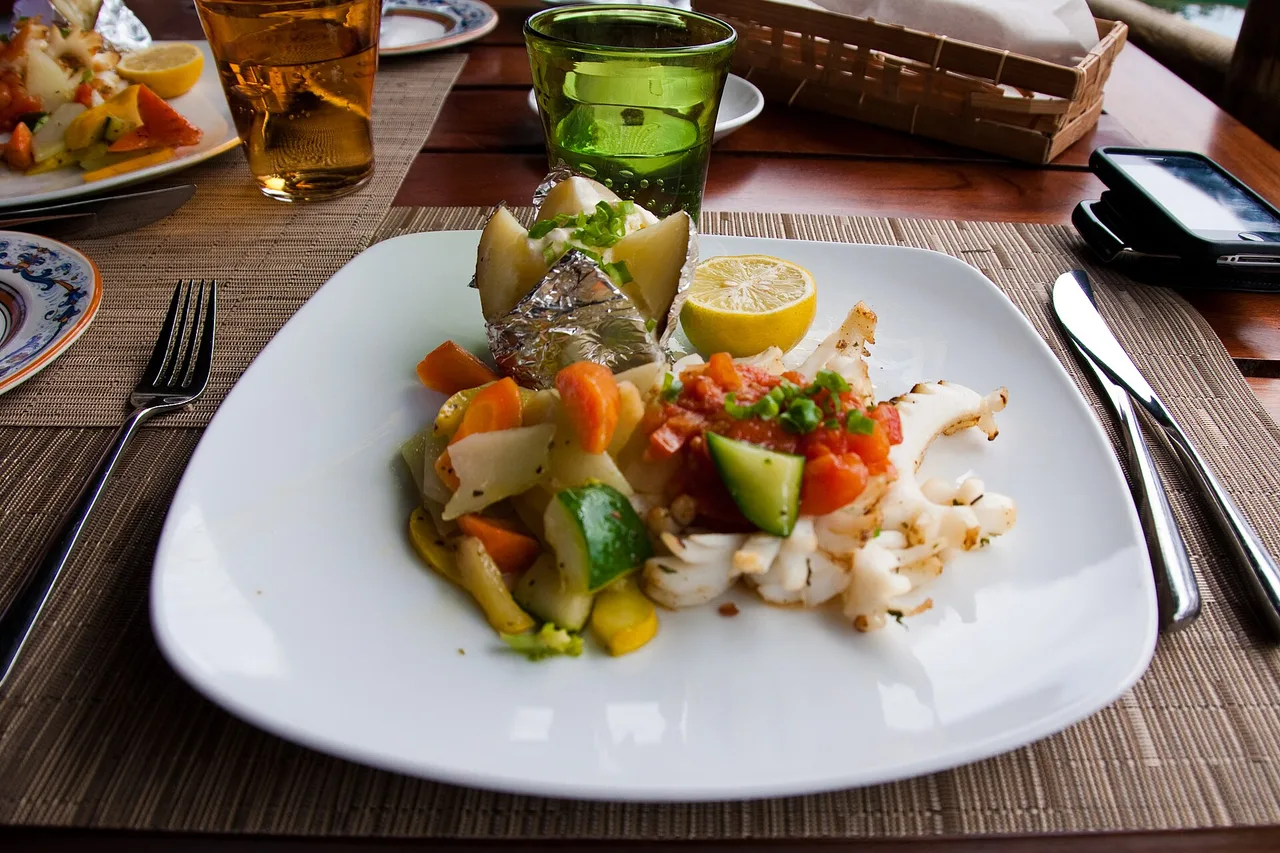
This is the postcard, and it genuinely exists: dining rooms open onto the lagoon, the day's catch on the plate, and sunsets that make you forget the bill. In the north, Le Pescatore in Trou aux Biches has been the coast's historic fine-dining address since 1990, working seafood with haute-cuisine precision in front of a sweeping ocean view. A few minutes away, La Marée plays the opposite tune: four tables set some twenty metres from the water, feet in the sand — the kind of place you only find because someone whispered it to you.
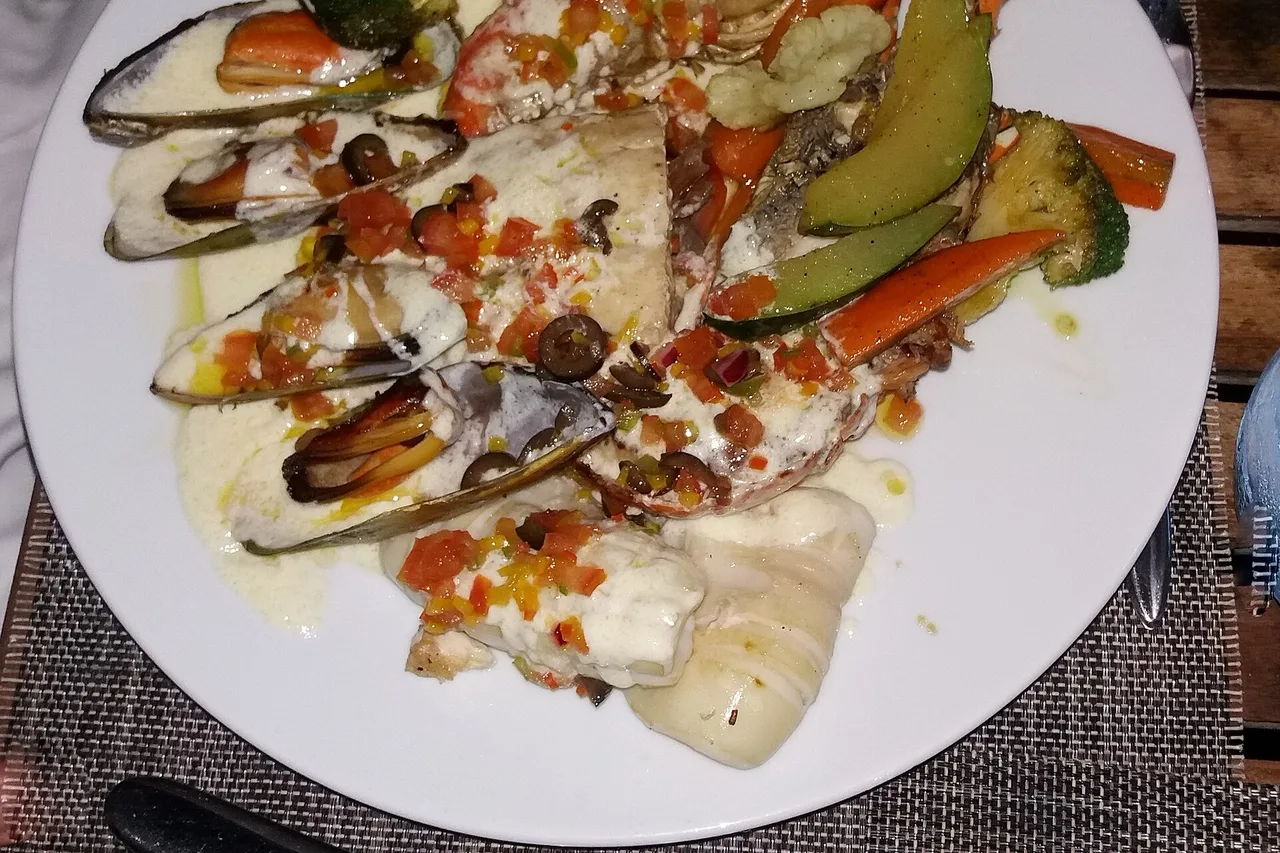
On the west coast, The Bay in Rivière Noire serves refined fusion cooking in an idyllic setting facing the ocean, and Pearl Fisher lines up its seafood selection in front of the Flic-en-Flac lagoon. In the east, one exceptional address: Amari by Vineet at LUX* Belle Mare, where Indian haute cuisine is signed by Vineet Bhatia, the first Indian chef ever awarded a Michelin star. Back in the north, Mayniko takes as much care over the welcome as over its intricate, colourful plates. One piece of advice that applies to all of them: book — several of these rooms are tiny, and high season does not forgive improvisation.
Food trucks and street food: eating like a local
Here is the island's other half — the one Mauritians prefer. In Grand Baie, Ti Kouloir lives up to its name: an institution hidden down a little corridor, the island's absolute specialist in mine frit. In the same north, Nana mama serves small family-style Mauritian dishes cooked the way they are at home, while in Port Louis, Roti Aka has the reputation of being one of the capital's best roti sellers — those stuffed Indian flatbreads eaten in three bites, standing on the pavement.
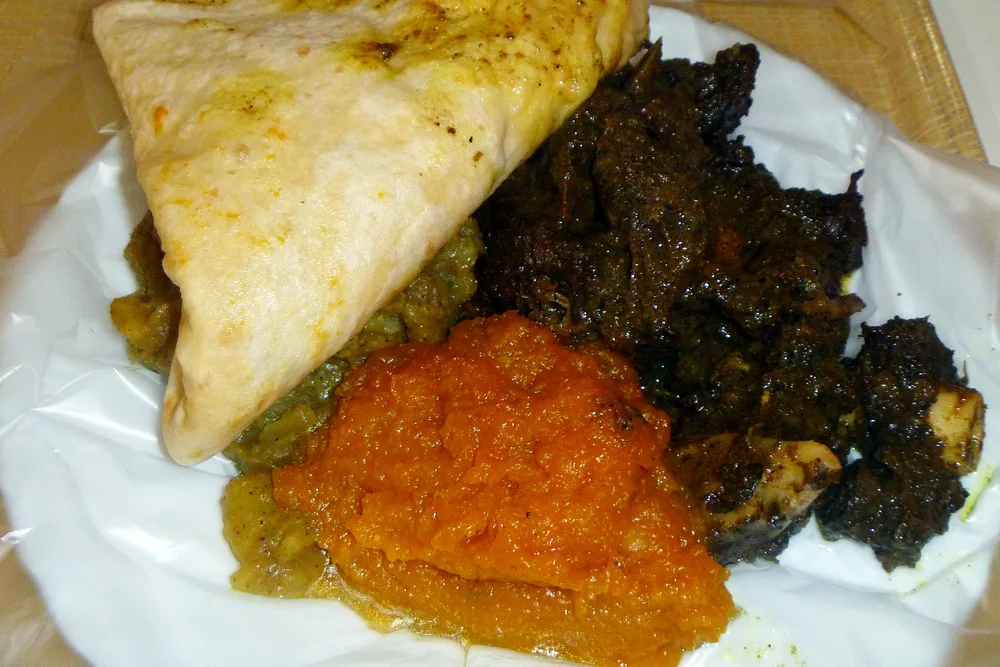
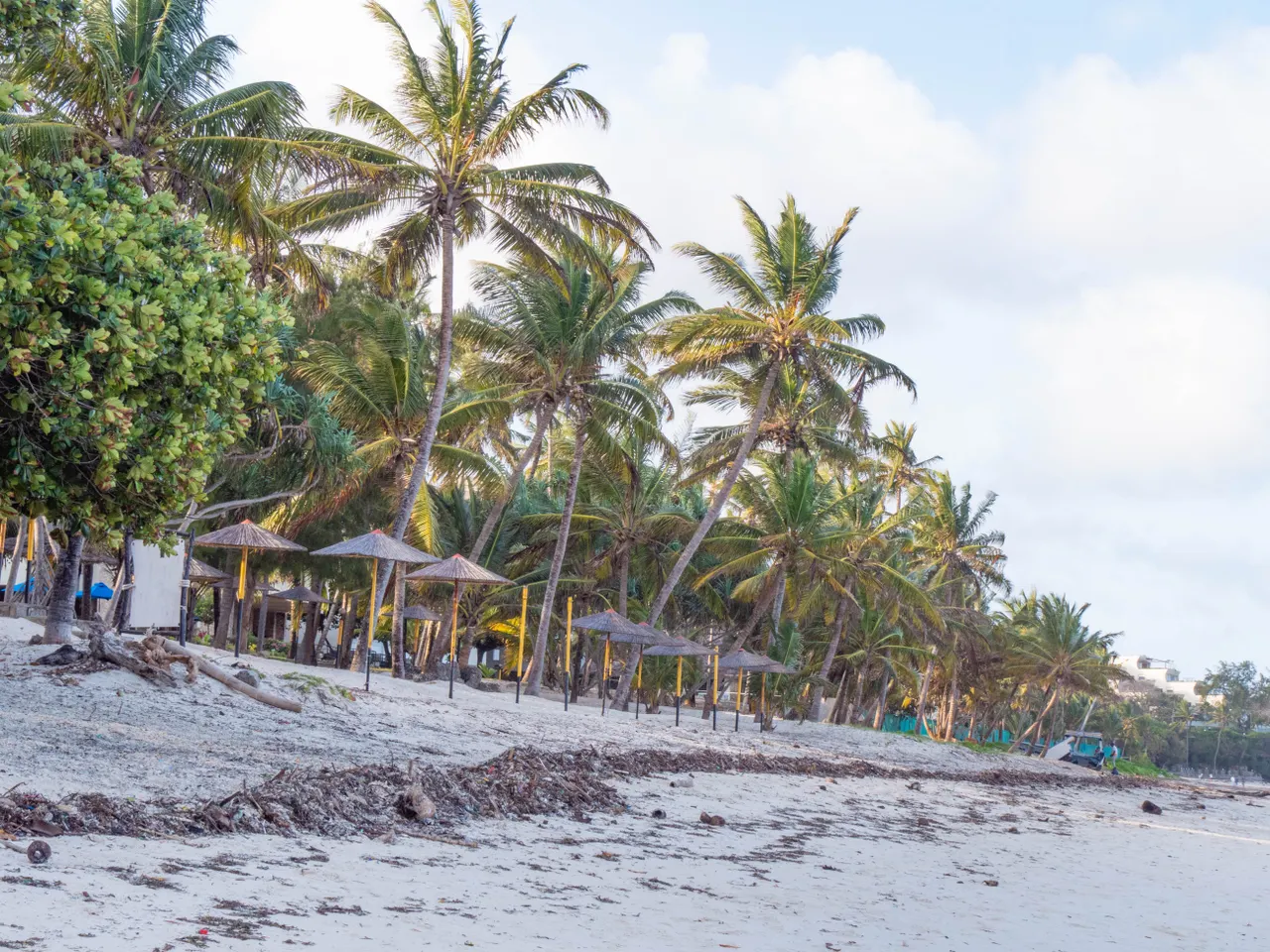
On the beaches, look for the roulottes — the food trucks. In Flic-en-Flac, Chez Françoise is the area's historic truck, serving authentic Creole dishes to take away onto the sand, and the farata stop on the road to the public beach griddles its flatbreads to order, right in front of you. At Le Morne, Emba Filao ("under the filaos") parks its truck directly on the sand, facing one of the island's most beautiful beaches. All these addresses, with their exact position and locals' tips, are in the app's food category, validated on the ground — from village snack bar to starred-chef table.
Explore the island like an Insider
Moris Insider brings together 225 hand-picked places, today's weather coast by coast and a road trip planner on the real roads. €24.90 once, for life. 30-day money-back guarantee.
Discover the app →The markets: the lunch that never lies
A Mauritian market at lunchtime is an open-air restaurant. The most authentic is Mahébourg: at the heart of the covered market, the local food court simmers with Creole flavours — you build your plate stall by stall, surrounded by regulars. In Port Louis, the central market adds its floor of herbal teas and old-time remedies, and the dholl puri sellers clear whole stacks before noon. Our guide to the island's markets covers each one's days and atmosphere.
The golden rule, here as everywhere: follow the queue. The stall where Mauritians are waiting is the one where dishes are cooked to order and nothing sits around. It is both the island's best restaurant guide and its best food-safety guarantee.
And to drink? Alouda, of course: this iced milk flavoured with basil seeds and agar-agar is a market drink — Port Louis has turned it into an institution. Elsewhere on the island, coconut water is sold machete-in-hand by the roadside, and local coffee is drunk standing at the counter of a village "Chinese shop". Three sips of Mauritius that appear on no hotel menu.
Eating with a view: the altitude tables
Between the food truck and the grand table, Mauritius hides a third register: the perched tables. The most spectacular is Le Chamarel: suspended at 260 metres in the mountains of the south-west, the restaurant overlooks one of the island's finest panoramas — the west-coast lagoon unrolled to the horizon. Go for a lunch that stretches on, as the light turns over the bay.
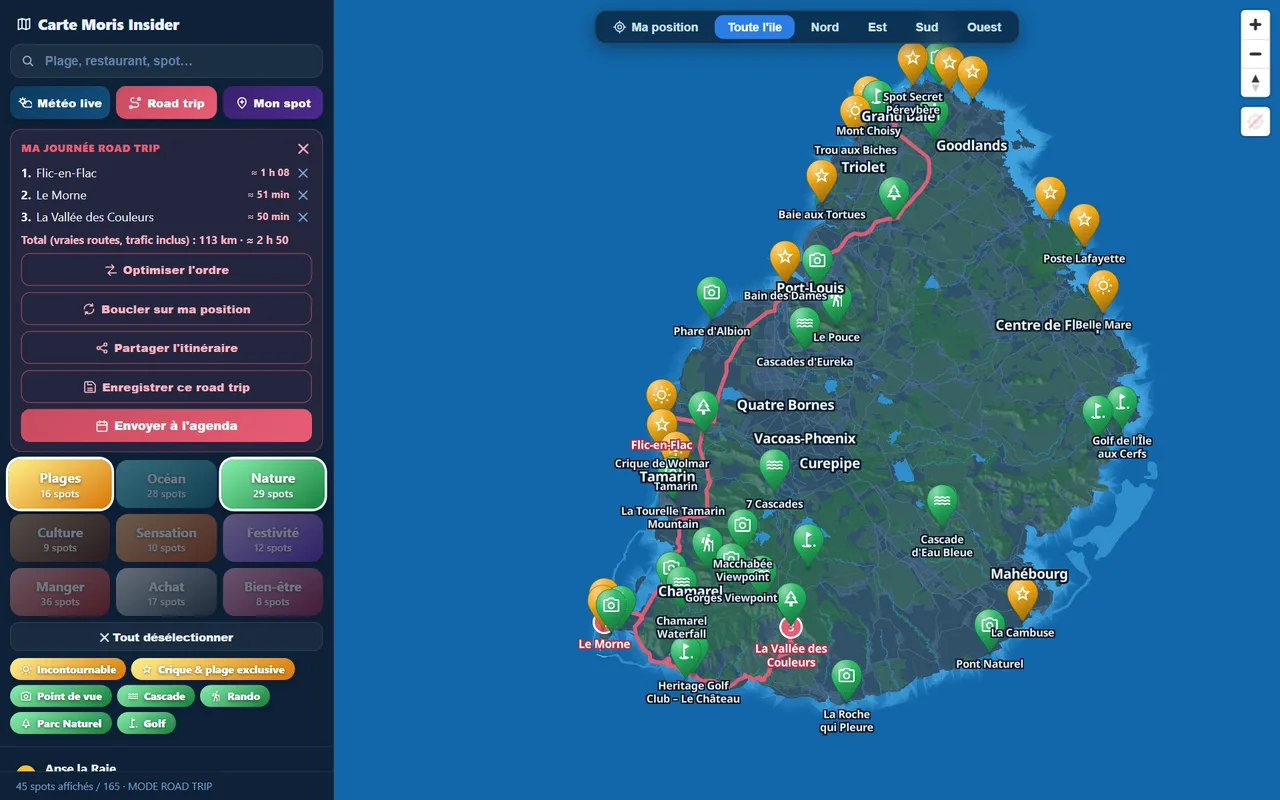
Up in the hills, the Creole tables d'hôtes serve the cooking restaurants cannot do: slow-simmered rougailles, garden vegetables, the house rhum arrangé. They are booked a day ahead, directly with the families. To see where they are — and what is around them to build your day — the explorer map places every address and plots a timed road trip on real roads, saving you from crossing the island for a lunch you could have found ten minutes away.
Our local rules for never eating badly
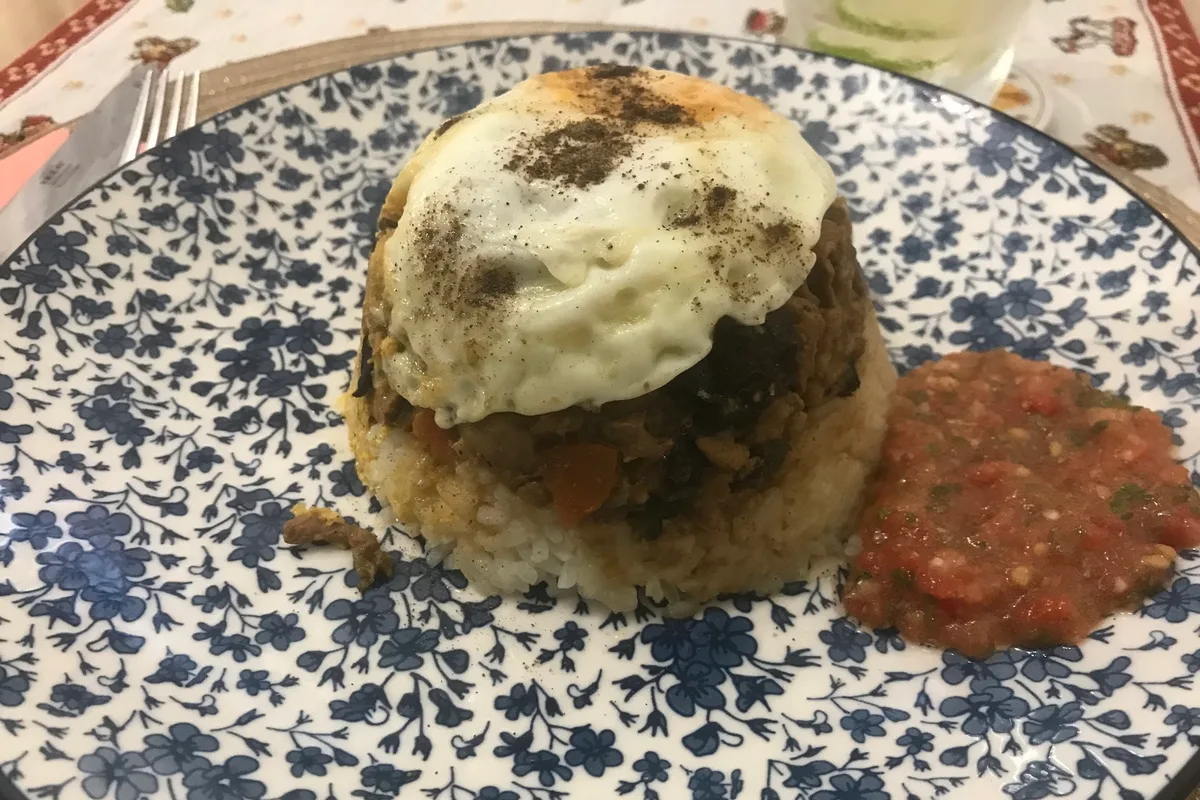
After years of criss-crossing the island, our rules fit in five lines. One: beware of laminated photo menus in tourist zones — they almost always signal assembly-line cooking. Two: eat Creole and Indian at lunch, from food trucks or markets; keep the grand tables for the evening. Three: book the small coastal dining rooms several days ahead in high season. Four: do a table d'hôte at least once in your stay — that is where real Mauritian cooking hides. Five: follow the queues, never the touts.
To organise all this without thinking about it, the app's day planner slots lunches and dinners into your day, between the morning beach and the sunset — and reminds you that in Mauritius, dinner comes early.
A final word from the locals. The best meal of your trip will probably not be the one you planned: it will be a vindaye bought from a lady with no sign, a grilled lobster on a full-moon evening, a wedding biryani shared because you happened to be there at the right moment. Note those addresses as you go: the app's travel journal keeps your tables, notes and photos — and next year, you will know exactly where to return.
The real Mauritius, in your pocket
The interactive explorer map: 225 hand-picked places, live weather coast by coast and timed road trips. €24.90 once, for life. 30-day money-back guarantee.
Discover the app →