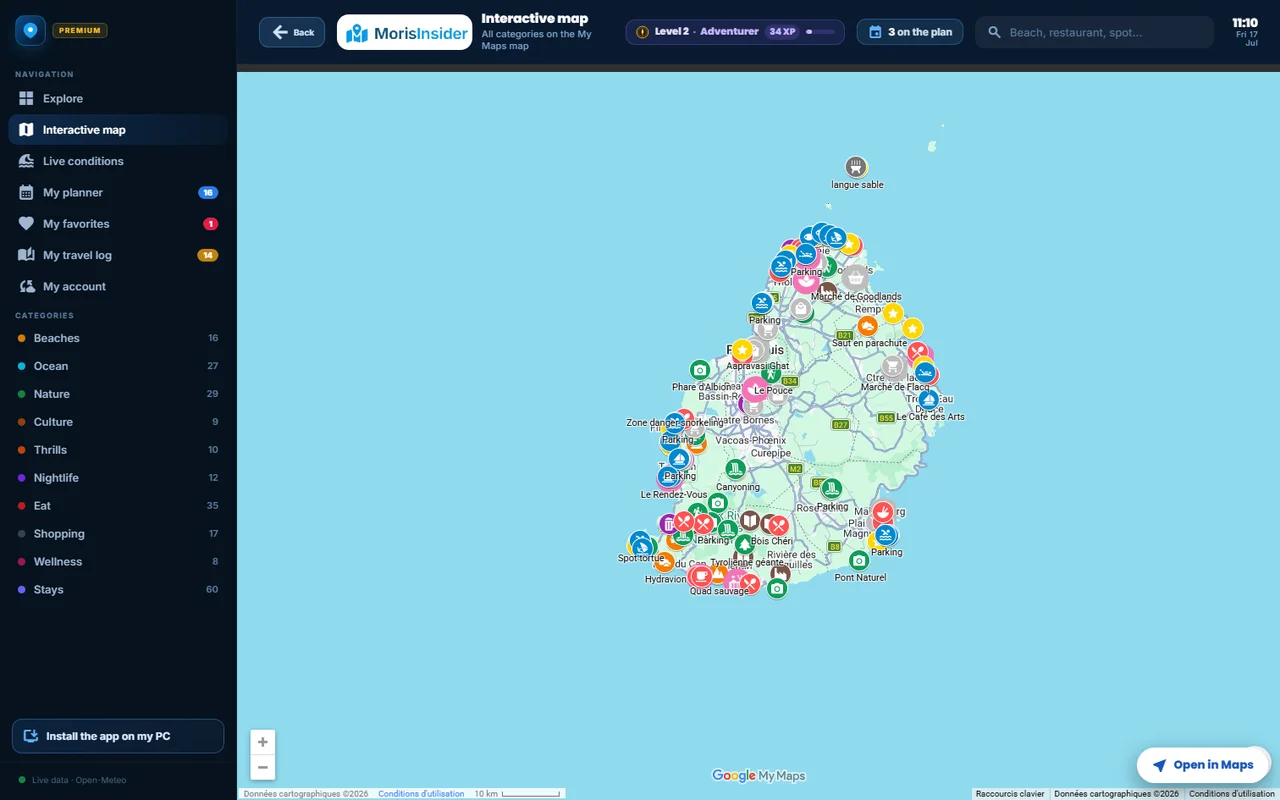
The short answer: no, swimming in Mauritius is not dangerous — as long as you stay inside the lagoon and know two or three rules. An almost continuous coral reef surrounds the island and stops the Indian Ocean swell; inside lies shallow, calm water at 23 to 29 degrees depending on the season. The real risks are not called “shark”: they are called reef pass, stonefish and coast without a lagoon — and that is exactly what this guide walks through, with every fact checked on 24 October 2026. To see where each zone is, there is the explorer map with the spots of the whole island.
Budget tip: in Mauritius, part of what you do can cost you less. See how to save money with discounts on your activities.
The lagoon: why swimming here is so easy
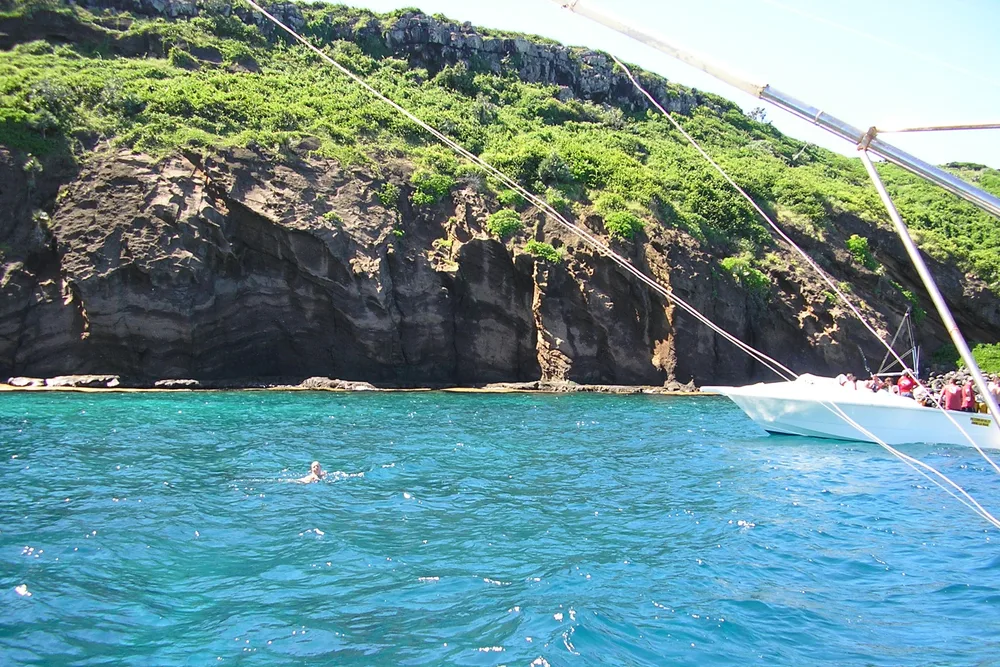
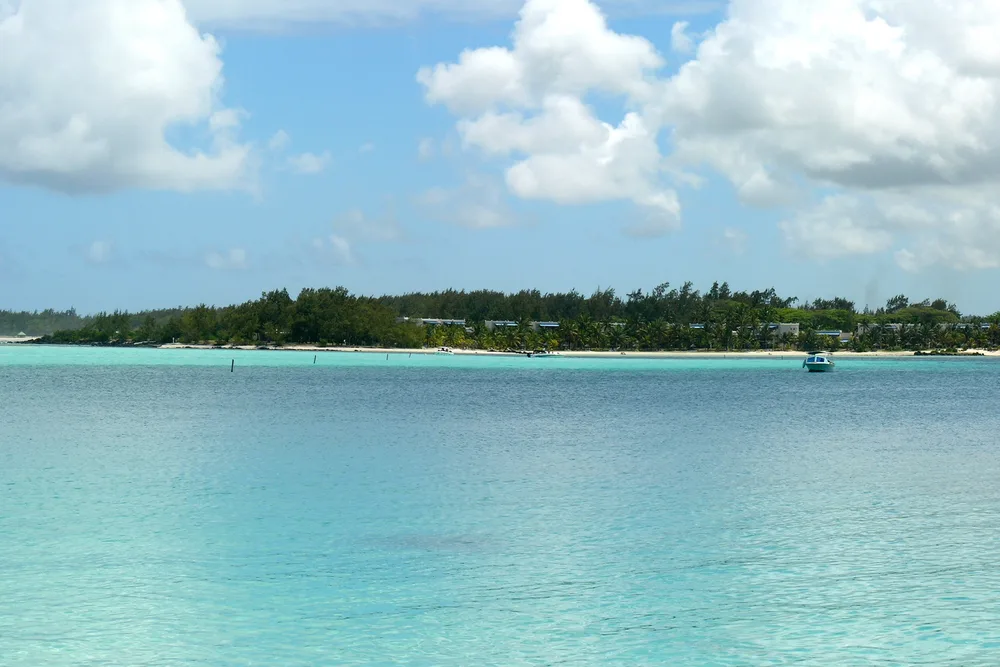
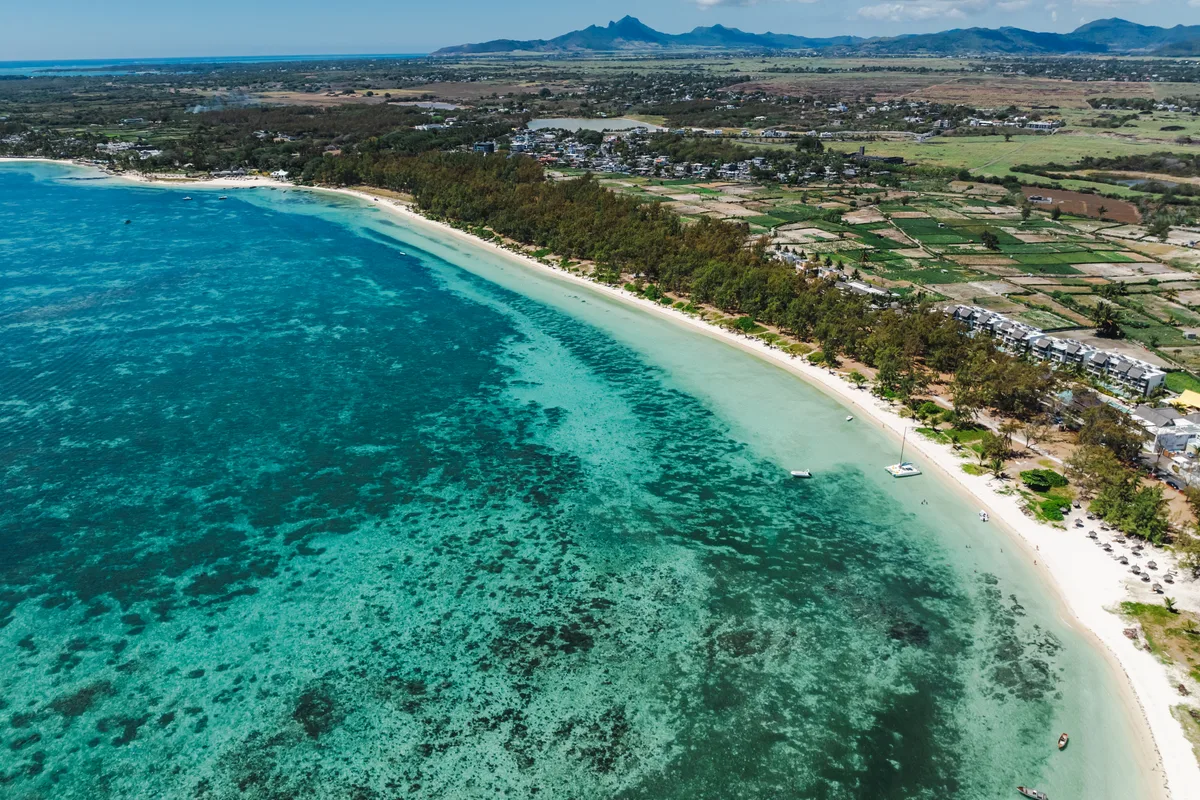
Mauritius is ringed almost entirely by a coral reef. The reef breaks the open-ocean swell before it reaches the beaches — what remains is a lagoon: shallow, clear, often hip-deep, with water between roughly 23 degrees in the austral winter and 29 degrees in summer. That is why swimming feels so effortless here: on most beaches you can still stand far from the shore, and small reef fish come right up to the sand.
And the sharks so many travellers google? In the shallow lagoon you will practically never meet one. The last documented shark incident in Mauritius dates back to the 1980s — this island is not Réunion, where the subject genuinely dictates where people swim. The rescue services tell a different story: what gets people into trouble in Mauritius is current in the wrong place, not animals.
That does not make the sea harmless. Local press had already counted 19 drownings by early August 2025, and the authorities publicly urged caution — almost always unsupervised spots, rough weather, or precisely the zones described in the next sections. The good news: those zones are known, limited and easy to avoid.
Reef passes: the one real danger
The reef has openings — the passes, through which the lagoon’s water flows back out to sea. A seaward current forms there, and it does so even on perfectly calm days: the more swell pushes water over the reef into the lagoon, the stronger the outflow through the pass. A snorkeler following a school of fish without checking where they are drifting can end up in that corridor.
A pass is usually easy to spot: the water suddenly turns deeper and darker, buoys often mark a boat channel, and the surface ripples differently from its surroundings. Keep your distance — a few dozen metres is enough. Even in a beautiful lagoon like Le Morne’s, the current clearly accelerates as you approach the pass; the kitesurfers streaking towards the reef are a good marker of where the lagoon ends.
If a current does pull you seaward: do not swim against it. Stay calm, swim parallel to the beach until the pull weakens, then curve back — and raise an arm to signal if boats or people are within reach. Most accidents come from exhaustion fighting the current, not from the current itself.
Where the lagoon is missing: the South and Tamarin
Along a few stretches of coast there is no protective reef — the open ocean hits the island directly. The best known: Gris-Gris and Souillac on the south coast, where waves explode against the cliffs, and Riambel beach. These places are among the most beautiful on the island — to look at. You do not swim there: powerful waves, unpredictable currents, no reef to soften anything. The warning signs on site are not decoration.
Tamarin, on the west coast, is another special case: the bay is not protected by coral and real swell rolls in — which is why it is the island’s surf spot. For a swimmer, that same water means treacherous currents, even in apparently calm weather. Locals drive a few minutes north to Flic en Flac for their swim.
The rule is simple and covers almost everything: where there is a lagoon, swimming is easy; where there is none, you watch. When in doubt, glance out to sea — if you can see a white line of foam (the reef), a rampart stands between you and the ocean. If you cannot, the ocean breaks straight onto the beach.
Stonefish and sea urchins: look, don’t touch
The most dangerous animal in Mauritian waters is not a shark but a master of camouflage: the stonefish, “laf labou” in Creole. It lies motionless among rocks, coral and sand, almost impossible to tell from a stone. Step on it and its dorsal spines inject a venom that is excruciating and can have serious consequences without rapid care. Prevention is mundane and effective: closed water shoes, never put your foot on coral or boulders, slide your feet rather than lifting them when wading — and when snorkeling, touch nothing, ever.
If it happens anyway: get out of the water immediately, immerse the stung area in hot water — around 45 degrees, as hot as bearable without scalding, because the venom is heat-sensitive — for 30 to 90 minutes, disinfect the wound, do not apply a tourniquet, and get to a doctor or hospital as fast as possible. This is not a “wait and see” situation: a stonefish sting needs medical attention even once the pain fades.
Far more common and far less serious: sea urchins, sitting on rocky and coral bottoms. Their spines snap off in the skin and infect easily — the same shoes solve that problem too. And one more reason to touch nothing: a coral scratch infects quickly in the tropics, and every contact damages the very reef that keeps the lagoon calm.
Snorkeling safely: the right reflexes
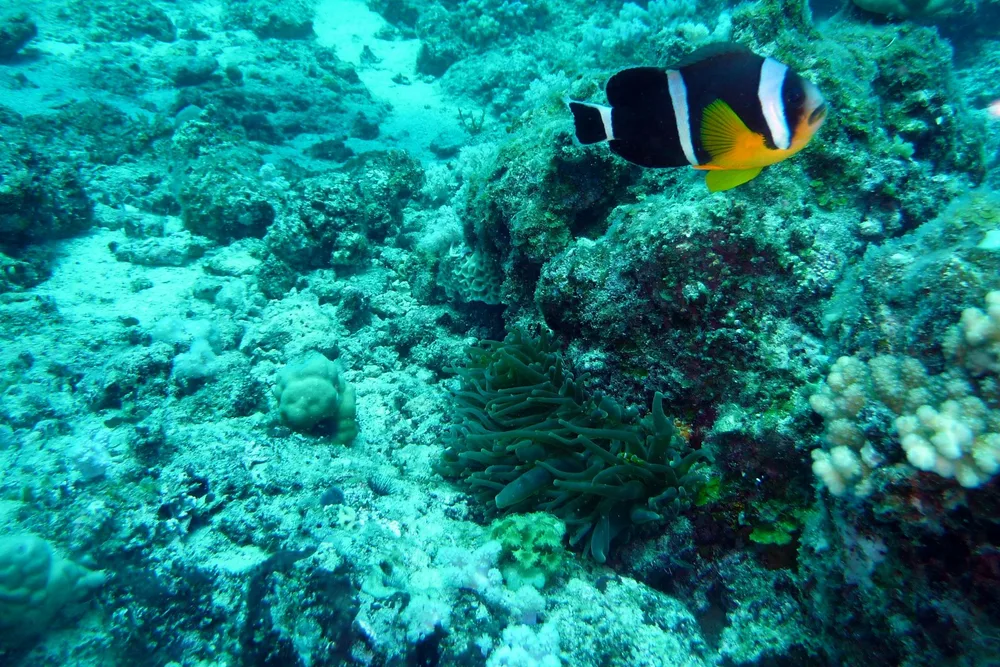
Snorkeling itself is wonderfully simple in Mauritius: from one metre of depth you will see parrotfish, butterflyfish and — with a little luck — the endemic Mauritius clownfish. The best-known spot is the Blue Bay marine park in the south-east: a shallow coral garden in a sheltered bay, marked out with buoys. Its rules apply everywhere: do not stand on coral, touch nothing, take nothing, stay clear of boat channels.
A few reflexes make the difference. Never snorkel alone — in a pair you see more and you are not on your own if something goes wrong. Lift your head regularly to check your position: the current shifts you unnoticed while you look down. Fins or closed shoes against stonefish and urchins. And in onshore wind or murky water, give the day to dry land instead — poor visibility is neither fun nor safe. In the app, the island’s 225 addresses are sorted by category — the “Ocean” category gathers the swimming and snorkeling spots with their quirks.
Where it’s calm: the coasts at a glance
The North is the island’s gentlest corner: Trou aux Biches and Mon Choisy have wide, shallow lagoons over sand — ideal with children too — and Pereybère a small, deeper bay. The west coast around Flic en Flac swims calmly almost all year, sheltered from the trade winds; only towards the south, where the lagoon ends near Tamarin, does it get rough. In the south-east, Blue Bay remains the safe bet for snorkeling.
The east coast around Belle Mare depends on the season: from May to September the south-easterly trade winds blow straight onto this shore, the lagoon turns choppy and snorkeling becomes tiring — in summer, on the other hand, the East is magnificent. The same logic works in reverse: in the austral winter, the West and the North are the reliable sides. It is worth comparing the zones on the map: the island’s coasts rarely share the same weather at the same time.

Lifeguards, flags and seasons
Do not expect European-style supervision: only some public beaches have lifeguards, mostly at busy hours — on the big swimming beaches such as Belle Mare or Flic en Flac — and many stretches are not supervised at all. All the more reason to respect the flags: red = no swimming, including when the water looks harmless. The 19 drownings counted by local press by early August 2025 happened overwhelmingly outside supervised zones or in bad weather.
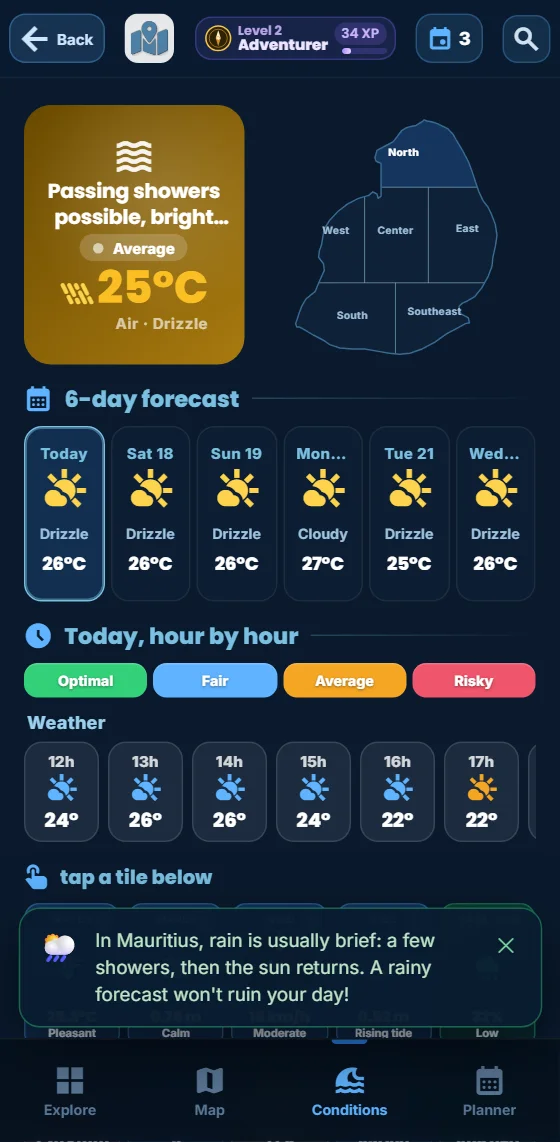
The season plays its part too: during the cyclone season, from November to April, swell episodes can cloud the lagoon and strengthen the current in the passes — on those days, the flags and the locals’ advice are in charge, not your plan for the day. The practical reflex: check the land and sea conditions, zone by zone, before hitting the road — wind, gusts and cloud often differ sharply from one coast to another — and set the beach day on the right coast in your week planner.
Which leaves the honest verdict: Mauritius is among the most relaxed swimming destinations in the tropics. The lagoon pulls almost all of the ocean’s teeth — and the few that remain have names and addresses: the passes, the reef-less South, Tamarin, the stonefish. Know them, and you will have forgotten the word “dangerous” within two days.
FAQ
Is it dangerous to swim in Mauritius?
No — inside the lagoon the water is shallow, calm and protected by the reef. The real risks are the current at the reef passes, the stonefish (wear closed shoes, touch nothing) and the stretches of coast without a reef in the south. Avoid those zones, stay alert near the passes, and swimming here is very relaxed.
Are there sharks in Mauritius?
Practically none in the shallow lagoon. The last documented shark incident in Mauritius dates back to the 1980s — nothing comparable to Réunion. Currents and the stonefish are far more real subjects.
What should you do after a stonefish sting?
Get out of the water immediately, immerse the stung area in hot water (around 45 degrees, without scalding — the venom is heat-sensitive) for 30 to 90 minutes, disinfect, do not apply a tourniquet, and see a doctor or hospital as fast as possible. Prevention is simpler: closed water shoes, never step on coral or rocks.
Are the beaches supervised?
Far from everywhere. A few public beaches have lifeguards at busy hours; many stretches are not supervised at all. Red flag = no swimming — take it seriously: local press had already counted 19 drownings by early August 2025.
Is the app paid?
Yes: €24.90 once, for life, no subscription. Everything is included — the 225 addresses, hour-by-hour weather zone by zone, routes, the week planner, the trip journal and partner discounts. 30-day money-back guarantee.