A Greek travel budget is not settled at the taverna table: it is settled on a map. Since 1 January 2026, 24 Greek islands have applied VAT cut by 30 % — 17 % instead of 24 % — and they are not the islands you would guess. This article gives you no “daily average”: those are invented. It gives you the three amounts the Greek state and the European Union publish in black and white, what they do to a 10-day trip, and the method to work out your own.
What decides your Greek budget is not the season, it is the island
Here is the most important fact in this budget, and it went almost unnoticed outside Greece: since 1 January 2026, 24 Greek islands have applied VAT cut by 30 %. Not a commercial discount, not a low-season promotion: a difference in tax, written into the tax code, applying to almost everything you will buy on the ground.
| What the rate applies to | Mainland and Cyclades | The 24 eligible islands | Cut on a displayed price |
|---|---|---|---|
| Standard rate (most purchases) | 24 % | 17 % | − 5.6 % |
| Reduced rate (dining, food) | 13 % | 9 % | − 3.5 % |
| Super-reduced rate (books, medicines) | 6 % | 4 % | − 1.9 % |
The right-hand column is the one to read, and it deserves a second of attention. “30 % less VAT” is not a 30 % cut. On a tax-inclusive displayed price, going from 24 to 17 % is worth 5.6 % less; at the restaurant rate, 3.5 %. That is modest on a coffee and perfectly visible over 10 days of spending.
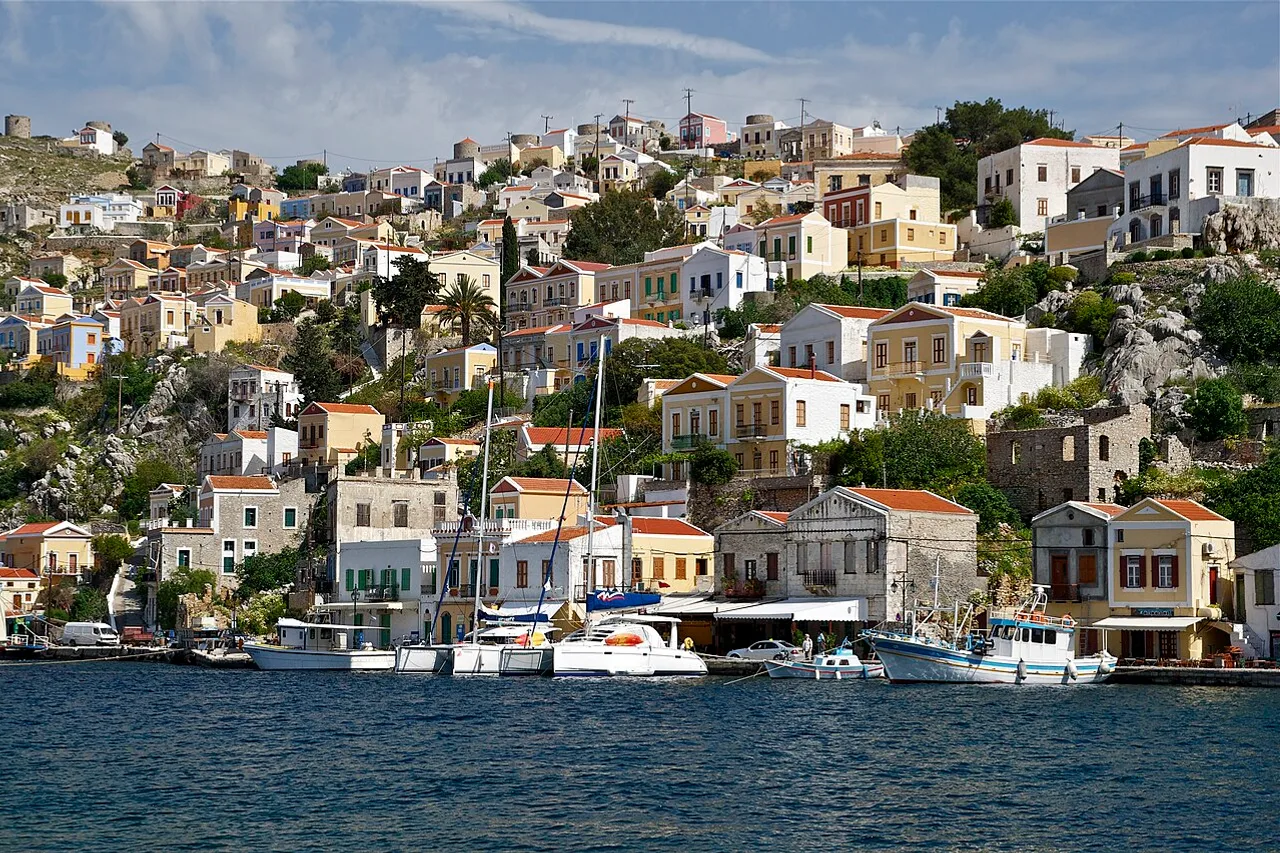
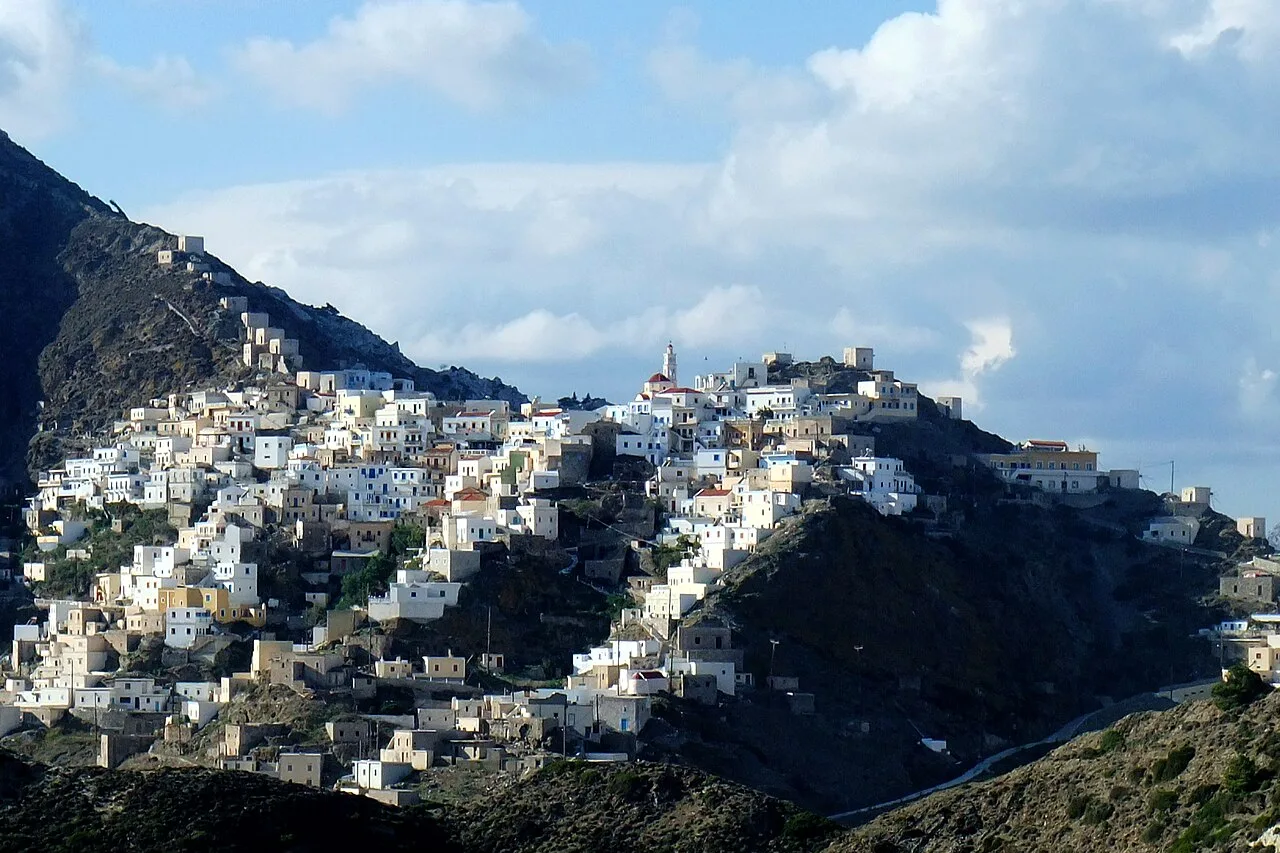
The islands concerned are those of the North Aegean, Samothrace and the Dodecanese, under 20,000 inhabitants: Agathonissi, Agios Efstratios, Astypalée, Ikaria, Kalymnos, Karpathos, Kasos, Kos, Lipsi, Léros, Lesbos, Limnos, Mégisti, Nisyros, Oinousses, Patmos, Samothrace, Samos, Symi, Tilos, Fournoi, Chalki, Chios, Psara. Lesbos, Kos, Samos and Chios already qualified; Leros has just joined on the population criterion.
📌 And here is what makes the fact useful rather than trivia: the Cyclades are not on it. Santorini, Mykonos, Paros and Naxos stay on the full rate. In other words, the most expensive islands in Greece are also the ones where tax did not fall — while the 24 listed above offer the opposite. If the island is still open to debate, it is worth framing it this way too; we covered the choice by landscape and atmosphere in our comparison of the Cyclades islands.
⚠️ Two caveats, and they matter. Tobacco and transport are excluded from the measure: your ferry ticket and your domestic flight do not get cheaper. And above all, the law lowers the tax, not the price: the shopkeeper sets the label. In practice prices are displayed inclusive of tax and competition passes most of it on, but that is something to check on a receipt — not to assume.
The line your comparison site never shows
Greece has an accommodation cost that appears in no compared price, because it does not go through the booking: the climate resilience fee, paid on the spot, per room and per night. It replaced the old tourist tax and its scale has been in force since 1 January 2025.
| Accommodation category | Per night (April – October) | For 9 nights | Per night (November – March) |
|---|---|---|---|
| Furnished rooms, 1 or 2-star hotel | €2 | €18 | €0.50 |
| 3-star hotel | €5 | €45 | €1.50 |
| 4-star hotel | €10 | €90 | €3 |
| 5-star hotel | €15 | €135 | €4 |
| Short-term rental | €8 | €72 | €2 |
| Villa or property of 80 sq m and over | €15 | €135 | €4 |
The third column is the one that counts for you, because it carries the real length of the trip. Ten days of holiday make 9 nights, not ten — the kind of detail that quietly distorts every copied budget. Over those 9 nights, the gap between furnished rooms and a five-star reaches €117, a ratio of 7.5 between the two extremes.
Two properties of this fee are worth knowing before you book. It is not per person but per room: four people in one villa split the €15 a night, whereas two separate rooms pay it twice. And it follows the category, not the island: it is the only item in this article that island VAT does not touch.
📌 It also swings hard with the season: from November to March the same categories fall to €0.50 and €4. If your trip can slide out of season, read this table alongside the crowd calendar we set out in when to visit Greece.
Ten days do not make ten days out: the real price of one more island
Now for the most underrated lever, and pulling it costs nothing: the shape of your itinerary decides the price of each of your days. Arrival and departure together eat one whole day; every island change eats another half — check out in the morning, cross, settle in during the afternoon.
| Trip shape | Crossings | Usable days out of 10 | Price of one day (base 100) |
|---|---|---|---|
| A single island | 0 | 9 | 94 |
| 2 islands | 1 | 8.5 | 100 |
| 3 islands | 2 | 8 | 106 |
| 4 islands | 3 | 7.5 | 113 |
| 5 islands | 4 | 7 | 121 |
The last column is the heart of the argument. Your fixed costs — flights, transfers, insurance — do not shrink when your usable days shrink: they are spread over fewer days. Going from two islands to five therefore makes every day 21.4 % more expensive, before you have paid for a single crossing. Between a single island and five, the gap reaches 28.6 %.
Hence the method we offer instead of an invented daily average: take your fixed costs, divide them by the usable days in the table, and you have the real price of one day of your trip. It is a figure of your own, computed on your actual tickets, and it beats any average found online.
⚠️ The trade-off is real and should be named: staying longer in one place is only worth it if you can explore inland. On a large island — Karpathos, Ikaria, Lesbos, Chios — the villages worth the detour sit in the interior and buses are scarce. A hire car picked up locally, for two or three days only is what turns a base island into a region to visit, and it costs less than the crossings it replaces. On how the connections themselves work, everything is in our guide to Greek ferries.
Arrival: where tiredness costs the most
It is the first expense of the trip, it is decided in ten seconds in an arrivals hall, and it is officially priced. Metro line 3 links Athens airport to Syntagma in about 40 minutes for €9, or €16 return.
Full guide: Athens Airport to Piraeus: Metro, Bus, Taxi or Transfer?
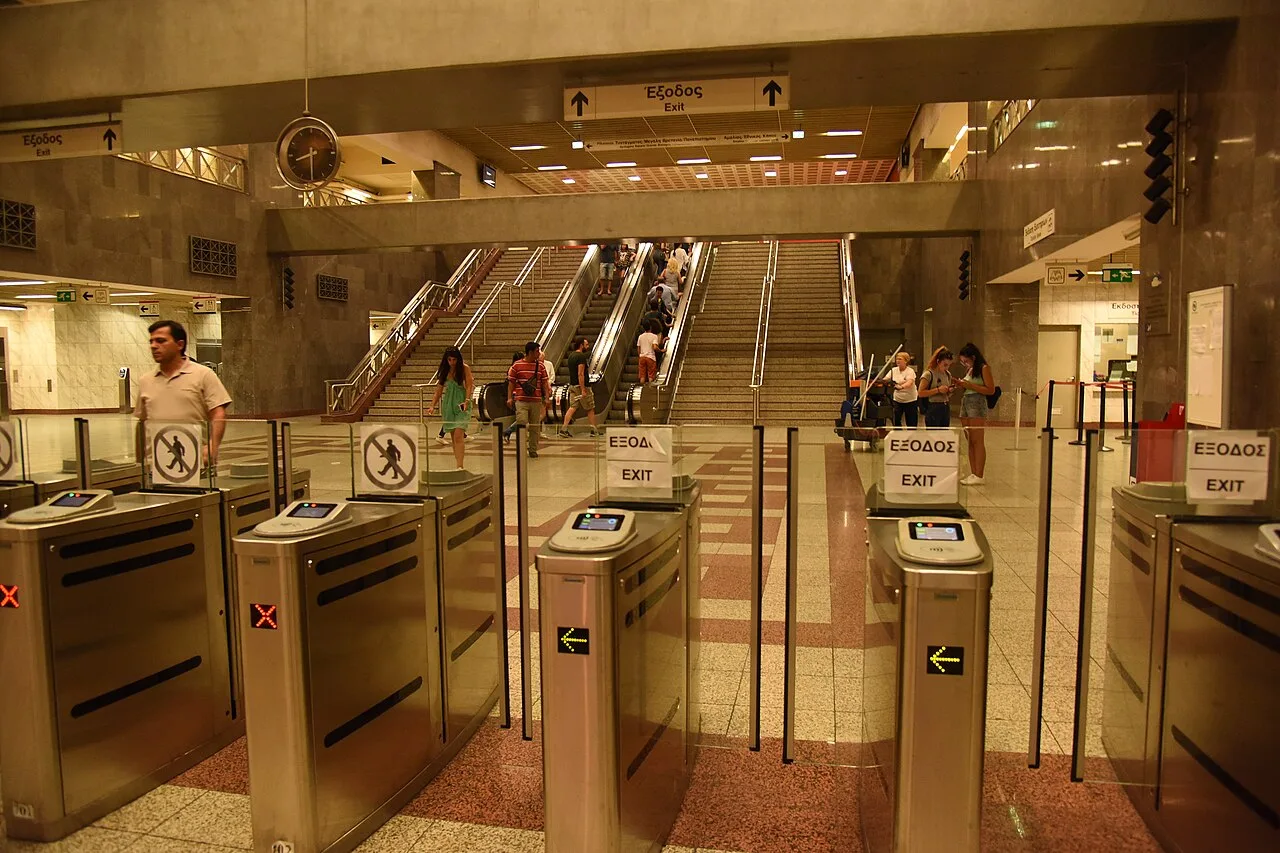
One fare trap deserves flagging, because it catches many travellers: the airport is in a separate fare zone. The ordinary city ticket, valid downtown, is not accepted on that stretch. For one or two people the metro remains almost always the cheapest option, by a wide margin.
The maths flips with numbers. For 4 travellers, the one-way trip costs €36, because the ticket is per person while a vehicle is a flat fare. That is the threshold at which a fixed-price transfer booked in advance becomes comparable — and clearly wins with luggage, small children or a flight landing after the last metro. Do the arithmetic for your own case: it takes thirty seconds and it settles the question.
The only three-figure item in this budget is a refund
Everything above saves tens of euros. This paragraph saves hundreds, and it is not an expense at all: a flight arriving 3 hours late entitles you to flat-rate compensation, owed by the airline whatever you paid for the ticket.
| Flight distance | Amount due | From our markets |
|---|---|---|
| Up to 1,500 km | €250 | Rome – Athens (about 1,050 km) |
| 1,500 to 3,500 km, and any intra-EU flight over 1,500 km | €400 | Paris, Berlin, Madrid – Athens |
| Over 3,500 km outside the EU | €600 | Does not apply to Greece |
Set that amount against the rest of the article and the order of magnitude is obvious. The €400 of a delayed flight is worth 8.9 times the stay levy for 9 nights in a three-star, and 11.1 times the arrival journey of a family of 4. It is the only line in this budget where an hour of paperwork pays more than a week of thrift.

⚠️ And how you go about it matters as much as the right itself. Start by claiming yourself, directly from the airline: it is free and it returns the whole sum. Only if you are refused, ignored or contested does a service specialising in flight compensation become worthwhile: it takes a commission on what it recovers, and is paid only if it recovers something. Claim deadlines depend on the national law under which the claim is brought, and they run in years: a flight from this summer can still be claimed.
📌 The European reform, often badly summarised, changes nothing for a 2,026 trip. The agreement of 13 July 2,026 keeps the amounts and the 3-hour threshold; it adds automatic notification within 4 days, a standard form, payment within 30 days, cabin baggage included in the advertised fare and rerouting within 3 hours. But those rules only take effect in mid-2,027: until then, nothing triggers itself.
Why you will find no “average budget” in this article
The omission is deliberate, and it deserves to be argued rather than endured. A daily average for Greece is not a measurement: it is an average of choices that are not yours, taken across islands, seasons and accommodation categories the author never specifies.
Everything this article quantifies has a public source: a VAT scale, a decree on the resilience fee, a metro fare, a European regulation. All the rest — hotel, restaurant, ferry, flight, car — depends on a market that moves every week, and we will not invent prices to give the illusion of a complete guide.
What we can do is hand you the frame: the official items above, plus your fixed costs divided by your usable days. You will get a budget that describes your trip, not somebody else’s.
The calculation to make before you book, in three lines
Let us sum up what is decided before departure, while everything is still free to change:
One. Check whether your island is among the 24 with reduced VAT. If the choice is open, 5.6 % off almost everything you buy over 10 days is not trivial — and those islands are, by construction, quieter than the Cyclades.
Two. Add the resilience fee to your accommodation comparison, category by category, multiplied by 9 nights. It is the one line no comparison site will show you, and it opens a €117 gap.
Three. Count your crossings before you count your euros. Every extra island makes all your days dearer, and five islands in ten days cost 21.4 % more per day than a two-stop trip — to see less.
📌 And keep the last line in mind on the way home: if your flight ran 3 hours late, the refund you are owed exceeds several items of this budget on its own. It is the only line in this article that pays you instead of costing you.
Top-rated activities in Greece, bookable online: