In Bangkok, the right test is how far you walk to a station. In Tokyo that test sorts nothing at all: everyone is near a station. The sorting happens elsewhere, on two things neighbourhood round-ups almost never lead with — whether you are on the Yamanote loop, and which airport you land at, which on its own swings your first journey from ¥300 to ¥3,250. Here are the eight neighbourhoods, their line, their catch, and two practical points the rest of the trip hangs on.
The real test: the loop, not the district
Tokyo has no centre. It has a loop — the Yamanote line — with a score of cities hooked onto it, any one of which would be a metropolis somewhere else. That geometry is what makes the usual question, “which district?”, close to useless, and replaces it with a far sharper one: is your address on the loop, or do you need a change to reach it?
On a map the difference looks like nothing. You feel it on the tenth journey. On the loop you walk out, board whatever train arrives, and get off at the name you were aiming for; off the loop, every outing begins with picking a line, checking a direction, and usually changing once. Over ten days, at three trips a day, that is thirty extra small decisions — and it is exactly the energy you no longer have by evening.
| Neighbourhood | Line | Who it suits | The catch |
|---|---|---|---|
| Shinjuku | Yamanote · N’EX direct | First trip, everything starts here | The station is a maze: over 200 exits |
| Shibuya | Yamanote | Nightlife, walking after dark | Expensive, dense, a permanent building site |
| Tokyo · Marunouchi (central station) | Yamanote · Shinkansen | Shinkansen departures, comfort | The priciest, and deserted after dark |
| Ueno | Yamanote · Skyliner | Landing at Narita, museums | Little charm once the museums close |
| Asakusa | ⚠️ hors boucle | Old Tokyo, tight budget | Off the Yamanote loop, and far from Haneda |
| Ikebukuro | Yamanote | Saving without leaving the loop | No landmark within walking distance |
| Shinagawa | Yamanote · Keikyu (Haneda) | Landing at Haneda, heading south | Office district, no evening life |
| Akihabara · Kanda | Yamanote · Tsukuba Express | The city’s geometric centre | A very particular mood — you take it or leave it |
The second test appears on no comparison table, and it weighs even more: the airport you land at. We come to it below, because it moves the needle far more than a district’s atmosphere ever will.
Shinjuku: the best address, and the worst station
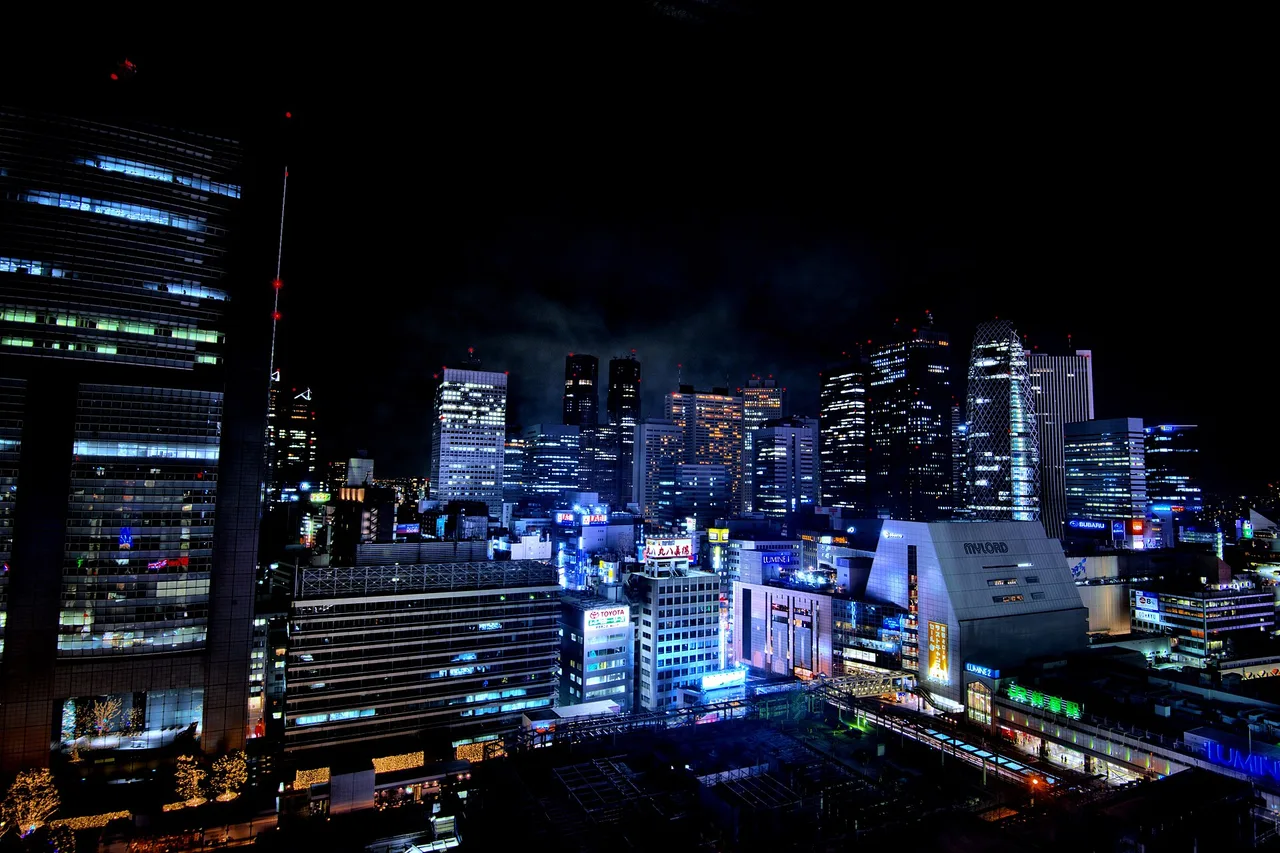
Shinjuku is the default answer, and it is a good one. The district brings together the Yamanote loop, a dozen other lines, the Narita Express terminus, night buses to the rest of the country, and hotels across every bracket — from ¥3,500 capsules to ¥30,000-a-night towers. You can eat late, walk in the evening, and still find a pharmacy open at eleven.
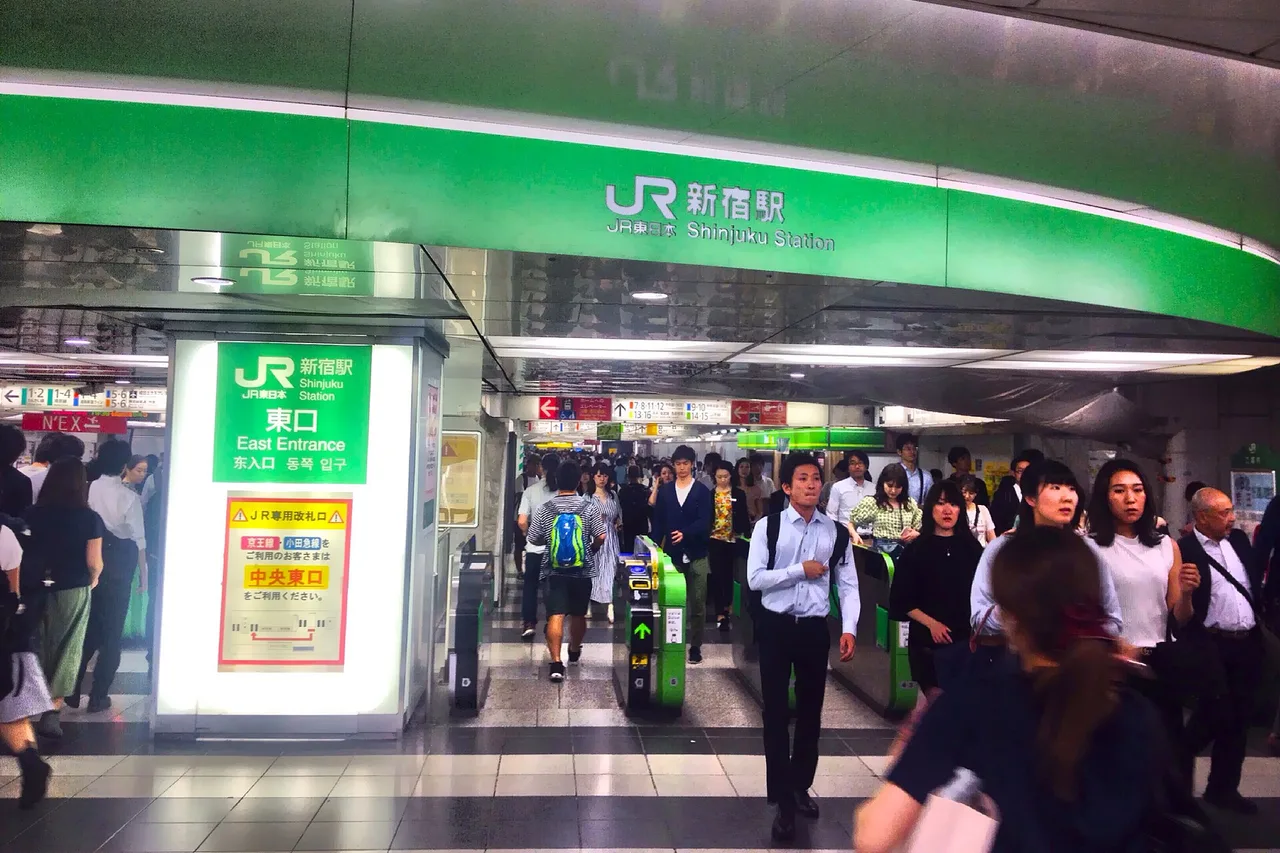
The catch comes down to one number. Shinjuku station holds the Guinness-ratified world record for the busiest station: an average of 2,704,703 passengers a day in 2022. It has more than 200 exits and 36 platforms. This is not a station, it is an underground city, and the first time you look for “the exit” you will lose twenty honest minutes.
The fix is simple and nobody gives it: never remember “Shinjuku”, remember your exit — South, East, West, New South, or its alphanumeric code. A hotel described as “5 minutes from the station” is five minutes from one exit; via the wrong one it is twenty. Ask for the code when you book, write it down, and the problem is gone for the whole trip.
Shibuya and Marunouchi: the centre, its price, and what happens after dark
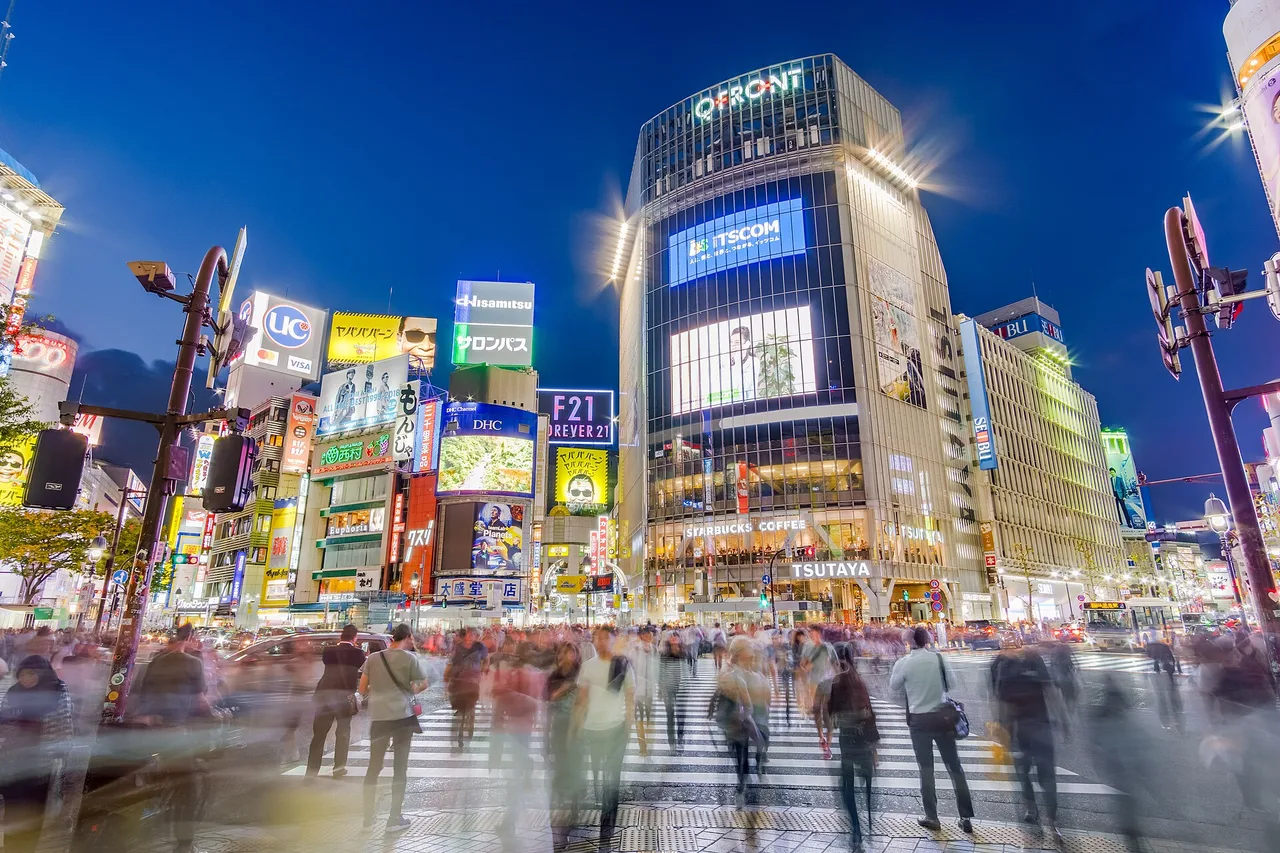
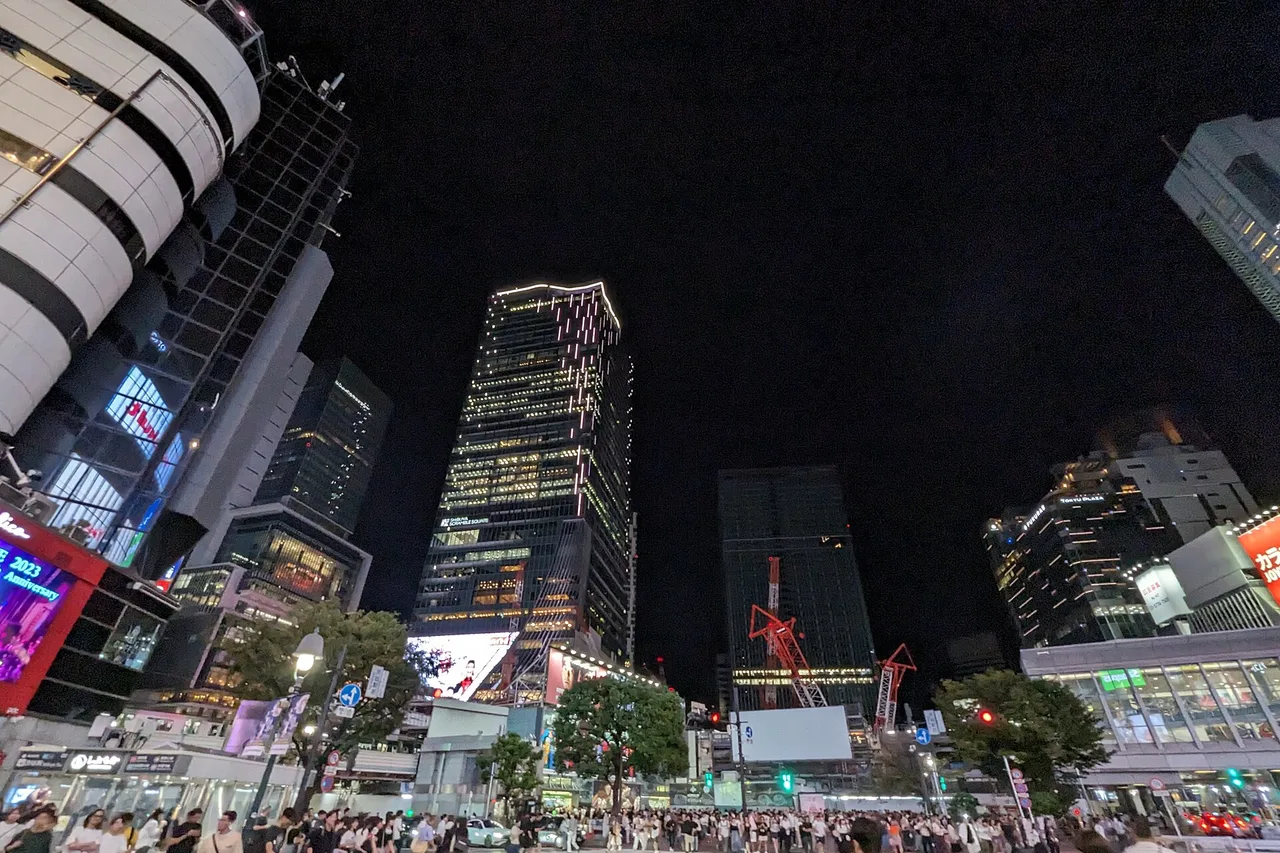
Shibuya is the district everyone has seen a picture of before arriving. The crossing lives up to its reputation, the nightlife is genuine, and the Yamanote loop stops there. It is also one of the most expensive parts of the city, one of the densest, and a near-permanent building site for the past decade: the area around the station changes from season to season, and temporary walkways are not always easy to follow with a suitcase.
Tokyo · Marunouchi, around the central station, answers one precise need: catching a Shinkansen without crossing the city at dawn. If your route continues to Kyoto or Hiroshima — the full trade-off is in our two-week itinerary — sleeping there saves an hour of stress on departure day. In exchange it is the priciest district on this list alongside Ginza, and it empties after dark: the offices close, and you find yourself hunting for an open restaurant in very clean, very empty streets.
Between the two, Ikebukuro is the compromise few guides recommend and that works: on the loop, very well served, clearly cheaper than Shibuya or Shinjuku, with real restaurant streets. Its drawback is honest — there is no landmark within walking distance. You sleep there and you leave, which on an active trip is precisely the point.
Ueno and Asakusa: 20 to 30 % cheaper, and one decisive difference
This is the pair everyone lumps together, wrongly. Ueno and Asakusa both cost 20 to 30 % less than Shinjuku for equivalent comfort, and both show you a working-class Tokyo you will not find in the west of the city. But only one of them is on the loop.
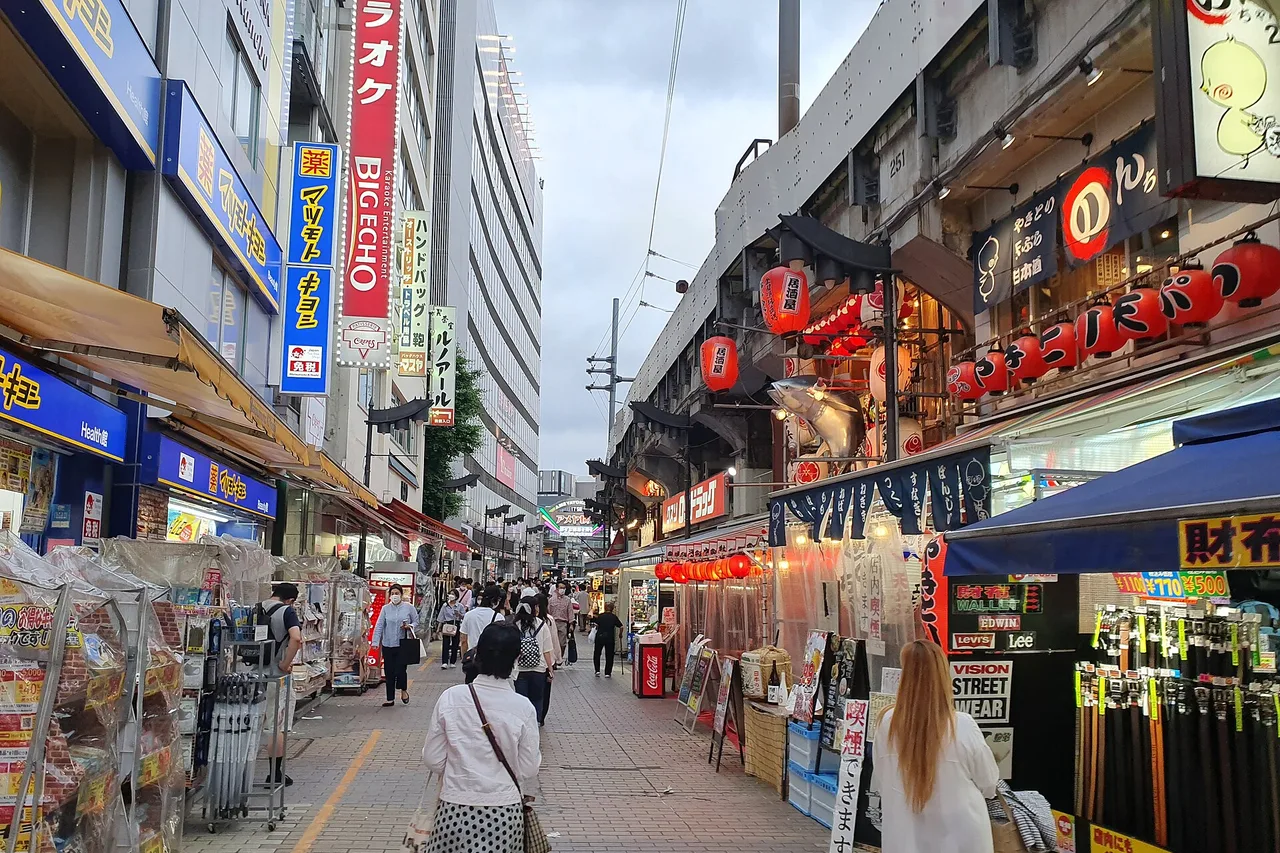
Ueno is on the Yamanote — and, better still, it is a Skyliner stop from Narita. Add the park, its museums, the zoo, and the Ameyoko market street where you pass as many residents as visitors: it is probably the best value in the city for anyone landing at Narita. Its drawback is real but mild: once the museums close, the district has little to offer in the evening.
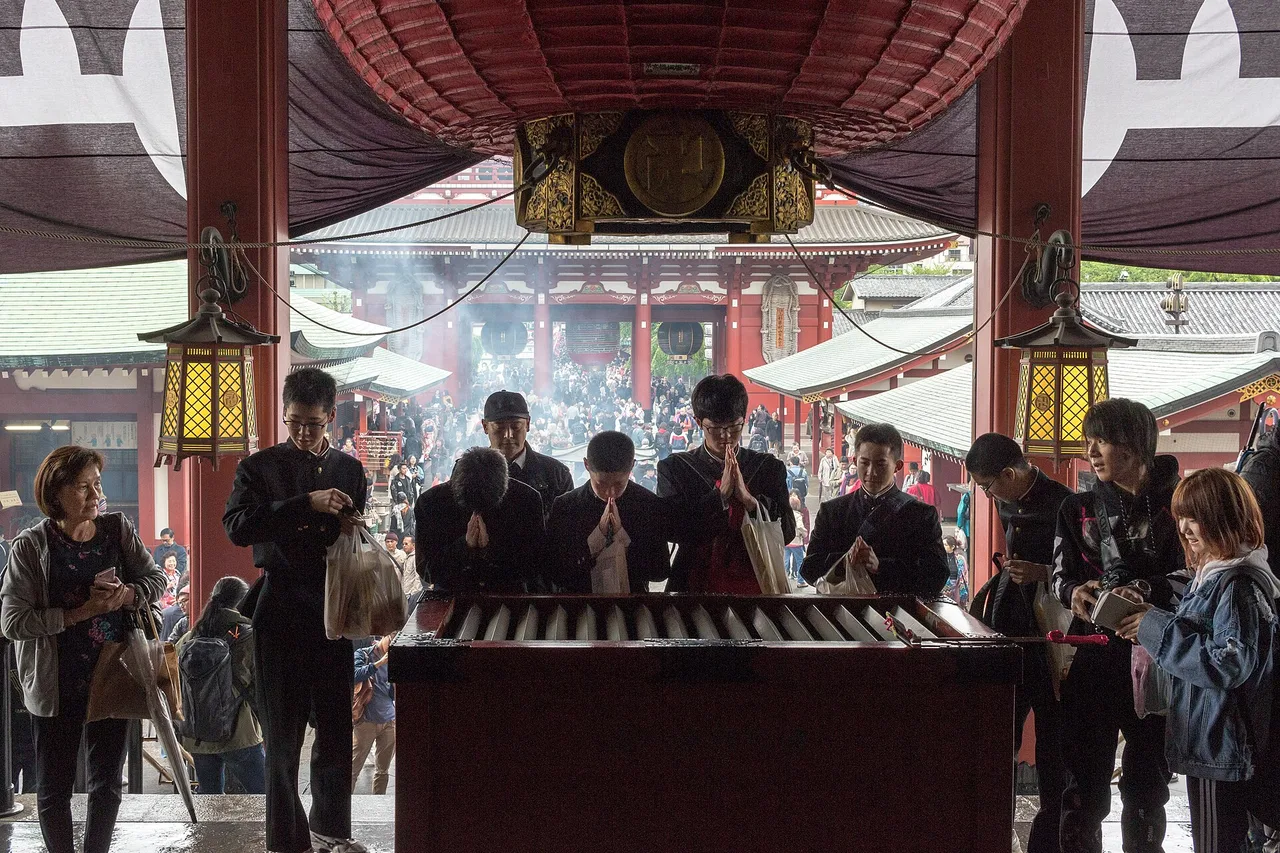
Asakusa is not on the loop. That is the hard point, and it is structural: the district is served by the Ginza subway line and the Asakusa line, which means a change for almost everything. In exchange — and the compensation is a fine one — it is the only area from which you reach Senso-ji on foot as it opens, ahead of the tour groups, which changes the experience of the place entirely. It is also, by a distance, the worst choice if you land at Haneda: you will be at the exact opposite end of the city from your airport.
The sound approach is usually this: two or three nights in Asakusa at the start, for the temples and old Tokyo, then move onto the loop. Plenty of people do it the other way round and regret it by the tenth change.
🔴 Narita or Haneda: your airport picks your neighbourhood
Here is the factor almost no round-up leads with, even though it outweighs all the others combined. Tokyo has two airports, and they do not suggest remotely the same base.
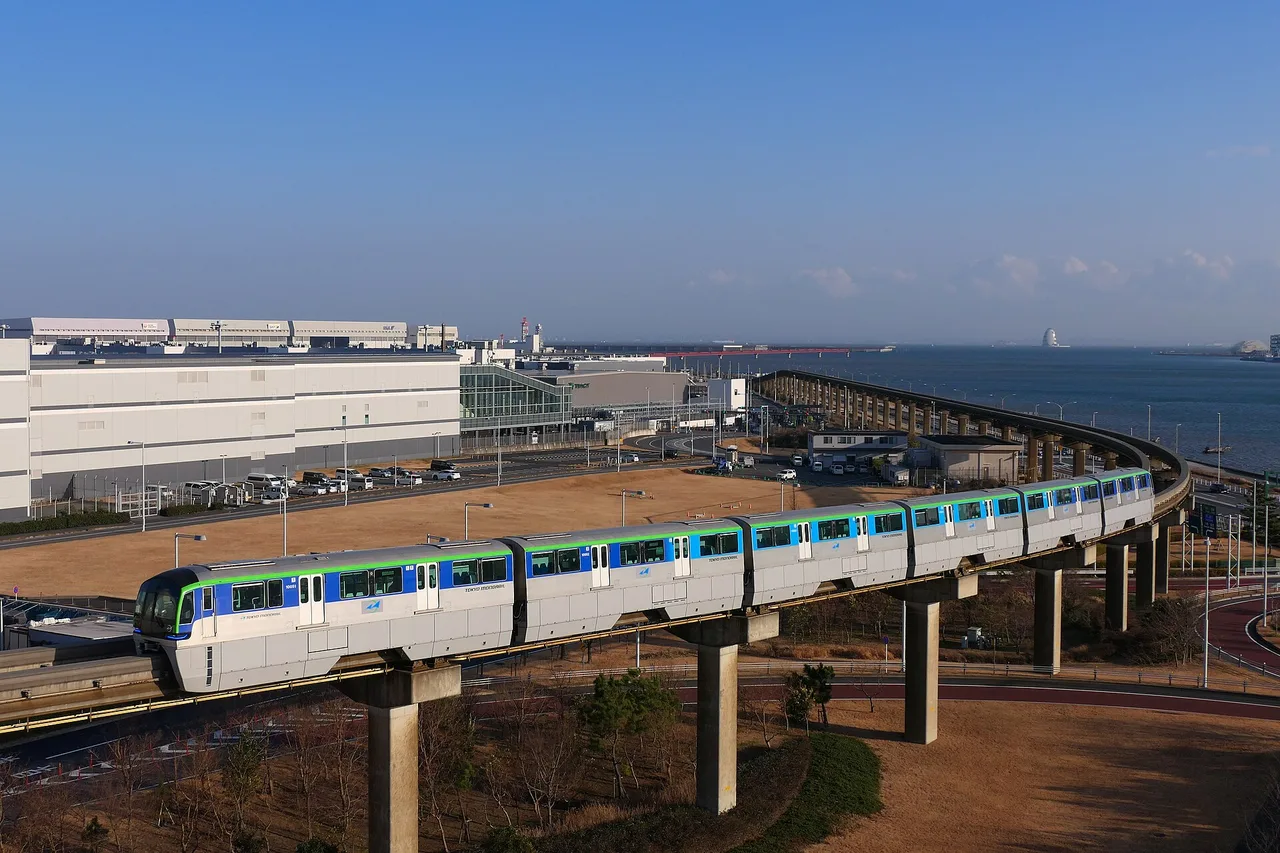
Haneda is close, and that is an advantage people underrate. The Keikyu line reaches Shinagawa for ¥300 to ¥330 — ¥327 with a contactless card — in 14 to 21 minutes depending on the service. The Tokyo Monorail reaches Hamamatsuchō for ¥520 in 13 minutes at its fastest, with a train every four to five minutes. Both land you on the Yamanote loop. In other words: from Haneda you are on the loop for the price of a coffee, in a quarter of an hour.
Narita is another scale entirely. The Skyliner reaches Nippori, one stop from Ueno, for ¥2,580 in 36 to 41 minutes; continued on the Yamanote to Shinjuku, the whole trip comes to ¥2,730 for 65 to 75 minutes. The Narita Express runs direct to Shinjuku for ¥3,250 in a reserved seat, in 75 to 90 minutes. For two people on a return trip, then, the gap between the two airports is on the order of ten thousand yen for the transfer alone.
The practical consequence fits in one sentence: if you land at Narita, Ueno and Nippori become excellent addresses; if you land at Haneda, Shinagawa and the southern loop take the lead, and Asakusa becomes the worst choice on the list. Check your airport before booking the hotel, not after — that is the order almost everyone reverses.
One last point, which only shows up once you are there. The last Narita Express leaves at around 21:40. After that you have the limousine bus when the timetable suits, and the road when it does not. A late arrival at Narita is the worst possible moment to negotiate a price: tired, without bearings, facing a line of vehicles — a transfer booked before you leave is paid at the quoted amount, and that question is settled before you have even taken off.
🔴 The thing nobody writes: mobile Suica does not exist on Android
This one does not affect which district you pick, but it shapes every journey you make, and it is wrong in almost every guide still online. Welcome Suica Mobile, launched by JR East on 6 March 2025, exists on iPhone only. As of July 2026, no Android version was available. That is not a detail: across our German, Austrian and Swiss readers, Android is the majority platform.
What it changes in practice. With an iPhone the card is set up before you leave, topped up by bank card, stays valid for 180 days, and there is nothing to buy on arrival — provided you create it from Japan, Australia, Singapore, Malaysia, Taiwan, Vietnam or South Korea, the only countries where the app allows it. With an Android you need a physical card, and therefore a counter or a machine on arrival.
Physical cards have their own rules, rarely written down. The Welcome Suica is sold at JR East Travel Service Center counters and at dedicated machines — Haneda Terminal 3, Narita, Tokyo, Shinjuku. It requires no ¥500 deposit, so the full amount goes onto the balance; in return that balance is non-refundable and the card expires after 28 days. The suspension of standard Suica sales to visitors, which began with the 2023 chip shortage, has only been partly lifted: availability varies from one sales point to another. A Tourist PASMO appeared in May 2026, sold at airports only.
The practical corollary is that an Android traveller leans much harder on their phone for everything else: reading a station map, following a connection, finding one exit among two hundred. Japan is in neither the European Union nor the European Economic Area, so your plan covers nothing there — an eSIM bought before departure activates on landing and costs less than a single day of roaming. It is the only connectivity purchase we genuinely recommend, and that is because the country makes it necessary.
The accommodation tax changed shape on 1 March 2026
Small sums, but an unwelcome surprise at the desk, and the rule has just changed. Tokyo levies an accommodation tax per person per night: nothing below ¥10,000 a night, ¥100 between ¥10,000 and ¥15,000, ¥200 from ¥15,000 up. Those amounts have not moved.
What has moved is how it is billed. Since 1 March 2026, Tokyo, Kyoto and Osaka have switched from tax-inclusive to tax-exclusive pricing. A booking made before 28 February 2026 stays tax-inclusive, even for a later stay; a booking made from 1 March 2026 has the tax billed separately, on site — including when the stay is fully prepaid. This is exactly the case where you believe everything is settled and then reach for your wallet.
A heavier change has been announced, and it must be read in the future tense: from April 2027, Tokyo would replace the flat scale with 3 % of the room rate, raising the exemption threshold to ¥13,000 per person per night and extending the tax to holiday rentals and guesthouses, exempt until now. Announced is not in force: as things stand, the flat scale applies. The detail for other cities, including Kyoto which overhauled its own in March 2026, is in our two-week budget breakdown.
Full guide: Where to Stay in Kyoto 2026: Areas and the New Tax
What the district really changes, and what it does not
Once the loop and the airport are settled, the district decides less than you would think. Sightseeing first: measured in minutes on a train, the distances are much the same everywhere, and Senso-ji is no further from Shinagawa than from Shibuya. What the district does decide is your evenings, because that is the only time you go out on foot. That is the real tiebreaker between two equivalent hotels.
It also decides where day trips start, and geography matters again there. Direct trains for Nikkō leave from Asakusa; those for Hakone leave from Shinjuku; Kamakura is reached from Tokyo and Shinagawa. Staying on the right side saves forty minutes on the morning of an excursion — and comparing packages in advance avoids surprises at the counter: day trips from Tokyo can be compared online, and between two apparently identical offers the gap is often double.
Full guide: Things to Do in Tokyo: Tickets to Book Ahead (2026)
It changes nothing, on the other hand, about two calendar constraints. The first is the season: Tokyo is very pleasant outside peak periods, and the month matters infinitely more than the address. The second is the last day, and it is the city’s most common trap. Rooms are released around ten or eleven, long-haul flights leave in the late afternoon or evening: that leaves six to eight hours to fill, and they are miserable with suitcases. The coin lockers in the big stations — Shinjuku first among them — are full by mid-morning; a luggage locker booked near your station costs about what a meal does and hands you back a whole day.
The verdict, according to your trip
First trip, arriving at Narita: Ueno or Nippori. The Skyliner drops you there in 36 to 41 minutes, you are on the loop, and you pay 20 to 30 % less than in Shinjuku.
First trip, arriving at Haneda: Shinagawa or the southern loop. Fourteen to twenty-one minutes for ¥300 to ¥330, and the Shinkansen stops there if you are heading west.
You want everything within reach, no thinking required: Shinjuku, noting your exit when you book. It is the best district in the city and the hardest station in the world — both at once.
Temples and old Tokyo first: Asakusa for two or three nights, accepting that you are off the loop, then move. Senso-ji as it opens is worth that small inconvenience.
Tight budget without giving up on transport: Ikebukuro. On the loop, well served, appreciably cheaper, and without a single landmark — which matters not at all when you leave early.
You continue to Kyoto on day three: Tokyo · Marunouchi for the final night only. Sleep elsewhere the rest of the time: the district is expensive and empties after dark. The full calculation, transport included, is in our two-week budget.