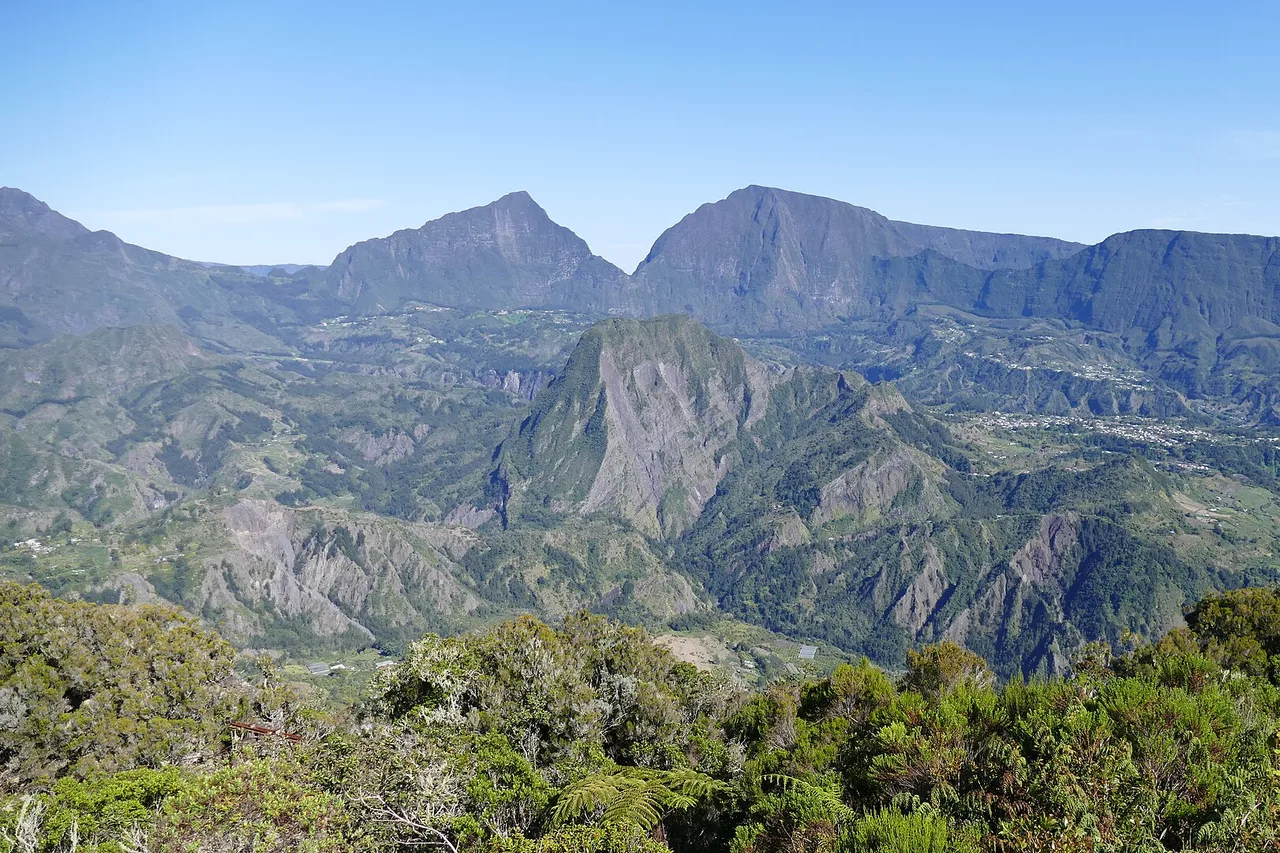
Salazie is the cirque you see first — and the one you never forget. The most accessible of Réunion’s three cirques is also the greenest: walls over a thousand metres high, cloaked in forest and streaked with waterfalls — including the island’s most famous one, the Voile de la Mariée, the “Bride’s Veil”. At the far end sits Hell-Bourg, the only overseas village listed among France’s Most Beautiful Villages. Here is our full guide to the cirque, with figures checked in September 2026.
The greenest cirque on the island
Three cirques surround the Piton des Neiges, inscribed together with the island’s peaks and ramparts on UNESCO’s World Heritage list in 2010: Mafate, where no road enters, Cilaos with its 420-bend road, and Salazie, the only one that opens wide towards the ocean. You enter along the RD48, which leaves Saint-André on the east coast and follows the Rivière du Mât valley for about 18 kilometres — allow 1 to 1.5 hours by road from Saint-Denis.
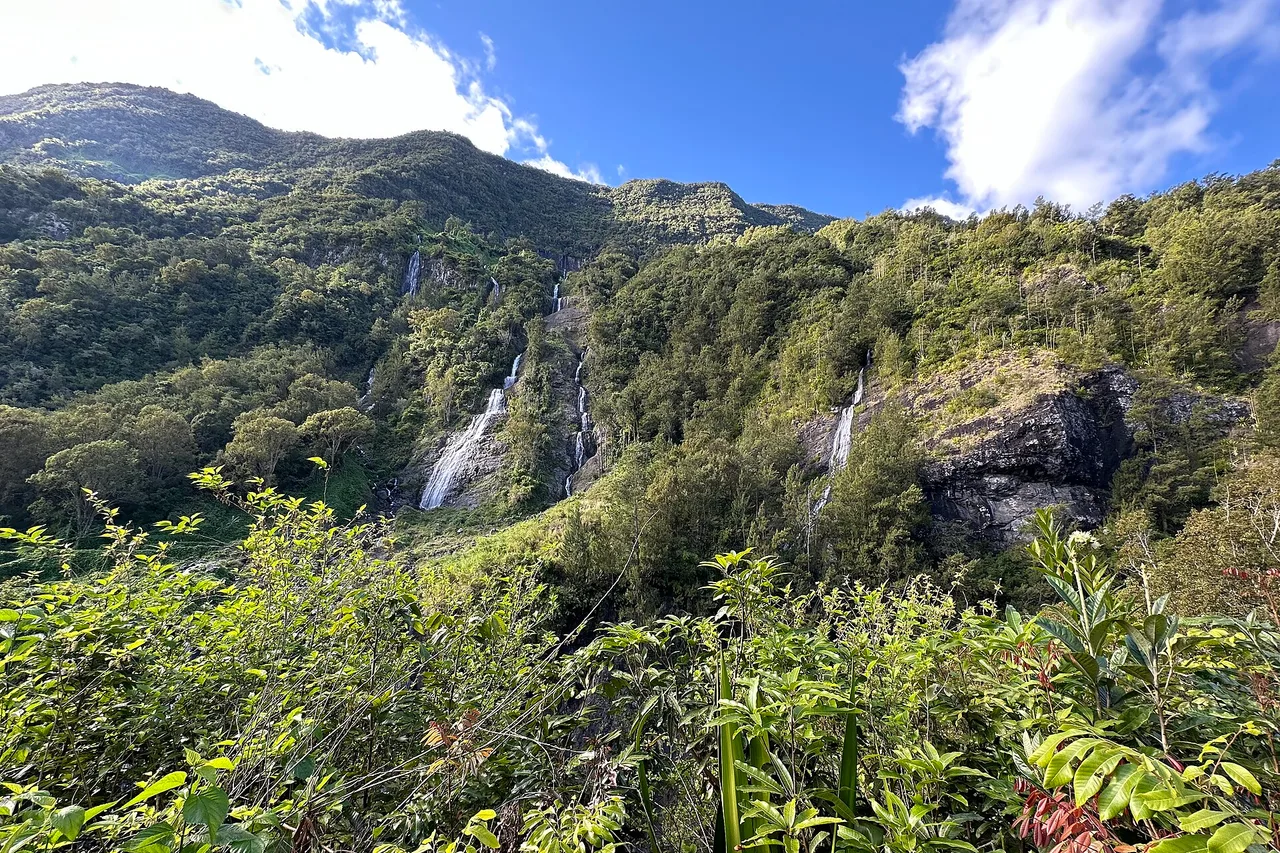
Why such outrageous greenery? Because Salazie faces east, the windward side: this is the rainiest part of the island — the east coast receives 3,000 to 5,000 mm of rain a year, while Saint-Gilles stays under 700 mm. The result is spectacular: after a rainy spell, the cirque’s ramparts streak with dozens of ephemeral waterfalls, mist clings to the ridges, and every bend of the road opens onto a wall of vegetation. That is the price of admission, and it is a gentle one — this abundance is exactly what you come to Salazie for.
The Voile de la Mariée, icon of the cirque
It is the most photographed waterfall on Réunion, and it asks nothing of you: the Voile de la Mariée is admired from a viewpoint laid out right on the RD48, just before Salazie village. A cluster of thin ribbons of water slides down the cliff and fans out like tulle — hence the name; local legend has it that a young bride threw herself here to escape a forced marriage, and that the waterfall kept her veil.
The curious can get closer to the pool along a short trail, when it is open — ask before setting out, closures are frequent after rain. And let us be clear, as always: in a cirque where flash floods rise fast, you do not linger in riverbeds, and no pool here is supervised. The show from the road carries no risk at all — and it is more than enough. Our guide to Réunion’s most beautiful waterfalls puts the Voile de la Mariée alongside its sisters, from the Trou de Fer to Langevin.
Hell-Bourg, the listed Creole village
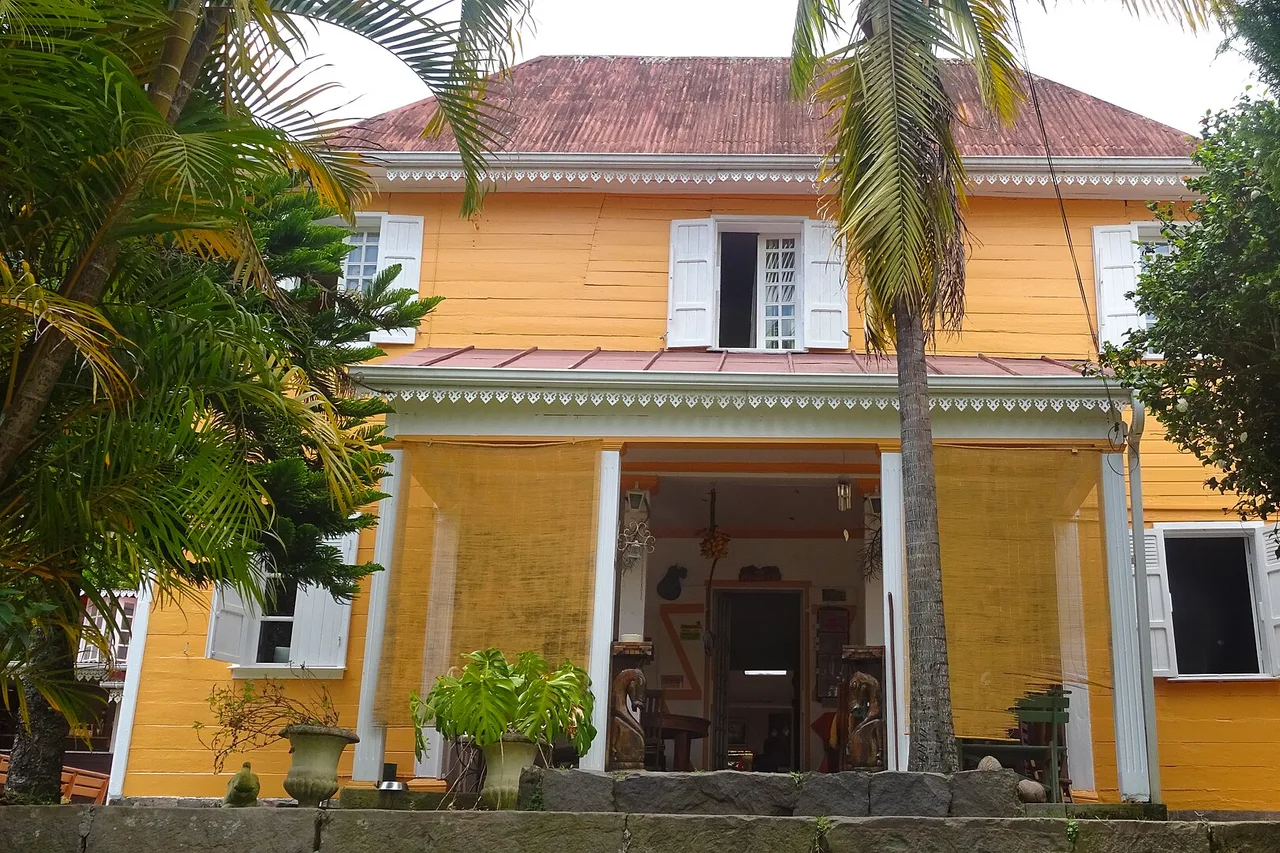
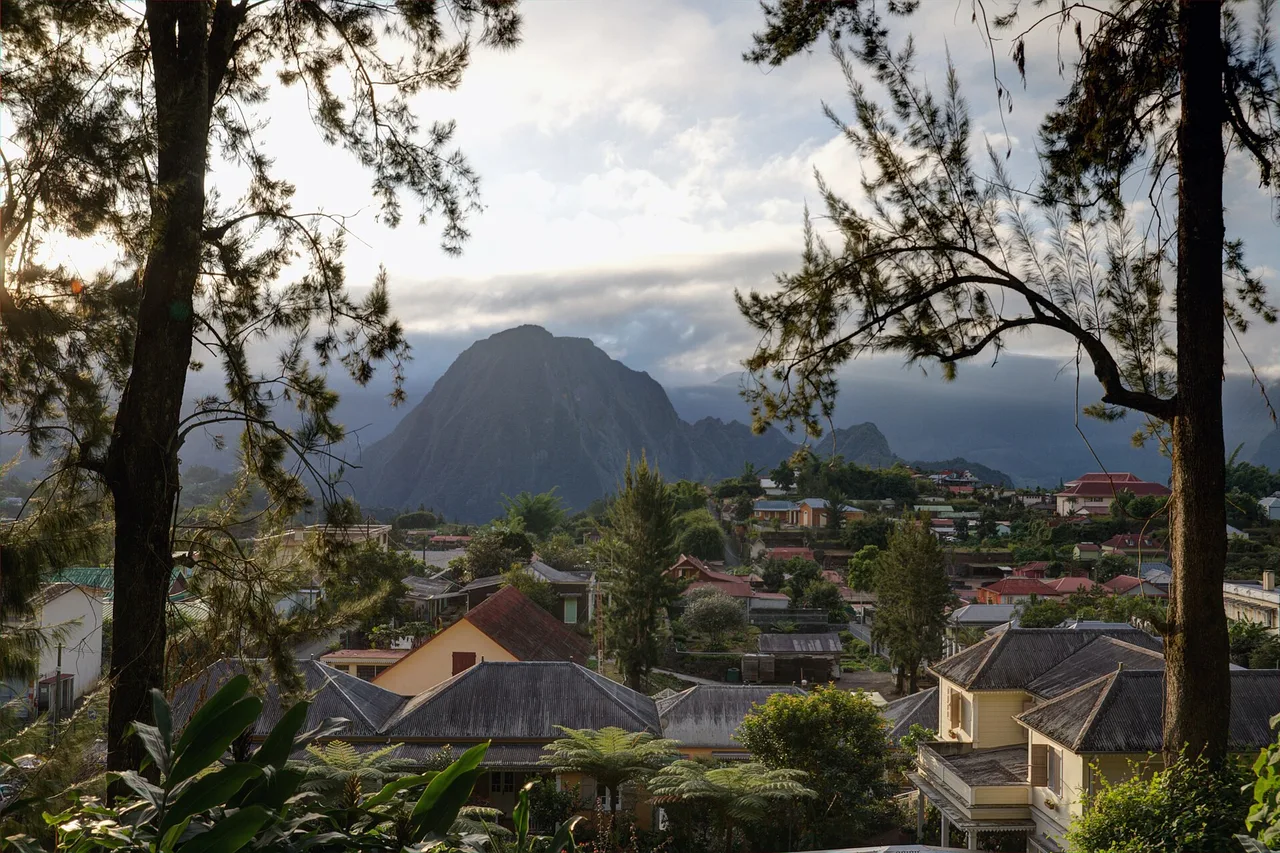
At the end of the road, at about 930 metres, Hell-Bourg lines up its Creole houses with their colourful lambrequin fretwork, gardens overflowing with hydrangeas, and lanes where time has stopped. The label is deserved: it is the only overseas village listed among Les Plus Beaux Villages de France, since 1998.
The town owes its birth to a thermal spring discovered in the 19th century: people came to Hell-Bourg to “take the waters”, until the terrible cyclone of 1948 put an end to the spa — the remains of the old baths can still be seen below the village. To understand the Creole soul of the place, push open the door of Maison Folio, a 19th-century bourgeois Creole house listed as a historic monument, open daily (9–11:30 am and 2–5 pm): the varangue veranda, the guétali pavilion, the scented garden — it is all there. Maison Morange completes the visit with its museum of Indian Ocean music and instruments. Allow one to two hours to wander the village, more if a cari keeps you at the table — Hell-Bourg’s Creole restaurants rank among the island’s best.
The Piton d’Anchaing and the memory of the maroons
In the middle of the cirque rises a flat-topped summit ringed by ramparts: the Piton d’Anchaing, 1,356 metres. Its name carries one of the island’s most powerful stories: that of Anchaing and Héva, runaway slaves — “maroons”, as they were called — who found refuge on this impregnable peak and lived there for years, free, before being hunted down by slave catchers. The memory of marronnage runs through the place names of Réunion’s highlands, and Salazie is one of its heartlands.
You can climb to the top: allow 3 to 4 hours return from Îlet à Vidot, on a steep and sometimes slippery trail — par for the course in this humid cirque. Up there, the reward is total: the whole cirque spreads out 360°, from Hell-Bourg to the Bélouve ramparts. Start early: clouds often swallow the ridges by late morning.
The chouchou, king of the cirque
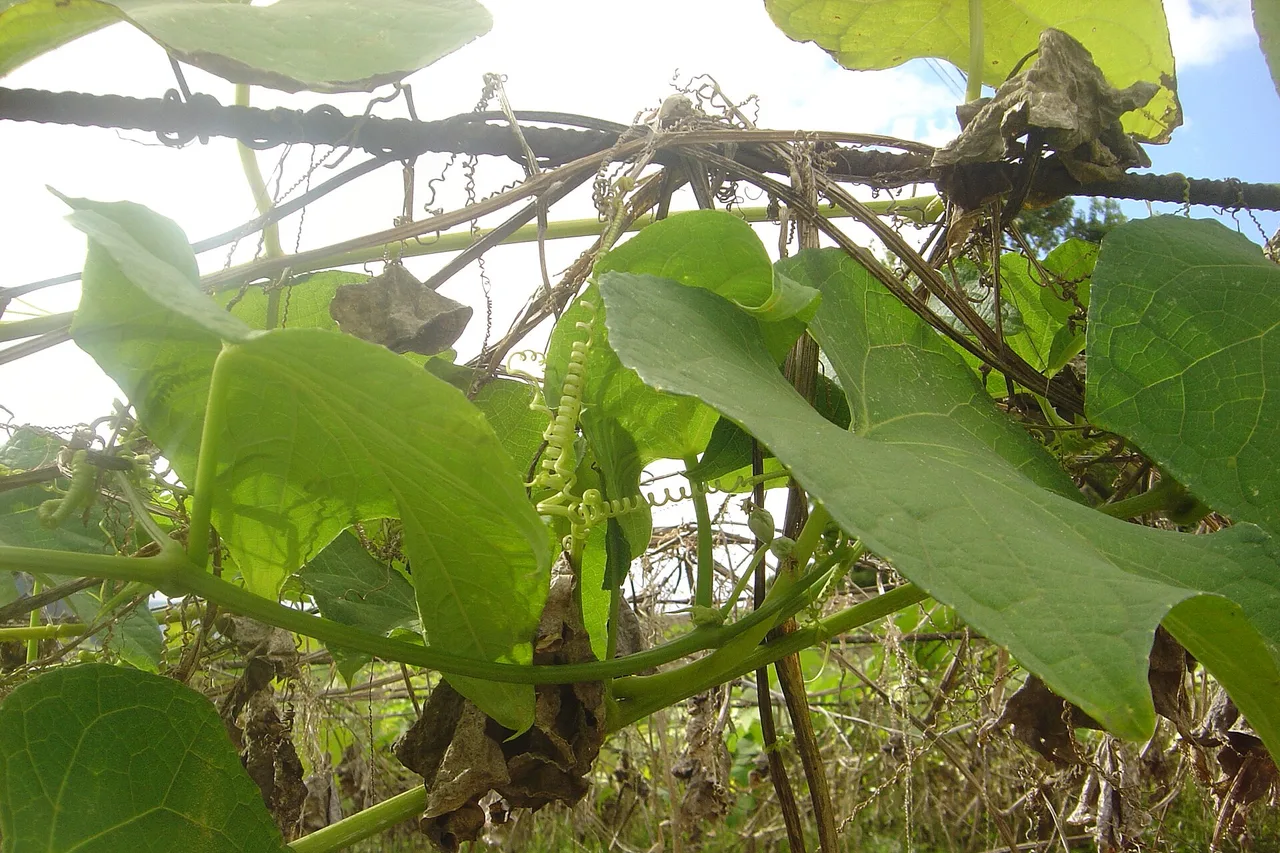
You cannot cross Salazie without meeting it: the chouchou — chayote, to the rest of the world — is the cirque’s emblem. Its vines cover trellises clinging to the slopes, along the RD48 and around Hell-Bourg, and its cultivation has sustained the cirque for generations. Almost all of Réunion’s chouchou comes from here: Salazie’s humid climate is exactly what it needs.
On the plate, it is everywhere: chouchou gratin, crispy fritters, salads of brèdes chouchou (the young shoots), or as a side to a cari. Hell-Bourg even dedicates a festival to it, with parades and cooking contests. Taste it here, in one of the village’s Creole eateries: it is a piece of the cirque on a plate, and the simplest way to support the people who keep it alive.
Hiking: from Bélouve to the Trou de Fer, and on to Mafate
Salazie is a major gateway to hiking on Réunion. The classic: climb to the Bélouve forest on the École Normale trail, which rises from the cirque floor to the rampart — then walk on through the tamarind forest to the Trou de Fer viewpoint: a chasm where the water drops 725 metres in four leaps, about two hours’ walk from the Bélouve mountain hut. It is one of the island’s greatest sights, and it can only be earned on foot.
Full guide: Things to Do in Réunion Island: 25 Unmissable Spots, Chosen by Locals
Other fine hours on the trail: the iron-rich Source Manouilh, the peaceful Mare à Poule d’Eau near Salazie village, or the Trois Cascades above Hell-Bourg. Canyoners also know Salazie for Trou Blanc, one of the island’s most celebrated canyons — guided only. Finally, few visitors know it: Salazie is also a door into Mafate. Via Grand Îlet then Le Bélier, you can drive to the Col des Bœufs car park (5 € per day, 14 € overnight, attended) — and from there, the roadless cirque is two hours’ walk away. Our Mafate guide covers this “northern door” in detail.
Good to knowIn high season, cars get booked up fast and prices rise as the dates approach. Comparing local rental companies before you go lets you lock in the car and the rate in Réunion, with deposit and insurance shown upfront.
Rent a car in RéunionLocal rental companies on Localrent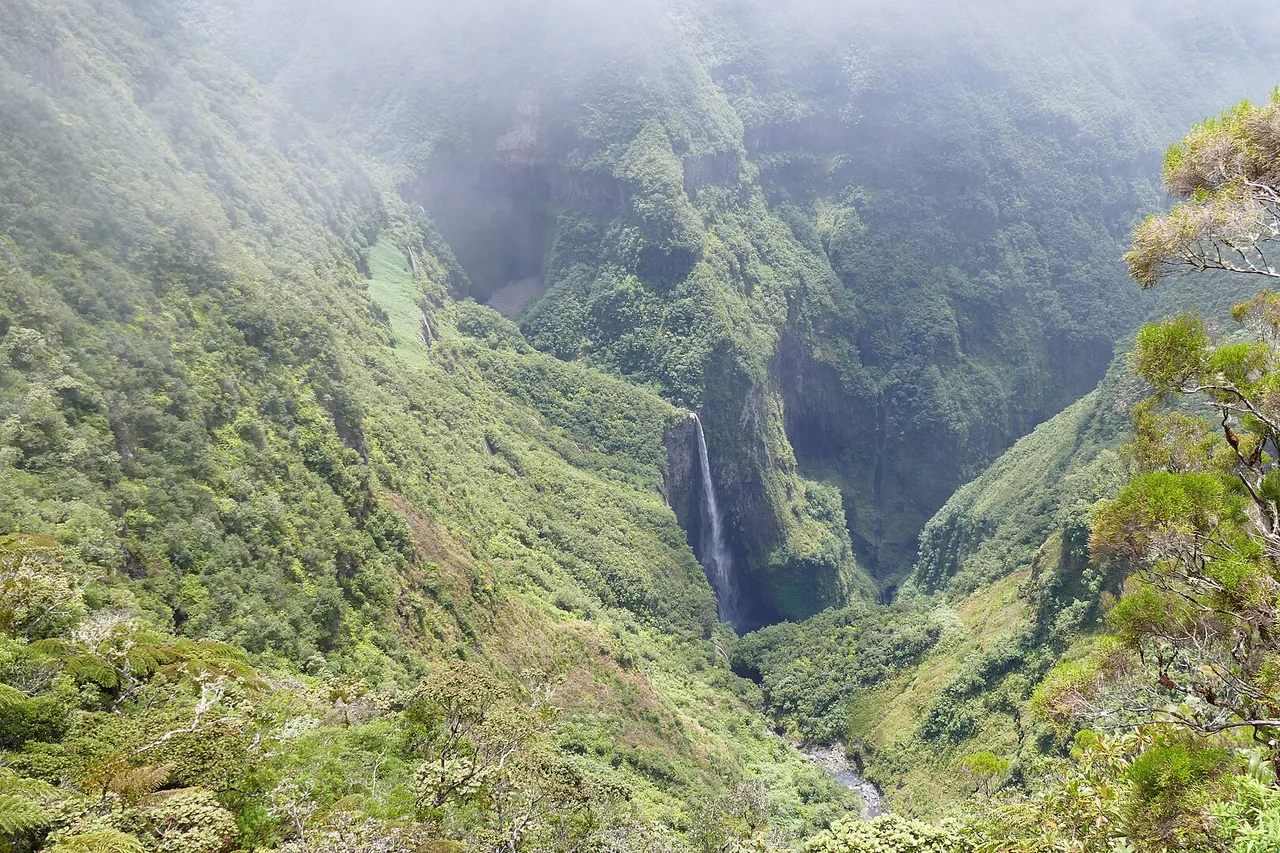
Practical tips: the road, the weather, the right moment
One single road enters and leaves the cirque, and that is its weakness: the RD48 is regularly cut by rockfalls. In recent months alone: closed then reopened with alternating traffic in late December 2025 (Îlet Morin sector), fully closed for a morning in May 2026 at the same spot, and for a night in August 2026 at the Pont de l’Escalier — each time reopened after a cliff inspection. The local reflex: check the road status before driving up, especially after heavy rain, on local media or the Département’s channels.
As for the sky, the rule of the highlands applies doubly in this humid cirque: start early — mornings are clearest, and clouds climb the valley as the day goes on. The austral winter (May–October) offers the most reliable days; summer, greener still, is paid for in rain and mist — our guide on when to visit Réunion lays out the whole mechanism. At 930 m, a warm layer is never wasted in the evening. One day is enough for the Voile de la Mariée viewpoint, Hell-Bourg and the Mare à Poule d’Eau; stay a night — table d’hôte dinners, cari cooked over a wood fire, the silence of the cirque — and Salazie becomes one of the finest stops on a 10-day itinerary. The rest of the island awaits on our Réunion blog, guide by guide.