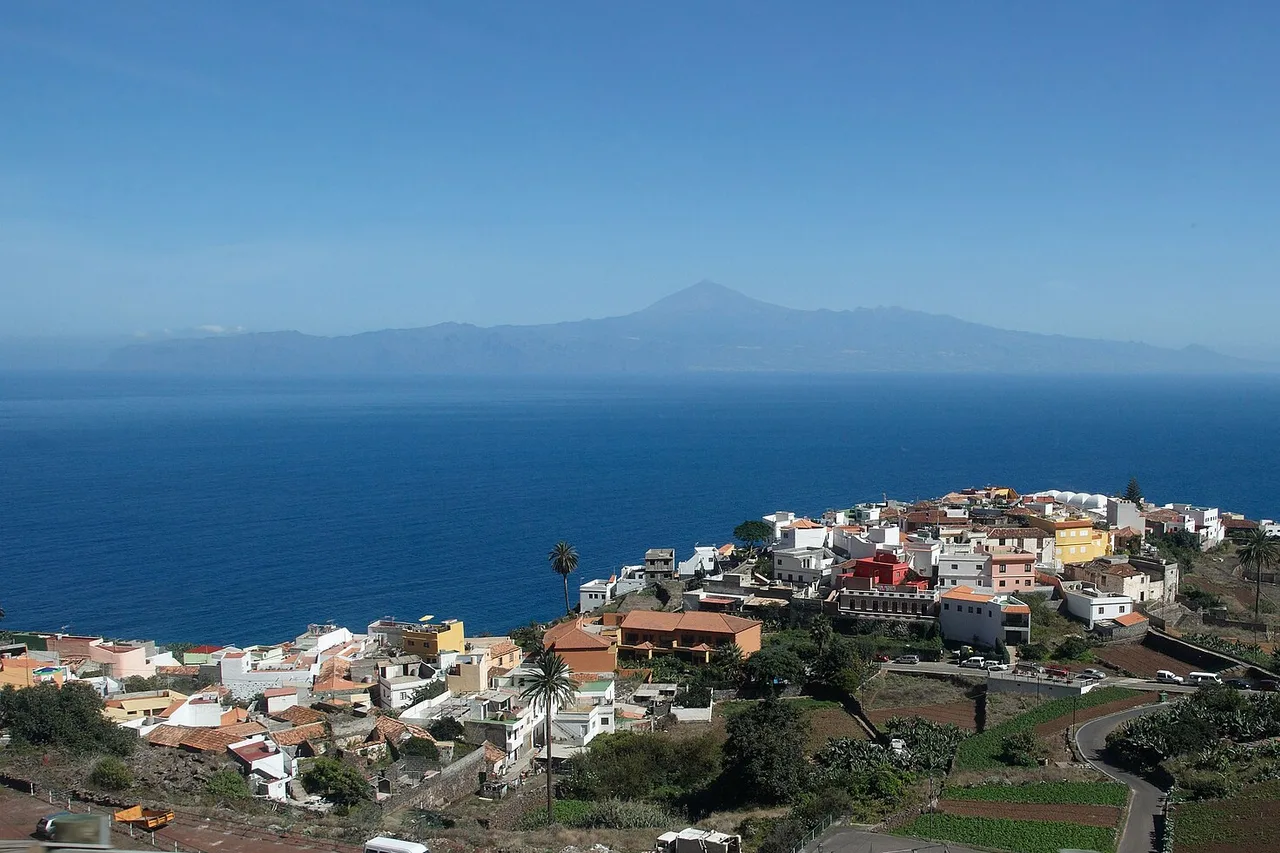
From the beaches of southern Tenerife you can see it on clear days: La Gomera, the small green island next door. Just 50 minutes of sea separate Los Cristianos from the harbour of San Sebastián — yet you step back a century: no hotel towers, but a UNESCO cloud forest, hairpin roads above dizzying ravines and a whistled language that schoolchildren still learn today. This guide answers the questions you ask before boarding: which ferry, at what price, guided tour or rental car, and what can you really see in one day? Prices and facts verified at publication, 30 September 2026.
The island next door: what to expect
La Gomera is Tenerife's opposite: about 370 km², some 22,000 inhabitants, and not a single high-rise resort. The island is one old extinct volcanic cone, carved by deep barrancos — the ravines that radiate from the centre to the coast. Arrive in the morning, leave in the evening, and you still get a surprisingly complete picture: the capital San Sebastián, the cloud forest of Garajonay, the viewpoints of the north — and, with luck, a whistling demonstration over lunch.
Two things to know before you go. First, distances look laughable on the map, but here you count in bends, not kilometres: crossing the island easily takes an hour of driving. Second, the weather obeys the trade winds: the south sits in sunshine almost permanently, while the ridge around Garajonay often catches the mist — which is exactly what keeps its forest alive. Neither is a reason to cancel; both are reasons to plan.
The ferry from Los Cristianos: time, prices, operators
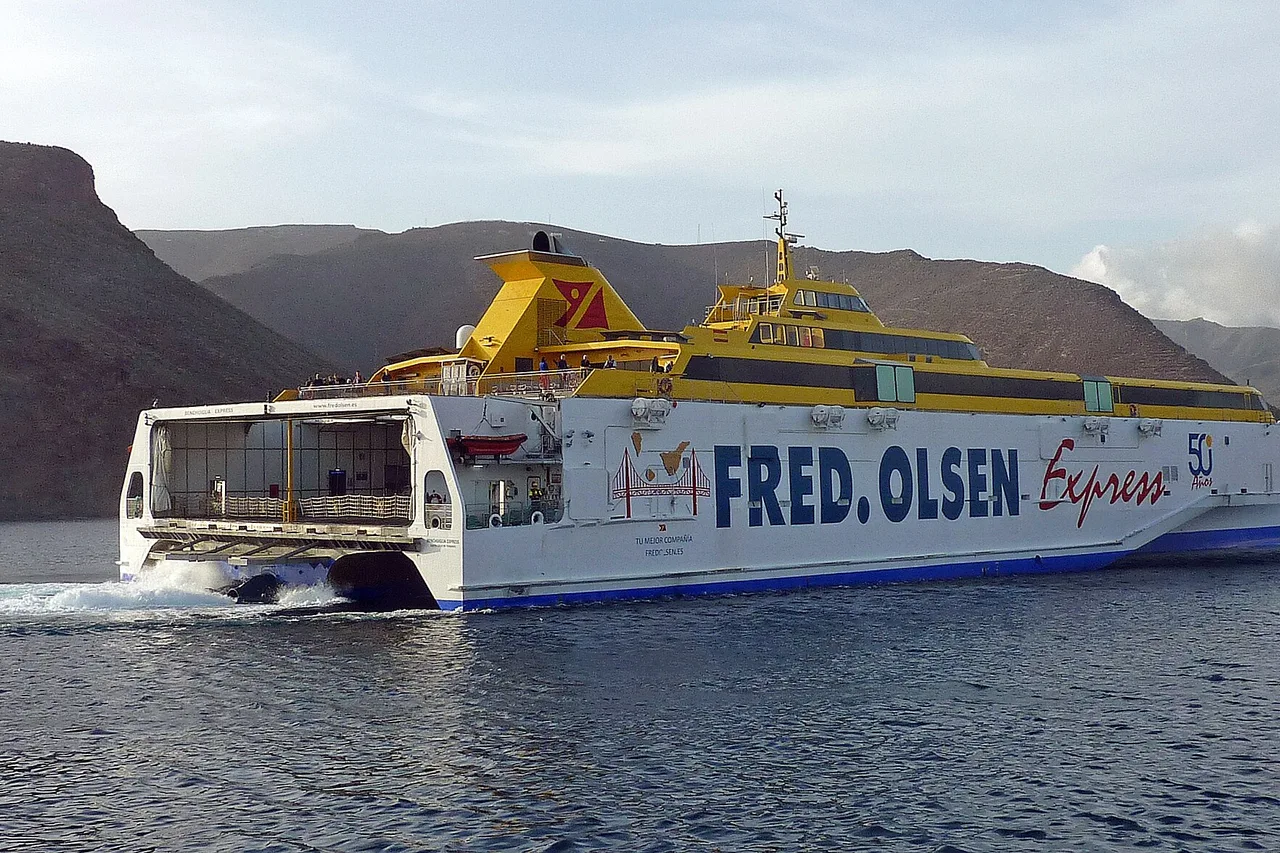
The fastest link is Fred. Olsen Express: its catamarans Benchijigua Express and Bencomo Express cover Los Cristianos – San Sebastián in 50 minutes, with up to four daily departures each way. Naviera Armas and Baleària also serve the route, usually a little slower and often a little cheaper. In late September 2026, standard one-way foot-passenger fares with Fred. Olsen ran around €40 to €46 depending on the ticket class; promotional and resident fares go lower, and vehicles pay extra.
For a proper day on the island, the rule is simple: first ferry out, last ferry back. Timetables shift with the seasons — check the day's schedule directly with the operator and be at the port a good half-hour before departure. In high season and at weekends, book online in advance. The crossing itself is part of the trip: the cliffs of Los Gigantes to starboard, La Gomera's cone dead ahead — and behind you, Mount Teide growing with every mile.
Guided tour or on your own?
The comfortable option is the organised day trip: hotel pick-up, ferry, guided island tour, lunch — all in one package. In late September 2026, standard full-day tours from southern Tenerife sold for €96 to €115 per person (about 9 hours), with longer 12-hour programmes from €149. The value is not just logistics: a good guide brings the laurel forest, the terraced fields and the whistled language to life — and nobody asks you to stare at the wheel through the hairpins.
The independent option: cross as a foot passenger and hire a car on the island, or take your Tenerife rental across — but check with your rental company first that ferry crossings are allowed; policies differ. Driving yourself means stopping where it is beautiful, lingering in the forest, adding one more village. Just budget honestly: between the first and last ferry you have about ten hours, and the island charges for them in bends. To see how this trip fits a longer stay, have a look at our 7-day Tenerife itinerary.
Garajonay: the UNESCO cloud forest
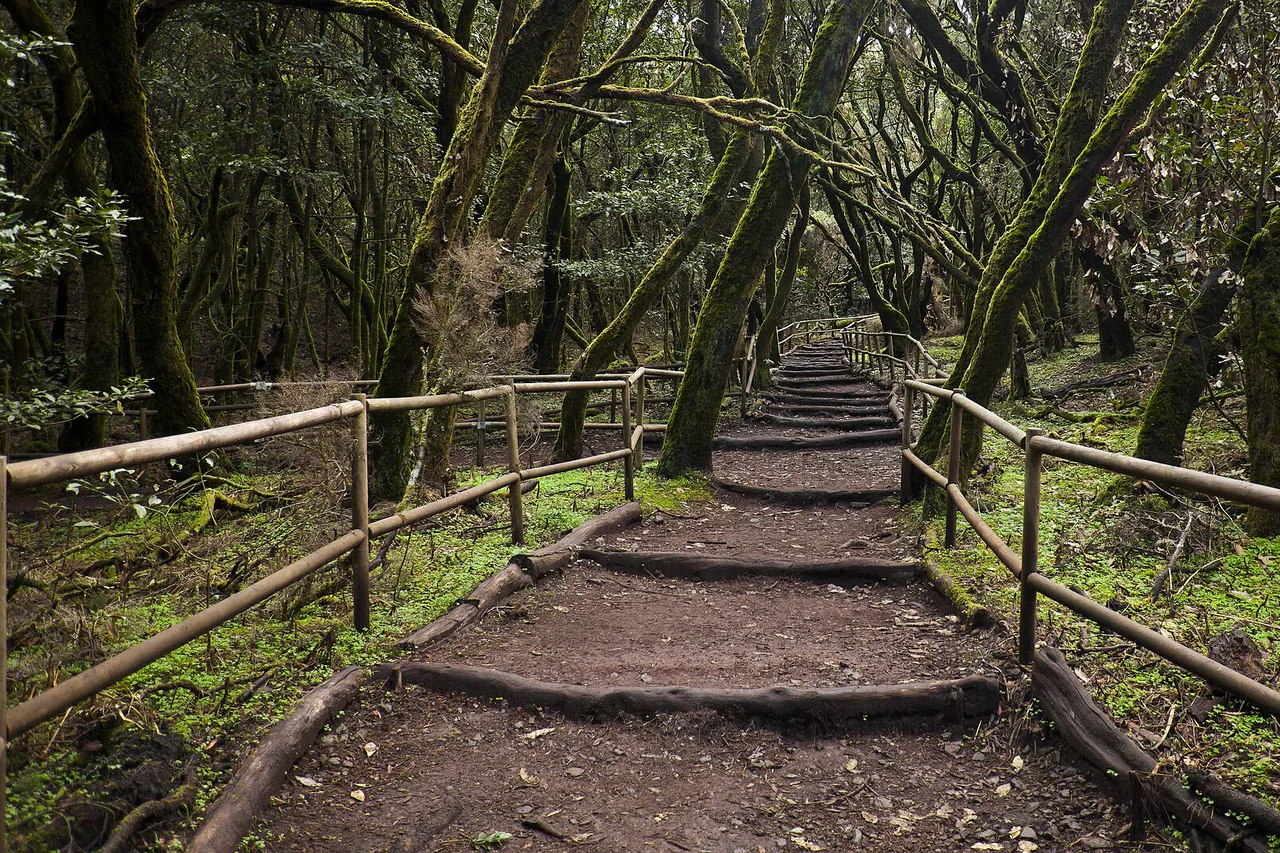
The heart of the island is Garajonay National Park: declared a national park in 1981, a UNESCO World Heritage Site since 1986, nearly 4,000 hectares — about a tenth of the island. Its treasure is the laurisilva, an evergreen laurel forest like those that covered much of southern Europe millions of years ago. What the ice ages erased elsewhere survived here, fed by the trade-wind mist: moss-hung trunks, ferns, ribbons of fog between the branches — a fairy-tale forest, and entry is free.
The highest point, Alto de Garajonay, rises to 1,487 metres: on a clear day the view reaches Tenerife, El Hierro and La Palma. If you only have a short stop, walk a stretch of the waymarked paths from the rest areas along the park road; with more time, aim for the stream valley of El Cedro under the laurels. Pack an extra layer: on the ridge it is a good ten degrees cooler than at the coast, and the mist can close in within minutes. Craving altitude back on Tenerife? Our guide to the best hikes in Tenerife has the classics.
The island loop: San Sebastián, Roque de Agando, Agulo — and the whistling
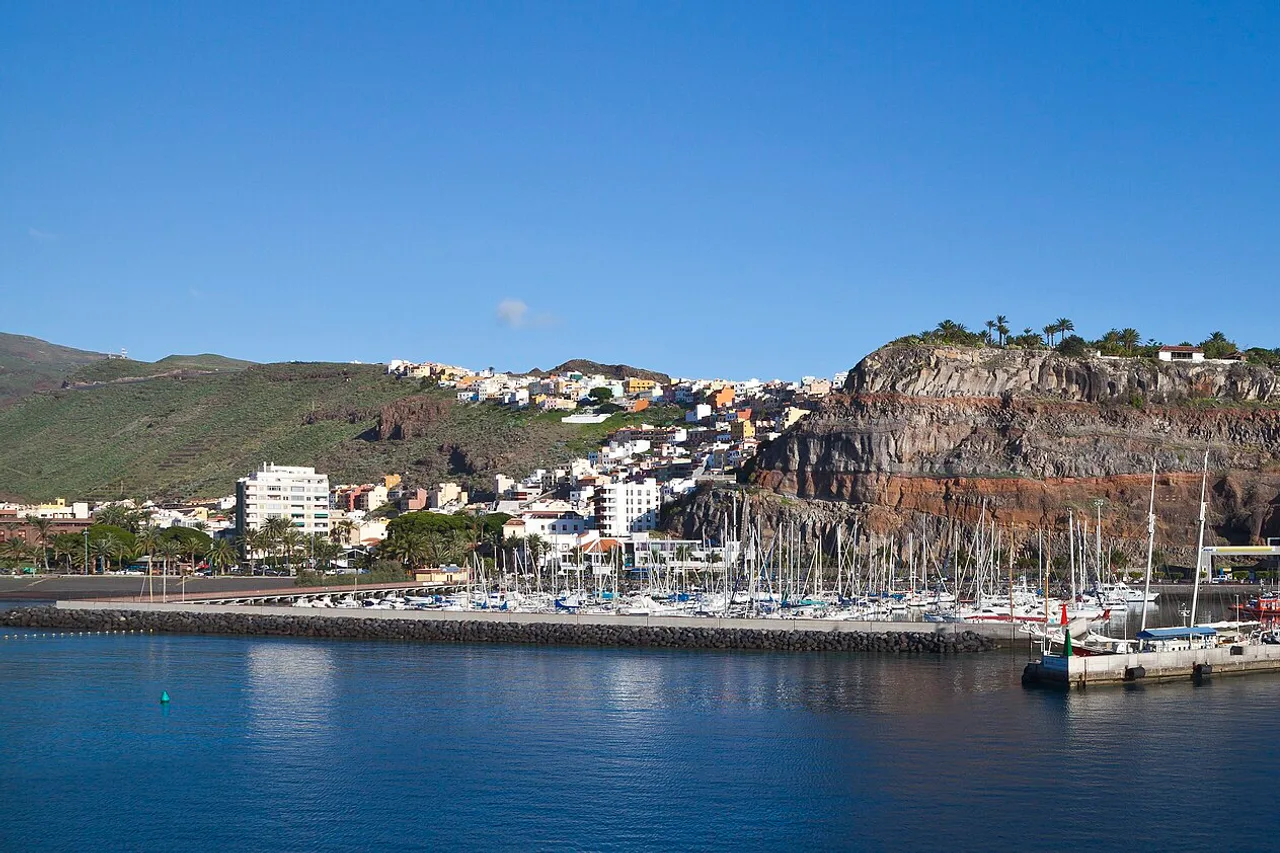
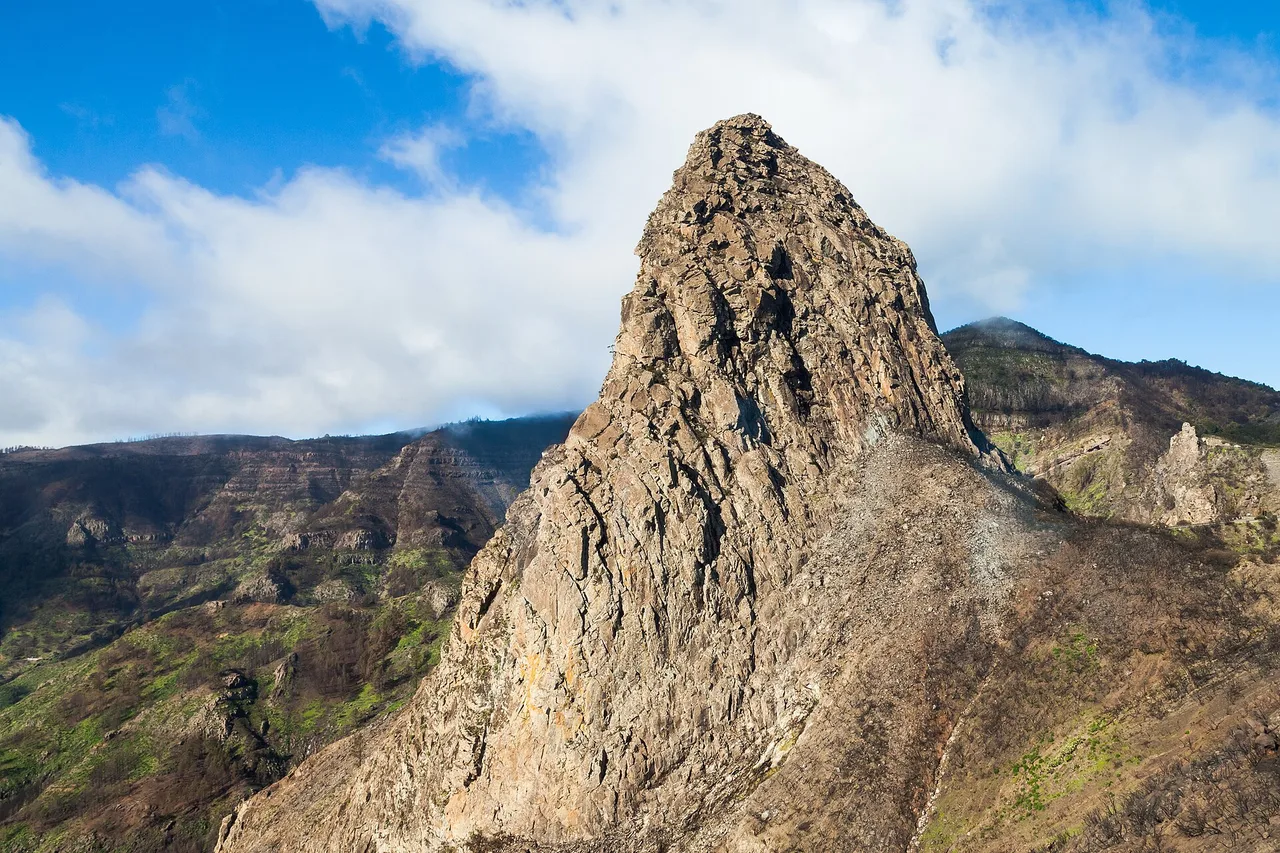
In San Sebastián, before or after the ferry, take a walk through the old town: it was here that Christopher Columbus called in 1492, filling his water barrels before the great crossing — the well in the old customs house is still presented as the water 'that baptised America'. The Torre del Conde, raised around 1450, a stout red cube in its park, is among the oldest surviving military buildings in the Canaries. Driving inland, the postcard waits by the roadside: the Roque de Agando, a volcanic plug rearing up like a sugarloaf.
In the green north lies Agulo, an amphitheatre of terraced fields above the ocean, with Teide as a backdrop across the water — our cover photo. On the cliff above the village, the Mirador de Abrante pushes its glass walkway 7 metres out over the void. And everywhere on the island you will meet the Silbo Gomero: the whistled language that carried messages across the ravines. A compulsory school subject since 1999, inscribed by UNESCO in 2009, it often comes with excursion lunches — and it is no tourist folklore: people here really do still whistle.
Practical tips for a successful day
Timing first: leave early — the first ferry buys you two hours of island that no tour group has. If you are prone to seasickness, sit midships on the fast catamarans and pick a day of reasonable wind: the crossing is short, but this is the Atlantic, not a lagoon. At the table, Gomeran cooking is simple and honest: try almogrote, a punchy cheese paste for spreading, and miel de palma, cooked palm syrup poured over desserts and grilled cheese.
Then the budget: ferry plus car or tour, plus lunch — realistically the day starts at around €100 per person; our article on what a Tenerife trip really costs puts that line in context. And the honest answer to the opening question: yes, the day trip is worth it — but it whets the appetite. If you can, add a night: an evening in San Sebastián and the forest at first light, before the day visitors arrive, are another kind of quiet. For picking the season, our guide to the best time to visit Tenerife works for its neighbour too.